
Investment Casting Hidden Costs: Proven Beyond Price
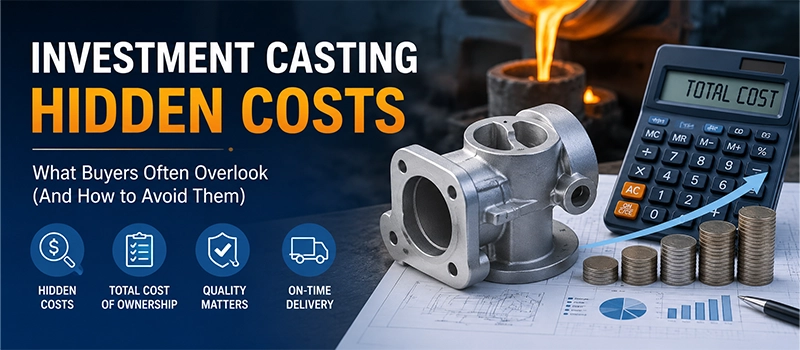
Investment casting hidden costs can significantly increase the total cost of a project, even when the initial quotation appears competitive. This guide explains what investment casting hidden costs are, why the lowest unit price may not represent the best value, and the common hidden expenses buyers often overlook. It also introduces the concept of Total Cost of Ownership (TCO), provides practical strategies for reducing unexpected costs, and answers common questions to help buyers make more informed sourcing decisions and achieve better long-term value from investment casting projects.
Investment Casting Tooling Costs: Proven Complete Guide
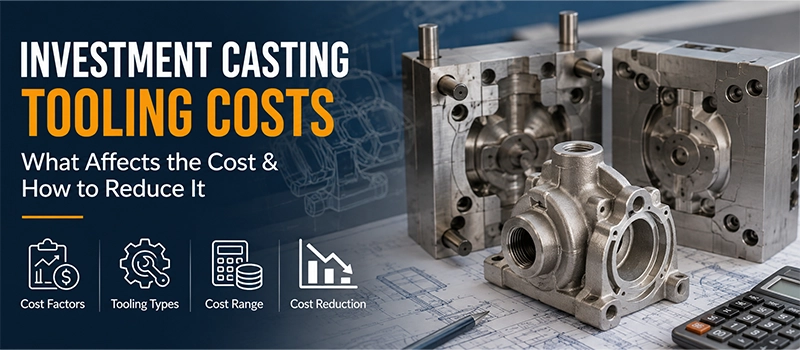
Investment casting tooling costs are one of the most important considerations when developing custom cast components. This guide explains what investment casting tooling is, the key factors that influence tooling costs, typical cost ranges, and practical strategies for reducing tooling expenses. It also covers common mistakes that increase tooling costs, how to obtain an accurate tooling quotation, and why working with an experienced investment casting manufacturer can improve production efficiency and maximize long-term value.
Casting Shrinkage of Alloys: Causes and Solutions
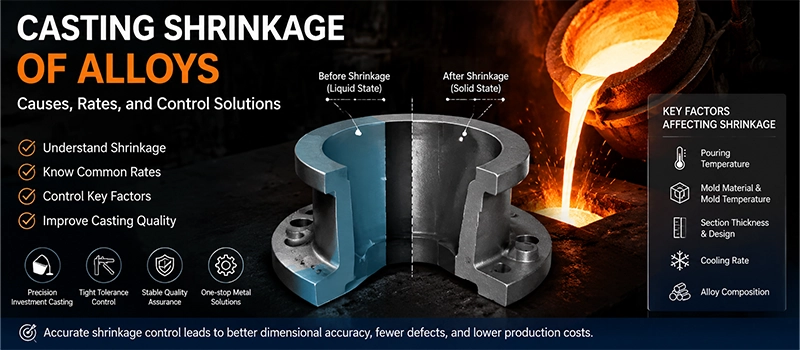
Casting shrinkage of alloys is a natural phenomenon that directly affects the dimensional accuracy and quality of metal castings. This article explains what casting shrinkage of alloys is, why it occurs, and the typical shrinkage rates of common casting alloys. It also explores the key factors that influence shrinkage, effective methods for controlling it, and how Dalian Zhongsheng Metal Product Co., Ltd. minimizes shrinkage through advanced engineering, precision investment casting, and strict quality control. Whether you are selecting materials or sourcing custom alloy castings, this guide provides valuable insights for achieving consistent, high-quality casting results.
Gating and Risering System Design: Improve Casting Quality
Gating and risering system design plays a vital role in controlling molten metal flow, solidification behavior, and overall casting quality. A properly designed system helps prevent common defects such as shrinkage porosity, misruns, cold shuts, gas porosity, and inclusions while improving casting yield and reducing production costs. This guide explains the fundamentals of gating systems and risering systems, explores their key components, outlines essential design principles, and examines common gating and riser configurations used in modern foundries. By understanding the relationship between metal flow, feeding efficiency, and defect prevention, manufacturers can optimize gating and risering system design to produce higher-quality castings with greater consistency and efficiency.
Quality Control in Investment Casting Guide
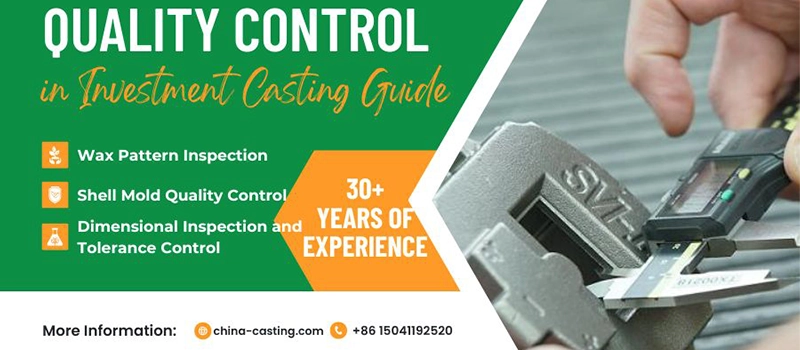
This article explains the key methods used in quality control in investment casting to ensure stable precision casting quality and reduce production defects. It covers raw material inspection, wax pattern verification, shell mold control, pouring and temperature management, dimensional inspection, non-destructive testing, mechanical property testing, and final quality inspection. The article also discusses how strict process control improves casting consistency, dimensional accuracy, and long-term product reliability for industrial applications.
Powerful Silicon Sol Binder Guide for Investment Casting
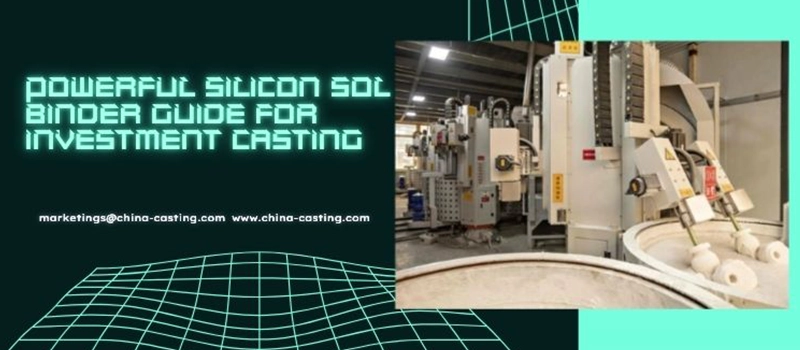
This article explains the role of silica sol binder in modern investment casting, including its composition, working principles, shell-building process, and key advantages. It also compares silica sol systems with water glass binders to help manufacturers better understand their differences in casting quality, precision, and production performance.
Pad Printing: Powerful Industrial Printing Process Guide
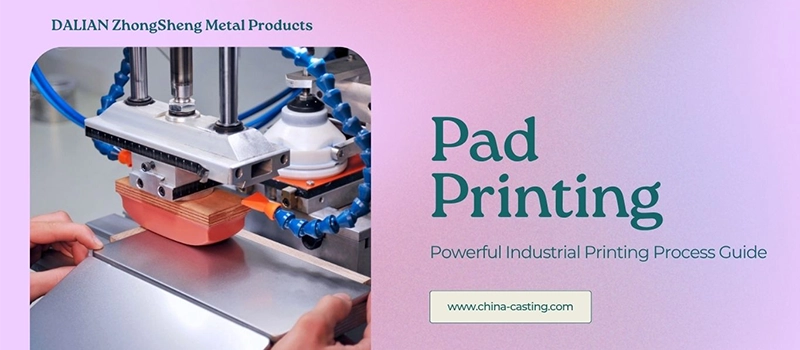
This article explains what pad printing is, how the pad printing process works, and why it is widely used in industrial manufacturing. It also compares pad printing vs screen printing and explores the advantages of precision image transfer on complex product surfaces.
Automation Systems for Die Casting: Ultimate Smart Guide
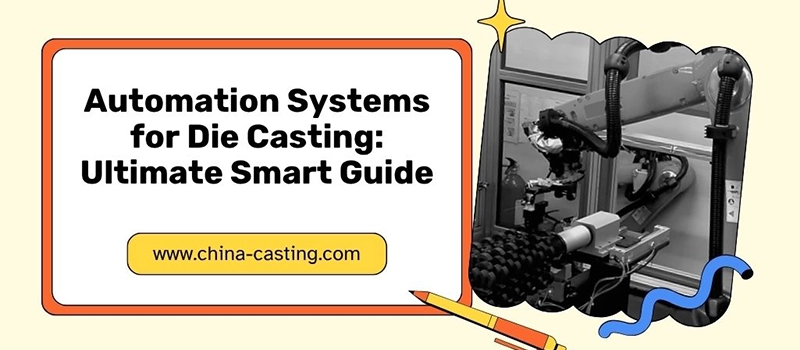
This article explores automation systems for die casting and their role in modern smart manufacturing. It explains the core components of automated die casting production lines, the advantages of robotic automation, key robotic process steps, and the industries most suitable for automated die casting solutions. The article also highlights how intelligent manufacturing technologies help improve efficiency, reduce labor costs, enhance product consistency, and support long-term industrial competitiveness.
Die Casting Cycle Time: Better Ways to Save Seconds
This article explains the meaning of die casting cycle time and why it is critical for production efficiency in modern manufacturing. It compares cycle times for different die casting materials, including aluminum, zinc, and magnesium alloys, while analyzing the major factors that affect production speed. The article also explores practical methods for reducing seconds per shot through optimized cooling systems, automation, mold design, and process control to help manufacturers improve output and lower production costs.
