Automation systems for die casting are transforming modern manufacturing. As industries demand faster production, higher precision, and lower operating costs, automated die casting solutions have become essential for competitive factories. From robotic part extraction to AI-driven quality inspection, automation improves efficiency, consistency, and workplace safety. Today, smart die casting systems are widely used in automotive, electronics, telecommunications, and industrial equipment manufacturing, helping companies achieve stable production and long-term growth in the era of intelligent manufacturing.
What Are Automation Systems for Die Casting?
Automation systems for die casting refer to integrated manufacturing technologies used to automate the die casting production process. These systems combine industrial robots, intelligent control systems, automated spraying equipment, conveyor systems, and monitoring technologies to improve production efficiency and manufacturing consistency.
In modern manufacturing, automation systems for die casting are widely used to reduce manual operations during production. Traditional die casting processes often rely on workers to perform repetitive and high-temperature tasks such as molten metal handling, mold spraying, casting extraction, and product transfer. However, automated systems can complete these operations more efficiently and more consistently.
The core purpose of automation systems for die casting is to create a stable and continuous production environment. By using programmable robotic systems and intelligent machine controls, manufacturers can achieve highly repeatable production cycles while reducing human error.
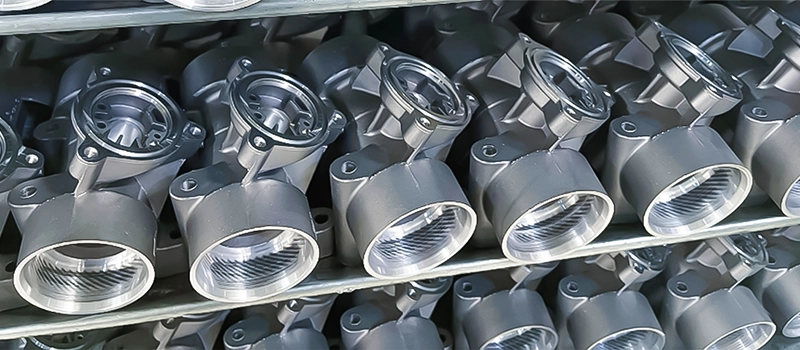
A typical automated die casting production line usually includes several interconnected systems. These may include automated die casting machines, robotic arms, spraying systems, temperature control equipment, conveyors, and centralized PLC control systems. All equipment works together to maintain stable production conditions throughout the manufacturing process.
One of the most important characteristics of automation systems for die casting is process synchronization. Every production step can be programmed according to fixed cycle times. For example, after molten metal injection is completed, the mold automatically opens, the robot extracts the casting, the spraying system applies release agent, and the next cycle begins immediately. This coordinated process helps manufacturers improve productivity and maintain stable product quality.
Modern automation systems for die casting also rely heavily on intelligent monitoring technologies. Sensors installed on machines can monitor parameters such as mold temperature, injection pressure, cooling time, and machine status in real time. Production data can then be analyzed to help maintain stable operating conditions.
Another key feature of automation systems for die casting is flexibility. Different robotic systems can be configured according to product size, mold complexity, and production volume requirements. This allows manufacturers to automate both small precision components and large structural die casting parts.
Today, automation systems for die casting are becoming increasingly important in industries that require high-volume and high-precision manufacturing. As global manufacturers continue to pursue higher efficiency, lower labor dependency, and better production stability, automated die casting systems have become a critical part of modern smart manufacturing.
Advantages of Automation Systems for Die Casting
Automation systems for die casting provide major benefits for modern manufacturing companies. As production demands continue to increase, manufacturers need faster production speed, better product consistency, and lower operating costs. Automated die casting systems help factories improve efficiency while maintaining stable and reliable production quality.
Increased Production Efficiency
One of the biggest advantages of automation systems for die casting is higher production efficiency. Automated systems can operate continuously with highly stable cycle times. Unlike manual production, robotic systems can maintain the same operating speed throughout long production periods without fatigue.
Robotic extraction systems, automatic spraying equipment, and intelligent conveyors work together to reduce unnecessary waiting time between production cycles. This helps manufacturers increase daily production output while improving overall equipment utilization.
In high-volume manufacturing environments, even small cycle time improvements can significantly increase total production capacity.
Reduced Labor Costs
Automation systems for die casting help manufacturers reduce dependence on manual labor. Traditional die casting production often requires workers to perform repetitive and physically demanding operations near high-temperature equipment.
Automated systems can replace manual operations such as:
- Casting extraction
- Mold spraying
- Product transfer
- Trimming and deburring
As labor costs continue to rise globally, automated production helps manufacturers control long-term operating expenses more effectively.
In addition, factories can reduce workforce management challenges caused by labor shortages and employee turnover.
Improved Product Quality
Another important advantage of automation systems for die casting is improved product consistency and quality control. Automated systems can repeat the same movements and process settings with extremely high precision during every production cycle.
For example, robotic spraying systems can apply release agents evenly across mold surfaces. Automated temperature control systems can maintain stable mold conditions throughout production. These improvements help reduce common casting defects such as:
- Porosity
- Flash
- Cold shuts
- Dimensional variation
Stable process control leads to more reliable product quality and higher customer satisfaction.
Better Workplace Safety
Die casting environments often involve molten metal, high temperatures, moving machinery, and metal splashing risks. Automation systems for die casting significantly improve workplace safety by reducing direct human involvement in hazardous production areas.
Industrial robots can safely perform dangerous operations such as:
- Molten metal ladling
- High-temperature casting extraction
- Trimming operations
- Product transfer
Reducing manual exposure to dangerous environments helps manufacturers lower workplace accident risks and improve overall factory safety standards.
Lower Scrap and Defect Rates
Modern automation systems for die casting use intelligent monitoring systems and real-time data collection to improve production stability. Sensors continuously monitor key process parameters such as:
- Injection pressure
- Mold temperature
- Cooling time
- Machine status
If abnormal production conditions occur, the system can automatically adjust settings or issue warning alerts.
This level of process control helps manufacturers reduce scrap rates and minimize material waste during production.
Some advanced factories also use AI-powered visual inspection systems to identify casting defects automatically before products move to the next manufacturing stage.
Faster Production Cycles
Automation systems for die casting can significantly reduce production cycle times. Robotic systems perform operations much faster and more consistently than manual workers.
For example:
- Robots can extract castings immediately after mold opening
- Automated spraying systems can complete mold treatment quickly
- Conveyor systems can transfer products continuously
These improvements reduce idle machine time and allow factories to achieve higher production throughput.
Easier Smart Factory Integration
Modern automation systems for die casting can integrate with MES systems, ERP platforms, and IoT monitoring technologies. This creates a more connected and intelligent manufacturing environment.
Production managers can monitor:
- Machine performance
- Production output
- Equipment downtime
- Quality data
- Energy consumption
through centralized digital management systems.
This data-driven approach helps manufacturers optimize production planning, improve traceability, and support long-term smart factory development.
Long-Term Cost Savings
Although automation systems for die casting require significant initial investment, they often reduce manufacturing costs over the long term. Higher efficiency, lower defect rates, reduced labor expenses, and improved equipment utilization all contribute to better production profitability.
As global manufacturing competition becomes increasingly intense, automated die casting systems are becoming a critical investment for companies seeking long-term operational stability and market competitiveness.
Main Components of Automation Systems for Die Casting
Automation systems for die casting consist of multiple integrated technologies that work together to improve manufacturing efficiency, production consistency, and process stability. Modern automated die casting production lines combine intelligent machinery, robotic systems, monitoring equipment, and centralized control technologies to create highly efficient manufacturing environments.
Each component plays an important role in maintaining stable production cycles and reducing manual intervention during die casting operations.
Automated Die Casting Machines
Automated die casting machines are the foundation of modern automation systems for die casting. These machines are designed to perform precise metal injection processes with minimal manual operation.
Modern die casting machines use intelligent control systems to manage important production parameters such as:
- Injection pressure
- Injection speed
- Mold locking force
- Cooling time
- Cycle timing
Advanced machines can automatically adjust operating parameters according to production conditions. This helps manufacturers maintain stable casting quality while reducing process variations.
Automated die casting machines are widely used in aluminum, zinc, and magnesium alloy production for industries that require high-volume and high-precision manufacturing.
Robotic Arms and Manipulators
Industrial robots are one of the most important components of automation systems for die casting. Robotic arms are commonly used to perform repetitive and high-temperature operations during production.
Typical robotic applications include:
- Casting extraction
- Product transfer
- Mold spraying
- Trimming operations
- Stacking and packaging
Robots improve production speed and maintain highly consistent movements during every production cycle. Compared with manual operations, robotic systems reduce human error and improve manufacturing stability.
Six-axis robots are commonly used in modern die casting factories because they offer flexible movement and high positioning accuracy.
Automatic Spraying Systems
Automatic spraying systems are used to apply release agents and cooling fluids onto mold surfaces during production cycles. Proper mold spraying is essential for maintaining casting quality and extending mold life.
In automation systems for die casting, robotic spraying systems can precisely control:
- Spray angle
- Spray volume
- Spray timing
- Spray coverage area
This helps manufacturers achieve more consistent mold temperatures and reduce excessive release agent consumption.
Automated spraying systems also improve workplace cleanliness and reduce unnecessary chemical waste during production.
Conveyor and Material Handling Systems
Conveyor systems are used to transfer castings and materials automatically between different production stages. In modern automation systems for die casting, conveyors help create continuous and efficient production flow.
Automated material handling systems can transport products between:
- Die casting machines
- Trimming stations
- CNC machining areas
- Inspection stations
- Packaging lines
This reduces manual handling requirements and improves overall production efficiency.
Some advanced production lines also use intelligent AGV systems (Automated Guided Vehicles) for flexible factory logistics operations.
Cooling and Temperature Control Systems
Temperature stability is extremely important in die casting production. Modern automation systems for die casting use advanced cooling and temperature control systems to maintain stable mold operating conditions.
These systems can automatically regulate:
- Mold temperature
- Cooling water flow
- Thermal balance
- Cooling cycle timing
Stable temperature control helps improve casting consistency while reducing defects caused by thermal fluctuations.
Proper thermal management also helps extend mold service life and improve production reliability.
PLC and Centralized Control Systems
PLC systems (Programmable Logic Controllers) are responsible for coordinating the entire automated production process. They serve as the central control unit for automation systems for die casting.
PLC systems synchronize all production equipment, including:
- Die casting machines
- Robots
- Spraying systems
- Conveyors
- Sensors
- Cooling systems
Centralized control allows manufacturers to maintain stable production timing and reduce process interruptions.
Modern PLC systems also provide real-time monitoring interfaces that allow operators to track production status and machine performance more efficiently.

IoT Sensors and Real-Time Monitoring Systems
Modern automation systems for die casting increasingly rely on IoT sensors and intelligent monitoring technologies. Sensors continuously collect production data throughout the manufacturing process.
These systems monitor important production conditions such as:
- Machine vibration
- Mold temperature
- Hydraulic pressure
- Injection force
- Cycle time
- Equipment status
Real-time monitoring allows manufacturers to identify abnormal operating conditions before major production problems occur.
Some advanced factories also use predictive maintenance technologies that analyze equipment data to reduce unexpected machine downtime.
Integrated Safety Systems
Safety systems are another important component of automation systems for die casting. Automated production environments require multiple protective technologies to ensure safe equipment operation.
Common safety systems include:
- Emergency stop systems
- Safety fences
- Light curtain protection
- Robot safety sensors
- Automatic shutdown functions
These systems help protect workers while allowing automated equipment to operate safely in high-speed production environments.
Human-Machine Interface (HMI) Systems
HMI systems allow operators to interact with automated production equipment through digital control interfaces. These systems help workers monitor production data, adjust machine settings, and manage operating conditions more efficiently.
Modern HMI systems often provide:
- Real-time production dashboards
- Alarm notifications
- Equipment diagnostics
- Production reports
- Parameter adjustment controls
User-friendly HMI interfaces improve production management efficiency and simplify machine operation for factory personnel.
Process Steps Involving Die Casting Robots
Die casting robots play a critical role in modern automation systems for die casting. These robotic systems help manufacturers improve production efficiency, maintain stable cycle times, reduce labor dependency, and improve workplace safety.
In modern automated die casting factories, robots are used throughout multiple stages of the production process. From molten metal handling to product transfer and inspection, robotic systems help create highly coordinated and continuous manufacturing operations.
Each robotic process is designed to improve production consistency while reducing manual intervention in high-temperature and hazardous working environments.
Automatic Metal Ladling
Automatic metal ladling is one of the earliest robotic applications in automation systems for die casting. Ladling robots are responsible for transferring molten metal from the furnace into the die casting machine with precise and controlled movements.
Compared with manual ladling operations, robotic ladling systems provide several advantages:
- More accurate molten metal volume control
- Reduced metal splashing
- Improved production consistency
- Better workplace safety
- Lower material waste
Stable molten metal dosing is extremely important for maintaining casting quality. Excess or insufficient metal can lead to production defects and unstable process conditions.
Modern ladling robots can also synchronize automatically with die casting machine cycle timing to improve production efficiency.
Mold Spraying Automation
Mold spraying is another essential process in automation systems for die casting. During production, release agents and cooling fluids must be sprayed onto mold surfaces to support casting release and thermal management.
Automated spraying robots perform this process with highly controlled and repeatable movements.
Robotic spraying systems can precisely control:
- Spray angle
- Spray distance
- Spray pressure
- Spray timing
- Spray coverage area
Consistent spraying helps maintain stable mold temperature while reducing excessive release agent usage.
Proper spraying automation can also extend mold service life and improve casting surface quality.
Compared with manual spraying, robotic systems create more stable and predictable production conditions.
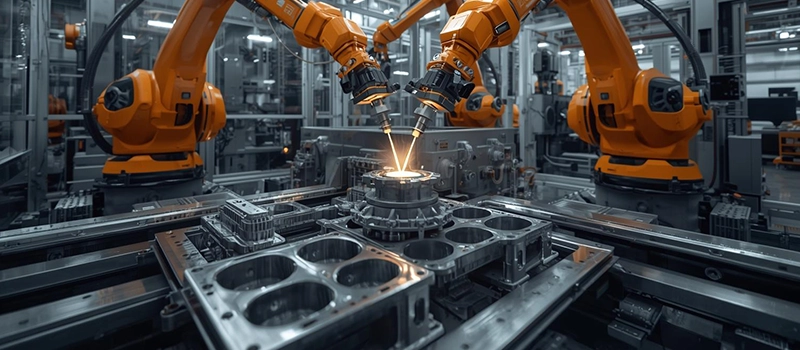
Robotic Part Extraction
After molten metal solidifies inside the mold, robotic extraction systems automatically remove the casting from the die casting machine.
Robotic extraction is one of the most common applications in automation systems for die casting because it directly affects production cycle time and operational safety.
High-speed extraction robots can quickly remove castings immediately after mold opening. This helps manufacturers reduce cycle delays and maintain continuous production flow.
Robotic extraction systems also help reduce:
- Casting deformation
- Surface damage
- Handling errors
- Worker exposure to high temperatures
Six-axis industrial robots are commonly used for casting extraction because they provide flexible movement and precise positioning control.
Automated Trimming and Deburring
After extraction, many die casting products require trimming and deburring operations to remove flash, excess material, and sharp edges.
In traditional factories, these operations are often performed manually. However, automation systems for die casting increasingly use robotic trimming systems to improve consistency and production efficiency.
Automated trimming robots can perform:
- Flash removal
- Edge trimming
- Surface grinding
- Deburring operations
- Precision cutting
Robotic trimming systems are especially valuable for complex aluminum die casting components with high precision requirements.
Automated trimming also helps reduce operator fatigue and improve workplace safety.
Automatic Quality Inspection
Quality inspection is becoming increasingly important in automation systems for die casting. Modern factories use intelligent robotic inspection systems to identify defects during production.
Automated inspection technologies may include:
- AI visual inspection systems
- Laser measurement systems
- X-ray inspection equipment
- Dimensional scanning technologies
These systems can automatically detect:
- Surface defects
- Cracks
- Porosity
- Dimensional deviations
- Incomplete filling
Compared with manual inspection, automated systems provide faster inspection speed and more stable quality control standards.
Real-time inspection also allows manufacturers to identify production problems earlier and reduce scrap rates.
Robotic Transfer and Product Handling
After inspection, robotic systems often transfer castings to the next manufacturing stage automatically.
In modern automation systems for die casting, robots and conveyor systems work together to move products between:
- Trimming stations
- CNC machining centers
- Cleaning systems
- Inspection areas
- Packaging stations
Automated product handling helps reduce manual transportation and improve factory logistics efficiency.
Continuous robotic transfer systems also reduce production bottlenecks and improve manufacturing flow stability.
Automated Packaging Operations
Some advanced automation systems for die casting also include robotic packaging systems. After final inspection, robots can automatically sort, stack, and package products according to production requirements.
Automated packaging systems help manufacturers achieve:
- Faster packaging speed
- Reduced labor costs
- Better packaging consistency
- Lower product handling damage
This level of automation is particularly important for high-volume manufacturing industries such as automotive and consumer electronics production.
Integrated Process Coordination
One of the biggest advantages of robotic automation in die casting is process synchronization. All robotic systems can operate according to centralized production timing controlled by PLC systems and intelligent software platforms.
For example:
- The ladling robot supplies molten metal
- The die casting machine performs injection
- The extraction robot removes the casting
- The spraying robot prepares the mold
- The conveyor transfers the product
- Inspection systems check product quality
This fully coordinated process allows automation systems for die casting to maintain stable and highly efficient production cycles with minimal interruption.
Industries Suitable for Die Casting Automation
Automation systems for die casting are widely used across many industries that require high-volume production, stable product quality, and efficient manufacturing processes. As global manufacturing standards continue to increase, more industries are adopting automated die casting technologies to improve competitiveness and production reliability.
Industries with complex metal components, strict dimensional requirements, and continuous production demands benefit the most from automated die casting systems.
Automotive Industry
The automotive industry is one of the largest users of automation systems for die casting. Modern vehicles require large quantities of precision die casting components for engines, transmissions, structural systems, and electronic assemblies.
Automated die casting production is widely used for manufacturing:
- Engine housings
- Transmission cases
- Oil pump components
- Motor housings
- Structural brackets
- Steering system parts
The automotive industry requires extremely high production consistency and tight dimensional tolerances. Automation systems help manufacturers maintain stable product quality while supporting large-scale production volumes.
Robotic production lines also improve manufacturing efficiency and reduce production downtime, which is essential for automotive supply chains.
Electric Vehicle Industry
The rapid growth of electric vehicles has significantly increased demand for automation systems for die casting. EV manufacturers require lightweight aluminum components with high structural strength and precise dimensional accuracy.
Automated die casting systems are commonly used for producing:
- EV battery housings
- Motor housings
- Inverter enclosures
- Structural aluminum components
- Mega casting body structures
Large integrated die casting components used in EV manufacturing require highly stable process control and advanced automation technologies.
Because EV production volumes continue to increase globally, manufacturers rely heavily on automated die casting systems to maintain efficient and scalable production capacity.
Consumer Electronics Industry
Consumer electronics manufacturers use automation systems for die casting to produce high-precision aluminum and magnesium alloy components.
Typical applications include:
- Laptop housings
- Smartphone frames
- Camera bodies
- Heat dissipation components
- Smart device enclosures
Electronic products often require thin-wall die casting structures with excellent surface quality and dimensional precision.
Automation helps manufacturers maintain consistent product appearance and reduce defects during high-volume production.
In addition, automated inspection systems help ensure strict quality standards required by consumer electronics brands.
Telecommunications Industry
The telecommunications industry also benefits greatly from automation systems for die casting. Modern communication equipment requires lightweight and high-performance metal components with excellent heat dissipation properties.
Automated die casting production is widely used for manufacturing:
- 5G communication housings
- Signal transmission enclosures
- Heat sink components
- Base station structural parts
Automation systems improve dimensional consistency and help manufacturers achieve stable thermal performance in communication products.
As global 5G infrastructure continues to expand, demand for precision die casting components in telecommunications equipment is expected to continue growing.
Industrial Equipment Manufacturing
Industrial machinery manufacturers use automation systems for die casting to produce durable and high-strength mechanical components.
Typical products include:
- Hydraulic system components
- Pump housings
- Gearbox casings
- Industrial motor parts
- Machine structural components
Industrial equipment often requires stable mechanical performance and long product life cycles.
Automated production systems help manufacturers improve manufacturing precision while reducing process variations during mass production.
For heavy industrial applications, automated die casting systems also help improve material utilization and production efficiency.
Aerospace Industry
The aerospace industry requires extremely high manufacturing precision and strict quality control standards. Automation systems for die casting help aerospace manufacturers maintain stable production conditions and product traceability.
Typical aerospace die casting applications include:
- Structural aluminum components
- Aircraft system housings
- Lightweight support structures
- Precision aerospace hardware
Automated inspection systems are especially important in aerospace manufacturing because product reliability and dimensional accuracy are critical.
Modern automation technologies allow manufacturers to collect and store production data for complete manufacturing traceability and quality verification.
Medical Equipment Industry
Medical equipment manufacturers increasingly use automation systems for die casting to produce precision metal components with strict quality standards.
Applications include:
- Medical device housings
- Imaging equipment components
- Surgical equipment parts
- Precision instrument structures
Automation helps manufacturers maintain high cleanliness standards and stable dimensional accuracy during production.
Because medical devices often require strict production documentation and traceability, automated systems provide important support for quality management and regulatory compliance.
Renewable Energy Industry
The renewable energy sector is another growing market for automation systems for die casting. Solar energy systems, wind power equipment, and energy storage systems require durable and lightweight metal components.
Automated die casting production is commonly used for manufacturing:
- Solar inverter housings
- Wind power system components
- Energy storage equipment structures
- Electrical control enclosures
As renewable energy markets continue to expand globally, manufacturers are increasing investment in automated production technologies to improve efficiency and reduce manufacturing costs.
Smart Home and Appliance Industry
Home appliance manufacturers also use automation systems for die casting to produce aluminum and zinc alloy components for consumer products.
Common applications include:
- Smart appliance housings
- Motor components
- Heat dissipation parts
- Decorative metal structures
Automation allows manufacturers to achieve large-scale production while maintaining stable appearance quality and product consistency.
Fast production speed and efficient robotic handling systems are particularly important in highly competitive consumer appliance markets.
Conclusion
Automation systems for die casting are transforming modern manufacturing through robotics, intelligent control systems, and smart production technologies. From automotive and EV manufacturing to electronics and aerospace industries, automated die casting solutions help manufacturers improve efficiency, product quality, workplace safety, and long-term production competitiveness in the era of intelligent manufacturing.