
Welding Service
We provide MIG, TIG, spot, and laser welding services for sheet metal parts, frames, and complex assemblies — ensuring strong joints, clean finishes, and reliable performance.
Professional Metal Welding for Structural Strength and Precision Assembly
Our welding service covers MIG, TIG, spot welding, and laser welding processes for sheet metal parts, frames, and structural components. From simple brackets to complex welded assemblies, we ensure strong joints, dimensional accuracy, and clean surface finishes.
We support carbon steel, stainless steel, aluminum, and alloy materials across various thickness ranges, providing reliable welding solutions for industrial, construction, machinery, and equipment applications.
Our Welding Capabilities & Advantages
- Multiple Welding Processes
- Strong Structural Integrity
- Precision Alignment Control
- Clean & Consistent Finish
- Small Batch & Mass Production
- Post-Welding Processing
- Material Versatility
- Engineering Support
- Strict Quality Inspection
- Reliable Lead Time
Get a Welding Quote
Send us your drawings and project details. Our engineering team will review your welding requirements and provide a competitive quotation within 24 hours.
Need Welding Support?
Our welding engineers are ready to assist with process selection, structural evaluation, and production planning for your project.
+86 15041192520
marketings@china-casting.com
Why Choose us
Precision Welding. Stronger Structures. Reliable Performance.
With experienced welders, advanced equipment, and strict quality control procedures, we deliver high-strength welded components and assemblies for demanding industrial applications.
MIG, TIG, spot welding, and laser welding options for different material and strength requirements.
Optimized welding parameters ensure strong joints and long-term durability.
Professional fixtures and jigs maintain dimensional consistency in batch production.
Skilled technicians with hands-on experience in industrial fabrication projects.
Visual inspection, dimensional checks, and weld seam verification before delivery.
Controlled heat input reduces deformation and improves weld appearance.
Support for prototypes, small batch production, and large-scale manufacturing.
Customer drawings and project data are strictly protected.
Quick evaluation and feedback for welding process optimization and quotation.
How it works
From Engineering Review to Finished Welded Assemblies
Our welding workflow focuses on precision alignment, structural integrity, and consistent quality from prototype to mass production.
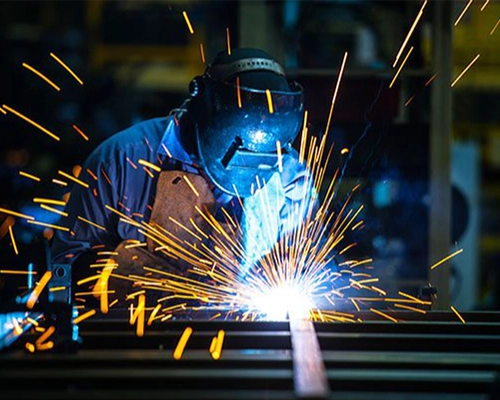
Technical Consultation & Drawing Review
We analyze your drawings, material specifications, thickness, and strength requirements to determine the most suitable welding method (MIG, TIG, spot, or laser).
Process Planning & Fixture Preparation
Custom fixtures and positioning tools are prepared to ensure alignment accuracy and minimize distortion during welding.
Welding & Assembly Production
Skilled welders perform controlled welding operations with optimized parameters to achieve strong joints and clean seams.
Inspection & Quality Verification
Each welded component undergoes visual inspection, dimensional checks, and structural verification before shipment.
Common Questions
Frequently Asked Questions About Welding Services
Find answers to common questions regarding welding methods, material compatibility, production capacity, and quality control.
We provide MIG, TIG, spot welding, and laser welding services. The selection depends on material type, thickness, structural strength requirements, and surface finish expectations.
Yes. We support carbon steel, stainless steel, aluminum, and certain alloy combinations. Our engineering team evaluates compatibility to ensure structural integrity.
We use controlled heat input, optimized welding parameters, and precision fixtures to minimize deformation and maintain dimensional accuracy.
Yes. We offer secondary operations such as grinding, polishing, surface treatment, painting, and full assembly to deliver finished components.
Lead time depends on project complexity and order quantity. Prototype production is typically faster, while batch production schedules are arranged to ensure on-time delivery.
