Pad printing is one of the most widely used industrial printing technologies for transferring images onto irregular, curved, textured, or hard-to-print surfaces. As manufacturers continue to demand precision branding, product identification, and durable markings, pad printing has become an essential process across automotive, electronics, medical, and consumer product industries.
Compared with traditional printing methods, pad printing offers excellent flexibility, sharp detail reproduction, and efficient production capability. This guide explains how pad printing works, the complete pad printing process, its industrial applications, and the key differences between pad printing and screen printing.
What Is Pad Printing?
Pad printing is an indirect offset printing process used to transfer images, text, symbols, or patterns from a printing plate onto the surface of an object through a silicone pad. The technology is commonly known as pad printing or pad print.
The core principle of pad printing is based on image transfer. During the process, the printing image is first etched onto a metal plate. Ink fills the etched area, and a soft silicone pad presses onto the plate to pick up the image. The silicone pad then transfers the inked image onto the target surface.
What makes pad printing different from many traditional printing methods is the flexibility of the silicone pad. Because the pad is soft and elastic, it can adapt to curved, uneven, textured, or irregular surfaces during the transfer process. This allows pad printing to maintain clear and accurate image reproduction even on complex product geometries.
Pad printing is often described as a highly precise printing technology because it can reproduce extremely fine details, small characters, thin lines, and intricate graphics with excellent consistency. The process is especially suitable for situations where standard flat printing methods cannot achieve stable image transfer.
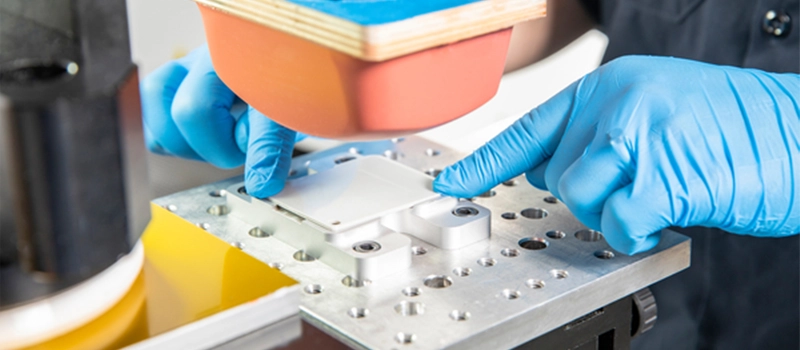
The silicone pad is the most important component in the entire pad printing process. Its material properties allow it to pick up ink cleanly from the etched plate while releasing the image efficiently onto the product surface. The elasticity of silicone also helps reduce image distortion during transfer.
Modern pad printing technology has evolved significantly over the years. Early pad printing systems relied heavily on manual operation, while today’s equipment uses advanced automation, precision controls, and stable ink management systems to improve printing quality and production consistency.
The pad printing process is also highly adaptable to different surface conditions. Smooth surfaces, textured finishes, curved structures, recessed areas, and small detailed sections can all be printed effectively through the same transfer principle.
Another important characteristic of pad printing is image stability. Because the printing image is transferred indirectly through the silicone pad rather than directly from a flat screen or plate, the process can achieve more controlled ink transfer on difficult surfaces.
In modern manufacturing, pad printing is widely recognized as one of the most effective solutions for precision surface marking and detailed image transfer. Its combination of flexibility, accuracy, and stable image reproduction has made pad printing an essential industrial printing technology.
How Does Pad Printing Work?
The working principle of pad printing is based on indirect image transfer. Instead of applying ink directly from a printing surface onto a product, the process uses a silicone transfer pad as an intermediate carrier. This method allows images to be transferred accurately onto surfaces that are difficult to print through direct-contact technologies.
The entire operation begins with an etched printing plate, often called a cliché. The desired image is engraved into the surface of the plate, creating recessed areas that hold ink during the printing cycle. These engraved sections determine the final printed pattern.
During operation, ink is spread across the surface of the plate. Excess ink is then removed, leaving ink only inside the etched image area. At this stage, the image exists on the plate in a thin layer of controlled ink.
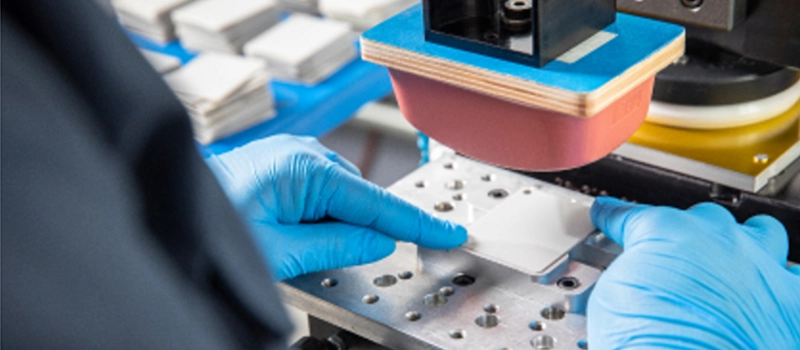
A silicone pad then moves downward and presses gently onto the etched plate. Because silicone has unique surface tension characteristics, the pad can lift the ink image cleanly from the engraved area without damaging the pattern. The image temporarily transfers from the metal plate onto the silicone surface.
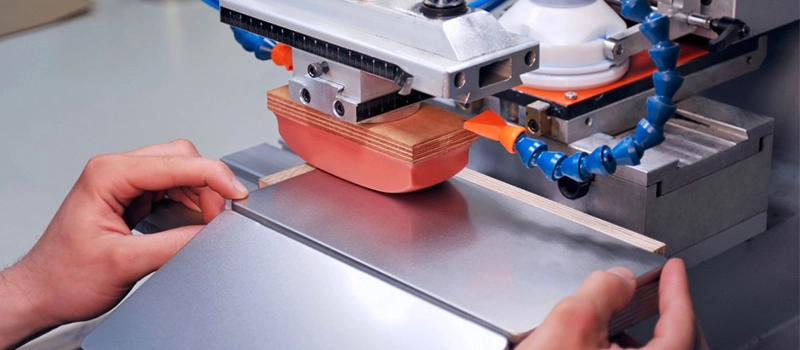
After picking up the image, the silicone pad moves toward the product being printed. The pad compresses slightly as it contacts the surface of the object, allowing the image to transfer evenly onto the material. Once the transfer is complete, the pad returns to its original position and the cycle repeats.
One of the most important reasons this process works so effectively is the flexibility of the silicone pad itself. Unlike rigid printing tools, silicone can deform and adapt to complex contours during contact. This flexibility helps maintain image clarity even when printing onto curved or uneven surfaces.
Another critical factor is surface tension control. The silicone pad must release the ink more easily onto the product surface than it releases from the etched plate. The balance between ink viscosity, pad elasticity, evaporation speed, and surface energy determines the quality of the final print.
The printing cycle itself happens very quickly. In modern automated systems, the transfer process can be completed within seconds while maintaining stable image consistency across large production volumes.
The shape and hardness of the silicone pad also influence printing performance. Softer pads can adapt more easily to irregular geometries, while firmer pads often provide sharper image definition on flatter surfaces. Different pad shapes are selected depending on the complexity of the product being printed.
Ink behavior is equally important during the transfer process. The ink must remain stable while sitting inside the etched plate, transfer cleanly onto the silicone surface, and then bond properly to the product during final transfer. If the evaporation speed or viscosity is not controlled correctly, image defects may occur.
Modern systems use highly controlled mechanical movements to maintain precise positioning during every printing cycle. Accurate alignment ensures that the transferred image remains sharp, centered, and repeatable throughout production.
Although the overall principle appears simple, successful image transfer depends on the precise coordination of multiple factors, including:
- Plate depth
- Ink viscosity
- Silicone hardness
- Contact pressure
- Transfer speed
- Surface condition
- Environmental stability
Because of this controlled transfer mechanism, the process can achieve excellent image precision while maintaining strong adaptability to different product geometries and surface conditions.
Complete Pad Printing Process Explained
The printing process involves several carefully controlled stages. Each step directly affects image clarity, ink transfer stability, and final product quality. Although modern equipment is highly automated, the fundamental workflow remains based on precise coordination between the printing plate, ink system, silicone pad, and substrate surface.
Artwork Preparation
Every printing cycle begins with artwork preparation. The image, logo, symbol, or text must first be converted into a printable design format. In industrial production, vector-based artwork is commonly used because it maintains sharp edges and accurate dimensions during plate manufacturing.
At this stage, image size, line thickness, spacing, and positioning must all be carefully reviewed. Extremely fine details may require adjustments to ensure stable ink transfer during production.
Image orientation is also important. Since the transfer process involves multiple image pickups and releases, the artwork is typically prepared in reverse before plate engraving.
For multicolor graphics, separate artwork files are created for each individual color layer. Precise alignment between colors is critical for maintaining print accuracy.
Plate Etching Process
After the artwork is finalized, the image is engraved onto a printing plate known as a cliché. This plate contains recessed image areas that hold the ink during the printing cycle.
Plate production can be completed through several methods, including:
- Laser engraving
- Chemical etching
- Photopolymer exposure
The depth of the etched image plays a major role in print quality. If the engraving is too shallow, insufficient ink may transfer during printing. If the engraving is too deep, excessive ink buildup can reduce image sharpness.
Modern industrial systems often use high-precision laser engraving because it provides excellent detail control and stable repeatability.
The finished plate acts as the image carrier throughout the production process.
Ink Filling and Doctoring
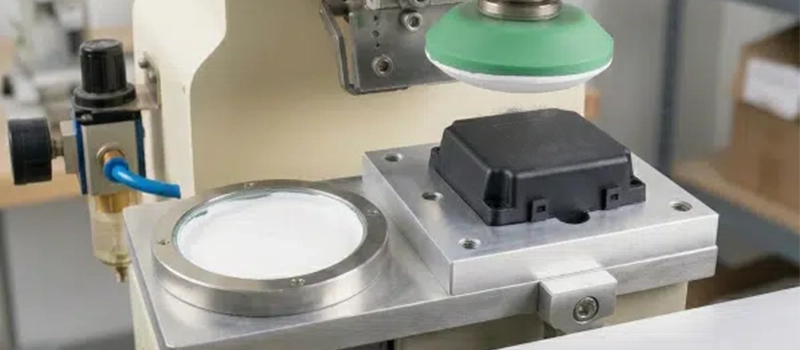
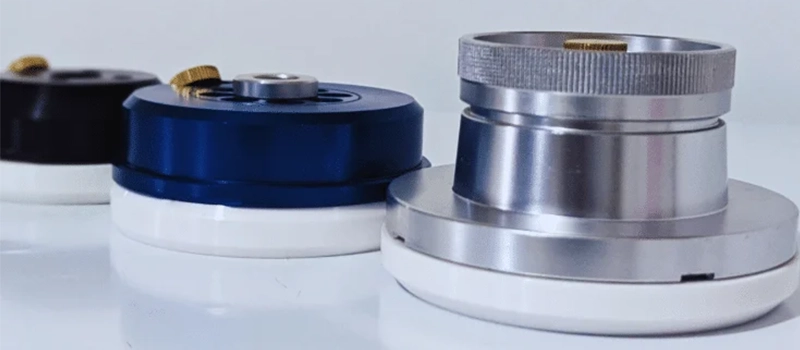
Once the plate is installed into the machine, ink is applied across its surface. The ink fills the recessed image area while excess material remains on the flat plate surface.
A sealed ink cup or doctor blade system then removes excess ink from the top of the plate. This step is known as doctoring.
After doctoring, ink remains only inside the engraved image section. The surrounding surface becomes clean, allowing accurate image transfer during the next stage.
Ink consistency is extremely important at this point. Factors such as:
- Viscosity
- Evaporation speed
- Temperature
- Solvent balance
all influence transfer performance and image stability.
Industrial production environments usually maintain controlled operating conditions to reduce printing variation.
Image Pickup and Transfer
The image transfer stage is the core of the entire process.
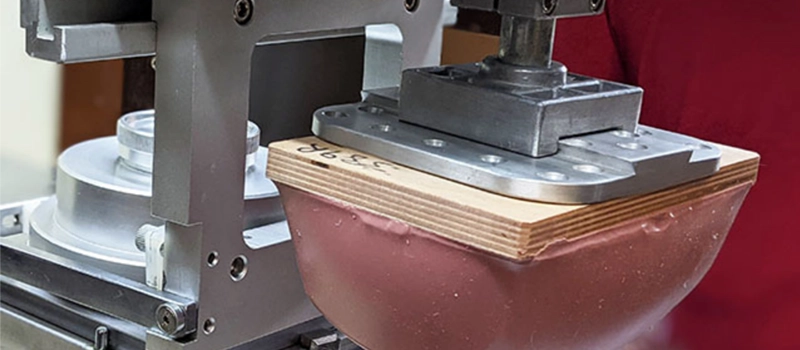
A silicone pad moves downward and presses onto the etched plate surface. Due to its surface properties, the pad lifts the ink image from the engraved area cleanly and evenly.
After picking up the image, the pad moves toward the product surface. The silicone material compresses slightly during contact, allowing the image to adapt to the geometry of the object being printed.
This flexibility is what enables accurate printing on curved, recessed, textured, or irregular surfaces.
The amount of pressure applied during transfer must remain carefully controlled. Excessive pressure may distort the image, while insufficient pressure can cause incomplete transfer.
Pad shape, hardness, and movement speed are also adjusted according to product geometry and image requirements.
Drying and Curing
After the image is transferred onto the product, the ink must dry or cure properly to achieve stable adhesion and durability.
Different ink systems use different curing methods, including:
- Air drying
- Heat curing
- UV curing
- Chemical hardening
Drying conditions directly affect scratch resistance, chemical resistance, and long-term durability.
In high-speed automated production lines, drying systems are often integrated directly into the manufacturing process to improve efficiency and maintain consistent results.
Proper curing is essential because incomplete drying may lead to smudging, weak adhesion, or reduced print durability.
Quality Inspection
After printing and curing are completed, products usually undergo quality inspection before final packaging.
Inspection standards commonly focus on:
- Image clarity
- Alignment accuracy
- Color consistency
- Ink adhesion
- Surface defects
Modern production facilities may use automated camera inspection systems to detect printing defects during continuous operation.
Consistent inspection procedures help maintain stable product quality throughout large-scale manufacturing runs.
Industrial Applications of Pad Printing
Modern manufacturing industries require marking and decoration methods that can maintain high precision across complex product surfaces. Traditional printing technologies often struggle when products contain curves, recessed areas, textured finishes, or miniature structures. Because of its flexible transfer capability, this printing method has become an important solution for detailed surface marking in industrial production.
Its ability to reproduce sharp graphics, small text, and durable symbols makes it suitable for both decorative and functional applications. In many manufacturing environments, accurate product identification is not only related to appearance but also connected to traceability, safety, operation, and brand consistency.
Automotive Components
The automotive industry demands extremely high standards for durability, precision, and long-term stability. Interior and exterior vehicle components often contain symbols, icons, scales, and identification markings that must remain clear throughout years of use.
Buttons, switches, dashboard controls, and operating panels frequently require detailed graphics positioned on curved plastic surfaces. Since these parts are handled repeatedly by users, the printed markings must resist abrasion, oils, temperature changes, and continuous physical contact.
Manufacturers also require stable color consistency and precise alignment across large production volumes. For this reason, precision transfer printing has become a widely adopted solution in automotive manufacturing environments.
In addition to decorative branding, many automotive markings serve functional purposes. Indicator symbols, warning signs, and operational instructions must remain legible under varying environmental conditions.
Medical Devices
Medical equipment manufacturing requires strict control over product quality and marking accuracy. Surgical tools, testing instruments, monitoring devices, and handheld medical components often contain important identification information that must remain permanent and easy to read.
Because many medical products include curved or miniature surfaces, conventional flat printing methods may not provide stable results. Flexible image transfer technology allows precise marking on complex geometries without damaging delicate components.
In this industry, printed information may include:
- Measurement indicators
- Calibration marks
- Instructional symbols
- Product identification
- Regulatory markings
Durability is especially important because medical products may undergo cleaning, sterilization, and chemical exposure during use.
High-resolution image reproduction is another key requirement. Small errors in technical markings can affect readability and product usability, making precision printing essential for medical manufacturing.
Electronics Industry
Electronic products continue to become smaller, thinner, and more complex. As device miniaturization increases, manufacturers require printing methods capable of producing extremely fine details within limited spaces.
Electronic housings, control buttons, connectors, keyboards, and interface panels often require highly accurate symbols and functional markings. In many cases, the printed graphics must align precisely with internal electronic structures or operating interfaces.
The ability to print on textured plastics and irregular molded surfaces makes this process highly valuable in electronics production.
Modern electronic products also emphasize visual quality. Clean edges, sharp characters, and consistent color appearance contribute directly to perceived product quality and brand image.
Because electronic production usually involves high manufacturing volumes, stable repeatability is essential. Automated printing systems help manufacturers maintain consistent positioning and image clarity across continuous production cycles.
Promotional Products
Promotional products require customized branding on a wide variety of materials and product shapes. Pens, keychains, drinkware, USB drives, electronic accessories, and office products often include logos, slogans, or decorative graphics applied directly to the product surface.
Many promotional items contain curved or cylindrical geometries that are difficult to process using direct flat printing methods. Flexible transfer printing provides a practical solution for these shapes while maintaining good visual consistency.
Short production cycles are also common in promotional manufacturing. Many projects involve custom branding for events, exhibitions, corporate marketing campaigns, or seasonal product launches. Fast setup capability and stable image reproduction help manufacturers meet tight delivery schedules.
Because branding quality directly affects promotional effectiveness, clear and durable image transfer remains a major production priority in this market.
Consumer Goods
Consumer products often combine functional requirements with visual design expectations. Manufacturers not only need durable product markings but also attractive decorative finishes that improve product appearance.
Household appliances, personal care devices, tools, toys, packaging components, and lifestyle products frequently require detailed surface graphics for branding and operation guidance.
Modern product designs increasingly include curved edges, textured finishes, and compact structures. These design trends create challenges for traditional printing technologies while increasing demand for more adaptable image transfer methods.
In consumer manufacturing, consistency is especially important because products are produced in large quantities and distributed globally. Even minor variations in image quality may affect brand perception and product presentation.
For this reason, manufacturers place strong emphasis on stable production control, precise positioning, and repeatable image quality throughout the printing process.
Pad Printing vs Screen Printing
Pad printing and screen printing are both widely used industrial printing methods, but they are designed for different manufacturing requirements. The differences between the two processes mainly involve surface compatibility, image precision, ink transfer, production flexibility, and application range.
The following comparison table clearly explains the differences between pad printing vs screen printing.
| Comparison Item | Pad Printing | Screen Printing |
|---|---|---|
| Printing Method | Indirect image transfer using a silicone pad | Direct ink transfer through a mesh screen |
| Best Surface Type | Curved, irregular, textured, recessed surfaces | Flat or slightly curved surfaces |
| Printing Precision | Excellent for fine details and small graphics | Better for large and bold graphics |
| Image Resolution | High precision image reproduction | Moderate to high depending on screen quality |
| Ink Layer Thickness | Thin and controlled ink layer | Thick ink coverage |
| Surface Adaptability | Very strong | Limited on complex geometries |
| Small Part Printing | Excellent | More difficult |
| Large Area Printing | Moderate efficiency | Very efficient |
| Complex Shapes | Highly suitable | Limited capability |
| Multicolor Alignment | High precision positioning | Good for larger graphics |
| Printing Speed | Fast for precision parts | Fast for flat mass production |
| Equipment Components | Silicone pad, cliché plate, ink cup | Mesh screen, squeegee, stencil |
| Setup Flexibility | High flexibility for different product shapes | Better for repeated flat-surface jobs |
| Typical Graphic Type | Logos, symbols, technical markings | Posters, panels, signage, textiles |
| Material Compatibility | Plastic, metal, glass, rubber, ceramic | Mainly flat materials and panels |
| Production Advantage | Precision and surface adaptability | Large-format and heavy ink coverage |
Advantages of Industrial Pad Printing
Modern manufacturing industries demand printing technologies that can deliver precision, consistency, durability, and production flexibility at the same time. As product structures become more complex, traditional flat-surface printing methods often struggle to maintain stable image quality on irregular geometries.
Because of its unique transfer mechanism, pad printing has become one of the most reliable industrial printing solutions for precision surface marking.
The process offers several important advantages that make it highly valuable across modern manufacturing environments.
Excellent Surface Adaptability
One of the biggest advantages of pad printing is its ability to print on difficult surfaces.
The flexible silicone transfer pad can adapt to:
- Curved surfaces
- Textured materials
- Cylindrical products
- Recessed areas
- Uneven geometries
- Small precision parts
Unlike many direct-contact printing methods, pad printing can maintain stable image transfer even when the product surface contains complex contours.
This flexibility allows manufacturers to print on products that would otherwise be extremely difficult to process using conventional printing technologies.
As modern industrial product designs continue to become more compact and structurally advanced, this adaptability becomes increasingly important.
High Printing Precision
Pad printing is widely recognized for its excellent image accuracy.
The process can reproduce:
- Fine lines
- Small characters
- Technical symbols
- Intricate logos
- Detailed graphics
with very high consistency.
Because the image is transferred from an etched plate through a controlled silicone surface, edge definition remains sharp and stable during production.
This level of precision is especially important for:
- Electronic components
- Technical equipment
- Medical products
- Industrial control systems
where accurate marking quality directly affects readability and product appearance.
Pad printing also performs exceptionally well when products require miniature graphics in limited spaces.
Strong Printing Consistency
Industrial production requires stable repeatability across large manufacturing volumes.
Pad printing systems are designed to maintain:
- Consistent image positioning
- Stable ink transfer
- Uniform graphic appearance
- Reliable print quality
through continuous production cycles.
Modern automated equipment uses precision mechanical control systems to reduce variation during operation.
This production consistency helps manufacturers improve:
- Product appearance
- Quality stability
- Production efficiency
- Brand uniformity
In large-scale manufacturing environments, even small improvements in print consistency can significantly reduce rejection rates and production waste.
Wide Material Compatibility
Another major advantage of pad printing is its compatibility with multiple materials.
The process can be used on:
- Plastic
- Metal
- Glass
- Rubber
- Ceramic
- Painted surfaces
- Engineered materials
This versatility allows manufacturers to standardize printing operations across different product categories.
Many industrial products combine multiple materials within the same assembly. Pad printing makes it easier to maintain consistent graphic quality across these different surfaces.
Because of this flexibility, the technology is widely used in both consumer and industrial manufacturing.
Cost-Effective Production
Pad printing offers strong cost efficiency for both medium-volume and large-scale manufacturing.
Several factors contribute to its economic advantages:
- Fast printing cycles
- Reduced material waste
- Efficient ink usage
- Low operating cost
- Stable automated production
Compared with some alternative decoration technologies, pad printing often requires simpler tooling and lower production setup costs for precision graphics.
The process is also highly suitable for automated production integration, which further improves labor efficiency and production speed.
For manufacturers focused on balancing quality and production cost, pad printing provides a practical and scalable solution.
Durable Printing Results
Industrial products often operate under demanding environmental conditions. Printed graphics may be exposed to:
- Friction
- Heat
- Moisture
- Chemicals
- Repeated handling
- Outdoor environments
Properly controlled pad printing processes can achieve strong ink adhesion and long-term durability.
Modern industrial inks are designed to provide:
- Abrasion resistance
- Chemical resistance
- Color stability
- Surface adhesion
- Environmental durability
This durability is especially important for products that require permanent markings or long-term brand visibility.
Flexible Production Capability
Pad printing is highly adaptable to different production requirements.
Manufacturers can use the process for:
- Small batch production
- Prototype development
- Customized graphics
- High-volume manufacturing
- Precision industrial marking
Different silicone pad shapes and hardness levels can also be selected depending on product geometry and image complexity.
This flexibility allows manufacturers to optimize production efficiency while maintaining high print quality across different applications.
Conclusion
Pad printing has become an essential industrial printing technology because of its precision, flexibility, and ability to print on complex surfaces. Compared with traditional printing methods, pad printing offers better adaptability for curved, textured, and irregular products while maintaining stable image quality and production efficiency.
As modern manufacturing continues to demand higher accuracy and more advanced product designs, pad printing will remain one of the most reliable solutions for industrial surface marking and product decoration.