Melting point of lead is one of the most critical physical properties in metal manufacturing and industrial applications.
Understanding the melting point of lead is essential for engineers, buyers, and manufacturers who rely on precise temperature control during casting, soldering, and alloy production. Whether the question is what is the melting point of lead or how it changes in different alloys, accurate data directly impacts product quality and cost efficiency.
In modern industries, even small deviations in the melting point of lead can lead to defects, delays, or increased production costs. This is especially true in applications such as lead solder, battery components, and precision casting.
This article provides a comprehensive analysis of the melting point of lead, including key influencing factors, industrial applications, environmental considerations, and comparisons with other metals.
What is the Melting Point of Lead?
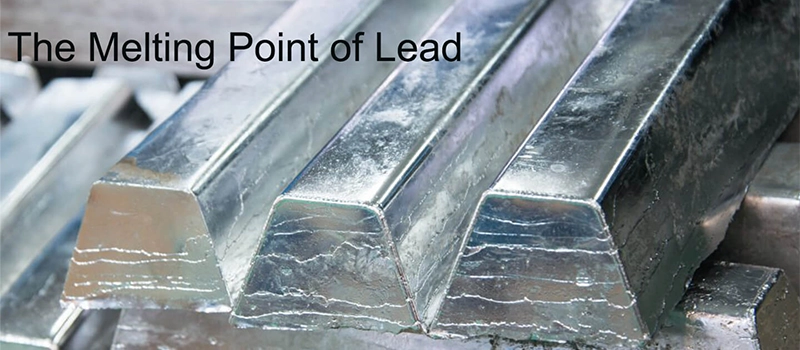
The melting point of lead is a key physical property that defines the temperature at which solid lead transitions into liquid form. For pure lead, this value is precisely 327.5°C (621.5°F or 600.65 K). This relatively low melting temperature makes lead distinct from many structural metals and allows it to be processed with lower energy input.
When engineers ask what is the melting point of lead, they are typically referring to this standard value under normal atmospheric pressure. Authoritative references such as the National Institute of Standards and Technology confirm this data and provide consistent thermophysical property tables used across global industries.
In practice, the melting point of lead metal is not just a fixed number but a baseline for process control. During heating, lead does not instantly transition from solid to liquid at exactly one moment. Instead, it begins softening slightly before reaching its defined melting temperature. This behavior is important when controlling heating rates in industrial furnaces.
Melting Point of Pure Lead Under Standard Conditions
The melting point of pure lead remains stable under standard atmospheric pressure (1 atm). This consistency is one reason why lead has historically been used in applications requiring predictable thermal behavior.
However, even small variations in purity can influence melting performance. Industrial-grade lead may contain trace elements such as antimony, tin, or copper. These impurities can slightly shift the effective melting range, especially in precision applications.
For this reason, when specifying materials, engineers often distinguish between:
- Pure lead (99.99%) – stable and well-defined melting point
- Commercial lead – may exhibit a narrow melting range
Understanding this distinction is essential when interpreting data sheets or comparing supplier specifications.
Melting Point of Lead in Different Units
The melting point of lead in celsius, fahrenheit, and kelvin must be clearly defined to avoid confusion in international engineering environments.
| Unit | Value |
|---|---|
| Celsius | 327.5°C |
| Fahrenheit | 621.5°F |
| Kelvin | 600.65 K |
In global manufacturing, temperature misinterpretation is a common source of error. For example, confusion between Celsius and Fahrenheit can lead to incorrect furnace settings, affecting material flow and final product quality.
Therefore, when addressing what is the melting point of lead in fahrenheit or melting point of lead in kelvin, it is critical to verify unit consistency across technical drawings, contracts, and process documentation.
Melting and Boiling Point of Lead
The melting and boiling point of lead define the thermal working range of the material.
- Melting point: 327.5°C
- Boiling point: 1749°C
The large difference between these two values provides a broad liquid phase window. This allows lead to remain stable in liquid form during controlled processing without rapid vaporization.
This characteristic is particularly useful in thermal operations where consistent fluidity is required over extended periods.
Melting Point of Lead Solder and Alloys
The melting point of lead solder differs significantly from pure lead due to the presence of alloying elements, most commonly tin. These alloys are engineered to lower the melting temperature and improve workability.
Below is a clear comparison of common tin-lead solder compositions:
| Alloy Type | Composition (Sn/Pb) | Melting Range (°C) | Notes |
|---|---|---|---|
| 50/50 Tin-Lead Solder | 50% Sn / 50% Pb | 183–216°C | Wide melting range |
| 60/40 Tin-Lead Solder | 60% Sn / 40% Pb | 183–190°C | Common industrial use |
| 60/40 (alt. notation) | 60/40 | 183–190°C | Same as above |
| 63/37 Eutectic Solder | 63% Sn / 37% Pb | 183°C | Sharp melting point |
| Lead-Rich Alloy | High Pb content | Higher than 327°C | Less common |
These values are essential when evaluating the melting point of tin lead solder or determining process temperatures for soldering operations.
Compared to the melting point of pure lead, these alloys melt at significantly lower temperatures. This reduction is not random. It is the result of phase interactions between tin and lead, which create eutectic behavior in specific compositions.
When selecting materials, engineers must carefully match alloy composition with required melting performance. Even small changes in tin content can shift the melting range and affect process consistency.
Factors Affecting the Melting Point of Lead
The melting point of lead is often presented as a fixed value. However, in real-world industrial and scientific conditions, several variables can influence how lead actually melts. Understanding these factors is essential for accurate thermal control, especially in casting, alloying, and metallurgical processes.
Purity of Lead
One of the most important factors affecting the melting point of lead is material purity. Pure lead exhibits a well-defined melting temperature of 327.5°C. However, even small amounts of impurities can alter this value.
Common impurity elements include:
- Tin (Sn)
- Antimony (Sb)
- Bismuth (Bi)
- Copper (Cu)
These elements interact with lead at the atomic level, disrupting its crystal structure. As a result, the melting point of lead metal may shift slightly or transition from a single temperature to a melting range.
For example:
- Tin generally lowers the melting temperature
- Antimony can increase hardness and slightly modify melting behavior
- Bismuth often reduces melting temperature significantly
In industrial supply chains, this is why specifications often distinguish between pure lead and commercial-grade lead. The difference directly affects thermal processing consistency.
Alloy Composition
The melting point of lead alloys is highly dependent on composition. When lead is combined with other metals, the resulting alloy no longer follows the melting characteristics of pure lead.
This is particularly evident in tin-lead systems. The interaction between these two metals creates eutectic behavior, where certain compositions melt at a lower and more precise temperature than either pure component.
For instance:
- Increasing tin content lowers the melting point
- Specific ratios create narrow melting ranges
- Non-eutectic alloys exhibit gradual melting over a temperature interval
This explains why the melting point of lead tin alloy varies widely depending on formulation. Engineers must carefully select compositions based on required thermal performance.
In addition to tin, other alloying elements such as calcium or silver may be introduced in specialized applications. Each addition modifies the melting characteristics in predictable but distinct ways.
Pressure Conditions
Pressure is another factor that can influence the melting point of lead, although its effect is typically small under standard industrial conditions.
At higher pressures, atomic structures become more compact. This generally leads to an increase in melting temperature. Therefore, the melting point of lead at 100 atm is slightly higher than at normal atmospheric pressure.
However, in most manufacturing environments, pressure variations are minimal. As a result, this factor is more relevant in scientific research or extreme-condition engineering rather than routine production.
Heating Rate
The rate at which heat is applied can affect how the melting point of lead is observed in practice. While the theoretical melting point remains constant, the apparent melting behavior can vary.
- Rapid heating may cause uneven temperature distribution
- Slow heating allows uniform phase transition
- Thermal gradients can delay complete melting
In industrial furnaces, controlled heating is essential to ensure that the entire volume of lead reaches the required temperature evenly. Otherwise, partially solid regions may remain, affecting flow and processing quality.
Oxidation and Surface Conditions
When lead is heated in air, oxidation occurs on its surface. This forms a thin oxide layer, typically lead oxide (PbO). While this layer does not significantly change the intrinsic melting point of lead, it can affect melting behavior.
Key impacts include:
- Surface oxidation can delay visible melting
- Oxide films may interfere with fluid flow
- Additional energy may be required to break the surface layer
In precision applications, protective atmospheres or fluxes are sometimes used to minimize oxidation and ensure consistent melting performance.
Physical Form of Lead
The physical form of lead also plays a role in how melting occurs. The melting point of lead shot, bulk lead, or finely divided lead particles remains theoretically the same, but their thermal response differs.
- Small particles heat faster due to higher surface area
- Large ingots require more time for internal heat transfer
- Irregular shapes can create uneven melting zones
This means that while the melting point of pure lead does not change, the time required to reach full liquid state can vary significantly depending on geometry.
Chemical State and Compounds
It is important to distinguish between metallic lead and its chemical compounds. Substances such as lead bromide (PbBr₂) or lead iodide (PbI₂) have entirely different thermal properties.
For example:
- The melting point of lead bromide is much higher than metallic lead
- The melting point of lead iodide also differs due to ionic bonding
These compounds do not behave like metallic lead because their atomic structures are fundamentally different. Confusing these values can lead to incorrect assumptions in material selection.
Applications of Lead in Various Industries
The melting point of lead plays a decisive role in determining where and how this metal is used across industries. Because the melting point of lead is relatively low compared to many structural metals, it enables efficient processing, controlled casting, and precise thermal management in multiple industrial scenarios.
Lead in Soldering Applications
One of the most well-known uses influenced by the melting point of lead is soldering. Lead-based solders are widely used due to their predictable melting behavior and excellent wettability.
In soldering processes, materials must melt quickly and solidify reliably without damaging surrounding components. The relatively low melting point of lead solder makes this possible.
Key advantages include:
- Lower processing temperatures
- Reduced thermal stress on components
- Smooth flow characteristics
- Strong metallurgical bonding
For example, the melting point of 60/40 tin lead solder (around 183–190°C) allows precise joining without exposing sensitive parts to excessive heat. This is especially critical in electronics manufacturing, where overheating can damage circuits.
Even in non-electronic applications such as plumbing and mechanical assembly, the controlled melting range of lead-based solder ensures consistency and repeatability.
Lead in Casting and Molding
The melting point of lead makes it highly suitable for casting operations. Because lead melts at a relatively low temperature, it can be processed using simpler equipment and lower energy input compared to metals like steel or aluminum.
In casting applications, this offers several benefits:
- Faster melting cycles
- Lower fuel or electricity consumption
- Reduced thermal wear on molds
- Improved fluidity during pouring
Lead’s fluidity in the molten state allows it to fill complex molds with high precision. This makes it ideal for producing detailed components, weights, and specialized industrial parts.
Additionally, the predictable melting point of lead metal ensures stable process parameters. Manufacturers can maintain consistent temperature control, reducing defects such as incomplete filling or surface irregularities.
Lead in Battery Manufacturing
Lead is a core material in battery production, particularly in lead-acid batteries. The melting point of lead influences how grids, plates, and internal structures are formed.
During manufacturing:
- Lead must be melted and cast into precise shapes
- Temperature control ensures uniform structure
- Alloying elements are introduced during the molten phase
Because the melting point of lead is relatively low, large-scale production becomes more energy-efficient. This is especially important in high-volume industries where cost control is critical.
The ability to repeatedly melt and recast lead without significant degradation also supports recycling processes, which are integral to battery manufacturing systems.
Lead in Radiation Shielding
Another important application influenced by the melting point of lead is radiation shielding. Lead is widely used to block X-rays and gamma rays due to its high density.
In this context, the melting point of lead allows:
- Easy casting into sheets or custom shapes
- Adaptation to complex shielding designs
- On-site fabrication when required
Because lead can be melted and reshaped without extreme temperatures, it is practical for producing shielding components in medical, nuclear, and industrial environments.
The ability to form lead into precise geometries ensures effective coverage and consistent protection.
Lead in Ammunition and Weight Applications
The melting point of lead also supports its use in ammunition, counterweights, and balancing systems. In these applications, manufacturing efficiency and material density are key considerations.
Lead’s low melting temperature allows:
- Rapid production cycles
- Easy molding into standardized shapes
- Minimal energy consumption during processing
For example, in producing lead shot or weights, molten lead can be formed into uniform shapes with high consistency. The controlled melting behavior ensures repeatable results across large production volumes.
Lead in Cable Sheathing and Industrial Components
In cable manufacturing, lead has historically been used as a protective sheath due to its corrosion resistance and flexibility. The melting point of lead enables efficient extrusion and forming processes.
During production:
- Lead is melted and formed around cable cores
- Temperature control ensures uniform coating thickness
- The material solidifies quickly after shaping
This process relies heavily on maintaining the correct melting temperature to achieve consistent product quality.
In addition, lead is used in various industrial components where sealing, vibration damping, or chemical resistance is required. The ability to process lead at relatively low temperatures simplifies manufacturing and reduces operational costs.
Role of Melting Point in Material Selection
When selecting materials for industrial use, the melting point of lead is often compared with alternatives. Its low melting temperature provides clear advantages in processes where:
- Energy efficiency is important
- Thermal sensitivity must be controlled
- Rapid production cycles are required
However, engineers must also consider mechanical properties, environmental factors, and regulatory constraints when choosing lead over other materials.
Environmental Impact of Lead and Regulations
The melting point of lead is closely linked to its processing, but the broader use of lead raises important environmental and regulatory considerations. Lead is a heavy metal with well-documented toxicity, and its lifecycle—from extraction to processing and disposal—must be carefully managed.
Environmental Impact of Lead
Lead can enter the environment through multiple pathways, including mining, smelting, manufacturing, and recycling processes. During thermal processing, especially when heated above the melting point of lead, there is a risk of releasing lead fumes or particulate matter into the air.
These emissions can have significant environmental consequences:
- Contamination of soil and water
- Accumulation in plants and animals
- Long-term persistence in ecosystems
Unlike many organic pollutants, lead does not degrade over time. It remains in the environment and can accumulate through biological systems. This makes control measures essential at every stage of handling and processing.
In industrial settings, improper control during melting operations may result in airborne lead particles. Therefore, maintaining controlled temperatures slightly above the melting point of lead—rather than excessive overheating—is critical for minimizing emissions.
Health Considerations in Lead Exposure
Lead exposure is associated with serious health risks. It can affect multiple systems in the human body, particularly the nervous system. Long-term exposure may result in:
- Neurological damage
- Developmental issues
- Cardiovascular effects
Workers involved in processes where lead is heated near or above its melting point are at higher risk if proper protective measures are not in place.
Because of these risks, industries that rely on the melting point of lead for manufacturing must implement strict occupational safety controls, including ventilation systems, protective equipment, and exposure monitoring.
Global Regulations on Lead Usage
Due to its environmental and health impacts, lead is subject to strict regulations in many regions. These regulations do not eliminate the use of lead entirely but control how it is used, processed, and disposed of.
Key regulatory frameworks include:
- RoHS (Restriction of Hazardous Substances Directive) in the European Union
- REACH (Registration, Evaluation, Authorisation and Restriction of Chemicals)
- Environmental and occupational standards from the U.S. Environmental Protection Agency
These regulations often limit the use of lead in consumer products, especially in electronics. For example, traditional lead-based solders have been restricted in many applications, leading to the development of lead-free alternatives.
However, exemptions still exist in industries where performance requirements cannot yet be met by substitutes.
Industrial Compliance and Certification
Manufacturers working with lead must ensure compliance with applicable regulations. This includes:
- Material traceability
- Chemical composition verification
- Controlled processing conditions
- Documentation and certification
Companies exporting to regulated markets must also appoint authorized representatives and maintain technical documentation to demonstrate compliance.
For example, formal certification systems and authorized representation agreements are often required for products entering the European market, ensuring that lead-containing products meet safety and regulatory standards.
Emission Control During Melting Processes
Controlling emissions during heating is essential when working near the melting point of lead. Industrial facilities typically implement:
- Local exhaust ventilation systems
- Air filtration units
- Temperature monitoring controls
By maintaining temperatures close to the required melting range and avoiding unnecessary overheating, manufacturers can reduce the formation of lead fumes.
This approach not only supports regulatory compliance but also improves operational efficiency by minimizing material loss.
Recycling and Sustainability Considerations
Lead is highly recyclable, and recycling plays a major role in reducing its environmental impact. The ability to remelt lead near its relatively low melting point allows for efficient recovery and reuse.
Recycling processes typically involve:
- Collection of lead-containing products
- Controlled melting and refining
- Removal of impurities
Because the melting point of lead is low compared to many other metals, recycling consumes less energy. This contributes to lower overall environmental impact when proper controls are in place.
Comparison of Lead’s Melting Point with Other Metals
The melting point of lead is relatively low compared to many commonly used industrial metals. This characteristic directly affects how lead is processed, what applications it is suitable for, and how it compares with alternative materials.
To clearly understand its position among metals, the following table provides a comparison of the melting point of lead vs aluminum and other widely used metals.
Melting Point Comparison Table
| Metal | Melting Point (°C) | Melting Point (°F) | Relative Level | Key Characteristics |
|---|---|---|---|---|
| Lead (Pb) | 327.5°C | 621.5°F | Low | Soft, dense, easy to melt |
| Aluminum (Al) | 660.3°C | 1220.5°F | Medium | Lightweight, corrosion-resistant |
| Zinc (Zn) | 419.5°C | 787.1°F | Low-Medium | Good fluidity, often used in die casting |
| Tin (Sn) | 231.9°C | 449.4°F | Very Low | Excellent for soldering |
| Copper (Cu) | 1085°C | 1985°F | High | Strong, excellent conductivity |
| Iron (Fe) | 1538°C | 2800°F | Very High | Structural strength, widely used |
| Steel (Alloy) | ~1370–1510°C | ~2500–2750°F | Very High | High strength, industrial backbone |
Conclusion: The Importance of Understanding Lead’s Melting Point
The melting point of lead is a fundamental parameter that defines its processing behavior, alloy performance, and industrial usability. Accurate understanding of the melting point of lead ensures better temperature control, consistent material quality, and more efficient manufacturing operations across various engineering applications.