Are you struggling to find a casting process that delivers accuracy without inflating your production budget? Does your current solution leave you choosing between cost and performance? Or maybe you’re just tired of inconsistent results and rising rework rates?
Water glass casting may be the answer. This process strikes a practical balance between surface finish, dimensional control, and cost—making it the preferred method for industrial buyers worldwide.
Let’s explore why this process continues to lead in mid-precision, mid-volume metal manufacturing.
🔹 What Is Water Glass Casting?
Water glass casting, also known as water glass investment casting or sodium silicate casting, is a highly effective metal casting process widely used for producing precision components at a relatively low cost. It’s particularly popular in the fields of agriculture, mining, automotive, and petrochemical equipment manufacturing—industries where balance between part accuracy and budget is crucial.
The term “water glass” refers to sodium silicate, a binding agent used to bond the mold materials. This is where water glass casting gets its name. In the process, a water glass binder is mixed with silica sand to form a hard shell mold that can withstand high temperatures. Once the shell is cured, molten metal is poured into it to form the final shape. After cooling, the mold is broken, and the final product is retrieved.
This method is sometimes confused with water glass sand casting, but there’s a subtle difference: water glass casting generally produces parts with much better surface quality and tighter tolerances, while sand casting is used more for rougher and larger parts. The beauty of the water glass process lies in its ability to deliver mid-level complexity parts without the high costs of precision casting techniques like silica sol.

In many cases, water glass casting serves as a bridge between traditional sand casting and high-end precision investment casting. It’s affordable, flexible, and suitable for both ferrous and non-ferrous alloys, including carbon steel, alloy steel, and stainless steel.
If you’re in the market for metal parts that don’t require the micro-precision of aerospace but still demand good repeatability and strength, cast water glass parts may be the most logical choice. It’s the go-to method for many OEMs in mechanical and industrial fields.
🔹 How Water Glass Casting Works: Step-by-Step Process
The water glass casting process is a variation of the investment casting method, but with a more cost-effective twist—thanks to the use of sodium silicate (commonly called water glass) as a binder. Below is a step-by-step breakdown of how this reliable and efficient process works from start to finish.
1. Pattern Creation
The process begins with the creation of a wax pattern that replicates the final shape of the metal part. This step is nearly identical to the traditional investment casting process.
2. Shell Building with Water Glass Binder
Here’s where the difference lies. Instead of using expensive ceramic slurry, the wax pattern is coated in silica sand mixed with water glass (sodium silicate). This forms a hardened outer shell through chemical reaction and air drying, rather than high-temperature sintering.
Multiple layers are applied—usually 3 to 5 coats—depending on the required strength of the mold. This is the foundation of the water glass investment casting process.
3. Dewaxing
Once the shell is cured, the wax inside is melted and removed—typically using steam or an autoclave. This leaves a cavity in the exact shape of the desired casting.
4. Mold Firing (Optional)
While not always necessary, the shell can be heated to enhance its strength and reduce moisture, helping improve the surface finish of the final part. However, this step is less intensive than what is used in silica sol casting.
5. Metal Pouring
Molten metal—such as carbon steel, alloy steel, stainless steel, or even copper—is poured into the hardened mold. This step must be carefully controlled to avoid shrinkage and defects.
6. Cooling and Shell Removal
After the casting cools and solidifies, the mold is broken apart to release the part. This can involve mechanical vibration, water blasting, or manual tools.
7. Cutting, Grinding, and Post-Processing
Excess materials like runners and gates are removed. Depending on the part’s application, it may undergo machining, heat treatment, or surface finishing such as polishing, shot blasting, or painting.
🔹 Water Glass vs Silica Sol Casting: Which Should You Choose?

In the world of metal casting, water glass casting and silica sol casting are two of the most widely used investment casting methods. While they share some similarities in general workflow, they differ greatly in precision, surface finish, cost, and application suitability. Choosing between the two depends entirely on your project’s specific needs.
📊 Process Comparison Table: Water Glass vs Silica Sol
| Category | Water Glass Casting | Silica Sol Casting |
|---|---|---|
| Main Binder | Sodium silicate (water glass) | Silica sol |
| Shell Hardening Method | Air drying or low-heat baking | High-temperature sintering |
| Surface Roughness (Ra) | 12.5–25 μm | 3.2–6.3 μm |
| Dimensional Tolerance | CT7–CT9 | CT4–CT6 |
| Suitable Part Complexity | Medium complexity | High complexity / precision parts |
| Shell Strength | Moderate | Very high |
| Material Compatibility | Carbon steel, alloy steel, stainless | Stainless, heat-resistant alloys, high-alloy steel |
| Production Cost | ★★☆ (Lower) | ★★★★☆ (Higher) |
| Batch Production Suitability | Medium | Low to medium |
| Typical Applications | Construction, mining, agriculture, auto | Aerospace, instrumentation, medical |
| Surface Post-processing | Often required (grinding, polishing) | Often unnecessary |
🔹 Benefits of Water Glass Casting in Industrial Applications
The water glass casting process offers a compelling set of advantages for manufacturers and buyers alike. It’s particularly valuable in industrial sectors where performance, cost-efficiency, and medium-level precision are required—without overengineering or overpaying.
Here are the key benefits of water glass investment casting and why so many industrial operations choose it over other methods:
✅ 1. Cost-Effective for Mid-Complexity Parts
Among all investment casting techniques, water glass casting stands out for its low tooling and molding costs. Because it uses sodium silicate as the binder and does not require expensive high-temperature ceramic sintering, overall production costs are significantly lower.
For buyers managing tight budgets or large-volume orders, this process can reduce unit cost by 20–40% compared to silica sol casting—especially in sectors like construction equipment, machinery parts, and general industrial components.
✅ 2. Excellent Surface Finish (for the Price)
While not as fine as silica sol, the surface roughness of water glass cast parts usually falls within the range of Ra 12.5–25 μm, which is smooth enough for most mechanical applications. For many components, this eliminates the need for extensive surface grinding or machining—saving both time and cost during post-processing.
If surface appearance is not critical but functionality and structure are, this method delivers solid performance with minimal rework.
✅ 3. Wide Range of Compatible Materials
The water glass manufacturing process supports a wide variety of metals, including:
- Carbon steel
- Low alloy steel
- Stainless steel
- Heat-resistant alloys
This flexibility means you can produce parts tailored to the working conditions—whether it’s high strength, corrosion resistance, or weldability that you need.
✅ 4. Shorter Lead Times
Thanks to faster mold drying cycles (air-drying or low-heat baking instead of high-temp sintering), production timelines for water glass castings are typically shorter. This is crucial for buyers who need quick turnaround to match their equipment manufacturing schedules.
On average, water glass casting can save 3–5 days in the molding phase compared to silica sol—an edge in just-in-time (JIT) procurement.
✅ 5. Suitable for Medium Batch Production
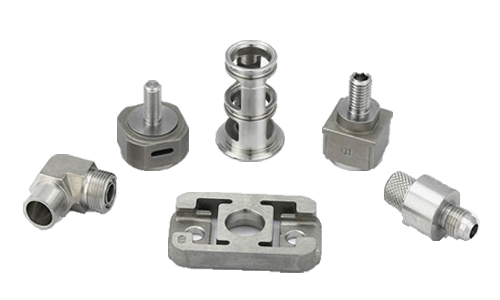
If you need hundreds to thousands of identical parts but don’t want to invest in expensive die casting or CNC machining, water glass casting hits the sweet spot. It’s ideal for medium-volume orders that require consistency, quality, and value.
You get reliable quality without the overkill of ultra-precision processes.
✅ 6. Balanced Mechanical Properties
Water glass cast parts generally exhibit good:
- Tensile strength
- Impact resistance
- Dimensional repeatability
This makes them suitable for demanding applications like gear housings, brackets, agricultural equipment, and valve bodies, where strength matters more than micrometric precision.
🔹 Best Materials and Applications for Water Glass Casting
One of the biggest strengths of the water glass casting process lies in its ability to support a wide variety of materials—each aligned with different industrial applications. This makes it a highly flexible solution for companies across sectors like construction, agriculture, mining, automotive, and petrochemical equipment manufacturing.
Here’s how the material capabilities of this process directly serve the real-world needs of major industries:
✅ Carbon Steel – Strong and Economical
Material Overview:
Carbon steel is the most common material used in water glass casting due to its cost-effectiveness, high tensile strength, and ease of machining.
Used In:
- Construction machinery (e.g., brackets, supports)
- Agricultural equipment (e.g., tiller arms, chassis parts)
- Mining components (e.g., gear housings, anchor plates)
Why It’s Ideal:
- Excellent strength for structural applications
- Affordable for large-volume casting
- Compatible with heat treatment for improved hardness
✅ Alloy Steel – For Heavy Loads and Tough Environments
Material Overview:
Alloy steel contains elements like chromium, molybdenum, or nickel for enhanced wear resistance and toughness.
Used In:
- Auto parts (e.g., suspension components, mounts)
- Earthmoving equipment (e.g., hammer housings, loader joints)
- High-pressure valve bodies
Why It’s Ideal:
- Stronger and more fatigue-resistant
- Great for parts that undergo mechanical stress or impact
- Allows precise post-casting machining
✅ Stainless Steel – Corrosion Resistance in Critical Environments
Material Overview:
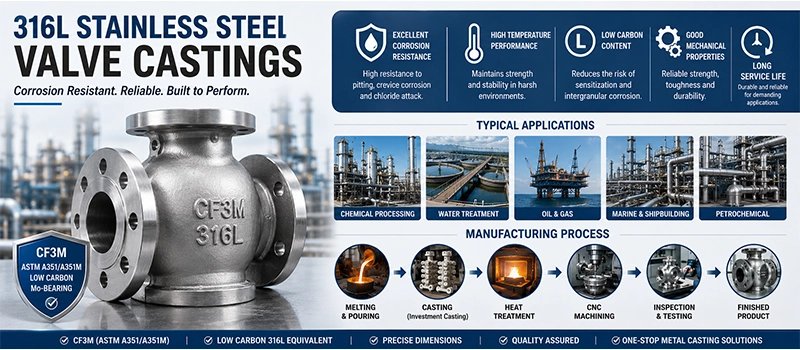
Grades like 304 and 316 stainless steel are frequently used in cast water glass applications where moisture, chemicals, or weather exposure are concerns.
Used In:
- Petrochemical parts (e.g., flanges, pump housings)
- Food-grade machinery
- Water treatment and chemical systems
Why It’s Ideal:
- High resistance to rust and corrosion
- Strong and aesthetically clean surface
- Good for hygienic or outdoor uses
✅ Heat-Resistant Alloys – For Elevated Temperature Applications
Material Overview:
While not always the first choice for water glass casting due to mold limitations, some heat-resistant steels and alloys can be used for non-complex parts.
Used In:
- Burner assemblies
- Furnace supports
- Power plant hardware
Why It’s Ideal:
- Withstands thermal stress
- Performs well in harsh, high-temp environments

🧩 Matching Materials to Real-World Needs
By combining cost-effective materials with a simplified mold process, water glass investment casting allows manufacturers to quickly scale production of mechanical-grade parts—without compromising structural reliability.
Whether it’s:
- A carbon steel gearbox housing for a tractor
- A stainless steel valve body for a chemical plant
- Or an alloy steel bracket for construction equipment
—water glass casting delivers.
🔹 Conclusion
The water glass casting process remains one of the most reliable, cost-effective, and versatile casting solutions in today’s manufacturing landscape. It strikes the ideal balance between precision and affordability, making it a go-to method for industries that demand strong, functional components without overpaying for ultra-high tolerances.
Whether you’re producing agricultural parts, mining machinery, automotive brackets, or industrial valve bodies, this method offers the flexibility to choose from carbon steel, alloy steel, stainless steel, and more—all while keeping your production efficient and scalable.
If you’re seeking a casting solution that delivers practical performance without the premium price, water glass casting is not just an option—it’s the smart choice.