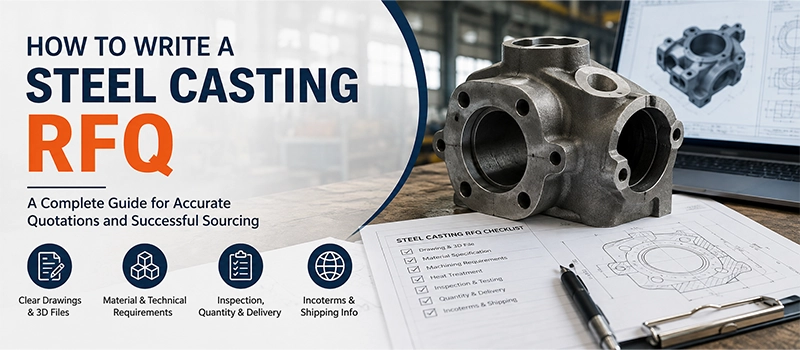
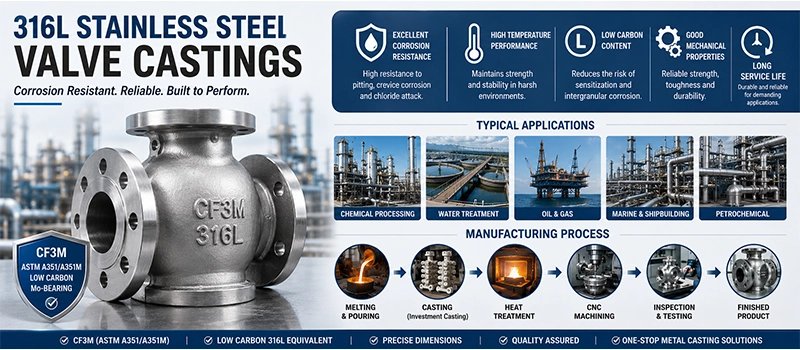
Marine grade steel castings are designed to withstand one of the world’s harshest operating environments. Constant exposure to seawater, salt spray, heavy loads, and changing temperatures places extreme demands on every component used in marine and offshore applications. Choosing the wrong casting material or manufacturing process can lead to premature corrosion, costly repairs, and unexpected downtime. This guide explains the common mistakes buyers should avoid and provides practical insights into materials, manufacturing methods, quality standards, and supplier selection to help you make informed purchasing decisions.
What Are Marine Grade Steel Castings?
Marine grade steel castings are steel components specifically designed for use in marine and offshore environments where strength, durability, and long-term reliability are essential. Unlike general-purpose steel castings, these components are manufactured to perform under conditions that involve continuous exposure to seawater, salt-laden air, moisture, and heavy mechanical loads. Their primary purpose is to maintain structural integrity and dependable performance throughout an extended service life, even in demanding operating environments.
The term “marine grade” does not describe a single type of steel or a specific alloy. Instead, it refers to steel castings that possess the characteristics required for marine service. These characteristics include excellent mechanical strength, good toughness, reliable corrosion resistance, and the ability to remain stable under dynamic loading conditions. Whether installed above or below the waterline, marine grade steel castings are expected to operate safely while resisting the deterioration commonly caused by harsh marine conditions.
Steel casting is a manufacturing method that produces components by pouring molten steel into a mold, allowing it to solidify into a desired shape. This process enables manufacturers to create complex geometries that would be difficult or uneconomical to produce through machining or forging alone. As a result, steel castings are widely selected for components that require intricate designs, varying wall thicknesses, or integrated structural features without sacrificing mechanical performance.
Marine grade steel castings are commonly found in commercial vessels, offshore structures, port facilities, dredging equipment, marine transportation systems, and other applications operating in coastal or offshore environments. These components often serve as critical load-bearing parts where failure is not an option. Because marine equipment is frequently expected to operate continuously for many years with limited maintenance opportunities, the reliability of every casting directly affects operational safety and equipment availability.
Another important characteristic of marine grade steel castings is their long service life. Marine projects typically involve significant investments, and replacing large structural components can be both expensive and time-consuming. For this reason, engineers and equipment manufacturers place considerable emphasis on selecting castings that can maintain their performance throughout years of operation while minimizing maintenance requirements and lifecycle costs.
Although marine grade steel castings are used across a wide range of industries, they all share the same objective: providing dependable structural performance in environments where conventional steel components may experience accelerated degradation. Their ability to combine strength, durability, and design flexibility has made them an essential solution for modern marine engineering and offshore infrastructure.
Rather than representing a single product category, marine grade steel castings encompass a broad range of engineered components designed to meet the demanding requirements of the marine industry. Understanding what defines a marine grade casting is the first step toward selecting components capable of delivering safe, reliable, and long-lasting performance in challenging marine environments.
Why Marine Environments Require Special Steel Castings
Marine environments are among the most demanding conditions for metal components. Unlike equipment used on land, marine machinery and structures are exposed to a combination of seawater, salt-laden air, constant moisture, changing temperatures, and continuous mechanical loading. These factors do not act independently. Instead, they interact over time, accelerating material degradation and increasing the risk of unexpected failures. As a result, steel castings designed for marine service must meet much higher performance requirements than those intended for ordinary industrial applications.
One of the greatest challenges is the presence of seawater. Unlike freshwater, seawater contains a high concentration of dissolved salts, particularly chlorides, which significantly accelerate the corrosion process. When steel is continuously exposed to seawater, electrochemical reactions occur on the metal surface, gradually consuming the material. Even components that are not permanently submerged can experience severe corrosion because salt particles carried by sea air settle on exposed surfaces and attract moisture from the atmosphere. This creates a continuously wet environment that promotes corrosion throughout the service life of the equipment.
Humidity is another factor that cannot be overlooked. Marine environments often maintain high levels of relative humidity throughout the year, especially in coastal regions and enclosed engine rooms. Moisture trapped on steel surfaces creates ideal conditions for oxidation. Repeated wet and dry cycles further accelerate deterioration by breaking down protective oxide films and exposing fresh metal to the surrounding environment. Over time, this process can reduce structural integrity and increase maintenance requirements if the material is not properly selected.
Mechanical loading in marine applications is equally demanding. Ships, offshore platforms, and marine equipment rarely operate under static conditions. Waves, currents, tides, wind, and engine vibration generate continuous cyclic stresses that are transmitted through structural components. Unlike a single heavy load, repeated loading over thousands or even millions of cycles can gradually weaken a component through fatigue. Small defects that appear insignificant during initial inspection may slowly develop into larger cracks under repeated stress, making fatigue resistance a critical consideration for marine steel castings.
Impact loading is also common in marine operations. Ships may encounter rough seas, floating debris, docking collisions, or heavy cargo handling operations. Offshore equipment can experience sudden loading caused by waves, lifting operations, or unexpected environmental forces. These events require steel castings to possess sufficient toughness so that they can absorb impact energy without fracturing. Components that are strong but lack adequate toughness may become vulnerable to brittle failure, particularly in cold operating conditions.
Temperature variations further complicate the operating environment. Marine equipment may experience intense sunlight during the day, cooler temperatures at night, and even freezing conditions in certain regions. Components installed in engine rooms or near exhaust systems are subjected to elevated temperatures, while those operating in northern waters may face extremely low temperatures. Continuous thermal expansion and contraction can contribute to material fatigue, especially when combined with mechanical loading and corrosive environments.
Marine equipment is also expected to operate continuously for extended periods with limited opportunities for maintenance. Unlike machinery in a factory, which can often be shut down for routine repairs, many marine systems remain in service for weeks or months before scheduled maintenance is possible. Offshore platforms and large commercial vessels may operate in remote locations where replacing damaged components is expensive, time-consuming, and logistically challenging. For this reason, reliability is not simply a desirable characteristic—it is an operational necessity.
Economic considerations make durability even more important. A failed casting rarely affects only the damaged component itself. Equipment downtime, emergency repairs, replacement parts, vessel delays, and lost productivity can multiply the overall cost of failure. In critical applications, a single component failure may interrupt an entire operation or require specialized repair procedures that significantly increase project expenses. Selecting steel castings capable of withstanding marine conditions helps reduce lifecycle costs while improving operational reliability.
For these reasons, the marine industry places far greater demands on steel castings than most other industrial sectors. Components used in marine service must maintain their mechanical performance while resisting the combined effects of corrosion, fatigue, impact, humidity, and environmental exposure over many years of operation. Meeting these challenges is what distinguishes marine grade steel castings from conventional steel castings used in less demanding environments.
Common Materials Used for Marine Grade Steel Castings
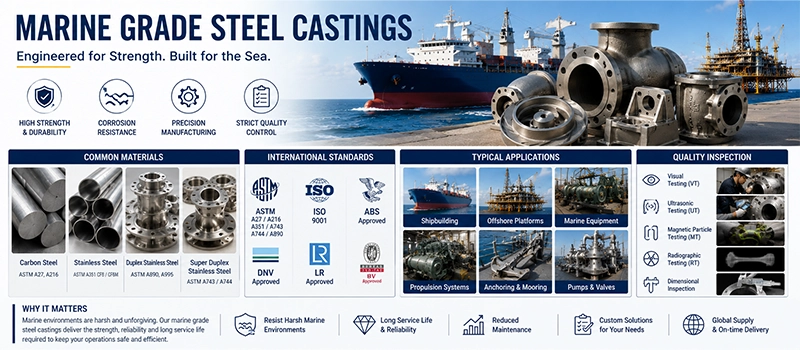
Different applications require different materials for marine grade steel castings. The ideal choice depends on factors such as corrosion exposure, mechanical strength, operating temperature, expected service life, and project budget. While no single material is suitable for every marine application, the following materials are the most commonly used for manufacturing marine grade steel castings.
| Material | Strength | Corrosion Resistance | Typical Applications | Relative Cost |
|---|---|---|---|---|
| Carbon Steel | High | Fair | Deck equipment, structural components, anchor parts | Low |
| Low-Alloy Steel | Very High | Good | Heavy-duty machinery, offshore structures | Medium |
| Stainless Steel (CF8/CF8M) | High | Excellent | Pumps, valves, pipe fittings, marine hardware | Medium-High |
| Duplex Stainless Steel | Very High | Outstanding | Offshore platforms, seawater systems, subsea equipment | High |
| Nickel-Based Alloys | Excellent | Exceptional | Offshore oil & gas, chemical processing, extreme marine environments | Very High |
Selecting the right material for marine grade steel castings is always a balance between performance and cost. Carbon steel remains the most economical option for general structural applications, while stainless steel and duplex stainless steel are preferred where corrosion resistance is critical. Nickel-based alloys are typically reserved for the harshest offshore environments, where long service life outweighs the higher material cost.
International Standards for Marine Grade Steel Castings
Marine grade steel castings are commonly manufactured according to internationally recognized material and quality standards. The specific standard depends on the project requirements, destination market, and industry sector. Understanding these standards helps buyers communicate technical requirements more accurately and ensures compatibility with shipbuilding and offshore engineering projects.
ASTM Standards
ASTM standards are widely used in North America and many international marine projects. Common specifications for marine grade steel castings include ASTM A27 for carbon steel castings, ASTM A148 for high-strength structural steel castings, ASTM A216 for pressure-containing carbon steel castings, ASTM A351 for stainless steel castings, and ASTM A743/A744 for corrosion-resistant stainless steel castings. These standards define chemical composition, mechanical properties, heat treatment, and testing requirements.
EN and ISO Standards
European manufacturers often produce marine grade steel castings in accordance with EN and ISO standards. EN standards establish material grades and mechanical requirements, while ISO standards provide internationally recognized quality management and testing guidelines. These standards are widely accepted throughout Europe and many global marine engineering projects.
Classification Society Standards
In addition to material specifications, many marine grade steel castings must also be approved by classification societies before they can be installed on ships or offshore structures. Depending on the project, buyers may require certification from organizations such as:
- American Bureau of Shipping (ABS)
- DNV
- Lloyd’s Register (LR)
- Bureau Veritas (BV)
- ClassNK
- RINA
- China Classification Society (CCS)
These organizations verify that marine grade steel castings meet the technical requirements for marine and offshore service through material review, inspection, and certification.
When purchasing marine grade steel castings, buyers should confirm not only the required material specification but also whether classification society certification is mandatory for the project. Selecting the correct standard at the beginning of the procurement process helps avoid unnecessary production delays and ensures compliance with customer or project requirements.
Manufacturing Process of Marine Grade Steel Castings
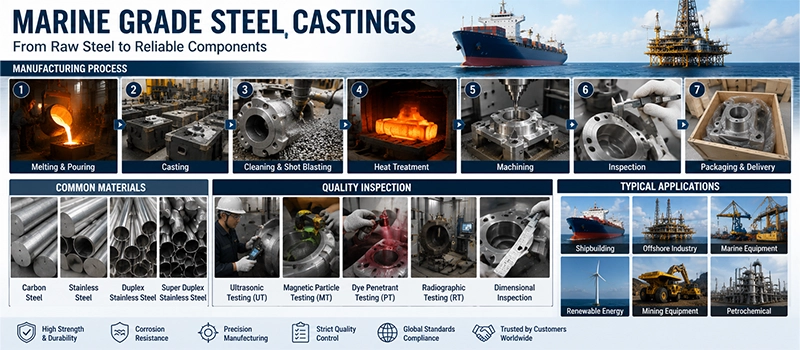
The manufacturing process of marine grade steel castings plays a crucial role in determining product quality, mechanical performance, and service life. From raw material selection to final inspection, every production step must be carefully controlled to ensure the casting can withstand demanding marine environments.
Pattern and Mold Preparation
The production of marine grade steel castings begins with pattern and mold preparation. Patterns are manufactured according to engineering drawings, while molds are designed to achieve accurate dimensions and proper metal flow. A well-designed mold helps reduce casting defects and ensures the final component meets dimensional requirements.
Steel Melting and Chemical Composition Control
Raw materials are melted in electric induction furnaces or electric arc furnaces under controlled conditions. During melting, the chemical composition is carefully monitored to ensure the steel complies with the specified material grade. Controlling impurities such as sulfur and phosphorus is essential because they can negatively affect the strength and toughness of marine grade steel castings.
Pouring and Solidification
Once the molten steel reaches the required temperature, it is poured into the prepared molds. Proper control of pouring temperature, filling speed, and feeding systems helps minimize defects such as shrinkage cavities, porosity, inclusions, and cold shuts. Stable solidification is especially important for large marine grade steel castings used in critical structural applications.
Heat Treatment
Heat treatment is performed to optimize the mechanical properties of marine grade steel castings. Depending on the material specification, the casting may undergo normalizing, quenching and tempering, or solution treatment. Proper heat treatment improves strength, toughness, hardness, and dimensional stability while reducing internal stress generated during casting.
Machining
After heat treatment, marine grade steel castings are machined to achieve the required dimensions and surface finish. CNC machining is commonly used for precision features such as mounting surfaces, holes, sealing faces, and threaded connections. Accurate machining ensures that the casting can be assembled correctly with other marine equipment.
Quality Inspection
Every batch of marine grade steel castings undergoes quality inspection before shipment. Typical inspections include dimensional measurement, chemical composition analysis, mechanical property testing, and non-destructive testing. These inspections verify that each casting meets the required specifications and is suitable for marine service.
The manufacturing process of marine grade steel castings involves far more than simply pouring molten steel into a mold. Consistent process control at every stage is essential to producing castings that deliver reliable performance, long service life, and dependable quality in demanding marine applications.
Applications of Marine Grade Steel Castings
Marine grade steel castings are used across a wide range of marine and offshore industries where components must withstand harsh operating conditions while maintaining long-term structural reliability. Their excellent strength, durability, and design flexibility make them suitable for both commercial and industrial marine applications.
Shipbuilding
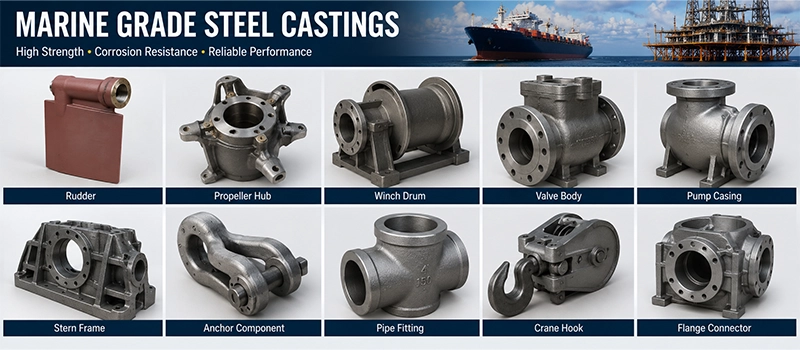
Shipbuilding is one of the largest markets for marine grade steel castings. These castings are used in both commercial and military vessels for critical structural and mechanical components. Common applications include rudders, rudder carriers, propeller hubs, stern frames, anchor components, winches, deck fittings, and engine brackets. Because these parts are subjected to continuous loading and seawater exposure, marine grade steel castings are widely selected for their durability and long service life.
Offshore Oil and Gas
Offshore platforms operate in some of the world’s harshest environments. Marine grade steel castings are commonly used in drilling equipment, subsea systems, lifting devices, valve bodies, pump housings, connector assemblies, and structural support components. These applications require castings capable of maintaining reliable performance under high loads, corrosive seawater, and continuous offshore operation.
Marine Pumps and Valves
Marine pumps and valves rely heavily on marine grade steel castings because these components are in constant contact with seawater, ballast water, cooling systems, or process fluids. Pump casings, impellers, valve bodies, valve covers, and pipe fittings are frequently manufactured as steel castings to achieve complex geometries while maintaining excellent mechanical properties.
Port and Harbor Equipment
Ports and harbors utilize marine grade steel castings in cranes, mooring systems, dock machinery, lifting equipment, dredging machinery, and cargo handling systems. These components operate outdoors throughout the year and must withstand salt spray, humidity, heavy loads, and frequent operation.
Marine Propulsion Systems
Reliable propulsion is essential for every vessel. Marine grade steel castings are widely used in propulsion systems for propeller hubs, shaft brackets, stern tube components, coupling housings, and transmission-related parts. High dimensional accuracy and mechanical strength ensure safe and efficient power transmission during long-term operation.
Marine Renewable Energy
As offshore renewable energy continues to grow, marine grade steel castings are increasingly used in offshore wind farms, tidal energy equipment, and wave energy systems. Foundation connectors, gearbox housings, structural nodes, and mechanical support components must withstand continuous environmental loading while maintaining long service lives with minimal maintenance.
Marine grade steel castings have become an essential manufacturing solution for modern marine engineering. Their ability to produce complex components with high strength and long-term durability makes them suitable for applications ranging from commercial shipbuilding to offshore energy and coastal infrastructure.
Quality Inspection of Marine Grade Steel Castings
Quality inspection is an essential step in the production of marine grade steel castings. Since these components are often used in critical marine and offshore applications, every casting should be inspected before delivery to ensure it meets the required specifications. A comprehensive inspection process helps identify potential defects, verify material properties, and improve product reliability.
Chemical Composition Analysis
The first inspection focuses on verifying the chemical composition of marine grade steel castings. Samples are analyzed using spectrometers to confirm that the levels of carbon, chromium, nickel, molybdenum, and other alloying elements comply with the specified material grade. Correct chemical composition is the foundation for achieving the required mechanical properties and corrosion resistance.
Mechanical Property Testing
Mechanical testing confirms whether marine grade steel castings meet the required strength and toughness. Common tests include tensile strength, yield strength, elongation, hardness, and impact testing. The required values vary according to the material specification and the intended marine application.
Dimensional Inspection
Dimensional inspection verifies that marine grade steel castings conform to the engineering drawings and machining tolerances. Depending on the component’s complexity, manufacturers may use calipers, coordinate measuring machines (CMM), or 3D scanning equipment to inspect critical dimensions before shipment.
Non-Destructive Testing (NDT)
Non-destructive testing is widely used to detect internal or surface defects without damaging the casting. The most common inspection methods include:
- Visual Testing (VT) – Detects obvious surface defects.
- Magnetic Particle Testing (MT) – Identifies surface and near-surface cracks in ferromagnetic materials.
- Dye Penetrant Testing (PT) – Reveals surface-breaking defects in non-magnetic materials.
- Ultrasonic Testing (UT) – Detects internal discontinuities such as shrinkage cavities and cracks.
- Radiographic Testing (RT) – Uses X-rays or gamma rays to identify internal defects that cannot be seen from the surface.
The appropriate NDT method depends on the material, casting geometry, and project specifications.
Material Certification
In addition to physical inspections, buyers often require documentation for marine grade steel castings. Typical documents include material certificates, heat treatment records, mechanical test reports, dimensional inspection reports, NDT reports, and third-party inspection certificates when required. Complete documentation improves traceability and demonstrates compliance with project specifications.
A comprehensive inspection program helps ensure that marine grade steel castings meet quality requirements before they enter service. For critical marine applications, selecting a manufacturer with rigorous inspection procedures and complete quality documentation is just as important as selecting the right material or manufacturing process.
How to Choose a Reliable Marine Grade Steel Castings Manufacturer
Choosing the right manufacturer is just as important as selecting the right material for marine grade steel castings. A qualified supplier should not only produce components that meet technical specifications but also provide consistent quality, reliable delivery, and professional engineering support throughout the project.
Evaluate Manufacturing Capabilities
A reliable manufacturer should have complete in-house production capabilities, including pattern making, steel casting, heat treatment, machining, and quality inspection. Managing these processes under one roof helps maintain consistent quality and shortens production lead times.
It is also important to confirm whether the manufacturer has experience producing marine grade steel castings with different materials, sizes, and levels of complexity. An experienced supplier is more likely to identify potential manufacturing issues before production begins.
Verify Quality Control
Quality control should extend throughout the entire manufacturing process. Buyers should look for suppliers that provide material certificates, mechanical testing reports, dimensional inspection records, and non-destructive testing reports. For projects that require classification society approval, the manufacturer should also be able to coordinate third-party inspections and provide the necessary certification documents.
Review Engineering Support
Marine projects often require custom components rather than standard products. A manufacturer with an experienced engineering team can review drawings, recommend suitable materials, optimize casting designs, and improve manufacturability before production starts. This reduces technical risks while helping control production costs.
Consider Delivery and Communication
Reliable delivery is critical for shipbuilding and offshore projects, where production schedules are tightly managed. An experienced manufacturer should provide clear production timelines, regular project updates, and responsive communication throughout the manufacturing process.
Why Work with Dalian ZhongSheng Metal Products?
Dalian ZhongSheng Metal Products is a professional manufacturer of custom marine grade steel castings with extensive experience serving customers in the marine, offshore, construction, mining, and industrial equipment industries.
The company offers a complete manufacturing solution, including steel casting, precision machining, heat treatment, surface finishing, and comprehensive quality inspection. This integrated production capability allows customers to source finished components from a single supplier, simplifying project management and ensuring consistent product quality.
Every marine grade steel casting is manufactured according to customer drawings and specifications. From material selection and process planning to final inspection, each production stage is carefully controlled to ensure reliable performance and dimensional accuracy. Quality documentation, including material certificates, mechanical testing reports, and non-destructive testing reports, can be provided upon request.

With years of export experience, Dalian ZhongSheng Metal Products understands the quality expectations and documentation requirements of international customers. The company works closely with clients throughout the project, providing technical support, transparent communication, and on-time delivery to help ensure every order progresses smoothly from quotation to shipment.
Whether the project requires a prototype, small production run, or large-volume manufacturing, Dalian ZhongSheng Metal Products is committed to delivering high-quality marine grade steel castings that combine competitive pricing, dependable quality, and responsive customer service.
If you are looking for a trusted manufacturing partner for custom marine grade steel castings, our engineering team is ready to review your drawings, recommend suitable manufacturing solutions, and provide a competitive quotation for your project.