Die casting heat treatment processes play a critical role in determining the final performance, reliability, and cost efficiency of die-cast components. Unlike conventional castings, die casting involves rapid solidification and often introduces internal porosity, making heat treatment both highly beneficial and technically challenging. Selecting the right heat treatment approach is not simply a matter of improving strength—it directly impacts defect formation, dimensional stability, and long-term durability.
In modern manufacturing, understanding different types of die casting heat treatment processes is essential for engineers and buyers aiming to balance performance and risk. This guide provides a proven and practical overview of the most commonly used heat treatment types, their mechanisms, advantages, and limitations, helping readers make informed and cost-effective decisions.
Introduction to Die Casting Heat Treatment Processes
Die casting heat treatment processes play a fundamental role in improving the performance and reliability of die-cast components. In modern manufacturing, die casting is widely used for producing complex parts with high efficiency and excellent surface quality. However, the unique characteristics of this process, including rapid solidification and high-pressure metal injection, also introduce challenges such as internal porosity, residual stress, and microstructural inconsistency. These factors make heat treatment both valuable and technically demanding in die casting applications.
Unlike traditional casting methods, die casting produces parts with a dense outer layer but often contains trapped gases within the internal structure. When subjected to thermal cycles, these internal conditions can respond unpredictably. As a result, die casting heat treatment processes require stricter control over temperature, time, and cooling conditions compared to other manufacturing methods. Improper control may lead to defects such as surface blistering, dimensional distortion, or even cracking, which directly affect product quality and usability.

The primary objective of die casting heat treatment processes is to optimize material properties while maintaining structural integrity. This includes enhancing mechanical strength, improving dimensional stability, and relieving internal stress generated during solidification. However, achieving these goals is not always straightforward. The presence of porosity means that certain heat treatment methods may introduce more risks than benefits if not carefully selected and controlled.
In practical applications, die casting heat treatment processes are highly dependent on factors such as alloy composition, casting quality, and final performance requirements. Not all die-cast parts require the same level of heat treatment. Some components benefit from multi-stage processes to achieve higher strength, while others may only require minimal treatment to ensure dimensional accuracy. This variability highlights the importance of understanding different heat treatment approaches before making process decisions.
Another critical consideration is the relationship between casting quality and heat treatment effectiveness. Heat treatment cannot fully eliminate defects introduced during the casting stage. In some cases, it may even amplify existing issues, particularly those related to gas porosity. Therefore, successful implementation of die casting heat treatment processes relies on a comprehensive approach that integrates both casting and post-processing control.
Overall, die casting heat treatment processes represent a key step in bridging the gap between raw casting and final application performance. A clear understanding of their role, limitations, and impact is essential for achieving consistent quality and cost efficiency. The following sections will focus on the different types of die casting heat treatment processes, providing a detailed analysis of their mechanisms, advantages, and practical applications.
Types of Die Casting Heat Treatment Processes
Die casting heat treatment processes include a range of thermal methods designed to modify the microstructure and performance of die-cast components. Unlike conventional materials, the selection of these processes must consider internal porosity, rapid solidification characteristics, and the risk of defect amplification. Different types of die casting heat treatment processes are not interchangeable. Each method directly influences mechanical strength, dimensional stability, defect formation, and overall production cost. Therefore, understanding the classification and characteristics of these processes is essential before making any engineering or purchasing decisions.
Classification of Die Casting Heat Treatment Processes
Die casting heat treatment processes can be broadly classified based on their functional objectives and process complexity. From a functional perspective, they are typically divided into strengthening processes, stress relief processes, and stabilization processes. Strengthening processes aim to improve mechanical properties through microstructural transformation, particularly through precipitation hardening mechanisms. Stress relief processes focus on reducing internal stresses generated during rapid cooling and solidification, which is especially important for maintaining dimensional accuracy. Stabilization processes are used to ensure consistent performance over time, particularly for components subjected to machining or thermal cycling.
From a process complexity standpoint, die casting heat treatment processes can also be categorized into single-stage and multi-stage treatments. Single-stage processes, such as annealing or simple stress relief, involve relatively low temperatures and shorter cycles, making them more stable and cost-effective. In contrast, multi-stage processes, such as T6 heat treatment, combine solution treatment, quenching, and aging to achieve higher strength but require much stricter control and carry higher risks.
It is important to emphasize that die casting is fundamentally different from other casting methods. The presence of trapped gases and non-uniform internal structures means that heat treatment strategies used for wrought or sand-cast materials cannot be directly applied. This distinction is critical when selecting appropriate die casting heat treatment processes.
Solution Heat Treatment
Solution heat treatment is a key component of many die casting heat treatment processes, particularly those aimed at improving mechanical strength. The process involves heating the alloy to a temperature at which soluble phases dissolve into the matrix, forming a uniform solid solution. For aluminum die casting alloys, this temperature typically ranges between 480°C and 540°C, depending on the specific composition.
The effectiveness of solution heat treatment lies in its ability to redistribute alloying elements such as silicon, magnesium, and copper. This creates the necessary conditions for subsequent precipitation hardening during aging. However, in die casting applications, this process also introduces significant challenges. Internal gas porosity, which is common in die-cast parts, tends to expand at elevated temperatures. This expansion can lead to surface blistering and internal structural damage, especially if the process parameters are not carefully controlled.
To mitigate these risks, manufacturers often adjust traditional solution treatment parameters. Lower temperatures combined with longer holding times are commonly used to reduce thermal stress and minimize porosity expansion. In addition, gradual heating methods can help improve process stability. Despite these challenges, solution heat treatment remains an essential step in advanced die casting heat treatment processes, particularly when high strength is required.

Quenching Process
Quenching is a critical stage in die casting heat treatment processes that follows solution treatment. Its primary purpose is to rapidly cool the material and retain the supersaturated solid solution formed during heating. The cooling rate plays a decisive role in determining the final microstructure and mechanical properties.
Common quenching media include water, air, and polymer-based solutions. Water quenching provides the fastest cooling rate and is often used to maximize strength. However, it also introduces significant thermal stress, which can lead to distortion or cracking, especially in thin-walled or complex components. Air cooling offers a more controlled cooling rate but may not achieve the same level of strengthening. Polymer quenching solutions provide a balance between these extremes, allowing for adjustable cooling rates depending on concentration and temperature.
In die casting applications, quenching must be carefully controlled due to the presence of internal defects. Rapid cooling can exacerbate stress concentrations around pores, increasing the likelihood of crack formation. Therefore, selecting the appropriate quenching medium and controlling transfer time between heating and cooling stages are essential aspects of optimizing die casting heat treatment processes.
Aging Treatment (Natural and Artificial)
Aging treatment is used to strengthen die-cast alloys through controlled precipitation of secondary phases. This process is a fundamental part of many die casting heat treatment processes, particularly those designed to enhance strength after solution treatment and quenching.
There are two main types of aging: natural aging and artificial aging. Natural aging occurs at room temperature over time, while artificial aging involves heating the material to a controlled temperature, typically between 120°C and 200°C. Artificial aging is more widely used in industrial applications because it allows for precise control over mechanical properties and significantly reduces processing time.
The strengthening mechanism is based on the formation of fine precipitates within the metal matrix, which hinder dislocation movement and increase strength. However, the relationship between time and temperature must be carefully controlled. Insufficient aging results in underdeveloped precipitates, while excessive aging leads to over-aging, where precipitates coarsen and reduce mechanical performance.
In die casting heat treatment processes, aging must also consider the initial casting condition. Components with high porosity may not respond uniformly to aging, leading to inconsistent properties. Therefore, process optimization is essential to achieve reliable results.
T6 Heat Treatment Process
T6 heat treatment is one of the most well-known multi-stage die casting heat treatment processes. It consists of three main steps: solution heat treatment, rapid quenching, and artificial aging. This process is widely used to achieve maximum strength in aluminum alloys.
However, applying T6 heat treatment to die-cast components presents significant challenges. The high temperatures involved in solution treatment can cause internal gases to expand, resulting in surface blistering and internal defects. In addition, the rapid cooling during quenching can introduce thermal stress, leading to distortion or cracking.
Despite these risks, T6 heat treatment is still used in high-performance applications where strength is critical. Its successful implementation depends heavily on casting quality. Components produced with advanced techniques such as vacuum die casting or reduced porosity processes are more suitable for T6 treatment. In contrast, standard die-cast parts with higher gas content may experience high failure rates.
As a result, T6 is considered one of the most effective but also most demanding die casting heat treatment processes, requiring strict control and careful evaluation before application.
Annealing Process
Annealing is a relatively simple and stable method among die casting heat treatment processes. It is primarily used to reduce internal stress and improve ductility rather than to increase strength. The process typically involves heating the material to a moderate temperature, followed by controlled cooling.
Compared to more aggressive processes such as T6, annealing carries a much lower risk of defect formation. It does not involve extreme temperature changes, making it suitable for components with higher porosity or complex geometries. This makes annealing a preferred option when dimensional stability and machinability are more important than maximum strength.
In many cases, annealing is used as a preparatory step before machining operations. By reducing internal stress, it helps prevent deformation during subsequent processing. Although it does not significantly enhance mechanical properties, it plays an important role in ensuring manufacturing consistency within die casting heat treatment processes.
Stress Relief Heat Treatment
Stress relief heat treatment is a low-temperature process designed specifically to reduce residual stress without significantly altering the material’s microstructure. In die casting heat treatment processes, this method is commonly applied to precision components that require tight dimensional tolerances.
Residual stress in die-cast parts is mainly generated during rapid cooling and solidification. If not properly managed, these stresses can lead to deformation during machining or service. Stress relief treatment typically involves heating the component to a temperature between 150°C and 300°C, followed by slow cooling.
This process is particularly useful before CNC machining, as it helps maintain dimensional accuracy and reduces the risk of distortion. While it does not improve strength, it enhances stability and reliability, making it an essential option in specific die casting heat treatment processes.
Advanced Heat Treatment Processes
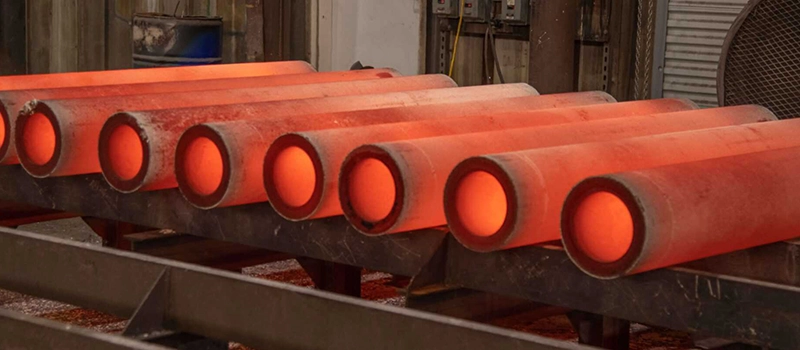
Advanced die casting heat treatment processes are used in high-end applications where standard methods are insufficient. These include vacuum heat treatment, hot isostatic pressing (HIP), and impregnation techniques.
Vacuum heat treatment minimizes oxidation and contamination by processing components in a controlled environment. This improves surface quality and consistency. Hot isostatic pressing applies high temperature and pressure simultaneously to eliminate internal porosity and increase material density. This process significantly enhances mechanical performance but involves higher cost and longer processing time. Impregnation is often used to fill internal pores with sealing materials, improving leak tightness and overall durability.
These advanced methods are typically reserved for critical components where performance requirements justify the additional cost. They represent the highest level of control within die casting heat treatment processes.
Comparison of Different Heat Treatment Types
Different die casting heat treatment processes offer varying levels of performance, risk, and cost. Selecting the right process requires a clear understanding of these trade-offs.
| Process | Strength | Risk | Cost | Typical Use |
|---|---|---|---|---|
| T6 | High | High | High | High-performance structural parts |
| Solution + Aging | Medium-High | Medium | Medium | General strength improvement |
| Annealing | Low | Low | Low | Stress relief and machining preparation |
| Stress Relief | Low | Very Low | Low | Precision components |
| HIP | Very High | Low | Very High | Critical high-integrity parts |
This comparison highlights that no single process is universally optimal. The choice of die casting heat treatment processes must be based on specific application requirements, material characteristics, and cost considerations.
How to Select the Right Die Casting Heat Treatment Process
Selecting the appropriate die casting heat treatment processes is not a one-size-fits-all decision. It requires a careful evaluation of multiple factors, including material properties, casting quality, performance requirements, and cost constraints. In industrial applications, an incorrect selection can lead to increased defect rates, higher production costs, and even product failure. Therefore, understanding how to choose the right process is just as important as understanding the processes themselves.
One of the most critical factors in selecting die casting heat treatment processes is the alloy type. Aluminum alloys, particularly those containing magnesium and silicon, are more suitable for strengthening processes such as solution treatment and aging. In contrast, zinc alloys are rarely subjected to high-temperature heat treatment due to their low melting point and dimensional instability. Magnesium alloys can be heat treated, but they require tighter control due to their sensitivity to oxidation and narrow processing window. Therefore, the chemical composition of the material directly determines which heat treatment methods are feasible.
Another key consideration is the level of porosity within the casting. Die-cast components often contain internal gas pockets that can expand during high-temperature processes. If the porosity level is high, aggressive die casting heat treatment processes such as T6 may lead to surface blistering or internal damage. In such cases, more conservative processes like annealing or stress relief are recommended. For high-quality castings produced using vacuum die casting or other advanced techniques, more complex heat treatment methods can be applied with reduced risk.
Performance requirements also play a decisive role in process selection. Components that require high mechanical strength, such as structural or load-bearing parts, may benefit from multi-stage die casting heat treatment processes like solution treatment followed by aging. On the other hand, components that prioritize dimensional accuracy over strength, such as precision machined parts, are better suited for stress relief treatments. Understanding the end-use conditions of the component is essential for aligning the heat treatment process with functional requirements.
Cost is another important factor that cannot be ignored. More advanced die casting heat treatment processes typically involve higher energy consumption, longer cycle times, and stricter quality control, all of which increase overall production costs. While processes like T6 or hot isostatic pressing can significantly improve performance, they may not be economically justified for standard components. In many cases, a simpler process that provides acceptable performance at a lower cost is the more practical choice.
In addition to these factors, manufacturers must also consider production volume and process stability. High-volume production requires consistent and repeatable die casting heat treatment processes to ensure uniform quality. Complex multi-stage treatments may introduce variability if not properly controlled, while simpler processes are generally more stable and easier to standardize. Therefore, process selection must balance technical performance with manufacturing practicality.
Ultimately, the selection of die casting heat treatment processes is a decision that involves trade-offs. There is no universally optimal solution, only the most suitable one based on specific conditions. A well-informed choice can significantly improve product performance while minimizing risks and costs, making it a critical step in the overall manufacturing strategy.
Key Risks Associated with Different Heat Treatment Types
Different die casting heat treatment processes involve varying levels of risk, and understanding these risks is essential for avoiding costly production failures. While heat treatment is often applied to improve performance, it can also amplify existing defects within die-cast components. In many cases, the failure is not caused by the process itself, but by a mismatch between the selected process and the inherent characteristics of the casting.
One of the most critical risks in die casting heat treatment processes is porosity expansion. Due to the nature of die casting, trapped gases are often present within the internal structure of the component. When exposed to high temperatures, particularly during solution heat treatment, these gases expand significantly. This expansion can lead to surface blistering, internal void growth, and even structural failure. Processes such as T6 heat treatment are especially sensitive to this issue, making them unsuitable for parts with high porosity levels.

Another major risk is distortion caused by thermal stress. During heating and especially during rapid cooling in quenching, temperature gradients develop between different sections of the component. These gradients generate internal stresses that can result in warping or dimensional deviation. Thin-walled parts and components with complex geometries are particularly vulnerable. Even minor distortion can render a part unusable, especially in applications requiring tight tolerances.
Cracking is also a significant concern in die casting heat treatment processes. Rapid cooling, combined with pre-existing stress concentrations around pores or sharp corners, can lead to crack initiation and propagation. This is most commonly observed during aggressive quenching conditions. Once cracks form, the component typically cannot be repaired, leading to complete rejection and increased production cost.
Surface oxidation and discoloration represent another category of risk, particularly in high-temperature processes. Exposure to oxygen at elevated temperatures can result in the formation of oxide layers, which not only affect the appearance but may also impact surface properties. While this may be acceptable in some applications, it becomes a critical issue for components requiring high surface quality or subsequent coating and finishing processes.
Inconsistent mechanical properties are another hidden risk associated with die casting heat treatment processes. Due to variations in cooling rate, material thickness, and internal structure, different areas of the same component may respond differently to heat treatment. This can result in uneven hardness or strength distribution, which compromises overall performance and reliability.
It is also important to recognize that some die casting heat treatment processes carry inherently higher risks than others. For example, multi-stage processes such as T6 offer significant strength improvements but also introduce the highest likelihood of defects if not carefully controlled. In contrast, simpler processes such as annealing or stress relief are much more stable but provide limited performance enhancement. This trade-off highlights the importance of aligning process selection with both material conditions and application requirements.
To effectively manage these risks, manufacturers must adopt a comprehensive approach that includes strict process control, proper material selection, and high-quality casting practices. Advanced techniques such as vacuum die casting can significantly reduce porosity, thereby improving the success rate of subsequent heat treatment. Additionally, careful monitoring of temperature, time, and cooling conditions is essential for minimizing defect formation.
Ultimately, the risks associated with die casting heat treatment processes cannot be completely eliminated, but they can be effectively controlled. A clear understanding of these risks allows engineers and decision-makers to choose the most appropriate process, balancing performance improvements against potential drawbacks.
Cost Implications of Different Heat Treatment Processes
The cost of die casting heat treatment processes is a critical factor in determining overall manufacturing efficiency and profitability. While heat treatment can significantly improve product performance, it also introduces additional expenses that must be carefully evaluated. These costs are not limited to energy consumption alone but include equipment investment, process time, defect rates, and quality control requirements.
One of the primary cost drivers in die casting heat treatment processes is energy consumption. High-temperature processes such as solution heat treatment and T6 require substantial energy input to maintain stable furnace conditions over extended periods. Multi-stage processes further increase energy usage due to repeated heating and cooling cycles. In contrast, lower-temperature processes such as stress relief or annealing consume significantly less energy, making them more cost-effective for standard applications.
Another important cost factor is equipment and infrastructure. Advanced die casting heat treatment processes often require specialized furnaces, such as controlled atmosphere or vacuum systems, to prevent oxidation and ensure consistent results. These systems involve high initial investment and ongoing maintenance costs. Additionally, processes like hot isostatic pressing require highly specialized equipment, making them suitable only for high-value components where performance justifies the expense.
Process time also has a direct impact on cost. Complex die casting heat treatment processes typically involve longer cycle times, including heating, holding, cooling, and sometimes multiple stages. Longer processing time reduces production throughput and increases labor and operational costs. For high-volume production, even small increases in cycle time can significantly affect overall efficiency.
Scrap rate is another hidden but crucial cost component. Improperly selected or poorly controlled die casting heat treatment processes can lead to defects such as blistering, distortion, or cracking. These defects often result in part rejection, increasing material waste and rework costs. High-risk processes such as T6 heat treatment may deliver superior mechanical properties but can also lead to higher rejection rates if casting quality is not sufficient.
Cost-effectiveness in die casting heat treatment processes is not determined solely by the lowest process cost, but by the balance between performance improvement and risk. In some cases, applying a high-cost process such as T6 can reduce overall system cost by improving durability and reducing failure rates in service. In other cases, a simpler and more stable process may provide adequate performance at a significantly lower cost.
Production scale also influences cost considerations. For large-scale manufacturing, stable and repeatable die casting heat treatment processes are preferred to minimize variability and maintain consistent quality. Simpler processes are often favored in such scenarios due to their lower operational complexity and reduced risk. In contrast, small-batch or high-performance applications may justify more advanced and expensive processes.
Ultimately, the cost of die casting heat treatment processes must be evaluated in the context of the entire production chain. This includes not only direct processing costs but also the impact on product quality, reliability, and lifecycle performance. A well-optimized heat treatment strategy can reduce total cost by minimizing defects, improving consistency, and enhancing product value.
Industrial Applications of Different Heat Treatment Types
Different die casting heat treatment processes are applied across a wide range of industries, but their selection is always closely tied to specific performance requirements. Rather than applying a single process universally, manufacturers choose different heat treatment types based on strength, stability, cost, and defect tolerance. Understanding how these processes are used in real applications helps clarify why proper selection is so critical.
High-Strength Structural Components
In applications where mechanical strength is the primary requirement, advanced die casting heat treatment processes such as T6 are often used. These components are typically subjected to high loads or stress during operation, making strength and fatigue resistance essential.
For example, structural housings, brackets, and load-bearing parts require enhanced mechanical properties to ensure long-term reliability. In such cases, solution heat treatment followed by quenching and artificial aging can significantly improve strength through precipitation hardening. However, these benefits come with increased risk. If the casting contains internal porosity, high-temperature processes may lead to blistering or internal damage.
As a result, high-strength applications usually require not only advanced die casting heat treatment processes but also higher casting quality standards. Techniques such as vacuum die casting are often used in combination to reduce internal defects and ensure successful heat treatment outcomes.
Precision Machined Components
For components that require tight dimensional tolerances, stability is often more important than strength. In these cases, stress relief heat treatment is one of the most suitable die casting heat treatment processes.
Precision parts that undergo CNC machining are particularly sensitive to internal stress. Without proper stress relief, these stresses may be released during machining, leading to deformation and dimensional inaccuracies. By applying low-temperature heat treatment before machining, manufacturers can stabilize the material and significantly reduce the risk of distortion.
Compared to multi-stage processes, stress relief is simpler, more stable, and more cost-effective. It does not introduce significant thermal shock, making it ideal for complex geometries and thin-walled components. This makes it one of the most widely used die casting heat treatment processes in precision manufacturing.
General Industrial Components
In many standard industrial applications, the goal is to achieve a balance between performance and cost. For these components, simpler die casting heat treatment processes such as annealing are often sufficient.
Annealing helps reduce internal stress and improve ductility without significantly increasing production cost. It is commonly used for parts that do not require high strength but still need reliable performance and good machinability. Examples include covers, enclosures, and non-load-bearing structural components.
Because of its low risk and stable performance, annealing is often preferred in high-volume production. It allows manufacturers to maintain consistent quality while keeping costs under control, making it a practical choice in many applications.
High-Integrity and Critical Components
In critical applications where internal defects cannot be tolerated, advanced die casting heat treatment processes are required. These include vacuum heat treatment and hot isostatic pressing.
Hot isostatic pressing is particularly effective in eliminating internal porosity by applying high temperature and pressure simultaneously. This process significantly improves material density and mechanical performance. It is commonly used in components that must meet strict safety or reliability standards.
Although these advanced die casting heat treatment processes involve higher costs, they are justified in applications where failure is not an option. The improved structural integrity and consistency make them essential for high-end manufacturing scenarios.
Conclusion
Die casting heat treatment processes play a decisive role in balancing performance, risk, and cost. Different process types offer distinct advantages and limitations. Selecting the right approach based on material, quality, and application requirements is essential to achieve reliable results and optimal manufacturing efficiency.