Aluminum corrosion is often misunderstood in industrial applications. Many buyers and engineers assume that aluminum does not rust and therefore cannot degrade over time. This assumption is only partially correct.
So, does aluminum rust or corrode? The answer is more complex than a simple yes or no. Aluminum does not rust in the same way as steel, but it does undergo a form of corrosion under certain environmental conditions. Understanding aluminum corrosion is essential for selecting the right material, controlling costs, and ensuring long-term performance.
In this article, the fundamental differences between rust and corrosion will be clarified, along with the mechanisms, risks, and prevention methods of aluminum corrosion in real-world applications.
What Is Rust vs Corrosion
What Is Rust
Rust is a specific type of corrosion that occurs only in iron and iron-based alloys. It is the result of an electrochemical reaction between iron, oxygen, and moisture. When these elements are present, iron atoms lose electrons and react with oxygen to form iron oxides. This process typically requires water or humidity to act as an electrolyte, enabling the transfer of electrons across the metal surface.
The material produced during this reaction, commonly known as rust, has a loose and porous structure. It does not form a continuous or protective barrier. Instead, it tends to expand, crack, and detach from the surface. As this happens, fresh metal underneath is exposed to the environment, allowing the reaction to continue. This cycle makes rust a progressive process that can penetrate deeper into the material over time.
The rate at which rust develops depends heavily on environmental conditions. High humidity, the presence of salts, and fluctuating temperatures can all accelerate the reaction. In industrial environments, especially those exposed to moisture or chemical pollutants, rust can form rapidly if no protective measures are applied.
What Is Corrosion
Corrosion is a general term used to describe the degradation of a material due to chemical or electrochemical interaction with its environment. Unlike rust, corrosion is not limited to iron or any single type of metal. It applies to a wide range of materials, including metals such as copper, zinc, magnesium, and others.
In most cases, corrosion involves oxidation reactions in which metal atoms lose electrons and form compounds such as oxides, hydroxides, or salts. These reactions can occur in various environments, including dry air, humid conditions, or liquid exposure. The exact mechanism depends on factors such as the composition of the material and the surrounding environment.
Corrosion does not always progress in the same way. In some materials, the products formed during corrosion create a dense and stable layer on the surface. In other cases, the corrosion products are weak and non-adherent, allowing the reaction to continue. The behavior of this surface layer plays a critical role in determining whether the material will degrade quickly or remain relatively stable over time.
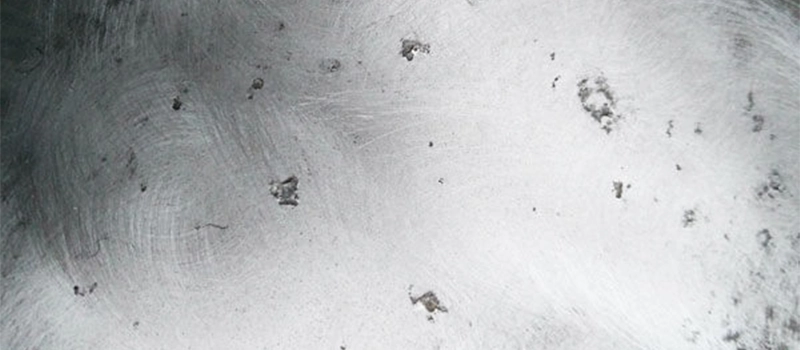
Different forms of corrosion can also occur depending on conditions. These include uniform corrosion across a surface, as well as localized forms such as pitting and crevice corrosion. Each type follows its own mechanism and results in different patterns of material change.
Key Differences Between Rust and Corrosion
The most fundamental difference between rust and corrosion lies in their scope. Rust refers only to the oxidation of iron, while corrosion is a broader concept that includes all forms of material degradation caused by environmental interaction.
There is also a clear difference in how the reaction products behave. Rust forms a porous and unstable layer that does not protect the underlying metal. This allows the reaction to continue and often accelerate. Corrosion, depending on the material involved, may produce either protective or non-protective surface layers. The outcome varies based on the chemical nature of the material and the surrounding conditions.
Another distinction is in appearance and detection. Rust is usually easy to identify due to its characteristic color and texture. Corrosion, however, may not always be immediately visible. In many cases, early-stage corrosion presents as slight surface changes that require closer inspection to detect.
These differences define rust as a specific case within the broader category of corrosion, rather than a separate or equivalent process.
Does Aluminum Rust
Does Aluminum Rust in the Same Way as Steel
Aluminum does not rust in the same way as steel. Rust is a process that only occurs in iron and iron-based materials, and aluminum contains no iron. Because of this, the typical reddish-brown oxidation associated with rust cannot form on aluminum surfaces under normal conditions.
This distinction is often overlooked in non-technical contexts. Many assume that all metals behave similarly when exposed to air and moisture. However, aluminum follows a different reaction pathway. When exposed to oxygen, it does not produce rust. Instead, it undergoes a different type of surface reaction that does not match the characteristics of iron oxidation.
From a material classification standpoint, aluminum is considered a non-ferrous metal. This means it does not participate in the same corrosion mechanisms that define rust formation. As a result, when evaluating whether aluminum rusts, the direct and technically accurate answer is no.
Why Aluminum Is Often Mistaken as Rusting
Despite the fact that aluminum does not rust, it is often described as “rusting” in everyday language. This confusion usually comes from visual changes on the metal surface. Over time, aluminum may appear dull, discolored, or slightly rough. To an untrained observer, these changes can resemble early stages of rust on steel.
In some environments, especially those involving moisture or pollutants, the surface of aluminum may develop a gray or whitish layer. This visual transformation is sometimes misinterpreted as rust. However, the color, structure, and behavior of this layer are fundamentally different from iron oxide.
Another source of confusion comes from mixed-material assemblies. When aluminum is used together with steel components, rust from the steel parts may spread or stain nearby surfaces. This can create the impression that the aluminum itself is rusting, even though the source of the rust is external.
Language also plays a role in this misunderstanding. In many cases, the word “rust” is used as a general term for any form of metal deterioration. This informal usage further blurs the distinction between rust and other types of surface reactions.
What Actually Happens to Aluminum Instead of Rusting
When aluminum is exposed to air, it reacts almost immediately with oxygen. This reaction forms a thin layer on the surface of the metal. Unlike rust, this layer is not loose or flaky. It is tightly bonded to the underlying material and remains stable under normal conditions.
This surface layer develops rapidly and uniformly. It covers the exposed metal and changes the surface appearance, often giving aluminum a slightly matte or dull finish. The formation of this layer does not result in the same kind of material loss or structural weakening that is typically associated with rust.
Under certain conditions, such as exposure to aggressive chemicals or extreme environments, the surface of aluminum may undergo further changes. These changes can affect the appearance and, in some cases, the performance of the material. However, these processes are not classified as rust, as they do not involve iron or iron oxide formation.
The key point is that aluminum follows a different interaction with its environment. While it does react, the nature of that reaction does not produce rust.
Why Aluminum Resists Corrosion
Formation of a Natural Oxide Layer
Aluminum resists corrosion primarily because of its ability to form a stable oxide layer on its surface. When aluminum is exposed to air, it reacts immediately with oxygen. This reaction occurs within fractions of a second and results in the formation of aluminum oxide. The layer is extremely thin, typically only a few nanometers thick, but it plays a critical role in protecting the material.
Unlike many other metals, the oxide layer formed on aluminum is dense and continuous. It adheres tightly to the surface and does not peel or flake off. This creates a physical barrier that separates the underlying metal from the surrounding environment. As a result, further interaction between aluminum and external elements such as oxygen, moisture, or contaminants is significantly reduced.
This natural process occurs without any external treatment. It is an inherent property of aluminum, which is why aluminum is widely used in environments where corrosion resistance is required without relying heavily on coatings or additional protection.
Self-Limiting Reaction Mechanism
Another important characteristic of aluminum is that its surface reaction is self-limiting. Once the oxide layer forms, it slows down or even stops further oxidation. This is because the protective film prevents oxygen from reaching the underlying metal.
In contrast to metals that continue to react aggressively with their environment, aluminum reaches a relatively stable state after the initial surface reaction. The oxide layer effectively controls the rate of further chemical interaction. This behavior explains why aluminum components can maintain their structural integrity over long periods, even when exposed to air and moisture.
The stability of this layer is one of the key reasons aluminum performs well in a wide range of industrial and environmental conditions. It reduces the need for continuous maintenance and lowers the risk of progressive material degradation.
Strong Adhesion and Structural Stability
The protective oxide layer on aluminum is not only dense but also strongly bonded to the base metal. This strong adhesion ensures that the layer remains intact even under mechanical stress or minor surface damage. Because it is part of the material itself rather than a separate coating, it does not detach easily.
This structural stability distinguishes aluminum from metals that rely on external coatings for protection. If a coating on another metal is damaged, the exposed area can become a starting point for rapid corrosion. In aluminum, however, the protective mechanism is integrated into the material. Even if the surface is scratched, the exposed area can quickly react with oxygen and form a new oxide layer.
This ability to maintain a protective surface contributes to the long service life of aluminum products in many applications, including construction, transportation, and industrial equipment.
Stability in Neutral Environments
Aluminum performs particularly well in neutral environments where extreme chemical exposure is not present. In conditions such as ambient air, moderate humidity, and clean water, the oxide layer remains stable and continues to protect the metal effectively.
The resistance of aluminum in these environments makes it suitable for a wide range of uses. It can maintain its appearance and structural properties without significant degradation. This is one of the reasons aluminum is often selected for applications where both durability and low maintenance are required.
However, the performance of aluminum is closely linked to the stability of its oxide layer. While the layer is effective under many conditions, its behavior can change when exposed to more aggressive environments.
When Does Aluminum Corrode
Exposure to Acidic Environments
Aluminum can corrode when it is exposed to acidic environments, especially when the pH level drops significantly below neutral. Acids can react with the protective oxide layer on the aluminum surface and gradually dissolve it. Once this layer is compromised, the underlying metal becomes directly exposed to the environment, allowing further chemical reactions to occur.
Different acids affect aluminum at different rates. Weak acids may only cause slow surface changes, while strong acids can accelerate the reaction and lead to noticeable material loss. Industrial environments that involve chemical processing, emissions, or acidic residues can increase the likelihood of this type of corrosion. The extent of the reaction depends on factors such as concentration, temperature, and exposure duration.
Exposure to Alkaline Conditions
Aluminum is particularly sensitive to alkaline environments. In many cases, alkaline conditions are more aggressive toward aluminum than acidic ones. Substances with high pH values, such as certain cleaning agents or industrial solutions, can break down the oxide layer more effectively than acids.
When aluminum is exposed to alkaline substances, the protective film can dissolve, leading to direct interaction between the metal and the environment. This process can occur relatively quickly, especially at elevated temperatures or high concentrations. As a result, aluminum components used in environments where alkaline exposure is possible must be carefully evaluated for compatibility.
Saltwater and High Chloride Environments
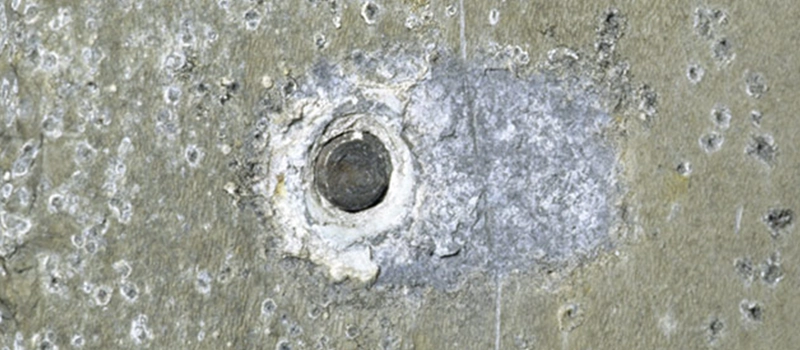
Aluminum can also corrode in environments that contain high levels of chloride ions, such as seawater or coastal air. Chlorides have the ability to penetrate and disrupt the protective oxide layer. Instead of uniform surface changes, this often leads to localized reactions on the metal surface.
In these environments, aluminum may develop small, concentrated areas of attack rather than widespread corrosion. These localized reactions can be difficult to detect in early stages because the overall surface may still appear intact. Over time, however, the affected areas can deepen and expand.
Marine applications, offshore structures, and equipment exposed to deicing salts are common situations where chloride-related corrosion becomes a concern. The presence of moisture combined with salt significantly increases the likelihood of this type of degradation.
Galvanic Interaction with Other Metals
Aluminum can corrode when it comes into electrical contact with other metals in the presence of an electrolyte. This process is known as galvanic interaction. When two different metals are connected, one may act as an anode and the other as a cathode. In such cases, aluminum often becomes the anodic material and begins to lose electrons.
This reaction leads to accelerated material loss at the contact point. The rate of this process depends on the difference in electrochemical potential between the metals, as well as the conductivity of the environment. The presence of water, especially saltwater, can significantly increase the speed of the reaction.
In practical applications, this situation can occur when aluminum components are fastened with dissimilar metal bolts or connected to other structural elements. Without proper isolation, localized corrosion may develop at these junctions.
High Temperature and Polluted Atmospheres
Environmental factors such as temperature and air quality can also influence aluminum corrosion. Elevated temperatures can accelerate chemical reactions, including those affecting the oxide layer. In polluted atmospheres containing sulfur compounds, industrial emissions, or other reactive substances, the surface of aluminum may undergo gradual changes.
These conditions can alter the stability of the oxide layer and affect how the material interacts with its environment. While the process may not always be rapid, long-term exposure can lead to measurable surface degradation.
In areas with heavy industrial activity or poor air quality, aluminum components may experience different corrosion behavior compared to those used in cleaner environments.
Types of Aluminum Corrosion
Pitting Corrosion in Aluminum Corrosion
Pitting corrosion is one of the most common and critical forms of aluminum corrosion. This type of aluminum corrosion occurs when small, localized areas on the aluminum surface break down, leading to the formation of tiny pits or holes. Unlike uniform aluminum corrosion, which spreads evenly across a surface, pitting aluminum corrosion is highly concentrated and can penetrate deeply into the material while leaving surrounding areas relatively unaffected.
Pitting aluminum corrosion is often associated with environments containing chloride ions, such as seawater or salt-contaminated air. These chlorides can disrupt the protective oxide layer that normally prevents aluminum corrosion. Once this layer is locally damaged, aluminum corrosion begins at that specific point and continues inward. Because pitting aluminum corrosion is not always visible on the surface, it can be difficult to detect until significant damage has already occurred.
This form of aluminum corrosion is particularly dangerous in structural and pressure-related applications, where even small pits can act as stress concentrators. Over time, pitting aluminum corrosion may lead to cracking or failure if not properly considered during material selection and design.
Crevice Corrosion in Aluminum Corrosion
Crevice corrosion is another localized form of aluminum corrosion that occurs in confined spaces where access to oxygen is limited. This type of aluminum corrosion typically develops in gaps such as joints, under fasteners, or between overlapping surfaces. In these areas, stagnant conditions allow chemical changes to occur, creating an environment that promotes aluminum corrosion.
As oxygen levels inside the crevice decrease, the protective oxide layer becomes less stable. At the same time, contaminants such as chlorides may accumulate, further accelerating aluminum corrosion within the confined space. The result is a difference in chemical conditions between the crevice and the surrounding surface, which drives localized aluminum corrosion.
Crevice aluminum corrosion is often difficult to identify because it occurs in hidden or inaccessible areas. By the time it becomes visible, the aluminum corrosion may already be advanced. This makes it a critical consideration in applications where components are assembled or exposed to moisture over long periods.
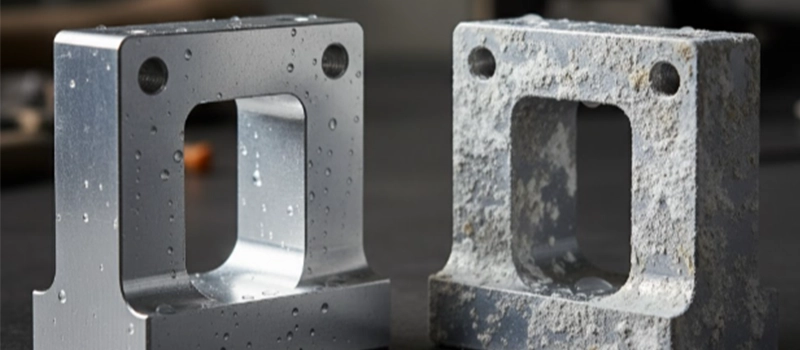
Galvanic Corrosion in Aluminum Corrosion
Galvanic corrosion is a form of aluminum corrosion that occurs when aluminum is electrically connected to a different metal in the presence of an electrolyte. In this situation, aluminum often acts as the anodic material and begins to corrode preferentially. This type of aluminum corrosion is driven by the difference in electrochemical potential between the two metals.
When aluminum corrosion occurs through galvanic interaction, the rate of material loss can be significantly higher than in other forms of aluminum corrosion. The severity depends on factors such as the type of metals involved, the surface area ratio, and the conductivity of the environment. Saltwater or humid conditions can greatly increase the rate of galvanic aluminum corrosion.
This type of aluminum corrosion is commonly observed in assemblies where aluminum components are joined with steel, copper, or other dissimilar metals. Without proper design considerations, galvanic aluminum corrosion can lead to rapid degradation at the contact points, even when the overall environment appears relatively mild.
Intergranular Corrosion in Aluminum Corrosion
Intergranular corrosion is a more specialized form of aluminum corrosion that occurs along the grain boundaries of the material. This type of aluminum corrosion is typically associated with certain aluminum alloys and specific thermal or mechanical conditions that affect the microstructure.
In intergranular aluminum corrosion, the attack progresses along the boundaries between grains rather than across the entire surface. This can weaken the internal structure of the material without causing obvious surface damage. As a result, the aluminum component may lose strength while still appearing relatively intact from the outside.
This form of aluminum corrosion is often related to improper heat treatment or alloy composition. It is more likely to occur in environments where the material is exposed to conditions that activate these microstructural weaknesses. Although less visible than other forms of aluminum corrosion, intergranular corrosion can have serious implications for mechanical performance.
How to Prevent Aluminum Corrosion Effectively
Anodizing as a Primary Method to Control Aluminum Corrosion
Anodizing is one of the most widely used and effective methods to prevent aluminum corrosion. This process enhances the natural oxide layer on the aluminum surface by increasing its thickness and improving its uniformity. During anodizing, aluminum is placed in an electrolytic environment where controlled oxidation occurs, forming a much thicker and more durable oxide film compared to the naturally formed layer.
This enhanced layer significantly improves resistance to aluminum corrosion. It provides better protection against moisture, oxygen, and aggressive environmental factors such as chlorides. In addition to improving aluminum corrosion resistance, anodizing also increases surface hardness and allows for decorative finishes.
Anodized aluminum is commonly used in architectural, automotive, and industrial applications where long-term resistance to aluminum corrosion is required. The thickness of the anodized layer can be adjusted depending on the level of protection needed, making it a flexible solution for different environments.
Protective Coatings to Reduce Aluminum Corrosion
Applying protective coatings is another effective way to control aluminum corrosion. Coatings such as powder coating, painting, or specialized industrial finishes create a physical barrier between the aluminum surface and the surrounding environment. This barrier prevents direct contact with moisture, oxygen, and corrosive substances, reducing the likelihood of aluminum corrosion.
Powder coating is particularly effective because it forms a uniform and durable layer that adheres well to aluminum surfaces. It provides both functional protection and aesthetic benefits. In environments where aluminum corrosion risks are high, such as coastal or industrial areas, coated aluminum components can maintain their performance for extended periods.
The effectiveness of coatings in preventing aluminum corrosion depends on proper surface preparation. Any contamination or poor adhesion can compromise the protective layer and allow aluminum corrosion to initiate at weak points.
Material Selection to Minimize Aluminum Corrosion Risk
Different aluminum alloys exhibit different levels of resistance to aluminum corrosion. Selecting the appropriate alloy is a critical step in preventing aluminum corrosion, especially in demanding environments. Some alloys are specifically designed to offer improved resistance to chloride exposure, chemical attack, or mechanical stress.
For example, certain aluminum-magnesium alloys perform better in marine environments where aluminum corrosion is influenced by saltwater exposure. Other alloys may be more suitable for industrial environments where chemical exposure is a concern.
Choosing the correct alloy reduces the reliance on additional protective measures and helps control aluminum corrosion from the material level. This approach is often more cost-effective in the long term, as it minimizes maintenance and extends service life.
Design Considerations to Prevent Aluminum Corrosion
Proper design plays an important role in controlling aluminum corrosion. Even when high-quality materials are used, poor design can create conditions that promote aluminum corrosion. Features such as narrow gaps, overlapping joints, and areas where water can accumulate may increase the risk of localized aluminum corrosion.
Design strategies should aim to minimize moisture retention and avoid crevices where contaminants can build up. Ensuring proper drainage, ventilation, and accessibility for inspection can reduce the likelihood of aluminum corrosion developing over time.
In addition, avoiding direct contact between aluminum and dissimilar metals can help prevent galvanic aluminum corrosion. If such contact is unavoidable, insulating materials or protective barriers should be used to reduce electrical interaction between metals.
Environmental Control to Limit Aluminum Corrosion
Environmental exposure is one of the primary factors influencing aluminum corrosion. Controlling the operating environment can significantly reduce the risk of aluminum corrosion. In indoor or controlled settings, maintaining low humidity levels and minimizing exposure to corrosive chemicals can help preserve aluminum surfaces.
In outdoor or industrial environments, it may not be possible to fully control exposure conditions. However, understanding the environmental risks allows for better planning and material selection. For example, in areas with high salt content in the air, additional protective measures may be required to manage aluminum corrosion effectively.
Regular cleaning can also play a role in reducing aluminum corrosion. Removing contaminants such as salts, dust, and industrial residues helps maintain the integrity of the protective surface layer and prevents the initiation of corrosion processes.
Aluminum vs Steel vs Stainless Steel
| Material | Rust Behavior | Aluminum Corrosion / Corrosion Resistance | Strength | Weight | Cost Level | Typical Applications |
|---|---|---|---|---|---|---|
| Aluminum | Does not rust | Excellent resistance to aluminum corrosion due to natural oxide layer | Medium | Light | Medium | Construction, automotive, aerospace, machinery |
| Carbon Steel | Rusts easily | Poor corrosion resistance, requires coatings to prevent rust and corrosion | High | Heavy | Low | Structural parts, heavy equipment, industrial frames |
| Stainless Steel | Does not rust easily | High corrosion resistance, but not immune in extreme environments | High | Heavy | High | Food processing, medical equipment, marine components |
Corrosion Behavior Comparison
Aluminum corrosion differs significantly from the corrosion behavior of both carbon steel and stainless steel. Aluminum does not rust, but aluminum corrosion can still occur under specific environmental conditions. The natural oxide layer on aluminum provides a level of protection that carbon steel does not have, which is why steel requires additional treatments such as galvanizing or painting.
Compared to stainless steel, aluminum corrosion resistance is achieved through a different mechanism. Stainless steel relies on chromium content to form a passive layer, while aluminum corrosion resistance depends on aluminum oxide formation. Although both materials resist corrosion, their performance varies depending on the environment.
Cost and Performance Considerations
From a cost-performance perspective, aluminum offers a balance between corrosion resistance and weight. Aluminum corrosion resistance allows it to be used in many environments without the need for heavy protective treatments. This reduces maintenance and long-term costs.
Carbon steel, while strong and inexpensive, requires continuous protection to prevent rust. Without proper treatment, corrosion can significantly reduce its lifespan. Stainless steel provides superior corrosion resistance, but at a higher material cost, which may not always be necessary depending on the application.
Application Selection Based on Aluminum Corrosion
Material selection often depends on how aluminum corrosion compares to other corrosion mechanisms. In applications where weight reduction and moderate corrosion resistance are required, aluminum is often preferred. In highly aggressive environments, stainless steel may be selected despite the higher cost. Carbon steel is typically chosen when cost is the primary concern and protective measures can be applied effectively.
Industrial Applications of Aluminum Corrosion Resistance
Construction Industry and Aluminum Corrosion Performance
In the construction industry, aluminum corrosion resistance plays a critical role in long-term structural performance. Aluminum is widely used in curtain walls, roofing systems, window frames, and structural panels because aluminum corrosion is naturally controlled by its oxide layer. This allows aluminum components to maintain stability when exposed to outdoor environments such as rain, humidity, and temperature fluctuations.
Compared to traditional steel structures, aluminum corrosion does not result in flaking or progressive material loss under normal conditions. This makes aluminum particularly suitable for buildings located in urban and coastal areas where environmental exposure is unavoidable. In these applications, aluminum corrosion behavior ensures that surfaces remain intact with minimal maintenance over time.
The lightweight nature of aluminum also reduces structural load, while its resistance to aluminum corrosion minimizes the need for frequent repainting or protective treatment. This combination makes aluminum a preferred material in modern architectural design where durability and cost efficiency are both required.
Automotive Industry and Aluminum Corrosion Applications
In the automotive industry, aluminum corrosion resistance is closely linked to performance, safety, and fuel efficiency. Aluminum is commonly used in body panels, engine components, chassis parts, and heat exchangers. The ability of aluminum to resist corrosion helps maintain the integrity of these components under varying environmental conditions.
Vehicles are often exposed to moisture, road salts, and temperature changes, all of which can accelerate corrosion in traditional materials. Aluminum corrosion, however, behaves differently due to the presence of the protective oxide layer. This allows aluminum parts to maintain their function and appearance over longer periods compared to untreated steel components.
The use of aluminum also contributes to weight reduction, which improves fuel efficiency and reduces emissions. At the same time, aluminum corrosion resistance ensures that lightweight structures do not compromise durability. This balance between weight and corrosion performance has led to increased adoption of aluminum in modern vehicle manufacturing.
Aerospace Industry and Aluminum Corrosion Reliability
Aluminum plays a fundamental role in the aerospace industry, where both weight and reliability are critical factors. Aluminum corrosion resistance is essential in aircraft structures, fuselage panels, and internal components that are exposed to varying atmospheric conditions.
At high altitudes, materials must withstand temperature fluctuations, pressure changes, and moisture exposure. Aluminum corrosion behavior allows it to perform reliably in these environments without rapid degradation. The oxide layer provides consistent protection, reducing the risk of material failure over extended service periods.
In addition, aluminum alloys used in aerospace applications are often engineered to further enhance resistance to aluminum corrosion. This ensures that components can maintain their structural integrity even under demanding operational conditions. The predictable behavior of aluminum corrosion is one of the reasons aluminum remains a key material in aviation.
Agricultural Equipment and Aluminum Corrosion Resistance
Agricultural equipment operates in environments where exposure to moisture, soil, fertilizers, and chemicals is common. These conditions can accelerate corrosion in many metals. Aluminum corrosion resistance makes it a suitable material for components used in farming machinery, irrigation systems, and storage equipment.
Unlike steel, which may require constant protection against rust, aluminum corrosion forms a stable surface layer that reduces ongoing maintenance requirements. This is particularly valuable in agricultural settings where equipment is frequently exposed to outdoor conditions and cleaning cycles.
The use of aluminum also improves equipment handling due to its lower weight. At the same time, aluminum corrosion resistance helps maintain the performance of parts that come into contact with water or chemicals. This combination of durability and practicality supports long-term use in demanding agricultural environments.
Industrial Equipment and Aluminum Corrosion Applications
In industrial settings, aluminum corrosion resistance is utilized in a wide range of equipment, including piping systems, enclosures, heat exchangers, and processing machinery. Many of these applications involve exposure to moisture, chemicals, or fluctuating environmental conditions.
Aluminum corrosion behavior allows these components to operate without rapid degradation, especially in environments where traditional materials would require additional protection. The ability to maintain a stable surface reduces downtime and maintenance costs, which is critical in industrial operations.
In addition, aluminum is often selected for equipment where both corrosion resistance and thermal conductivity are important. Its performance in these areas makes aluminum a versatile material across multiple industries. The consistent and predictable nature of aluminum corrosion is a key factor in its widespread industrial use.
Conclusion
Aluminum corrosion behaves fundamentally differently from rust. Aluminum does not rust because it contains no iron, but aluminum corrosion can still occur under specific environmental conditions. The natural oxide layer gives aluminum strong resistance, yet factors such as chemicals, chlorides, and galvanic interaction can influence its performance. Understanding aluminum corrosion allows for more accurate material selection and better control of durability in industrial applications.