Shaft machining plays a vital role in modern manufacturing, powering everything from industrial pumps and agricultural machinery to automotive drivetrains and heavy equipment. As industries demand greater precision, durability, and efficiency, the quality of machined shafts has become more critical than ever. Advanced CNC technologies now enable manufacturers to produce complex shaft components with exceptional accuracy, tight tolerances, and consistent performance. Whether for high-volume OEM production or custom-engineered applications, professional shaft machining helps ensure reliability, reduce maintenance costs, and extend equipment life. This guide explores the key processes, technologies, and quality considerations behind precision shaft manufacturing and explains why CNC machining remains the preferred solution for modern industries.
What Is Shaft Machining?
Shaft machining is the manufacturing process used to produce cylindrical components that transmit motion, torque, and rotational power within mechanical systems. As one of the most widely used manufacturing operations in modern industry, shaft machining plays a critical role in ensuring the reliability, efficiency, and longevity of equipment across numerous sectors. From industrial pumps and gearboxes to agricultural machinery and automotive systems, properly machined shafts are essential for smooth mechanical performance.
A shaft is typically a rotating component designed to transfer power from one part of a machine to another. It often supports gears, pulleys, bearings, couplings, and other moving elements. Because shafts are constantly exposed to torsional forces, bending stresses, vibration, and friction during operation, they must be manufactured with exceptional accuracy and consistency. Even minor dimensional deviations can affect equipment performance and lead to premature component failure.
The shaft machining process begins with raw material in the form of round bar stock or forged blanks. These materials are then transformed into finished components through a series of machining operations. Depending on the application, machined shafts may include stepped diameters, threads, grooves, keyways, splines, bearing seats, and other precision features. Each feature must meet exact engineering specifications to ensure proper fit and function within the final assembly.
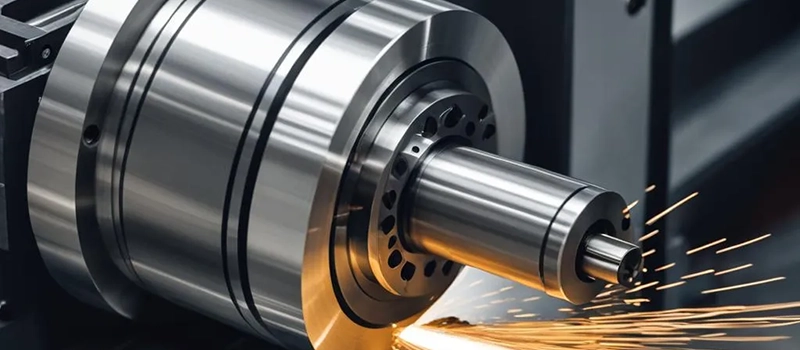
Machined shafts are found in virtually every industry that relies on mechanical power transmission. In automotive applications, drive shafts transfer power from the transmission to the wheels. In industrial pumps, shafts connect electric motors to impellers and ensure continuous fluid movement. Agricultural equipment uses shafts to transmit rotational motion between different working components, while mining and construction machinery depend on heavy-duty shafts to withstand extreme operating conditions.
Several common shaft designs are frequently produced through shaft machining services. Drive shafts are engineered to handle torque transmission over long distances and under varying loads. Pump shafts are designed for continuous rotation and often require excellent corrosion resistance and dimensional stability. Spline shafts feature a series of precisely machined teeth that allow components to slide while maintaining torque transmission. Worm shafts are commonly used in gear reduction systems where smooth and controlled power transfer is required. Each shaft type presents unique manufacturing challenges and requires specific machining expertise.
Material selection is another important aspect of shaft machining. Carbon steel remains one of the most popular materials because of its balance of strength, machinability, and cost-effectiveness. Alloy steels such as 4140 and 4340 provide enhanced mechanical properties for demanding applications. Stainless steel is often selected when corrosion resistance is required, while hardened tool steels and specialty alloys are used in environments involving severe wear or high loads. Choosing the appropriate material is essential for achieving the desired performance and service life.
Compared with general turning operations, shaft machining requires stricter control over dimensional accuracy. Critical characteristics such as concentricity, roundness, straightness, and surface finish directly influence the functionality of the final product. A shaft that is not perfectly aligned can create excessive vibration, accelerate bearing wear, increase energy consumption, and reduce overall equipment reliability. For this reason, manufacturers invest heavily in advanced machining equipment and inspection technologies to maintain consistent quality standards.
Today, demand for high-quality shaft machining continues to increase as industries seek greater efficiency and performance from their equipment. Modern manufacturing technologies make it possible to produce custom machined shafts with complex geometries, tight tolerances, and superior surface finishes. Whether used in heavy industrial machinery or precision mechanical assemblies, machined shafts remain fundamental components that enable the reliable operation of countless mechanical systems around the world.
Shaft Machining Process
The shaft machining process involves several carefully controlled manufacturing stages. Each operation contributes to the dimensional accuracy, surface quality, and mechanical performance of the finished shaft. Depending on the design requirements and application environment, manufacturers may use different machining methods, but the overall workflow generally follows a similar sequence.
Material Selection
The shaft machining process begins with selecting the appropriate material. Common options include carbon steel, alloy steel, stainless steel, and specialty metals. Material selection depends on factors such as strength requirements, wear resistance, corrosion resistance, and operating conditions. Choosing the correct material is essential because it directly influences machinability, product lifespan, and manufacturing costs.
CNC Turning
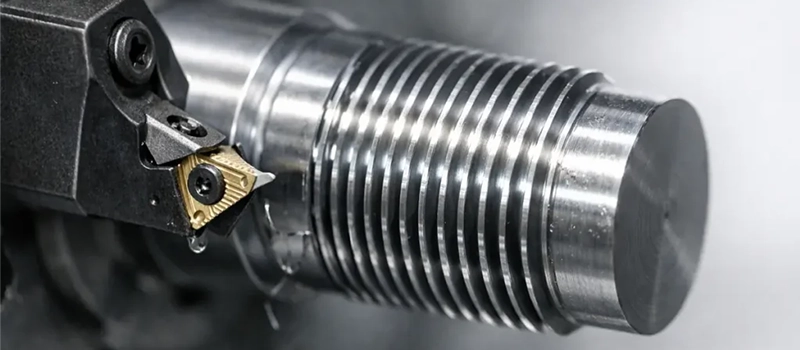
CNC turning is the primary operation in shaft machining. During this stage, raw bar stock is mounted on a CNC lathe and rotated at high speed while cutting tools remove excess material. The turning process creates the basic cylindrical profile and establishes critical dimensions such as outside diameters, shoulders, and bearing seats. Modern CNC turning centers provide exceptional accuracy and repeatability, making them ideal for producing high-quality machined shafts.
Milling and Keyway Machining
Many shafts require additional features that cannot be produced through turning alone. Milling operations are used to create keyways, flats, slots, and other functional geometries. Keyways are particularly important because they allow gears, pulleys, and couplings to transmit torque effectively. Advanced machining centers can perform turning and milling operations within a single setup, improving both efficiency and precision.
Heat Treatment
Heat treatment is often applied to improve the mechanical properties of machined shafts. Processes such as quenching, tempering, induction hardening, and carburizing increase hardness, wear resistance, and fatigue strength. These treatments are especially important for shafts used in heavy-duty industrial applications where components are subjected to continuous stress and demanding operating conditions.
Grinding and Surface Finishing
After heat treatment, grinding may be performed to achieve tighter tolerances and superior surface finishes. Precision grinding removes small amounts of material while improving roundness, straightness, and concentricity. Additional finishing processes such as polishing or surface coating may also be applied to enhance corrosion resistance and reduce friction during operation.
Quality Inspection
Quality inspection is the final stage of the shaft machining process. Critical dimensions and geometric tolerances must be verified before shipment. Manufacturers use precision measuring instruments such as micrometers, dial indicators, and coordinate measuring machines (CMMs) to inspect every important feature. Thorough inspection ensures that each machined shaft meets customer specifications and performs reliably in its intended application.
CNC Shaft Machining Technology
As manufacturing requirements continue to evolve, CNC shaft machining has become the industry standard for producing high-precision shaft components. Compared with conventional machining methods, CNC technology offers superior accuracy, consistency, efficiency, and flexibility. Whether manufacturing simple cylindrical shafts or complex multi-feature components, CNC machining enables manufacturers to meet increasingly demanding quality standards while maintaining cost-effective production.
CNC Turning Centers
CNC turning centers are the foundation of modern shaft machining. These machines use computer-controlled programming to automate the cutting process and produce highly accurate cylindrical components. During operation, the workpiece rotates while cutting tools remove material according to programmed specifications.
One of the greatest advantages of CNC turning centers is their ability to maintain consistent dimensions throughout large production runs. Unlike manual machining, which depends heavily on operator skill, CNC systems execute the same machining program repeatedly with minimal variation. This level of consistency is particularly important for machined shafts used in automotive, agricultural, mining, and industrial equipment applications.
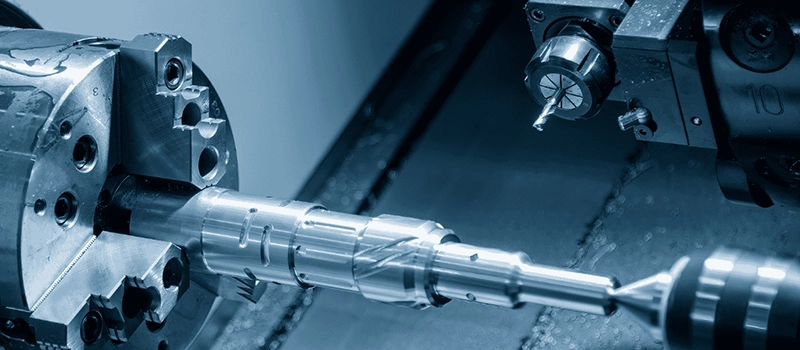
Modern CNC turning centers can also perform multiple operations in a single setup, including facing, turning, grooving, threading, drilling, and boring. By reducing the number of machine setups required, manufacturers improve productivity while minimizing dimensional errors caused by repeated workpiece handling.
Multi-Axis CNC Machining
Many modern shaft designs require features that extend beyond traditional turning operations. Multi-axis CNC machining allows manufacturers to create complex geometries with exceptional precision while reducing production time.
Unlike conventional lathes that primarily operate along two axes, multi-axis machining systems can simultaneously control multiple movements. This capability makes it possible to produce intricate features such as cross holes, milled flats, keyways, slots, and specialized profiles without transferring the workpiece between multiple machines.
For custom shaft machining projects, multi-axis technology offers significant advantages. Complex parts can often be completed in a single setup, reducing cycle times and improving overall dimensional accuracy. This approach is especially valuable for industries that require tight tolerances and repeatable quality across large production volumes.
CNC Lathe Precision Shaft Machining
CNC lathe precision shaft machining is widely used when exceptional dimensional accuracy and surface quality are required. Components such as pump shafts, gearbox shafts, motor shafts, and transmission shafts often operate under demanding conditions where even minor dimensional variations can affect performance.
Advanced CNC lathes are equipped with high-resolution control systems, precision spindle assemblies, and sophisticated tool monitoring technologies. These features allow manufacturers to achieve extremely tight tolerances while maintaining excellent surface finishes.
Precision machining also improves critical geometric characteristics such as concentricity, straightness, roundness, and runout control. These factors are essential for applications involving high rotational speeds, heavy loads, or continuous operation. By maintaining precise geometry throughout the machining process, manufacturers can significantly improve component reliability and service life.
CNC Machined Shafts for Complex Applications
The growing demand for specialized equipment has increased the need for complex CNC machined shafts. Many industries now require components that combine multiple functional features within a single part. These shafts may include stepped diameters, threaded sections, spline profiles, bearing journals, sealing surfaces, and integrated mounting features.
Producing such components using traditional manufacturing methods can be time-consuming and prone to error. CNC machining simplifies the process by allowing multiple operations to be performed under a single automated program. This not only improves efficiency but also ensures that every feature is accurately positioned according to engineering requirements.
Industries such as aerospace, automotive, energy, petrochemical, and industrial automation increasingly rely on CNC machined shafts because of their superior performance and consistency. As equipment designs become more advanced, the role of CNC machining continues to expand across nearly every sector of modern manufacturing.
Benefits of CNC Shaft Machining
CNC shaft machining offers several important advantages over conventional manufacturing methods. Precision is perhaps the most significant benefit, as CNC systems can repeatedly produce components with extremely tight tolerances. This level of accuracy helps improve assembly quality and overall equipment performance.
Efficiency is another major advantage. Automated machining cycles reduce production times and increase manufacturing capacity. Complex shaft components that once required multiple setups and extensive manual intervention can now be completed with minimal operator involvement.
Consistency also plays a crucial role. Every CNC machined shaft is produced according to the same programmed instructions, ensuring uniform quality throughout production runs. This consistency reduces scrap rates, minimizes rework, and improves customer satisfaction.
In addition, CNC technology provides exceptional flexibility. Manufacturers can quickly modify machining programs to accommodate design changes, prototype development, or custom production requirements. This adaptability makes CNC shaft machining an ideal solution for both low-volume custom projects and large-scale OEM manufacturing.
Today, CNC shaft machining continues to drive innovation throughout the manufacturing industry. By combining advanced automation, precision engineering, and efficient production methods, CNC technology enables manufacturers to produce high-quality shaft components that meet the increasingly demanding requirements of modern industrial applications.
Custom Shaft Machining Services
Standard shaft components can satisfy many common applications, but modern industries increasingly require solutions tailored to specific operating conditions and equipment designs. This growing demand has made custom shaft machining one of the fastest-growing sectors within precision manufacturing. By producing shafts according to unique drawings, material specifications, and performance requirements, manufacturers can help customers achieve better equipment efficiency, longer service life, and improved overall system reliability.
Custom shaft machining allows engineers to optimize every aspect of a component, from dimensions and material selection to surface treatment and tolerance requirements. Unlike off-the-shelf products, custom machined shafts are designed to meet exact application needs, ensuring seamless integration into complex mechanical systems.
Prototype Development
Prototype manufacturing is often the first step in custom shaft machining projects. Before committing to full-scale production, engineers typically require prototype components to verify design concepts, evaluate performance, and identify potential improvements.
Modern CNC technology makes prototype production faster and more cost-effective than ever before. Manufacturers can quickly convert CAD models into physical components while maintaining the same precision standards used in production environments. This capability allows design teams to test fit, function, and performance before investing in large production runs.
Prototype shafts are particularly valuable in industries where product development cycles are short and design optimization is critical. By validating designs early in the development process, companies can reduce risks and avoid costly modifications later.
Low-Volume and Small-Batch Production
Not every project requires thousands of identical components. Many industries rely on low-volume production for specialized equipment, replacement parts, maintenance programs, and custom machinery.
Custom shaft machining services are ideal for these applications because CNC systems can efficiently produce small batches without the need for expensive tooling investments. Manufacturers can maintain high precision while offering the flexibility needed to accommodate varying quantities and design changes.
Small-batch production is especially common in industrial maintenance operations. When older equipment requires replacement shafts that are no longer available from original manufacturers, custom machining provides a practical solution. Engineers can reproduce existing components or improve upon the original design using modern manufacturing techniques.
OEM Manufacturing Solutions
Original Equipment Manufacturers often require custom machined shafts that meet strict quality, performance, and production requirements. These components are frequently integrated into larger assemblies where dimensional accuracy and consistency are essential.
Custom shaft machining services support OEM manufacturers by providing tailored production solutions that align with specific application needs. Production teams work closely with customers to understand design requirements, material specifications, operating conditions, and expected production volumes.
Advanced CNC equipment enables manufacturers to produce large quantities of custom shafts while maintaining uniform quality across every component. This consistency is critical for OEM applications because dimensional variations can affect assembly processes, equipment performance, and product reliability.
Many OEM customers also require comprehensive quality documentation, material certifications, and traceability records. Professional shaft machining providers often integrate these requirements into their manufacturing systems to ensure compliance with customer and industry standards.
Custom Materials and Engineering Requirements
One of the key advantages of custom shaft machining is the ability to select materials based on specific performance requirements. Different applications demand different combinations of strength, toughness, wear resistance, corrosion resistance, and machinability.
Carbon steel remains a popular option for general-purpose applications because it offers a good balance between performance and cost. Alloy steels provide enhanced strength and fatigue resistance for demanding mechanical systems. Stainless steel is commonly selected for corrosive environments, while specialty alloys may be required for extreme temperatures or highly abrasive operating conditions.
In addition to material selection, custom machining allows engineers to specify unique dimensions, tolerances, surface finishes, and geometric features. Components can be optimized for weight reduction, increased durability, improved power transmission, or other performance objectives depending on the intended application.
Custom Machined Shafts for Specialized Applications
Many industries require custom machined shafts that incorporate features not found in standard components. These specialized designs often include precision splines, multiple bearing seats, threaded sections, keyways, grooves, sealing surfaces, and complex stepped diameters.
Pump manufacturers frequently require custom shaft designs capable of operating in corrosive environments while maintaining excellent dimensional stability. Agricultural equipment producers may need shafts designed to withstand heavy shock loads and continuous operation. Mining and construction machinery often rely on heavy-duty shafts engineered for extreme durability under challenging working conditions.
Custom shaft machining also supports emerging technologies and advanced industrial systems. As equipment becomes more sophisticated, shaft designs continue to evolve, requiring increasingly complex manufacturing solutions. CNC machining provides the flexibility necessary to meet these evolving requirements while maintaining high levels of precision and consistency.
By combining advanced manufacturing technology with application-specific engineering expertise, custom shaft machining services enable companies to obtain components that precisely match their operational needs. This tailored approach often results in improved equipment performance, reduced maintenance requirements, and lower long-term operating costs, making custom machined shafts a valuable investment for many industrial applications.
Precision Shaft Machining and Tolerance Control
Precision is one of the most important factors in shaft manufacturing. Even the highest-quality materials and advanced machining equipment cannot compensate for poor dimensional control. In many industrial applications, shafts operate at high rotational speeds, carry significant loads, and work continuously for extended periods. Under these conditions, small dimensional errors can lead to vibration, excessive wear, reduced efficiency, and premature equipment failure. This is why precision shaft machining has become a critical requirement across industries ranging from automotive and aerospace to industrial pumps and heavy machinery.
Modern precision shaft machining services focus on achieving exceptional dimensional accuracy while maintaining consistent quality throughout production. Through advanced CNC technology, strict process control, and comprehensive inspection procedures, manufacturers can produce precision machined shafts that meet the most demanding engineering specifications.
Precision Requirements in Shaft Machining
Every shaft design includes dimensional requirements that must be maintained throughout the manufacturing process. These requirements often involve diameter tolerances, shaft length, shoulder locations, bearing seats, thread dimensions, and geometric relationships between critical features.
In many industrial applications, tolerances are measured in microns rather than millimeters. A slight deviation in shaft diameter can affect bearing fit, while misalignment between machined surfaces may cause rotational instability. As a result, precision shaft machining requires careful control at every stage of production.
Engineers determine tolerance requirements based on the function of the shaft within the overall assembly. Components used in high-speed equipment generally require tighter tolerances than those operating under lower rotational speeds. Likewise, shafts that interface with precision bearings, seals, or gears often demand stricter dimensional control to ensure proper performance.
Surface Finish Standards
Surface finish is another critical aspect of precision shaft machining. The quality of a shaft’s surface directly influences friction, wear resistance, lubrication performance, and component lifespan.
Rough surfaces can increase friction between mating parts, accelerate wear, and contribute to premature failure. Smooth surfaces, on the other hand, promote better lubrication retention and improve operational efficiency. This is particularly important for bearing journals, sealing surfaces, and other contact areas that experience continuous movement during operation.
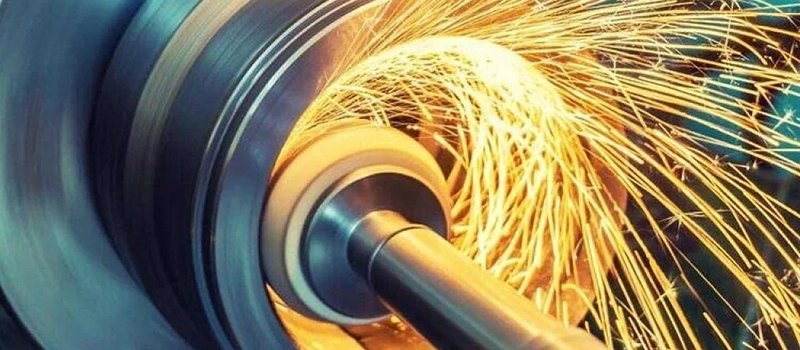
Manufacturers use various finishing processes to achieve the required surface quality. Precision turning, grinding, polishing, and superfinishing techniques are commonly employed to reduce surface roughness and enhance component performance. The required finish depends on the specific application and operating conditions.
For example, shafts used in hydraulic systems or precision pumps often require exceptionally fine surface finishes to ensure effective sealing and minimize leakage. High-speed rotating equipment may also demand superior surface quality to reduce vibration and improve overall reliability.
Concentricity and Runout Control
Among all geometric requirements in shaft manufacturing, concentricity and runout control are often the most critical. These characteristics determine how accurately different shaft features align with the rotational axis.
Concentricity refers to the relationship between multiple cylindrical surfaces that share a common centerline. If these surfaces are not properly aligned, the shaft may rotate unevenly, causing vibration and excessive mechanical stress.
Runout measures the amount of deviation that occurs as a shaft rotates around its axis. Excessive runout can negatively affect bearings, seals, gears, and other connected components. In severe cases, poor runout control may lead to catastrophic equipment failure.
Precision shaft machining relies on carefully controlled machining setups, high-quality tooling, and advanced machine calibration to minimize these issues. Manufacturers often perform multiple inspection checks throughout production to verify that geometric tolerances remain within specification.
Precision Gear Shaft Machining Technology
Gear shafts represent some of the most demanding components in modern mechanical systems. These parts combine the functions of both a shaft and a gear, requiring exceptional precision in multiple areas simultaneously.
Precision gear shaft machining technology involves the accurate production of bearing seats, shaft diameters, gear teeth, and alignment features within a single component. Because gears directly transmit power and motion, even minor dimensional errors can affect transmission efficiency, noise levels, and equipment durability.
Advanced CNC machining centers and specialized gear-cutting equipment enable manufacturers to achieve the accuracy required for modern gear shaft applications. Sophisticated software systems help optimize machining parameters and maintain consistency throughout production runs.
Industries such as automotive manufacturing, robotics, industrial automation, and heavy equipment production rely heavily on precision gear shafts to ensure smooth and efficient power transmission.
Advanced Inspection and Quality Control
Achieving precision dimensions is only part of the process. Manufacturers must also verify that every finished component meets design requirements before shipment.
Modern quality control systems utilize a wide range of inspection technologies. Micrometers and digital calipers are commonly used for basic dimensional verification, while dial indicators help measure runout and alignment characteristics. For more complex inspections, coordinate measuring machines (CMMs) provide highly accurate three-dimensional measurement capabilities.
Surface roughness testers evaluate finish quality, while optical measuring systems can inspect intricate geometries with exceptional accuracy. In critical applications, manufacturers may also perform hardness testing, material verification, and non-destructive testing procedures to ensure product integrity.
Comprehensive inspection programs provide confidence that every precision machined shaft meets customer expectations and performs reliably in service. These quality assurance practices are particularly important for industries where equipment downtime can result in significant operational costs.
The Value of Precision Machined Shafts
Precision machined shafts offer substantial benefits beyond dimensional accuracy alone. Improved fit and alignment contribute to smoother equipment operation, reduced vibration, and lower energy consumption. Enhanced surface finishes help minimize wear and extend component life, while accurate geometric control improves overall system reliability.
Although precision machining may involve higher manufacturing costs compared to standard machining processes, the long-term benefits often outweigh the initial investment. Reduced maintenance requirements, longer service intervals, and improved equipment performance can significantly lower total operating costs over the life of the product.
As industrial systems continue to demand higher levels of performance and efficiency, precision shaft machining will remain a fundamental element of modern manufacturing. Through advanced technology, rigorous quality control, and continuous process improvement, manufacturers can deliver precision machined shafts capable of meeting the increasingly complex requirements of today’s engineering applications.
Conclusion
Shaft machining remains one of the most important manufacturing processes in modern industry. From industrial pumps and agricultural machinery to automotive systems and heavy equipment, shafts serve as critical components that enable efficient power transmission and reliable mechanical performance. The quality of a machined shaft directly influences equipment durability, operational efficiency, and long-term maintenance costs.
As manufacturing standards continue to rise, advanced CNC shaft machining technologies have become essential for producing components with exceptional accuracy, consistency, and repeatability. Modern machining methods allow manufacturers to create custom machined shafts that meet increasingly complex design requirements while maintaining tight tolerances and superior surface finishes.
Whether the application requires prototype development, OEM production, or highly specialized components, custom shaft machining services provide the flexibility needed to achieve optimal performance. Combined with rigorous quality control and precision engineering, these capabilities ensure that machined shafts can operate reliably even in the most demanding environments.
By selecting the appropriate materials, following a controlled shaft machining process, and maintaining strict tolerance standards, manufacturers can produce high-quality shaft components that deliver long service life and dependable performance. As industries continue to pursue greater efficiency and productivity, precision shaft machining will remain a cornerstone of advanced manufacturing and mechanical engineering.