Copper laser cutting is rapidly transforming modern manufacturing with unmatched precision and efficiency. Many engineers and buyers often ask: can copper be laser cut without compromising quality? With advancements in fiber laser cutting copper and improved copper laser cutting services, the answer is increasingly clear. From thin foil to thick plate, laser cutting copper now delivers consistent results across various applications. This guide explores how copper laser cutting works and why it has become a preferred solution in precision industries.
Copper Laser Cutting: Definition and Working Principle
Copper laser cutting is a precision manufacturing process that uses a focused laser beam to cut copper materials with high accuracy. In modern fabrication, copper laser cutting is widely used because it allows manufacturers to achieve clean edges, tight tolerances, and complex geometries without mechanical contact.
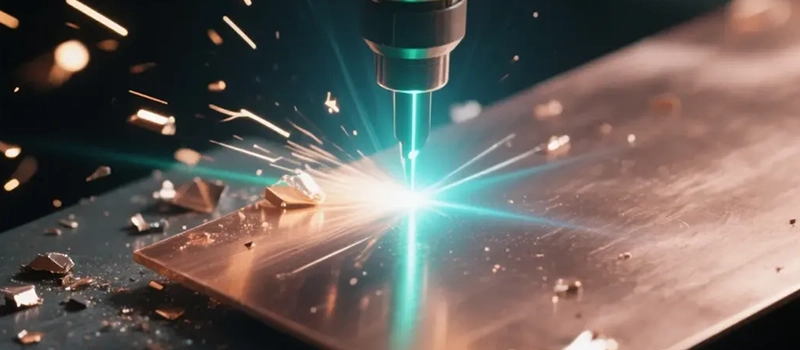
Unlike traditional cutting methods, copper laser cutting does not rely on physical tools. Instead, it uses concentrated thermal energy generated by a laser beam. When the laser is directed onto the copper surface, the energy is absorbed and converted into heat. This localized heat rapidly increases the temperature of the material, causing it to melt or vaporize along a predefined path.
During laser cutting copper, an assist gas is typically introduced into the cutting zone. This gas plays a critical role in the process. It helps remove molten material from the cutting area and stabilizes the cut edge. Depending on the requirements, different gases may be used to achieve specific cutting results, such as smoother surfaces or reduced oxidation.
A key characteristic of copper laser cutting is the need to manage copper’s physical properties. Copper has high thermal conductivity, which means heat spreads quickly away from the cutting zone. As a result, maintaining sufficient energy concentration is essential to ensure continuous cutting. At the same time, copper also reflects a portion of the laser energy, which requires precise control of laser parameters.
The effectiveness of cutting copper on laser systems depends on several factors. These include laser power, beam focus, cutting speed, and material thickness. Proper coordination of these parameters ensures that the laser can penetrate the material efficiently while maintaining edge quality.
In addition, the wavelength of the laser source directly influences the cutting performance. Different laser systems interact with copper in different ways, affecting absorption and energy efficiency. This is why selecting the appropriate laser technology is an important part of copper laser cutting, although the specific differences will be discussed in later sections.
Another important aspect of laser cutting copper is process stability. Because copper reacts quickly to temperature changes, even small variations in energy input can affect the final result. Therefore, modern copper laser cutting relies on advanced control systems to maintain consistent cutting conditions throughout the operation.
Overall, copper laser cutting is defined by its ability to deliver precise, repeatable results through controlled thermal processing. By focusing energy into a small area and combining it with assist gas flow, the process achieves efficient material removal while preserving the integrity of the surrounding material.
Copper Laser Cutting: Can Copper Be Laser Cut? Key Feasibility Analysis
Copper laser cutting is often questioned because copper is traditionally considered a difficult material to process with lasers. Many engineers and buyers initially doubt whether copper laser cutting can achieve stable results, especially when compared with steel or aluminum. However, with modern technology, laser cutting copper has become not only feasible but also increasingly reliable in industrial production.
The main reason behind this concern lies in the physical properties of copper. Copper has very high reflectivity, especially when interacting with certain laser wavelengths. During the early stages of laser cutting copper, a significant portion of the laser energy is reflected away from the surface rather than absorbed. This reduces cutting efficiency and can even create instability in the process. As a result, early copper laser cutting methods were limited in performance and consistency.
Another factor affecting copper laser cutting is thermal conductivity. Copper transfers heat extremely quickly. When a laser attempts to concentrate heat in a specific area, the material disperses that heat almost immediately. This makes it more difficult to maintain the temperature required for continuous cutting. In practical terms, this means that cutting copper on laser systems requires higher energy density and more precise parameter control than many other metals.
Despite these challenges, copper laser cutting is absolutely achievable. The key lies in how modern systems manage energy delivery and absorption. In current industrial environments, laser cutting copper has been significantly improved through optimized beam control, better focusing systems, and advanced parameter tuning. These improvements allow the laser to deliver sufficient energy into a very small area, overcoming both reflection and heat dissipation.
Material condition also plays an important role in feasibility. For example, surface treatment can influence how effectively copper absorbs laser energy. Oxidized or coated surfaces may absorb more energy than highly polished copper. This means that in some cases, pre-treatment can improve the performance of copper laser cutting without changing the core process.
Thickness is another critical variable. Thin materials, such as copper foil, are much easier to process because they require less energy to penetrate. As thickness increases, the difficulty of laser cutting copper also increases. Thicker materials demand higher power levels and more stable process control to maintain consistent cutting quality. This is why selecting the appropriate equipment and parameters is essential when working with different copper forms.
In addition, the feasibility of copper laser cutting depends on the type of laser system used. Some laser technologies interact more effectively with copper, improving absorption and reducing reflection issues. This allows for faster cutting speeds and better edge quality. The specific differences between these technologies will be examined in the next section, where fiber and CO2 laser cutting copper are compared in detail.
Another important aspect is process stability over time. Even if copper can be cut successfully, maintaining consistent results across multiple parts is critical in industrial production. Modern copper laser cutting systems address this by using real-time monitoring and adaptive control. These systems adjust parameters during the cutting process to ensure uniform quality, even when material conditions vary slightly.
From a practical perspective, copper laser cutting is now widely used in industries that require high precision and conductivity. The fact that it is being adopted across multiple sectors is strong evidence of its feasibility. Manufacturers are no longer asking whether copper can be laser cut, but rather how to optimize the process for efficiency and quality.
Overall, copper laser cutting is not only possible but has become a mature and dependable process. While copper presents unique challenges due to its reflectivity and thermal behavior, modern laser technologies have effectively addressed these issues. With the right setup, laser cutting copper can achieve stable performance, making it a viable solution for precision manufacturing.
Copper Laser Cutting: Fiber Laser Cutting Copper vs CO2 Laser Cutting Copper
Copper laser cutting performance is strongly influenced by the type of laser technology used. While both fiber laser cutting copper and CO2 laser cutting copper are technically capable of processing copper materials, their efficiency, stability, and industrial practicality differ significantly. Understanding these differences is essential for selecting the right method for laser cutting copper.
Fiber Laser Cutting Copper
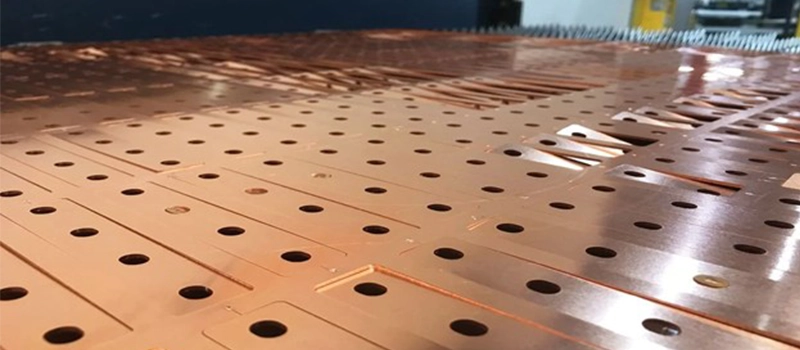
Fiber laser cutting copper has become the dominant solution in modern manufacturing. This is mainly due to its wavelength characteristics and energy efficiency. Fiber lasers operate at a shorter wavelength, which is better absorbed by copper surfaces. As a result, copper laser cutting with fiber systems achieves higher energy utilization and more stable cutting performance.
When performing laser cutting copper with fiber lasers, the beam can penetrate the material more effectively. This reduces the impact of copper’s natural reflectivity, which has historically been a major obstacle. Because more energy is absorbed rather than reflected, the cutting process becomes faster and more consistent.
Another important advantage of fiber laser cutting copper is precision. The beam quality is extremely high, allowing for tighter focus and finer cuts. This is especially important when working with thin materials or intricate geometries. In addition, fiber laser systems typically require less maintenance and have lower operational complexity, making them more suitable for continuous industrial use.
In terms of adaptability, fiber laser cutting copper can handle a wide range of material thicknesses. From thin foil to thicker plates, the process remains stable as long as parameters are properly controlled. This flexibility makes fiber lasers the preferred choice for most copper laser cutting services today.
CO2 Laser Cutting Copper
CO2 laser cutting copper represents an earlier generation of laser technology. While it is widely used for cutting non-metallic materials and certain metals, its effectiveness for copper laser cutting is more limited. The primary issue lies in the wavelength of CO2 lasers, which is less efficiently absorbed by copper.
During laser cutting copper with CO2 systems, a large portion of the laser energy is reflected away from the surface. This reduces cutting efficiency and can lead to unstable processing conditions. In some cases, the reflected energy may even interfere with the laser system itself, increasing the risk of equipment damage.
To compensate for these limitations, cutting copper with CO2 laser often requires higher power levels and slower cutting speeds. Even with these adjustments, achieving consistent results can be challenging, especially when dealing with thicker materials or high-precision requirements.
However, CO2 laser cutting copper is not entirely obsolete. In specific situations, such as cutting very thin copper materials or when fiber laser systems are not available, CO2 lasers can still be used. Proper parameter control and surface preparation can improve performance, but the process generally remains less efficient compared to fiber laser alternatives.
Key Differences in Copper Laser Cutting Performance
When comparing fiber laser cutting copper and CO2 laser cutting copper, several key differences become clear. First is energy absorption. Fiber lasers provide significantly better absorption on copper surfaces, which directly improves cutting efficiency. Second is process stability. Fiber systems offer more consistent results due to reduced reflection and better control of heat input.
Another major difference is cutting speed. Fiber laser cutting copper typically achieves higher speeds while maintaining quality, whereas CO2 laser cutting copper often requires slower operation to maintain stability. This difference has a direct impact on productivity in industrial environments.
Edge quality is also affected by the choice of technology. Fiber laser cutting copper generally produces cleaner edges with less thermal distortion. In contrast, CO2 laser cutting copper may result in rougher edges or require additional finishing processes.
Finally, from a practical standpoint, fiber laser systems are more aligned with current industrial demands. They support automation, require less maintenance, and integrate more easily into modern production lines. As a result, most copper laser cutting services have transitioned toward fiber laser technology as their primary solution.
Copper Laser Cutting: Laser Cut Copper Sheet, Plate, and Tube Material Differences
Copper laser cutting is not a one-size-fits-all process. Different material forms require different processing strategies, even when using the same laser system. In practical manufacturing, laser cutting copper sheet, laser cut copper plate, and laser cutting copper tube each present unique characteristics that directly influence cutting performance, parameter selection, and final quality.
Laser Cut Copper Sheet
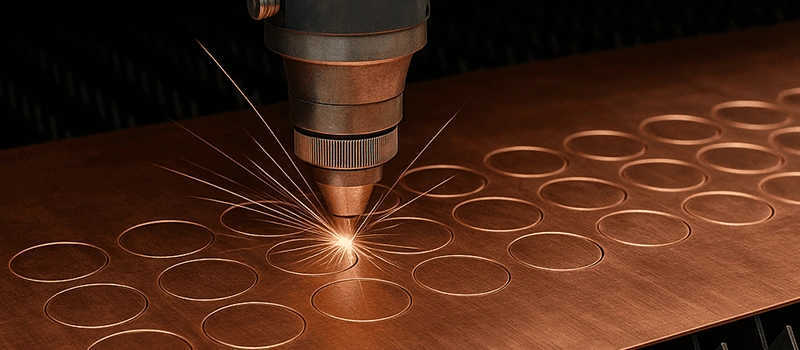
Laser cut copper sheet is one of the most common applications in copper laser cutting. Sheets are typically thin to medium in thickness, which makes them relatively easier to process compared to heavier sections. During laser cutting copper sheet, the laser can penetrate the material quickly due to its limited thickness, allowing for higher cutting speeds and better efficiency.
Another advantage of copper sheet is its flat geometry. This allows for stable positioning during cutting, which improves accuracy and repeatability. In copper laser cutting, stability is critical because even slight movement can affect edge quality. Flat sheets minimize this risk and enable consistent results across large production batches.
However, thin sheets also introduce specific challenges. Because the material is lightweight, excessive heat input can cause deformation or warping. Therefore, cutting copper on laser systems for sheet materials requires careful control of power and speed. The goal is to deliver enough energy to achieve a clean cut without overheating the surrounding area.
Laser cutting copper sheet is widely used in applications that require precise shapes and fine details. The process supports intricate patterns and tight tolerances, making it suitable for components where dimensional accuracy is critical.
Laser Cut Copper Plate
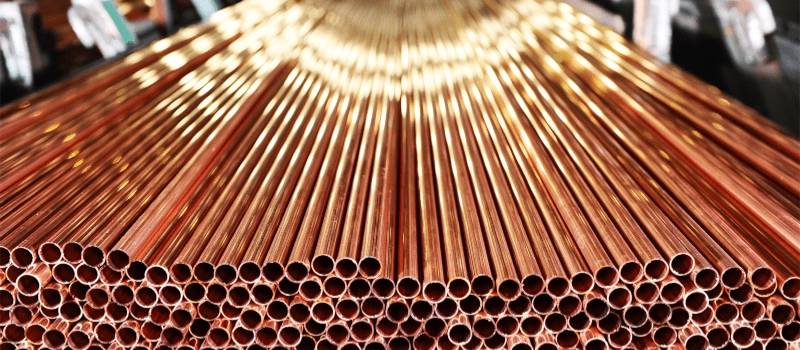
Laser cut copper plate involves thicker materials and presents a different set of requirements in copper laser cutting. As thickness increases, the amount of energy needed to penetrate the material also increases significantly. This means that laser cutting copper plate requires higher power levels and slower cutting speeds compared to sheet processing.
One of the main challenges in cutting thicker copper plates is maintaining consistent energy delivery throughout the cut. Because copper conducts heat quickly, the laser must continuously supply sufficient energy to keep the cutting zone at the required temperature. Any fluctuation in energy can lead to incomplete cuts or uneven edges.
In addition, assist gas plays a more critical role when processing copper plates. The gas must effectively remove molten material from the kerf to prevent buildup and ensure a clean cut. Proper gas pressure and flow are essential for maintaining edge quality during copper laser cutting of thicker sections.
Another factor to consider is edge finish. Laser cut copper plate may exhibit slight roughness or striations if parameters are not optimized. Therefore, achieving high-quality results often requires precise calibration of laser settings. Despite these challenges, modern laser cutting copper technologies, especially fiber-based systems, have made it possible to process thicker plates with improved consistency.
Laser Cutting Copper Tube
Laser cutting copper tube introduces additional complexity due to its three-dimensional geometry. Unlike flat sheets or plates, tubes require coordinated movement of both the laser head and the material. This makes copper laser cutting more technically demanding when applied to tubular components.
One of the key considerations in laser cutting copper tube is maintaining consistent focus along the curved surface. As the tube rotates during cutting, the distance between the laser and the material must remain constant. Any variation can affect the quality of the cut and lead to inconsistencies.
Another challenge is heat distribution. Because tubes have a hollow structure, heat behaves differently compared to solid materials. During laser cutting copper, heat may accumulate unevenly, which can impact edge quality if not properly managed. This requires precise synchronization between laser power, cutting speed, and rotational movement.
Despite these challenges, cutting copper on laser systems for tubes offers significant advantages. It enables the production of complex geometries, including holes, slots, and custom profiles, without the need for additional machining steps. This improves production efficiency and reduces overall processing time.
Laser Cut Copper Foil and Thin Materials
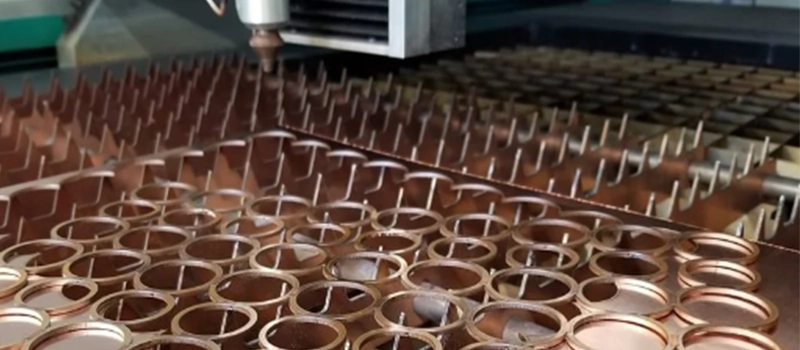
In addition to sheets, plates, and tubes, copper laser cutting is also widely used for very thin materials such as copper foil. Laser cutting copper foil requires extremely precise control because the material is highly sensitive to heat.
When processing thin copper materials, even a small increase in energy input can cause burning or deformation. Therefore, copper laser cutting for foil applications typically uses lower power settings and higher cutting speeds. The objective is to minimize thermal impact while maintaining a clean cut.
Thin materials also benefit from the non-contact nature of laser cutting copper. Since there is no mechanical force applied, the risk of distortion is reduced compared to traditional cutting methods. This makes laser cutting an effective solution for delicate copper components.
Material Form Selection in Copper Laser Cutting
Choosing the correct approach in copper laser cutting depends heavily on the material form. Sheets prioritize speed and precision, plates require power and stability, and tubes demand advanced motion control. Each form presents its own balance between efficiency and complexity.
Understanding these differences allows manufacturers to optimize laser cutting copper processes for specific applications. By adjusting parameters and selecting appropriate equipment, it is possible to achieve high-quality results across all copper material types.
Copper Laser Cutting: Our Advantages in Copper Laser Cutting Services
In the field of copper laser cutting, choosing the right manufacturer directly determines product quality, delivery reliability, and overall cost efficiency. As a professional factory, Dalian ZhongSheng Metal Products has developed strong capabilities in copper laser cutting through years of technical accumulation and production experience. These advantages are reflected in equipment, process control, quality assurance, and global service support.
Advanced Equipment for Stable Copper Laser Cutting
Copper laser cutting requires high-performance equipment due to the material’s reflectivity and thermal conductivity. The company is equipped with advanced fiber laser systems optimized for laser cutting copper. These machines provide stable energy output and high beam quality, ensuring consistent performance across different copper materials.
With modern equipment, it is possible to efficiently handle laser cut copper sheet, laser cut copper plate, and laser cutting copper tube. This enables flexible production regardless of part complexity or material thickness.
Strong Process Control in Laser Cutting Copper
Process control plays a critical role in copper laser cutting. The manufacturer has established standardized procedures for cutting copper on laser systems, including parameter optimization for different materials and thicknesses.
Each project is evaluated to determine the optimal cutting conditions. This ensures that laser cutting copper remains stable and repeatable, whether working with pure copper or copper alloy laser cutting.
Experience in Copper Alloy Laser Cutting
In addition to pure copper, the company has accumulated practical experience in copper alloy laser cutting. Different alloys respond differently to laser energy, and improper parameter settings can affect the final result.
Through continuous production practice, the team understands how to adjust copper laser cutting parameters for various alloy compositions. This ensures reliable performance when producing laser cut copper alloys for industrial applications.
High Precision and Quality Assurance
Precision is one of the core strengths of the company’s copper laser cutting services. Tight tolerances and clean edges are achieved through controlled processes and strict inspection standards.
From raw material selection to final inspection, every stage is monitored to ensure consistent quality. In addition, the manufacturer meets international compliance requirements and holds relevant certifications, ensuring reliability for global markets .
Flexible Production and Fast Delivery
Production flexibility is another key advantage. The factory supports both small-batch customization and large-scale manufacturing in copper laser cutting projects.
Efficient workflow management ensures timely delivery. This helps customers reduce lead times and maintain stable production schedules, which is critical in industrial supply chains.
Competitive Pricing from a Direct Factory
As a direct manufacturer, the company is able to offer competitive pricing for copper laser cutting services. By managing the full production process internally, unnecessary costs are reduced.
This allows customers to achieve a balance between quality and cost, making laser cutting copper a more efficient manufacturing solution.
One-Stop Metal Fabrication Capability
Beyond copper laser cutting, the factory provides a full range of metal fabrication services, including casting, machining, forging, and sheet metal processing.
This one-stop capability simplifies procurement and ensures consistency across different production stages, especially for complex projects.
Reliable Global Export Experience
With extensive export experience, the company supports international customers with stable logistics and professional documentation.
From packaging to shipping, each step is carefully managed to ensure safe and timely delivery. This makes the manufacturer a reliable long-term partner for copper laser cutting projects.
Copper Laser Cutting: Applications of Laser Cut Copper in Industry
Copper laser cutting plays a critical role across multiple industries due to copper’s excellent electrical conductivity, thermal performance, and corrosion resistance. As manufacturing standards continue to rise, laser cutting copper has become the preferred method for producing high-precision copper components in demanding applications.
Electrical and Power Distribution Industry
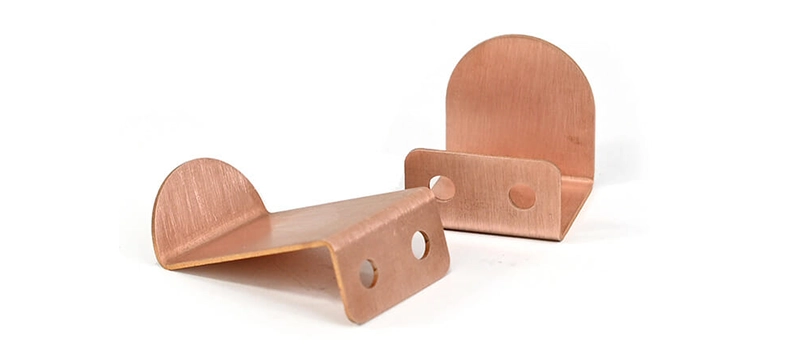
In the electrical industry, copper laser cutting is widely used to manufacture components such as busbars, connectors, and conductive plates. These parts require extremely high precision because even minor dimensional deviations can affect electrical performance.
Laser cutting copper ensures clean edges and accurate dimensions, which are essential for maintaining stable current flow and minimizing energy loss. In addition, the ability to process laser cut copper sheet and laser cut copper plate with consistent quality makes this method highly suitable for large-scale electrical production.
Another advantage in this sector is repeatability. Copper laser cutting allows manufacturers to produce identical components across batches, ensuring uniform performance in electrical systems. This is especially important in power distribution applications where reliability is critical.
Automotive Industry
In the automotive sector, the demand for copper components has increased significantly, especially with the growth of electric vehicles. Copper laser cutting is used to produce parts such as battery connectors, motor components, and heat transfer elements.
Laser cutting copper provides the precision needed for compact and complex designs commonly found in modern vehicles. As components become smaller and more integrated, traditional cutting methods struggle to maintain accuracy. Copper laser cutting solves this problem by enabling intricate geometries without compromising quality.
Additionally, the efficiency of laser cutting copper supports high-volume production, which is essential in the automotive industry. Manufacturers can maintain both speed and consistency, ensuring that production targets are met without sacrificing performance.
Electronics and Precision Devices
Copper laser cutting is also essential in the electronics industry, where components require extremely fine details and tight tolerances. Typical applications include circuit components, electromagnetic shielding parts, and precision connectors.
Laser cutting copper foil and thin sheets allows for precise pattern creation without mechanical stress. This is particularly important in electronics, where material deformation can affect functionality. The non-contact nature of copper laser cutting ensures that delicate components remain intact during processing.
As electronic devices continue to become smaller and more complex, the demand for high-precision copper parts is increasing. Laser cutting copper provides the level of control needed to meet these evolving requirements.
New Energy and Renewable Systems
In renewable energy systems, copper laser cutting is widely used for components in solar, wind, and energy storage applications. Copper is often selected for its conductivity and durability, making it ideal for energy transfer and heat management.
Laser cutting copper is used to produce parts such as conductive connectors, cooling components, and structural elements. These applications require both precision and reliability, as performance directly impacts system efficiency.
In this field, the ability to process different material forms—such as laser cut copper sheet and thicker plates—allows manufacturers to adapt to various design requirements. Copper laser cutting supports both customization and scalability in renewable energy projects.
Industrial Machinery and Equipment
Copper laser cutting is also applied in general industrial machinery, where copper components are used for thermal management, electrical systems, and wear-resistant parts. These components must meet strict durability and performance standards.
Laser cutting copper ensures that parts are produced with consistent quality, reducing the need for additional finishing processes. This improves production efficiency and helps manufacturers maintain tight delivery schedules.
In machinery applications, flexibility is important. Copper laser cutting allows for quick adjustments to design changes, enabling manufacturers to respond rapidly to evolving production needs.
Petrochemical and Heavy Industry
In petrochemical and heavy industrial environments, copper components are often used in systems that require corrosion resistance and thermal stability. Copper laser cutting enables the production of specialized parts that can withstand harsh operating conditions.
Laser cutting copper provides the precision needed for sealing surfaces and connection points, which are critical in these industries. High-quality edges and accurate dimensions help ensure system integrity and long-term reliability.
Additionally, the ability to process thicker materials makes copper laser cutting suitable for heavy-duty applications where strength and durability are essential.
Copper Laser Cutting: Conclusion
Copper laser cutting has become a mature and dependable manufacturing process capable of delivering high precision and consistent quality. With the advancement of laser technologies, especially in handling copper’s unique properties, laser cutting copper is now widely applied across industries requiring accuracy and reliability. From different material forms to diverse industrial uses, copper laser cutting continues to play a critical role in modern fabrication.