Are forging terms causing confusion between engineers and production teams?
Do unclear forging process definitions lead to dimensional errors or mechanical failure?
Misunderstanding forging terminology can result in material waste, tool damage, and costly production delays.
A structured Forging Process Glossary establishes a standardized technical language for open die forging, closed die forging, heat treatment, deformation control, and quality inspection. By clearly defining essential forging terminology, this Forging Process Glossary improves communication, mechanical performance, and process reliability in modern metal forming operations.
In this comprehensive Forging Process Glossary, I systematically organize and explain the most important terminology used in industrial forging production.
Forging Fundamentals Glossary
Forging Fundamentals Glossary terms form the technical foundation of the Forging Process Glossary. These Forging Process Glossary terms define deformation behavior, temperature control, mechanical properties, and structural transformation during metal forming. Mastering these Forging Process Glossary fundamentals ensures accurate communication between engineers, metallurgists, and production teams.
Forging: Forging is a metal forming process in which compressive forces are applied to shape heated or cold metal into desired geometry. In the Forging Process Glossary, forging represents a primary method for improving mechanical strength through controlled deformation.
Blacksmithing: Blacksmithing is the traditional form of forging involving manual hammering of heated metal, forming the historical basis of the modern Forging Process Glossary.
Billet: Billet is a semi-finished metal bar used as starting material in forging operations within the Forging Process Glossary system.
Bloom: Bloom is a larger rectangular semi-finished metal product used for heavy forging applications.
Ingot: Ingot is a cast metal block that serves as raw material before forging deformation.
Workpiece: Workpiece refers to the metal material undergoing deformation during the forging process.
Plastic Deformation: Plastic deformation is the permanent shape change of metal under applied stress, a core concept in the Forging Process Glossary.
Elastic Deformation: Elastic deformation is temporary shape change that disappears when stress is removed.
Forgability: Forgability describes the ability of a metal to undergo deformation without cracking under forging conditions.
Forging Temperature: Forging temperature is the temperature range in which metal exhibits sufficient ductility for safe deformation.
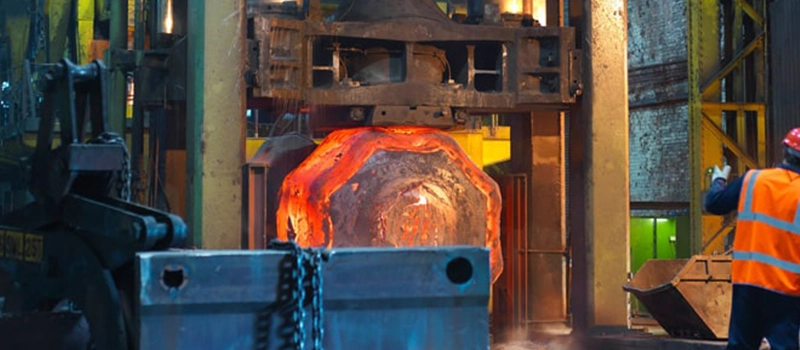
Hot Forging: Hot forging is performed above recrystallization temperature to reduce flow stress and refine grain structure.
Warm Forging: Warm forging occurs at intermediate temperatures, balancing strength and deformation resistance.
Cold Forging: Cold forging is performed at or near room temperature to achieve high dimensional accuracy and surface finish.
Recrystallization Temperature: Recrystallization temperature is the threshold above which new grains form during deformation.
Grain Flow: Grain flow refers to the directional alignment of metal grains caused by deformation, improving strength in forged components.
Directional Grain Structure: Directional grain structure enhances fatigue resistance in critical load-bearing parts.
Forging Ratio: Forging ratio is the ratio of original cross-sectional area to final cross-sectional area after deformation.
Reduction Ratio: Reduction ratio measures the percentage decrease in cross-sectional area during forging.
True Strain: True strain represents the logarithmic measure of deformation used in advanced Forging Process Glossary calculations.
Engineering Strain: Engineering strain is the ratio of change in length to original length.
Flow Stress: Flow stress is the stress required to continue plastic deformation during forging.
Yield Strength: Yield strength is the stress level at which permanent deformation begins.
Ductility: Ductility describes a material’s ability to deform without fracture under tensile stress.
Toughness: Toughness represents the ability of forged metal to absorb energy before fracturing.
Plasticity: Plasticity is the capacity of metal to undergo permanent deformation.
Strain Hardening: Strain hardening increases metal strength through deformation at lower temperatures.
Thermal Expansion: Thermal expansion is the dimensional change of metal due to temperature variation.
Thermal Stress: Thermal stress develops due to uneven heating or cooling during forging operations.
Deformation Rate: Deformation rate influences grain structure and mechanical properties in the Forging Process Glossary framework.
Forging Force: Forging force is the compressive load required to shape the metal workpiece.
Forging Pressure: Forging pressure refers to force applied per unit area during deformation.
Metal Flow: Metal flow describes how material redistributes within dies during forging.
Aspect Ratio: Aspect ratio in forging refers to the proportional relationship between length and diameter during upsetting.
Upsetting Ratio: Upsetting ratio defines the permissible height-to-diameter reduction during forging.
Forging Window: Forging window is the optimal temperature and strain rate range for safe metal deformation.
Workpiece Temperature: Workpiece temperature determines deformation resistance and grain behavior.
Surface Scale: Surface scale is oxide layer formed during high-temperature forging.
Scale Loss: Scale loss refers to material weight reduction due to oxidation.
Metallurgical Bond: Metallurgical bond forms when surfaces join under high pressure and temperature.
Homogeneity: Homogeneity ensures uniform mechanical properties throughout the forged part.
Internal Soundness: Internal soundness indicates absence of voids or inclusions after forging.
Structural Integrity: Structural integrity defines the mechanical reliability achieved through controlled forging deformation.
Forging Equipment Glossary
Forging Equipment Glossary terms describe the machines, structural components, and control systems used in modern metal forming operations. This section of the Forging Process Glossary explains how force is generated, transferred, and controlled during forging production. Understanding these Forging Process Glossary equipment terms is essential for evaluating capacity, precision, and production efficiency.
Forging Press: Forging press is a machine that applies controlled compressive force to shape metal. In the Forging Process Glossary, presses are categorized by drive mechanism and tonnage capacity.
Hydraulic Press: Hydraulic press uses hydraulic cylinders to generate high and consistent forging force, widely used in large-scale Forging Process Glossary applications.
Mechanical Press: Mechanical press uses flywheel energy and crank mechanisms to deliver high-speed forging strokes.
Screw Press: Screw press generates force through rotational motion converted into vertical displacement.
Friction Press: Friction press uses friction discs to control ram movement in forging operations.
Drop Hammer: Drop hammer delivers impact force by dropping a heavy ram onto heated metal, a traditional method within the Forging Process Glossary.
Power Hammer: Power hammer provides repetitive impact blows for shaping metal efficiently.
Counterblow Hammer: Counterblow hammer features two moving rams striking simultaneously to improve forging efficiency.
Anvil: Anvil is the stationary base that supports the workpiece during hammer forging.
Ram: Ram is the moving component of forging equipment that applies compressive force.
Slide: Slide guides the ram vertically during press forging operations.
Bolster Plate: Bolster plate supports and secures the lower die in forging presses.
Die Cushion: Die cushion absorbs shock and controls material flow during forging.
Press Capacity: Press capacity refers to the maximum force the forging machine can apply, typically measured in tons.
Stroke Length: Stroke length defines the vertical travel distance of the ram.
Ram Speed: Ram speed determines deformation rate and influences grain structure in the Forging Process Glossary framework.
Tonnage: Tonnage describes the total compressive force available in forging equipment.
Load Cell: Load cell measures applied force during forging for process monitoring.
Manipulator: Manipulator is a mechanical arm used to position heated billets during forging.
Forging Robot: Forging robot automates workpiece transfer and die loading to improve safety and consistency.
Induction Heater: Induction heater rapidly heats billets using electromagnetic induction in modern Forging Process Glossary production lines.
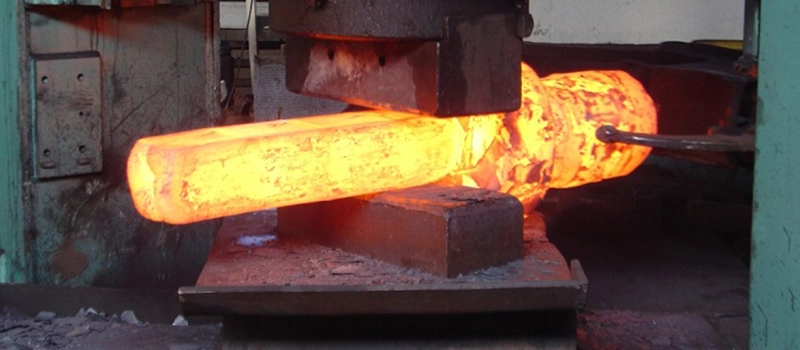
Gas Furnace: Gas furnace heats metal billets using controlled combustion systems.
Electric Furnace: Electric furnace uses electrical resistance or induction to heat forging materials.
Temperature Controller: Temperature controller maintains consistent heating conditions for forging operations.
Billet Feeder: Billet feeder automatically supplies raw material into the forging line.
Lubrication System: Lubrication system reduces friction between dies and workpiece during deformation.
Cooling System: Cooling system regulates die temperature to extend die life.
Die Handling System: Die handling system facilitates rapid die changeover in production forging.
Clutch System: Clutch system engages or disengages mechanical press drive systems.
Flywheel: Flywheel stores rotational energy in mechanical presses.
Crankshaft Mechanism: Crankshaft mechanism converts rotational motion into vertical ram movement.
Guide Columns: Guide columns maintain precise alignment of upper and lower dies.
Foundation Block: Foundation block absorbs vibration and stabilizes forging machinery.
Safety Interlock: Safety interlock prevents machine operation under unsafe conditions.
Emergency Stop: Emergency stop instantly halts forging equipment during abnormal situations.
Automation System: Automation system integrates sensors and controls for optimized Forging Process Glossary production.
Control Panel: Control panel allows operators to monitor and adjust forging parameters.
Programmable Logic Controller (PLC): PLC manages automated forging equipment functions.
Hydraulic Cylinder: Hydraulic cylinder generates linear force in hydraulic press systems.
Oil Reservoir: Oil reservoir stores hydraulic fluid for pressure transmission.
Pressure Gauge: Pressure gauge monitors hydraulic pressure during forging cycles.
Cooling Tower: Cooling tower dissipates heat generated during continuous forging production.
Die Spray System: Die spray system applies lubricants to improve metal flow and die life.
Billet Transfer Conveyor: Billet transfer conveyor moves heated material between process stages.
Heating Zone: Heating zone refers to controlled sections inside a forging furnace.
Preheating Station: Preheating station prepares billets to minimize thermal shock before forging.
Tool Change System: Tool change system reduces downtime during die replacement.
Maintenance Platform: Maintenance platform provides safe access to forging machinery for servicing.
Forging Dies and Tooling Glossary
Forging Dies and Tooling Glossary terms are a core component of the Forging Process Glossary because die design directly determines metal flow, dimensional accuracy, flash formation, and final mechanical properties. These Forging Process Glossary terms define die geometry, tooling components, wear behavior, and forming precision.
Open Die: Open die refers to flat or simple-shaped dies used in open die forging operations where metal flows freely without full enclosure.
Closed Die: Closed die fully encloses the workpiece inside a die cavity, forming complex shapes in the Forging Process Glossary production system.
Impression Die: Impression die contains shaped cavities that imprint geometry onto the heated workpiece.
Die Cavity: Die cavity is the shaped recess inside forging dies that determines final part geometry.
Upper Die: Upper die is attached to the ram and moves downward during forging.
Lower Die: Lower die is mounted on the bolster plate and remains stationary.
Flash: Flash is excess material squeezed out between die halves during closed die forging.
Flash Land: Flash land is the narrow gap controlling flash thickness and metal flow resistance.
Flash Gutter: Flash gutter collects excess material during forging to prevent die overloading.
Draft Angle: Draft angle is the slight taper applied to die walls to facilitate part removal.
Die Radius: Die radius refers to rounded transitions inside die cavities to prevent stress concentration.
Die Fillet: Die fillet reduces sharp corners to improve metal flow and reduce cracking risk.
Preform: Preform is an intermediate forged shape used before final impression forging.
Blocker Die: Blocker die shapes material closer to final geometry before finishing.
Finisher Die: Finisher die produces the final forging geometry and surface definition.
Trimming Die: Trimming die removes flash from forged components after forming.
Punch: Punch is a tool used to create holes or indentations during forging.
Mandrel: Mandrel supports internal cavities during ring rolling or hollow forging.
Knockout Pin: Knockout pin ejects forged parts from die cavities.
Ejector System: Ejector system assists in removing forged components safely.
Die Wear: Die wear refers to gradual degradation of die surfaces due to repeated forging cycles.
Die Cracking: Die cracking occurs due to thermal fatigue and cyclic stress.
Die Life: Die life represents the number of forging cycles before replacement is required.
Die Steel: Die steel is high-strength tool steel designed to withstand forging temperatures and pressures.
Tool Steel: Tool steel is alloy steel optimized for wear resistance and toughness in forging dies.
Heat Checking: Heat checking describes surface cracking caused by repeated thermal cycling.
Surface Hardening: Surface hardening improves die durability against abrasion.
Lubrication Groove: Lubrication groove distributes die lubricant evenly across cavity surfaces.
Die Alignment: Die alignment ensures accurate positioning between upper and lower dies.
Guide Pins: Guide pins maintain precise die alignment during forging strokes.
Die Block: Die block is the base structure supporting die cavities.
Preheating of Dies: Preheating of dies reduces thermal shock and improves die life.
Die Coating: Die coating protects tooling surfaces from oxidation and wear.
Die Polishing: Die polishing improves surface finish and metal flow consistency.
Cavity Filling: Cavity filling refers to the complete distribution of metal inside die impressions.
Metal Flow Path: Metal flow path describes how material moves through die cavities during deformation.
Die Impression Depth: Die impression depth controls final forging thickness and dimensional tolerance.
Insert Die: Insert die uses replaceable cavity sections for maintenance efficiency.
Die Maintenance: Die maintenance involves inspection, polishing, and repair to extend die life.
Die Repair Welding: Die repair welding restores worn or cracked die surfaces.
Tooling Setup: Tooling setup refers to installation and alignment of forging dies before production.
Cooling Channel: Cooling channel controls die temperature during high-volume forging.
Die Stress Concentration: Die stress concentration refers to localized stress areas that may initiate cracks.
Forging Tooling Assembly: Forging tooling assembly includes all die components, support structures, and clamping systems.
Flash Control System: Flash control system optimizes excess material flow in closed die forging.
Die Locking Mechanism: Die locking mechanism secures tooling during high-pressure forging cycles.
Forging Die Design: Forging die design integrates geometry, draft, radii, and flow analysis within the Forging Process Glossary engineering framework.
Forging Process Methods Glossary
Forging Process Methods Glossary terms define the various industrial forming techniques used in the Forging Process Glossary. These Forging Process Glossary methods describe how compressive force, temperature control, and material flow are applied to produce components with superior strength and grain structure. Understanding these Forging Process Glossary process methods allows engineers to select optimal forming strategies based on geometry, material, and production volume.
Open Die Forging: Open die forging compresses metal between flat or simple dies without fully enclosing the workpiece.
Closed Die Forging: Closed die forging shapes metal inside impression cavities for high precision components.
Impression Die Forging: Impression die forging uses shaped cavities to create complex geometries under high pressure.
Precision Forging: Precision forging minimizes machining allowance by achieving near-net dimensions.
Near Net Shape Forging: Near net shape forging reduces post-processing by closely matching final part geometry.
Hot Forging Process: Hot forging process is performed above recrystallization temperature to reduce deformation resistance.
Warm Forging Process: Warm forging process balances dimensional accuracy and mechanical strength.
Cold Forging Process: Cold forging process is performed at room temperature for superior surface finish.
Upset Forging: Upset forging increases cross-sectional area by compressing metal along its axis.
Heading: Heading is a specialized upset forging method used to form bolt heads and fasteners.
Roll Forging: Roll forging uses rotating rolls to progressively shape elongated parts.
Ring Rolling: Ring rolling enlarges the diameter of rings through radial compression.
Radial Forging: Radial forging applies compressive force from multiple directions simultaneously.
Orbital Forging: Orbital forging uses a tilted die to apply localized compressive force.
Swaging: Swaging reduces diameter using repeated radial hammering.
Extrusion Forging: Extrusion forging forces metal through a die opening under compressive stress.
Forward Extrusion: Forward extrusion pushes material in the same direction as ram movement.
Backward Extrusion: Backward extrusion forces metal to flow opposite to ram direction.
Lateral Extrusion: Lateral extrusion directs material flow sideways within die cavities.
Coining: Coining applies high pressure to create fine surface details.
Piercing: Piercing creates internal holes through compressive force and punches.
Drawing: Drawing elongates metal by reducing cross-sectional area.
Cross Wedge Rolling: Cross wedge rolling forms stepped shafts using angled rollers.
Isothermal Forging: Isothermal forging maintains both dies and workpiece at controlled temperatures.
Flashless Forging: Flashless forging eliminates excess material by precisely controlling die volume.
Semi-Closed Die Forging: Semi-closed die forging partially restricts material flow.
Hydrostatic Forging: Hydrostatic forging uses fluid pressure to assist material deformation.
Incremental Forging: Incremental forging applies small successive deformations to achieve final shape.
Precision Ring Forging: Precision ring forging controls ring geometry with tight tolerance.
Multi-Directional Forging: Multi-directional forging deforms metal in several directions to refine grain structure.
Powder Forging: Powder forging compacts and forges sintered metal preforms.
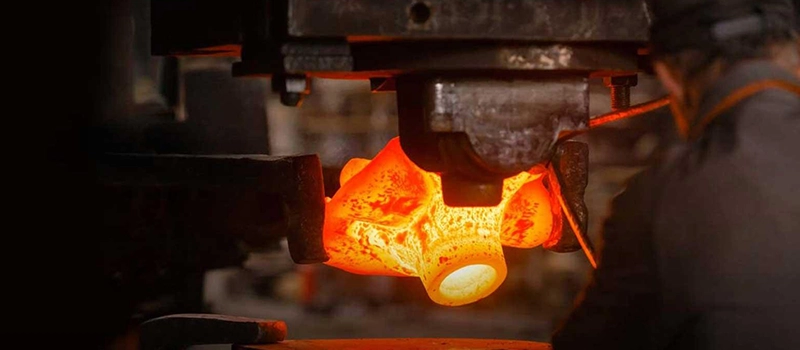
Micro Forging: Micro forging produces miniature components under controlled micro-scale deformation.
High Speed Forging: High speed forging applies rapid deformation to improve productivity.
Controlled Atmosphere Forging: Controlled atmosphere forging reduces oxidation during heating.
Vacuum Forging: Vacuum forging limits oxidation and contamination.
Forging with Induction Heating: Forging with induction heating ensures rapid and uniform billet temperature.
Transfer Forging: Transfer forging moves workpieces automatically between multiple die stations.
Multi-Stage Forging: Multi-stage forging uses several forming steps to achieve complex geometry.
Preform Forging: Preform forging prepares intermediate shape before finishing.
Blocker Forging: Blocker forging distributes material close to final dimensions.
Finish Forging: Finish forging creates the final geometry with precise dimensional control.
Trimming Operation: Trimming operation removes flash after closed die forging.
Sizing Operation: Sizing operation improves dimensional accuracy after forging.
Calibrating: Calibrating corrects dimensional variation after initial forging.
Forge Welding: Forge welding joins metals by applying heat and compressive force.
Upset Butt Welding: Upset butt welding joins rods by heating and axial compression.
Induction Assisted Forging: Induction assisted forging integrates localized heating with deformation.
Press Forging: Press forging applies slow, steady compressive force.
Hammer Forging: Hammer forging applies repeated impact blows.
Automated Forging Line: Automated forging line integrates heating, forming, and trimming processes.
High Integrity Forging: High integrity forging emphasizes internal soundness and fatigue resistance.
Forging Metallurgy Glossary
Forging Metallurgy Glossary terms represent the scientific backbone of the Forging Process Glossary. These Forging Process Glossary metallurgical concepts explain how microstructure evolves during deformation, how phase transformation influences mechanical properties, and how heat treatment integrates with forging to achieve optimal strength and toughness.
Recrystallization: Recrystallization is the formation of new strain-free grains during hot deformation, a central concept in the Forging Process Glossary.
Dynamic Recrystallization: Dynamic recrystallization occurs simultaneously with deformation at elevated temperature.
Static Recrystallization: Static recrystallization occurs after deformation during controlled cooling.
Grain Growth: Grain growth is the increase in grain size after recrystallization if temperature remains high.
Grain Refinement: Grain refinement improves mechanical properties by producing fine and uniform grain structure.
Microstructure: Microstructure refers to the internal arrangement of grains and phases within forged metal.
Austenite: Austenite is a high-temperature phase of steel with face-centered cubic structure.
Ferrite: Ferrite is a body-centered cubic iron phase with relatively low strength and high ductility.
Martensite: Martensite is a hard, brittle phase formed by rapid quenching of austenite.
Bainite: Bainite is a microstructure formed at intermediate cooling rates.
Pearlite: Pearlite is a lamellar mixture of ferrite and cementite formed during slow cooling.
Cementite: Cementite is iron carbide contributing to hardness in steels.
Phase Transformation: Phase transformation refers to structural changes in metal due to temperature variation.
Phase Diagram: Phase diagram illustrates equilibrium phases as a function of temperature and composition in the Forging Process Glossary framework.
Flow Stress Curve: Flow stress curve represents stress-strain behavior during plastic deformation.
Strain Rate Sensitivity: Strain rate sensitivity describes how material strength changes with deformation speed.
Work Hardening: Work hardening increases strength through plastic deformation at lower temperatures.
Dynamic Recovery: Dynamic recovery reduces dislocation density during hot deformation.
Dislocation Density: Dislocation density influences strength and deformation behavior in forged metals.
Residual Stress: Residual stress remains inside a forged component after cooling.
Inclusion: Inclusion refers to non-metallic particles embedded within the metal matrix.
Segregation: Segregation is uneven distribution of alloying elements during solidification.
Homogenization: Homogenization heat treatment reduces chemical segregation.
Carbide Precipitation: Carbide precipitation strengthens steel during heat treatment.
Solid Solution Strengthening: Solid solution strengthening occurs when alloying elements distort the crystal lattice.
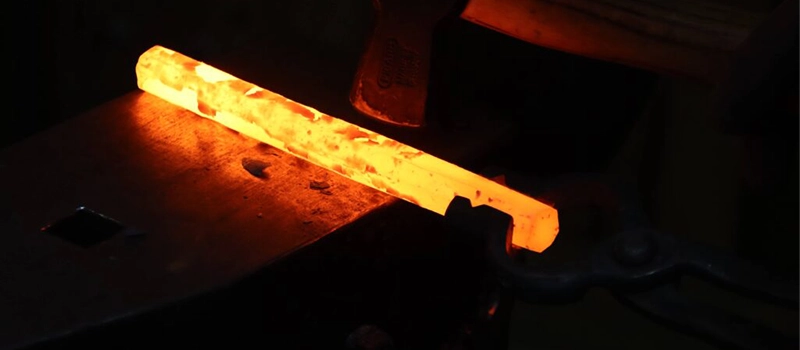
Precipitation Hardening: Precipitation hardening enhances strength by forming fine particles inside the matrix.
Annealing: Annealing softens forged metal and relieves internal stress.
Normalizing: Normalizing refines grain structure by controlled air cooling.
Quenching: Quenching rapidly cools heated metal to form hard microstructures.
Tempering: Tempering reduces brittleness after quenching.
Solution Treatment: Solution treatment dissolves alloying elements at high temperature before aging.
Aging: Aging forms strengthening precipitates after solution treatment.
Heat Treatment Cycle: Heat treatment cycle defines heating, holding, and cooling parameters.
Grain Boundary: Grain boundary is the interface between adjacent grains.
Texture: Texture refers to preferred crystallographic orientation caused by deformation.
Forging Texture: Forging texture influences anisotropic mechanical properties.
Thermal Gradient: Thermal gradient describes temperature variation within the forged component.
Metallurgical Bonding: Metallurgical bonding occurs when two metal surfaces join under heat and pressure.
Internal Soundness: Internal soundness ensures absence of voids and internal defects.
Fatigue Resistance: Fatigue resistance measures ability to withstand cyclic loading.
Creep Resistance: Creep resistance defines resistance to deformation at high temperature.
Yield Strength: Yield strength indicates the onset of permanent deformation.
Ultimate Tensile Strength: Ultimate tensile strength measures maximum stress before fracture.
Elongation: Elongation represents ductility during tensile testing.
Impact Toughness: Impact toughness measures resistance to sudden fracture.
Fracture Toughness: Fracture toughness defines resistance to crack propagation.
Metallographic Analysis: Metallographic analysis examines microstructure for quality verification.
Grain Flow Inspection: Grain flow inspection verifies directional grain alignment achieved through forging.
Forging Defects Glossary
Forging Defects Glossary terms are a critical part of the Forging Process Glossary because defect prevention directly determines mechanical reliability, fatigue life, and customer acceptance. These Forging Process Glossary defect terms classify surface defects, internal defects, dimensional deviations, and metallurgical failures encountered during forging operations.
Laps: Laps are surface folds formed when metal flows improperly and folds over itself without welding.
Cold Shut: Cold shut occurs when two metal flow fronts fail to bond completely during forging.
Surface Crack: Surface crack appears on the outer surface due to excessive deformation or improper temperature control.
Internal Crack: Internal crack develops inside the forged component due to high tensile stress during deformation.
Underfill: Underfill occurs when insufficient material fills the die cavity completely.
Overfill: Overfill results from excessive material causing die overloading or excessive flash.
Scale Pit: Scale pit is a surface defect caused by oxide scale being pressed into the metal surface.
Die Shift: Die shift refers to misalignment between upper and lower dies during forging.
Mismatch: Mismatch appears as dimensional offset along the parting line.
Buckling: Buckling occurs when slender sections collapse under compressive load.
Internal Void: Internal void is a cavity remaining inside forged metal due to incomplete consolidation.
Porosity: Porosity refers to small internal cavities caused by trapped gas or incomplete welding of metal flow.
Delamination: Delamination occurs when layers within the metal separate under stress.
Fold: Fold defect forms when surface material overlaps and fails to bond during deformation.
Flake: Flake is a small crack caused by hydrogen embrittlement in steel forgings.
Burst: Burst is an internal crack formed due to excessive tensile stress during deformation.
Chevron Crack: Chevron crack appears in a V-shaped pattern typically associated with central bursting.
Central Burst: Central burst occurs when tensile stresses develop at the center of the workpiece during extrusion-type forging.
Flow Defect: Flow defect refers to irregular grain flow pattern caused by improper die design.
Incomplete Filling: Incomplete filling occurs when die cavities are not fully filled by metal.
Excess Flash: Excess flash indicates improper material volume control.
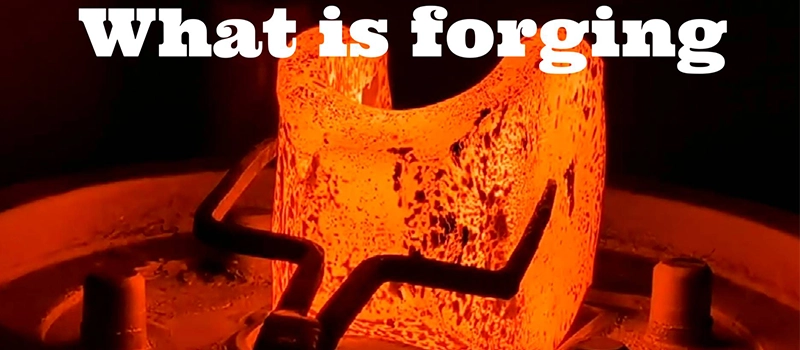
Overheating: Overheating reduces grain strength and may cause surface cracking.
Burning: Burning occurs when metal is overheated to the point of grain boundary melting.
Oxidation: Oxidation forms scale on metal surfaces during high-temperature forging.
Decarburization: Decarburization reduces carbon content near the surface of steel forgings.
Surface Tear: Surface tear develops due to excessive friction between die and workpiece.
Die Mark: Die mark is an unwanted surface impression caused by damaged die surfaces.
Tool Impression: Tool impression appears when tooling defects transfer onto forged part surfaces.
Edge Crack: Edge crack forms along sharp edges due to stress concentration.
Radial Crack: Radial crack spreads outward from the center in circular forgings.
Residual Stress Crack: Residual stress crack forms during cooling due to internal stress imbalance.
Warping: Warping refers to dimensional distortion caused by uneven cooling.
Twisting: Twisting defect occurs when material rotates unevenly during forging.
Lack of Bonding: Lack of bonding appears in welded or consolidated forging operations.
Hydrogen Embrittlement: Hydrogen embrittlement weakens steel due to hydrogen diffusion.
Segregation Defect: Segregation defect arises from uneven distribution of alloying elements.
Inclusion Defect: Inclusion defect results from non-metallic particles trapped within the metal matrix.
Grain Coarsening: Grain coarsening reduces mechanical strength due to improper temperature control.
Overstrain: Overstrain occurs when deformation exceeds material ductility limits.
Understrain: Understrain results in insufficient grain flow and reduced mechanical performance.
Die Wear Mark: Die wear mark appears due to progressive deterioration of die surfaces.
Improper Grain Flow: Improper grain flow reduces fatigue resistance in forged parts.
Internal Folding: Internal folding happens when metal layers collapse without bonding.
Surface Wrinkling: Surface wrinkling forms due to compressive instability in thin sections.
Material Tearing: Material tearing results from high tensile stress during deformation.
Thermal Crack: Thermal crack forms due to rapid temperature change.
Improper Heat Treatment: Improper heat treatment may cause brittleness or reduced strength after forging.
Hard Spot: Hard spot is a localized area of excessive hardness due to uneven cooling.
Soft Spot: Soft spot indicates insufficient hardness due to improper heat treatment.
Forging Inspection and Quality Glossary
Forging Inspection and Quality Glossary terms complete the technical structure of the Forging Process Glossary. These Forging Process Glossary quality terms define inspection methods, mechanical testing standards, process monitoring systems, and acceptance criteria used to ensure forged component reliability and performance.
Visual Inspection: Visual inspection is the first-level examination method used to identify surface cracks, laps, scale pits, and dimensional deviations in forged parts.
Dimensional Inspection: Dimensional inspection verifies forged component measurements against engineering drawings and tolerance requirements.
Coordinate Measuring Machine (CMM): CMM is a precision device used to measure complex forged geometries with high accuracy.
Hardness Testing: Hardness testing evaluates surface resistance to indentation to confirm heat treatment effectiveness.
Brinell Hardness Test: Brinell hardness test uses a spherical indenter to measure hardness in forged components.
Rockwell Hardness Test: Rockwell hardness test determines hardness based on indentation depth under standardized load.
Tensile Testing: Tensile testing measures yield strength, ultimate tensile strength, and elongation.
Impact Testing: Impact testing evaluates toughness and resistance to sudden loading.
Fatigue Testing: Fatigue testing assesses performance under cyclic stress conditions.
Creep Testing: Creep testing measures deformation resistance at elevated temperature over time.
Ultrasonic Testing (UT): Ultrasonic testing uses high-frequency sound waves to detect internal defects within forged components.
Magnetic Particle Testing (MT): Magnetic particle testing identifies surface and near-surface cracks in ferromagnetic forgings.
Dye Penetrant Testing (PT): Dye penetrant testing reveals surface-breaking defects using liquid penetrants.
Eddy Current Testing: Eddy current testing detects surface discontinuities using electromagnetic induction.
Radiographic Testing (RT): Radiographic testing uses X-ray or gamma radiation to detect internal voids or cracks.
Non-Destructive Testing (NDT): NDT refers to inspection techniques that evaluate forged parts without damaging them.
Destructive Testing: Destructive testing involves cutting or fracturing samples to examine internal structure.
Metallographic Examination: Metallographic examination analyzes grain structure and phase distribution.
Grain Flow Inspection: Grain flow inspection verifies proper directional grain alignment achieved through forging.
Microstructure Analysis: Microstructure analysis evaluates internal structural quality after forging and heat treatment.
Chemical Composition Analysis: Chemical composition analysis confirms alloy elements meet specification.
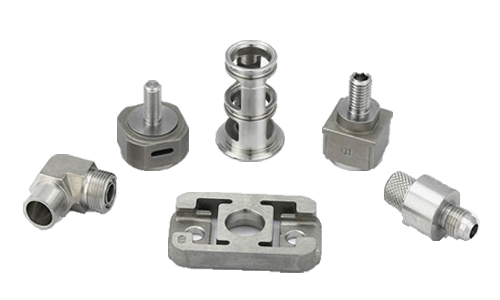
Spectrometer Analysis: Spectrometer analysis provides rapid elemental verification during production.
Residual Stress Measurement: Residual stress measurement identifies internal stress distribution in forged components.
Surface Roughness Measurement: Surface roughness measurement ensures finish quality meets engineering requirements.
Process Capability (Cp): Cp measures how well forging processes operate within tolerance limits.
Process Capability (Cpk): Cpk evaluates process centering and consistency in the Forging Process Glossary quality framework.
Statistical Process Control (SPC): SPC uses statistical methods to monitor and control forging production quality.
Control Chart: Control chart tracks process variation over time.
Traceability: Traceability records batch data, material origin, and process parameters.
Certification: Certification confirms compliance with international quality standards.
Calibration: Calibration ensures measuring equipment accuracy.
Acceptance Criteria: Acceptance criteria define allowable defect limits and dimensional tolerances.
Quality Assurance (QA): QA establishes systematic procedures to ensure forging quality consistency.
Quality Control (QC): QC involves inspection and corrective action during forging production.
Root Cause Analysis: Root cause analysis identifies underlying causes of forging defects.
Continuous Improvement: Continuous improvement applies structured methods to enhance Forging Process Glossary production efficiency.
Production Documentation: Production documentation records forging parameters and inspection data.
Audit: Audit verifies compliance with internal and external quality standards.
First Article Inspection (FAI): FAI validates initial forged components before mass production.
Lot Inspection: Lot inspection evaluates a defined production batch for conformity.
Conclusion
This Forging Process Glossary provides a comprehensive and structured technical reference covering forging fundamentals, equipment systems, die and tooling design, process methods, metallurgical principles, defect analysis, and quality inspection standards. By clearly defining essential forging terminology, this Forging Process Glossary establishes a standardized professional language for engineers, metallurgists, and manufacturing teams. Mastering the Forging Process Glossary enhances process control, mechanical performance, defect prevention, and overall reliability in modern industrial forging operations.