Milling vs Drilling is one of the most fundamental comparisons in modern machining, yet it is often misunderstood in real manufacturing decisions. Many engineers and buyers assume that these two processes are interchangeable, but in reality, Milling vs Drilling represents two completely different machining philosophies. This misunderstanding can lead to higher costs, production delays, and even quality issues.
In today’s competitive manufacturing environment, understanding the critical differences in Milling vs Drilling is no longer optional. It directly impacts product design, machining efficiency, and overall profitability. This article provides a clear, professional breakdown of Milling vs Drilling, focusing on their core differences as well as their advantages and limitations, helping readers make smarter and more cost-effective machining choices.
Milling vs Drilling Core Differences Explained
In the analysis of Milling vs Drilling, the true value lies in understanding their core differences rather than just their definitions. These two machining processes are fundamentally different in motion, cutting behavior, capability, and industrial application.
A clear understanding of these differences helps manufacturers avoid costly mistakes, improve machining efficiency, and ensure product quality. The following sections break down the critical differences in Milling vs Drilling in a structured and professional way.
Milling vs Drilling: Motion Mechanics Difference
One of the most fundamental distinctions in Milling vs Drilling lies in motion mechanics.
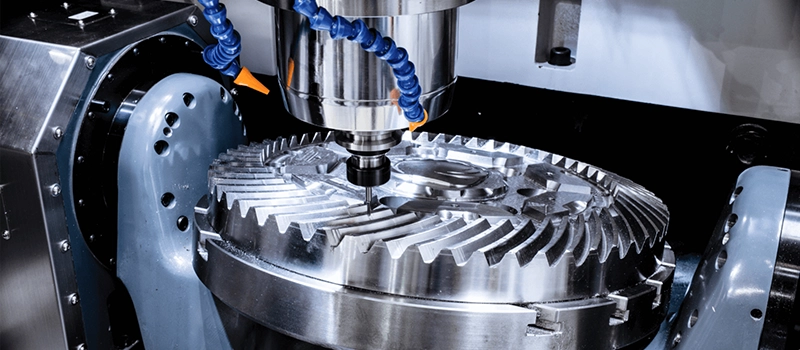
Milling involves a rotating cutting tool that can move along multiple axes, including X, Y, and Z directions. This multi-axis capability allows the tool to approach the workpiece from different angles and perform complex material removal. Advanced CNC milling machines can even operate on 4-axis or 5-axis systems, significantly expanding machining flexibility.
Drilling, in contrast, is based on a much simpler motion pattern. The drill bit rotates while moving strictly along a single axis, typically the vertical Z-axis. There is no lateral movement during the cutting process.
This makes Milling vs Drilling fundamentally different: milling enables multi-dimensional machining, while drilling is limited to linear penetration.
Milling vs Drilling: Cutting Direction Difference
Cutting direction is another defining factor in Milling vs Drilling.
Milling supports cutting in multiple directions. It can perform side cutting, face cutting, slotting, and contouring. This flexibility allows manufacturers to create complex geometries and detailed surface features.
Drilling, however, is restricted to axial cutting. The cutting action occurs at the tip of the drill bit and proceeds straight into the material. As a result, drilling can only produce cylindrical holes.
In Milling vs Drilling, milling offers directional flexibility, while drilling is strictly vertical.
Milling vs Drilling: Machining Capability Difference
Machining capability is one of the most significant differences in Milling vs Drilling.
Milling is a highly versatile process capable of producing flat surfaces, curved profiles, slots, pockets, and complex 3D geometries. It is essential in industries that require precision and intricate designs.
Drilling is limited to creating holes, either through holes or blind holes. While additional processes can enhance these holes, drilling itself remains a single-purpose operation.
Thus, in Milling vs Drilling, milling is multifunctional, while drilling is specialized.

Milling vs Drilling: Tool Structure Difference
Tool design further highlights the contrast in Milling vs Drilling.
Milling cutters are multi-edge tools with cutting edges distributed along both the circumference and the end face. This allows them to perform various cutting actions in different directions.
Drill bits typically have two main cutting edges and are designed specifically for axial cutting. Their geometry is optimized for penetration rather than versatility.
In Milling vs Drilling, tool complexity directly supports process capability.
Milling vs Drilling: Precision and Tolerance Difference
Precision is a key consideration in Milling vs Drilling.
Milling can achieve high precision, often within ±0.01 mm or better. It is suitable for parts requiring tight tolerances and high-quality surface finishes.
Drilling generally provides moderate precision. Factors such as tool deflection and heat can affect accuracy, often requiring secondary operations like reaming for improvement.
Therefore, in Milling vs Drilling, milling delivers higher accuracy and better surface quality.
Milling vs Drilling: Equipment Complexity Difference
The equipment used in Milling vs Drilling also differs significantly.
Milling machines, especially CNC machining centers, are complex systems that require programming, setup, and skilled operation. They are designed for flexibility and precision.
Drilling machines are simpler, ranging from manual drill presses to basic automated systems. They require less setup and lower technical expertise.
This makes Milling vs Drilling a comparison between advanced and basic machining systems.
Milling vs Drilling: Efficiency Difference
Efficiency varies depending on the application in Milling vs Drilling.
Milling is efficient for complex parts that require multiple operations. A single setup can complete several machining tasks.
Drilling is highly efficient for repetitive hole-making tasks. It offers fast cycle times and is ideal for mass production.
In Milling vs Drilling, milling excels in complexity, while drilling excels in speed.
Milling vs Drilling: Cost Difference
Cost is a critical factor in Milling vs Drilling decisions.
Milling typically involves higher costs due to expensive equipment, longer setup times, and complex programming.
Drilling is more cost-effective, with lower equipment costs and faster operation. It is ideal for simple and high-volume tasks.
Thus, Milling vs Drilling represents a balance between capability and cost.
Milling vs Drilling: Application Difference
Application scenarios clearly differentiate Milling vs Drilling.
Milling is widely used in high-precision industries such as aerospace, automotive, and mold manufacturing, where complex geometries are required.
Drilling is commonly used for creating holes for fasteners, bolts, and assembly purposes across almost all industries.
In Milling vs Drilling, the choice depends on whether complexity or simplicity is required.
Milling vs Drilling Advantages and Limitations
After understanding the core differences, the next step is to evaluate the practical strengths and weaknesses of each process. In real manufacturing environments, neither method is universally superior. A clear breakdown of advantages and limitations helps manufacturers make better decisions in terms of cost, efficiency, and product quality.
Milling: Advantages
High Precision Capability
Milling is known for its ability to achieve very tight tolerances. Advanced CNC milling machines can consistently maintain high dimensional accuracy, making them suitable for precision-critical components. This level of control is essential in industries where even small deviations can affect performance.
Ability to Machine Complex Geometries
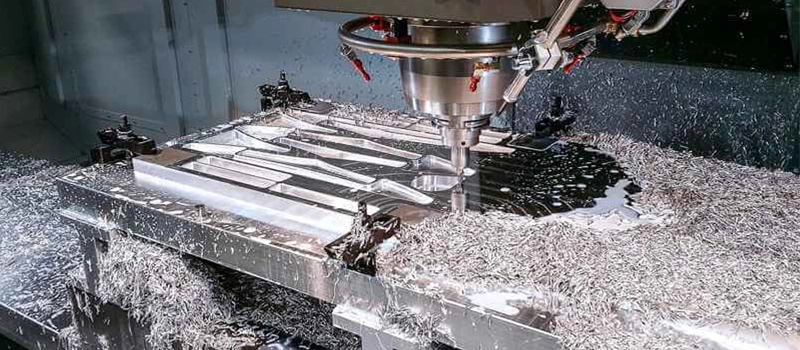
One of the strongest advantages of milling is its flexibility in shaping materials. It can produce complex contours, slots, pockets, and three-dimensional surfaces that cannot be achieved through simpler machining methods. This makes milling indispensable for advanced engineering designs.
Multi-Functional Machining
Milling machines are capable of performing multiple operations within a single setup. Tasks such as facing, contouring, slotting, and even drilling can be completed on the same machine. This reduces the need for multiple processes and improves production efficiency.
Strong Compatibility with Automation
Modern milling processes are highly compatible with CNC automation. Once programmed, the system can produce consistent and repeatable results with minimal manual intervention. This greatly enhances productivity in large-scale manufacturing.
Milling: Limitations
High Equipment and Operational Cost
Milling requires significant investment in machinery, especially for multi-axis CNC systems. In addition to equipment costs, tooling, maintenance, and energy consumption contribute to overall expenses, making it less economical for simple tasks.
Complex Setup and Programming
Operating milling machines requires technical expertise. Tool path programming, parameter selection, and machine setup must be carefully managed. Errors in these stages can lead to defective parts or wasted materials.
Longer Processing Time for Simple Parts
For basic machining tasks, milling can be inefficient. Using a high-end milling process for simple features increases machining time and cost unnecessarily compared to simpler alternatives.
Tool Wear and Maintenance Requirements
Due to multi-directional cutting forces, milling tools experience significant wear. Regular monitoring and replacement are necessary to maintain machining quality, which adds to operational complexity.
Drilling: Advantages
High Speed for Hole Production
Drilling is extremely efficient when it comes to producing holes. The process is fast and straightforward, making it ideal for applications that require large volumes of identical holes.
Low Cost and High Efficiency
Compared to milling, drilling involves lower equipment costs and simpler operations. This makes it a cost-effective solution for basic machining tasks, especially in high-volume production.
Simple Operation and Setup
Drilling machines are easy to operate and require minimal setup. Even manual machines can deliver consistent results, reducing the need for highly skilled operators.
Excellent for Repetitive Tasks
Drilling is highly reliable for repetitive operations. Once the setup is complete, it can produce consistent results across large batches, improving production stability.
Drilling: Limitations
Limited Machining Capability
Drilling is restricted to producing round holes. It cannot create complex shapes or perform multi-directional cutting, which limits its application in advanced manufacturing.

Moderate Precision
The accuracy of drilling is generally lower than milling. Factors such as tool deflection and heat can affect the final result, making it less suitable for high-precision requirements without additional finishing processes.
Dependence on Secondary Operations
Many drilling applications require follow-up processes such as reaming, tapping, or boring to achieve final specifications. This increases overall production time and complexity.
Chip Removal and Heat Issues
During drilling, chips must be effectively removed from the hole. Poor chip evacuation can lead to overheating, tool damage, and reduced machining quality, especially in deep-hole operations.
Final Thoughts on Milling vs Drilling
Understanding the differences between milling and drilling is essential for making efficient and cost-effective machining decisions. Milling offers unmatched flexibility, precision, and the ability to create complex geometries, making it ideal for advanced manufacturing needs. Drilling, on the other hand, provides speed, simplicity, and low-cost operation, making it highly effective for standard hole-making tasks.
In practice, these two processes are not competitors but complementary solutions. Choosing the right method depends on part design, tolerance requirements, and production volume. A well-balanced approach that leverages the strengths of both can significantly improve overall manufacturing performance.