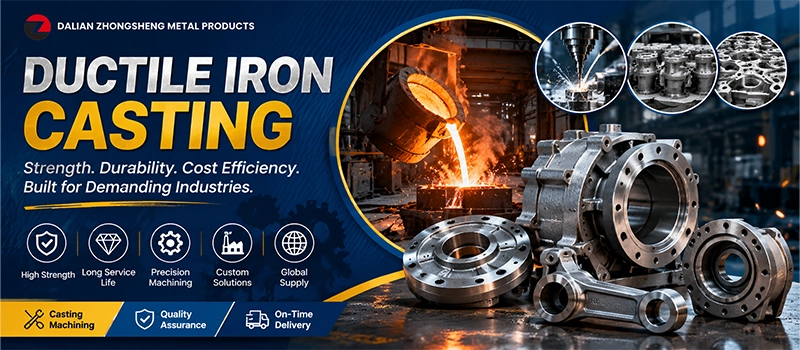
Choosing the right casting material can significantly affect product performance and production costs. Among the many available options, ductile iron casting stands out for its strength, reliability, and affordability. Understanding its advantages and manufacturing process can help engineers and buyers make better decisions for demanding industrial applications.
What Is Ductile Iron Casting?
Ductile iron casting is a manufacturing process used to produce metal components from ductile iron, also known as nodular iron or spheroidal graphite iron. It is one of the most widely used casting materials in modern industry because it combines high strength, good toughness, and cost-effective production.
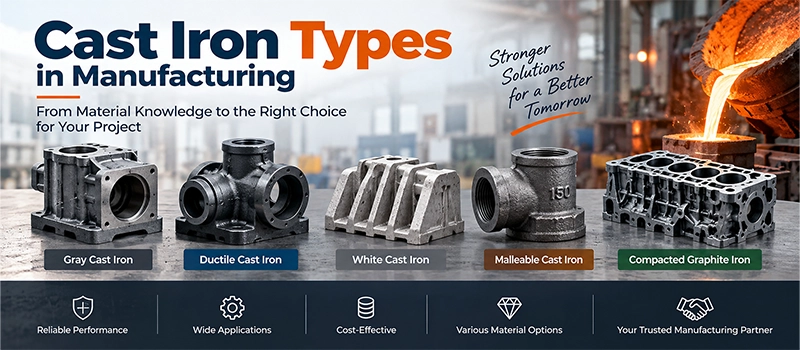
Unlike traditional cast iron, ductile iron contains graphite in the form of small spherical nodules rather than flakes. This seemingly small difference has a significant impact on material performance. The spherical graphite structure reduces stress concentration within the metal, allowing ductile iron castings to withstand greater loads and impacts without cracking.
As a result, ductile iron is often selected for components that require both strength and durability. It offers mechanical properties that are much closer to steel while retaining many of the manufacturing advantages associated with cast iron. This balance makes it a practical solution for a wide range of industrial applications where reliability and cost control are equally important.
The Unique Structure of Ductile Iron
The performance of ductile iron is largely determined by its microstructure. During production, specific alloying and treatment processes cause the graphite to form as rounded nodules throughout the iron matrix.
In gray iron, graphite exists as thin flakes. These flakes interrupt the metal structure and create weak points where cracks can begin and spread. In ductile iron, the rounded graphite nodules have a much smaller effect on the continuity of the material. This allows the metal to maintain higher strength and better resistance to shock and fatigue.
The result is a material that can absorb stress more effectively while maintaining dimensional stability under demanding operating conditions.
Key Properties of Ductile Iron
Several characteristics distinguish ductile iron from other common casting materials.
| Property | Description |
|---|---|
| High Strength | Suitable for heavy-duty load-bearing components |
| Good Ductility | Can deform under stress without sudden failure |
| Impact Resistance | Performs well under shock and vibration |
| Wear Resistance | Suitable for abrasive working environments |
| Good Machinability | Easier to machine than many steel grades |
| Cost Efficiency | Lower production cost compared with many steel castings |
These properties have made ductile iron one of the most versatile engineering materials available today. Manufacturers can use it to produce complex castings that require strength, reliability, and long service life without significantly increasing production costs.
Ductile Iron vs Gray Iron vs Steel Casting
When selecting a casting material, engineers and buyers often compare ductile iron with gray iron and steel casting. Each material has its own strengths, limitations, and ideal applications. The right choice depends on factors such as mechanical performance, production cost, service conditions, and design requirements.
Although all three materials are widely used in industrial manufacturing, ductile iron is often considered a middle ground between gray iron and steel. It offers significantly better strength and toughness than gray iron while remaining more economical and easier to cast than many steel grades.
Ductile Iron vs Gray Iron
The most significant difference between ductile iron and gray iron is the shape of the graphite within the material.
Gray iron contains graphite flakes, which interrupt the metal matrix and create natural stress concentration points. While this structure provides excellent vibration damping and machinability, it also limits the material’s strength and ductility.
Ductile iron, on the other hand, contains spherical graphite nodules. This structure allows the material to distribute stress more evenly and resist crack propagation more effectively. As a result, ductile iron can handle higher loads and impact forces without failure.
In practical terms, a component made from ductile iron can often withstand conditions that would cause a gray iron component to crack or break.
| Property | Ductile Iron | Gray Iron |
|---|---|---|
| Tensile Strength | High | Moderate |
| Ductility | High | Very Low |
| Impact Resistance | Good | Poor |
| Fatigue Strength | High | Moderate |
| Machinability | Good | Excellent |
| Vibration Damping | Good | Excellent |
| Cost | Moderate | Lower |
Gray iron remains a popular choice for applications where vibration absorption and low manufacturing costs are the primary concerns. Examples include machine bases, engine blocks, and pump housings. However, when strength and durability become critical requirements, ductile iron is often the preferred solution.
Ductile Iron vs Steel Casting
The comparison between ductile iron and steel casting is more complex because both materials offer high mechanical performance.
Steel castings generally provide greater tensile strength and impact resistance, especially in extreme operating environments. They are commonly used for highly stressed components subjected to heavy loads, severe impacts, or harsh working conditions.
However, these performance advantages often come at a higher cost.
Steel has a higher melting temperature than ductile iron, resulting in increased energy consumption during production. Steel castings also tend to experience greater shrinkage during solidification, making the casting process more challenging and increasing the likelihood of manufacturing defects if not properly controlled.
Ductile iron offers several practical advantages in comparison.
| Property | Ductile Iron | Steel Casting |
|---|---|---|
| Castability | Excellent | Good |
| Machinability | Good | Moderate |
| Production Cost | Lower | Higher |
| Strength | High | Very High |
| Ductility | Good | Excellent |
| Wear Resistance | Good | Good |
| Manufacturing Efficiency | High | Moderate |
For many industrial components, ductile iron provides sufficient mechanical performance at a substantially lower manufacturing cost. This is one of the main reasons it has become a widely accepted alternative to steel casting in numerous engineering applications.
Which Material Is the Better Choice?
There is no single material that is best for every project.
Gray iron is often selected when low cost, vibration damping, and easy machining are the primary objectives.
Steel casting is typically chosen for highly demanding applications where maximum strength and toughness are required.
Ductile iron occupies the space between these two materials. It delivers a balanced combination of strength, toughness, castability, and cost efficiency that makes it suitable for a broad range of industrial components.
For many manufacturers, this balance is exactly what makes ductile iron such a valuable engineering material. Rather than maximizing a single property, it provides an effective combination of performance and economy, allowing designers to achieve reliable results without unnecessary production costs.
The Ductile Iron Casting Process
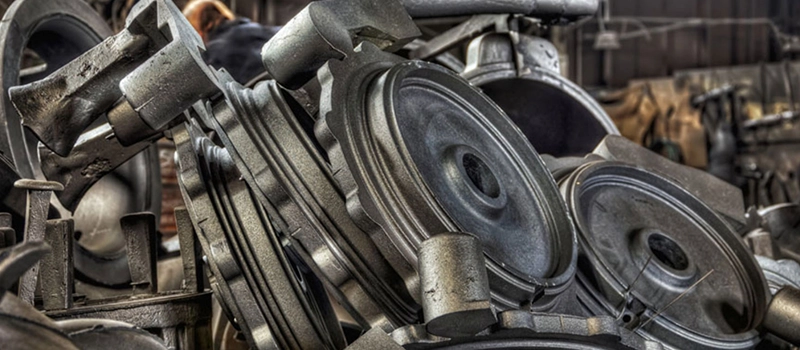
The performance of a ductile iron casting depends not only on the material itself but also on how it is produced. A well-controlled ductile iron casting process ensures consistent mechanical properties, dimensional accuracy, and long-term reliability. Even the highest-quality raw materials cannot compensate for poor process control during ductile iron casting production.
Compared with many other casting methods, the ductile iron casting process offers excellent flexibility. Manufacturers can produce both simple and highly complex ductile iron castings while maintaining cost efficiency and stable quality. This is one of the reasons why ductile iron casting remains one of the most widely used manufacturing methods in modern industry.
Raw Material Preparation
Every ductile iron casting begins with carefully selected raw materials. The chemical composition of the molten metal directly affects the final properties of the ductile iron casting.
Typical raw materials include:
- Pig iron
- Steel scrap
- Return ductile iron castings
- Carbon additives
- Ferroalloys
Before melting begins, foundries carefully control the composition of these materials to ensure the final ductile iron casting meets the required specifications. Even small variations in carbon, silicon, sulfur, or magnesium levels can influence the quality of the finished ductile iron casting.
Maintaining chemical consistency is particularly important when producing ductile iron castings for critical industrial applications where strength and reliability are essential.
Melting and Composition Control
The next stage of the ductile iron casting process involves melting the raw materials in an induction furnace.
During melting, operators continuously monitor the chemical composition of the molten iron. Spectrometers are commonly used to verify that the metal chemistry remains within target ranges.
A typical ductile iron casting contains:
| Element | Typical Range (%) |
|---|---|
| Carbon | 3.2 – 4.0 |
| Silicon | 2.0 – 3.0 |
| Manganese | 0.1 – 0.5 |
| Sulfur | < 0.02 |
| Phosphorus | < 0.08 |
Accurate composition control is one of the most important factors in successful ductile iron casting production. If sulfur levels become too high or carbon levels fall outside acceptable limits, the quality of the ductile iron casting can be significantly affected.
Nodularization Treatment
Nodularization is the defining step in the ductile iron casting process.
Without nodularization, the molten iron would solidify as gray iron rather than ductile iron.
During this stage, magnesium-based alloys are added to the molten metal. The magnesium alters the way graphite forms during solidification, causing the graphite to develop as spherical nodules instead of flakes.
This transformation is what gives a ductile iron casting its characteristic combination of strength, ductility, and toughness.
Because magnesium reacts rapidly at high temperatures, nodularization must be carefully controlled. Excessive magnesium can create defects, while insufficient magnesium can result in poor graphite formation and reduced ductile iron casting quality.
For this reason, experienced foundries place significant emphasis on process monitoring during nodularization.
Molding and Pouring
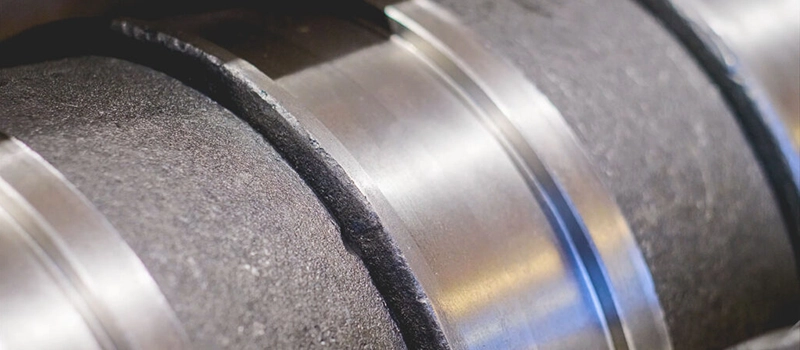
Once the molten metal has been treated, it is poured into prepared molds to create the desired ductile iron casting shape.
Sand casting is the most common method used for ductile iron casting production because it offers excellent flexibility and cost efficiency. It is suitable for both small and large ductile iron castings and can accommodate complex geometries.
During pouring, several factors must be carefully controlled:
- Pouring temperature
- Pouring speed
- Mold design
- Gating system design
- Feeding system design
Improper pouring conditions can lead to defects such as shrinkage, porosity, cold shuts, or inclusions. Therefore, controlling the flow of molten metal is a critical part of achieving high-quality ductile iron castings.
Modern foundries often use casting simulation software to optimize mold filling and solidification before production begins.
Cooling and Solidification
After pouring, the ductile iron casting begins to cool and solidify inside the mold.
The cooling rate has a significant influence on the final microstructure of the ductile iron casting. Controlled cooling helps maintain the desired graphite morphology and matrix structure while minimizing internal stresses.
During this stage, foundries must also ensure proper feeding of the casting to prevent shrinkage defects.
Large ductile iron castings may require specially designed risers and feeding systems to compensate for metal contraction during solidification.
A properly solidified ductile iron casting will exhibit uniform mechanical properties throughout the component and provide reliable performance during service.
Inspection and Quality Verification
The final step of the ductile iron casting process is inspection.
Before shipment, ductile iron castings typically undergo a series of quality checks to verify that they meet customer requirements.
Common inspection methods include:
- Chemical composition analysis
- Tensile testing
- Hardness testing
- Dimensional inspection
- Microstructure examination
- Ultrasonic testing
- Magnetic particle testing
These inspections help ensure that every ductile iron casting meets the specified standards for strength, accuracy, and reliability.
A comprehensive quality control system is essential because even minor defects can affect the long-term performance of a ductile iron casting in demanding industrial environments.
Through careful control of melting, nodularization, molding, pouring, cooling, and inspection, manufacturers can consistently produce high-quality ductile iron castings that meet the requirements of modern engineering applications.
Main Advantages of Ductile Iron Casting
The growing popularity of ductile iron casting is not accidental. Across industries ranging from automotive manufacturing to heavy equipment production, ductile iron casting has become a preferred solution because it delivers an exceptional balance of performance, durability, and cost efficiency.
Many materials can provide high strength. Others may offer good wear resistance or easy machinability. What makes ductile iron casting unique is its ability to combine multiple advantages in a single material. This combination allows manufacturers to reduce costs without sacrificing product performance.
For this reason, ductile iron casting continues to replace traditional gray iron castings and even some steel castings in a wide range of industrial applications.
High Strength Without Excessive Weight
One of the most important advantages of ductile iron casting is its impressive strength.
The nodular graphite structure found in ductile iron castings allows the material to withstand significantly higher loads than conventional cast iron. This makes ductile iron casting suitable for components that must operate under continuous stress or heavy mechanical loads.
Many engineers choose ductile iron casting because it provides mechanical properties approaching those of steel while maintaining the manufacturing advantages associated with cast iron.
For load-bearing components, this combination can result in safer and more reliable products without dramatically increasing production costs.
Excellent Toughness and Impact Resistance
Strength alone is not enough for many industrial applications.
A component must also be able to absorb shock, vibration, and sudden impact without cracking. This is where ductile iron casting demonstrates another major advantage.
Unlike brittle materials that can fail unexpectedly, ductile iron castings possess a degree of flexibility that allows them to absorb energy before fracture occurs. This characteristic improves the reliability of components operating in demanding environments.
Industries that experience frequent vibration, cyclic loading, or impact conditions often rely on ductile iron casting because of its superior toughness compared with traditional cast iron materials.
Outstanding Fatigue Performance
Many industrial components do not fail because of a single overload event. Instead, failure occurs gradually due to repeated stress cycles over time.
This phenomenon is known as fatigue.
A major benefit of ductile iron casting is its ability to resist fatigue-related failures. The spherical graphite structure helps distribute stress more evenly throughout the material, reducing the likelihood of crack initiation.
As a result, ductile iron castings often achieve longer service lives when exposed to repeated loading conditions.
This advantage is particularly valuable for mechanical components that operate continuously throughout their service life.
Good Wear Resistance
Wear is one of the leading causes of component replacement in industrial equipment.
Many ductile iron castings are used in environments where surfaces are exposed to friction, abrasion, and repeated contact with other components. The material’s microstructure provides good resistance to wear, helping extend service life and reduce maintenance requirements.
Because of this property, ductile iron casting is frequently selected for components that must maintain dimensional stability and functional performance over long operating periods.
Reduced wear translates directly into lower maintenance costs and less equipment downtime.
Excellent Machinability
Manufacturing efficiency is another reason why ductile iron casting remains highly popular.
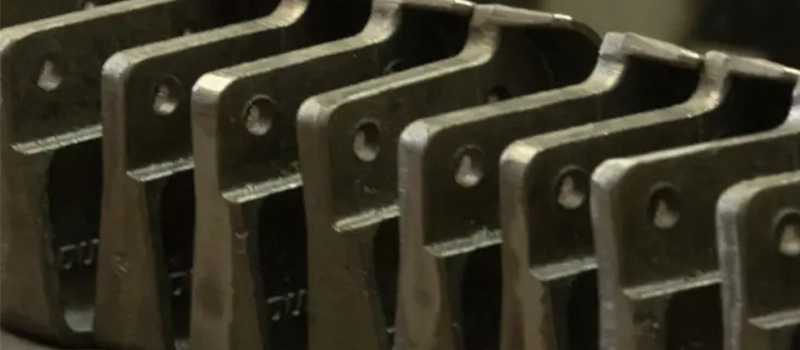
Although ductile iron castings offer excellent mechanical performance, they also retain good machinability. Cutting, drilling, milling, and turning operations can be performed efficiently using standard machining equipment.
Compared with many high-strength steel castings, ductile iron casting often requires less machining effort, resulting in:
- Faster production cycles
- Reduced tool wear
- Lower machining costs
- Improved manufacturing efficiency
For manufacturers producing large quantities of components, these savings can have a significant impact on overall production costs.
Superior Design Flexibility
Another major advantage of ductile iron casting is design freedom.
The casting process allows manufacturers to create complex shapes that would be difficult, expensive, or even impossible to produce through other manufacturing methods.
Internal cavities, intricate geometries, and integrated features can often be incorporated directly into a ductile iron casting design.
This flexibility offers several benefits:
- Fewer assembled parts
- Reduced welding requirements
- Lower production costs
- Improved structural integrity
As a result, engineers can optimize product designs while maintaining cost-effective manufacturing.
Cost-Effective Alternative to Steel Casting
Perhaps the most attractive advantage of ductile iron casting is its overall cost efficiency.
While steel castings may offer higher ultimate strength in certain situations, they typically require:
- Higher melting temperatures
- Increased energy consumption
- More complex manufacturing processes
- Higher machining costs
Ductile iron casting can often achieve the required performance at a significantly lower total production cost.
This cost advantage becomes even more important when manufacturing large production volumes or oversized components.
For many applications, ductile iron casting delivers the best balance between performance and affordability.
Long Service Life
The combination of strength, toughness, fatigue resistance, and wear resistance contributes to another important benefit: durability.
High-quality ductile iron castings are capable of operating reliably for many years under demanding conditions. Longer service life means fewer replacements, reduced maintenance expenses, and lower lifecycle costs.
When evaluating material options, manufacturers increasingly focus not only on initial purchase price but also on total ownership cost. In many cases, ductile iron casting proves to be the most economical choice over the full lifespan of a component.
These advantages explain why ductile iron casting has become one of the most widely specified materials in modern engineering. Its ability to deliver reliable mechanical performance, manufacturing efficiency, and long-term value continues to make ductile iron casting a preferred solution across a broad range of industrial sectors.
Common Applications of Ductile Iron Castings
The combination of strength, durability, machinability, and cost efficiency has made ductile iron casting one of the most widely used manufacturing methods across modern industry. Today, ductile iron castings can be found in everything from passenger vehicles to heavy mining equipment.
Manufacturers often choose ductile iron casting when components must withstand high mechanical loads while maintaining long service life and reasonable production costs. This versatility explains why global demand for ductile iron castings continues to grow across multiple industrial sectors.
Automotive Components
The automotive industry is one of the largest consumers of ductile iron castings.
Vehicle manufacturers require components that can handle continuous stress, vibration, and dynamic loading while meeting strict safety standards. Ductile iron casting provides the mechanical performance necessary for these demanding applications.
Common automotive ductile iron castings include:
- Differential housings
- Steering knuckles
- Suspension brackets
- Wheel hubs
- Brake system components
- Transmission housings
Compared with traditional gray iron castings, ductile iron castings offer significantly better toughness and fatigue resistance. These properties help improve vehicle reliability and component lifespan.
As automotive manufacturers continue to seek durable and cost-effective materials, ductile iron casting remains a preferred solution for many critical structural components.
Agricultural Machinery
Agricultural equipment operates in some of the harshest working environments. Components are regularly exposed to heavy loads, shock impacts, mud, dust, and abrasive materials.
For these reasons, ductile iron casting is widely used throughout the agricultural machinery industry.
Typical ductile iron castings used in farming equipment include:
- Tractor housings
- Gearbox casings
- Axle components
- Hydraulic system parts
- Mounting brackets
- Agricultural implement frames
The excellent wear resistance and strength of ductile iron castings help agricultural equipment maintain reliable performance during long periods of operation.
Because equipment downtime can be extremely costly during planting and harvesting seasons, manufacturers place a strong emphasis on the durability provided by ductile iron casting.
Construction Equipment
Construction machinery places enormous demands on structural and mechanical components.
Excavators, loaders, bulldozers, and cranes all operate under conditions involving heavy loads, vibration, and continuous mechanical stress. Ductile iron casting offers an effective solution for producing components capable of handling these challenging environments.
Common construction equipment ductile iron castings include:
- Hydraulic pump housings
- Swing gear components
- Counterweight structures
- Bearing supports
- Frame connectors
- Structural brackets
The high strength-to-cost ratio of ductile iron casting makes it particularly attractive for construction equipment manufacturers seeking both performance and economic efficiency.
Mining Equipment
Mining is one of the most demanding industries for any engineering material.
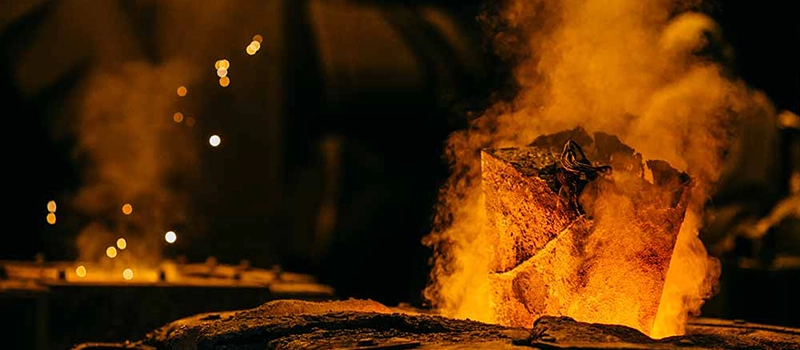
Equipment must withstand abrasive materials, heavy impacts, and continuous operation under severe conditions. As a result, many mining equipment manufacturers rely on ductile iron castings for critical components.
Examples include:
- Crusher components
- Pump housings
- Gearbox casings
- Bearing carriers
- Conveyor system parts
- Structural support components
The toughness and fatigue resistance of ductile iron casting help reduce the risk of unexpected failures in mining operations, where equipment reliability directly affects productivity.
In many cases, ductile iron castings provide a practical balance between the lower cost of conventional cast iron and the higher cost of steel castings.
Pumps and Valves
The pump and valve industry represents another major application area for ductile iron casting.
Many fluid handling systems operate under pressure and require components with excellent strength, dimensional stability, and corrosion resistance. Ductile iron castings meet these requirements while maintaining competitive manufacturing costs.
Typical applications include:
- Valve bodies
- Pump housings
- Impellers
- Pipe fittings
- Water distribution components
- Industrial flow control systems
Because ductile iron castings can be produced in complex shapes with excellent dimensional accuracy, they are particularly suitable for pressure-containing components.
Municipal water systems, wastewater treatment facilities, and industrial processing plants frequently utilize ductile iron castings in their infrastructure.
Industrial Machinery
Beyond specific industries, ductile iron casting is extensively used in general industrial equipment.
Manufacturers often require components that combine strength, machinability, and long-term durability. Ductile iron castings provide an effective solution for these requirements.
Common examples include:
- Machine tool components
- Compressor housings
- Industrial gearboxes
- Power transmission parts
- Equipment bases
- Mechanical support structures
The ability to produce complex geometries through ductile iron casting allows manufacturers to reduce assembly requirements and improve overall equipment reliability.
How to Choose a Reliable Ductile Iron Casting Supplier
Selecting the right manufacturing partner is just as important as selecting the right material. Even the best design and engineering specifications can lead to disappointing results if a supplier lacks the experience, equipment, or quality control systems needed to produce consistent parts.
For buyers, the challenge is not finding a supplier that claims to manufacture castings. The real challenge is finding a supplier capable of delivering high-quality finished components on time, within budget, and according to exact specifications.
Evaluate Manufacturing Capabilities
A reliable supplier should have the ability to support a project from initial drawings to finished parts.
Many buyers focus only on casting production capacity, but this can be a mistake. In most industrial applications, castings are only one stage of the manufacturing process. Components often require machining, surface treatment, assembly, inspection, and customized packaging before they are ready for use.
Working with a supplier that offers integrated manufacturing services can simplify supply chain management and reduce overall procurement costs.
When evaluating potential suppliers, buyers should consider:
- Production capacity
- Available casting processes
- CNC machining capabilities
- Secondary processing services
- Quality inspection equipment
- Engineering support
A supplier that can manage multiple manufacturing stages under one roof often provides better consistency and communication throughout the project.
Verify Quality Control Systems
Quality control is one of the most important factors when sourcing metal components.
A reputable manufacturer should maintain documented quality management procedures and provide inspection records when required. This becomes especially important for components used in demanding industries such as automotive, construction, mining, and agricultural equipment.
Key areas to evaluate include:
- Incoming material inspection
- Process control procedures
- Dimensional inspection
- Mechanical testing
- Non-destructive testing capabilities
- Final product verification
Suppliers should be able to demonstrate how quality is monitored throughout production rather than relying solely on final inspections.
Consistency is often a stronger indicator of manufacturing capability than occasional high-quality results.
Look Beyond the Casting Process
Many buyers make the mistake of sourcing castings and machining services from separate suppliers. While this approach may appear cost-effective initially, it often creates additional challenges.
Using multiple suppliers can lead to:
- Longer lead times
- Increased transportation costs
- Communication issues
- Quality inconsistencies
- More complicated project management
For this reason, many OEMs prefer working with manufacturers that provide complete metal component solutions rather than only supplying raw castings.
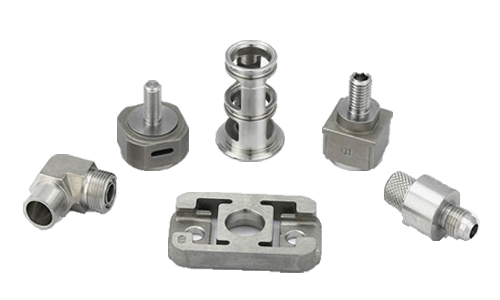
As a professional metal parts manufacturer, Dalian ZhongSheng Metal Products focuses on delivering finished industrial components rather than simply supplying cast materials. The company combines casting, machining, forging, sheet metal fabrication, and related manufacturing processes to help customers streamline procurement and reduce supply chain complexity.
This integrated approach allows buyers to source customized metal parts from a single supplier while maintaining strict quality and delivery requirements.
Assess Industry Experience
Experience matters when manufacturing custom metal components.
An experienced supplier is more likely to identify potential production challenges before they become costly problems. They can often recommend design improvements, optimize manufacturing methods, and help reduce unnecessary production expenses.
When reviewing suppliers, buyers should examine:
- Years of manufacturing experience
- Export history
- Industries served
- Engineering capabilities
- Customer case studies
Manufacturers with extensive experience in international projects are typically better equipped to handle documentation requirements, communication standards, and delivery expectations.
Consider Lead Time and Delivery Performance
Reliable delivery is often just as important as product quality.
Production delays can disrupt entire manufacturing schedules, particularly for OEM customers operating under strict deadlines. A supplier’s ability to consistently meet delivery commitments should therefore be carefully evaluated.
Important questions include:
- What is the average production lead time?
- How are urgent orders handled?
- What logistics options are available?
- How is production progress communicated?
A transparent supplier should be willing to provide realistic timelines and regular project updates throughout production.
Focus on Long-Term Value Rather Than Lowest Price
Price will always be an important consideration, but the lowest quotation is not always the most economical choice.
Low-cost suppliers may reduce expenses by compromising on material quality, process control, inspection procedures, or customer support. These hidden costs can eventually lead to production delays, quality issues, and increased replacement expenses.
Instead of focusing solely on unit price, buyers should evaluate the overall value provided by a supplier, including:
- Product quality
- Manufacturing expertise
- Technical support
- Delivery reliability
- Communication efficiency
- Long-term partnership potential
A dependable manufacturing partner can often generate greater savings over the lifetime of a project than a supplier offering the lowest initial quote.
For companies sourcing custom industrial components, choosing the right supplier is ultimately about reducing risk. Strong engineering support, consistent quality, and reliable delivery frequently have a greater impact on project success than small differences in purchase price.
Conclusion
Ductile iron remains one of the most versatile materials used in modern manufacturing, offering an excellent balance of strength, durability, machinability, and cost efficiency. Whether for automotive, agricultural, construction, or industrial applications, it provides reliable performance in demanding environments. By understanding its properties and working with an experienced manufacturing partner, businesses can achieve high-quality components that deliver long-term value and dependable performance.