Laser cutting services not meeting expectations? Inconsistent edges, poor dimensional control, and inefficient workflows continue to challenge manufacturers seeking precision. Long lead times and outdated cutting methods raise concerns about how to achieve accurate results with materials like steel, aluminum, stainless, or copper—without driving up cost. With multiple options such as CNC laser cutting, plasma, and waterjet, how does one choose the most reliable and cost-effective method?
Laser cutting has emerged as a preferred solution. Known for producing clean cuts, tight tolerances, and fast turnaround, this technology supports a broad range of metals and is ideal for complex or high-volume production. From thin sheet parts to detailed enclosures, laser cutting combines precision with consistency across diverse applications.
As the Fabricators & Manufacturers Association (FMA) notes, “Laser cutting has become an essential part of modern fabrication shops due to its flexibility, speed, and minimal finishing requirements.” This article explores how the process works, what makes it efficient, and why it is increasingly used across sectors demanding high-quality metal parts.
What Is Laser Cutting Service and How Does It Work?
Overview of Laser Cutting Service
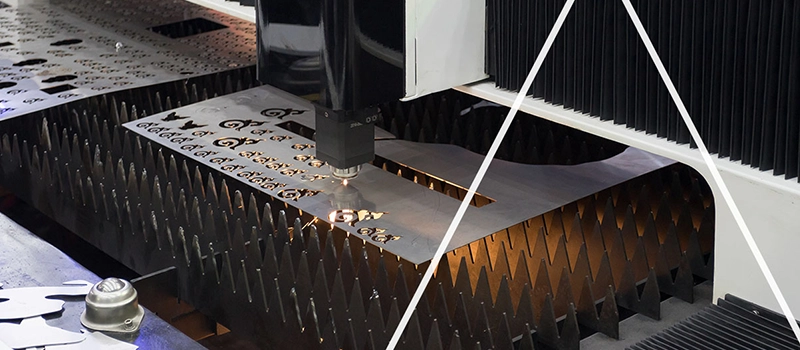
Laser cutting service is a precision manufacturing process that uses a focused, high-energy laser beam to cut metal with exceptional accuracy and speed. Controlled by CNC (Computer Numerical Control) systems, the laser follows programmed paths to produce detailed shapes, clean edges, and tight tolerances across a variety of metal materials.
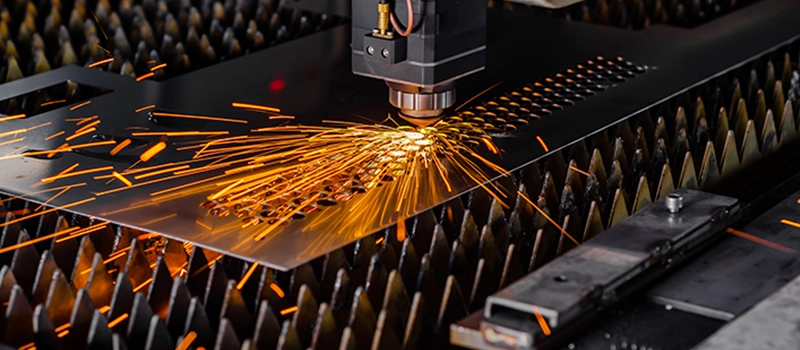
Laser cutting service is especially effective for custom metal parts, sheet metal fabrication, signage, enclosures, and components used in industrial machinery. It provides non-contact cutting, reducing physical stress and eliminating the need for complex tool changes.
How the Laser Cutting Process Works
The process begins when a laser source—usually a fiber or CO₂ laser—generates a concentrated light beam. This beam is directed through a series of mirrors or fiber optics to a focusing lens, which narrows it to a precise point on the metal surface. The laser energy rapidly heats, melts, or vaporizes the material, creating a cut along the programmed path.
CNC and Automation Integration
Modern laser cutting service is integrated with CAD/CAM software, allowing for automated, high-speed production of complex parts. The CNC system ensures repeatability and consistent dimensions from part to part, making it ideal for both prototyping and large-scale manufacturing.
Assist Gases and Cutting Quality
During cutting, assist gases such as nitrogen, oxygen, or compressed air are used to blow molten metal away from the kerf (cut line). These gases also influence edge quality and cutting speed:
- Oxygen enhances cutting speed for carbon steel.
- Nitrogen prevents oxidation for stainless steel and aluminum.
- Compressed air is suitable for cost-efficient cutting of thin sheets.
Choosing the right gas improves the overall result of the laser cutting service and ensures that the final part meets technical specifications.
Material Thickness and Capabilities
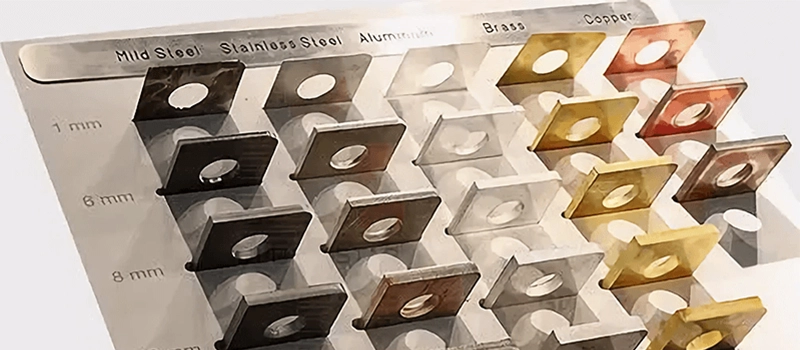
Laser cutting service can handle a wide range of thicknesses. For example:
- Stainless steel: up to 20 mm
- Carbon steel: up to 25 mm
- Aluminum: up to 15 mm
- Brass/Copper: up to 10 mm with fiber laser
These capabilities make it suitable for multiple industries, including automotive, electronics, construction, and energy.
Advantages of Laser Cutting Service in Precision Fabrication
Exceptional Cutting Accuracy
Laser cutting service offers high-precision results with minimal dimensional variation. The focused laser beam can achieve tolerances as tight as ±0.1 mm, allowing for intricate cuts and sharp edges across various metals. This precision is particularly important for parts used in machinery, electronic enclosures, and structural components where exact fit is critical.
Clean Edges and Minimal Post-Processing
Unlike mechanical cutting methods, laser cutting service produces clean, smooth edges without burrs or deformation. This reduces or eliminates the need for secondary operations such as grinding, sanding, or deburring. For manufacturers, it means faster lead times and lower overall production costs.
High Efficiency and Speed
Laser cutting service is known for its speed, especially on thinner materials. Once the design is programmed, the machine can cut complex shapes with minimal delay. There are no tool changeovers, and switching between different part geometries is seamless. This efficiency benefits both short-run prototypes and high-volume production.
Material Flexibility
Laser cutting service works with a broad range of metals, including stainless steel, carbon steel, aluminum, brass, and copper. Whether you’re processing thin sheets or medium-thick plates, the same machine can handle different materials with consistent results. This flexibility supports a wide range of industrial applications from automotive to construction.
Design Freedom
With no need for physical tools or molds, laser cutting service allows designers to create complex geometries and detailed patterns with ease. This supports innovation in product design, especially where aesthetics and functionality must go hand in hand—such as in architectural panels or branded signage.
Repeatability and Reliability
In precision fabrication, consistency is key. Laser cutting service, when combined with CNC automation, ensures that every part in a production batch is identical to the last. This reduces the risk of defects and supports quality assurance in industries that require traceability and strict compliance.
Comparing Laser Cutting with Traditional Cutting Methods
Cutting Method Overview
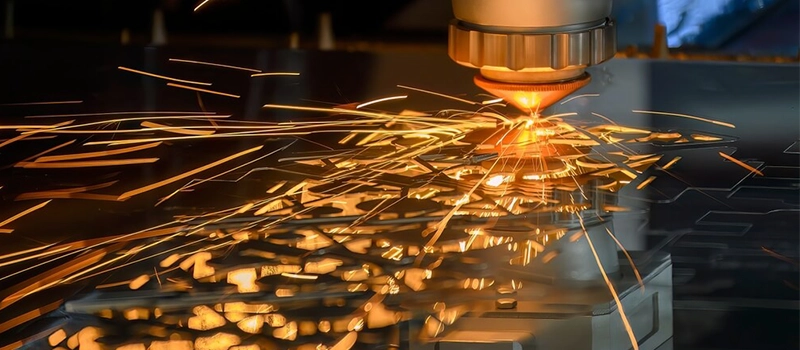
Traditional metal cutting methods include mechanical processes such as shearing, sawing, drilling, and punching. These rely on physical force and hardened tools to separate material. In contrast, laser cutting service uses a concentrated laser beam to thermally cut through metals without direct contact. This fundamental difference greatly influences the quality, speed, and capabilities of each method.
Precision and Tolerance Control
Laser cutting service offers significantly higher precision compared to traditional tools. With programmable CNC control and a focused beam as narrow as 0.1 mm, laser cutting creates highly accurate parts with minimal deviation. Traditional tools, particularly those used in manual or semi-automated operations, can suffer from wear, vibration, and variability, reducing consistency over time.
Edge Finish and Cleanliness
A major advantage of laser cutting service is the edge quality. Laser-cut parts have smooth, burr-free edges that often require no additional processing. In contrast, traditional methods typically leave rough edges, burrs, or tool marks that must be removed through grinding or polishing—adding labor and cost to the workflow.
Material Waste and Nesting Efficiency
Laser cutting service maximizes material usage through advanced nesting software, allowing parts to be laid out tightly on a sheet. This reduces waste and optimizes raw material consumption. Traditional cutting techniques often have larger kerf widths, less flexible nesting options, and wider safety margins, resulting in more scrap.
Tool Wear and Maintenance
Mechanical cutters and punches wear down over time, affecting the accuracy and finish of the final part. This leads to regular tool replacement and maintenance costs. Laser cutting service, being non-contact, does not experience the same mechanical wear, resulting in lower long-term maintenance and more consistent output.
Setup Time and Production Flexibility
With traditional methods, changing part designs often requires new tooling or mechanical reconfiguration, which can be time-consuming. Laser cutting service enables rapid transitions between different part files without tool changes. This flexibility supports custom production, prototyping, and quick design revisions with minimal downtime.
Applications Across Industries and Materials
Industrial Applications by Sector
Laser cutting service plays a critical role across a wide range of industries, offering high precision, design flexibility, and material versatility that traditional cutting methods cannot match.
Automotive and Transportation
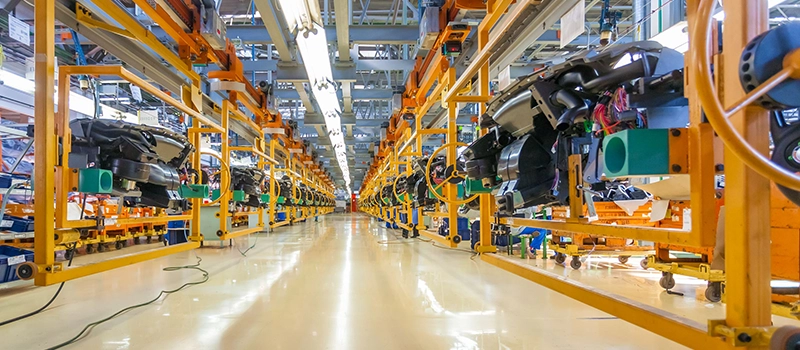
In automotive manufacturing, laser cutting service is used to fabricate structural brackets, body panels, heat shields, and battery enclosures. Its ability to cut lightweight aluminum and high-strength steel accurately supports modern vehicle design, including electric vehicles that demand material efficiency and tight tolerances.
Construction and Architecture
Architectural projects rely on laser cutting service for decorative panels, façade cladding, and metal signage. The process allows for detailed cutouts in stainless steel and aluminum, helping designers achieve both aesthetic and functional goals with high repeatability.
Electronics and Enclosures
For the electronics industry, laser cutting service enables the production of control panels, heatsinks, casings, and contact plates. These components often require precise holes and cutouts with clean edges, especially when fitting circuit boards or thermal assemblies.
Agriculture and Heavy Equipment
Manufacturers of agricultural and construction machinery use laser cutting service to produce frames, guards, and support plates. The high-speed processing of thick carbon steel makes it ideal for rugged parts that require durability and dimensional consistency.
Materials Commonly Processed
Laser cutting service supports a wide range of metals, each with unique cutting characteristics and industry-specific applications.
Stainless Steel
Used in food-grade equipment, architectural finishes, and durable enclosures, stainless steel benefits from laser cutting’s ability to produce oxidation-free edges when using nitrogen assist gas.
Carbon Steel
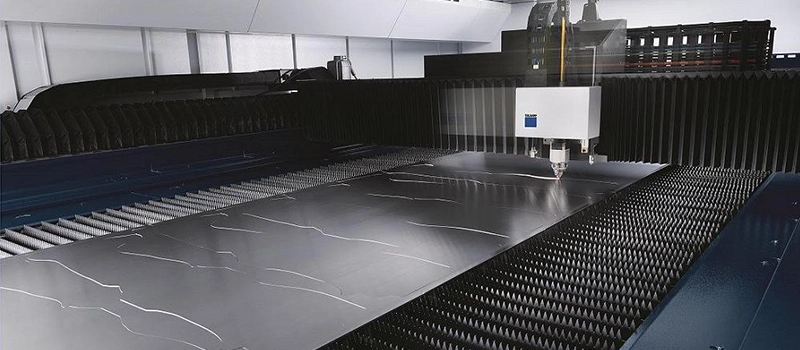
Laser cutting service efficiently processes mild and carbon steel for structural parts, machinery bases, and general-purpose brackets. Oxygen gas increases cutting speed and makes post-processing like welding more efficient.
Aluminum
Ideal for aerospace, automotive, and consumer products, aluminum is lightweight but reflective. Fiber lasers used in laser cutting service handle this challenge with precision, minimizing edge burning and distortion.
Brass and Copper
Though more difficult to cut due to reflectivity and conductivity, brass and copper are widely used in electrical components. High-powered fiber laser systems allow safe, accurate processing of these materials.
Cost, Provider Selection, and Common Challenges
Understanding Laser Cutting Service Pricing
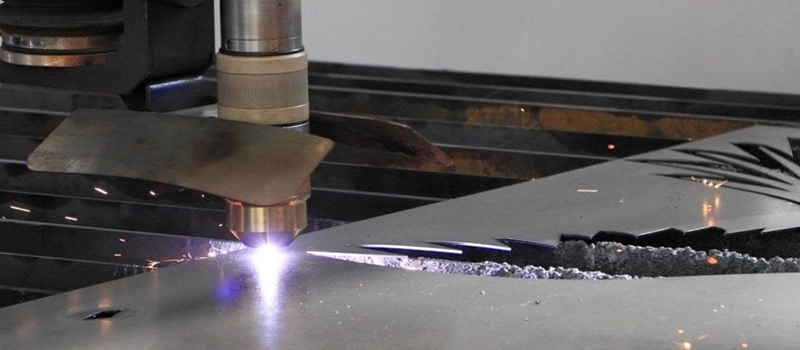
The cost of laser cutting service is influenced by multiple factors, starting with material type and thickness. Thicker or reflective materials such as stainless steel or copper require more energy and slower cutting speeds, increasing operational costs. Similarly, complex part geometries with long cut paths or intricate contours consume more machine time, which directly impacts pricing.
Factors Affecting Pricing
- Material selection: Carbon steel is more economical; aluminum and copper cost more to process.
- Cutting time: Longer or denser cuts increase laser usage and energy consumption.
- Batch size: Larger runs reduce per-part costs by spreading setup time over more units.
- Post-processing: Services like deburring, bending, or coating are typically quoted separately.
- File readiness: Poorly prepared CAD files may incur engineering or file repair fees.
A transparent laser cutting service provider will itemize these elements clearly in a quotation.
Selecting the Right Laser Cutting Service Provider
Choosing a capable and reliable laser cutting service partner is critical for quality, cost efficiency, and delivery reliability. The provider’s equipment, experience, and process integration directly affect the outcome of your parts.
Key Selection Criteria
- Machine capabilities: Look for fiber laser systems with CNC controls and automated nesting.
- Quality assurance: Consistency depends on dimensional control, calibration, and inspection processes.
- Lead times: A provider should offer fast turnaround without sacrificing quality.
- Design support: Ability to interpret or optimize technical drawings adds value.
- Communication and logistics: Clear updates and packaging/shipping capabilities improve overall project management.
An ideal laser cutting service provider will demonstrate both technical competence and business responsiveness.
Common Challenges and How They’re Solved
Even with advanced technology, laser cutting service comes with operational challenges. However, experienced providers implement technical strategies to prevent defects and delays.
Edge Quality and Warping
Poor edge finishes or warping can occur due to incorrect settings or thermal buildup. These are mitigated through optimized gas use, cutting parameters, and nesting layouts.
Tolerance Drift
Inconsistent tolerances arise from equipment misalignment or material variability. Precision laser cutting service providers use regular calibration and part verification to maintain dimensional accuracy.
File Errors and Downtime
Problems with file compatibility, open contours, or scale issues can delay production. To avoid this, providers should offer file review and pre-processing validation before running a job.
Conclusion: Why Laser Cutting Service Is the Future of Precision Fabrication
Laser cutting service has transformed the metal fabrication industry by delivering unmatched precision, speed, and flexibility. From intricate stainless steel components to large structural carbon steel plates, it supports both prototyping and high-volume production with reliable accuracy.
Its compatibility with a wide range of metals—including aluminum, copper, and brass—combined with CNC automation and clean edge quality, makes it the preferred solution in industries ranging from automotive and electronics to construction and heavy equipment.
In an environment where efficiency, consistency, and scalability matter, laser cutting service stands out as a reliable and future-ready manufacturing process. As technology continues to advance, it will play an even more central role in meeting modern fabrication demands with reduced waste, faster lead times, and greater design freedom.