Types of wear play a critical role in determining the performance and lifespan of metal components. In industrial applications, unexpected wear is one of the leading causes of equipment failure, increased maintenance costs, and production delays. Understanding the 8 types of wear is essential for engineers, manufacturers, and procurement professionals who aim to prevent costly metal failure.
Each wear mechanism—whether abrasive, adhesive, or erosive—has distinct causes and effects on material surfaces. Without proper knowledge of these wear types, even high-quality metal parts can fail prematurely. This article provides a clear and practical breakdown of the 8 types of wear, helping readers identify risks and select the right materials for demanding environments.
What is Wear Resistance
Types of wear are closely related to the concept of wear resistance, which is a fundamental property of metal materials. Wear resistance refers to the ability of a material to withstand surface damage or material loss caused by mechanical interaction, such as friction, impact, or abrasion. In industrial environments, wear resistance is one of the most critical performance indicators when selecting metal components for demanding applications.
In practical terms, wear resistance determines how long a metal part can maintain its function under continuous operation. Components with poor wear resistance tend to experience rapid material degradation, leading to surface damage, dimensional changes, and ultimately mechanical failure. This is why understanding types of wear is essential. Each wear mechanism affects materials differently, and wear resistance must be evaluated in relation to specific working conditions.
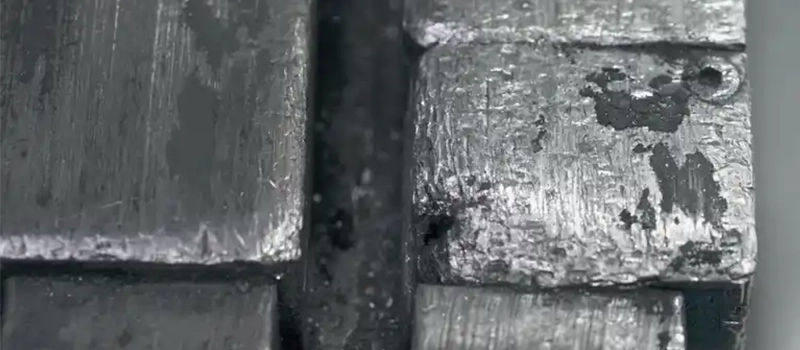
Several factors influence the wear resistance of metal materials. Hardness is often considered the most important factor. In general, materials with higher hardness exhibit better resistance to abrasive wear. However, hardness alone is not sufficient. The microstructure of the material, such as the presence of martensite, pearlite, or austenite phases, also plays a significant role. These microstructural characteristics determine how the material responds to different types of wear under stress.
In addition, chemical composition has a direct impact on wear resistance. Elements such as carbon, chromium, molybdenum, and nickel can significantly enhance the performance of metal materials. For example, chromium improves hardness and corrosion resistance, while molybdenum increases strength at high temperatures. These elements are widely used in alloy steels designed for high wear resistance applications.
Heat treatment is another key factor that affects wear resistance. Processes such as quenching, tempering, carburizing, and nitriding are commonly used to modify the surface and internal structure of metal components. Proper heat treatment can significantly improve resistance to different types of wear by increasing surface hardness while maintaining core toughness.
It is also important to note that wear resistance is not an absolute property. It must be evaluated in the context of specific wear conditions. For example, a material that performs well under abrasive wear may not perform equally well under impact or corrosive wear. Therefore, engineers must consider the types of wear involved when selecting materials and designing components.
In summary, wear resistance is a complex and multi-factor property that directly influences the durability and reliability of metal parts. A clear understanding of wear resistance provides the foundation for analyzing the 8 types of wear and developing effective strategies to prevent metal failure in real-world applications.
8 Types of Wear You Must Understand to Prevent Metal Failure
Types of wear are the primary root causes of material degradation in metal components. In real industrial environments, failure rarely results from a single factor. Instead, different types of wear often occur simultaneously and interact with each other, accelerating damage and reducing service life. Understanding these types of wear is essential for engineers and manufacturers who aim to improve wear resistance and ensure long-term performance of metal parts under complex working conditions.
1. Adhesive Wear
Adhesive wear occurs when two metal surfaces slide against each other under sufficient pressure, causing localized bonding at microscopic contact points. These micro-junctions are formed due to plastic deformation and atomic attraction between the surfaces. As motion continues, these bonded areas are sheared off, resulting in material transfer or loss.
This type of wear is particularly common in conditions where lubrication is insufficient or completely absent. Under high load and low-speed conditions, adhesive wear becomes more severe because the contact time between surfaces increases, allowing stronger adhesion to form. In extreme cases, this can lead to galling, where large fragments of material are torn from one surface and welded onto another.
Surface roughness plays a critical role in adhesive wear. Rougher surfaces increase the real contact area at asperities, promoting bonding. Similarly, materials with high ductility are more prone to adhesive wear because they deform easily under pressure. Proper lubrication, surface finishing, and material pairing are essential strategies to reduce this type of wear.
2. Abrasive Wear
Abrasive wear is one of the most widespread and destructive types of wear in industrial applications. It occurs when hard particles or asperities slide across a softer surface, cutting or plowing material away. This mechanism is essentially a micro-machining process, where material is removed in the form of small chips or debris.
There are two primary forms of abrasive wear. Two-body abrasion occurs when a hard surface directly scratches a softer material. Three-body abrasion involves loose particles trapped between two surfaces, acting as cutting tools. The latter is extremely common in environments where dust, sand, or debris is present.
Abrasive wear is heavily influenced by hardness. In general, increasing the hardness of a material significantly improves its resistance to this type of wear. However, hardness alone is not sufficient. The shape, size, and distribution of abrasive particles also affect the wear rate. Sharp, angular particles tend to cause more severe damage than rounded ones.
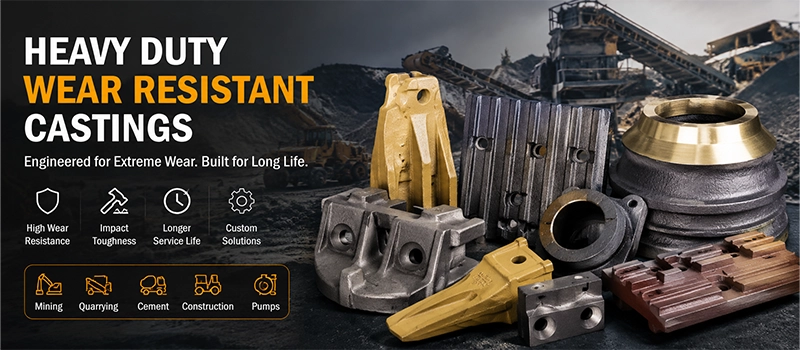
This type of wear is commonly found in mining equipment, construction machinery, and agricultural tools. Components such as buckets, blades, and liners are continuously exposed to abrasive conditions, making material selection and surface treatment critical.
3. Fatigue Wear
Fatigue wear, also referred to as surface fatigue, is caused by repeated cyclic stresses acting on a material over time. Unlike abrasive or adhesive wear, fatigue wear does not result from direct material removal at the initial stage. Instead, it begins beneath the surface.
Under cyclic loading, micro-cracks form at stress concentration points within the material. These cracks gradually propagate toward the surface as the loading continues. Eventually, small fragments break away, resulting in pitting or spalling. This process significantly degrades the surface integrity and can lead to catastrophic failure if not addressed.
Fatigue wear is strongly influenced by material toughness, hardness, and internal structure. Materials with poor fatigue resistance tend to develop cracks more quickly. Surface finish also plays an important role. Rough surfaces create stress concentrations that accelerate crack initiation.
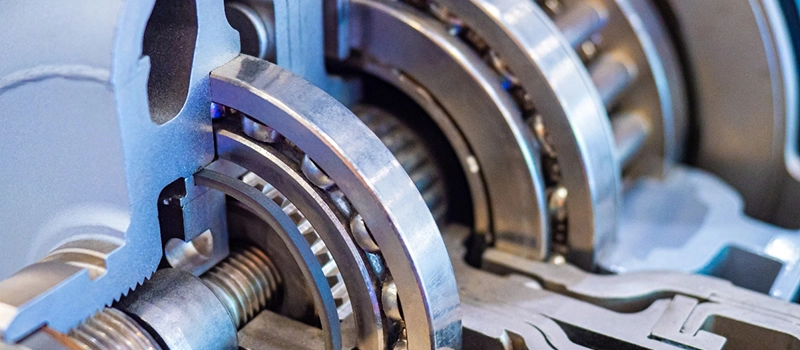
This type of wear is commonly observed in rolling contact components such as bearings, gears, and cam systems. In these applications, even small surface defects can evolve into serious failures due to continuous cyclic loading.
4. Corrosive Wear
Corrosive wear is a complex interaction between chemical reactions and mechanical action. It occurs when a metal surface reacts with its surrounding environment while simultaneously being subjected to friction or movement. This dual effect accelerates material degradation beyond what would occur from either corrosion or wear alone.
In many cases, oxidation is the primary chemical process involved. A thin oxide layer forms on the metal surface, which may initially act as a protective barrier. However, under continuous motion, this layer is repeatedly broken and removed, exposing fresh metal to further oxidation. This cycle leads to continuous material loss.
Environmental factors play a dominant role in corrosive wear. Temperature, humidity, and the presence of chemicals such as acids or salts significantly influence the rate of degradation. Materials that perform well in dry conditions may fail rapidly in corrosive environments.
Corrosive wear is commonly encountered in marine equipment, chemical processing machinery, and outdoor structures. Selecting corrosion-resistant alloys and applying protective coatings are essential measures to mitigate this type of wear.
5. Erosive Wear
Erosive wear is caused by the repeated impact of particles or fluids against a metal surface at high velocity. These particles can be solid, liquid droplets, or even gas streams containing suspended matter. Each impact removes a small amount of material, and over time, this leads to significant surface degradation.
The severity of erosive wear depends on several factors, including particle velocity, size, hardness, and impact angle. For example, ductile materials tend to experience maximum erosion at shallow impact angles, while brittle materials are more sensitive to perpendicular impacts.
Unlike abrasive wear, which involves sliding contact, erosive wear is driven by impact dynamics. This makes it particularly challenging to control, as it often occurs in environments where flow conditions are difficult to regulate.
Erosive wear is commonly found in pipelines transporting slurry, turbine blades exposed to high-speed fluids, and pneumatic conveying systems. Materials used in these applications must be carefully selected to balance hardness and toughness.
6. Fretting Wear
Fretting wear occurs when two contacting surfaces experience very small amplitude oscillatory motion. Although the movement is minimal, the repeated micro-sliding leads to surface damage over time. This type of wear is often underestimated because it occurs at such small displacement levels.
The main characteristic of fretting wear is the formation of fine debris at the contact interface. These particles can oxidize quickly, forming abrasive compounds that further accelerate wear. As the process continues, surface cracks may develop, eventually leading to fatigue failure.
Fretting wear is strongly influenced by contact pressure, vibration, and material properties. It is particularly common in assemblies where components are supposed to remain fixed but are subjected to vibration or cyclic loading.
Typical examples include bolted joints, shaft couplings, and electrical contacts. Preventing fretting wear requires careful control of surface finish, material selection, and the use of coatings or lubricants to minimize micro-motion.
7. Impact Wear
Impact wear results from repeated high-energy impacts on a material surface. Each impact generates localized stress, which can cause plastic deformation, cracking, or material removal. Over time, this leads to significant degradation of the component.
Unlike other types of wear, impact wear involves dynamic loading rather than continuous sliding or contact. This makes it particularly severe in applications where materials are subjected to sudden or repeated forces.
Materials used in impact environments must possess high toughness to absorb energy without fracturing. At the same time, they must maintain sufficient hardness to resist surface damage. Achieving this balance is a key challenge in material engineering.
Impact wear is commonly observed in heavy-duty equipment such as crushers, hammers, and excavator components. In many cases, it occurs together with abrasive wear, creating a combined wear mechanism that is even more difficult to manage.
8. Cavitation Wear
Cavitation wear occurs in liquid environments where rapid pressure changes cause the formation and collapse of vapor bubbles near a metal surface. When these bubbles collapse, they generate intense localized shock waves and micro-jets that strike the surface.
These repeated impacts cause pitting and surface erosion over time. Although each individual event is small, the cumulative effect can lead to severe damage, especially in high-flow systems.
Cavitation wear is influenced by fluid properties, pressure fluctuations, and surface geometry. Areas with turbulence or sudden changes in flow direction are particularly susceptible.
This type of wear is commonly found in pumps, valves, and marine propellers. It is often difficult to detect in its early stages, as the damage begins at a microscopic level before becoming visible.
Preventing cavitation wear requires careful design of fluid systems, as well as the use of materials and coatings that can withstand repeated micro-impact loading.
Comparison of Different Metal Materials Based on Types of Wear
Understanding different metal materials through the lens of types of wear is essential for making correct engineering decisions. In practical applications, selecting the wrong material for specific types of wear can lead to rapid failure, increased maintenance costs, and reduced equipment efficiency. Therefore, evaluating materials based on how they respond to different types of wear is a critical step in improving wear resistance.
Different metal materials exhibit distinct performance characteristics when exposed to various types of wear. No single material performs best under all conditions. Instead, each material is optimized for specific types of wear depending on its hardness, toughness, microstructure, and chemical composition. Engineers must analyze the dominant types of wear in their application before selecting the most suitable material.
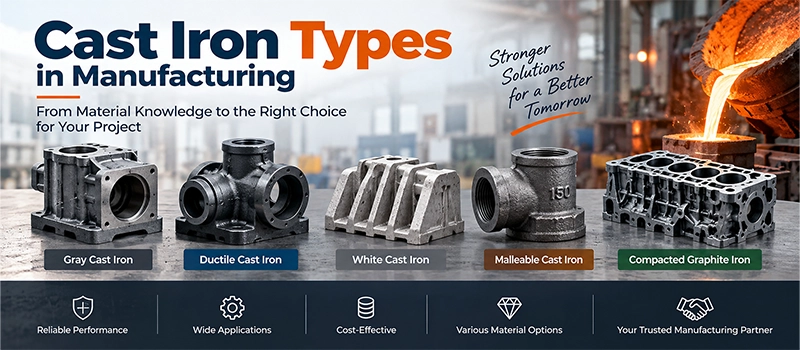
1. Cast Iron and Its Behavior Under Types of Wear
Cast iron is widely used due to its low cost and good wear resistance in certain conditions. When evaluating cast iron against different types of wear, it performs particularly well under abrasive wear. The presence of hard graphite flakes and carbides provides a natural resistance to material removal.
However, cast iron has limitations. Under impact wear, it tends to perform poorly due to its relatively low toughness. The brittle nature of cast iron makes it susceptible to cracking when exposed to repeated impact loads. In addition, under fatigue wear, micro-cracks can propagate quickly, leading to surface failure.
Cast iron also shows moderate performance under corrosive wear, depending on the environment. Without protective coatings, it can degrade in humid or chemically aggressive conditions. Therefore, cast iron is best suited for applications where abrasive wear is dominant and impact forces are minimal.
2. Alloy Steel and Its Adaptability to Types of Wear
Alloy steel is one of the most versatile materials when considering different types of wear. By adjusting its chemical composition and heat treatment, alloy steel can be engineered to perform well under multiple wear conditions.
Under abrasive wear, alloy steel with high hardness provides excellent resistance. At the same time, its improved toughness allows it to withstand impact wear better than cast iron. This balance between hardness and toughness makes alloy steel suitable for demanding environments where multiple types of wear occur simultaneously.
In terms of fatigue wear, alloy steel performs well due to its refined microstructure and high strength. Proper heat treatment can significantly enhance its resistance to crack initiation and propagation. Additionally, alloying elements such as chromium and molybdenum improve resistance to corrosive wear, especially in harsh environments.
Because of its adaptability, alloy steel is commonly used in mining, construction, and heavy machinery, where complex types of wear must be managed simultaneously.
3. Stainless Steel and Its Performance Across Types of Wear
Stainless steel is primarily known for its excellent corrosion resistance, which makes it highly effective under corrosive wear conditions. The formation of a passive oxide layer protects the surface from chemical attack, significantly reducing material degradation.
However, when evaluating stainless steel against other types of wear, its performance can vary. Under abrasive wear, many stainless steels have relatively low hardness, which makes them more susceptible to surface damage. Similarly, under adhesive wear, certain grades may experience galling if not properly lubricated.
That said, specialized stainless steels can be engineered to improve resistance to specific types of wear. For example, martensitic stainless steels offer higher hardness, while duplex stainless steels provide a balance of strength and corrosion resistance.
Stainless steel is ideal for applications where corrosive wear is the dominant concern, especially in chemical, food processing, and marine industries.
4. High Manganese Steel and Its Unique Response to Types of Wear
High manganese steel is a unique material specifically designed to perform under extreme impact wear conditions. Its most notable characteristic is work hardening. When subjected to high impact loads, the surface becomes significantly harder while the core remains tough.
This property makes high manganese steel highly resistant to impact wear and also effective against certain forms of abrasive wear. As the surface hardens during operation, it becomes more resistant to further material loss.
However, under low-stress abrasive conditions, high manganese steel may not perform as well because the work hardening effect is not sufficiently activated. Additionally, its resistance to corrosive wear is limited compared to stainless steel.
High manganese steel is widely used in applications such as crushers, railway crossings, and heavy-duty machinery, where impact-driven types of wear are dominant.
5. Comparative Overview of Metal Materials and Types of Wear
To better understand how these materials respond to different types of wear, the following comparison provides a simplified overview:
| Material | Abrasive Wear | Adhesive Wear | Impact Wear | Fatigue Wear | Corrosive Wear |
|---|---|---|---|---|---|
| Cast Iron | Good | Moderate | Poor | Moderate | Moderate |
| Alloy Steel | Excellent | Good | Good | Excellent | Good |
| Stainless Steel | Moderate | Moderate | Moderate | Good | Excellent |
| High Manganese Steel | Good | Moderate | Excellent | Good | Poor |
This comparison highlights an important principle: material selection must always be based on the dominant types of wear in the application. There is no universal solution, and optimizing wear resistance requires a clear understanding of how materials behave under specific wear conditions.
Conclusion
Understanding the 8 types of wear is essential for selecting the right materials and improving wear resistance. By analyzing how different types of wear affect metal components, engineers can reduce failure risks, optimize performance, and extend service life in demanding industrial applications.