“Metals owe their conductivity to a ‘sea of free electrons’ that move freely between atomic nuclei.”
—— Physics of Materials, MIT OpenCourseWare
Conduction in metals has fascinated physicists and powered industries for centuries. From the wiring in your home to the engine in your car, the ability of metals to rapidly transfer heat and electricity is not just useful—it’s essential.
The Science Behind Conduction in Metals
Conduction in metals is the phenomenon where heat or electrical energy is transmitted through a metal due to its internal structure. Unlike insulators, metals possess a unique atomic arrangement that allows electrons to move freely. These free-moving electrons—often called delocalized electrons—are the core reason why metals are such effective conductors.
At the atomic level, metal atoms are arranged in a tightly packed lattice. However, the outer electrons (also called valence electrons) are not bound to any single atom. Instead, they form a collective “electron cloud” or electron sea that moves throughout the metal structure. This free flow of electrons enables two critical processes:
- Electrical conductivity: When an electric field is applied, free electrons drift toward the positive side, generating current flow. This makes metals highly conductive in their solid state.
- Thermal conductivity: Vibrations from heated atoms are quickly passed to neighboring atoms via free electrons, distributing heat efficiently through the material.
Metals such as copper, silver, and aluminum are widely used because their electron mobility is extremely high, resulting in minimal resistance to current or heat flow. In contrast, non-metals lack free electrons, so they cannot conduct energy as efficiently.
It’s also important to note that this conductivity is a direct result of metallic bonding. In this bonding type, positive metal ions are surrounded by the shared pool of electrons, holding the structure together and making metals both strong and conductive. This bonding explains why conduction in metals remains effective across a wide range of temperatures and applications.
For engineers and product designers, understanding this mechanism is crucial. It affects everything from material selection to heat dissipation design in real-world applications.
Key Factors Affecting Thermal Conductivity
The thermal conductivity of metals—how well a metal conducts heat—is determined by a combination of internal structure, temperature behavior, and purity. While conduction in metals is generally high compared to non-metals, not all metals conduct heat equally. Understanding these influencing factors is essential for selecting the right material in engineering and manufacturing.
1. Free Electron Density
The most fundamental factor is the density of free electrons. In metals, these delocalized electrons transfer energy rapidly. Metals with a higher electron density, such as silver and copper, show superior thermal conductivity because more electrons are available to carry heat.
Key Insight: The more free electrons a metal has, the faster it transfers heat.
2. Atomic Structure and Bonding
A compact and uniform crystalline lattice structure allows electrons and atomic vibrations (phonons) to move smoothly. Metals with highly ordered atomic arrangements face fewer obstacles in transferring thermal energy. Disruptions in the lattice—like grain boundaries or dislocations—can reduce conductivity.
For example, annealed copper (with larger crystal grains) conducts heat better than cold-worked copper.
3. Impurities and Alloying
The presence of impurities or alloying elements significantly lowers thermal conductivity. These foreign atoms disrupt the flow of electrons and phonons. That’s why pure metals conduct better than alloys. For instance, pure aluminum conducts heat better than aluminum alloy used in structural components.
Conductivity in metals is highest when purity is above 99.9%.
4. Temperature Dependence
Unlike insulators, the thermal conductivity of metals generally decreases as temperature increases. This is because rising temperatures cause more lattice vibrations, which interfere with electron flow. So while metals are still conductive at high temperatures, efficiency drops.
5. Phase and Physical State
Metals in their solid state conduct heat better than in liquid or gaseous forms. In a solid, atoms remain in fixed positions, allowing efficient electron and phonon interaction. Once melted, this order is lost, and conduction in metals drops in the liquid state.
6. Surface Oxidation
Oxide layers on metal surfaces can act as barriers to heat transfer. Aluminum, for example, forms a thin oxide film that reduces its surface thermal conductivity unless removed or treated. This is especially critical in heat sink design.

Comparison of Conductivity in Different Metals
When discussing conduction in metals, one of the most frequently asked questions is: Which metals conduct electricity and heat the best? While most metals are naturally conductive, their performance varies significantly. The differences in conductivity in metals—both thermal conductivity and electrical conductivity—depend on atomic structure, electron mobility, and purity.
1. Conductive Metals in Order
Below is a general ranking of metal conductivity in order, based on both electrical and thermal performance:
| Metal | Electrical Conductivity (σ) | Thermal Conductivity (W/m·K) |
|---|---|---|
| Silver (Ag) | ★★★★★ | ★★★★★ |
| Copper (Cu) | ★★★★☆ | ★★★★☆ |
| Gold (Au) | ★★★★☆ | ★★★★☆ |
| Aluminum (Al) | ★★★☆☆ | ★★★★☆ |
| Zinc (Zn) | ★★☆☆☆ | ★★☆☆☆ |
| Iron (Fe) | ★★☆☆☆ | ★★☆☆☆ |
| Lead (Pb) | ★☆☆☆☆ | ★☆☆☆☆ |
Silver is the most conductive metal in the world, but its cost limits its use in large-scale industrial applications.
Copper is the most commonly used conductive metal, especially in electrical wiring, because it balances high electrical conductivity with cost-effectiveness.
2. Why Copper Is Widely Used
Although silver has the highest conductivity in metals, copper is more practical due to its lower cost, wide availability, and ease of processing. It offers:
- High thermal conductivity
- Excellent electrical conduction in solid state
- Resistance to oxidation compared to aluminum
- Stable performance across temperatures
3. Aluminum vs. Copper
Aluminum is lighter and cheaper than copper, which makes it favorable in aerospace and automotive applications. However, it has lower conductivity. To compensate, aluminum wires are made thicker than copper wires. But aluminum is more reactive, forming an oxide layer that can reduce efficiency unless properly treated.
4. Gold and Industrial Electronics
Gold has lower electrical conductivity than silver and copper, but it’s extremely resistant to corrosion. That’s why it’s used in high-precision electronics where signal integrity matters more than cost.
5. Other Considerations
- Conductivity in metals like iron and lead is significantly lower, which limits their usage in high-conduction applications.
- Some alloys are engineered for strength and durability but suffer a drop in metal conductivity due to impurities and structural variations.
Applications of Metal Conduction in Everyday Life
Conduction in metals is not just a theoretical concept in physics textbooks—it’s a driving force behind the function of nearly every modern device and infrastructure. Thanks to the high thermal conductivity and electrical conductivity of metals, they are widely used in essential applications across industries and everyday life.
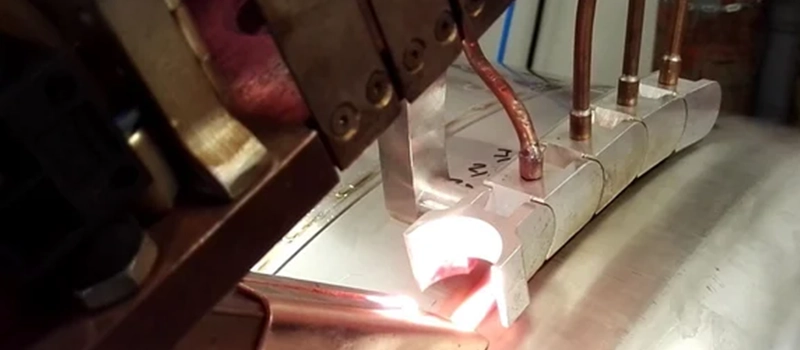
1. Electrical Wiring and Power Transmission
The most common and visible use of conductivity in metals is in electrical wiring. Copper is the global standard for electrical conductors due to its excellent electrical conductivity, flexibility, and durability. In high-end electronics or corrosion-prone environments, gold and silver are used for their superior conduction in metals without oxidation.
- Power grids
- Home and industrial wiring
- Circuit boards and connectors
- Battery terminals and electric motors
Without electrical conductivity in metals, transmitting power over distances would be inefficient or even impossible.
2. Heat Sinks and Thermal Management
In computers, LED lighting, and automotive electronics, heat management is crucial. Here, thermal conductivity in metals plays a key role. Aluminum and copper are the most commonly used conductive metals for dissipating heat.
For example, a CPU heat sink made from aluminum uses thermal conduction in metals to absorb and release heat away from the chip, preventing thermal overload.
3. Cooking and Kitchen Appliances
Every time you cook with a metal pan, you’re relying on thermal conductivity of metals. Stainless steel, aluminum, and copper are used in cookware because they heat evenly and respond quickly to temperature changes.
- Frying pans
- Electric kettles
- Oven coils
- Induction cooktops (which use electrical conduction in metals)
4. Automotive and Transportation
In vehicles, metal conductivity ensures both electrical systems (like starters and alternators) and thermal systems (like radiators and brake components) work efficiently.
- Aluminum radiators dissipate heat quickly
- Copper wiring connects electronic modules
- Thermal pads and shielding use high thermal conductivity metals to protect sensitive areas
5. Industrial and Petrochemical Equipment
Heavy-duty machines, furnaces, and reactors rely on conduction in metals to transfer heat and electricity under extreme conditions. In petrochemical plants, metal parts with high thermal conductivity ensure rapid heat exchange in distillation and reaction processes.
6. Smart Devices and Wearables
As electronics become smaller and more powerful, electrical conduction in metals must be even more efficient. From mobile phones to smartwatches, microcircuits rely on ultrathin layers of highly conductive metals like silver and gold to perform rapid signal transmission with minimal resistance.
The Role of Electrons in Thermal Conductivity
The key to understanding conduction in metals lies in the behavior of electrons—specifically, the free electrons in metals. These electrons are not bound to any one atom but move freely throughout the metal’s structure. This unique characteristic is the foundation of both thermal conductivity and electrical conductivity in metals.
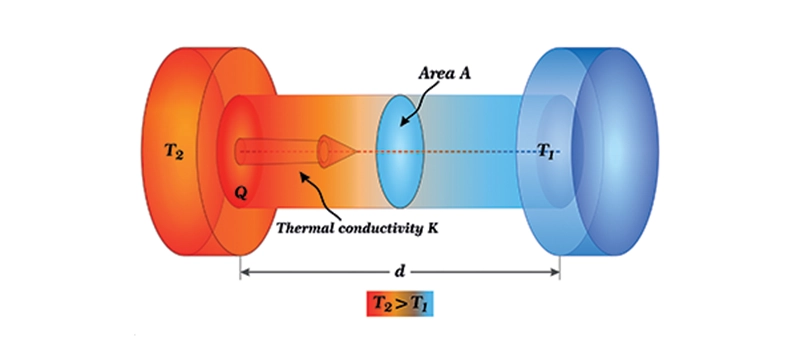
1. Free Electrons as Heat Carriers
In most materials, heat is transferred through vibrations of atoms in the lattice, known as phonons. But in conductive metals, the primary carriers of heat are the free-moving electrons. When one part of the metal is heated, these electrons gain kinetic energy and rapidly transfer that energy through the metal by colliding with other electrons and atoms.
This mechanism is what makes thermal conductivity in metals far superior to that of non-metals. Non-metals lack these mobile electrons, relying solely on slow-moving phonons.
In summary: More free electrons = higher thermal conductivity.
2. Why Metals Are Conductive in Solid State
Conduction in metals is most efficient in the solid state, where atoms are fixed in a lattice and electrons can move freely between them. In this state, the metallic bonds create a stable structure with a shared electron cloud. This electron cloud allows energy to move with minimal resistance, enabling excellent electrical conduction and heat transfer.
- Do metals conduct electricity in solid state? Yes—better than in any other state.
- Why? Because free electrons can move rapidly and continuously through a stable atomic structure.
3. How Electrons Enable Electrical Conductivity
When a voltage is applied across a metal, the free electrons begin to drift toward the positive terminal. This drift causes electric current to flow. The density and mobility of these electrons determine the electrical conductivity in metals.
Silver and copper top the list of conductive metals because their electron clouds are highly mobile, with minimal scattering. This means that electrical resistance is very low, resulting in highly efficient conduction in metals.
4. Why Temperature Affects Conductivity
Temperature plays a complex role in conductivity in metals. As temperature increases:
- Lattice vibrations increase, leading to more electron scattering.
- This reduces electrical conductivity, as the path of electrons is disrupted.
- Thermal conductivity may also drop, especially in metals with high impurity levels.
So, although metals are naturally conductive, extreme heat can interfere with the free flow of electrons, reducing their effectiveness.
5. What Property of Metal Atoms Enables High Conductivity?
The secret lies in low ionization energy and the metallic bonding structure. These properties allow valence electrons to delocalize, forming the mobile “electron sea” that defines conduction in metals. Without this, metals would behave more like insulators.
Future Trends in Conductive Materials Research
As industries push for smarter, faster, and more energy-efficient technologies, the future of conduction in metals is evolving rapidly. Researchers and engineers are not only optimizing traditional conductive metals like copper and silver, but also exploring new conductive materials that surpass the limits of natural metals in both thermal conductivity and electrical conductivity.
1. Nano-Engineered Conductive Metals
Nanotechnology is transforming the landscape of conductive materials. By manipulating the grain size and surface structure at the nano-level, we can enhance thermal conductivity in metals and reduce electron scattering. For instance:
- Nano-copper shows improved electrical conductivity in microchips.
- Nanostructured aluminum improves thermal conduction in compact heat exchangers.
These innovations help maintain efficient conduction in metals at smaller scales without overheating.
2. Hybrid Metal Composites
Researchers are developing metal-polymer or metal-ceramic composites to combine the flexibility of polymers with the conductivity in metals. These are particularly useful in flexible electronics, wearable devices, and aerospace.
- Example: Silver-infused conductive inks printed on flexible substrates
- Benefit: Lightweight, corrosion-resistant, and still exhibit high electrical conductivity
This creates a new class of conductive materials that perform beyond traditional limits.
3. Superconductive Metals and Alloys
The holy grail of electrical conduction in metals is zero resistance. While most conductive metals have some resistance, superconductors like niobium-titanium exhibit perfect electrical conductivity at extremely low temperatures.
Current research aims to:
- Develop room-temperature superconductors
- Enhance electron mobility in standard metallic structures
- Reduce energy loss in transmission systems
If successful, this could revolutionize how conduction in metals powers cities, factories, and transport networks.
4. Green and Sustainable Conductive Materials
With growing pressure for sustainability, future conductive metals must also be recyclable and eco-friendly. This is driving interest in:
- Recycled copper and aluminum for wiring and HVAC systems
- Bio-compatible conductive metals for medical devices
- Low-carbon production of high thermal conductivity alloys
These trends ensure that future conductivity in metals supports both performance and environmental responsibility.
5. AI-Driven Material Design
Artificial intelligence is now being used to predict and simulate metal conductivity performance. Machine learning models can evaluate thousands of metallic compounds for optimal electrical conductivity, thermal conductivity, corrosion resistance, and cost—all in seconds.
This accelerates the discovery of new conductive materials and applications for conduction in metals across industries.
Conclusion
Understanding conduction in metals is not just about physics—it’s about making smart, efficient, and cost-effective engineering decisions. Throughout this article, we explored how conductivity in metals—both thermal conductivity and electrical conductivity—is made possible by the presence of free electrons in metals. These electrons are the foundation of why conductive metals like copper, silver, aluminum, and gold are essential to modern industry.
For engineers, product designers, and sourcing professionals, mastering the science of conductivity in metals enables better decision-making—from selecting the right metal for wires that conduct electricity, to designing components that demand superior thermal conduction under stress.
In a world that runs on power and speed, conduction in metals isn’t just useful—it’s indispensable.