Have you ever received a CNC machining quote and had no idea what each cost item meant? Worried about being overcharged or making the wrong sourcing decision? You’re not alone. Understanding where the numbers come from is the first step toward better control of your machining budget.
CNC machining cost isn’t a mystery. It’s driven by 8 critical factors — from material selection and part complexity to production volume and machine type. In this guide, I’ll walk you through each cost element so you can make smarter, more cost-effective decisions, avoid unnecessary charges, and ensure you get exactly what you pay for.
With a clear understanding of what truly drives CNC pricing, you’ll gain the upper hand in negotiations and planning. Let’s break down the real cost behind CNC machining.
What is CNC Machining Cost?
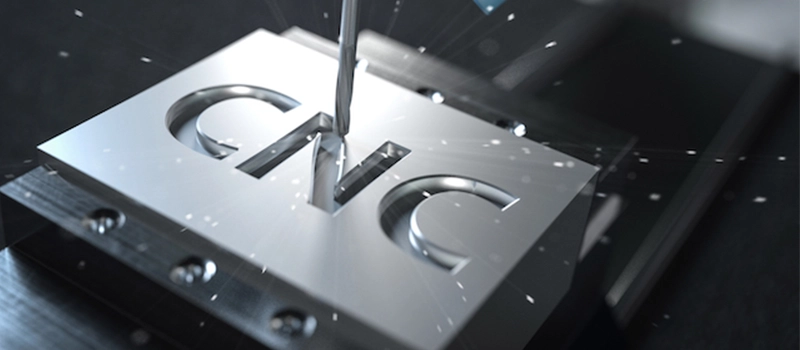
CNC machining cost refers to the total expense involved in producing a part using computer numerical control (CNC) equipment. It encompasses everything from raw materials and machine time to labor and post-processing. But at its core, CNC machining cost is the price you pay for precision, consistency, and efficiency in custom part manufacturing.
Unlike traditional methods, CNC machining doesn’t rely on manual labor or molds. Instead, it uses pre-programmed computer software to automate complex cutting, drilling, turning, and milling operations. This makes it ideal for both prototyping and low- to medium-volume production — but the cost can vary widely depending on several factors.
The pricing structure usually falls into two categories: per-part pricing and hourly machine rates. The former is more common when working with suppliers overseas or placing repeat orders. The latter is often used in quoting one-off or prototype jobs, especially in local machine shops.
CNC machining cost isn’t just a number — it’s the result of precise planning, smart engineering, and efficient execution. Every detail, from the materials you choose to the machine tools involved, plays a part in shaping that final cost.

Key Factors That Influence CNC Machining Cost
When evaluating CNC machining cost, it’s important to understand that no single element determines the final price. Instead, it’s the combination of multiple technical and logistical factors that together define how much you’ll pay per part or per hour. Here’s a breakdown of the most critical ones:
1. Material Selection and Its Cost Implications
Material plays a foundational role in CNC machining cost. Not all raw materials are created equal — some are significantly more expensive due to their hardness, machinability, or availability.
For example:
- Aluminum is lightweight, corrosion-resistant, and easy to machine, making it relatively affordable.
- Stainless steel is tougher to cut and wears down tools faster, raising both material and machining costs.
- Brass is expensive but machines easily, often reducing cycle time.
- Titanium and specialty alloys are difficult to machine and come with a premium price tag.
It’s not just the price per kilogram of material that matters — but how the material affects tool wear, machining time, and scrap rate. Choosing the right material for your application can significantly impact both unit price and total cost of production.
If you’re working with imported or specialty materials, consider the extra cost for sourcing, customs duties, and minimum order quantities. These hidden charges can easily inflate your CNC machining cost if not accounted for early on.
🧠 Tip: Use materials with good machinability ratings for prototypes or high-volume parts.
2. Complexity of Design
The more intricate the geometry, the higher the machining cost. Features like deep cavities, thin walls, undercuts, or internal threads can dramatically increase CNC cycle time and setup effort.
Complex designs may require:
- Multiple setups or fixture changes
- Special tooling
- Multi-axis machining (5-axis instead of 3-axis)
- Custom CAM programming
- Slower feed rates and deeper quality inspection
For instance, a simple rectangular block with drilled holes might take 15 minutes to complete, while a part with curves, bevels, and tight radii could take 2 hours — using the same machine and operator.
Reducing complexity (without compromising function) is one of the most effective ways to control CNC machining cost. That’s why Design for Manufacturability (DFM) principles are so important when preparing your CAD files.
📐 Tip: Minimize sharp internal corners and use standard hole sizes to reduce tool changes.
3. Quantity and Production Runs
CNC machining cost is highly sensitive to order volume. Producing one prototype part is far more expensive (on a per-part basis) than producing 100 or 1,000 identical units.
Why?
- The setup cost (tool calibration, fixture prep, programming) is a fixed expense
- In low volumes, this fixed cost gets distributed across fewer parts
- Larger production runs benefit from economies of scale
In general:
- Prototypes (1–10 pcs): Highest cost per part
- Low volume (10–100 pcs): Moderate per-part cost
- Mass production (100+ pcs): Lowest unit cost
If your parts don’t change frequently, consider batching your orders to reduce total cost. In contrast, frequent small runs with design changes may incur repeated setup costs.
📦 Tip: Ask your supplier for price breaks based on volume tiers.
4. Tolerances and Precision Levels
Tighter tolerances = higher CNC machining cost.
Why? Because high-precision parts:
- Require slower machining speeds
- May need specialized inspection equipment
- Increase rejection rates (scrap cost)
- Require experienced technicians for quality control
A part with ±0.01 mm tolerance is exponentially more difficult (and expensive) to produce than one with ±0.1 mm.
If your application doesn’t demand extreme accuracy, avoid specifying tight tolerances everywhere. Only apply them where functionally necessary.
🎯 Tip: Use ISO or ASME standard tolerance classes to streamline quoting.
5. Machine Type and Technology
Different types of CNC machines come with different hourly rates — and different capabilities.
For example:
- 3-axis CNC milling is standard and affordable
- 5-axis machining allows more complex parts in fewer setups, but is more expensive
- CNC lathes (turning) are ideal for cylindrical parts
- Swiss-type lathes are highly precise but costly
Each machine type involves its own tooling, maintenance, and operator expertise. Using a high-end machine for a low-complexity part will unnecessarily raise your costs.
🛠️ Tip: Match your part design to the most cost-effective machine type.
6. Tooling and Setup Costs
Before production begins, machinists must prepare the equipment. This includes:
- Installing the right cutting tools
- Calibrating the machine
- Creating or adjusting the G-code program
- Designing fixtures or jigs
These are one-time non-recurring engineering (NRE) costs that are spread across the production batch.
The more complex the part, the longer the setup time. Some parts may even require custom tooling, which adds further cost.
⏱️ Tip: Reordering the same part later avoids new setup costs.
7. Labor Costs
Although CNC is automated, it still requires skilled human input:
- Programming the machine
- Setting up the tools
- Performing quality inspections
- Supervising production
Labor rates vary significantly between countries:
- China & Vietnam: $5–$15/hour
- Eastern Europe: $15–$30/hour
- North America / Western Europe: $35–$80/hour
Even within China, labor costs differ between provinces or cities. The more labor-intensive the process (e.g., manual deburring, polishing), the more impact it has on your overall CNC machining cost.
👷 Tip: For high-labor tasks, offshore sourcing can offer major savings.
8. Additional Costs (Surface Finish, Packaging, Shipping, Certifications, etc.)
Beyond machining itself, several post-processing and service-related factors contribute to the total cost:
- Surface finishes (anodizing, painting, polishing)
- Heat treatment (for strength or hardness)
- Deburring and cleaning
- Custom packaging or labeling
- Shipping (especially air freight)
- Inspection reports and certifications (RoHS, REACH, CE, etc.)
While some of these are optional, others may be required for regulatory compliance or customer specifications. Always clarify what’s included in the supplier’s quote.
📋 Tip: Always ask for an itemized quote to avoid unexpected charges.
How to Reduce CNC Machining Costs Without Sacrificing Quality
CNC machining is known for its precision and reliability — but it can also become expensive if not properly optimized. The good news is: you don’t have to sacrifice part performance or quality just to save money. By making smart decisions in design, material selection, and supplier communication, you can significantly reduce your CNC machining cost without cutting corners.
Here are the most effective ways to do it:
1. Simplify Your Design
Complex geometries often require more machine time, tool changes, and even custom setups — all of which increase cost.
Ways to simplify:
- Eliminate non-functional aesthetic features
- Avoid deep pockets, undercuts, or thin walls where not needed
- Use standard hole sizes and radii
- Keep part orientation stable for fewer setups
You don’t have to strip the part down to the bare minimum — but removing unnecessary complexity can reduce your CNC machining cost by 20–50%, especially for prototypes or small batches.
🧠 Pro tip: Send your design to your supplier for a quick DFM (Design for Manufacturability) review — they can suggest ways to cut cost without affecting performance.
2. Choose Materials That Are Easier to Machine
Not all materials are equal in cost — and even affordable ones can be expensive to machine.
For example:
- Aluminum (6061 or 7075) machines fast and clean — ideal for prototypes or structural parts
- Brass is expensive but very machinable — great for tight tolerance parts
- Stainless steel is strong, but slow to machine — increasing tool wear and cycle time
By selecting a material with better machinability, you reduce both tool wear and machining time, which directly lowers your CNC machining cost.
⚙️ Pro tip: Ask your supplier which material options are both cost-effective and fit for your intended application.
3. Increase Your Order Quantity (When It Makes Sense)
Setup costs — programming, tooling, fixturing — are amortized across the total number of parts produced. That means the more parts you produce per run, the lower your cost per unit.
If your design is stable and demand predictable, batch production is the smartest way to bring down cost.
Consider:
- Ordering 200 parts instead of 100 could reduce your cost by 10–25%
- Producing parts in families or modular batches can simplify tooling
📦 Pro tip: Even if you don’t need the full batch now, negotiate a blanket order with staged deliveries to lock in lower per-part pricing.
4. Limit Tight Tolerances to Critical Features Only
Precision costs money. Every decimal you tighten on a tolerance spec increases machine time, tool passes, and inspection complexity.
Only apply tight tolerances (e.g., ±0.01 mm) where it actually impacts function — such as mating surfaces, press fits, or sealing zones. Keep the rest of the part in standard tolerance ranges (±0.1 mm).
🎯 Pro tip: If you’re not sure what tolerance is required, discuss it with your supplier’s engineering team — they often help optimize this for free.
5. Combine Multiple Parts into One When Possible
If your assembly includes several small parts that are always used together, consider redesigning them as a single CNC-machined component.
Benefits:
- Eliminates fasteners or welding
- Reduces total machine setups
- Lowers handling and assembly labor
- Improves part alignment and structural strength
This design-for-consolidation strategy is especially powerful in automotive, robotics, and industrial equipment parts.
🔗 Pro tip: Use 3D CAD simulation to check if combining parts maintains your mechanical tolerances.

6. Avoid Unnecessary Surface Finishing
Surface treatments like anodizing, powder coating, polishing, or bead blasting all add cost — especially for low-volume parts.
Ask yourself:
- Is cosmetic finish essential for function?
- Will the part be hidden inside equipment?
- Can raw finish or light deburring meet your needs?
If so, you can avoid multiple processing steps and lower your CNC machining cost.
🪶 Pro tip: Choose in-machine deburring or as-machined finish for internal, non-visible parts.
7. Choose the Right Supplier Location
As mentioned earlier, labor cost and overhead vary widely by region. For example, CNC machining in China typically costs:
- $10–$25 per hour depending on city and process complexity
In contrast:
- North America or Western Europe can cost $50–$100+ per hour
For high-volume or labor-intensive jobs, offshore suppliers offer significant savings without sacrificing quality — as long as you vet their capabilities and certifications.
🌍 Pro tip: Ask for a cost breakdown including freight and lead time — total landed cost is what matters most.
8. Eliminate Unclear or Incomplete Drawings
Unclear drawings = quote delays, errors, and unexpected rework — all of which inflate CNC machining cost.
Make sure your files include:
- Clear dimensions and tolerances
- Surface finish requirements
- Material specification
- Quantity
- Thread types or hole specs
Using standard formats like STEP (.stp) or IGES (.igs) can reduce communication friction and improve quoting accuracy.
📝 Pro tip: Add a drawing checklist before sending RFQs — it speeds up the process and ensures cost clarity.
Comparing CNC Machining Costs with Other Manufacturing Methods
When evaluating manufacturing options, it’s important to consider not only precision and lead time — but also cost. While CNC machining cost is often viewed as relatively high, it offers distinct advantages in flexibility, accuracy, and material range. That said, it’s not always the most cost-effective option depending on your application.
Here’s a detailed side-by-side comparison of CNC machining cost versus 3D printing, injection molding, and die casting:
🧾 Cost Comparison Table: CNC Machining vs. Other Methods
| Criteria | CNC Machining Cost | 3D Printing Cost | Injection Molding Cost | Die Casting Cost |
|---|---|---|---|---|
| Startup/Tooling Cost | Low to medium (setup only) | Very low (almost none) | High (expensive molds) | High (metal dies needed) |
| Per-Part Cost (Low Volume) | Medium to high | Low to medium | High | High |
| Per-Part Cost (Mass Production) | Medium (volume helps reduce cost) | High (not scalable) | Very low (after tooling) | Low to medium |
| Precision & Tolerances | Very high (±0.01 mm possible) | Low to medium (depends on material/method) | Medium (±0.1 mm typical) | Medium (±0.05–0.1 mm) |
| Material Range | Very wide (metals, plastics) | Limited (mainly plastics/resins) | Limited (usually thermoplastics) | Limited (non-ferrous metals like aluminum) |
| Surface Finish Quality | High (can be customized) | Moderate | High (depends on mold quality) | High |
| Design Flexibility | High (no mold constraints) | Very high (complex geometries possible) | Low (needs mold redesign for changes) | Low |
| Lead Time (Prototyping) | 1–5 days (fast setup) | 1–2 days (very fast) | 2–4 weeks (tooling time) | 3–5 weeks (tooling + testing) |
| Lead Time (Production) | 1–3 weeks (volume-dependent) | 1–2 weeks | Fast (after tooling is done) | Fast (after dies are ready) |
| Cost Scalability | Moderate (good for 1–1,000 pcs) | Poor (cost/part stays flat or rises) | Excellent (ideal for 10,000+ pcs) | Excellent (ideal for thousands of units) |
Common Cost Misunderstandings You Should Avoid
While CNC machining is known for transparency and precision, many buyers still fall into costly traps — often due to assumptions, incomplete RFQs, or overreliance on headline pricing. Let’s clear up some of the most common cost-related misunderstandings to help you avoid unnecessary expenses and manage your CNC machining cost more effectively.
1. Thinking Quoted Price = Total Cost
One of the biggest misconceptions is assuming that the supplier’s quoted unit price includes everything — but that’s rarely the case.
Often excluded:
- Packaging and labeling
- Surface treatment (e.g. anodizing, plating)
- Dimensional inspection reports
- Freight or insurance
- Import taxes or VAT
A quote that seems “low” may not actually be the lowest CNC machining cost once all add-ons are included. Always request a fully itemized quote and ask for a total landed cost if shipping internationally.
🧾 Tip: Clarify what’s included in the price: Are post-processing, QC reports, and shipping fees listed?
2. Assuming All CNC Machines Are the Same
Not all CNC machines — or shops — are created equal. The type of machine (3-axis vs. 5-axis), age, condition, and the operator’s skill level can drastically affect both quality and pricing.
For example:
- A 5-axis machine may complete your part in one setup (saving time)
- But that same part on a 3-axis may require multiple setups (raising cost)
- Using older or worn-out machines might reduce cost but increase part defects
The CNC machining cost can appear higher from a top-tier shop — but the consistency, precision, and scrap reduction may make it more cost-effective in the long run.
📌 Tip: Don’t compare quotes blindly — ask about equipment and capabilities.
3. Believing “Tighter Tolerance = Better Quality”
It’s common to assume that specifying ultra-tight tolerances (like ±0.01 mm) automatically means higher quality. In reality, it just means higher cost — and often unnecessarily so.
Over engineering tolerances:
- Increases machine time
- Requires slower tool feeds
- Reduces yields
- May require more expensive inspection tools (CMMs)
Unless the function absolutely demands it, overly tight specs will only raise your CNC machining cost without any functional benefit.
📐 Tip: Only apply tight tolerances where performance requires it — everywhere else, go standard.
4. Underestimating the Impact of Order Volume
Some buyers assume that per-unit CNC machining cost remains constant, whether you order 10 or 1,000 pieces. That’s far from reality.
What actually happens:
- Setup and programming costs are fixed
- Higher volume spreads those fixed costs
- Unit cost can drop by 20–50% with just a slight volume increase
If you always order low quantities, your per-part CNC machining cost will stay high — even for simple parts.
📦 Tip: Consolidate orders when possible, or negotiate volume pricing tiers.
5. Expecting Instant Quotes Without Complete Drawings
Providing vague drawings, missing material specs, or unclear tolerances slows down the quoting process — and often leads to buffer pricing, just in case.
A professional shop needs:
- 3D model (STEP or IGES)
- 2D drawing with tolerances
- Material type
- Quantity
- Surface finish (if needed)
Without this, suppliers may either refuse to quote or inflate the CNC machining cost to cover unknowns.
📝 Tip: Create a standard RFQ package to reduce quote times and ensure pricing accuracy.
6. Ignoring the Cost of Design Revisions
Making design changes after a quote has been issued — or worse, after machining begins — can lead to:
- Reprogramming fees
- Re-setup charges
- Scrapped material
- Delayed delivery
Even small adjustments can result in significant added CNC machining cost, especially for shops running tight schedules or automated lines.
🔄 Tip: Finalize your design before sending out RFQs, or communicate early if revisions are expected.
7. Assuming Local Suppliers Are Always Cheaper (or Safer)
It’s easy to believe that working with a local machine shop avoids hidden costs, quality issues, or delivery problems — but that’s not always true.
For example:
- Local labor rates may be 4–6x higher than overseas shops
- Local shops may outsource parts anyway (adding markup)
- High overhead and taxes increase base CNC machining cost
At the same time, overseas suppliers with strong certifications (ISO, CE) and communication standards can offer high-quality output with much lower costs.
🌍 Tip: Evaluate total cost + risk + communication, not just location.
CNC Machining Cost Comparison: China vs. Other Countries
Choosing where to source CNC parts isn’t just about price — but price still plays a major role. Whether you’re producing prototypes or high-volume batches, understanding how CNC machining cost varies by country can help you make smarter, more strategic sourcing decisions.
Here’s a clear, data-backed comparison of common sourcing regions:
🌏 Global CNC Machining Cost Comparison Table
| Cost & Capability Factors | China | Vietnam | Eastern Europe | United States | Germany |
|---|---|---|---|---|---|
| Average Machining Cost/Hour | $10–$25 | $8–$20 | $15–$30 | $50–$100 | $60–$120 |
| Setup & Tooling Costs | Low to medium | Low | Medium | High | High |
| Labor Costs | Low | Very low | Medium | Very high | Very high |
| Material Availability | Wide range (incl. imported) | Limited high-end alloys | Good | Excellent | Excellent |
| Quality Control Systems | Improving (ISO 9001 common) | Basic to mid-level | Mid to high | High (AS9100, ISO) | Very high |
| Tolerances Capability | ±0.01 mm achievable | ±0.02 mm typical | ±0.01–0.02 mm typical | ±0.005–0.01 mm | ±0.005 mm and better |
| Lead Time (Prototype) | 5–7 days | 5–10 days | 7–10 days | 2–5 days | 3–6 days |
| Lead Time (Production) | 2–3 weeks | 2–4 weeks | 3–4 weeks | 2–4 weeks | 3–5 weeks |
| MOQ (Minimum Order Quantity) | Flexible | Flexible | Medium | Often required | Often required |
| Communication Efficiency | Moderate to high (varies by shop) | Medium (language gaps common) | High | Native-level | Native-level |
| IP Protection | Moderate | Low | High | Very high | Very high |
| Total CNC Machining Cost | ⭐️ Lowest overall | ⭐️ Very low | Medium | ⭐️ Highest | High to very high |
Conclusion
Understanding what drives CNC machining cost is essential for making smarter, more cost-effective sourcing decisions. From material selection and part complexity to production volume and supplier location, each factor plays a role in the final price. By optimizing your design, clarifying requirements, and choosing the right manufacturing partner, you can reduce costs without compromising on quality.