High-pressure die casting often struggles with thin walls, voids, or surface sealing failure—especially when using alloys with low fluidity or poor gas control.
According to the ASM Handbook, “Aluminum alloy A413 provides superior castability, pressure tightness, and resistance to hot cracking.” Yet poor design alignment or unfit process parameters often lead to porosity or cosmetic failure.
Aluminum alloy A413 is engineered for precision casting where fill behavior and dimensional accuracy are non-negotiable. With proper gating and control, it delivers tight tolerances, clean surfaces, and consistent performance—ideal for electronics housings, auto components, and high-detail die casts.
What Is Aluminum Alloy A413?
Classification and Composition
Aluminum alloy A413 is a pressure die-casting alloy defined by high silicon content, typically around 12%. It falls under the ASTM B179 standard and is categorized as a hypereutectic alloy. Key alloying elements include silicon, iron, and trace amounts of copper and magnesium. Its chemical balance favors fluidity and resistance to hot cracking during solidification.
Casting Purpose and Industry Use
A413 is selected specifically for die casting where thin walls, complex shapes, and surface integrity are critical. It’s frequently used in electronic housings, gearboxes, lighting components, and decorative automotive castings. The alloy supports fine detail and stable dimensional control under high-pressure casting conditions.

How Aluminum Alloy A413 Behaves in Casting
Flowability and Mold Fill
Aluminum alloy A413 is engineered for excellent molten flow. The high silicon content reduces viscosity and enhances mold fill, making it highly suitable for thin-wall or detailed parts. Its behavior allows consistent cavity filling under high-pressure die casting, minimizing cold shuts and misruns.
Porosity and Pressure Tightness
A413 resists porosity better than many aluminum casting alloys. Its metallurgical structure supports pressure-tight applications such as hydraulic housings and automotive components. When paired with vacuum-assisted casting or proper venting, this alloy consistently achieves sound castings with minimal entrapped gas.
Thermal Cracking Resistance
The silicon-rich matrix provides thermal cracking resistance. Aluminum alloy A413 is less prone to hot tearing during solidification, especially when compared to lower-silicon grades like A356 or 319. Controlled cooling and die temperature management are still necessary to maintain part integrity.
How Manufacturing Responds to Aluminum Alloy A413
Die Casting Considerations
Aluminum alloy A413 is optimized for high-pressure die casting. It requires rapid fill speeds and precise thermal control to take full advantage of its fluidity. Tooling must accommodate higher wear from silicon particles, and die materials should be selected accordingly to prevent erosion or sticking.
Machining Characteristics
While A413 machines adequately, its high silicon content causes tool abrasion. Carbide tools are recommended, and tool life is shorter compared to softer alloys like 6061. Secondary machining should consider the presence of hard silicon phases and the risk of surface pitting.
Welding and Joining Limits
A413 is not recommended for fusion welding. The alloy’s silicon structure leads to hot cracking, and weld zones suffer from porosity and strength loss. If joining is required, mechanical fastening or adhesive bonding is preferred over arc-based methods.
Where Aluminum Alloy A413 Works
Automotive Castings
Aluminum alloy A413 is widely used in automotive applications such as transmission cases, pump housings, and air conditioning components. Its pressure tightness and dimensional stability under vibration make it suitable for both structural enclosures and fluid-handling parts.
Electronics and Instrument Housings
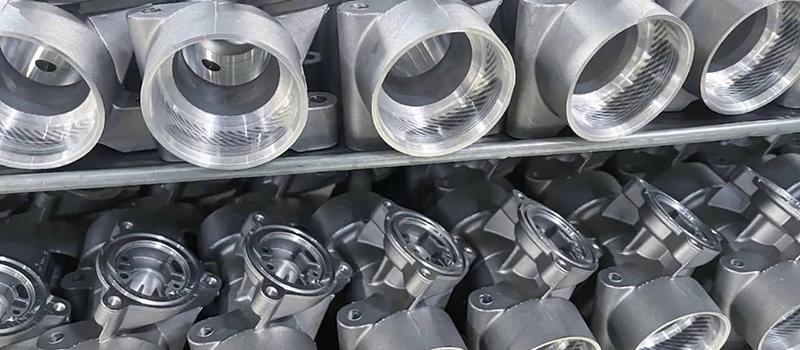
The alloy’s fine surface finish and casting precision make it a common choice for electronic enclosures, heat sinks, and instrumentation cases. It supports complex geometries and thin-wall sections while maintaining sealing surfaces and fastening threads.
Decorative and Structural Castings
Due to its ability to hold surface detail, A413 is selected for lighting fixtures, appliance housings, and consumer product frames. It is also used in architectural and industrial parts where cosmetic surface appearance is important after painting or powder coating.
Where Aluminum Alloy A413 Fails
Structural Load-Bearing Applications
Aluminum alloy A413 has inherent mechanical limitations that prevent its use in critical load-bearing parts. With a typical elongation under 1% and low yield strength compared to wrought aluminum, it performs poorly in applications that demand flexibility or high-impact resistance. Its silicon-heavy microstructure, while ideal for casting flow, introduces brittleness.
This makes A413 unsuitable for suspension components, engine mounts, or structural frames that experience dynamic stress. If overstressed, parts tend to fracture without significant deformation. Engineers requiring higher ductility or energy absorption should consider casting alloys like 356-T6 or structural wrought grades like 6061-T6 instead.
Elevated Temperature Environments
A413 is not a heat-resistant alloy. Its mechanical properties deteriorate rapidly at elevated temperatures, with tensile strength and hardness both decreasing above 150°C. In high-heat environments such as near engine blocks, turbochargers, or continuous power electronics, this reduction can lead to dimensional drift, warping, or creep.
Because A413 is not heat-treatable in the conventional sense, it cannot be upgraded for thermal stability through T6 or T5 processes. Other heat-resistant aluminum alloys like A319 or modified 356 are preferred when thermal exposure is a primary design factor.
Welding and Post-Processing Limitations
A413 is difficult to weld using standard arc processes. Its silicon content and solidification characteristics promote hot cracking and porosity in the fusion zone. Even with controlled techniques like TIG or friction stir welding, the mechanical integrity of welded joints is typically unreliable. As a result, A413 components are usually monolithic and not suited for post-assembly welding.
Furthermore, A413 cannot be strengthened by heat treatment due to its non-heat-treatable matrix. This limits its usefulness in processes that require part hardening, stress relief, or dimensional stabilization after casting. Its mechanical properties remain close to the as-cast state, meaning any downstream operations must work within those limits.
Surface Finishing Constraints
While A413 provides a decent cosmetic surface after casting, its high silicon content can complicate certain finishing operations. Anodizing can yield uneven coloration or blotchy surfaces due to silicon particle distribution. Electroplating or chromate conversion coatings are better suited, but care must be taken to control surface porosity, especially for decorative or sealing applications.
When a high-grade aesthetic finish is needed, parts often require polishing or impregnation to reduce microporosity. This adds cost and complexity, which should be factored into material selection early in the design process.
Surface Finishing Options and Limitations
Chromate Conversion Coating Compatibility
Aluminum alloy A413 accepts chromate conversion coatings, particularly Type II trivalent formulations, when surface porosity is minimal. The coating enhances corrosion resistance and provides a suitable base for painting or adhesive bonding. However, due to the alloy’s high silicon content, coating uniformity can vary. Pretreatment steps such as desmutting and etching are essential to improve adhesion and coating consistency.
For industrial enclosures or components requiring electrical grounding, chromate finishes offer both conductivity and passivation. Yet in visually critical applications, uneven tone or patchiness may require additional cosmetic treatment.
Powder Coating and Organic Paint Adhesion
Powder coating is a common finish for aluminum alloy A413, particularly in consumer products and electronics housings. The alloy’s surface accepts epoxy and polyester-based powders, but proper surface cleaning and outgassing control are essential.
Due to A413’s microporosity, gas can escape during curing and create surface blisters or pinholes. To mitigate this, castings are often pre-baked to degas trapped air before coating. Applying a primer layer before the powder coat can also improve adhesion and visual consistency.
Anodizing Challenges
Anodizing aluminum alloy A413 produces inconsistent results. High silicon content leads to dark, blotchy, or speckled anodized surfaces, especially in decorative clear or color finishes. Unlike wrought alloys such as 6061, A413 does not develop a uniform oxide layer, making it a poor candidate for decorative anodizing.
In industrial settings where corrosion protection is more important than appearance, hard anodizing may still be used—though results vary. Designers requiring consistent anodized appearance should consider alternate alloys with lower silicon content.
Surface Porosity and Cosmetic Considerations
As-cast A413 surfaces often contain micro-porosity, especially in complex parts or under suboptimal die conditions. This affects both aesthetics and coating quality. If visual uniformity or sealing performance is critical, additional processes like surface impregnation or polishing may be required.
Pressure impregnation with resin or sealants fills surface voids and prevents paint bleed-through or chemical ingress. For highly visible parts, light sanding or bead blasting is used before coating to smooth irregularities and improve final finish quality.
When selecting aluminum alloy A413 for coated or painted components, finishing requirements must be defined early in the design process. Surface treatment compatibility depends on casting quality, alloy behavior, and the intended cosmetic or functional outcome.
Comparison to Other Aluminum Casting Alloys
A413 vs A380: Pressure Tightness vs Machinability
A380 is the most commonly used aluminum die casting alloy due to its balanced properties and ease of casting. Compared to A380, aluminum alloy A413 offers superior fluidity and pressure tightness, making it a better choice for complex, thin-walled, or sealed components.
However, A380 has slightly better machinability and higher yield strength, especially when machining threaded features or tight-tolerance bores. If internal pressure sealing is not critical, A380 may offer better cost efficiency and tool life. When porosity or casting density is a concern, A413 has the advantage.

A413 vs A319: Thermal Stability and Weldability
A319 is often chosen for applications requiring elevated temperature performance or the ability to undergo heat treatment. Aluminum alloy A413, while superior in castability, cannot be heat treated for mechanical strength and degrades more quickly under thermal exposure.
A319 can be used in structural and engine-related parts, especially when welding or post-casting modifications are needed. A413, by contrast, should not be welded and performs best in stable, low-temperature conditions. For pressure castings that do not face thermal cycling, A413 remains a better die-casting option.
A413 vs 356-T6: Strength and Ductility
356 aluminum alloy, particularly in its heat-treated T6 form, provides greater strength, ductility, and impact resistance than aluminum alloy A413. It is used in sand casting and permanent mold applications where mechanical performance is prioritized.
However, 356 requires more post-processing and has lower castability in high-pressure die casting compared to A413. When net-shape casting and fine detail reproduction are critical, A413 remains the superior choice. For structural loads or applications exposed to impact, 356-T6 is preferred.
Summary of Alloy Selection Tradeoffs
Aluminum alloy A413 excels in pressure sealing, casting flow, and detail accuracy, but sacrifices weldability, ductility, and heat resistance. Compared to A380, it offers better casting density. Compared to A319 or 356, it lags in mechanical performance and thermal capacity.
Selecting between these alloys requires alignment between casting performance, finishing requirements, and in-service mechanical demands. A413 fits best where precision casting and pressure tightness are primary goals.
Common Defects and Prevention Methods
Cold Shuts and Misruns
Cold shuts occur when two flow fronts meet but fail to fuse properly, leaving a visible seam or incomplete section. Aluminum alloy A413 is susceptible to this defect when fill speed is too low or gating is improperly placed. Its high fluidity helps reduce this risk, but thin-wall designs and long flow paths can still present challenges.
To prevent cold shuts and misruns, mold filling must be rapid and continuous. Proper gating design, short flow lengths, and die temperature control are critical. Shot sleeve venting and fill timing must also match the alloy’s flow curve to avoid interruptions.
Shrinkage Cavities
Shrinkage occurs when the metal contracts during solidification but lacks sufficient feed metal to compensate. While aluminum alloy A413 has low shrinkage compared to other alloys, thick cross-sections or poorly placed risers can still produce cavities.
Because A413 is mainly used in high-pressure die casting, traditional risers are not used. Instead, process control through fast fill, high pressure, and uniform cooling is the primary method to reduce shrinkage defects. Thermal modeling of casting solidification is essential in complex geometries.
Gas Porosity
Gas porosity in aluminum alloy A413 is commonly caused by trapped air, poor degassing, or high hydrogen content in the melt. These voids reduce pressure tightness and compromise the cosmetic or sealing performance of the casting.
Vacuum die casting or vented die systems are preferred to reduce entrapped air. Melt handling practices such as degassing with argon and maintaining proper holding temperature below 720°C help reduce hydrogen absorption. Die lubrication must also be optimized to avoid gas entrapment from vaporized lubricants.
Blisters and Outgassing During Coating
Blisters often form during powder coating or baking processes if gas escapes from the casting surface. This is tied directly to the microporosity inherent in aluminum alloy A413, especially in fast solidifying thin-walled parts.
Pre-bake cycles at 200–220°C are used before coating to outgas trapped air. Surface impregnation with sealants is another method for pressure-tight parts that require flawless coatings. Without these steps, blistering is common, especially in decorative or functional coatings.
Summary of Defect Prevention
Defect control in aluminum alloy A413 depends on mastering its casting behavior. High fluidity reduces fill issues, but the alloy still requires optimized gating, venting, and thermal control to minimize porosity, shrinkage, or cold shuts. When used within its process envelope, A413 can deliver near-net-shape castings with excellent density and appearance.
Design Recommendations for A413 Parts
Wall Thickness Guidelines
Aluminum alloy A413 supports thin-wall designs better than most aluminum casting alloys due to its superior fluidity. Wall thicknesses as low as 1.5 mm are achievable in pressure die casting if fill paths are short and mold temperatures are controlled. However, to ensure consistent fill and avoid cold shuts, walls are typically designed between 2–4 mm.
Avoid abrupt transitions between thick and thin sections, as these create thermal gradients that lead to porosity or distortion. Uniform wall thickness improves flow and solidification, minimizing internal stress and dimensional shift.
Draft Angles and Feature Resolution
Draft angles facilitate part ejection from the die. For aluminum alloy A413, a typical draft of 1° per side is recommended for vertical walls, with up to 2° for deeper or textured surfaces. Because A413 casts fine detail well, sharp edges and small radii can be reproduced—though corners should still be rounded to reduce stress concentrations.
Text embossing, logos, or fine grooves are possible, but must be placed in well-vented areas of the mold to prevent air entrapment. Features with tight tolerances should align with primary draw directions to reduce flash and tooling wear.
Bosses, Ribs, and Reinforcements
Bosses for fastening and ribs for structural support should be integrated carefully. Avoid large, solid bosses as they promote shrinkage porosity. Instead, use hollow bosses or add cored holes to maintain even wall thickness.
Ribs should be no more than 60% of adjacent wall thickness to avoid hot spots. Cross-bracing ribs enhance stiffness without adding mass but must maintain consistent draft and spacing for reliable fill and die maintenance.
Dimensional Control and Warpage
Aluminum alloy A413 shows good dimensional stability after casting, especially in short-cycle, high-pressure die casting systems. However, features with high aspect ratios or large unsupported spans may warp during solidification or ejection.
To control warpage, use symmetric designs, balanced thermal loads, and consistent wall structures. Die temperature control and part cooling rate should be tuned to the geometry, especially for large or detailed parts. Post-cast straightening is rarely needed if the die is properly engineered.
Fastening and Assembly Integration
A413 parts are typically assembled using mechanical fasteners, inserts, or press fits. Threaded holes are best created via post-machining or with thread-forming inserts, as cast threads may lack the required strength and definition due to silicon content.
Avoid designs requiring welding or structural adhesives. Mechanical joints must account for the brittle nature of A413, avoiding over-tightening or stress risers near load-bearing holes.
Conclusion
Aluminum alloy A413 offers superior casting performance where fluidity, detail accuracy, and pressure tightness are essential. It excels in thin-walled, complex parts—particularly in automotive, electronics, and consumer product castings.
However, its use comes with clear boundaries. Aluminum alloy A413 lacks structural ductility, weakens under heat, and cannot be post-welded or heat-treated for strength. Selection must align with both design function and downstream processing limits to ensure reliable performance.