“The bitterness of poor quality remains long after the sweetness of low price is forgotten.” — Benjamin Franklin
Welding is more than just melting metal — it’s the backbone of modern industry. From aerospace to agriculture, welding services determine the structural integrity, performance, and longevity of countless critical components. But what happens when the welds fail? What if the supplier doesn’t understand your material requirements, or worse — delays your entire production line?
As metal fabrication becomes more complex and quality standards more stringent, relying on generic solutions is no longer enough. Choosing the wrong welding service can lead to missed deadlines, costly rework, and even dangerous product failures. And with so many processes — from TIG to robotic welding, friction stir to laser welding services — how do you know which one fits your project?
That’s exactly what this guide is here to solve.
We’ll take you deep into the world of custom welding services, helping you understand each technique, when to use it, and how to find a reliable, cost-effective partner. Whether you’re producing agricultural equipment, constructing industrial machinery, or designing precision parts, this article will help you make informed, confident decisions — and ensure your metal project succeeds from the first spark to the final weld.
What Are Welding Services and Why Do They Matter?
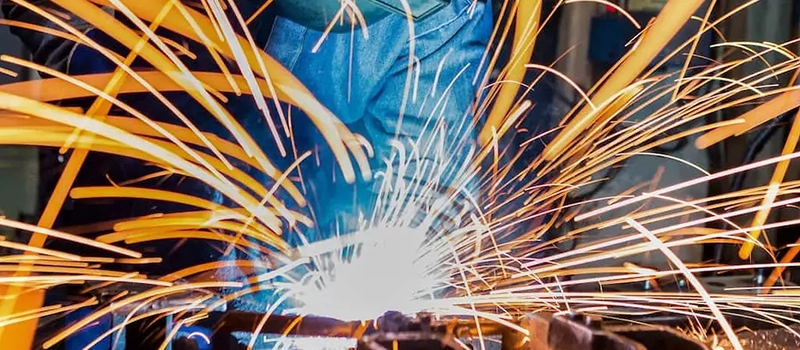
Welding services are at the heart of modern metalworking — whether for construction equipment, transportation systems, or precision components in the medical and aerospace sectors. But to understand their true value, we need to look beyond the sparks and arcs.
Understanding Welding Services: More Than Just Joining Metal
At its core, welding is the process of fusing two or more metal parts together through heat, pressure, or both. While this sounds straightforward, the actual application varies greatly depending on the material type, part design, strength requirements, and production volume.
Professional welding services go far beyond the simple act of joining metal. They include:
- Process selection: Choosing between TIG, MIG, Stick, Laser, Friction Stir, etc.
- Material expertise: Knowing how to handle aluminum, stainless steel, carbon steel, and even exotic metals like titanium.
- Precision and customization: Applying the exact heat, speed, and filler materials required for each job.
- Quality assurance: Following international welding standards (such as AWS D1.1 or ISO 3834), offering NDT (non-destructive testing), and providing full traceability.
- Logistics and scalability: Offering portable welding services, on-site repair, and full production welding capabilities for large-scale orders.
In short, welding services are not just technical — they are strategic. Selecting the right service can make or break your project’s timeline, budget, and performance.
Why Do Welding Services Matter in Modern Manufacturing?
Let’s consider why welding services have become essential for industries worldwide:
1. Structural Integrity and Safety
Welds often carry the highest load in a finished product — especially in construction, automotive, or mining. A poor-quality weld can lead to catastrophic failure. This is why quality welding services ensure joint strength through careful process control, filler material selection, and post-weld inspections.
2. Cost Efficiency and Lead Time Control
Choosing the appropriate welding technique from the start (e.g., automated welding services for repetitive tasks, or custom welding services for prototyping) avoids costly rework and delays. In large-scale production, even a slight improvement in weld efficiency or robot path optimization can save thousands in labor and material costs.
3. Material Optimization and Waste Reduction
Not all materials respond the same to heat or pressure. For example, aluminum requires high thermal conductivity management, while stainless steel is sensitive to distortion. By using specialized welding services, manufacturers can minimize scrap and reduce unnecessary machining or post-processing.
4. Innovation and Advanced Manufacturing
From laser welding services for micro-components to friction stir welding services in the aerospace sector, welding has evolved alongside other precision technologies. Companies that understand these advancements can design lighter, stronger, and more reliable products while remaining competitive in global markets.
In summary, welding services form the invisible skeleton of modern manufacturing. Every bridge, train car, engine part, or metal enclosure you see was made possible because someone selected the right welding method — and executed it flawlessly.
Different Types of Welding Services and Their Industrial Applications
In the modern industrial landscape, welding services are as diverse as the products they help create. From automotive frames to oil pipelines, from aircraft panels to heavy-duty gates — different welding methods serve different purposes. Understanding both the techniques and the industries where they shine is critical when choosing the right partner for your metal project.
Manual vs. Automated Welding Services
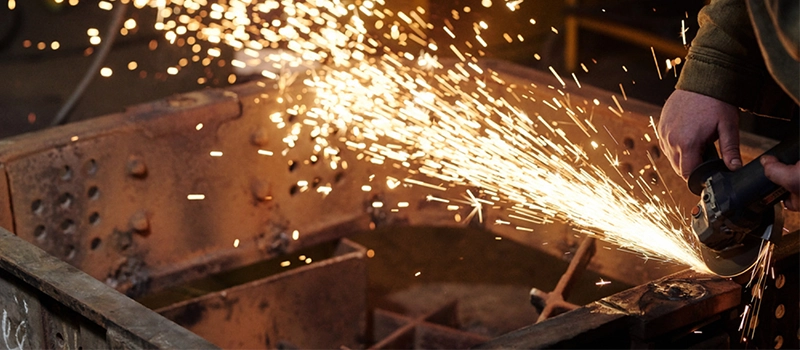
Manual welding services remain the go-to for custom work, small production batches, and structural repairs. These include:
- TIG welding services: Often used in aerospace, piping, and precision work due to its clean, controlled welds.
- Stick welding services: Common in construction and mining, known for deep penetration and adaptability to outdoor environments.
- Arc welding services: Suitable for general fabrication, including rebar structures and metal framework.
Industries served:
- Construction: Steel beams, bridges, structural repairs.
- Mining: Equipment maintenance and custom part production.
- Automotive (custom shop): Exhausts, chassis, roll cages.
In contrast, automated welding services dominate large-scale manufacturing where speed, precision, and consistency are vital:
- Robotic welding services: Used extensively in automotive, agriculture, and HVAC equipment manufacturing.
- CNC and laser welding services: Serve electronics, medical device manufacturing, and precision enclosures.
- Automated mesh welding services: Useful in fencing, storage racks, and industrial shelves.
Industries served:
- Automotive: Mass production of frames, engine mounts, body panels.
- Aerospace: Lightweight and precision components.
- Agricultural machinery: Repetitive high-strength welds for durability.
Advanced Welding Services for High-Performance Sectors
Some applications require more than just heat and filler. Here, advanced welding services such as laser, friction, and ultrasonic welding come into play.
Laser Welding Services
Laser welding offers unparalleled control and precision. It’s ideal for:
- Battery casing in EVs
- Microsensors and electronics
- Medical instruments that demand non-invasive joins
Used by:
- Electronics
- Medical
- High-precision manufacturing
Friction Stir Welding Services
FSW is a solid-state joining process that avoids melting the material. It creates extremely strong, defect-free welds in aluminum and copper.
Typical applications:
- Aerospace wing panels
- Marine decks and hulls
- Rail car floor panels
Ultrasonic and Spot Welding Services
These techniques are frequently used in plastics, sheet metals, and automated assembly lines:
- Spot welding: Battery tabs, steel mesh
- Ultrasonic welding: Plastic enclosures, delicate electronics
Industries:
- Consumer electronics
- EV battery packs
- Small appliance manufacturing
Specialty Welding Services: Built for Harsh or Regulated Environments
Not all welding services are created equal — some are designed for extreme conditions or high-certification demands:
- Underwater welding services: Used for bridge pylons, ship repairs, and offshore oil rigs.
- Aerospace welding services: Require full compliance with NADCAP and AS9100 standards.
- Marine welding services: Focus on corrosion-resistant metals and watertight integrity.
- Pipe welding services: Critical in petrochemical plants and water treatment facilities.
Choosing the Right Welding Process for Your Material
No matter how advanced your design is, choosing the wrong welding method can compromise the strength, appearance, and even safety of your metal product. The secret to a strong and lasting weld lies in matching the correct process to the base material — whether it’s lightweight aluminum, durable stainless steel, or heat-sensitive alloys.
Why Material Matters in Metal Joining
Each type of metal has its own behavior when exposed to heat, pressure, and filler materials. Some expand quickly, others are prone to cracking. Knowing these characteristics helps determine which joining technique ensures optimal fusion without weakening the material or causing distortion.
For example:
- Aluminum conducts heat rapidly and is prone to warping, making it ideal for TIG or friction stir welding.
- Stainless steel requires a low heat input to prevent discoloration and oxidation, often joined using MIG or laser welding.
- Carbon steel allows flexibility in method — stick, MIG, and arc welding all work well, depending on thickness and setting.
- Titanium demands a controlled atmosphere (often inert gas shielding) due to its reactivity at high temperatures.
Understanding the nature of the metal is the first step toward selecting the most effective welding process.
Process Selection Guide: Matching Method to Metal
Here’s a breakdown of commonly used welding processes and the materials they suit best:
| Welding Process | Best Suited Materials | Key Benefits |
|---|---|---|
| TIG (GTAW) | Aluminum, Stainless, Titanium | Precise, clean welds, low distortion |
| MIG (GMAW) | Carbon steel, Stainless, Alloys | Fast, semi-automated, good for volume |
| Stick (SMAW) | Carbon steel, Cast iron | Versatile, low-cost, outdoor ready |
| Laser Welding | Stainless, Thin sheets, Electronics | No contact, minimal HAZ |
| Friction Stir | Aluminum, Copper, Lightweight alloys | High strength, no melting |
| Spot Welding | Thin steel, Automotive sheet | Quick, robotic, uniform |
Real-World Examples of Process and Material Matching
Let’s look at how process selection works in actual manufacturing scenarios:
Construction Industry
- Carbon steel I-beams are commonly joined using arc welding due to their thickness and load-bearing role.
- Rebar connections use stick welding for fast, rugged connections on-site.
Automotive Sector
- Car frames use robotic MIG welding for repeatability and strength.
- Battery components in EVs often require laser welding for precision and minimal heat input.
Aerospace & Aviation
- Aircraft skins made of aluminum are joined using friction stir welding, minimizing weight and defects.
- Internal structures may use TIG for precision and cleanliness.
Oil & Gas
- Piping systems demand pipe welding techniques like TIG or MIG, with focus on seam integrity and pressure resistance.
- Tool steels require preheat and controlled cooling, often handled by custom welding setups.
Marine Fabrication
- Hull components often use MIG welding for speed and corrosion resistance.
- Certain joints benefit from friction welding or solid-state methods due to water exposure.
Choosing the correct metal joining technique ensures not only that the weld holds — but that the final product performs under stress, resists corrosion, and meets industry compliance.
Custom & Fabrication Welding Services: When Standard Welding Isn’t Enough
Not every project fits into a predefined box — and neither should your welding solutions. When working with complex geometries, niche applications, or specialized performance demands, custom welding becomes more than a convenience — it’s a necessity.
What Is Custom Welding?
Custom welding refers to tailored metal joining solutions designed around a customer’s unique part requirements, materials, and usage scenarios. This includes:
- Non-standard joint designs
- Multi-process integration (e.g., TIG + Spot + MIG in one assembly)
- Low-to-medium production runs
- Prototype development
- Repair and restoration of legacy equipment
This kind of service often involves close collaboration between design engineers, welders, and quality control experts to ensure both function and compliance.
Unlike standard services that apply the same technique across many parts, custom welding adapts the method, tools, fixtures, and even filler materials to meet very specific criteria.
Fabrication vs. Welding: How They Work Together
While welding focuses on fusing metals, fabrication refers to the entire process of transforming raw material into a usable part or structure. This includes:
- Cutting (laser, plasma, waterjet)
- Bending/forming
- Machining
- Assembly and welding
- Surface treatment
Fabrication welding services blend both disciplines. For example, a sheet metal part may be laser-cut, CNC-formed, then precision-welded using TIG — all under one roof. This vertical integration reduces lead time, improves quality control, and ensures better fit and finish.
When to Choose Custom Metal Joining Solutions
Here are a few scenarios where custom solutions outperform standard welds:
1. Complex Assemblies
If your part requires multiple components to be joined at unusual angles or with tight tolerances, robotic or manual custom welding provides the flexibility and precision required.
2. High-Spec Industries
Sectors like aerospace, defense, and medical devices often demand welding that meets strict documentation and process validation. Standard off-the-shelf options won’t cut it here.
3. Legacy Equipment Repair
Need to fix an old casting or pipe system with no existing drawings? Custom welding can reverse-engineer and restore the part using compatible processes and materials.
4. Rapid Prototyping
When developing a new product, speed is key. Quick-turn welding combined with in-house fabrication reduces iteration cycles — turning ideas into testable metal parts faster.
Industries That Depend on Fabrication Welding Services
- Architecture: Custom gates, staircases, railings
- Energy: Skid-mounted systems, pipe weldments
- Industrial Machinery: Frames, brackets, precision housings
- Food Processing: Sanitary stainless welds and enclosures
- Defense: Armored plating, vehicle modifications
These industries often rely on a supplier who offers both flexibility in process and consistency in results — whether that means TIG welding a food-grade tank or MIG welding a heavy-duty trailer.
The value of customized welding isn’t just about unusual shapes or rare materials. It’s about problem-solving — delivering exactly what the project needs, with the right blend of technique, equipment, and quality assurance.
FAQs: Welding Processes and Services
Even experienced professionals often find themselves facing questions when choosing the right welding solution. Below, I’ve compiled and answered some of the most frequently asked questions surrounding metal joining services, techniques, and supplier selection.
What is the most accurate welding process?
TIG welding (Tungsten Inert Gas) is widely recognized as the most precise welding process. It provides:
- Superior control over heat input
- Clean, high-quality welds with minimal spatter
- The ability to weld thin materials and exotic metals like titanium and aluminum
It’s commonly used in aerospace, medical device manufacturing, and high-end architectural projects where both strength and appearance matter.
For micro-applications, laser welding can outperform TIG in precision, especially when working with very small or delicate components.
How do I choose the right welding method?
It depends on several key factors:
| Factor | Best Practice |
|---|---|
| Base Material | Match process to metal type (e.g., aluminum → TIG, steel → MIG) |
| Part Thickness | Thin → TIG/Laser; Thick → MIG/Stick |
| Production Volume | High volume → Robotic/MIG; Low volume → Manual TIG |
| Environment | Outdoor → Stick; Clean room → Laser/TIG |
| Strength Requirements | Critical load → TIG or FSW |
| Cost Sensitivity | MIG and Stick are cost-effective for general use |
Still unsure? A custom welding consultation can save you time and reduce rework by identifying the most cost-effective solution upfront.
What’s the difference between welding and fabrication?
Welding is the act of joining metal parts together using heat or pressure.
Fabrication, on the other hand, refers to the full metalworking process that includes cutting, forming, machining, and assembling — with welding often as the final step.
Choosing a fabrication and welding service means you’re outsourcing the entire workflow from raw material to finished part, which improves consistency, quality control, and turnaround times.
Are all welding processes safe for food-grade or cleanroom applications?
No — only certain welding techniques meet sanitary or hygienic standards, such as:
- TIG welding with full penetration
- Proper shielding gas and filler materials
- Smooth, crevice-free welds that can be passivated or electropolished
For applications in pharmaceutical, food processing, or semiconductor industries, always ensure your supplier can meet certifications like 3-A Sanitary Standards or ISO 14644 for cleanrooms.
Is it possible to combine multiple welding processes in one project?
Absolutely. In fact, many complex assemblies benefit from process integration. For example:
- A robotic arm may handle long seam welds with MIG, while a technician performs detailed TIG work on sensitive joints.
- Sheet metal enclosures may use spot welding for inner flanges and laser welding for visible outer edges.
This hybrid approach optimizes both efficiency and finish — but it requires a supplier who offers versatile welding capabilities under one roof.
Conclusion: Smarter Welding, Better Results
From selecting the right method to finding a partner who understands your industry, custom welding services are key to building products that are strong, efficient, and built to last.
Whether you’re fabricating industrial machinery, assembling precision components, or restoring legacy equipment, making smart welding decisions ensures your project flows smoothly — from blueprint to final inspection.
📌 Choose strategically. Weld professionally. Build confidently.