“The lightest structural metal available today.”
That’s how the International Magnesium Association defines magnesium — and why it’s increasingly used where performance and weight must align.
Struggling to reduce component weight without compromising strength?
Facing rising material costs, complex machining, or shipping inefficiencies?
Need thinner walls, faster cycles, or tighter tolerances?
Magnesium die casting solves these problems.
This high-precision process delivers strong, lightweight, and dimensionally stable parts for industries that demand both performance and economy.
From automotive brackets to electronics housings, magnesium die casting is not just lighter — it’s smarter.
The Lightweight Challenge in Modern Manufacturing
Reducing component weight is now a top priority across multiple industries. In automotive and aerospace, lighter parts directly improve fuel efficiency, reduce emissions, and enhance system performance.
Traditional metals like steel and brass are strong but heavy. Plastics are light, but often lack structural integrity, especially under heat or load.
Magnesium offers a new solution. It’s the lightest structural metal in use today, with a density about one-third that of aluminum.
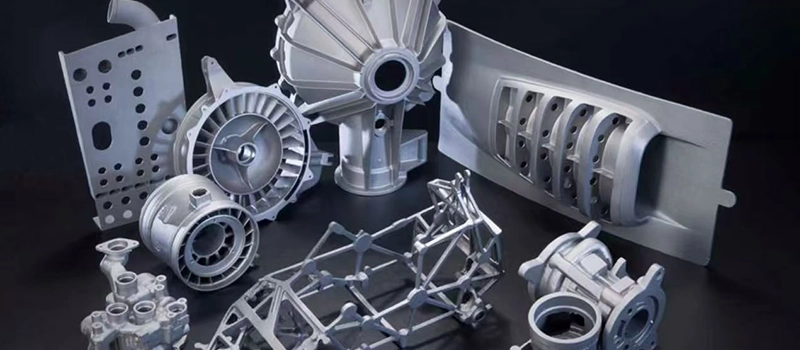
This means manufacturers can achieve thinner walls, lower part mass, and faster assembly — without sacrificing strength or dimensional precision.
As regulatory pressures and cost-reduction goals intensify, magnesium die casting is emerging as a strategic answer to modern engineering constraints.
Understanding Magnesium Die Casting
Definition and Core Process
Magnesium die casting is a high-pressure manufacturing process where molten magnesium alloy is injected into a precision steel mold. It forms complex parts with excellent dimensional accuracy and surface integrity, reducing the need for extensive post-machining.
Hot Chamber Die Casting
This is the most widely used method for magnesium. In this system, the injection unit is submerged directly in the molten metal, allowing rapid cycle times and efficient material transfer. Magnesium’s relatively low melting point makes it well-suited for this method.
Cold Chamber Die Casting
Used less frequently for magnesium, this method isolates the injection system from the molten metal. The metal is ladled into a shot sleeve before being injected into the mold. Cold chamber systems are preferred for specific alloys or when producing larger castings with longer fill times.
Material Behavior and Fluidity
Magnesium flows well under pressure. Its low viscosity allows it to fill thin-walled, complex geometries with minimal turbulence or air entrapment. This fluidity supports precision casting of detailed designs while maintaining mechanical strength.
Application Fit
The process is ideal for high-volume production requiring accuracy and repeatability. From electronics housings to structural automotive components, magnesium die casting supports both functional and aesthetic requirements with reduced production cost and cycle time.
Benefits of Using Magnesium Die Casting
Superior strength-to-weight ratio
Magnesium is the lightest structural metal used in volume manufacturing. It has a density of just 1.74 g/cm³, roughly 35% lighter than aluminum and 78% lighter than steel. Despite its weight, it retains excellent mechanical strength, making it ideal for reducing overall product mass while maintaining durability.
Dimensional stability and casting accuracy
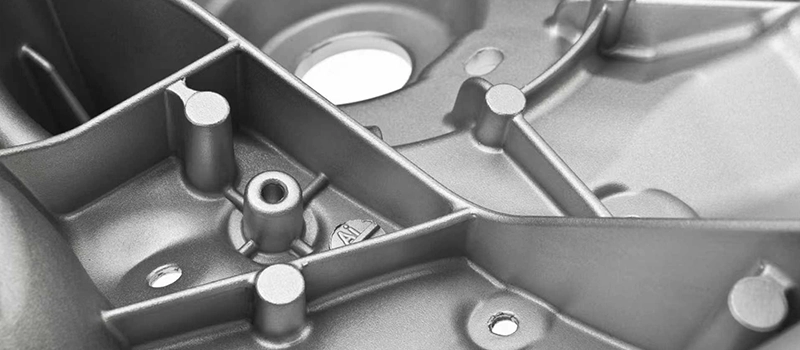
Magnesium die cast parts demonstrate excellent dimensional repeatability. Tight tolerances can be achieved consistently, reducing the need for secondary machining. The stability of the material also minimizes warping and distortion during cooling, even in parts with thin walls or intricate features.
Thin-wall and complex geometry capability
Thanks to magnesium’s low viscosity in molten form, it fills molds quickly and completely. This makes it possible to cast components with thin walls, deep ribs, and fine details, all in a single cycle. Designers can create shapes that balance both form and function without compromise.
Integrated design and assembly efficiency
Die casting allows multiple features to be formed into a single part—such as mounting points, channels, and heat sinks. This reduces part count, simplifies assemblies, and enhances structural rigidity. It also supports modular design strategies common in electronics and automotive systems.
Thermal and electromagnetic performance
Magnesium naturally provides EMI shielding and superior heat dissipation. This gives it a unique advantage in electronic housings and enclosures where both thermal control and protection from signal interference are critical.
Production speed and energy savings
Magnesium has a fast solidification rate, enabling shorter cycle times compared to aluminum. This improves overall productivity and lowers energy consumption per part. In high-volume operations, these savings translate to measurable reductions in cost per unit.
Magnesium Alloys and Industrial Applications
Common magnesium die casting alloys
Magnesium die casting relies on a group of well-established alloys engineered for strength, corrosion resistance, and casting performance. The most widely used is AZ91D, which contains approximately 9% aluminum and 1% zinc. It offers a balanced profile of strength, ductility, and castability, making it the industry standard in magnesium die casting operations.
Other frequently used alloys include AM60 and AM50. These contain higher magnesium content with reduced aluminum, improving impact resistance and elongation. AM60 is preferred for safety-critical automotive components like steering wheels and seat frames due to its superior energy absorption under stress.
Each magnesium die casting alloy is selected based on performance requirements, mold design, and finishing needs. Their properties make them ideal for structural and semi-structural applications where lightweight design and consistent mechanical behavior are essential.
Applications in key industries
Magnesium die casting is used extensively in automotive manufacturing. Lightweight steering housings, brackets, transmission covers, and engine support systems are commonly die cast to reduce vehicle weight and improve fuel efficiency. With electric vehicle growth, the demand for magnesium die cast parts is accelerating, particularly for battery enclosures and structural integration.
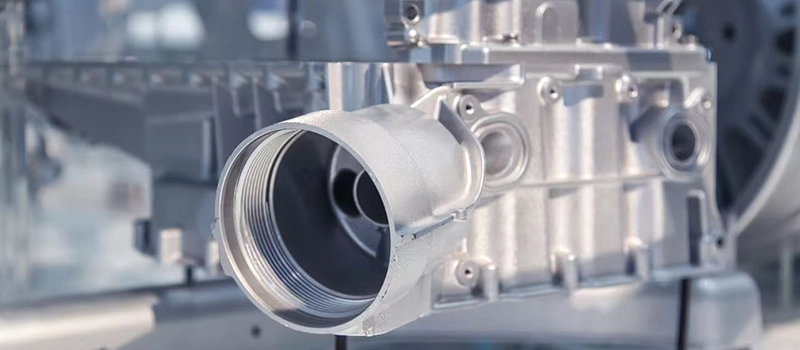
In consumer electronics, magnesium die casting is used to produce durable yet lightweight casings for laptops, tablets, mobile phones, and camera bodies. These products benefit from magnesium’s high strength-to-weight ratio and built-in electromagnetic shielding.
Aerospace and aviation sectors apply magnesium die casting for interior brackets, structural supports, and covers. The weight savings directly impact range and payload efficiency, while still meeting performance and safety standards.
Medical and industrial equipment also adopt magnesium die cast components for handheld devices, housings, and structural elements where precision, lightweight handling, and ease of assembly are critical.
Matching alloy to application
Choosing the right alloy is essential to maximizing performance. AZ91D is favored for cosmetic and dimensionally stable parts with good corrosion resistance. AM60 and AM50 are used when ductility and impact strength are prioritized. In high-volume production, alloy selection also affects cycle time, die wear, and finishing requirements.
Magnesium die casting continues to expand across industries as more engineers explore its unique ability to combine weight savings with mechanical reliability. As applications grow, alloy formulations and design integration strategies will become even more specialized.
Surface Finishing, Design, and Production Considerations
Surface finishing options for magnesium die casting
Magnesium die casting parts typically require surface treatment to enhance appearance, durability, and corrosion resistance. Due to the reactivity of magnesium, proper preparation is critical to ensure adhesion and long-term performance.
Common finishing processes include powder coating, chromate conversion, anodizing, and painting. Chromate conversion provides corrosion resistance and serves as a base layer for further coating. Powder coating is widely used in automotive and electronics applications, providing both aesthetic and protective value. Anodizing is applied where harder surface layers are needed, especially in consumer-facing or abrasion-prone components.
Magnesium die casting surfaces can also be treated through shot blasting, polishing, or machining depending on the functional and visual requirements of the end use. The finishing choice must consider the specific magnesium alloy used, part geometry, and final operating environment.
Key design rules in magnesium die casting
Successful magnesium die casting starts with design. Wall thickness should be uniform to prevent hot spots or uneven cooling. Recommended wall thickness ranges from 1.5 mm to 3.5 mm depending on the casting size and application. Sharp corners should be avoided or radiused to minimize stress concentrations and promote smooth metal flow.
Draft angles must be included to aid part ejection from the die. Ribs and bosses should be optimized for structural support without over-thickening, which could cause porosity or extended cooling times. Undercuts and deep recesses should be minimized unless tooling includes slides or core pulls.
Magnesium die casting allows for part consolidation, so engineers are encouraged to integrate features such as mounting tabs, cable guides, or fluid channels into the casting. This reduces assembly complexity and secondary operations.
Production tooling and process optimization
Die tooling for magnesium die casting must be precision-engineered for temperature control and high wear resistance. Tool steel selection, gate design, and venting layout all influence casting quality. Proper die temperature management prevents cold shuts, shrinkage, and incomplete fills.
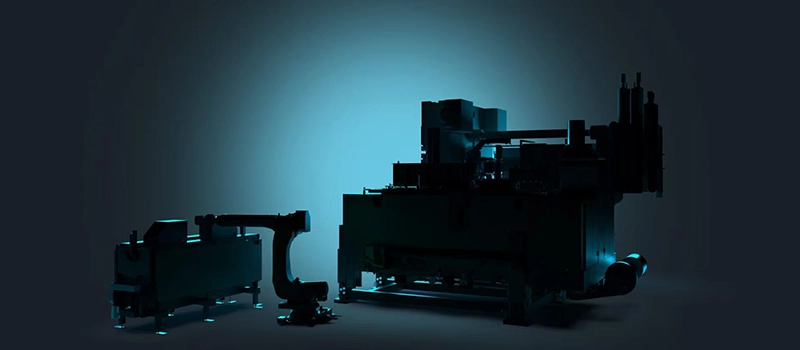
High-pressure magnesium die casting machines range in clamping force from 80 tons to over 1000 tons depending on part size. Automation systems are often integrated to manage metal dosing, part ejection, trimming, and quality inspection.
Optimizing shot speed, pressure, and cooling time helps maintain consistency and reduce scrap rates. For high-volume runs, mold maintenance and cleaning schedules are essential to preserve surface finish and dimensional accuracy over the tool’s lifespan.
Choosing Magnesium Over Alternatives
Magnesium die casting vs. aluminum die casting
Aluminum and magnesium are often compared when evaluating lightweight metal casting options. Magnesium die casting provides significant advantages in weight, with a density approximately 33% lower than aluminum. This translates into lighter final assemblies without compromising strength for many structural applications.
Magnesium also exhibits faster solidification rates, enabling shorter cycle times. This reduces energy consumption per part and improves throughput, especially in automotive and consumer electronics production. In contrast, aluminum die casting may require longer cooling and higher processing temperatures, impacting cycle efficiency.
Tooling wear is typically lower in magnesium die casting due to its lower thermal load on the die. This can extend tool life and reduce long-term maintenance costs. However, aluminum has broader alloy availability and is more established in larger structural casting formats.
The choice between magnesium and aluminum depends on specific performance needs, part complexity, and cost priorities. For weight-critical designs where speed and integration matter, magnesium often offers a competitive edge.
When to switch from plastic to magnesium
Plastic injection molding is common in non-structural components, but it has limitations in thermal resistance, stiffness, and EMI shielding. Magnesium die casting can directly replace certain high-performance plastic parts, especially where dimensional stability, strength, and heat tolerance are required.
In industries such as electronics, switching to magnesium allows engineers to reduce internal shielding components by using the housing itself as a shield. In automotive, plastic parts that fail under mechanical load or thermal cycling can be redesigned using magnesium die casting for enhanced reliability.
While unit cost may be higher than plastic, the total system cost often decreases by reducing part count, improving longevity, and eliminating secondary shielding or support structures.
Total value in application
Magnesium die casting provides clear advantages when weight, strength, dimensional accuracy, and thermal or EMI performance intersect. The ability to integrate multiple functions into a single, castable unit lowers part complexity and speeds up production.
For companies seeking to improve their product’s strength-to-weight ratio, simplify assembly, and meet stricter regulatory targets on fuel consumption or emissions, magnesium die casting presents a scalable, proven solution.
Conclusion
Magnesium die casting is a proven method for producing lightweight, high-performance parts at scale. When applied strategically, it reduces weight, improves efficiency, and simplifies design—making it an increasingly valuable choice in today’s competitive manufacturing environment.