Why do parts that meet individual tolerances still fail during assembly?
Why does misalignment increase as more components are added to a system?
Why do corrective actions at final assembly rarely solve the root problem?
These issues are commonly caused by unmanaged tolerance stacking.
According to geometric dimensioning and tolerancing guidance published by standards bodies such as ASME , dimensional variation accumulates across mating features rather than cancelling out. Tolerance stacking shifts functional dimensions away from design intent, even when every single part passes inspection.
Understanding how tolerance stacking develops is essential to control assembly fit, reduce rework, and prevent late-stage dimensional failures.
What Tolerance Stacking Means in Manufacturing
Definition of Tolerance Stacking
Tolerance stacking occurs when dimensional variation from multiple features or parts accumulates along an assembly path. Each individual dimension may be within its specified tolerance, yet the combined effect shifts the functional dimension away from design intent. In manufacturing, tolerance stacking is not a measurement error; it is a predictable outcome of how tolerances interact across features and components.

Linear Versus Statistical Tolerance Accumulation
Linear tolerance accumulation assumes worst-case conditions, where all dimensions vary in the same direction. This approach is conservative and often results in overly tight specifications or unexpected assembly failure when real variation aligns unfavorably. Statistical accumulation considers process capability and distribution, reducing risk when processes are stable. However, statistical methods only work when manufacturing variation is controlled and verified; otherwise, they mask risk rather than remove it.
Why Tolerance Stacking Is Often Overlooked
Tolerance stacking is frequently overlooked because inspection is performed at the feature level, not at the functional assembly level. Parts pass inspection individually, creating a false sense of compliance. The issue surfaces only during assembly, where rework, shimming, or force fitting becomes necessary. This disconnect between inspection results and assembly performance is why tolerance stacking remains a recurring manufacturing problem.
How Tolerance Stacking Develops in Assemblies
Feature-to-Feature Dimensional Accumulation
Tolerance stacking develops when multiple dimensions are chained together along a functional path. Each feature contributes its own variation, and these variations accumulate rather than cancel out. The longer the chain of dependent features, the greater the potential deviation at the functional interface. This effect is common in linear assemblies, sheet metal bends, and machined components with sequential features.
When features are dimensioned without considering their relationship to the functional requirement, variation propagates unchecked. Even small, acceptable deviations at each step can combine into a significant positional error at the end of the chain.
Datum Selection and Its Role in Stack-Up
Datum selection determines how variation is referenced and controlled. Poor datum choices allow variation to accumulate across multiple reference points, increasing stack-up risk. When dimensions are taken from inconsistent or non-functional datums, the assembly outcome becomes unpredictable.
Using functional datums limits accumulation by anchoring critical features to the same reference. This reduces the number of independent variations and keeps dimensional control focused on what actually affects assembly fit and performance.
Effect of Assembly Sequence
Assembly sequence influences how and where tolerance stacking manifests. Parts assembled early in the sequence establish reference conditions for later components. Any deviation introduced at this stage is carried forward and often amplified.
If the sequence forces parts to conform through clamping or fastening, accumulated variation may be hidden temporarily. Once constraints are released or loads are applied, misalignment becomes apparent. Designing with assembly sequence in mind is therefore essential to managing tolerance stacking effectively.
Tolerance Stacking and Assembly Accuracy
Misalignment and Interference Issues
Tolerance stacking directly affects how parts align during assembly. When accumulated variation shifts mating features beyond their functional limits, components no longer fit as intended. This often results in interference between parts that were designed to clear each other nominally.
In practice, misalignment caused by tolerance stacking is rarely uniform. Some assemblies may fit with force, while others fail completely. This inconsistency complicates production planning and masks the root cause, as individual parts still meet their specified tolerances.
Fastener and Hole Position Deviation
Fastener alignment is particularly sensitive to accumulated positional variation. When hole locations are affected by tolerance stacking, even small shifts can prevent bolts, pins, or screws from entering freely. Assemblers may resort to reaming or forcing fasteners, which introduces additional stress and reduces joint reliability.
These deviations often appear only at final assembly, where correction options are limited. The cost impact increases sharply at this stage, making early control of tolerance stacking critical for maintaining assembly efficiency.
Angular Error Propagation
Angular variation is a common but overlooked result of tolerance stacking. Small angular deviations at individual features propagate over distance, creating large positional errors at the ends of assemblies. This effect is especially pronounced in long or multi-part structures.
Angular errors are difficult to detect through standard inspection methods focused on linear dimensions. As a result, assemblies may pass dimensional checks yet fail functional alignment requirements. Managing angular contributors is therefore an essential part of controlling tolerance stacking and preserving assembly accuracy.
Common Manufacturing Scenarios Where Tolerance Stacking Occurs
Sheet Metal Assemblies
Sheet metal assemblies are highly susceptible to tolerance stacking due to the combination of cutting, bending, and fastening operations. Each bend introduces angular variation, and small deviations accumulate across multiple flanges. When flat pattern tolerances are defined without considering forming behavior, the final assembled geometry often drifts from the intended envelope.
Corner reliefs, bend radius variation, and forming sequence all contribute to stack-up. Even when individual sheet metal parts meet drawing requirements, accumulated variation frequently causes misalignment at mounting points or enclosure interfaces.
Machined Multi-Part Assemblies
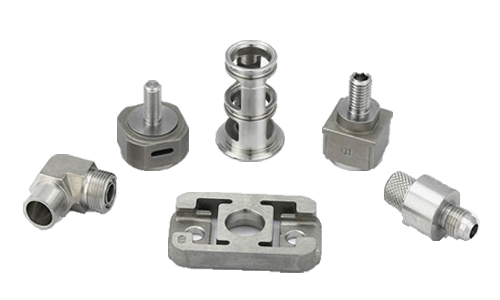
In machined assemblies, tolerance stacking commonly occurs along chained linear dimensions. When features are dimensioned sequentially rather than from a common functional datum, each machining operation adds its own variation. Over several features, this accumulation can exceed allowable limits at the assembly interface.
This issue is often overlooked because individual parts pass inspection. The problem becomes visible only when multiple components are brought together, at which point correction requires rework or selective assembly rather than simple process adjustment.
Welded and Fabricated Structures
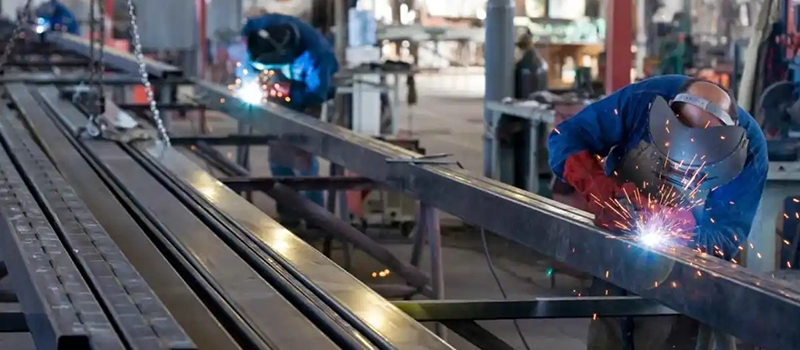
Welded structures introduce tolerance stacking through both dimensional variation and thermal distortion. Fit-up gaps, weld shrinkage, and fixturing variation all add to cumulative deviation. Unlike machined parts, these variations are less repeatable and more sensitive to operator technique.
In fabricated assemblies, tolerance stacking is difficult to measure directly. Misalignment may be temporarily constrained during welding but released afterward, revealing accumulated error. Effective control requires both design allowance and disciplined fabrication procedures.

Design Practices That Increase Tolerance Stacking Risk
Overuse of Chain Dimensioning
Chain dimensioning links multiple features together end to end. Each feature carries its own allowable variation, and these variations accumulate along the chain. While this approach may simplify drawing layout, it increases the likelihood that the final functional dimension drifts beyond acceptable limits.
In manufacturing, chain dimensioning shifts risk from individual features to the assembly level. Parts may meet all specified dimensions yet fail to assemble correctly. This practice is one of the most common contributors to uncontrolled tolerance stacking.
Poor Datum Structure
A weak datum structure allows dimensional variation to propagate freely. When datums are selected based on convenience rather than function, critical features reference different origins. This creates multiple independent variation paths that combine during assembly.
Functional datums limit tolerance stacking by anchoring dimensions to features that control fit and performance. Poor datum selection, by contrast, increases inspection pass rates while reducing assembly reliability.
Excessive Reliance on Nominal Dimensions
Designs that rely heavily on nominal dimensions assume that variation will cancel out naturally. In reality, variation is directional and rarely self-correcting. Without defined functional relationships, nominal-based layouts allow tolerance stacking to develop unnoticed.
This issue is amplified when drawings lack clear functional requirements. Manufacturing teams may meet all nominal targets while still producing assemblies that require adjustment, shimming, or force fitting.
Controlling Tolerance Stacking During Design
Functional Dimensioning Principles
Controlling tolerance stacking begins with dimensioning features based on function rather than geometry alone. Functional dimensioning links critical features directly to the requirement they support, such as alignment, sealing, or load transfer. This approach limits the number of contributing dimensions and reduces unnecessary accumulation.
When dimensions are defined around how the assembly must work, variation is constrained where it matters most. This shifts control from individual feature compliance to overall assembly performance.
Datum Optimization
Effective datum selection is one of the most powerful tools for reducing tolerance stacking. Datums should represent stable, repeatable features that directly influence assembly fit. By referencing multiple critical features to a common datum structure, independent variation paths are reduced.
Optimized datums also improve inspection relevance. Measurements taken from functional datums correlate more closely with assembly outcomes, making deviations easier to detect before parts reach final assembly.
When Statistical Tolerancing Is Appropriate
Statistical tolerancing can reduce tolerance stacking risk when manufacturing processes are stable and capable. By accounting for variation distribution rather than worst-case limits, overall tolerance requirements can be relaxed without sacrificing assembly fit.
However, statistical methods rely on verified process capability. When variation is uncontrolled or poorly understood, statistical tolerancing hides risk instead of managing it. It should be applied only where process data supports its assumptions.
Manufacturing and Inspection Considerations
Process Capability Versus Drawing Tolerances
Tolerance stacking cannot be controlled by drawing limits alone. Manufacturing capability determines how variation actually behaves. When specified tolerances are tighter than what the process can consistently achieve, variation becomes directional and accumulative rather than random.
In this situation, inspection may confirm dimensional compliance on individual features, but assembly performance still degrades. Aligning drawing tolerances with proven process capability is essential to prevent systematic stack-up rather than isolated deviation.
Inspection Limitations
Inspection is often performed feature by feature, using isolated measurements that do not represent functional relationships. This approach confirms local compliance but fails to detect cumulative effects. As a result, tolerance stacking passes undetected until parts are assembled.
Another limitation is datum mismatch between inspection and assembly. When parts are inspected using different reference schemes than those used in assembly, measured results do not reflect real fit conditions. Inspection plans must mirror functional datums to be effective.
When Passing Inspection Still Fails Assembly
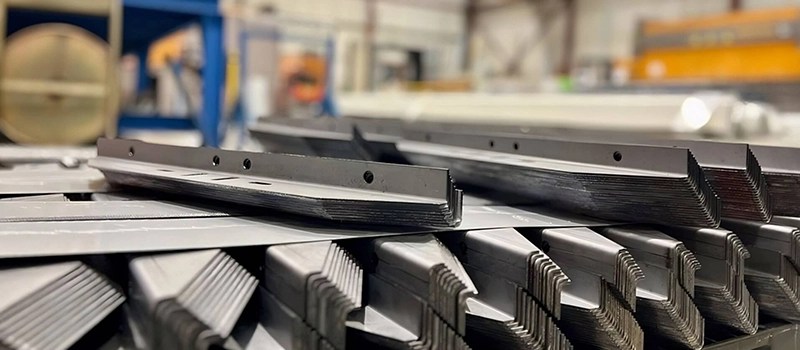
Assemblies fail despite passing inspection when tolerance stacking is unmanaged. Each part meets its individual requirements, yet the accumulated variation exceeds functional limits. This leads to rework, adjustment, or forced assembly.
At this stage, corrective action is expensive and disruptive. The issue is often misdiagnosed as an assembly problem rather than a design and tolerance control issue. Recognizing this pattern is critical to addressing tolerance stacking at its source rather than treating its symptoms.
Cost and Production Impact of Poor Tolerance Control
Rework and Scrap
Uncontrolled tolerance stacking increases rework rates because assemblies fail only after components are combined. At this stage, correction usually involves re-machining, shimming, or selective assembly. These actions consume time and introduce additional variability rather than eliminating it.
Scrap rates also increase when correction is not feasible. Parts that meet individual specifications may still be unusable at the assembly level, resulting in material loss and wasted processing effort.
Assembly Time Increase
Tolerance stacking slows assembly operations. Misaligned parts require manual adjustment, force fitting, or repeated trial-and-error alignment. This reduces assembly throughput and increases labor dependence.
In high-volume production, even small increases in assembly time accumulate into significant capacity loss. The root cause is rarely the assembler’s technique but the dimensional instability created earlier in design and manufacturing.
Late-Stage Design Changes
When tolerance stacking is identified late, design changes become costly. Tooling modifications, drawing revisions, and supplier requalification disrupt production schedules. These changes often address symptoms rather than the underlying tolerance structure.
Late-stage corrections also carry higher risk because they are implemented under time pressure. Addressing tolerance stacking during design is far more effective than reacting after production has begun.
When Tolerance Stacking Should Trigger Redesign
Functional Failure at Assembly
Tolerance stacking should trigger redesign when assemblies consistently fail to meet functional requirements despite compliant parts. If alignment, sealing, or motion is compromised, the issue lies in dimensional structure rather than isolated features.
Repeated adjustment during assembly is a clear signal that the design intent does not match manufacturing reality.
Excessive Adjustment or Shimming
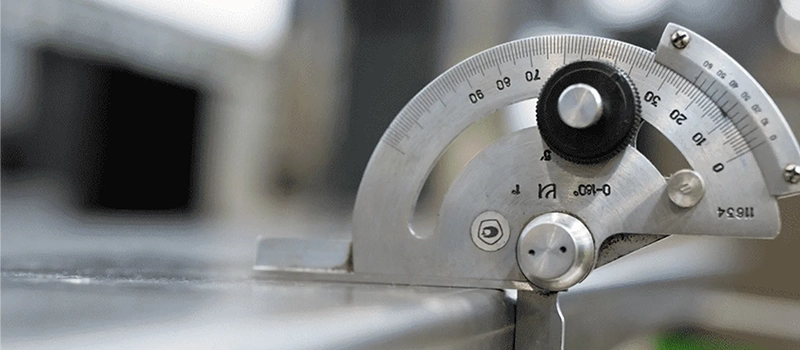
Frequent use of shims, slots, or manual correction indicates unmanaged accumulation. While these measures may restore fit temporarily, they introduce long-term reliability and maintenance issues.
When adjustment becomes routine, redesigning the tolerance scheme is more effective than expanding allowable variation.
Repeated Production Instability
If assembly outcomes vary significantly between batches, tolerance stacking is likely interacting with process variation. This instability cannot be resolved through inspection alone.
Redesign becomes necessary when production results cannot be stabilized through reasonable process control.
Conclusion
Tolerance stacking is not an inspection problem but a design and manufacturing alignment issue. When dimensional variation is managed at the functional level, assembly stability improves and corrective costs decrease. Ignoring tolerance stacking shifts risk downstream, where correction is most expensive and least effective.