Are sheet metal terms causing confusion between engineers and production teams?
Do unclear sheet metal process definitions lead to bending errors, dimensional deviation, or tooling damage?
Misunderstanding sheet metal terminology can result in costly rework, material waste, and delayed production schedules.
A structured Sheet Metal Process Glossary establishes a standardized technical language covering cutting, bending, forming, stamping, tooling design, material properties, and quality inspection. By clearly defining essential terminology, this Sheet Metal Process Glossary improves communication, dimensional accuracy, and manufacturing efficiency in modern fabrication environments.
In this comprehensive Sheet Metal Process Glossary, I systematically organize and explain the most important terminology used in industrial sheet metal fabrication.
Sheet Metal Fundamentals Glossary
Sheet Metal Fundamentals Glossary terms form the structural foundation of the Sheet Metal Process Glossary. These Sheet Metal Process Glossary core concepts define thickness standards, deformation behavior, bending theory, and dimensional calculation principles used in industrial fabrication. Mastering these Sheet Metal Process Glossary fundamentals ensures accurate communication between engineers, designers, and production teams.
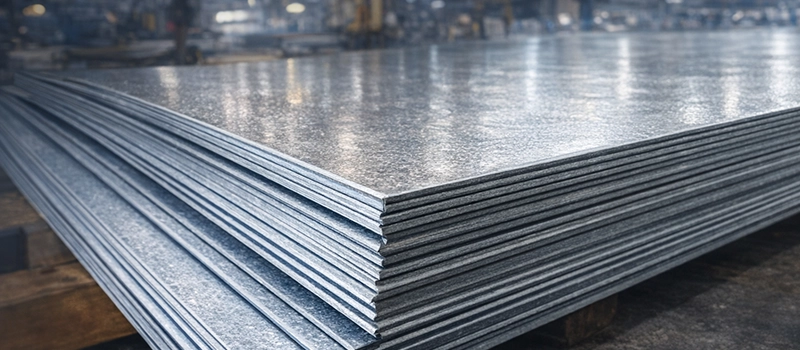
Sheet Metal: Sheet metal refers to metal formed into thin, flat pieces used for fabrication. In the Sheet Metal Process Glossary, sheet metal is the primary raw material for cutting, bending, stamping, and forming operations.
Gauge: Gauge is a standardized thickness measurement system used for sheet metal materials, varying by material type within the Sheet Metal Process Glossary framework.
Thickness: Thickness defines the nominal material dimension measured perpendicular to the sheet surface and directly affects bending behavior.
Blank: Blank is a flat sheet metal piece cut to size before forming or bending.
Coil: Coil is rolled sheet metal supplied in continuous lengths for automated fabrication processes.
Strip: Strip refers to narrow sheet metal cut from coil for secondary processing.
Flat Pattern: Flat pattern is the unfolded representation of a formed sheet metal part used for cutting layout calculations.
Formability: Formability describes the ability of sheet metal to undergo deformation without cracking.
Ductility: Ductility refers to the capacity of sheet metal to stretch under tensile stress before fracture.
Yield Strength: Yield strength defines the stress at which sheet metal begins permanent deformation.
Tensile Strength: Tensile strength represents the maximum stress sheet metal can withstand before failure.
Elastic Deformation: Elastic deformation is temporary shape change that disappears when stress is removed.
Plastic Deformation: Plastic deformation is permanent shape change after exceeding yield strength.
Springback: Springback is the elastic recovery of sheet metal after bending, a critical factor in the Sheet Metal Process Glossary.
Bend Radius: Bend radius is the inside radius of a bent sheet metal section.
Minimum Bend Radius: Minimum bend radius is the smallest allowable radius to avoid cracking during bending.
Neutral Axis: Neutral axis is the imaginary line within sheet thickness where material experiences no tensile or compressive stress during bending.
Neutral Factor: Neutral factor describes the position of the neutral axis relative to sheet thickness.
K-Factor: K-factor is the ratio used to calculate bend allowance based on neutral axis location.
Bend Allowance: Bend allowance is the calculated length of material required to accommodate bending.
Bend Deduction: Bend deduction adjusts flat pattern dimensions to account for material deformation.
Bend Line: Bend line indicates where deformation will occur during bending.
Grain Direction: Grain direction refers to rolling orientation of sheet metal affecting bend performance.
Surface Finish: Surface finish describes texture quality of sheet metal before and after processing.
Flatness: Flatness defines the allowable deviation from a perfectly flat surface.
Tolerance: Tolerance specifies acceptable dimensional variation in fabricated parts.
Work Hardening: Work hardening increases sheet metal strength through plastic deformation.
Strain: Strain represents the amount of deformation relative to original length.
Stress: Stress is internal force per unit area generated during sheet metal deformation.
Bending Moment: Bending moment is the force applied to create curvature in sheet metal.
Forming Limit: Forming limit defines maximum deformation before necking or fracture occurs.
Anisotropy: Anisotropy refers to directional mechanical property differences in rolled sheet metal.
Rolling Direction: Rolling direction is the orientation created during sheet production, influencing bending quality.
Edge Condition: Edge condition describes cut edge quality and its effect on forming performance.
Blank Size Calculation: Blank size calculation determines required flat dimensions before forming.
Material Utilization: Material utilization measures efficiency of sheet layout during cutting.
Bend Sequence: Bend sequence defines the order of operations to avoid interference during forming.
Part Geometry: Part geometry influences bending strategy and tool selection.
Dimensional Stability: Dimensional stability ensures part retains geometry after forming.
Residual Stress: Residual stress remains inside sheet metal after forming processes.
Sheet Metal Materials Glossary
Sheet Metal Materials Glossary terms are a critical component of the Sheet Metal Process Glossary because material selection directly determines bendability, strength, corrosion resistance, weldability, and surface quality. These Sheet Metal Process Glossary material terms explain the mechanical properties and surface treatments used in modern fabrication environments.
Mild Steel: Mild steel is low-carbon steel widely used in sheet metal fabrication due to good formability and cost efficiency within the Sheet Metal Process Glossary framework.
Carbon Steel: Carbon steel contains varying carbon levels to adjust strength and hardness in sheet applications.
Cold Rolled Steel (CRS): Cold rolled steel is processed at room temperature to improve surface finish and dimensional accuracy.
Hot Rolled Steel (HRS): Hot rolled steel is formed at high temperature and typically has lower surface smoothness.
Stainless Steel: Stainless steel contains chromium to provide corrosion resistance and structural durability.
Austenitic Stainless Steel: Austenitic stainless steel offers excellent corrosion resistance and good ductility.
Ferritic Stainless Steel: Ferritic stainless steel provides moderate corrosion resistance with magnetic properties.
Martensitic Stainless Steel: Martensitic stainless steel offers high strength and hardness after heat treatment.
Aluminum Sheet: Aluminum sheet is lightweight, corrosion-resistant, and highly formable for sheet metal fabrication.
Aluminum Alloy: Aluminum alloy includes elements such as magnesium or silicon to enhance strength.
Copper Sheet: Copper sheet provides excellent electrical conductivity and corrosion resistance.
Brass Sheet: Brass sheet is a copper-zinc alloy known for decorative appearance and machinability.
Galvanized Steel: Galvanized steel is coated with zinc to improve corrosion resistance.
Electrogalvanized Steel: Electrogalvanized steel uses electroplating for thinner, uniform zinc coating.
Galvalume: Galvalume is steel coated with aluminum-zinc alloy for enhanced corrosion protection.
Pre-Painted Steel: Pre-painted steel has factory-applied coating for decorative and protective purposes.
High Strength Low Alloy (HSLA): HSLA steel offers improved strength-to-weight ratio for structural sheet components.
Dual Phase Steel: Dual phase steel combines strength and ductility through mixed microstructure.
Advanced High Strength Steel (AHSS): AHSS provides high tensile strength for automotive sheet applications.
Tool Steel: Tool steel is used in sheet metal dies and tooling due to high wear resistance.
Surface Finish: Surface finish refers to texture quality of sheet before and after processing.
Brushed Finish: Brushed finish creates directional surface texture.
Mirror Finish: Mirror finish provides high-gloss reflective surface.
Powder Coated Surface: Powder coated surface enhances corrosion resistance and appearance.
Anodized Surface: Anodized surface increases corrosion resistance in aluminum sheets.
Passivated Surface: Passivated surface improves corrosion resistance by forming protective oxide layer.
Plated Surface: Plated surface adds metallic coating such as nickel or chrome.
Protective Film: Protective film prevents scratches during handling and fabrication.
Coating Thickness: Coating thickness affects durability and corrosion resistance.
Material Hardness: Material hardness influences cutting and forming performance.
Yield Ratio: Yield ratio compares yield strength to tensile strength.
Elongation: Elongation measures ductility in tensile testing.
Forming Limit Curve (FLC): FLC defines maximum safe deformation levels before fracture.
Corrosion Resistance: Corrosion resistance describes material durability in harsh environments.
Thermal Conductivity: Thermal conductivity influences welding and heat dissipation behavior.
Electrical Conductivity: Electrical conductivity determines suitability for electrical enclosures.
Density: Density affects weight and structural load considerations.
Surface Oxidation: Surface oxidation forms natural oxide layer on some metals.
Heat Treatable Alloy: Heat treatable alloy allows strength improvement through thermal processes.
Non-Heat Treatable Alloy: Non-heat treatable alloy relies on cold work for strengthening.
Material Certification: Material certification verifies compliance with composition standards.
Mill Test Report (MTR): MTR provides documented chemical and mechanical property data.
Coil Memory: Coil memory refers to tendency of rolled sheet to retain curvature.
Lamination: Lamination defect appears as layered separation within sheet material.
Surface Inclusion: Surface inclusion indicates embedded impurities affecting finish.
Cutting Processes Glossary
Cutting Processes Glossary terms represent a major section of the Sheet Metal Process Glossary because cutting defines part geometry, edge quality, dimensional precision, and downstream forming performance. These Sheet Metal Process Glossary cutting terms explain mechanical, thermal, and high-energy cutting technologies used in modern fabrication.
Shearing: Shearing is a mechanical cutting process that uses opposing blades to separate sheet metal along a straight line.
Blanking: Blanking removes a flat piece from sheet stock to create the primary workpiece.
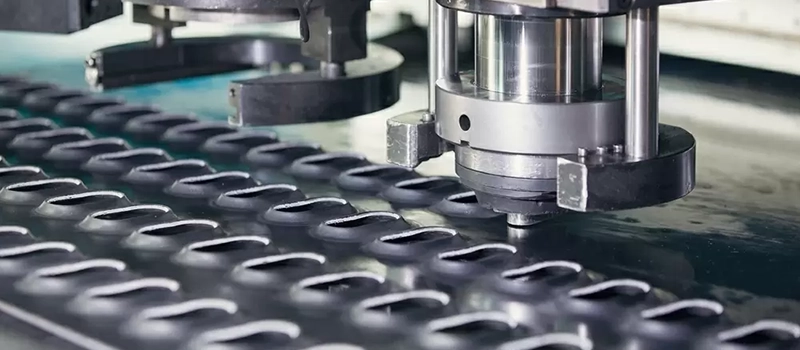
Punching: Punching creates holes or shapes by driving a punch through sheet metal into a die.
Piercing: Piercing forms internal holes without removing the surrounding blank.
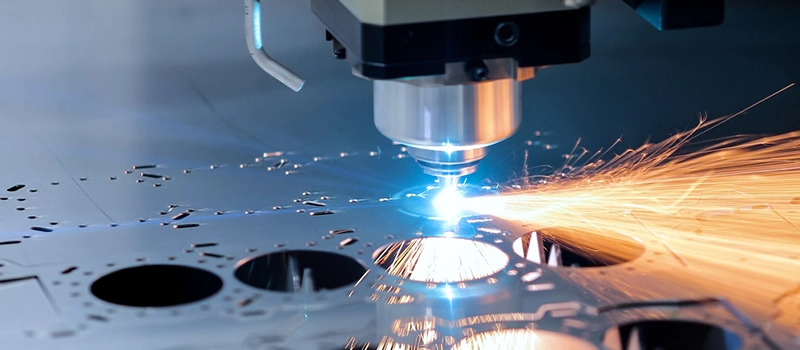
Laser Cutting: Laser cutting uses focused high-energy beams to melt and vaporize sheet metal with high precision.
Fiber Laser: Fiber laser cutting uses solid-state laser technology for improved energy efficiency and accuracy.
CO2 Laser: CO2 laser cutting is widely used for non-ferrous and mild steel sheet applications.
Plasma Cutting: Plasma cutting uses ionized gas to cut electrically conductive sheet materials.
Waterjet Cutting: Waterjet cutting uses high-pressure water mixed with abrasive particles to cut sheet metal without thermal distortion.
CNC Punching: CNC punching automates hole creation and contour cutting using programmable turret systems.
Turret Punch: Turret punch machine rotates multiple punch tools for flexible cutting operations.
Nibbling: Nibbling creates complex shapes by making a series of small overlapping punches.
Slitting: Slitting cuts sheet metal into narrower strips using rotary knives.
Notching: Notching removes material from sheet edges or corners to prepare for bending or assembly.
Trimming: Trimming removes excess material after forming or stamping operations.
Cutting Clearance: Cutting clearance is the gap between punch and die affecting edge quality.
Burr: Burr is a raised edge formed during mechanical cutting processes.
Deburring: Deburring removes burrs to improve safety and surface quality.
Heat Affected Zone (HAZ): HAZ is the region altered by thermal cutting processes such as laser or plasma cutting.
Kerf: Kerf refers to the width of material removed during cutting.
Cut Edge Quality: Cut edge quality defines smoothness and dimensional accuracy after separation.
Edge Hardening: Edge hardening may occur during thermal cutting due to rapid cooling.
Punch Force: Punch force is the required load to shear material thickness.
Tool Wear: Tool wear describes gradual deterioration of punch or blade edges.
Blade Clearance: Blade clearance influences shearing quality and burr formation.
Cutting Speed: Cutting speed defines the rate of tool movement relative to sheet material.
Feed Rate: Feed rate determines material advancement during cutting operations.
Pierce Time: Pierce time refers to duration required to initiate hole during laser cutting.
Assist Gas: Assist gas such as oxygen or nitrogen supports laser cutting performance.
Oxidation Cutting: Oxidation cutting enhances cutting efficiency in carbon steel.
High Definition Plasma: High definition plasma improves edge quality compared to conventional plasma systems.
Abrasive Jet: Abrasive jet cutting uses abrasive particles to improve waterjet performance.
Mechanical Shear: Mechanical shear uses fixed and moving blades for straight cuts.
Hydraulic Shear: Hydraulic shear provides consistent cutting force for thick sheet materials.
Rotary Shear: Rotary shear uses circular blades for continuous cutting.
Cutting Tolerance: Cutting tolerance defines allowable dimensional variation after separation.
Material Nesting: Material nesting optimizes layout of blanks to reduce scrap.
Nest Optimization: Nest optimization improves material utilization in CNC cutting.
Common Line Cutting: Common line cutting reduces material waste by sharing cut paths between parts.
Micro Joint: Micro joint keeps parts attached to sheet during cutting to prevent movement.
Slug: Slug is waste material removed during punching.
Punch Mark: Punch mark is slight surface indentation caused by punching operation.
Slug Pulling: Slug pulling occurs when removed material adheres to punch tool.
Laser Focus Position: Laser focus position affects kerf width and cut quality.
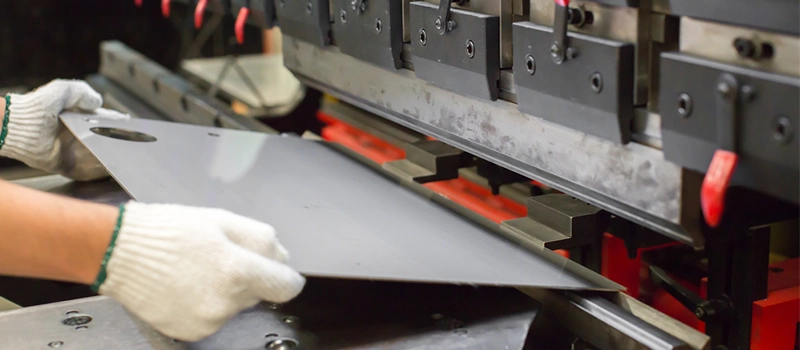
Cutting Path Programming: Cutting path programming defines tool movement sequence in CNC systems.
Thermal Distortion: Thermal distortion results from uneven heating during cutting.
Piercing Hole Quality: Piercing hole quality affects subsequent assembly performance.
Sharp Edge: Sharp edge refers to unrounded cut edge requiring finishing.
Cut Surface Roughness: Cut surface roughness measures edge texture after cutting.
Bending and Forming Glossary
Bending and Forming Glossary terms represent one of the most critical sections of the Sheet Metal Process Glossary because deformation control determines dimensional accuracy, springback behavior, structural strength, and assembly fit. These Sheet Metal Process Glossary forming terms explain bending mechanics, forming techniques, tooling geometry, and deformation compensation strategies used in industrial fabrication.
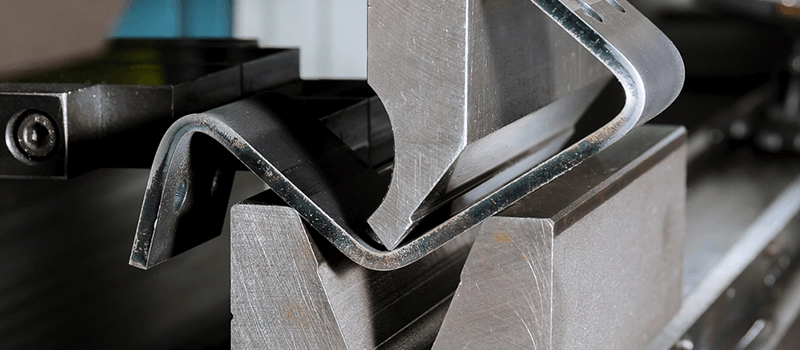
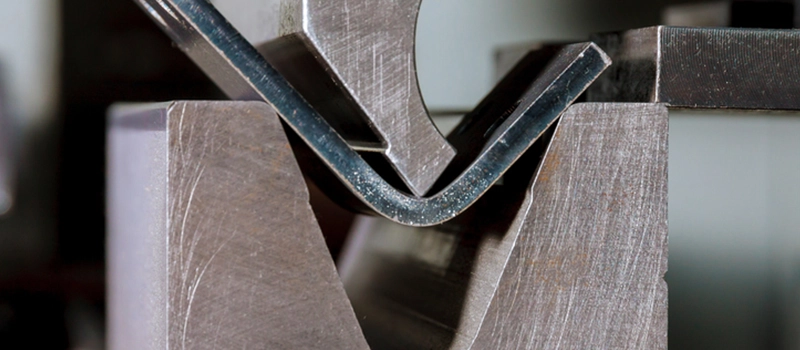
Press Brake: Press brake is a machine used to bend sheet metal by applying controlled force through upper and lower dies.
Air Bending: Air bending forms sheet metal using partial die contact, allowing flexible angle control.
Bottoming: Bottoming forces sheet metal into full die contact to reduce springback.
Coining: Coining applies high pressure to achieve precise bend angles with minimal elastic recovery.
Roll Bending: Roll bending uses rotating rolls to form curved or cylindrical shapes.
Edge Bending: Edge bending forms sheet metal edges using wipe dies.
Offset Bending: Offset bending creates two opposite bends close together to form stepped geometry.
U-Bending: U-bending forms sheet metal into U-shaped channels.
V-Bending: V-bending uses V-shaped dies to create angular bends.
Hemming: Hemming folds sheet metal edges onto themselves to increase rigidity and safety.
Curling: Curling rolls sheet edges into circular shapes for reinforcement.
Flanging: Flanging bends edges to create attachment surfaces.
Stretch Forming: Stretch forming stretches sheet metal over a die to create large-radius contours.
Deep Drawing: Deep drawing pulls sheet metal into a die cavity to form cup-shaped parts.
Shallow Drawing: Shallow drawing forms components with limited depth-to-diameter ratio.
Roll Forming: Roll forming progressively shapes sheet metal through sequential roll stations.
Incremental Forming: Incremental forming gradually deforms sheet metal using localized tool contact.
Hydroforming: Hydroforming uses fluid pressure to shape sheet metal into complex geometries.
Spin Forming: Spin forming shapes rotating sheet metal over a mandrel.
Springback Compensation: Springback compensation adjusts tooling angles to offset elastic recovery.
Bend Angle: Bend angle defines the degree of deformation between two sheet segments.
Bend Sequence Planning: Bend sequence planning determines order of bends to prevent interference.
Bend Line Positioning: Bend line positioning ensures dimensional accuracy in final assembly.
Inside Bend Radius: Inside bend radius affects material strain distribution.
Outside Bend Radius: Outside bend radius influences final external geometry.
Neutral Axis Shift: Neutral axis shift occurs during bending due to plastic deformation.
Forming Force: Forming force is the load required to plastically deform sheet metal.
Die Opening: Die opening determines bend radius and required force in press brake operations.
Punch Radius: Punch radius influences strain concentration during bending.
Bend Allowance Calculation: Bend allowance calculation determines flat length before forming.
Bend Deduction Calculation: Bend deduction calculation adjusts flat pattern dimensions.
Minimum Flange Length: Minimum flange length ensures proper tool engagement during bending.
Forming Limit Diagram (FLD): FLD defines safe deformation limits to prevent fracture.
Wrinkling: Wrinkling occurs when compressive stresses cause buckling during forming.
Necking: Necking is localized thinning before fracture in deep drawing.
Thinning: Thinning refers to reduction of sheet thickness during stretching operations.
Drawing Ratio: Drawing ratio defines maximum allowable depth relative to blank diameter.
Blank Holder Force: Blank holder force controls material flow during deep drawing.
Tool Clearance: Tool clearance ensures proper material flow and avoids surface damage.
Surface Galling: Surface galling occurs due to friction between die and sheet material.
Lubrication in Forming: Lubrication reduces friction and tool wear in sheet metal forming.
Forming Speed: Forming speed affects strain rate and springback magnitude.
Cold Forming: Cold forming shapes sheet metal at room temperature.
Warm Forming: Warm forming reduces forming force by moderately heating material.
Hot Forming: Hot forming improves ductility for high-strength alloys.
Die Compensation: Die compensation modifies tooling geometry to correct dimensional variation.
Overbending: Overbending intentionally exceeds target angle to offset springback.
Panel Forming: Panel forming shapes large sheet sections used in automotive fabrication.
Beading: Beading creates raised reinforcement lines in sheet metal.
Embossing: Embossing forms decorative or functional raised patterns.
Louvering: Louvering creates ventilation openings with formed edges.
Stiffening Rib: Stiffening rib increases structural rigidity of sheet panels.
Edge Rolling: Edge rolling forms curved edges for reinforcement.
Channel Forming: Channel forming produces structural channel profiles.
Hat Section Forming: Hat section forming creates complex cross-sectional shapes.
Form Tooling: Form tooling refers to specialized dies for complex sheet shapes.
Dimensional Recovery: Dimensional recovery refers to partial return to original shape after forming.
Stamping and Die Glossary
Stamping and Die Glossary terms form a core structural section of the Sheet Metal Process Glossary because stamping technology defines production speed, dimensional consistency, tooling precision, and large-scale manufacturing efficiency. In the Sheet Metal Process Glossary framework, stamping operations integrate cutting, bending, drawing, and forming into automated die systems for high-volume fabrication.
Stamping: Stamping is a high-speed sheet forming process that uses dies and presses to shape flat metal into finished components. In the Sheet Metal Process Glossary, stamping is a foundational production method for mass manufacturing.
Progressive Die: Progressive die performs multiple forming and cutting operations in sequential stations within a single press stroke, a critical concept in the Sheet Metal Process Glossary.
Transfer Die: Transfer die moves the workpiece mechanically between separate die stations during the stamping cycle.
Compound Die: Compound die performs multiple cutting operations simultaneously within one press stroke.
Die Clearance: Die clearance is the controlled gap between punch and die, directly affecting cut edge quality in the Sheet Metal Process Glossary.
Die Cavity: Die cavity defines the geometry transferred onto sheet metal during stamping.
Punch: Punch is the male tool component that penetrates or shapes sheet material.
Die Shoe: Die shoe is the base plate that supports die components during stamping operations.
Guide Pin: Guide pin maintains precise alignment between upper and lower die assemblies.
Stripper Plate: Stripper plate removes sheet material from the punch after each stroke.
Knockout: Knockout ejects formed parts or slugs from die cavities.
Press Stroke: Press stroke defines the vertical travel distance of the stamping press ram.
Tonnage Requirement: Tonnage requirement specifies the force needed to perform stamping operations within the Sheet Metal Process Glossary system.
Press Speed: Press speed determines production rate and influences material deformation behavior.
Die Set: Die set refers to the complete assembly of punches, dies, plates, and guiding systems.
Tool Steel: Tool steel is high-strength alloy steel used for die manufacturing due to wear resistance.
Die Wear: Die wear describes gradual deterioration of tooling surfaces under repetitive stamping cycles.
Die Life: Die life measures the number of stamping cycles before maintenance or replacement.
Blank Holder: Blank holder controls sheet flow during drawing operations in stamping.
Draw Die: Draw die forms deep or complex geometries by pulling sheet into cavity.
Die Alignment: Die alignment ensures dimensional accuracy and prevents uneven wear.
Parting Line: Parting line marks the separation interface between die halves.
Pilot Pin: Pilot pin positions strip material accurately during progressive stamping.
Feed Mechanism: Feed mechanism advances sheet strip through stamping stations.
Cam Mechanism: Cam mechanism enables side forming operations within stamping dies.
Embossing Die: Embossing die creates raised or recessed patterns in sheet metal.
Coining Die: Coining die applies high pressure to create sharp detail features.
Die Maintenance: Die maintenance includes inspection, polishing, and repair within the Sheet Metal Process Glossary production cycle.
Lubrication System: Lubrication system reduces friction and extends die life in stamping operations.
Slug Removal: Slug removal ensures waste material is cleared efficiently from die cavities.
Strip Layout: Strip layout determines optimal material usage in progressive stamping.
Press Frame: Press frame supports structural loads during stamping cycles.
Clutch and Brake System: Clutch and brake system controls press engagement and stopping precision.
Die Cushion: Die cushion regulates pressure distribution during deep drawing.
Die Changeover: Die changeover refers to the process of replacing tooling for different production runs.
Servo Press: Servo press provides programmable stroke control for improved precision.
Mechanical Press: Mechanical press uses flywheel energy for high-speed stamping production.
Hydraulic Press: Hydraulic press delivers controlled pressure for deep drawing and forming.
Stamping Line Automation: Stamping line automation integrates feeding, forming, and unloading processes.
High-Speed Stamping: High-speed stamping increases productivity while maintaining dimensional stability.
Precision Stamping: Precision stamping focuses on tight tolerances and fine detail reproduction.
Joining and Assembly Glossary
Joining and Assembly Glossary terms are a critical part of the Sheet Metal Process Glossary because sheet metal fabrication does not end at cutting and forming. In the Sheet Metal Process Glossary framework, joining technologies determine structural integrity, dimensional stability, corrosion resistance, and long-term performance of fabricated assemblies. Mastering these Sheet Metal Process Glossary joining terms ensures reliable assembly in industrial production.
Spot Welding: Spot welding is a resistance welding process widely used in the Sheet Metal Process Glossary for joining overlapping sheet components through localized heat and pressure.
Resistance Welding: Resistance welding generates heat by electrical resistance between contacting sheet surfaces.
Projection Welding: Projection welding concentrates current and force at predefined points for controlled joining.
TIG Welding: TIG welding uses a non-consumable tungsten electrode to create precise weld seams in sheet metal fabrication.
MIG Welding: MIG welding feeds consumable wire electrode to create continuous weld joints in the Sheet Metal Process Glossary production system.
Laser Welding: Laser welding uses focused laser energy to create narrow and high-strength weld seams.
Seam Welding: Seam welding produces continuous welds along sheet edges for leak-tight assemblies.
Plug Welding: Plug welding joins sheets through pre-drilled holes filled with weld material.
Riveting: Riveting joins sheet components mechanically using deformable fasteners.
Solid Rivet: Solid rivet creates permanent joints through plastic deformation of rivet tail.
Blind Rivet: Blind rivet allows joining from one side only, commonly used in enclosure fabrication.
Self-Piercing Rivet (SPR): Self-piercing rivet joins sheets without pre-drilled holes, a modern solution in the Sheet Metal Process Glossary.
Clinching: Clinching mechanically interlocks sheet layers without additional fasteners or heat.
Adhesive Bonding: Adhesive bonding joins sheet metal using structural adhesives to distribute load evenly.
Structural Adhesive: Structural adhesive provides high-strength bonding in lightweight assemblies.
Mechanical Fastener: Mechanical fastener includes screws, bolts, and nuts used in sheet metal assembly.
Thread Tapping: Thread tapping creates internal threads in sheet metal for screw fastening.
PEM Nut: PEM nut is a self-clinching fastener inserted into sheet metal for strong threaded attachment.
Stud Welding: Stud welding attaches threaded studs to sheet surfaces through arc welding.
Bolted Joint: Bolted joint provides detachable assembly within the Sheet Metal Process Glossary system.
Lock Nut: Lock nut prevents loosening under vibration conditions.
Torque Specification: Torque specification defines proper tightening force for threaded fasteners.
Joint Strength: Joint strength measures load-bearing capacity of assembled sheet components.
Lap Joint: Lap joint overlaps two sheet sections for welding or fastening.
Butt Joint: Butt joint aligns sheet edges for direct joining.
Corner Joint: Corner joint joins sheet sections at right angles.
Edge Joint: Edge joint connects sheet edges along parallel surfaces.
Sealant Application: Sealant application ensures moisture and air tightness in sheet assemblies.
Gasket Integration: Gasket integration improves sealing performance in fabricated enclosures.
Assembly Tolerance: Assembly tolerance defines acceptable dimensional variation in joined structures.
Thermal Expansion Compatibility: Thermal expansion compatibility ensures materials expand uniformly during temperature change.
Galvanic Corrosion Prevention: Galvanic corrosion prevention reduces electrochemical degradation between dissimilar metals.
Joint Fatigue Resistance: Joint fatigue resistance measures durability under cyclic loading.
Load Distribution: Load distribution ensures stress is evenly transferred across sheet connections.
Assembly Fixture: Assembly fixture holds components in precise alignment during joining.
Robotic Welding: Robotic welding automates welding operations for consistent quality.
Automated Assembly Line: Automated assembly line integrates joining processes into high-volume production.
Post-Weld Cleaning: Post-weld cleaning removes oxidation and spatter from welded joints.
Heat Distortion Control: Heat distortion control minimizes warping during welding.
Inspection of Weld Seam: Inspection of weld seam verifies joint integrity within the Sheet Metal Process Glossary quality framework.
Leak Testing: Leak testing confirms sealing performance of welded or bonded assemblies.
Surface Treatment Glossary
Surface Treatment Glossary terms represent a critical finishing section of the Sheet Metal Process Glossary because surface treatment determines corrosion resistance, aesthetic quality, wear resistance, electrical performance, and long-term durability of fabricated components. In the Sheet Metal Process Glossary framework, surface finishing is not optional but an integral stage of modern sheet metal fabrication.
Deburring: Deburring removes sharp edges and burrs created during cutting operations, an essential finishing step in the Sheet Metal Process Glossary workflow.
Mechanical Deburring: Mechanical deburring uses brushes or abrasive tools to smooth cut edges in Sheet Metal Process Glossary production.
Manual Deburring: Manual deburring is performed by hand tools for precision edge refinement in custom Sheet Metal Process Glossary applications.
Sandblasting: Sandblasting cleans and textures sheet surfaces using abrasive media under pressure.
Shot Blasting: Shot blasting improves surface uniformity and prepares sheet metal for coating processes within the Sheet Metal Process Glossary system.
Shot Peening: Shot peening enhances fatigue strength by inducing compressive residual stress on sheet surfaces.
Electroplating: Electroplating deposits a thin metallic layer onto sheet metal to improve corrosion resistance and conductivity.
Zinc Plating: Zinc plating protects carbon steel sheet components against oxidation.
Nickel Plating: Nickel plating enhances surface hardness and decorative appearance in Sheet Metal Process Glossary finishing.
Chrome Plating: Chrome plating provides high reflectivity and wear resistance.
Powder Coating: Powder coating applies electrostatically charged powder cured under heat to create durable protective layers in Sheet Metal Process Glossary fabrication.
Electrostatic Spraying: Electrostatic spraying improves coating adhesion and coverage uniformity.
Galvanizing: Galvanizing coats sheet steel with zinc to extend service life in outdoor environments.
Hot-Dip Galvanizing: Hot-dip galvanizing immerses sheet components in molten zinc for thicker coating protection.
Passivation: Passivation enhances corrosion resistance by forming a protective oxide film on stainless steel surfaces.
Anodizing: Anodizing thickens natural oxide layer on aluminum sheets to improve durability and appearance.
Painting: Painting applies liquid coating systems to protect and decorate sheet metal components.
E-Coating: E-coating uses electrically deposited paint for uniform coverage in complex geometries.
Phosphating: Phosphating prepares sheet surfaces for improved paint adhesion.
Surface Cleaning: Surface cleaning removes oil, scale, and contaminants before finishing operations.

Degreasing: Degreasing eliminates lubricants used during Sheet Metal Process Glossary forming operations.
Pickling: Pickling removes oxide scale using acid treatment prior to coating.
Polishing: Polishing improves aesthetic finish and reduces surface roughness.
Brushed Finish: Brushed finish creates directional texture for decorative applications.
Mirror Finish: Mirror finish achieves high-gloss reflective sheet surfaces.
Surface Roughness: Surface roughness defines microscopic texture affecting coating adhesion.
Coating Thickness: Coating thickness determines protective performance and compliance standards.
Adhesion Test: Adhesion test evaluates bonding strength between coating and base metal.
Salt Spray Test: Salt spray test measures corrosion resistance performance in Sheet Metal Process Glossary quality control.
Corrosion Resistance Rating: Corrosion resistance rating indicates durability under environmental exposure.
Surface Hardening: Surface hardening increases wear resistance of sheet components.
Protective Film Application: Protective film application prevents scratches during transport and assembly.
Edge Sealing: Edge sealing protects exposed cut edges from corrosion.
Heat Treatment After Coating: Heat treatment after coating stabilizes protective layers.
Color Matching: Color matching ensures consistent visual quality in fabricated assemblies.
Surface Defect Inspection: Surface defect inspection verifies coating integrity within the Sheet Metal Process Glossary inspection framework.
Environmental Compliance: Environmental compliance ensures surface treatments meet regulatory standards.
VOC Control: VOC control reduces emissions during painting processes.
Surface Preparation Standard: Surface preparation standard defines cleanliness levels before finishing.
Powder Cure Cycle: Powder cure cycle defines temperature and time required for coating polymerization.
Inspection and Quality Glossary
Inspection and Quality Glossary terms complete the technical structure of the Sheet Metal Process Glossary because fabrication precision, dimensional accuracy, and surface integrity must be verified before delivery. In the Sheet Metal Process Glossary framework, inspection and quality control ensure every sheet metal component meets mechanical, dimensional, and surface performance standards. A comprehensive Sheet Metal Process Glossary always integrates measurement systems, statistical control, and compliance verification.
Dimensional Inspection: Dimensional inspection verifies that sheet metal components meet specified tolerances defined in the Sheet Metal Process Glossary engineering documentation.
Tolerance: Tolerance defines allowable dimensional deviation in Sheet Metal Process Glossary fabrication.
Geometric Dimensioning and Tolerancing (GD&T): GD&T controls form, orientation, and position accuracy within the Sheet Metal Process Glossary design system.
Flatness: Flatness measures surface deviation from a perfectly flat plane after Sheet Metal Process Glossary forming operations.
Parallelism: Parallelism ensures two sheet surfaces remain equidistant across their length.
Perpendicularity: Perpendicularity verifies right-angle alignment in fabricated assemblies.
Surface Roughness Measurement: Surface roughness measurement evaluates texture quality following cutting and finishing processes in the Sheet Metal Process Glossary workflow.
Coordinate Measuring Machine (CMM): CMM provides high-precision dimensional measurement in complex Sheet Metal Process Glossary assemblies.
Caliper Measurement: Caliper measurement is used for quick dimensional verification in production environments.
Micrometer: Micrometer measures sheet thickness and formed features with high accuracy.
Optical Inspection: Optical inspection uses digital imaging systems for rapid quality verification.
Hardness Testing: Hardness testing confirms material properties after Sheet Metal Process Glossary forming or heat treatment.
Bend Angle Verification: Bend angle verification ensures formed parts meet specified angular requirements.
Springback Measurement: Springback measurement evaluates elastic recovery after bending in the Sheet Metal Process Glossary process.
Weld Inspection: Weld inspection verifies joint integrity in Sheet Metal Process Glossary joining operations.
Non-Destructive Testing (NDT): NDT evaluates sheet metal assemblies without causing structural damage.
Dye Penetrant Inspection: Dye penetrant inspection detects surface cracks in Sheet Metal Process Glossary welded components.
Ultrasonic Testing: Ultrasonic testing identifies internal defects in thicker sheet assemblies.
Leak Testing: Leak testing confirms enclosure sealing performance in Sheet Metal Process Glossary applications.
Coating Thickness Measurement: Coating thickness measurement verifies surface treatment compliance.
Adhesion Testing: Adhesion testing ensures coating bonding strength in the Sheet Metal Process Glossary finishing stage.
Salt Spray Testing: Salt spray testing evaluates corrosion resistance of coated sheet components.
Process Capability (Cp): Cp measures how well the Sheet Metal Process Glossary manufacturing process fits within tolerance limits.
Process Capability (Cpk): Cpk evaluates process stability and centering in Sheet Metal Process Glossary production.
Statistical Process Control (SPC): SPC monitors process variation to maintain Sheet Metal Process Glossary quality consistency.
Control Chart: Control chart tracks dimensional trends in continuous Sheet Metal Process Glossary production.
First Article Inspection (FAI): FAI validates initial production samples against Sheet Metal Process Glossary specifications.
Lot Inspection: Lot inspection evaluates a defined production batch for conformity.
Traceability: Traceability records material origin and processing history within the Sheet Metal Process Glossary system.
Quality Assurance (QA): QA establishes systematic procedures for maintaining Sheet Metal Process Glossary quality standards.
Quality Control (QC): QC implements inspection checkpoints throughout the Sheet Metal Process Glossary manufacturing cycle.
Root Cause Analysis: Root cause analysis identifies and eliminates recurring fabrication defects.
Continuous Improvement: Continuous improvement enhances Sheet Metal Process Glossary efficiency and defect reduction.
Documentation Control: Documentation control ensures engineering revisions are correctly implemented.
Audit: Audit verifies compliance with Sheet Metal Process Glossary production standards.
Inspection Report: Inspection report records measured data and acceptance results.
Material Certification Review: Material certification review confirms compliance with Sheet Metal Process Glossary material requirements.
Production Approval Process: Production approval process validates readiness for mass production.
Final Quality Release: Final quality release authorizes shipment of Sheet Metal Process Glossary fabricated components.
Conclusion
This Sheet Metal Process Glossary provides a comprehensive and structured technical reference covering sheet metal fundamentals, materials, cutting technologies, bending and forming methods, stamping systems, joining techniques, surface treatments, and inspection standards. By clearly defining essential terminology, this Sheet Metal Process Glossary establishes a standardized professional language for engineers, designers, and fabrication teams. Mastering the Sheet Metal Process Glossary improves dimensional accuracy, process control, production efficiency, and long-term structural reliability in modern sheet metal manufacturing.