“Sand casting remains the most widely used casting process in the metalworking industry, accounting for over 60% of total casting production worldwide.” — American Foundry Society (AFS)
With such widespread use, it’s easy to assume sand casting is the best choice. But how good is it really? In this article, I’ll walk you through the real advantages and limitations so you can decide for yourself.
What Is Sand Casting?
Sand casting, also known as sand mold casting, is one of the oldest and most foundational methods in metal manufacturing. Its origins date back over 5,000 years, and even today, it remains a go-to solution for industries that require flexibility, cost efficiency, and the ability to produce complex shapes in both ferrous and non-ferrous metals.
But what exactly is sand casting? In simple terms, it’s a metal casting process where molten metal is poured into a mold cavity formed from compacted sand. Once the metal solidifies, the sand mold is broken apart, revealing the final part. This relatively straightforward process masks a surprising amount of technical depth and flexibility.
🔧 The Basic Steps of Sand Casting
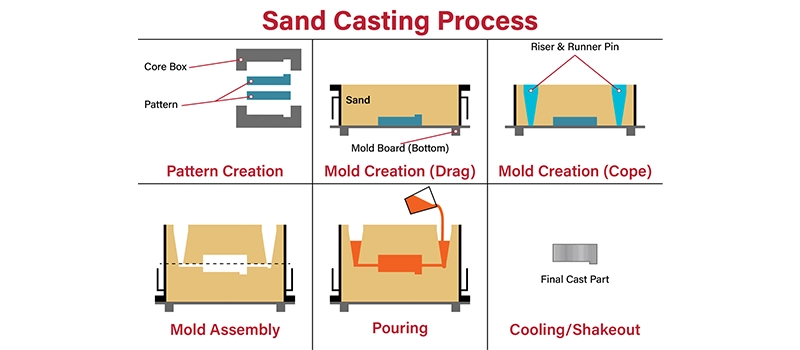
Understanding sand casting starts with its workflow. Here’s a simplified breakdown of the key stages:
- Pattern Making
A pattern — a replica of the final product — is created from wood, plastic, or metal. This is used to form the shape of the mold cavity.- Mold Preparation
The pattern is pressed into a two-part molding box filled with special sand mixed with binders. Once removed, the cavity left behind mirrors the shape of the part to be cast.- Core Making (if needed)
For hollow parts or internal cavities, sand cores are inserted into the mold.- Pouring
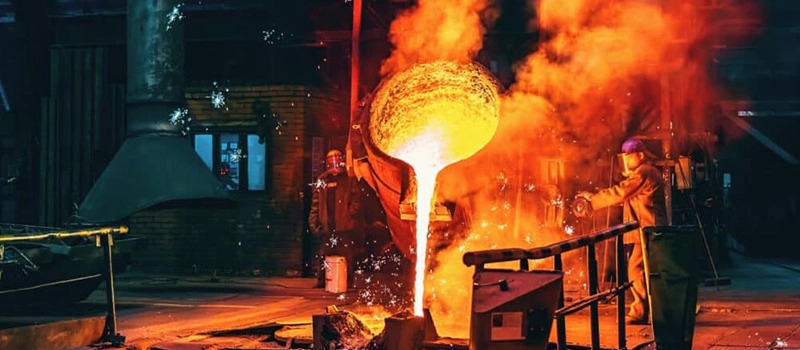
Molten metal is heated (typically up to 1,400–1,600°C for steel or 600–700°C for aluminum), then poured into the sand mold through a gating system.- Cooling and Solidification
The metal is left to cool and harden in the mold. Cooling times vary based on part size and metal type.- Shakeout and Cleaning
After solidification, the sand mold is broken to remove the casting. Cleaning processes like shot blasting are often applied to remove sand and excess metal.- Inspection and Finishing
The part is inspected for dimensional accuracy and defects. If needed, machining or surface finishing is performed.
🏭 Materials Commonly Used in Sand Casting
One reason for sand casting’s popularity is its compatibility with a wide range of metals, including:
- Gray iron and ductile iron
- Carbon steel and alloy steels
- Aluminum and aluminum alloys
- Brass, bronze, and other copper-based alloys
- Stainless steel
Because of this wide applicability, sand casting can be used in everything from mining equipment to automotive components and industrial pumps.
Advantages of Sand Casting
Despite being one of the oldest metal casting methods, sand casting remains highly relevant today — and for good reason. Its combination of affordability, adaptability, and material compatibility makes it a go-to choice in various manufacturing industries.
Let me walk you through the major advantages of sand casting and why, for many applications, it’s still the most practical solution.
💰 1. Cost-Effective Tooling and Production
One of the biggest advantages of sand casting is the low tooling cost. Since the molds are made from inexpensive materials like sand and clay, the setup cost is significantly lower compared to die casting or investment casting.
- No need for high-pressure machines
- Molds can be reused with minimal processing
- Ideal for small to medium batch production
- Faster pattern development, especially with 3D-printed tooling
👉 This makes sand casting especially attractive for prototypes, custom parts, and early-stage product development.
🛠️ 2. Highly Flexible Design Capabilities
Sand casting offers exceptional design freedom. The process is ideal for parts with:
- Irregular shapes
- Complex internal cavities (using sand cores)
- Varying wall thickness
- Integrations of bosses, ribs, and undercuts
This flexibility makes it possible to cast parts that would be impossible or too expensive with other methods.
Think large pump housings, valve bodies, or mining machine arms — sand casting can handle them with ease.
🔁 3. Compatible with a Wide Range of Metals
Another key advantage is material versatility. Sand casting works with nearly any alloy, including:
- Ferrous metals (gray iron, ductile iron, carbon steel, stainless steel)
- Non-ferrous metals (aluminum, bronze, brass, magnesium)
This adaptability means manufacturers can choose the exact material properties they need — whether that’s corrosion resistance, toughness, or thermal conductivity — without changing the casting process.
🧩 4. Ideal for Large and Heavy Components
When it comes to casting very large or heavy parts, sand casting has no real competition. While other methods may struggle with scale or become prohibitively expensive, sand casting:
- Can produce parts weighing up to tons per unit
- Uses large mold boxes that can be manually or mechanically packed
- Is commonly used in industries like construction, mining, and energy
If your part is big, complex, and doesn’t need mirror-like surface finishes, sand casting is likely the best option.
🧑🔧 5. Easy Modifications and Iterations
Because the tooling is relatively inexpensive and fast to produce, it’s easier to make design changes or quick iterations in sand casting. This is especially valuable when:
- The part is still in R&D or prototype phase
- Feedback from field use leads to design revisions
- Multiple configurations are needed for different end-users
In contrast, methods like die casting or forging require much longer lead times and costly die modifications for every change.
🌱 6. Sustainable and Reusable Materials
While casting in general isn’t considered a “green” process, sand casting is relatively sustainable in terms of materials. The sand used in molds can be:
- Reclaimed and reused for multiple cycles
- Separated and recycled after shakeout
- Combined with environmentally friendly binders
This helps reduce the environmental footprint and waste — especially in operations using green sand (clay + water-based binder).
Disadvantages of Sand Casting
While sand casting has many advantages, it’s not without its trade-offs. Like any manufacturing process, it has limitations that must be carefully considered — especially when high precision, tight tolerances, or perfect surface finishes are required.
Let’s break down the key disadvantages of sand casting so you know exactly when it may not be the best choice for your application.

🎯 1. Lower Dimensional Accuracy
Sand casting is not the best option when tight tolerances are required. That’s because:
- The sand mold can shift slightly during mold preparation or pouring
- Sand particles are relatively large compared to metal die surfaces
- The molten metal can erode parts of the mold cavity
This can result in deviations from the original design, typically in the range of ±1–3 mm depending on part size and complexity. For critical components requiring precise fitting, additional machining is often necessary.
👉 Compared to processes like investment casting or die casting, sand casting typically offers lower dimensional control.
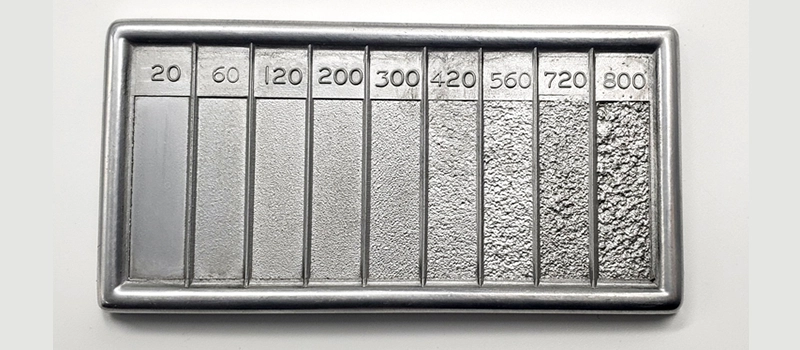
⚙️ 2. Poor Surface Finish
Because the mold cavity is made from granular sand, the resulting surface of the cast part is usually:
- Rough
- Textured
- Requires post-processing (grinding, machining, polishing)
The typical surface roughness (Ra) ranges from 6.3 to 25 μm, which is acceptable for structural components but not ideal for visible or tightly mating surfaces.
⏱️ 3. Slower Cycle Time Compared to Other Methods
Each sand mold is destroyed after one use, meaning that for every part:
- A new mold must be packed
- Metal must cool completely before shakeout
- Additional cleaning and inspection steps are needed
This makes sand casting inherently slower than die casting, where permanent molds allow for fast, repeated cycles.
In high-volume production, this slower turnaround time can lead to higher labor costs and longer lead times — especially if post-casting machining is involved.
💸 4. Hidden Costs in Finishing and Rework
At first glance, sand casting seems cost-effective. But depending on your part’s requirements, hidden costs can creep in:
- Machining after casting (to meet dimensional specs)
- Surface treatment (grinding, painting, polishing)
- Inspection processes (especially for critical parts)
- Rejections due to internal voids or surface defects
If your parts require minimal tolerance deviation or have aesthetic standards, sand casting may not be cost-efficient in the long run.
🧱 5. Not Suitable for Thin-Walled or Delicate Parts
Sand molds are relatively weak and coarse compared to metal dies or ceramic shells. As a result:
- Very thin-walled or intricate sections may collapse or not fill properly
- Risk of incomplete casting or mold breakage
- Not ideal for micro-featured parts (like electronics housings)
For these applications, investment casting or die casting is usually preferred due to better flow and stability.
🔍 6. Quality Inconsistencies and Porosity Risks
Due to the open nature of the sand mold, several quality issues can arise:
- Porosity from trapped gases or incomplete filling
- Shrinkage defects in thicker sections
- Cracks due to uneven cooling or mold collapse
- Sand inclusions if the mold breaks or deteriorates during pouring
Modern simulation tools and mold engineering can reduce these risks — but not eliminate them entirely.
Sand Casting vs. Other Casting Methods
🧾 Casting Method Comparison Table
| Feature / Method | Sand Casting | Die Casting | Investment Casting | Permanent Mold Casting |
|---|---|---|---|---|
| Tooling Cost | ⭐ Low | 🔺 High | 🔺 Medium | 🔺 Medium |
| Per-Part Cost (High Vol.) | 🔺 High | ⭐ Low | 🔺 Medium | ⭐ Low |
| Surface Finish | 🔺 Rough | ⭐ Excellent | ⭐ Good | ⭐ Good |
| Dimensional Accuracy | 🔺 Low | ⭐ High | ⭐ High | ⭐ High |
| Suitable for Large Parts | ⭐ Yes | 🔺 Limited | 🔺 No | 🔺 Limited |
| Thin-Walled Parts | 🔺 Not Ideal | ⭐ Yes | ⭐ Yes | ⭐ Yes |
| Complex Internal Cavities | ⭐ Yes (with cores) | 🔺 Limited | ⭐ Yes | 🔺 Limited |
| Mold Reusability | ❌ Single-use | ✅ Reusable | ❌ Single-use | ✅ Reusable |
| Production Speed | 🔺 Slow | ⭐ Fast | 🔺 Slow | ⭐ Medium |
| Material Flexibility | ⭐ High | 🔺 Limited | 🔺 Medium | 🔺 Medium |
| Batch Size Flexibility | ⭐ Small to large | 🔺 Best for large | 🔺 Small to medium | 🔺 Medium to large |
| Common Industries | Construction, Mining, Agriculture | Automotive, Electronics | Aerospace, Medical | Energy, Automotive |
💡 Key Takeaways from the Comparison
- Sand Casting is ideal for large, complex, and heavy parts, especially in low-to-medium batch sizes.
- Die Casting is best for high-volume production of small, precise parts, but with higher tooling investment.
- Investment Casting offers excellent detail and surface finish, great for aerospace or medical, but not cost-effective for large or heavy parts.
- Permanent Mold Casting is somewhere in between, offering decent accuracy and cost-efficiency for medium-volume production.
Where Sand Casting Performs Best
Although sand casting is not perfect, it continues to play a vital role in global manufacturing — especially in sectors that require large, robust, and functionally critical components.
Let’s look at where sand casting truly outperforms other casting methods and why it remains indispensable in certain industries.
🏗️ 1. Construction and Heavy Equipment Industry
In this sector, parts are often:
- Very large (weighing hundreds of kilograms or more)
- Structurally complex (like brackets, arms, housings)
- Not sensitive to surface aesthetics
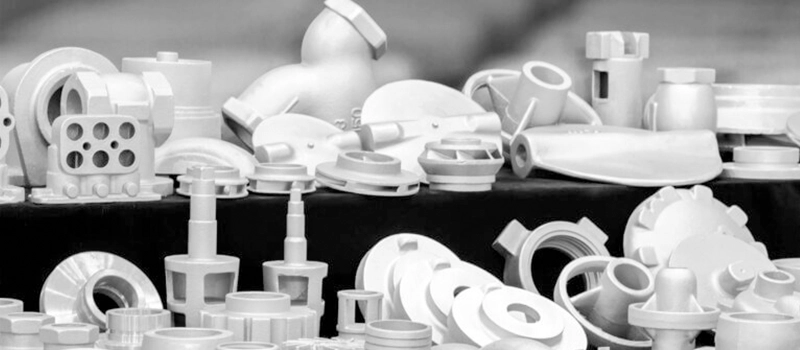
Sand casting is the only economically viable option for parts like:
- Gearbox housings
- Track rollers
- Lifting brackets
- Counterweights
👉 These parts require strength, not cosmetic perfection — making sand casting the perfect fit.
⛏️ 2. Mining and Quarrying Machinery
Mining equipment often works in extreme conditions, dealing with abrasion, impact, and temperature fluctuations. Sand casting is ideal for:
- Crusher frames
- Excavator arms
- Wear plates
- Bearing housings
These components benefit from:
- The ability to use abrasion-resistant alloys
- Rugged construction
- The option to include core cavities for lubrication or wear inserts
🚜 3. Agricultural Machinery
In the agricultural industry, machines operate seasonally and must be rugged, easy to repair, and cost-effective. Sand casting is used in parts such as:
- Plow brackets
- Combine harvester frames
- Tractor engine blocks
- Transmission housings
Since these machines are usually maintained in-field, casting simplicity and material reliability are more important than fine tolerances.
🚚 4. Automotive (Non-Critical Parts or Prototypes)
While die casting dominates the automotive industry, sand casting still plays a role, especially in:
- Prototyping large engine components
- Low-volume or specialty vehicles
- Truck and trailer frames
- Suspension arms for heavy-duty use
Sand casting’s low tooling cost and material flexibility are perfect when the goal is functional validation or custom fabrication.
🛢️ 5. Oil & Gas and Petrochemical Industry
The oil and gas sector demands parts that can withstand:
- Corrosive environments
- High temperatures and pressures
- Long service life under load
Sand casting is used to manufacture:
- Valve bodies
- Pump housings
- Manifolds
- Heat exchanger frames
These parts are typically large and heavy, with internal fluid channels — making sand casting + core placement the ideal production route.
Conclusion
Sand casting isn’t perfect — but for the right applications, it’s unbeatable.
Its ability to produce large, complex parts using a wide range of metals, at low tooling cost, makes it one of the most flexible and cost-effective casting methods available. While it can’t match the precision or surface finish of die casting or investment casting, it wins in areas where function, size, and versatility matter more than aesthetics.
If you’re working in heavy industry, developing prototypes, or manufacturing custom metal parts — sand casting might not just be an option, but your best option.