Metallurgical Terms are defined and standardized through internationally recognized authorities such as ASM International, ASTM International, ISO, and SAE International. These institutions establish the technical language that governs metallurgy, materials science, casting, forging, and heat treatment across global industries.
Accurate use of Metallurgical Terms ensures consistency in engineering specifications, quality control documentation, research publications, and international trade. Without standardized Metallurgical Terms, communication between manufacturers, engineers, and inspection bodies would lack precision and reliability.
This article systematically compiles essential Metallurgical Terms based on widely accepted industrial standards, academic publications, and technical references. Each definition is presented clearly and professionally to provide an authoritative and structured glossary for technical use.
Fundamental Metallurgical Terms
Fundamental Metallurgical Terms define the scientific principles that govern metal behavior at atomic, microscopic, and macroscopic levels. These Metallurgical Terms form the theoretical framework for metallurgy, materials engineering, and industrial metal processing.
1. Metallurgy
Metallurgy is the science and engineering discipline concerned with the extraction, refining, alloying, and processing of metals. It integrates thermodynamics, kinetics, crystallography, and mechanical behavior to control material properties for industrial applications.
2. Physical Metallurgy
Physical metallurgy focuses on the relationship between microstructure and mechanical properties. It studies phase transformations, heat treatment, and deformation mechanisms that influence strength, ductility, and toughness.
3. Extractive Metallurgy
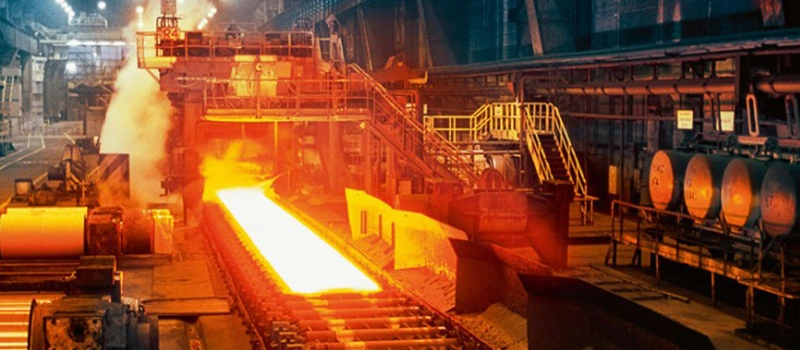
Extractive metallurgy involves the recovery of metals from ores through processes such as smelting, electrolysis, and chemical reduction. It emphasizes purification, efficiency, and control of chemical reactions.
4. Alloy
An alloy is a metallic material composed of two or more elements, designed to enhance specific properties such as strength, corrosion resistance, or hardness through controlled chemical composition.
5. Base Metal
Base metal refers to the primary metallic element in an alloy system, such as iron in steel or aluminum in aluminum alloys.
6. Solute
Solute is the minor element dissolved within a base metal matrix, influencing mechanical and physical properties through atomic interaction.
7. Solvent
Solvent is the dominant metallic element in a solid solution that dissolves solute atoms within its crystal structure.
8. Phase
A phase is a homogeneous region within a material possessing uniform physical and chemical characteristics, separated from other phases by distinct boundaries.
9. Phase Boundary
Phase boundary is the interface separating two different phases within a material, often influencing mechanical strength and diffusion behavior.
10. Phase Diagram
A phase diagram graphically represents phase stability as a function of temperature, pressure, and composition, serving as a fundamental tool in Metallurgical Terms analysis.
11. Binary System
Binary system refers to an alloy system containing two components, commonly used to study fundamental phase relationships.
12. Ternary System
Ternary system involves three alloying elements and requires three-dimensional phase representation for accurate interpretation.
13. Crystal Structure
Crystal structure describes the ordered atomic arrangement in metals, commonly categorized as BCC, FCC, or HCP structures.
14. Lattice
Lattice is the periodic three-dimensional arrangement of atoms forming the crystal framework of a metallic material.
15. Unit Cell
Unit cell is the smallest repeating structural unit that defines the geometry and symmetry of a crystal lattice.
16. Grain
Grain is an individual crystal within a polycrystalline metal, characterized by uniform atomic orientation.
17. Grain Boundary
Grain boundary is the interface between adjacent grains with different crystallographic orientations, affecting strength and corrosion behavior.
18. Microstructure
Microstructure refers to the internal structural features of a metal observable under magnification, including grains, phases, and inclusions.
19. Macrostructure
Macrostructure describes the large-scale structural features visible without high magnification, often revealing segregation or porosity.
20. Solid Solution
Solid solution is a single-phase alloy in which solute atoms are uniformly distributed within the solvent lattice.
21. Substitutional Solid Solution
Substitutional solid solution occurs when solute atoms replace solvent atoms in the crystal lattice.
22. Interstitial Solid Solution
Interstitial solid solution forms when small solute atoms occupy interstitial spaces between solvent atoms.
23. Diffusion
Diffusion is the thermally activated movement of atoms within solids, liquids, or gases, playing a key role in heat treatment and phase transformation.
24. Self-Diffusion
Self-diffusion refers to atomic movement within a pure metal without compositional change.
25. Interdiffusion
Interdiffusion describes atomic exchange between different materials or alloy components.
26. Solidification
Solidification is the transformation of molten metal into solid state, involving nucleation and crystal growth mechanisms.
27. Nucleation
Nucleation is the initial formation of stable atomic clusters that act as starting points for phase transformation.
28. Homogeneous Nucleation
Homogeneous nucleation occurs uniformly throughout the liquid without preferential sites.
29. Heterogeneous Nucleation
Heterogeneous nucleation occurs at interfaces such as mold walls, impurities, or grain boundaries.
30. Crystal Growth
Crystal growth is the expansion of stable nuclei into fully developed grains during solidification.
31. Segregation
Segregation is the non-uniform distribution of alloying elements during solidification, leading to compositional variations.
32. Eutectic Reaction
Eutectic reaction is an invariant reaction in which liquid transforms simultaneously into two solid phases at a specific composition and temperature.
33. Eutectoid Reaction
Eutectoid reaction is a solid-state transformation where one solid phase decomposes into two distinct solid phases.
34. Peritectic Reaction
Peritectic reaction involves a liquid and a solid phase combining to form a different solid phase during cooling.
35. Thermodynamics
Thermodynamics in Metallurgical Terms governs energy balance, phase stability, and equilibrium conditions in material systems.
36. Gibbs Free Energy
Gibbs free energy determines phase stability and transformation direction at constant temperature and pressure.
37. Equilibrium
Equilibrium refers to a stable state where no net phase or compositional change occurs under given conditions.
38. Kinetics
Kinetics describes the rate at which metallurgical transformations occur, influenced by temperature and diffusion mechanisms.
39. Critical Temperature
Critical temperature is the temperature at which a phase transformation begins or completes in alloy systems.
40. Transformation Temperature
Transformation temperature defines the specific temperature range where structural changes occur in metals.
Physical and Mechanical Properties Terms
Physical and Mechanical Metallurgical Terms describe how metals respond to external forces, temperature changes, cyclic loading, and environmental conditions. These Metallurgical Terms are essential for structural design, material selection, and performance evaluation in engineering applications.
1. Tensile Strength
Tensile strength is the maximum engineering stress a material can withstand under uniaxial tension before fracture occurs. It represents the ultimate load-carrying capacity and is determined through standardized tensile testing procedures.
2. Ultimate Tensile Strength (UTS)
Ultimate tensile strength refers to the highest stress reached during a tensile test before necking begins, serving as a critical parameter in structural Metallurgical Terms evaluation.
3. Yield Strength
Yield strength is the stress level at which a material transitions from elastic deformation to permanent plastic deformation, commonly defined using the 0.2% offset method.
4. Elastic Limit
Elastic limit is the maximum stress a material can endure without experiencing permanent deformation upon load removal.
5. Proportional Limit
Proportional limit represents the stress up to which stress and strain maintain a linear relationship according to Hooke’s Law.
6. Hardness
Hardness measures a material’s resistance to localized plastic deformation, typically assessed using Brinell, Rockwell, or Vickers hardness testing methods.
7. Brinell Hardness (HB)
Brinell hardness is determined by indenting a hardened steel or carbide ball into the surface and measuring the indentation diameter.
8. Rockwell Hardness (HR)
Rockwell hardness measures depth of penetration under a specific load using different scales such as HRC or HRB.
9. Vickers Hardness (HV)
Vickers hardness uses a diamond pyramid indenter and is suitable for evaluating microstructure-sensitive Metallurgical Terms.
10. Ductility
Ductility is the ability of a material to undergo significant plastic deformation before fracture, often expressed as percentage elongation.
11. Malleability
Malleability refers to the capacity of a metal to deform under compressive stress without cracking.
12. Toughness
Toughness is the ability of a material to absorb energy prior to fracture, representing the area under the stress-strain curve.
13. Fracture Toughness
Fracture toughness quantifies resistance to crack propagation under stress and is critical in failure analysis.
14. Impact Strength
Impact strength measures resistance to sudden loading, commonly evaluated using Charpy or Izod impact testing.
15. Elasticity
Elasticity describes the ability of a material to return to its original shape after removal of applied stress.
16. Plasticity
Plasticity is the property enabling permanent deformation without rupture when stress exceeds yield strength.
17. Modulus of Elasticity
Modulus of elasticity, or Young’s modulus, defines the ratio of stress to strain within the elastic deformation range.
18. Shear Strength
Shear strength represents the maximum stress a material can withstand in shear before failure.
19. Compressive Strength
Compressive strength indicates the maximum compressive stress a material can endure without failure.
20. Fatigue
Fatigue is the progressive structural damage that occurs under cyclic loading below the ultimate tensile strength.
21. Fatigue Limit
Fatigue limit is the maximum stress amplitude a material can withstand indefinitely without fatigue failure.
22. Endurance Limit
Endurance limit refers to the stress level below which infinite fatigue life is theoretically possible.
23. Creep
Creep is time-dependent plastic deformation occurring under constant stress at elevated temperatures.
24. Creep Rupture
Creep rupture is failure resulting from prolonged exposure to high temperature and stress.
25. Stress
Stress is the internal force per unit area developed within a material due to external loading.
26. Strain
Strain is the measure of deformation defined as the ratio of change in dimension to original dimension.
27. True Stress
True stress accounts for instantaneous cross-sectional area during deformation.
28. Engineering Stress
Engineering stress is calculated using the original cross-sectional area before deformation.
29. True Strain
True strain measures incremental deformation relative to instantaneous dimensions.
30. Engineering Strain
Engineering strain is based on original gauge length during tensile testing.
31. Resilience
Resilience is the ability of a material to absorb energy within the elastic range.
32. Work Hardening
Work hardening refers to the increase in strength and hardness due to plastic deformation.
33. Strain Rate
Strain rate is the speed at which deformation occurs during mechanical loading.
34. Anisotropy
Anisotropy describes directional dependence of mechanical properties due to grain orientation or processing history.
35. Isotropy
Isotropy refers to uniform mechanical properties in all directions.
36. Brittleness
Brittleness is the tendency of a material to fracture with minimal plastic deformation.
37. Damping Capacity
Damping capacity measures the ability of a material to dissipate vibrational energy.
38. Thermal Expansion
Thermal expansion describes dimensional change in response to temperature variation.
39. Thermal Fatigue
Thermal fatigue occurs due to repeated temperature cycling causing crack initiation and propagation.
40. Wear Resistance
Wear resistance indicates the ability to resist material loss due to friction or abrasion.
Chemical Composition and Alloying Terms
Chemical Composition and Alloying Metallurgical Terms define how elemental additions, chemical reactions, and compositional control influence microstructure, mechanical performance, corrosion resistance, and process stability in metallic systems.
1. Chemical Composition
Chemical composition refers to the quantitative distribution of elements within a metallic material, typically expressed in weight percent or atomic percent.
2. Alloying Element
Alloying element is an intentionally added element that modifies strength, hardness, corrosion resistance, or high-temperature stability.
3. Carbon Content
Carbon content determines hardness, strength, and phase transformation behavior in steel systems.
4. Impurity
Impurity is an unintended element present in metal that may negatively influence mechanical or chemical properties.
5. Trace Element
Trace element refers to a minor concentration element that may significantly affect metallurgical behavior despite low percentage.
6. Residual Element
Residual element remains in the alloy from raw materials or recycling processes and may influence performance unpredictably.
7. Inclusion
Inclusion is a non-metallic particle embedded in metal, often formed during solidification or deoxidation reactions.
8. Non-metallic Inclusion
Non-metallic inclusion consists of oxides, sulfides, or silicates that affect toughness and fatigue resistance.
9. Slag
Slag is a non-metallic byproduct formed during melting and refining that removes impurities from molten metal.
10. Deoxidation
Deoxidation is the process of removing dissolved oxygen from molten metal to prevent porosity and inclusions.
11. Killed Steel
Killed steel is fully deoxidized steel with minimal gas porosity due to controlled addition of deoxidizing agents.
12. Semi-Killed Steel
Semi-killed steel is partially deoxidized steel exhibiting moderate internal porosity.
13. Rimmed Steel
Rimmed steel is low-carbon steel with minimal deoxidation, producing a clean outer surface but porous interior.
14. Oxidation
Oxidation is the chemical reaction between metal and oxygen, forming oxide compounds.
15. Reduction
Reduction is the removal of oxygen from metal oxides during smelting or refining processes.
16. Carburization
Carburization introduces carbon into the surface layer of steel to increase hardness and wear resistance.
17. Decarburization
Decarburization is the loss of carbon from the surface during high-temperature exposure.
18. Nitriding
Nitriding introduces nitrogen into steel surfaces to improve hardness and fatigue resistance.
19. Boriding
Boriding diffuses boron atoms into metal surfaces, enhancing wear and corrosion resistance.
20. Alloy System
Alloy system describes a group of alloys based on specific elemental combinations.
21. Austenitic Alloy
Austenitic alloy contains stable austenite phase at room temperature, typically offering high corrosion resistance.
22. Ferritic Alloy
Ferritic alloy contains primarily ferrite structure and exhibits good corrosion resistance with moderate strength.
23. Martensitic Alloy
Martensitic alloy forms martensite upon quenching, providing high hardness and strength.
24. Precipitate
Precipitate is a fine particle formed within the matrix during aging or heat treatment.
25. Precipitation Hardening
Precipitation hardening strengthens alloys through controlled formation of dispersed particles.
26. Solid Solution Strengthening
Solid solution strengthening increases strength by introducing solute atoms that distort the crystal lattice.
27. Segregation
Segregation refers to localized enrichment of alloying elements during solidification.
28. Macrosegregation
Macrosegregation occurs at large scale and affects bulk chemical uniformity.
29. Microsegregation
Microsegregation occurs at microscopic scale between dendrite arms.
30. Homogenization
Homogenization heat treatment reduces chemical segregation through diffusion.
31. Chemical Stability
Chemical stability defines resistance to chemical reaction under environmental exposure.
32. Passivation
Passivation is the formation of a protective oxide film that reduces corrosion rate.
33. Galvanic Corrosion
Galvanic corrosion occurs when two dissimilar metals are electrically connected in an electrolyte.
34. Pitting Corrosion
Pitting corrosion is localized corrosion forming small cavities on metal surfaces.
35. Intergranular Corrosion
Intergranular corrosion occurs along grain boundaries due to compositional differences.
36. Stress Corrosion Cracking
Stress corrosion cracking combines tensile stress and corrosive environment, leading to brittle failure.
37. Hydrogen Embrittlement
Hydrogen embrittlement reduces ductility due to hydrogen diffusion into metal lattice.
38. Sulfur Content
Sulfur content influences machinability but may reduce toughness if uncontrolled.
39. Phosphorus Content
Phosphorus content increases strength but may decrease ductility.
40. Alloy Design
Alloy design is the strategic selection of elemental composition to achieve targeted mechanical and chemical properties.
Metallurgical Process Terms
Primary Metallurgy Metallurgical Terms
Primary metallurgy Metallurgical Terms describe the extraction and initial refining of metals from ores.
1. Smelting
Smelting is a high-temperature extraction process in which metal oxides are chemically reduced to produce molten metal, forming foundational Metallurgical Terms in extractive metallurgy.
2. Blast Furnace
Blast furnace is a large industrial reactor used to produce pig iron through continuous reduction of iron ore using coke and limestone.
3. Basic Oxygen Furnace (BOF)
Basic Oxygen Furnace is a steelmaking process where oxygen is blown into molten iron to reduce carbon content efficiently.
4. Electric Arc Furnace (EAF)
Electric Arc Furnace melts scrap or direct reduced iron using electric arcs, forming a key process in modern sustainable Metallurgical Terms practice.
5. Ladle Refining
Ladle refining is secondary metallurgy treatment that adjusts composition and temperature after primary steelmaking.
6. Vacuum Degassing
Vacuum degassing removes dissolved gases such as hydrogen and nitrogen to improve metallurgical cleanliness.
7. Continuous Casting
Continuous casting solidifies molten metal into semi-finished shapes, representing a major advancement in Metallurgical Terms related to productivity.
8. Direct Reduced Iron (DRI)
Direct reduced iron is produced by reducing iron ore in solid state without melting.
9. Pig Iron
Pig iron is the intermediate product of blast furnace smelting, containing high carbon content.
10. Refining
Refining removes impurities from molten metal to meet strict Metallurgical Terms specifications.
Casting Metallurgical Terms
Casting Metallurgical Terms govern molten metal flow, solidification, and defect control.
11. Mold
Mold is the cavity that shapes molten metal during solidification.
12. Core
Core creates internal cavities within cast components.
13. Gating System
Gating system directs molten metal into the mold cavity.
14. Sprue
Sprue is the vertical channel in a gating system.
15. Runner
Runner distributes molten metal from sprue to mold cavities.
16. Riser
Riser compensates for shrinkage during solidification.
17. Solidification Rate
Solidification rate influences microstructure formation and mechanical properties.
18. Dendrite
Dendrite is a tree-like crystal structure formed during solidification.
19. Chill
Chill accelerates cooling to refine grain structure.
20. Sand Casting
Sand casting uses expendable sand molds for complex geometries.
21. Investment Casting
Investment casting produces high-precision components using ceramic molds.
22. Die Casting
Die casting injects molten metal into steel dies under pressure.
23. Centrifugal Casting
Centrifugal casting uses rotational force to distribute molten metal.
24. Permanent Mold Casting
Permanent mold casting uses reusable metal molds.
25. Shrinkage Porosity
Shrinkage porosity results from insufficient feeding during solidification.
26. Gas Porosity
Gas porosity forms due to trapped gases in molten metal.
27. Cold Shut
Cold shut occurs when metal streams fail to fuse.
28. Hot Tear
Hot tear forms due to restrained contraction during cooling.
29. Misrun
Misrun occurs when molten metal solidifies before filling the cavity.
30. Casting Yield
Casting yield represents the ratio of usable casting weight to total poured metal.
Forging Metallurgical Terms
Forging Metallurgical Terms describe plastic deformation under compressive forces.
31. Forging
Forging shapes metal using compressive forces at elevated temperatures.
32. Open-Die Forging
Open-die forging uses simple dies allowing metal to flow freely.
33. Closed-Die Forging
Closed-die forging shapes metal within matched die cavities.
34. Upsetting
Upsetting increases cross-section by axial compression.
35. Drawing
Drawing elongates metal while reducing cross-section.
36. Grain Flow
Grain flow aligns microstructure along deformation direction.
37. Forging Ratio
Forging ratio defines degree of deformation applied.
38. Flash
Flash is excess metal squeezed out during closed-die forging.
39. Forging Temperature
Forging temperature influences ductility and flow stress.
40. Isothermal Forging
Isothermal forging maintains constant temperature during deformation.
Heat Treatment Metallurgical Terms
Heat treatment Metallurgical Terms control microstructure transformation.
41. Annealing
Annealing softens metal by controlled heating and slow cooling.
42. Normalizing
Normalizing refines grain structure through air cooling.
43. Quenching
Quenching rapidly cools metal to form martensite.
44. Tempering
Tempering reduces brittleness after quenching.
45. Austenitizing
Austenitizing heats steel into austenite phase region.
46. Martensitic Transformation
Martensitic transformation is diffusionless phase change during quenching.
47. Bainitic Transformation
Bainitic transformation forms intermediate microstructure at moderate cooling.
48. Case Hardening
Case hardening increases surface hardness while retaining core toughness.
49. Carburizing
Carburizing diffuses carbon into steel surface.
50. Nitriding
Nitriding diffuses nitrogen to improve wear resistance.
51. Induction Hardening
Induction hardening uses electromagnetic heating for localized hardening.
52. Stress Relieving
Stress relieving reduces residual stresses without major microstructural change.
Powder Metallurgy Metallurgical Terms
53. Powder Metallurgy
Powder metallurgy produces components by compacting and sintering metal powders.
54. Atomization
Atomization creates fine metal powders from molten streams.
55. Sintering
Sintering bonds particles through diffusion at elevated temperature.
56. Green Compact
Green compact is pressed but unsintered powder component.
57. Hot Isostatic Pressing (HIP)
HIP densifies materials under high pressure and temperature.
Additive Manufacturing Metallurgical Terms
58. Additive Manufacturing
Additive manufacturing builds components layer by layer.
59. Selective Laser Melting (SLM)
SLM uses laser to fully melt metal powder.
60. Directed Energy Deposition (DED)
DED deposits and melts metal simultaneously.
61. Build Plate
Build plate supports part during additive manufacturing.
62. Layer Thickness
Layer thickness influences surface finish and microstructure.
Surface Engineering Metallurgical Terms
63. Surface Treatment
Surface treatment modifies outer layer properties.
64. Coating
Coating applies protective or functional layer.
65. Electroplating
Electroplating deposits metal using electrical current.
66. Thermal Spraying
Thermal spraying projects molten particles onto surfaces.
67. Shot Peening
Shot peening introduces compressive surface stress.
68. Anodizing
Anodizing thickens oxide layer on aluminum.
69. Galvanizing
Galvanizing coats steel with zinc.
70. Passivation
Passivation enhances corrosion resistance.
Metallurgical Defects and Inspection Terms
Casting Defect Metallurgical Terms
1. Porosity
Porosity is the presence of small voids within a casting caused by gas entrapment or solidification shrinkage, representing a critical Metallurgical Terms quality concern.
2. Gas Porosity
Gas porosity forms when dissolved gases are trapped during solidification, reducing mechanical strength.
3. Shrinkage Cavity
Shrinkage cavity is a void formed due to insufficient feeding of molten metal during solidification.
4. Blowhole
Blowhole is a smooth-surfaced gas cavity typically located near casting surfaces.
5. Cold Shut
Cold shut occurs when two molten metal streams fail to fuse properly.
6. Misrun
Misrun is incomplete mold filling due to low pouring temperature or insufficient fluidity.
7. Hot Tear
Hot tear is a crack formed during solidification under restrained contraction.
8. Inclusion Defect
Inclusion defect refers to non-metallic particles trapped within the casting matrix.
9. Slag Inclusion
Slag inclusion occurs when refining byproducts remain in the molten metal.
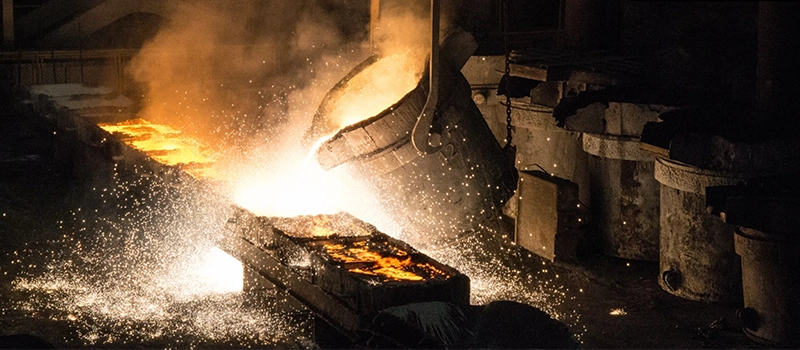
10. Segregation
Segregation in casting describes uneven distribution of alloying elements.
11. Dross
Dross is oxidized metal floating on molten surface, potentially entrapped in casting.
12. Cold Lap
Cold lap forms when metal folds over itself without proper fusion.
13. Runout
Runout occurs when molten metal leaks from mold due to failure.
14. Scab
Scab is a rough projection caused by sand mold erosion.
15. Sand Inclusion
Sand inclusion results from mold material entering molten metal.
Forging Defect Metallurgical Terms
16. Laps
Laps are surface folds caused by improper metal flow during forging.
17. Burst
Burst is internal cracking caused by excessive tensile stress during forging.
18. Forging Crack
Forging crack occurs due to improper temperature or deformation rate.
19. Underfill
Underfill results from insufficient material filling die cavity.
20. Overheating
Overheating damages microstructure by excessive grain growth.
21. Burning
Burning refers to irreversible grain boundary oxidation at extreme temperature.
22. Flakes
Flakes are internal cracks often associated with hydrogen presence.
23. Decarburization
Decarburization reduces carbon at surface during high-temperature exposure.
24. Scale
Scale is oxide layer formed during hot working.
Heat Treatment Defect Metallurgical Terms
25. Quench Crack
Quench crack forms due to rapid cooling stresses exceeding material strength.
26. Distortion
Distortion is dimensional change caused by uneven heating or cooling.
27. Residual Stress
Residual stress remains locked within material after processing.
28. Overtempering
Overtempering reduces hardness due to excessive tempering temperature.
29. Underhardening
Underhardening results from insufficient quenching or transformation.
30. Soft Spot
Soft spot is localized low-hardness region after heat treatment.
31. Case Depth Variation
Case depth variation refers to inconsistent hardened layer thickness.
Welding Defect Metallurgical Terms
32. Lack of Fusion
Lack of fusion occurs when weld metal fails to bond properly.
33. Lack of Penetration
Lack of penetration indicates incomplete weld joint penetration.
34. Undercut
Undercut is a groove melted into base metal adjacent to weld.
35. Crater Crack
Crater crack forms at end of weld bead due to shrinkage.
36. Porosity in Weld
Weld porosity forms from trapped shielding gas.
37. Slag Inclusion in Weld
Slag inclusion is non-metallic material trapped in weld metal.
Mechanical Failure Metallurgical Terms
38. Fracture
Fracture is separation of material into two or more parts under stress.
39. Brittle Fracture
Brittle fracture occurs without significant plastic deformation.
40. Ductile Fracture
Ductile fracture involves substantial plastic deformation.
41. Fatigue Failure
Fatigue failure occurs under cyclic stress over time.
42. Creep Failure
Creep failure results from prolonged high-temperature stress exposure.
43. Stress Corrosion Cracking
Stress corrosion cracking combines tensile stress and corrosive environment.
44. Hydrogen Embrittlement
Hydrogen embrittlement reduces ductility due to hydrogen diffusion.
Non-Destructive Testing Metallurgical Terms
45. Non-Destructive Testing (NDT)
NDT refers to inspection methods that evaluate material integrity without causing damage.
46. Ultrasonic Testing (UT)
UT uses high-frequency sound waves to detect internal flaws.
47. Radiographic Testing (RT)
RT employs X-rays or gamma rays to identify internal defects.
48. Magnetic Particle Testing (MT)
MT detects surface and near-surface discontinuities in ferromagnetic materials.
49. Dye Penetrant Testing (PT)
PT reveals surface-breaking defects using liquid penetrants.
50. Eddy Current Testing (ECT)
ECT uses electromagnetic induction to detect surface cracks.
51. Visual Inspection
Visual inspection is the most basic Metallurgical Terms inspection method.
52. Hardness Testing
Hardness testing evaluates resistance to indentation.
53. Tensile Testing
Tensile testing measures strength and ductility parameters.
54. Impact Testing
Impact testing evaluates resistance to sudden loads.
55. Metallographic Examination
Metallographic examination analyzes microstructure using microscopy.
56. Macroetch Testing
Macroetch testing reveals large-scale structural features.
57. Dimensional Inspection
Dimensional inspection verifies geometry against specification.
58. Surface Roughness Measurement
Surface roughness measurement evaluates surface texture quality.
59. Acceptance Criteria
Acceptance criteria define allowable defect limits.
60. Quality Assurance (QA)
QA ensures systematic control of production processes.
Advanced Metallurgical Science Terms
Advanced Metallurgical Science Metallurgical Terms describe the microscopic mechanisms and physical principles that control strength, deformation, transformation, and failure. These Metallurgical Terms provide the theoretical backbone for modern metallurgy, alloy development, and performance optimization.
Crystal Defect Metallurgical Terms
1. Dislocation
Dislocation is a linear crystal defect that enables plastic deformation in metals. In advanced Metallurgical Terms, dislocation movement explains yield strength, work hardening, and strengthening mechanisms.
2. Edge Dislocation
Edge dislocation is characterized by an extra half-plane of atoms inserted into the lattice, forming a key concept in deformation Metallurgical Terms.
3. Screw Dislocation
Screw dislocation involves shear distortion of the lattice and contributes to slip behavior in crystalline Metallurgical Terms systems.
4. Burgers Vector
Burgers vector defines the magnitude and direction of lattice distortion caused by dislocation in advanced Metallurgical Terms analysis.
5. Slip System
Slip system consists of a slip plane and slip direction, governing plastic deformation behavior in Metallurgical Terms theory.
6. Stacking Fault
Stacking fault is a planar defect caused by irregular atomic stacking sequence, influencing strengthening in advanced Metallurgical Terms.
7. Twin Boundary
Twin boundary is a symmetrical lattice boundary that affects deformation and transformation in certain Metallurgical Terms structures.
8. Point Defect
Point defect includes vacancies and interstitial atoms, playing a central role in diffusion-related Metallurgical Terms.
9. Vacancy
Vacancy is an empty lattice site that enables atomic diffusion in high-temperature Metallurgical Terms processes.
10. Interstitial Atom
Interstitial atom occupies space between lattice atoms, affecting strength and diffusion in Metallurgical Terms.
Strengthening Mechanism Metallurgical Terms
11. Work Hardening
Work hardening increases strength due to dislocation accumulation during plastic deformation, a critical concept in Metallurgical Terms.
12. Solid Solution Strengthening
Solid solution strengthening occurs when solute atoms distort the lattice, impeding dislocation motion in Metallurgical Terms systems.
13. Precipitation Hardening
Precipitation hardening strengthens alloys through fine particle formation that blocks dislocation movement.
14. Grain Boundary Strengthening
Grain boundary strengthening, explained by the Hall–Petch relationship, increases strength as grain size decreases.
15. Dispersion Strengthening
Dispersion strengthening uses stable particles to improve high-temperature performance in advanced Metallurgical Terms alloys.
16. Transformation Toughening
Transformation toughening enhances fracture resistance through stress-induced phase transformation.
Phase Transformation Metallurgical Terms
17. Phase Transformation
Phase transformation refers to structural change between phases driven by temperature or composition in Metallurgical Terms theory.
18. Diffusion-Controlled Transformation
Diffusion-controlled transformation requires atomic movement and occurs over measurable time scales.
19. Diffusionless Transformation
Diffusionless transformation, such as martensitic transformation, occurs without long-range atomic diffusion.
20. Martensitic Transformation
Martensitic transformation is a rapid shear-dominated phase change central to steel Metallurgical Terms.
21. Austenite
Austenite is the FCC high-temperature phase in steel Metallurgical Terms systems.
22. Ferrite
Ferrite is the BCC low-carbon phase commonly found in steel Metallurgical Terms.
23. Cementite
Cementite is iron carbide phase contributing to hardness in steel Metallurgical Terms.
24. Bainite
Bainite is a microstructure formed at intermediate cooling rates in steel Metallurgical Terms.
25. Time-Temperature-Transformation (TTT) Diagram
TTT diagram illustrates transformation kinetics under isothermal conditions in advanced Metallurgical Terms.
26. Continuous Cooling Transformation (CCT) Diagram
CCT diagram represents phase transformations under continuous cooling conditions.
Fracture Mechanics Metallurgical Terms
27. Crack Propagation
Crack propagation describes crack growth under applied stress in Metallurgical Terms fracture analysis.
28. Stress Intensity Factor
Stress intensity factor quantifies stress concentration at crack tips.
29. Fracture Toughness
Fracture toughness measures resistance to crack growth under loading.
30. Cleavage Fracture
Cleavage fracture occurs along specific crystallographic planes with minimal deformation.
31. Ductile Fracture
Ductile fracture involves void nucleation, growth, and coalescence.
32. Fatigue Crack Growth
Fatigue crack growth occurs progressively under cyclic stress conditions.
Thermodynamics and Kinetics Metallurgical Terms
33. Gibbs Free Energy
Gibbs free energy determines phase stability and transformation direction in Metallurgical Terms.
34. Activation Energy
Activation energy defines the minimum energy required for atomic movement.
35. Driving Force
Driving force is the thermodynamic potential that promotes phase transformation.
36. Diffusion Coefficient
Diffusion coefficient quantifies atomic mobility within solids.
37. Arrhenius Equation
Arrhenius equation describes temperature dependence of reaction rates in Metallurgical Terms kinetics.
38. Equilibrium Phase
Equilibrium phase represents thermodynamically stable state under given conditions.
39. Metastable Phase
Metastable phase persists temporarily despite not being thermodynamically stable.
40. Supercooling
Supercooling occurs when liquid cools below equilibrium solidification temperature.
Advanced Microstructure Metallurgical Terms
41. Nano-structure
Nano-structure refers to microstructural features below 100 nanometers affecting strength.
42. Grain Refinement
Grain refinement improves mechanical properties through reduced grain size.
43. Recrystallization
Recrystallization forms new strain-free grains after deformation.
44. Recovery
Recovery reduces dislocation density before recrystallization.
45. Grain Growth
Grain growth increases grain size during high-temperature exposure.
46. Interface Energy
Interface energy influences phase stability and nucleation behavior.
47. Coherency
Coherency describes lattice matching between precipitate and matrix.
48. Spinodal Decomposition
Spinodal decomposition is spontaneous phase separation without nucleation barrier.
49. Order-Disorder Transformation
Order-disorder transformation alters atomic arrangement without changing composition.
50. Texture
Texture describes preferred crystallographic orientation in processed metals.
Conclusion
Metallurgical Terms define the scientific language of metallurgy, materials engineering, and metal manufacturing. From fundamental crystal structures to advanced transformation kinetics, these Metallurgical Terms provide the framework for understanding composition, processing, performance, defects, and failure. Mastery of Metallurgical Terms ensures precise communication, reliable engineering decisions, and consistent quality across modern industrial applications.