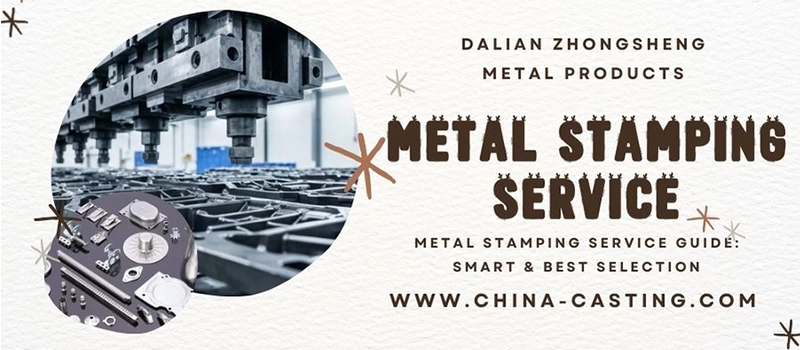
Metal stamping service is a core manufacturing solution for high-volume, precision-driven production.
It delivers consistent quality, tight tolerances, and cost efficiency across industries such as automotive, construction, and industrial equipment.
However, not all metal stamping service providers can meet the same standards.
Differences in tooling, materials, and process control directly impact precision, cost, and delivery reliability.
This guide provides a clear and professional overview to help identify the right metal stamping service with confidence.
Understanding Metal Stamping: An Overview
Metal stamping service refers to a manufacturing process that shapes flat metal sheets into specific forms using controlled force and dedicated tooling. It is widely recognized as a foundational solution for producing repeatable and dimensionally consistent components at scale. In modern manufacturing, metal stamping service is valued for its ability to convert simple raw materials into functional parts with high efficiency.
At a fundamental level, metal stamping service relies on mechanical or hydraulic presses to apply force through a die, transforming the metal into a predefined shape. This transformation is not random but follows precise engineering designs, ensuring that each produced part meets strict dimensional requirements. The consistency of metal stamping service makes it especially suitable for applications where uniformity is critical.
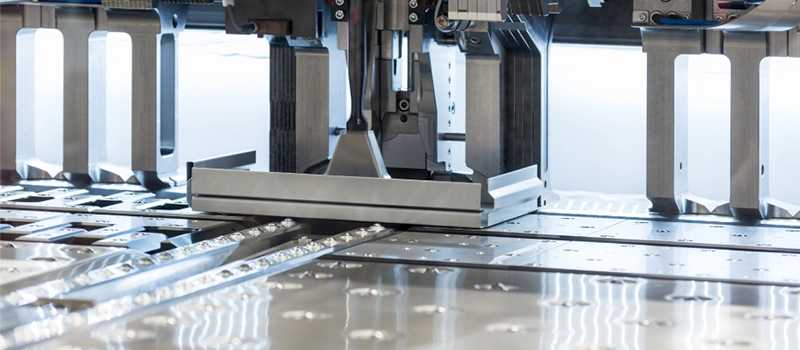
Another defining feature of metal stamping service is its scalability. Once the tooling is properly developed, the process can be repeated continuously with minimal variation. This allows manufacturers to maintain stable output over long production cycles. According to metal stamping production efficiency data, stamping processes are among the most efficient methods for high-volume part manufacturing.
In addition, metal stamping service is often integrated into broader production systems, serving as a core step in component manufacturing. Its role is not limited to shaping metal but also ensuring that parts meet design intent from the earliest stage of production. This makes metal stamping service an essential link between product design and mass manufacturing.
Overall, metal stamping service provides a reliable and structured approach to part production. It emphasizes consistency, repeatability, and efficiency, forming the basis for more advanced processes and applications discussed in later sections.
The Importance of Precision in Metal Stamping
Precision is one of the most critical factors in metal stamping. In industrial manufacturing, even the smallest deviation can directly affect product performance, assembly compatibility, and long-term reliability. Components produced through stamping are often used in systems where dimensional accuracy is essential, which means precision is not optional but a fundamental requirement.
A high level of accuracy ensures that each part consistently meets design specifications. When tolerances are tightly controlled, components can be assembled smoothly without additional adjustments. This reduces the risk of misalignment, vibration, or premature wear in final applications. In contrast, poor precision can lead to cumulative errors, especially in large-scale production, where even minor deviations are multiplied across thousands of parts.
Another key aspect of precision lies in repeatability. It is not enough for a process to produce one accurate component; it must produce thousands of identical parts over time. Stable repeatability depends on multiple factors, including tooling condition, press stability, and process control. When these elements are properly managed, manufacturers can maintain consistent output throughout long production cycles.
Precision also directly impacts cost efficiency. High accuracy reduces the need for secondary operations such as rework, machining, or manual correction. It also minimizes material waste caused by defects or rejected parts. As a result, maintaining tight tolerances is not only a technical advantage but also an economic one, helping to optimize overall production efficiency.
In addition, precision plays a crucial role in product reliability. Components that meet strict dimensional requirements are more likely to perform as intended under real working conditions. This is especially important in applications where safety and durability are priorities. Consistent accuracy ensures that parts fit correctly, function properly, and maintain performance over time.
Ultimately, precision defines the quality level of a stamping operation. It reflects the capability of the manufacturing system to deliver consistent, reliable, and application-ready components. Without strong control over accuracy and repeatability, it is difficult to achieve stable production or meet modern industrial standards.
Key Industries That Benefit from Metal Stamping Services
Metal stamping service plays a vital role across multiple industries due to its ability to deliver consistent, high-volume, and precision-driven components. Its adaptability makes it suitable for both simple parts and complex structural elements. As manufacturing demands continue to grow, more industries rely on stamping solutions to ensure efficiency and product consistency.
Automotive Industry
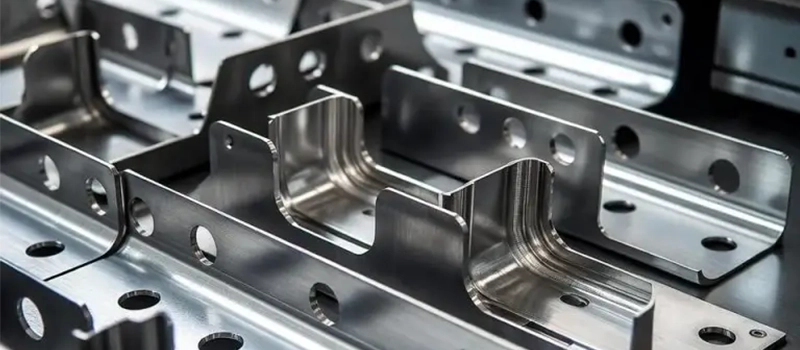
The automotive sector is one of the largest users of metal stamping service. A wide range of components, including brackets, panels, and structural reinforcements, are produced using stamping processes. These parts must meet strict dimensional and performance requirements to ensure safety and durability.
Consistency is especially important in automotive manufacturing. Large production volumes require each component to be nearly identical, allowing seamless assembly on automated production lines. Stamping enables this level of uniformity while maintaining high output efficiency, making it an essential solution for modern vehicle production.
Construction and Infrastructure
In the construction industry, stamped metal components are widely used in structural systems, support elements, and fastening solutions. These parts often require both strength and dimensional stability, especially in large-scale infrastructure projects.
Metal stamping service supports this demand by providing repeatable components that can be produced efficiently in bulk. This is particularly valuable in projects where timelines are tight and consistency across thousands of parts is required. Reliable component quality helps ensure structural integrity and long-term performance.
Industrial Equipment
Industrial machinery relies heavily on precisely manufactured metal parts to maintain operational stability. Components such as housings, connectors, and mounting elements are commonly produced through stamping.
In this sector, reliability is a key concern. Even minor dimensional inconsistencies can affect machine performance or lead to increased wear over time. By delivering consistent and repeatable parts, metal stamping service helps maintain equipment efficiency and reduces the risk of mechanical failure.
Agriculture Equipment
Agricultural machinery operates in demanding environments, requiring durable and accurately formed components. Stamped parts are often used in structural frames, protective covers, and connection systems.
The ability to produce robust components at scale makes stamping particularly suitable for this industry. Manufacturers benefit from stable production output while ensuring that parts meet the necessary strength and durability requirements for long-term field use.
Petrochemical and Energy Sector
In the petrochemical and energy industries, components must meet strict standards for reliability and environmental resistance. Stamped metal parts are commonly used in support structures, enclosures, and auxiliary systems.
Consistency and precision are critical in these applications, as components often operate under high pressure or extreme conditions. Metal stamping service provides a dependable method for producing parts that meet these demanding requirements while maintaining production efficiency.
Materials Used in Metal Stamping Service
Material selection is a fundamental aspect of metal stamping service, as it directly influences part performance, durability, and application suitability. Different materials exhibit unique mechanical properties such as strength, ductility, and corrosion resistance. Choosing the appropriate material ensures that the final component meets both functional and environmental requirements.
Steel and Carbon Steel
Steel is one of the most commonly used materials in stamping applications. It offers a strong balance between strength, formability, and availability. Carbon steel, in particular, is widely used for structural components due to its high strength and relatively low cost.
In many industrial applications, steel components must withstand mechanical stress and repeated use. Its versatility makes it suitable for a wide range of parts, from simple brackets to more demanding load-bearing components. The adaptability of steel makes it a reliable choice in large-scale production environments.
Stainless Steel
Stainless steel is preferred when corrosion resistance and durability are critical. It contains chromium, which forms a protective oxide layer on the surface, helping prevent rust and environmental degradation.
This material is commonly used in applications exposed to moisture, chemicals, or extreme temperatures. In addition to its resistance properties, stainless steel also maintains good strength, making it suitable for both functional and structural components where long-term performance is required.
Aluminum
Aluminum is widely valued for its lightweight characteristics and excellent formability. Compared to steel, it is significantly lighter, making it ideal for applications where weight reduction is important.
Its natural corrosion resistance also makes it suitable for outdoor and transportation-related uses. Aluminum components are often used in industries that require a balance between strength and weight, allowing manufacturers to improve efficiency without compromising structural integrity.
Brass and Copper Alloys
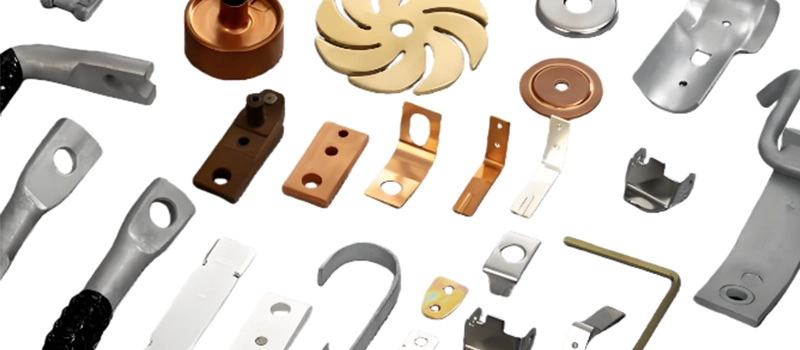
Brass and copper alloys are commonly used when electrical conductivity and corrosion resistance are required. These materials are softer and more ductile compared to steel, allowing them to be formed into detailed and precise shapes.
They are often used in electrical components, connectors, and decorative parts. In addition to functional advantages, these materials also offer aesthetic appeal, which can be important in visible applications.
Specialty and High-Performance Materials
In some applications, standard materials may not meet specific performance requirements. In these cases, specialty alloys or high-performance metals are used. These materials are designed to provide enhanced strength, heat resistance, or wear resistance.
Such materials are typically selected for demanding environments where reliability is critical. Although they may require more careful handling, they enable manufacturers to meet advanced engineering requirements that standard materials cannot fulfill.
Types of Metal Stamping Processes
Metal stamping service includes a variety of forming methods, each designed to achieve specific shapes and functional requirements. Different processes are selected based on part complexity, production volume, and design precision. Understanding these process types helps clarify how stamped components are produced efficiently and consistently.
Blanking
Blanking is one of the most fundamental operations in stamping. It involves cutting a flat piece of metal from a larger sheet to create a basic shape, known as a blank. This blank serves as the starting point for further processing or may already represent the final part in simpler applications.
This process is widely used because it provides clean edges and consistent dimensions. It is particularly effective in high-volume production where uniformity is essential.
Punching
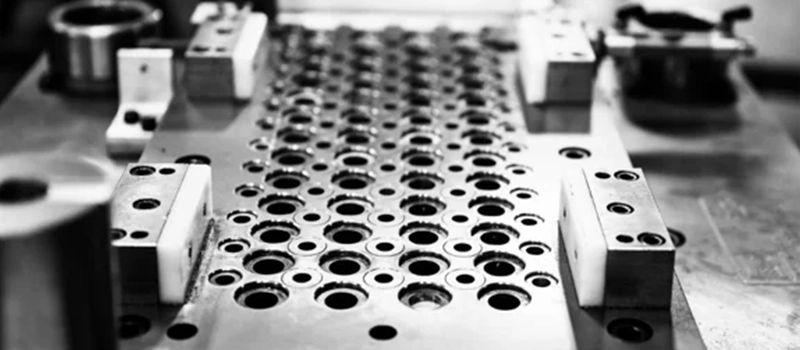
Punching is used to create holes or cutouts within a metal part. Unlike blanking, where the removed piece is the final product, punching focuses on removing specific sections from a larger workpiece.
This process is essential for components that require openings for fasteners, ventilation, or assembly features. Accuracy in punching ensures that holes are correctly positioned, which is critical for proper alignment during assembly.
Bending
Bending is a forming process that changes the shape of a metal sheet without removing material. By applying force along a straight axis, the metal is deformed into a desired angle or curve.
This process is commonly used to create structural shapes such as brackets, frames, and enclosures. The ability to achieve precise angles is important for ensuring that parts fit correctly within larger assemblies.
Deep Drawing
Deep drawing is a more advanced forming process used to create complex, three-dimensional shapes from flat metal sheets. It involves pulling the material into a die cavity, resulting in parts with depth, such as containers or cylindrical components.
This process requires careful control to prevent defects such as tearing or wrinkling. It is typically used for parts that require both structural strength and seamless shapes.
Embossing and Coining
Embossing and coining are processes used to add detailed features or surface patterns to metal parts. Embossing creates raised or recessed designs, while coining applies high pressure to produce fine details with sharp definition.
These processes are often used for functional markings, branding, or surface enhancements. They improve both the appearance and functionality of stamped components.
Progressive Stamping
Progressive stamping is a highly efficient process that combines multiple operations into a single production cycle. As the metal strip moves through a series of stations, different actions such as cutting, bending, and forming are performed sequentially.
This method is particularly suitable for high-volume production, as it reduces handling time and improves overall efficiency. It allows complex parts to be produced continuously with minimal interruption.
Key Benefits of Metal Stamping Services
Metal stamping service offers a range of advantages that make it one of the most widely used manufacturing solutions in modern industry. By combining efficiency, precision, and scalability, metal stamping service enables manufacturers to produce large quantities of consistent components while maintaining cost control and production stability. These benefits make metal stamping service particularly valuable for industries that require reliable and repeatable production.
High Production Efficiency
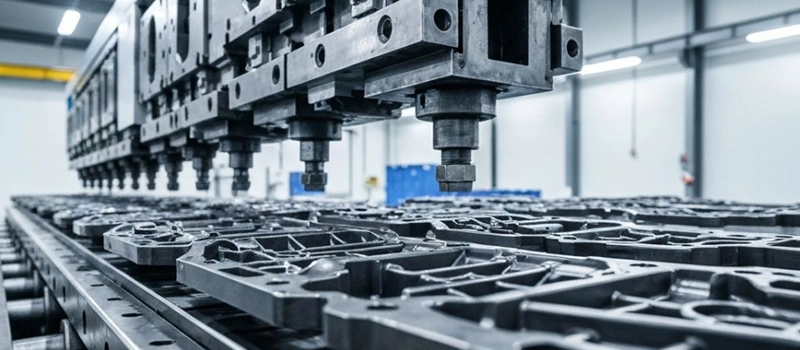
One of the most significant advantages of metal stamping service is its ability to support high-speed, continuous production. Once the tooling is properly set up, metal stamping service can operate with minimal interruption, producing large volumes of parts in a short period of time.
This level of efficiency is difficult to achieve with many other manufacturing methods. For companies managing large-scale production, metal stamping service provides a stable and predictable output, helping to meet tight deadlines and high demand without compromising consistency.
Consistent Quality and Repeatability
Metal stamping service is known for its ability to deliver consistent results across long production runs. Each part is produced using the same tooling and controlled process, ensuring that dimensions and shapes remain uniform.
This repeatability is essential for applications where components must fit together precisely. A reliable metal stamping service reduces variability, minimizes defects, and ensures that every part meets the required specifications.
Cost-Effective for Mass Production
Another key benefit of metal stamping service is its cost efficiency, especially in high-volume production. While initial tooling may require investment, the cost per unit decreases significantly as production volume increases.
Metal stamping service reduces the need for secondary operations and minimizes material waste, contributing to overall cost savings. For businesses looking to optimize production budgets, this makes metal stamping service a highly economical choice.
Design Flexibility
Modern metal stamping service supports a wide range of part designs, from simple shapes to complex geometries. With advanced tooling and engineering capabilities, manufacturers can produce components with intricate features and tight tolerances.
This flexibility allows metal stamping service to adapt to different product requirements without sacrificing efficiency. It also enables continuous product improvement and design optimization.
Strong Material Utilization
Efficient use of raw materials is another important advantage of metal stamping service. The process is designed to minimize waste by optimizing sheet layout and cutting patterns.
Better material utilization not only reduces costs but also supports more sustainable manufacturing practices. Companies using metal stamping service can achieve both economic and environmental benefits through improved resource efficiency.
Scalability and Production Stability
Metal stamping service is highly scalable, making it suitable for both medium and large production volumes. Once the process is established, it can be scaled up without significant changes to the production system.
This scalability ensures that manufacturers can respond to increasing demand while maintaining consistent quality. A stable metal stamping service provides long-term production reliability, which is essential for ongoing business operations.
Factors to Consider When Choosing a Metal Stamping Service
Choosing the right metal stamping service is a critical decision that directly affects product quality, production efficiency, and overall business performance. Not all metal stamping service providers offer the same level of capability, and selecting the wrong partner can lead to delays, inconsistent quality, and increased costs. A professional evaluation process is essential to ensure that the selected metal stamping service meets both technical and operational requirements.
Production Capability and Technical Expertise
One of the first factors to evaluate is the production capability of the metal stamping service provider. This includes the type of equipment used, production capacity, and the ability to handle different part complexities.
A reliable metal stamping service should demonstrate strong technical expertise, including the ability to understand design requirements and deliver accurate components consistently. Advanced equipment and experienced engineering teams are key indicators of a capable supplier.
Tooling and Engineering Support
Tooling plays a central role in the performance of any metal stamping service. High-quality dies ensure precision, repeatability, and long production life. Poor tooling, on the other hand, can lead to defects, frequent maintenance, and unstable production.
A professional metal stamping service should provide strong engineering support, including tooling design, optimization, and maintenance. This ensures that the production process remains stable and efficient over time.
Quality Control System
Quality control is a critical factor when selecting a metal stamping service. A reliable provider should have a structured inspection system in place to ensure that all parts meet specified requirements.
This may include dimensional inspection, process monitoring, and final product verification. A strong quality control system reflects the overall reliability of the metal stamping service and reduces the risk of defective products entering the supply chain.
Certifications and Compliance
Certifications are an important indicator of a metal stamping service provider’s credibility and compliance with international standards. They demonstrate that the company follows recognized quality and regulatory requirements.
For example, having authorized representation and compliance documentation for international markets strengthens trust and ensures smooth cooperation in global trade . A certified metal stamping service provider is more likely to deliver consistent and compliant products.
Lead Time and Delivery Reliability
Production time and delivery performance are critical in maintaining smooth operations. Delays in metal stamping service can disrupt entire production schedules and lead to significant losses.
A dependable metal stamping service should provide clear lead times and maintain stable delivery performance. Consistency in scheduling reflects strong internal management and production planning capabilities.
Cost Transparency
While price is always an important factor, it should not be the only consideration. A professional metal stamping service provides transparent pricing, clearly explaining tooling costs, unit pricing, and any additional charges.
Transparent cost structures help avoid misunderstandings and allow businesses to make informed decisions. A balanced evaluation of cost and quality is essential when selecting a metal stamping service.
Communication and Responsiveness
Effective communication is often overlooked but plays a crucial role in successful cooperation. A responsive metal stamping service provider can quickly address questions, provide updates, and resolve issues.
Clear communication ensures that requirements are fully understood and reduces the risk of errors during production. It also helps build long-term trust between both parties.
Conclusion: Finding the Right Metal Stamping Partner
Choosing the right metal stamping service ensures precision, efficiency, and long-term reliability. By evaluating capability, quality, and consistency, businesses can secure a dependable metal stamping service partner that supports stable production and sustainable growth.