Metal casting design determines not only how a product is manufactured, but whether it can succeed in a competitive industrial market.
In modern metal manufacturing, over 70% of product cost, quality stability, and production efficiency are directly influenced at the design stage. Yet, many projects still fail due to poor metal casting design decisions—resulting in excessive costs, repeated defects, delayed delivery, and strained supplier relationships. According to industry data sources (casting cost analysis report, manufacturing defect statistics), design-related issues remain one of the leading causes of production inefficiencies worldwide.
From an engineering and procurement perspective, metal casting design is no longer just a technical task. It is a strategic decision-making process that integrates material science, manufacturing capability, cost control, and global sourcing considerations. Companies that master metal casting design guidelines and align them with purchasing strategies consistently achieve lower total costs, higher product reliability, and faster time-to-market.
This article presents a systematic and practical framework for understanding metal casting design, focusing on proven metal casting design guidelines and the critical connection between metal casting design & purchasing. It provides actionable insights for professionals who aim to optimize both product performance and procurement outcomes in today’s global supply chain.
What Is Metal Casting Design?
Definition and Core Concepts of Metal Casting Design
Metal casting design is the systematic process of defining the geometry, material selection, dimensional tolerances, and manufacturability of a component that will be produced through casting processes. It is not merely a drawing activity. It is a multidisciplinary engineering function that directly determines whether a product can be manufactured efficiently, economically, and consistently at scale.
At its core, metal casting design integrates three essential elements: functional performance, process feasibility, and cost efficiency. A well-executed metal casting design ensures that the final component meets mechanical requirements while remaining compatible with casting methods such as sand casting, investment casting, or die casting. Poor metal casting design, by contrast, often leads to structural weaknesses, excessive machining requirements, and increased rejection rates.
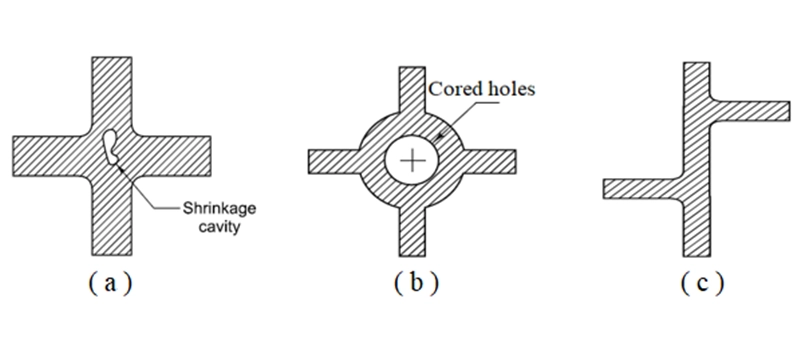
From a technical perspective, metal casting design includes critical parameters such as wall thickness distribution, draft angles, fillet radii, shrinkage allowances, and gating system considerations. Each of these factors must be carefully engineered to control molten metal flow, solidification behavior, and internal stress formation. According to industry findings, improper design decisions can increase total manufacturing costs by more than 30%, primarily due to material waste, rework, and inefficient processing.
Furthermore, metal casting design must align with real-world production constraints. This includes mold capabilities, equipment limitations, and material availability. A theoretically optimal design that ignores manufacturing constraints is not a viable design. Therefore, experienced engineers treat metal casting design as a balance between ideal performance and practical execution.
In modern global supply chains, metal casting design also serves as a communication bridge between engineers and suppliers. A clear and optimized metal casting design reduces ambiguity, minimizes back-and-forth revisions, and accelerates project timelines. Conversely, incomplete or overly complex designs often lead to misunderstandings, delayed sampling, and unexpected cost increases.
Ultimately, metal casting design is not an isolated engineering task. It is a strategic foundation that influences every downstream activity, including tooling development, quality control, and procurement planning. Companies that invest in robust metal casting design capabilities consistently achieve higher efficiency, lower defect rates, and stronger supplier collaboration.
Importance of Metal Casting Design in Manufacturing
The importance of metal casting design in manufacturing cannot be overstated. It is widely recognized that design decisions determine the majority of a product’s lifecycle cost, long before production begins. In the context of casting, this influence is even more pronounced due to the inherent complexity of molten metal behavior and solidification dynamics.
First, metal casting design directly impacts product quality and reliability. Defects such as porosity, shrinkage cavities, and hot cracking are often not caused by process errors alone, but by flawed design principles. For example, uneven wall thickness in metal casting design can lead to non-uniform cooling rates, which in turn creates internal stress concentrations and structural weaknesses. Industry data indicates that a significant percentage of casting defects originate from design-related issues rather than operational failures.
Second, metal casting design plays a decisive role in cost control. Every unnecessary thickness, sharp corner, or complex geometry increases material consumption and machining requirements. An optimized metal casting design minimizes excess material while maintaining structural integrity. This results in lower raw material costs, reduced machining time, and improved yield rates. In large-scale production, even small design optimizations can translate into substantial financial savings.
Third, metal casting design determines production efficiency and lead time. Designs that are compatible with standard tooling and processes can be manufactured quickly and consistently. In contrast, poorly optimized designs often require multiple iterations, tooling modifications, and extended sampling cycles. This not only delays production but also disrupts supply chain planning.
In addition, metal casting design has a direct impact on supplier selection and collaboration. Different suppliers possess varying capabilities in terms of casting processes, equipment, and quality control systems. A design that aligns with supplier strengths enables smoother production and better quality outcomes. On the other hand, designs that exceed supplier capabilities often result in quality instability and increased communication costs.
From a procurement perspective, metal casting design is closely linked to total cost of ownership (TCO). It affects not only the unit price but also hidden costs such as defect rates, logistics inefficiencies, and after-sales issues. Companies that integrate metal casting design considerations into their purchasing strategy are better positioned to achieve long-term cost advantages and operational stability.
In summary, metal casting design is the single most influential factor in determining product success in casting-based manufacturing. It governs quality, cost, efficiency, and supply chain performance simultaneously. Ignoring its importance is one of the most common and costly mistakes in industrial production.
Key Metal Casting Design Guidelines
Material Selection in Metal Casting Design
Material selection is one of the most critical decisions in the design phase of any casting project. The choice of material directly determines mechanical performance, durability, corrosion resistance, and overall cost structure. In practice, engineers must evaluate not only the functional requirements of the component but also the compatibility of the material with specific casting processes.
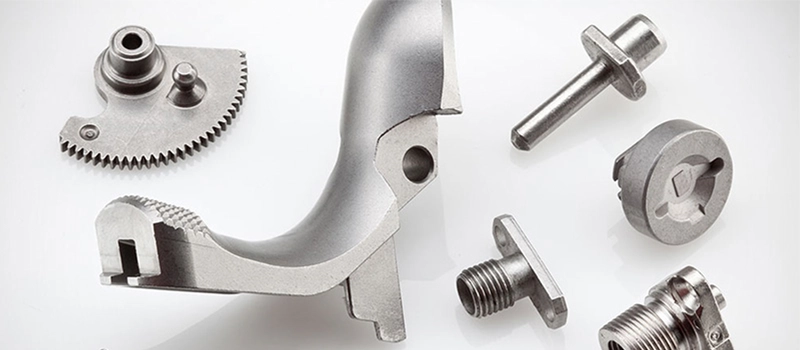
Commonly used materials include gray iron, ductile iron, carbon steel, stainless steel, and aluminum alloys. Each material offers distinct advantages. For example, gray iron provides excellent damping capacity and machinability, while ductile iron offers improved strength and toughness. Aluminum alloys, on the other hand, are widely used for lightweight applications due to their favorable strength-to-weight ratio. However, selecting a material without considering process limitations can lead to production challenges and increased costs.
Material fluidity, solidification characteristics, and shrinkage behavior must all be taken into account. Some alloys are more prone to defects such as porosity or hot cracking, especially when used in complex geometries. According to industry data, improper material selection is a major contributor to casting failures and rework.
In addition, cost considerations should not be limited to raw material prices. Engineers must also consider machining allowances, heat treatment requirements, and potential scrap rates. A slightly more expensive material that reduces post-processing may ultimately result in a lower total cost. Therefore, material selection should always be evaluated from a lifecycle perspective rather than a unit price perspective.
Wall Thickness and Uniformity
Wall thickness design is a fundamental aspect that significantly affects both manufacturability and product performance. Uniform wall thickness is generally preferred because it ensures consistent cooling rates during solidification. When thickness varies significantly within a component, thermal gradients can develop, leading to internal stresses, distortion, or even cracking.
Designers should aim to avoid abrupt transitions between thick and thin sections. Instead, gradual transitions and the use of fillets can help reduce stress concentration and improve metal flow. Excessively thick sections not only increase material consumption but also prolong cooling time, which reduces production efficiency. On the other hand, walls that are too thin may not fill properly during casting, resulting in incomplete parts or weak structures.
The optimal thickness depends on the casting process and material used. For instance, sand casting typically allows for thicker sections, while die casting can achieve much thinner walls with higher precision. Engineers must balance structural requirements with process capabilities to achieve an efficient design.
Another important consideration is the relationship between wall thickness and feeding systems. Thick sections often require additional risers to compensate for shrinkage, which increases material usage and post-processing work. By optimizing thickness distribution, it is possible to reduce the need for complex feeding systems and improve overall yield.
Draft Angles and Parting Line Design
Draft angles are essential for ensuring that cast parts can be easily removed from molds without damage. Insufficient draft can lead to mold wear, surface defects, and increased rejection rates. In general, a minimum draft angle is required on all vertical surfaces, although the exact value depends on the casting process and mold material.
For example, sand casting typically requires larger draft angles compared to investment casting due to the nature of the mold. Die casting, with its precision tooling, can achieve smaller draft angles but still requires careful consideration to avoid sticking and surface damage.
Equally important is the design of the parting line. The parting line determines how the mold is split and has a direct impact on dimensional accuracy, surface finish, and tooling complexity. A well-designed parting line should be as simple and flat as possible, minimizing the need for complex mold structures.
Poor parting line design can result in misalignment, flash formation, and additional machining requirements. It may also increase tooling costs and lead time. Therefore, designers should collaborate closely with manufacturing engineers to determine the most efficient parting strategy.
Shrinkage and Tolerance Considerations
All metals shrink during solidification, and this behavior must be accurately accounted for in the design stage. Shrinkage rates vary depending on the material and casting method, making it essential to apply appropriate allowances to ensure dimensional accuracy.
Failure to consider shrinkage can result in parts that do not meet specifications, leading to costly rework or rejection. Engineers typically use empirical data and simulation tools to predict shrinkage behavior and adjust designs accordingly. According to industry studies, incorrect shrinkage allowances are a common cause of dimensional defects.
Tolerance design is closely related to shrinkage. While tighter tolerances may seem desirable, they often increase manufacturing difficulty and cost. In casting, it is important to define realistic tolerances based on process capability. Overly strict tolerances may require additional machining or secondary operations, which increases both time and expense.
A balanced approach is necessary. Critical dimensions should be tightly controlled, while non-critical features can allow for greater variation. This strategy helps optimize both quality and cost.
Avoiding Common Casting Defects
Defect prevention should be a primary objective during the design phase rather than relying solely on process control. Many common defects originate from design-related issues that could have been avoided with better planning.
Porosity, for example, is often caused by trapped gas or improper solidification. This can be mitigated by improving wall thickness distribution and ensuring proper venting. Shrinkage cavities typically occur in thicker sections where feeding is insufficient. By redesigning these areas or adding appropriate risers, the risk can be significantly reduced.
Hot cracking is another issue that arises from thermal stress during cooling. Smooth transitions and rounded corners can help alleviate stress concentration and reduce the likelihood of cracking.
Modern simulation tools allow engineers to predict defect formation before production begins. By analyzing metal flow and solidification patterns, it is possible to identify potential problem areas and optimize the design accordingly.
Ultimately, preventing defects at the design stage is far more cost-effective than addressing them during production. A proactive approach not only improves product quality but also enhances production efficiency and reduces overall manufacturing risk.
Metal Casting Design for Different Processes
Sand Casting Design Considerations
Sand casting remains one of the most widely used manufacturing methods due to its flexibility and cost-effectiveness. When developing a design intended for this process, engineers must prioritize adaptability and tolerance for variation. Compared with other methods, sand casting allows for greater geometric freedom, making it suitable for large components and complex structures.
However, this flexibility comes with trade-offs. Surface finish and dimensional accuracy are generally lower than precision casting methods. Therefore, designers must incorporate sufficient machining allowances where necessary. Additionally, wall thickness should not be excessively thin, as molten metal flow in sand molds is less controlled compared to high-pressure processes.
Another key consideration is mold stability. Sand molds are more susceptible to deformation, so structural support features should be integrated into the design. Large flat surfaces, for example, may require reinforcement ribs to prevent warping. Designers should also consider the placement of gating and riser systems, as these directly influence metal flow and defect formation.
From a cost perspective, sand casting is highly competitive for low to medium production volumes. Tooling costs are relatively low, which makes it an ideal choice for prototyping or customized parts. However, inefficient design can still lead to high material waste and increased post-processing costs. Therefore, even in a flexible process like this, thoughtful design remains essential for cost control.
Investment Casting Design Guidelines
Investment casting, also known as lost-wax casting, is widely recognized for its ability to produce highly precise and complex components. This process is particularly suitable for parts that require excellent surface finish and tight tolerances.
Designing for investment casting requires a different mindset compared to sand casting. Since the process can achieve near-net-shape production, designers should aim to minimize machining wherever possible. This not only reduces cost but also shortens production time. Complex internal geometries, thin walls, and intricate details can be achieved more easily, making it ideal for high-performance components.
However, there are limitations that must be considered. Size constraints are more restrictive, and tooling costs are higher due to the need for wax patterns and ceramic shells. Additionally, certain design features may increase the risk of shell cracking or deformation during processing.
Uniform wall thickness remains important, as uneven sections can lead to differential cooling and internal stress. Designers should also avoid sharp corners and abrupt transitions to ensure smooth metal flow. According to industry references, optimized designs can significantly reduce defect rates and improve yield.
From a procurement perspective, investment casting is often chosen for high-value components where precision and surface quality are critical. While the initial cost may be higher, the reduction in machining and finishing can offset the investment in many applications.
Die Casting Design Optimization
Die casting is a high-efficiency process typically used for large-scale production of non-ferrous metal components, especially aluminum and zinc alloys. It is characterized by high pressure, fast cycle times, and excellent dimensional accuracy.
Designing for die casting requires strict adherence to process constraints. Unlike sand or investment casting, die casting involves expensive tooling, which makes design errors particularly costly. Therefore, designs must be thoroughly validated before production begins.
One of the primary advantages of this process is the ability to produce thin-walled components with high precision. Designers should leverage this capability to reduce material usage and weight. However, thin sections must still be balanced with proper flow characteristics to avoid defects such as cold shuts or misruns.
Draft angles in die casting can be smaller than in other processes, but they are still necessary to ensure smooth ejection. Additionally, uniform cooling is critical, as rapid solidification can lead to internal stresses if not properly managed. Cooling channels and mold design must be considered in parallel with part design.
From a cost standpoint, die casting offers excellent efficiency at high volumes but requires significant upfront investment in tooling. Therefore, it is most suitable for projects with stable demand and long production runs. Poor design decisions at this stage can lead to costly mold modifications or even complete redesigns.
Comparison of Casting Processes
Choosing the right process is a critical decision that directly affects cost, quality, and delivery time. Each casting method offers unique advantages and limitations, and no single process is universally optimal.
Below is a simplified comparison to support decision-making:
| Process | Cost Level | Precision | Surface Finish | Volume Suitability | Design Flexibility |
|---|---|---|---|---|---|
| Sand Casting | Low | Medium | Rough | Low–Medium | High |
| Investment Casting | Medium | High | Excellent | Medium | Medium–High |
| Die Casting | High (tooling) | Very High | Very Good | High | Medium |
This comparison highlights a key principle: process selection must align with both design requirements and business objectives. For example, a highly complex component with tight tolerances may justify the use of investment casting, while a large structural part may be better suited to sand casting.
In practice, experienced engineers evaluate multiple factors simultaneously, including geometry, material, production volume, and cost targets. By aligning design decisions with the most appropriate casting process, it is possible to achieve optimal results in both performance and economics.
Metal Casting Design & Purchasing Strategy
How Design Affects Purchasing Cost
In casting projects, purchasing cost is not determined at the negotiation table—it is largely defined during the design phase. Engineering decisions made early in the development process directly shape material consumption, tooling complexity, production efficiency, and even logistics expenses.
A well-optimized design reduces unnecessary material usage while maintaining structural integrity. For example, eliminating excessive wall thickness or simplifying complex geometries can significantly lower raw material consumption and machining requirements. According to industry research, design decisions can influence more than 70% of total manufacturing costs.
In addition, complexity has a direct cost implication. Features such as deep cavities, sharp internal corners, or undercuts often require special tooling or secondary operations. These additions increase both direct and hidden costs, including longer setup times and higher defect risks.
Another often overlooked factor is yield rate. Poorly designed parts may require larger risers or gating systems, leading to material waste. By improving geometry and solidification behavior, designers can increase yield and reduce scrap, which directly lowers unit cost.
Ultimately, cost control begins with intelligent design. Purchasing teams that understand this relationship are better equipped to evaluate supplier quotations and identify opportunities for optimization before production begins.
Supplier Capability Evaluation
Selecting the right supplier is not only about price—it is fundamentally about aligning metal casting design requirements with real manufacturing capabilities. Even the most optimized metal casting design cannot deliver expected results if the supplier lacks the necessary technical expertise, process control, or equipment capacity.
A comprehensive evaluation should go beyond quotations and include production capacity, process experience, quality control systems, and certification compliance. For companies involved in global sourcing, suppliers must meet strict regulatory and documentation standards. Verified certifications, such as CE compliance and authorized representation agreements, are strong indicators that a supplier can reliably execute a given metal casting design while meeting international requirements.
However, certification alone is not sufficient. Practical capability plays an equally critical role in determining whether a metal casting design can be successfully implemented. This includes mold design expertise, simulation capabilities, and the ability to identify and prevent casting defects before production begins. Suppliers who actively participate in design evaluation and provide optimization suggestions add far more value than those who simply follow drawings without technical input.
Communication efficiency is another essential factor. In many cases, issues in metal casting design arise not from complexity, but from misinterpretation. A capable supplier must be able to clearly understand technical drawings, anticipate potential risks, and respond with actionable solutions. Efficient communication reduces iteration cycles and ensures that the design intent is accurately translated into production.
From a strategic perspective, the most reliable suppliers act as engineering partners rather than passive manufacturers. They engage deeply with metal casting design, contribute to process optimization, and help reduce production risk. This collaborative approach ultimately leads to better product quality, improved cost control, and more predictable project outcomes.
Lead Time and Production Planning
Lead time is one of the most sensitive factors in casting procurement, especially for projects with strict production schedules. Design decisions play a crucial role in determining how quickly a component can move from concept to mass production.
Tooling development is often the longest phase in the process. Complex designs require more intricate molds, which increases manufacturing time and cost. Simplifying geometry and standardizing features can significantly shorten tooling lead time and accelerate project initiation.
Production planning is also influenced by design. Components that are difficult to cast or require multiple secondary operations will inevitably have longer production cycles. In contrast, designs optimized for manufacturability can move smoothly through production with minimal interruptions.
Another important aspect is sampling and validation. Poorly designed parts often require multiple iterations before meeting quality standards. Each iteration adds time and cost. By addressing potential issues during the design stage, companies can reduce the number of trial runs and achieve faster approval.
Effective coordination between engineering and purchasing teams is essential. When design and procurement strategies are aligned, it becomes possible to create realistic timelines and avoid unexpected delays.
Logistics and Shipping Considerations
Logistics is an often underestimated component of total cost, yet it is heavily influenced by design decisions. The size, weight, and packaging requirements of a component directly affect transportation efficiency and shipping expenses.
For example, bulky or irregularly shaped parts may require custom packaging or result in inefficient container utilization. This increases shipping costs and complicates handling. By optimizing geometry and considering stacking or nesting possibilities, designers can significantly improve logistics efficiency.
Weight is another critical factor. Reducing unnecessary mass not only lowers material costs but also decreases freight expenses, especially in international shipping. Lightweight design strategies are therefore beneficial from both manufacturing and logistics perspectives.
Packaging requirements must also be considered. Fragile or precision components may need additional protection, which adds cost and complexity. Designing parts with durability in mind can reduce packaging needs and improve overall efficiency.
In global sourcing scenarios, logistics planning should be integrated into the design process rather than treated as an afterthought. This approach helps ensure that products are not only manufacturable but also transportable in a cost-effective manner.
Cost Breakdown in Casting Procurement
Understanding the full cost structure of casting procurement is essential for effective decision-making. The total cost is not limited to the unit price quoted by suppliers; it includes multiple components that must be evaluated collectively.
The primary cost elements include raw material, tooling, casting production, machining, surface treatment, and logistics. Each of these elements is influenced by design decisions. For instance, a complex geometry may increase machining time, while poor design may require additional surface finishing.
Tooling cost is another important factor. Although it is often treated as a one-time expense, it can significantly impact project feasibility, especially for low-volume production. Optimizing design to simplify tooling can reduce initial investment and improve return on investment.
Hidden costs should not be ignored. These include defect rates, rework, delays, and communication inefficiencies. A design that appears cost-effective on paper may result in higher overall expenses if it leads to quality issues or production instability.
A comprehensive cost evaluation should therefore consider both direct and indirect factors. By analyzing the complete cost structure, purchasing teams can make more informed decisions and avoid unexpected financial risks.
Conclusion
Metal casting design is the foundation of cost control, product quality, and supply chain efficiency. By applying proper guidelines and aligning design with purchasing strategy, companies can achieve better performance, lower costs, and more reliable manufacturing outcomes.