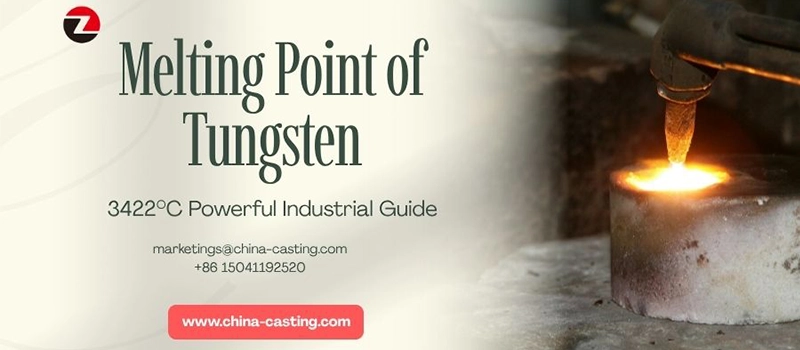
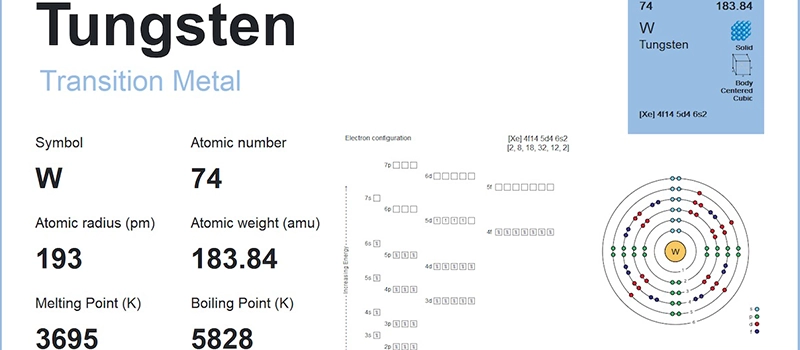
“The melting point of tungsten is 3422°C (6192°F, 3695 K), the highest of all metals.” — Royal Society of Chemistry (RSC), Periodic Table
Melting point of tungsten is not just a numerical value. It is a fundamental property that defines tungsten’s role in high-temperature engineering and advanced manufacturing. When professionals ask what is the melting point of tungsten, they are evaluating more than temperature limits—they are assessing reliability, durability, and performance under extreme conditions.
From tungsten filament in lighting to tungsten electrodes in welding and tungsten carbide in industrial tooling, the melting point of tungsten metal directly impacts material selection and operational efficiency. Understanding the melting and boiling point of tungsten is therefore essential for engineers, manufacturers, and procurement specialists seeking high-performance materials.
This article provides a comprehensive analysis of the melting point of tungsten, including its scientific basis, influencing factors, and industrial applications.
What is Tungsten?
Melting point of tungsten is a commonly searched topic in engineering and materials science, but any accurate discussion must begin with a clear definition of tungsten itself. Tungsten is a chemical element with the symbol W and atomic number 74. It belongs to the group of transition metals in the periodic table and is recognized as one of the heavier metallic elements used in modern industry.
The name “tungsten” originates from a Swedish term meaning “heavy stone,” which reflects the nature of the mineral ores from which it is extracted. In some regions and industries, tungsten is also referred to as “wolfram,” a name derived from the mineral wolframite. This dual naming convention is still used in international standards and technical documentation, which is why the symbol “W” remains associated with the element.
Tungsten does not occur naturally in its pure metallic form. Instead, it is found in mineral compounds, primarily wolframite and scheelite. These ores undergo a series of chemical separation and reduction processes to produce metallic tungsten. The refinement process is complex and requires precise control to achieve the purity levels required for industrial applications. As a result, tungsten is considered a strategically important material in global manufacturing.
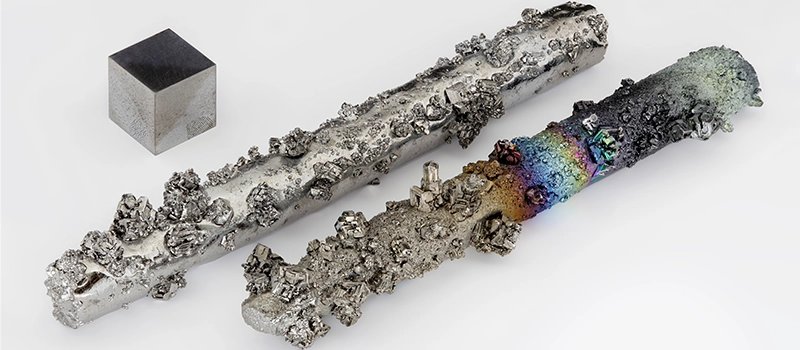
In its pure state, tungsten appears as a gray-white metal. At room temperature, it is relatively hard and brittle, which makes it difficult to process using conventional forming methods. To address this, specialized techniques such as powder metallurgy are often used to shape tungsten into usable forms. Through these processes, tungsten can be manufactured into rods, sheets, wires, and other engineered components.
From a classification standpoint, tungsten is categorized as a metallic element with a well-defined crystalline structure. Its atomic arrangement contributes to its identity as a stable and dense material. When professionals ask what is the melting point of tungsten or refer to the melting point of tungsten metal, they are typically discussing a property that is fundamentally linked to this atomic structure. However, understanding tungsten begins with recognizing it as an element before analyzing any of its specific physical properties.
Tungsten is widely used as a reference material in scientific and industrial contexts due to its distinctive position among metals. It is often included in discussions involving material selection, engineering standards, and performance evaluation. The frequent appearance of search queries such as what is melting point of tungsten reflects its importance, but these discussions are grounded in the basic identity of tungsten as a chemical element.
In summary, tungsten is a naturally occurring metallic element that is extracted from mineral ores, refined through controlled processes, and shaped into various industrial forms. It is defined by its position in the periodic table, its origin in specific mineral sources, and its role as a fundamental material in modern manufacturing. Any deeper analysis of the melting point of tungsten must be built on this foundational understanding of what tungsten is.
The Importance of Melting Point in Materials Science
Melting point of tungsten is often highlighted in technical discussions, but the broader concept of melting point itself plays a fundamental role in materials science. The melting point is defined as the temperature at which a solid material transitions into a liquid under standard atmospheric pressure. This property is not merely a numerical value; it is a critical parameter used to evaluate how a material behaves under thermal conditions and whether it is suitable for specific engineering requirements.
In materials science, the melting point serves as a key indicator of thermal stability. Materials with higher melting points generally maintain their structural integrity at elevated temperatures, while those with lower melting points may soften, deform, or fail when exposed to heat. For engineers and designers, understanding this threshold is essential when selecting materials for components that must operate in controlled or extreme thermal environments. This is why questions such as what is the melting point of tungsten are commonly raised when evaluating high-performance materials.
The melting point is also closely related to atomic bonding strength. Materials with strong interatomic forces require more energy to transition from solid to liquid, resulting in higher melting points. Conversely, weaker bonding leads to lower melting temperatures. This relationship allows scientists to use melting point data as a way to infer the internal structure and bonding characteristics of a material. When discussing the melting point of tungsten metal, the focus is often on how its atomic structure influences its thermal behavior, even though the detailed explanation of that mechanism belongs to a later discussion.
Another important role of melting point in materials science is its influence on manufacturing processes. Many industrial operations, such as casting, forging, welding, and heat treatment, depend directly on the melting characteristics of materials. If a material melts too easily, it may not withstand processing conditions. If it melts at extremely high temperatures, specialized equipment and techniques are required. Therefore, knowing the melting point allows manufacturers to determine feasible production methods and cost implications. This is particularly relevant when considering materials like tungsten, where the melting point of tungsten directly affects processing strategies.
Melting point is also used as a comparative tool. Engineers frequently compare materials based on their melting temperatures to determine which one is more suitable for a given application. For example, when evaluating metals for high-temperature use, the melting and boiling point of tungsten is often considered alongside other materials to establish performance benchmarks. This comparative approach helps in narrowing down material choices and ensuring that selected materials meet operational requirements.
In addition, melting point plays a role in quality control and material identification. Variations in melting temperature can indicate impurities or inconsistencies in material composition. For this reason, precise measurement of melting point is often used in laboratory testing and industrial inspection. When referring to the melting point of pure tungsten, the expectation is a consistent and well-defined value, and any deviation may signal a change in material quality.
Furthermore, melting point influences safety considerations. Materials exposed to temperatures near or beyond their melting point can fail unexpectedly, leading to equipment damage or hazardous conditions. Engineers must therefore account for safety margins when selecting materials, ensuring that operating temperatures remain well below the melting threshold. This makes the understanding of melting point not only a technical requirement but also a critical factor in risk management.
Finally, the melting point serves as a foundational reference in the study of advanced materials. It is often one of the first properties examined when developing new alloys, composites, or high-performance materials. The repeated attention given to topics such as what is melting point of tungsten reflects the broader importance of this property in both research and industrial practice. Without a clear understanding of melting point, it would be difficult to design materials that meet the increasingly demanding requirements of modern engineering.
What is the Melting Point of Tungsten?
Melting point of tungsten refers to the temperature at which tungsten transitions from a solid to a liquid under standard atmospheric conditions. It is a fixed physical constant and one of the most recognized properties of this element in both scientific research and industrial practice. When questions such as what is the melting point of tungsten or the melting point of tungsten is are raised, they are typically seeking this standardized value as a reference for material performance.
The melting point of tungsten metal is universally accepted as 3422°C (3695 K / 6192°F). This value is not only a defining characteristic of tungsten but also a critical parameter used in engineering calculations, material selection, and process design. Its consistency across different measurement systems ensures that tungsten can be reliably specified in global applications, regardless of regional unit preferences.
Unlike many materials whose thermal properties may vary significantly, the melting point of pure tungsten remains stable under controlled conditions. This makes it a dependable reference point in materials science. As a result, tungsten is frequently used as a benchmark when evaluating other metals or high-temperature materials. Queries such as what is melting point of tungsten and tungsten has a melting point of reflect its widespread use as a comparative standard.
Melting Point of Tungsten in Different Units
| Unit System | Value |
|---|---|
| Celsius (°C) | 3422°C |
| Kelvin (K) | 3695 K |
| Fahrenheit (°F) | 6192°F |
Melting Point of Tungsten-Based Materials
While the melting point of tungsten itself is a fixed value, tungsten is often used in combination with other elements to form alloys and compounds. These materials exhibit different melting behaviors due to changes in composition and structure. Understanding these differences is essential when distinguishing between melting point of tungsten metal and melting point of tungsten carbide or other derivatives.
| Material | Approximate Melting Point |
|---|---|
| Pure Tungsten | 3422°C |
| Tungsten Carbide (WC) | ~2870°C |
| Tungsten Carbide-Cobalt (WC-Co) | ~1320–1450°C |
| Tungsten Oxide (WO₃) | ~1473°C |
| Tungsten Heavy Alloys | ~3000°C (varies by composition) |
The variation shown above highlights an important distinction: the melting point of tungsten applies strictly to elemental tungsten. Once combined with other elements, the resulting material may have significantly different thermal characteristics. This is why engineers often specify the exact material type when asking what is the melting point of tungsten carbide or evaluating tungsten-based products.
In practical terms, this distinction ensures accurate material selection and prevents confusion between pure tungsten and its engineered forms.
The Unique Properties of Tungsten
Melting point of tungsten is often the most recognized characteristic of this material, but tungsten’s value in materials science comes from a combination of multiple fundamental properties. These properties define its behavior under different conditions and explain why it is consistently referenced in engineering discussions. Understanding these characteristics provides a more complete picture beyond simply asking what is the melting point of tungsten.
High Density
Tungsten is one of the densest metals used in engineering, with a density of approximately 19.25 g/cm³. This places it close to gold in terms of mass per unit volume. High density allows tungsten to provide significant weight in a compact form, which is important in applications where space is limited but mass is required. When evaluating materials, density is often considered alongside the melting point of tungsten to determine suitability for demanding environments.
Mechanical Strength
Tungsten exhibits strong mechanical properties, particularly under elevated temperatures. Unlike many metals that lose strength when heated, tungsten maintains its structural stability over a wide temperature range. This characteristic makes it a reliable material for components that must withstand mechanical stress without deformation. In such evaluations, the melting point of tungsten metal serves as a reference boundary, while strength determines performance below that limit.
Low Thermal Expansion
Another important property of tungsten is its low coefficient of thermal expansion. This means that tungsten undergoes minimal dimensional change when exposed to temperature variations. Materials with low thermal expansion are preferred in precision engineering, where maintaining exact dimensions is critical. In these cases, the melting point of tungsten is considered together with expansion behavior to ensure long-term stability.
Thermal Conductivity
Tungsten has relatively good thermal conductivity compared to other refractory metals. This allows it to transfer heat efficiently without localized overheating. Effective heat distribution is essential in many technical environments, especially where temperature gradients must be controlled. Discussions involving the melting and boiling point of tungsten often include this property as part of overall thermal performance.
Chemical Stability
Under standard conditions, tungsten is chemically stable and resistant to corrosion. It does not react easily with most substances at room temperature. However, it can form compounds such as oxides and carbides under specific conditions. These chemical forms differ from pure tungsten, which is why distinctions are made when discussing the melting point of tungsten carbide or other derivatives.
Hardness and Wear Resistance
Tungsten is characterized by its hardness, particularly when used in combination with other elements. While pure tungsten is relatively brittle at room temperature, its resistance to wear and surface damage remains significant. This makes it suitable for environments involving friction and mechanical interaction. Hardness is often evaluated together with the melting point of tungsten when assessing durability.
Electrical Conductivity
Tungsten also possesses moderate electrical conductivity. Although it is not as conductive as metals like copper, it provides a balance between electrical performance and structural stability. This combination is important in applications where both conductivity and resistance to environmental conditions are required. In such cases, factors such as the melting point of tungsten wire are considered alongside electrical properties.
Why Tungsten Has a High Melting Point
Melting point of tungsten is exceptionally high compared to other metals, and this characteristic is not accidental. It is the direct result of tungsten’s atomic structure, bonding strength, and electron configuration. To understand why the melting point of tungsten metal reaches such an extreme value, it is necessary to examine the fundamental factors that determine how strongly atoms are held together in a solid material.
Strong Atomic Bonding
At the most fundamental level, the melting point of tungsten is governed by the strength of the bonds between its atoms. Tungsten atoms are connected through metallic bonding, where electrons are shared across a lattice structure. In tungsten, these metallic bonds are particularly strong, requiring a large amount of energy to break.
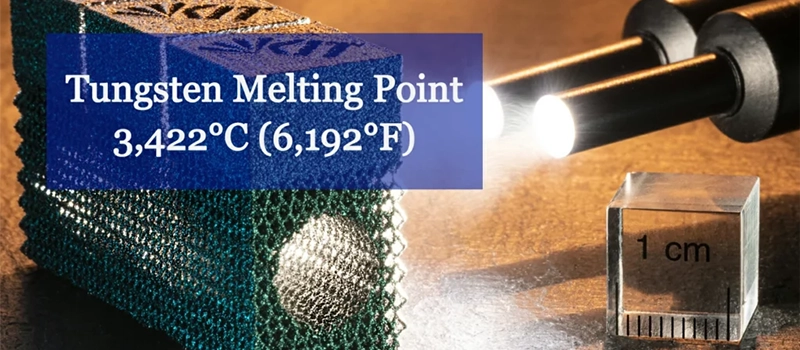
When a material is heated, energy is absorbed by the atomic structure. For melting to occur, the energy must be sufficient to overcome the forces holding the atoms in place. Because tungsten atoms are bonded so tightly, much more energy is required compared to most other metals. This is why questions such as what is the melting point of tungsten often lead to discussions about bonding strength as the primary cause.
High Atomic Mass and Density
Another contributing factor is tungsten’s high atomic mass. Heavier atoms tend to vibrate less at a given temperature compared to lighter atoms. As a result, more thermal energy is needed to increase atomic motion to the point where the structure breaks down into a liquid state.
This characteristic works together with tungsten’s dense atomic packing. The atoms are arranged closely within the crystal lattice, which further strengthens the overall structure. The combination of high atomic mass and compact arrangement reinforces the melting point of tungsten metal, making it significantly higher than that of lighter metals.
Body-Centered Cubic (BCC) Structure
Tungsten crystallizes in a body-centered cubic (BCC) structure. This crystal structure is known for its stability and resistance to deformation. In a BCC lattice, each atom is surrounded in a way that promotes strong interactions with neighboring atoms.
This structural arrangement contributes to the energy required to disrupt the lattice during heating. When evaluating the melting point of tungsten, the BCC structure is often cited as a key factor because it supports strong atomic cohesion. Although other metals may also have BCC structures, tungsten’s bonding strength within this structure is particularly high.
Electron Configuration
Tungsten’s electron configuration also plays a significant role in determining its melting behavior. The presence of partially filled d-orbitals allows tungsten atoms to form strong metallic bonds with directional characteristics. These bonds enhance cohesion within the lattice, making it more resistant to thermal disruption.
In materials science, electron configuration is often used to explain why certain elements exhibit higher melting points than others. For tungsten, the arrangement of electrons contributes directly to the strength of its atomic interactions, which in turn defines the melting point of tungsten.
Resistance to Atomic Diffusion
Melting involves not only bond breaking but also increased atomic mobility. In tungsten, atomic diffusion occurs relatively slowly due to the strength of the lattice and the size of the atoms. This resistance to movement delays the transition from solid to liquid, requiring higher temperatures to initiate melting.
This behavior is another reason why the melting and boiling point of tungsten are both significantly higher than those of most metals. The limited mobility of atoms within the structure reinforces its resistance to phase change.
Combined Effect of Multiple Factors
No single factor alone explains the extreme melting point of tungsten. Instead, it is the combined effect of strong metallic bonding, high atomic mass, stable crystal structure, and electron configuration that creates this result. Each of these elements contributes to the overall energy required to transition tungsten from solid to liquid.
When engineers and scientists ask what is melting point of tungsten, the answer reflects not just a numerical value, but a set of underlying physical principles. These principles are what make tungsten a reference material in discussions involving high-temperature performance and material stability.
Applications of Tungsten Due to Its High Melting Point
Melting point of tungsten plays a decisive role in determining where and how this material is used in modern industry. Materials are often selected based on their ability to maintain stability under heat, and tungsten is consistently chosen in environments where temperature resistance is a primary requirement. When engineers evaluate what is the melting point of tungsten, they are often doing so in direct relation to application limits and operational reliability.
High-Temperature Industrial Equipment
Tungsten is widely used in equipment designed to operate under extreme thermal conditions. Components such as furnace parts, heat shields, and high-temperature structural elements rely on materials that can withstand sustained exposure to elevated temperatures. The melting point of tungsten metal allows it to remain solid and stable in environments where many other metals would soften or fail.
In these settings, material selection is closely tied to safety and durability. Equipment operating near thermal limits must use materials with sufficient margins below their melting point. The melting point of tungsten provides that margin, making it a preferred material in high-temperature systems.
Electrical and Electronic Components
Tungsten is also used in electrical applications where both heat and electrical performance must be considered. Components such as filaments and electrodes require materials that can function under elevated temperatures without degradation.
The use of tungsten in these applications is directly related to its thermal tolerance. When discussing the melting point of tungsten filament or the melting point of tungsten electrode, the focus is on ensuring that the material can operate reliably without approaching its phase transition. This stability supports consistent performance over time.
Welding and Cutting Applications
In welding processes, materials are exposed to localized high temperatures generated by electric arcs. Tungsten is commonly used in electrodes for these processes because it can withstand intense heat without melting or deforming easily.
The melting point of tungsten is a key factor in maintaining the shape and function of the electrode during operation. If the electrode material were to melt or degrade, it would compromise precision and efficiency. This is why tungsten is often selected in welding systems that require stable and durable electrode materials.
Tooling and Wear-Resistant Components
Tungsten-based materials are frequently used in tools and components that experience both heat and mechanical stress. Cutting tools, drilling equipment, and wear-resistant parts often rely on tungsten compounds for their performance.
While these materials may not be pure tungsten, the melting point of tungsten remains an important reference when evaluating their thermal limits. Engineers often compare what is the melting point of tungsten carbide with that of pure tungsten to understand how composition affects performance in demanding environments.
Aerospace and Energy Systems
In aerospace and energy-related fields, materials are exposed to extreme conditions, including high temperatures, pressure, and mechanical stress. Tungsten is used in specialized components where reliability is critical.
The melting and boiling point of tungsten are considered when designing systems that must operate under such conditions. Materials used in these industries must maintain integrity over time, and tungsten’s thermal properties contribute to its selection in these applications.
General Industrial Manufacturing
Beyond specialized uses, tungsten is also applied in general manufacturing where high-temperature resistance is required. It may be used in molds, supports, or components that are exposed to heat during production processes.
In these contexts, understanding the melting point of tungsten helps manufacturers determine whether the material is suitable for specific processes. It also influences decisions related to cost, processing methods, and long-term performance.
Comparison with Other Metals
Melting point of tungsten is often evaluated in relation to other metals to better understand its position in materials science. Comparing melting points provides a clear perspective on how different metals behave under thermal conditions and helps engineers determine suitable materials for specific applications. When questions such as what is the melting point of tungsten arise, they are frequently part of a broader comparison process involving other commonly used metals.
Melting Point Comparison Table
| Metal | Melting Point (°C) | Relative Comparison |
|---|---|---|
| Tungsten | 3422°C | Highest among all metals |
| Tantalum | 3017°C | Lower than tungsten |
| Molybdenum | 2623°C | Significantly lower |
| Iron | 1538°C | Less than half of tungsten |
| Nickel | 1455°C | Moderate |
| Copper | 1085°C | Much lower |
| Aluminum | 660°C | Very low |
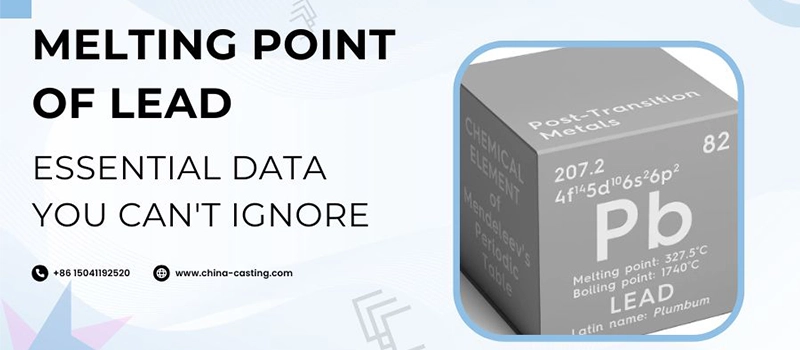
| Lead | 327°C | Extremely low |
This comparison highlights that the melting point of tungsten metal is substantially higher than that of other engineering metals. Even among refractory metals such as tantalum and molybdenum, tungsten maintains a clear advantage in terms of maximum temperature resistance.
Interpretation of the Comparison
The table demonstrates that tungsten occupies a unique position at the top of the melting point range. While metals like iron and aluminum are widely used in structural and manufacturing applications, their melting points are significantly lower. This means they are more suitable for environments where extreme heat is not a primary concern.
In contrast, the melting point of tungsten allows it to be considered in scenarios where other metals would reach their thermal limits. When engineers compare what is melting point of tungsten with other materials, the difference is not incremental but substantial. This gap is what makes tungsten a reference material in high-temperature evaluations.
Comparison with Non-Metal Materials
In some discussions, tungsten is also compared with non-metal materials known for high thermal resistance. For example, diamond is often mentioned due to its exceptional hardness and high temperature tolerance. The melting point of diamond and tungsten is sometimes compared to illustrate differences between metallic and non-metallic materials.
Although such comparisons are useful for academic understanding, metals and non-metals behave differently under heat. Therefore, the melting point of tungsten remains most relevant when compared within the category of metallic materials used in engineering and manufacturing.
Challenges in Working with Tungsten
Melting point of tungsten is often seen as an advantage, but it also introduces several practical challenges in processing, manufacturing, and application. Materials with extremely high melting points require specialized handling, and tungsten is no exception. While its thermal stability is beneficial, it also makes tungsten more difficult to work with compared to conventional metals.
Processing Difficulty
One of the primary challenges associated with tungsten is its difficulty in processing. Due to the extremely high melting point of tungsten metal, conventional melting and casting techniques are not suitable. Most common industrial furnaces cannot reach temperatures high enough to melt tungsten efficiently. As a result, alternative methods such as powder metallurgy are typically used to shape tungsten into usable forms.
This reliance on specialized processes increases production complexity. Manufacturers must use precise temperature control, controlled atmospheres, and advanced equipment to produce high-quality tungsten components. When evaluating what is the melting point of tungsten, it becomes clear that its processing requirements are significantly different from those of lower-melting-point metals.

Brittleness at Room Temperature
Another important challenge is tungsten’s brittleness at room temperature. Unlike many metals that are ductile and easy to form, tungsten tends to be hard and brittle in its pure state. This makes machining, forming, and shaping more difficult, especially without proper processing techniques.
Although the melting point of tungsten is extremely high, its behavior at lower temperatures must also be considered. Brittle materials are more prone to cracking during handling and manufacturing, which can lead to increased material waste and higher production costs.
High Processing Costs
The difficulty in processing tungsten directly contributes to higher manufacturing costs. Specialized equipment, controlled environments, and additional processing steps all increase the overall expense of producing tungsten components.
In addition, the energy required to approach the melting point of tungsten is significantly higher than that required for most other metals. Even when tungsten is not fully melted, high-temperature operations still demand considerable energy input. This makes tungsten less economical for applications where extreme thermal performance is not necessary.
Machining and Fabrication Challenges
Machining tungsten presents its own set of challenges. Its hardness and strength make it resistant to cutting and shaping using standard tools. Specialized cutting tools and techniques are often required to achieve precise dimensions.
Furthermore, joining tungsten components can be complex. Processes such as welding must be carefully controlled to avoid defects. When considering applications involving tungsten electrodes or components, the melting point of tungsten electrode is only one factor; fabrication feasibility must also be taken into account.
Sensitivity to Environmental Conditions
Although tungsten is stable under many conditions, it can react in specific environments, particularly at elevated temperatures. For example, oxidation can occur when tungsten is exposed to oxygen at high temperatures. This requires protective atmospheres or coatings in certain applications.
When discussing the melting and boiling point of tungsten, it is important to recognize that real-world conditions may influence material performance. Environmental factors such as temperature, atmosphere, and pressure must be considered alongside theoretical properties.
Limitations in Application Scope
Despite its advantages, tungsten is not suitable for every application. Its high cost, processing difficulty, and material characteristics limit its use to situations where its properties are truly required.
Engineers must balance the benefits of the melting point of tungsten with practical considerations such as manufacturability and cost efficiency. This evaluation ensures that tungsten is used where it provides clear value, rather than as a default material choice.
Conclusion: The Importance of Understanding Tungsten’s Melting Point
Melting point of tungsten is a critical parameter that defines its role in materials science and engineering. Understanding this property enables accurate material selection, ensures performance under thermal stress, and supports efficient industrial design in high-temperature environments.