Melting point of magnesium is a critical parameter in metal processing and engineering design. Pure magnesium has a melting point of 650°C (923 K), which is significantly lower than many structural metals such as aluminum (660°C) and steel (over 1370°C). This relatively low melting point makes magnesium highly suitable for energy-efficient casting and precision manufacturing.
In industrial applications, controlling the melting point of magnesium is essential for ensuring product quality, reducing defects, and optimizing production costs. Its thermal behavior directly affects casting fluidity, solidification rate, and mechanical performance.
This article explains the melting point of magnesium in detail, including key data, influencing factors, comparisons with other metals, and its role in modern manufacturing.
What is Melting Point?
The melting point is the temperature at which a solid material changes into a liquid under standard atmospheric pressure. At this temperature, the material reaches a state where its solid structure can no longer be maintained, and it begins to transform into a fluid phase.
From a microscopic perspective, solids are composed of atoms arranged in an ordered structure. These atoms vibrate around fixed positions. As temperature increases, the vibration becomes more intense. When the temperature reaches a certain level, the atoms gain enough energy to break free from their fixed positions, allowing the material to transition into a liquid state. This temperature is defined as the melting point.
For pure substances, the melting point is a precise and well-defined value. The phase change occurs at a constant temperature until the entire material has melted. This is an important characteristic that distinguishes pure materials from mixtures. In engineering and industrial contexts, this property is often used as a reference point for identifying materials and verifying their purity.

The melting point is typically measured under standard atmospheric pressure (1 atm) and is expressed in units such as degrees Celsius (°C) or Kelvin (K). These units allow engineers and scientists to maintain consistency in thermal calculations and process control.
In materials science, the melting point serves as a fundamental physical property. It is widely used in material selection, quality control, and thermal analysis. Knowing the exact temperature at which a material transitions from solid to liquid provides a clear basis for understanding its thermal behavior.
The Melting Point of Magnesium: Key Figures
Standard Melting Point of Magnesium
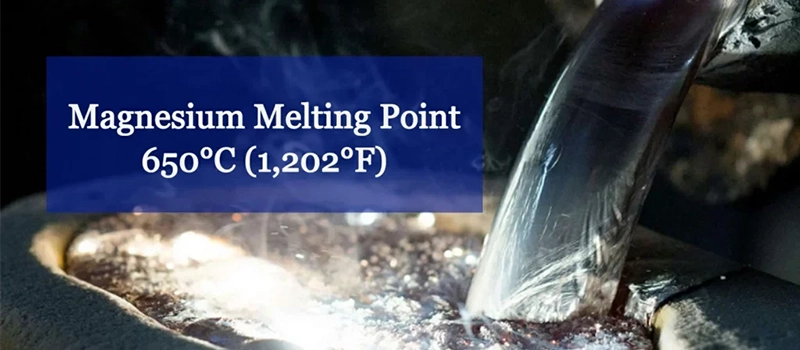
The melting point of magnesium is one of the most important thermal constants in metal engineering. Under standard atmospheric pressure, the melting point of magnesium is 650°C (923 K). This value defines the exact temperature at which solid magnesium transitions into a liquid state, making it a critical reference in manufacturing and thermal processing.
In industrial environments, the melting point of magnesium is used to determine furnace settings, processing temperatures, and safety margins. Because magnesium is widely used in casting and lightweight structural applications, accurate knowledge of the melting point of magnesium ensures stable and repeatable production results.
Melting Point of Magnesium in Celsius and Kelvin
The melting point of magnesium in Celsius is 650°C, which is the most commonly used unit in industrial and manufacturing contexts. However, in scientific research and thermodynamic calculations, the melting point of magnesium in Kelvin is expressed as 923 K.
Using both units is essential for global standardization. Engineers working across different regions rely on consistent data when analyzing the melting point of magnesium, especially in international supply chains and technical documentation. Whether expressed in Celsius or Kelvin, the melting point of magnesium remains a fixed and reliable value under standard conditions.
Boiling Point and Melting Point of Magnesium
When evaluating thermal properties, the boiling point and melting point of magnesium are often considered together. While the melting point of magnesium is 650°C, the boiling point of magnesium is approximately 1091°C (1364 K).
This means that magnesium has a well-defined liquid phase between its melting and boiling temperatures. The relatively wide gap between the melting point of magnesium and its boiling point allows for controlled heating and processing. In practical terms, this range provides flexibility in manufacturing operations, especially in processes that require molten magnesium.
The melting and boiling point of magnesium together form a complete thermal profile. Understanding both values helps engineers maintain temperature control and avoid issues such as premature vaporization or unstable material behavior.
Factors Affecting the Melting Point of Magnesium
Atomic Structure and Metallic Bonding
The melting point of magnesium is primarily determined by its internal atomic structure and the nature of metallic bonding. Magnesium atoms are arranged in a hexagonal close-packed (HCP) structure, which provides a stable lattice but does not require extremely high energy to break.
In this structure, each atom is surrounded by neighboring atoms, and the metallic bonds are formed through shared electrons. The strength of these bonds directly influences how much thermal energy is required to reach the melting point of magnesium. When heat is applied, atomic vibrations increase until the bonding forces can no longer hold the structure together, leading to melting.
Purity and Impurity Content
The melting point of magnesium is also affected by the purity of the material. Pure magnesium exhibits a well-defined and consistent melting temperature. However, when impurities are present, the melting behavior changes.
Instead of melting at a single temperature, the material may begin to soften at a lower temperature and complete melting at a higher one. This creates a melting range rather than a fixed point. In industrial production, controlling purity is essential to maintain a predictable melting point of magnesium and ensure stable processing conditions.
Effect of Alloy Composition
The melting point of magnesium alloy varies depending on the type and proportion of alloying elements. When elements such as aluminum or zinc are added, they modify the internal structure and bonding characteristics of magnesium.
As a result, the material no longer melts at a single temperature. Instead, it exhibits a temperature interval between the start and completion of melting. The exact melting point of magnesium alloy must therefore be determined based on its specific composition. This is especially important in manufacturing processes that require precise thermal control.
Influence of Chemical State
The thermal behavior of magnesium changes significantly when it exists in different chemical forms. The melting point of magnesium oxide, for example, is much higher than that of pure magnesium due to the strong bonding between magnesium and oxygen atoms.
Other compounds, such as magnesium chloride or magnesium sulfate, also exhibit different melting characteristics depending on their chemical structure. In some cases, materials may decompose before reaching a true liquid state. These variations show that the melting point of magnesium is not only dependent on the element itself but also on its chemical state.
Comparison of Magnesium’s Melting Point with Other Metals
Melting Point Comparison Table
To better understand the thermal characteristics of magnesium, it is useful to compare the melting point of magnesium with other commonly used metals. This comparison highlights its position among engineering materials and helps explain its processing advantages.
| Metal | Melting Point (°C) | Melting Point (K) | Notes |
|---|---|---|---|
| Magnesium | 650°C | 923 K | Lightweight, easy to process |
| Aluminum | 660°C | 933 K | Similar processing range |
| Zinc | 419.5°C | 692.5 K | Lower temperature metal |
| Copper | 1085°C | 1358 K | Higher thermal resistance |
| Iron | 1538°C | 1811 K | Structural strength metal |
| Titanium | 1668°C | 1941 K | High-performance material |
From the table above, the melting point of magnesium is relatively low compared to most structural metals. It is slightly lower than aluminum but significantly higher than zinc. This intermediate position makes magnesium particularly suitable for applications requiring both lightweight properties and manageable processing temperatures.
Position of Magnesium in Metal Processing
The relatively low melting point of magnesium allows it to be processed using less energy compared to metals such as iron or titanium. This characteristic is especially important in industries where cost control and production efficiency are critical.
At the same time, the melting point of magnesium is high enough to maintain stability during standard manufacturing operations. Unlike very low-melting metals, magnesium can withstand moderate thermal conditions without losing its structural integrity too quickly.
This balance between low melting temperature and sufficient thermal stability gives magnesium a unique position among engineering metals. It enables efficient melting, controlled solidification, and consistent material performance.

Relationship Between Melting Point and Material Selection
When selecting materials for engineering applications, the melting point of magnesium is often considered alongside other physical properties. A lower melting point generally means easier processing, faster production cycles, and reduced equipment wear.
Compared with metals that require extremely high temperatures to melt, magnesium offers clear advantages in terms of operational efficiency. However, its melting temperature is still high enough to support reliable use in many industrial environments.
Because of this balance, the melting point of magnesium plays a key role in determining where and how the material is used. It serves as an important reference for engineers when evaluating alternatives and optimizing manufacturing processes.
Applications of Magnesium in Various Industries
Automotive Industry
Magnesium is widely used in the automotive industry due to its lightweight nature and efficient processing characteristics. Its relatively low melting temperature allows manufacturers to produce complex components through casting processes with reduced energy consumption.
Common automotive parts made from magnesium include transmission housings, steering wheels, seat frames, and engine components. These parts benefit from weight reduction, which directly contributes to improved fuel efficiency and lower emissions. In large-scale production, the ability to process magnesium at moderate temperatures helps reduce cycle time and manufacturing costs.
Aerospace Industry
In aerospace applications, weight reduction is a critical factor. Magnesium materials are used in aircraft structures, interior components, and certain non-load-bearing parts where minimizing weight is essential.
The thermal characteristics of magnesium allow for precise casting and shaping, which is important for producing components with strict dimensional requirements. Additionally, its ability to be processed efficiently supports high-performance manufacturing environments where consistency and reliability are required.
Electronics and Communication Equipment
Magnesium is also widely applied in the electronics industry. It is commonly used for laptop casings, mobile device frames, and communication equipment housings. The material provides a combination of light weight, good strength, and excellent machinability.
Its processing advantages allow manufacturers to create thin-walled, high-precision components while maintaining structural integrity. This is particularly important in consumer electronics, where both durability and aesthetics are key considerations.
Construction and Industrial Equipment
In construction and heavy equipment, magnesium is used in components where reducing weight can improve handling and operational efficiency. It is often applied in tools, structural supports, and certain machinery parts.
The ability to process magnesium efficiently enables manufacturers to produce parts at scale while maintaining consistent quality. In industrial settings, this contributes to improved productivity and reduced operational costs.
Petrochemical and Specialized Applications
Magnesium also plays a role in specialized industries such as petrochemical engineering. It is used in environments where material performance under specific conditions is required.
Its processing characteristics allow for the production of customized components tailored to specific operational needs. This flexibility makes magnesium a valuable material in applications that demand both performance and manufacturing efficiency.
Conclusion: The Significance of Understanding Melting Points in Metallurgy
Understanding the melting point of magnesium is essential for accurate material selection and efficient manufacturing. It supports better process control, reduces production risks, and ensures consistent product quality, making it a key parameter in modern metallurgical and industrial applications.