Do you wonder why the machinability of aluminum varies across different alloys? Are you unsure how to calculate the right power when machining aluminum parts? Or perhaps you’re looking to reduce the overall cost of machining aluminum while maintaining precision and speed?
Here’s the truth — the machinability of aluminum is among the best in the metal manufacturing world. But achieving optimal results depends on more than just the base material. It requires a full understanding of the specific alloy’s behavior, proper tooling, precise cutting conditions, and efficient machining strategies.
In this article, I’ll guide you through the key factors that impact the machinability of aluminum and show you how to make smarter, more cost-effective decisions when working with this incredibly versatile material.
📖 1. Understanding Machinability: Definition and Importance
When we talk about the machinability of aluminum, we refer to how easily and economically a given aluminum material can be cut into desired shapes using standard machining operations like turning, milling, drilling, or tapping.
But machinability isn’t just a vague idea—it’s often quantified using measurable criteria:
- Tool life: How long a tool lasts when cutting the material.
- Surface finish: The smoothness and quality of the final part.
- Power consumption: How much energy is required to machine the material.
- Chip formation: Whether chips are continuous (ideal) or sticky and problematic.
- Cutting speed: How fast you can feed and rotate the cutting tool without defects.
A material with good machinability tends to wear tools slowly, allows for high feed rates, forms manageable chips, and yields excellent surface finishes. When it comes to metals, aluminum—especially alloys like 6061—is widely appreciated for having some of the best machinability ratings in the industry.
From a manufacturing standpoint, better machinability directly affects cost, throughput, and consistency. In large-scale operations like those we run in our factory, even a 5% improvement in tool life or a slight increase in cutting speed can result in thousands of dollars saved over time.
Many international machinability standards use a benchmark rating system, often with free-machining steel (like AISI 1212) rated at 100%. Under this scale:
- 6061 aluminum is rated around 90%
- 7075 aluminum is rated around 70–80%, depending on temper
- Pure aluminum (like 1100 series) can exceed 100%, but lacks strength
These ratings allow machinists to quickly estimate tool behavior, cooling needs, and surface finish expectations during production planning.
🧪 2. Unique Properties of Aluminum and Its Alloys
Aluminum is used in almost every industry, not only because of its low weight but also due to its versatile material characteristics, which include:
- Density: ~2.7 g/cm³ (⅓ of steel)
- Thermal conductivity: Excellent for heat dissipation (higher than steel or titanium)
- Malleability and ductility: Ideal for deep drawing, bending, and forming
- Corrosion resistance: Especially with anodizing or passivation
- Recyclability: Infinite recycling without property degradation
🔍 A Look at Key Aluminum Series and Their Machinability
⚙️ 1xxx Series (Pure Aluminum)
Highest ductility and corrosion resistance, but poor mechanical strength. Easy to machine but rarely used in load-bearing applications.
⚙️ 2xxx Series (Aluminum-Copper Alloys)
High strength and fatigue resistance. Machinability varies but tends to be lower due to the toughness. Common in aerospace (e.g., 2024 aluminum).
⚙️ 5xxx Series (Aluminum-Magnesium Alloys)
Great corrosion resistance and weldability. Often used in marine applications. Machinability is moderate, but the chips can be sticky.
⚙️ 6xxx Series (Aluminum-Magnesium-Silicon Alloys)
Balanced properties: good strength, corrosion resistance, and excellent machinability. 6061 and 6082 are popular in structural components, automotive frames, and industrial equipment.
⚙️ 7xxx Series (Aluminum-Zinc Alloys)
Extremely high strength-to-weight ratio. Widely used in aerospace and defense. 7075 aluminum is harder to machine but offers unmatched mechanical performance.
📌 Alloy Machinability Summary Table
| Alloy | Machinability Rating (%) | Common Use Case |
|---|---|---|
| 6061 | ~90% | Automotive, frames, molds |
| 7075 | ~70–80% | Aerospace, high-load parts |
| 2024 | ~65% | Aircraft structures |
| 1100 | ~100%+ | Decorative or electrical parts |
Keep in mind that temper (e.g., T6, O, H112) also affects machinability. A heat-treated 7075-T6 will cut very differently than an annealed 7075-O.
In our factory, we regularly machine 6061-T6 and 7075-T651. With the right tooling and cooling setup, both alloys produce consistent chips and require minimal secondary finishing.
⚙️ 3. Key Factors Affecting the Machinability of Aluminum
Despite aluminum’s natural advantages, several critical variables influence the machining result. Here are the most important ones:
🔧 3.1 Alloy Composition
As mentioned, the chemical composition of the alloy (particularly elements like copper, magnesium, zinc, and silicon) directly determines hardness, ductility, and chip formation. Alloys with more copper and zinc tend to be harder and cause greater tool wear.
For example, 7075 aluminum includes zinc and magnesium, increasing its strength but reducing machinability compared to 6061, which includes magnesium and silicon.
🧰 3.2 Tooling Choices
Aluminum tends to form built-up edge (BUE) — when material sticks to the cutting tool, degrading surface quality and accelerating wear. To counter this:
- Use carbide tools with polished flutes and sharp edges
- Choose coatings like ZrN or TiB2 instead of TiAlN (which holds heat)
- Opt for larger rake angles to reduce cutting force
We typically use solid carbide end mills with 2-3 flutes, optimized for high-speed machining of aluminum.
🛢️ 3.3 Lubrication and Coolant Use
Coolant plays a crucial role in aluminum machining. It not only reduces temperature but helps flush chips, prevents welding to the tool, and improves finish.
Options include:
- Flood coolant (common for general operations)
- Minimum quantity lubrication (MQL) — for cleaner, greener machining
- Compressed air — for dry machining in high-speed environments
Lubrication is especially critical when machining aluminum parts with tight tolerances, as excess heat causes expansion, leading to measurement errors.
⚡ 3.4 Power Requirements
One common question is:
“When machining aluminum, what level of power should be calculated?”
This depends on several cutting parameters:
Basic formula to estimate cutting power:
Power (kW) = (Cutting Force × Cutting Speed) / 60,000
Factors involved:
- Cutting force: Based on tool geometry and material hardness
- Feed rate: Higher feeds require more torque
- Spindle speed: Aluminum allows higher RPMs, often over 10,000
- Chip load: How much material each tooth of the tool removes
➡️ For aluminum, a typical roughing operation might require 1.5–3 kW, while finishing might use <1 kW depending on depth and speed.
Many high-performance machining centers now come with power monitoring systems that alert operators to tool overloads or excessive friction.
🎯 3.5 Machine Rigidity and Vibration Control
Even though aluminum is soft, rigid machine structure and tool holding are essential. Any vibration can cause chatter marks, surface defects, or even tool breakage.
We recommend:
- Short tool stick-out
- Proper fixturing/clamping
- Using balanced tool holders at high RPMs
Even small improvements in stability can greatly enhance the machinability of aluminum alloys, especially during high-speed or long-run operations.
🛠️ 4. Common Machining Processes for Aluminum
When it comes to machining operations, the machinability of aluminum gives manufacturers tremendous flexibility. Its soft structure, good thermal properties, and chip formation behavior make it compatible with nearly all conventional and modern machining processes. However, to truly take advantage of this, manufacturers need to choose the right process parameters and machine setups tailored specifically for aluminum.
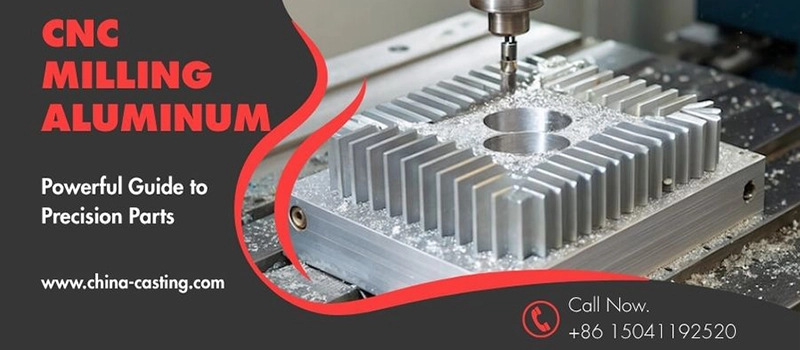
🔄 CNC Milling
CNC milling is perhaps the most widely used method for machining aluminum parts. Aluminum’s low cutting resistance allows faster spindle speeds and higher feed rates, significantly increasing productivity. The machinability of aluminum here shines because tool life remains relatively long, and surface finish can reach Ra < 0.8μm even in roughing passes if done right.
In our factory, for instance, high-speed CNC milling of 6061-T6 aluminum is done at cutting speeds up to 400 m/min and feed rates of over 1000 mm/min. This is possible because of aluminum’s superior heat dissipation and chip-clearing ability.
Machinability of aluminum also makes complex milling operations like pocketing, contouring, slotting, and drilling very stable and repeatable. The key is to use:
- Polished carbide tools with sharp edges
- High helix angle tools (45°–55°)
- Air blast or coolant to clear chips and prevent chip welding
🔄 CNC Turning
Turning aluminum alloys is efficient due to the low tool pressure required and the excellent machinability of aluminum, especially for high-speed lathes. However, aluminum’s softness can cause “built-up edge” on cutting tools. This happens when small bits of material weld to the insert edge, reducing accuracy and surface finish.
To overcome this, we use uncoated carbide inserts or inserts with ZrN coating that repels aluminum. For turning 7075 aluminum, which is harder than 6061, we reduce depth of cut and increase coolant pressure. With these techniques, we can machine precision shafts, bushings, and custom cylindrical parts with tolerances of ±0.01mm.
🔄 Drilling & Tapping
Aluminum drills easily, but due to its tendency to adhere to drill tips, lubrication and chip evacuation are crucial. We frequently use through-coolant carbide drills and a peck-drilling cycle when working on holes deeper than 3xD.
Tapping threads in aluminum is another area where the machinability of aluminum is both a benefit and a caution. While soft, aluminum tends to gall. For best results, we:
- Use thread-forming taps for blind holes
- Choose tapping oil or synthetic lubricants
- Avoid over-tightening to prevent stripping threads
🔄 High-Speed Machining (HSM)
High-speed machining of aluminum takes the material’s low cutting resistance to the extreme. Using speeds of over 15,000 RPM, minimal coolant, and optimized tool paths, we can reduce cycle times by 30–50%.
Aluminum is particularly suited for HSM because:
- Low cutting force minimizes vibration
- Better chip removal at high feed rates
- Tools stay cooler due to high thermal conductivity
For example, when machining 7075-T6 aluminum aerospace brackets, we run at 22,000 RPM, 1mm depth of cut, and 2,000 mm/min feed rate using a 3-flute ZrN-coated tool. The machinability of aluminum makes this not only possible but economically viable.
🔄 EDM & Other Processes
While rare, Electrical Discharge Machining (EDM) can be used on aluminum for extremely complex internal geometries. However, aluminum’s conductivity requires very precise control of current and voltage. The machinability of aluminum in EDM is not as favorable as with traditional methods, but it’s still workable for low-volume, high-complexity parts.
🌍 5. Applications of Machined Aluminum Parts Across Industries
Thanks to the machinability of aluminum, this metal finds widespread use in nearly every major manufacturing industry. From aerospace to agriculture, machined aluminum components help reduce weight, speed up production, and lower cost.
Let’s look at specific applications across sectors.
✈️ Aerospace Industry
In aerospace, 7075 aluminum is a go-to alloy due to its superior strength-to-weight ratio. Machined components include:
- Landing gear parts
- Wing spars and fuselage components
- Cabin structural frames
- Electronic housing systems
Despite being tougher than 6061, the machinability of aluminum 7075 is still far better than any titanium or steel grade used in the same context. High-speed CNC machining is frequently employed to handle these parts with tight tolerances and minimal post-processing.
🚗 Automotive Manufacturing
The automotive industry has shifted aggressively toward lightweighting, and machined aluminum parts are leading the way. Whether it’s 6061-T6 or even cast aluminum variants, components include:
- Engine mounts
- Brake system parts
- Transmission housings
- Chassis subframes
- Steering knuckles
Thanks to the machinability of aluminum, these parts are produced in high volumes using CNC machines, die casting, and even 5-axis machining centers.
⚙️ Industrial Equipment and Automation
In our own factory, most automation brackets, control panel housings, and robot arms are made from 6061 aluminum. The excellent machinability of aluminum allows us to maintain high production speeds while achieving surface finishes below Ra 1.0μm, which is essential for fitting and sliding parts.
🌾 Agricultural & Petrochemical Sectors
Aluminum’s resistance to corrosion and magnetic neutrality makes it ideal for:
- Pipeline clamps
- Structural connectors
- Pump housings
- Support frames
These components often operate in wet, corrosive, or vibration-heavy environments, where the machinability of aluminum alloys allows for rapid prototyping, batch customization, and easy maintenance replacements.
🖥️ Electronics & Consumer Goods
The sleek, anodized aluminum parts in laptops, smartphones, and home appliances are a testament to the machinability of aluminum in consumer markets. Precision CNC machining ensures sharp edges, tight fits, and aesthetic perfection.
✅ 6. Conclusion
The machinability of aluminum is more than a technical trait — it’s a strategic manufacturing advantage. Whether you’re producing structural aerospace parts or high-precision electronic components, understanding how to optimize tool choice, cutting conditions, and process flow can lead to:
- Faster production
- Lower tool wear
- Improved surface finish
- Reduced total machining cost
At our factory, we treat the machinability of aluminum as a key performance indicator. We continually invest in tooling upgrades, process automation, and employee training to extract the highest value from every aluminum billet.
If you’re looking to scale up production, enter new markets, or simply optimize cost, start by understanding your material — and with aluminum, you already have one of the best in your hands.