“Quality is never an accident; it is always the result of intelligent effort.” – John Ruskin
As a manufacturer, I live by this principle. In our industry, every micron of coating matters. A poorly applied surface finish can lead to product failure, corrosion, and costly downtime. That’s why I rely on e-coat paint—a process that transforms how we protect metal parts.
E-coat paint is not just a coating—it’s a technology. Also known as electrophoretic coating, e-coat paint uses electricity to apply a smooth, even layer of paint to a metal surface with precision and consistency. It’s an intelligent system that eliminates human error and maximizes coverage, even in areas that are hard to reach.
The defining feature of e-coat paint is its ability to coat every corner of a metal component uniformly through electrochemical action. This makes it ideal for automated, high-volume production lines. Unlike spray painting, which often misses edges or internal cavities, e-coat paint ensures every surface is covered evenly.
The advantage of using e-coat paint lies in its stability, reproducibility, and reduced material waste. It’s compatible with topcoats, powder coatings, or even standalone applications. When applied correctly, e-coat paint forms a dense, protective film that acts as the first defense against rust and wear.
And the real benefit? Products that last longer, perform better, and look more professional. Whether you’re producing automotive parts, farm equipment, or industrial tools, e-coat paint offers a smarter way to finish metal components.
What Is E-Coat Paint?
E-coat paint is a highly specialized surface finishing process used in metal manufacturing to apply a uniform protective coating using electrical current. Also known as electrophoretic coating or electrocoating, e-coat paint involves submerging a metal component into a bath containing a water-based emulsion filled with electrically charged paint particles.
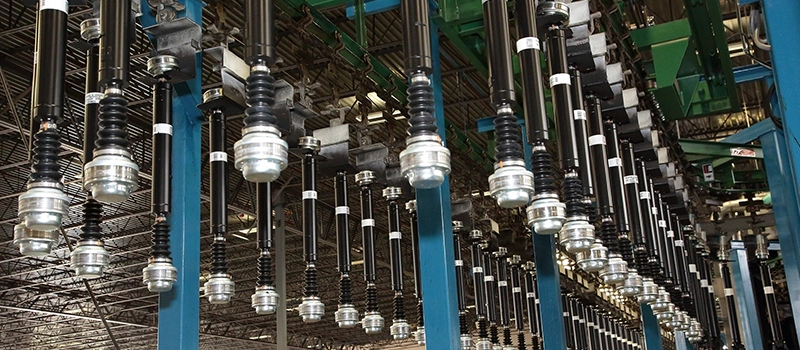
Once voltage is applied, these charged particles migrate and deposit onto the surface of the metal, forming a smooth, even layer. The metal part acts as an electrode in the system, and the process continues until the desired film thickness is reached. This creates a tightly bonded, consistent coating across every area of the part—something traditional spray methods often fail to achieve.
The unique aspect of e-coat paint is that it combines both mechanical adhesion and electrochemical reaction. The result is a foundation layer that’s stable, corrosion-resistant, and ready for further finishing if needed. Whether used as a stand-alone coating or as a primer beneath other finishes, e-coat paint ensures each part receives full surface coverage, including hidden cavities and sharp edges.
In industry terminology, e-coat paint is often referred to using similar terms:
- Electrocoat
- Electro paint
- E-coating
- Electrophoresis coating
- Cathodic e-coat or Anodic e-coat (depending on polarity)
Despite the variations in terminology, the fundamental process remains the same: e-coat paint is the use of electricity to deposit a coating onto a conductive surface with high precision.
One key point to remember is that e-coat paint requires the substrate to be electrically conductive—typically steel, aluminum, zinc alloys, or other metals. Non-conductive materials like plastic or ceramic are not suitable for this method.
To summarize, e-coat paint is not just another coating—it’s a controlled, engineered process that delivers a high-performance, base-layer finish tailored for industrial needs.
How the E-Coat Paint Process Works
Understanding the e-coat paint process means diving into a precise, controlled sequence of technical steps designed to ensure consistency, efficiency, and corrosion resistance. This process—also known as electrophoretic deposition or electrocoating—is built on one simple principle: using electric current to transfer paint particles onto a metal surface.
Let’s walk through each step of this process to help you see exactly how e-coat paint is applied in industrial production.
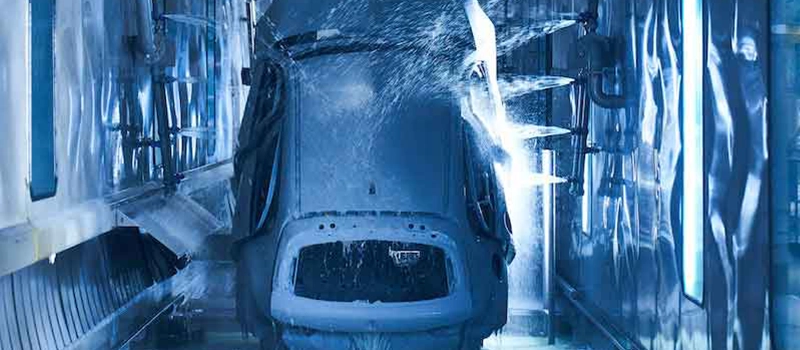
🔧 Step 1: Surface Preparation (Pretreatment)
Before any paint can adhere properly, the metal part must be meticulously cleaned. This begins with a multi-stage cleaning system to remove oils, dirt, and oxidation from the metal surface. Common stages include:
- Alkaline cleaning
- Rinsing
- Surface activation
- Phosphating (often zinc or iron phosphate)
- Final rinsing and deionized water rinse
This pretreatment ensures a uniform surface energy across the part, promoting optimal e-coat adhesion and minimizing future defects.
⚡ Step 2: Electrophoretic Deposition (The E-Coat Bath)
This is the core of the e-coat paint process.
- The metal part is submerged in a bath containing a water-based emulsion of resin and pigment particles, typically epoxy or acrylic-based.
- The part is connected to a power supply and acts as either a cathode or an anode depending on the system type:
- Cathodic e-coating is more corrosion-resistant and widely used today.
- Anodic e-coating is still found in some applications.
- Once voltage is applied (usually between 50–400 volts), the charged paint particles migrate through the water and deposit on the surface of the part.
- The coating grows in thickness until electrical resistance stops the deposition, resulting in a self-limiting and highly uniform film.
This step ensures even coverage, even in deep recesses, corners, and edges, which makes e-coat paint superior in consistency to spray methods.
🚿 Step 3: Post-Rinse
After the e-coating step, the part is removed from the bath and rinsed with ultrafiltration water to remove excess, non-deposited paint. This helps improve coating uniformity and reduce material waste.
🔥 Step 4: Curing (Baking)
The coated part is then sent to a curing oven, typically heated between 150–200°C (300–400°F), depending on the resin type. During this phase:
- The resin crosslinks, forming a hard, chemical-resistant, and corrosion-resistant coating.
- Film thickness is usually in the range of 15–35 microns, depending on voltage and immersion time.
This baked finish is durable enough to act as a final coat or as a primer for further painting.
What Materials Can Be E-Coated?
The e-coat paint process relies on one essential requirement: the part being coated must be electrically conductive. This is because the deposition of paint particles depends on the flow of electrical current between the workpiece and the surrounding solution. As a result, only conductive materials can undergo electrophoretic coating.

Let’s take a detailed look at what materials are suitable for e-coat paint, what materials are not, and what factors influence their compatibility with the process.
✅ Conductive Materials Suitable for E-Coat Paint
🧲 1. Mild Steel / Low-Carbon Steel
This is the most commonly e-coated material in industries such as automotive, agricultural equipment, and construction. Mild steel offers good conductivity, mechanical strength, and is economical for large-scale production.
🛡️ 2. Stainless Steel
Although less conductive than mild steel, stainless steel can still be e-coated effectively, especially with proper surface treatment. It is often used in medical equipment, food machinery, and marine applications where corrosion resistance is critical.
🧪 3. Aluminum and Aluminum Alloys
Aluminum requires specific pretreatment steps (like chromate or non-chrome conversion coating) to ensure proper adhesion of the e-coat paint. It’s widely used in the automotive, aerospace, and consumer electronics sectors.
⚙️ 4. Zinc and Zinc-Alloy Coated Steel (Galvanized Steel)
Zinc-coated materials are commonly found in electrical cabinets, structural components, and HVAC systems. These materials can be e-coated after proper pretreatment to avoid gas formation or poor adhesion.
❌ Materials That Cannot Be E-Coated
🚫 1. Plastics and Composites
These materials do not conduct electricity and thus cannot attract the charged paint particles required in the e-coat paint process. Even with metal inserts, full e-coating is not feasible.
🚫 2. Wood, Ceramics, Glass
All non-conductive materials fall outside the range of e-coating unless they are first metalized (a rare and expensive process).
🚫 3. Heavily Oxidized or Contaminated Metals
Even conductive materials can become non-coatable if the surface is covered with rust, oil, grease, or scale. This is why thorough pretreatment is non-negotiable.
Can You Paint Over E-Coat?
One of the most common questions engineers and manufacturers ask is: can you paint over e-coat? The short answer is—absolutely yes. In fact, e-coat paint is widely used as a primer layer precisely because it creates the ideal foundation for additional coatings such as powder paint, wet spray paint, and specialized topcoats.
But to do it right, you must understand the technical considerations that determine compatibility and performance.

🎯 Why Paint Over E-Coat?
The e-coat paint layer, while highly durable, is typically very thin (15–35 microns) and functional in nature. It is:
- Excellent at corrosion resistance
- Uniform in film thickness
- Stable as a chemical and mechanical barrier
However, many applications—especially in automotive, construction, appliance, and agriculture sectors—require a decorative, textured, or color-specific top layer.
Painting over e-coat allows manufacturers to:
- Add UV protection
- Provide custom colors and branding
- Improve chemical or abrasion resistance
- Achieve desired gloss or matte finishes
🧪 What Types of Paint Can Be Applied Over E-Coat?
The e-coat paint surface is highly versatile and compatible with multiple finishing systems:
🎨 1. Powder Coating
One of the most popular combinations is:
E-coat + Powder Coat
- E-coat acts as a corrosion-resistant primer
- Powder coating adds texture, color, and durability
- This dual-layer system is used extensively in automotive suspensions, appliance housings, and outdoor equipment
🖌️ 2. Wet Spray Paint (Solvent or Water-Based)
- Provides greater design flexibility and thin film control
- Suitable for complex geometries and custom finishes
- Widely used in electronics, decorative hardware, and medical devices
🔬 3. Functional Coatings
In some industries, e-coat is overcoated with:
- Anti-microbial coatings
- Electrically insulating layers
- Heat-reflective paints
These serve special performance needs beyond appearance.
Benefits of E-Coat in Industrial Applications
When it comes to protecting metal components in harsh environments, e-coat paint offers a set of performance advantages that are hard to beat. This is why industries like automotive, agriculture, construction, and heavy equipment manufacturing have made e-coat paint a core part of their finishing systems.
Let’s break down exactly why this process is so effective—and how it adds value across your entire production chain.

🛡️ 1. Superior Corrosion Resistance
One of the primary reasons manufacturers choose e-coat paint is for its exceptional corrosion protection.
- Because the coating is deposited via an electric field, it covers sharp edges, corners, recesses, and cavities evenly—areas where spray coatings typically fail.
- Once cured, the film acts as a barrier against moisture, salts, and chemicals, preventing rust from forming on the metal substrate.
- In salt spray tests, e-coated parts often exceed 1000+ hours of corrosion resistance depending on the film thickness and topcoat.
This level of protection is critical for equipment exposed to outdoor weather, coastal environments, or chemical processing conditions.
🎯 2. Uniform Film Thickness
Unlike manual spray or dip coatings, e-coat paint ensures an incredibly even film thickness, even on complex geometries.
- The electrochemical process self-regulates—once the surface is fully coated and electrical resistance rises, deposition stops automatically.
- This means no runs, sags, or uneven buildup, which reduces material waste and improves surface aesthetics.
- Consistency in thickness is also essential for meeting strict OEM specifications in the automotive and aerospace industries.
🌿 3. High Material Efficiency and Eco-Friendly
E-coating is one of the most efficient paint systems in terms of transfer rate and environmental impact.
- Transfer efficiency is over 95%, meaning almost all the paint ends up on the part, not wasted.
- The water-based paint bath emits very low VOCs (volatile organic compounds), making it environmentally compliant with global standards.
- Wastewater and sludge are minimal and manageable with closed-loop filtration systems.
This makes e-coat paint not just a smart technical choice, but also a sustainable one.
⚙️ 4. Automation-Friendly for High Production Volumes
E-coat paint systems are designed to be fully automated and scalable.
- The process can be integrated into robotic lines, conveyor systems, and precision control panels.
- Once parameters are set—voltage, temperature, immersion time—thousands of parts can be coated with near-zero variation.
- This makes e-coating ideal for OEMs, Tier-1 suppliers, and contract manufacturers serving global markets.
If you’re manufacturing at scale, e-coat paint minimizes labor costs, quality defects, and rework, while ensuring uniform quality.
🔧 5. Strong Adhesion Base for Topcoats
We already discussed how you can paint over e-coat. But more than just being “possible,” it’s actually ideal.
- The cured e-coat paint surface offers excellent adhesion for powder coating, wet spray, or specialty coatings.
- It prevents topcoat delamination and improves final appearance and durability.
In some applications, e-coat acts as both a corrosion barrier and a bonding primer, combining two functions in one step.
🔒 6. Long-Term Product Value and Cost Reduction
By enhancing durability and reducing rework or failure in the field, e-coat paint directly impacts your bottom line.
| Area | Cost Benefit |
|---|---|
| Corrosion failures | ✅ Reduced warranty claims |
| Manual rework | ✅ Lower labor costs |
| Material use | ✅ Less paint wasted |
| Maintenance | ✅ Less need for repainting or touch-up |
In industrial applications where lifecycle cost matters, e-coat helps extend component life and reduce downtime—especially in remote or high-value installations.
Common E-Coat Paint Defects and How to Avoid Them
No coating process is perfect—and e-coat paint is no exception. While this method offers excellent consistency and corrosion protection, it must be carefully controlled to avoid process defects that can compromise appearance, durability, or even part functionality.
Understanding the common defects in e-coat paint application—and how to prevent them—is critical for maintaining high product quality and minimizing costly rework.
❗ 1. Pinholes
Description: Small crater-like holes in the coating, often due to air bubbles, moisture, or gas release during curing.
Causes:
- Entrapped air during paint deposition
- Poor rinsing before curing
- High solids content or bath instability
- Inadequate curing temperature
Prevention:
- Optimize agitation in the e-coat tank to remove air bubbles
- Use ultrafiltration rinses to eliminate residue
- Monitor bake oven temperature and cure time precisely
- Regularly check bath chemistry and pH balance
⚠️ 2. Edge Pullback
Description: The coating appears thin or receded at edges or corners, leaving metal exposed to corrosion.
Causes:
- Poor surface pretreatment
- Excessive voltage
- Sharp part geometry
- Inconsistent current flow
Prevention:
- Improve phosphate layer uniformity during pretreatment
- Round off sharp edges in design or finishing
- Fine-tune deposition voltage and time
- Ensure uniform grounding and electrical contact
❌ 3. Blistering
Description: Raised bubbles that form under the coating, often after curing or during long-term exposure.
Causes:
- Trapped moisture or solvent vapors
- Contaminated rinse water
- Inadequate degreasing or surface cleaning
- Poor curing schedule
Prevention:
- Improve degreasing steps in pretreatment line
- Maintain rinse water conductivity below specified limits
- Use drying tunnels if needed before curing
- Follow recommended curing profiles from paint supplier
🌀 4. Cratering or Fish Eyes
Description: Small circular depressions in the coating surface, sometimes with a clean center.
Causes:
- Oil, silicone, or wax contamination
- Airborne particles from nearby processes
- Dirty bath filters or pipes
Prevention:
- Keep application zones clean and isolated from machining or polishing areas
- Use filtered air in spray zones (if applicable)
- Inspect bath filters and piping for leaks or buildup
📉 5. Poor Adhesion
Description: The e-coat paint peels or flakes off under mechanical stress or during topcoating.
Causes:
- Improper surface preparation
- Over-baking or under-baking the film
- Substrate incompatibility (e.g., unclean aluminum)
Prevention:
- Monitor pretreatment stages carefully
- Use crosshatch adhesion tests for quality control
- Ensure correct bake schedule based on e-coat resin type
Comparing E-Coat With Other Metal Coating Methods
Choosing the right coating process can significantly impact your product’s quality, durability, and cost. Here is a comprehensive comparison table of e-coat paint versus four other common coating methods—spray painting, powder coating, hot-dip galvanizing, and anodizing—to help you make an informed decision.
🧾 Comprehensive Comparison Table: E-Coat vs Other Coating Methods
| Feature / Method | E-Coat Paint | Spray Paint | Powder Coating | Hot-Dip Galvanizing | Anodizing |
|---|---|---|---|---|---|
| Application Process | Electrical deposition in immersion tank | Manual or robotic air-assisted spraying | Electrostatic powder spray + baking | Dipping in molten zinc | Electrochemical oxidation in acid bath |
| Coverage Consistency | Excellent (even in corners, recesses) | Fair (limited on edges and recesses) | Good (can miss sharp areas) | Full coverage but can be uneven in thickness | Even surface, but only on aluminum |
| Film Thickness Control | Very accurate (15–35μm) | Variable and operator-dependent | 60–120μm average | Uncontrolled (often thick: 50–200μm) | Thin oxide layer (~5–25μm typical) |
| Edge Protection | Excellent (uniform buildup) | Poor to average | Moderate | Excellent | Poor (may expose edges) |
| Corrosion Resistance | High (especially when topcoated) | Low to moderate | High (when used as topcoat) | Very high (zinc barrier) | Moderate (unless sealed) |
| Topcoat Compatibility | ✅ Ideal base for powder, wet spray, or specialty coats | ✅ Direct color finish | ❌ Not ideal as a base layer | ⚠ Requires surface prep before topcoating | ❌ Limited compatibility |
| Substrate Suitability | Conductive metals: steel, aluminum, zinc alloys | Almost any material | Conductive surfaces (mostly metal) | Ferrous metals only | Aluminum only |
| Environmental Compliance | ✅ Low VOC, water-based, recyclable system | ❌ Often solvent-based, high VOC | ✅ Low VOC, solid-based | ❌ Generates zinc waste, high energy usage | ✅ Minimal emissions |
| Automation & Production Scalability | ✅ Fully automated, high throughput | ❌ Labor-intensive unless robotic | ✅ Semi-automated, batch or inline systems | ❌ Mostly batch process | ✅ Batch-process capable |
| Aesthetic Finish Options | Matte to semi-gloss (needs topcoat for color) | Wide range of finishes | Textured, glossy, metallic options | Industrial matte silver only | Clear, dyed or metallic finish |
| Cost Efficiency (per part) | High in volume (low material loss, fast cycle) | Moderate (high labor, low control) | Moderate to high (due to powder cost) | High (material + energy intensive) | Moderate to high (specialized process) |
| Typical Use Cases | Automotive, machinery, appliances, base coating | Decorative parts, furniture, signs | Outdoor tools, appliances, machinery | Structural beams, fencing, marine hardware | Consumer electronics, architectural aluminum |
Conclusion
E-coat paint is more than just a coating—it’s a precision-engineered process that delivers uniform protection, unmatched corrosion resistance, and scalable efficiency for metal parts across industries. From its ability to cover complex geometries to its compatibility with topcoats, e-coat paint stands out as the foundation of modern metal finishing.
By understanding how it works, what materials it suits, how it integrates with other coatings, and how to avoid common defects, manufacturers and procurement teams can make smarter, more cost-effective decisions.
Whether you’re coating thousands of parts per day or building durable components for harsh environments, e-coat paint offers the consistency and performance that industrial production demands.