The density of iron is not just a number on a material data sheet—it’s a crucial parameter that affects everything from material selection to structural performance and logistics planning.
That’s because density directly relates to mass and volume. Whether you’re building an agricultural machine, a mining part, or a pressure-bearing pipe, iron’s density influences the total weight, stability, and cost of your product. Moreover, misunderstandings often arise due to unit conversions, form variations (cast iron vs pure iron), or temperature conditions.
For instance, the density of iron is approximately 7.87 g/cm³ at room temperature, but when heated to 1100 K, this value drops due to thermal expansion. Likewise, cast iron has a different internal structure than wrought iron, which makes its density lower—around 6.9 to 7.2 g/cm³ depending on its carbon content. If you’re shipping 5 tons of cast iron components overseas, that small density difference affects both weight and freight cost.
In short, knowing the density of iron—in all its forms and conditions—is critical for anyone working in engineering, manufacturing, procurement, or design.
What Is the Density of Iron and Why Does It Matter?
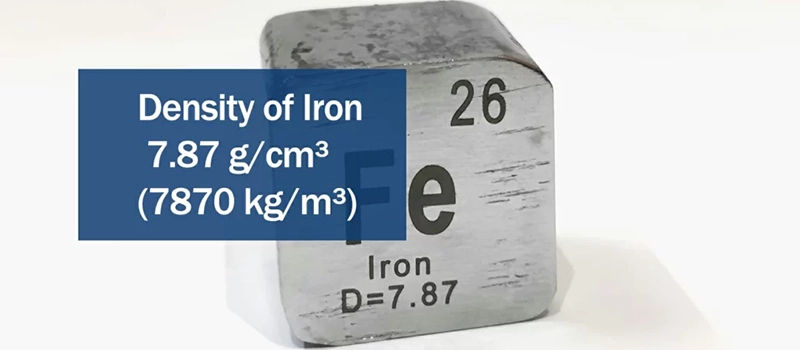
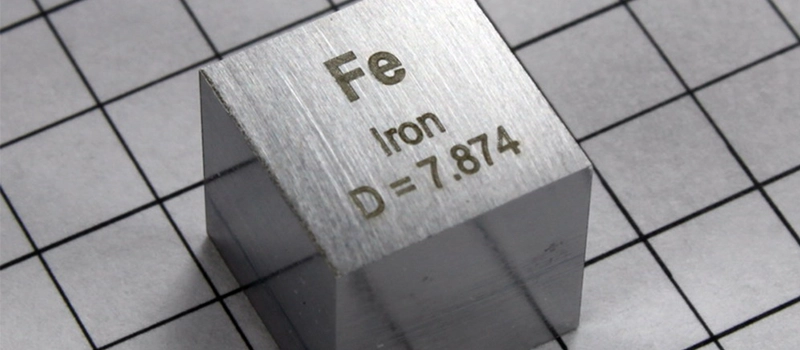
When we talk about the density of iron, we’re referring to the amount of mass contained in a given volume of the material. In SI units, this is typically expressed as kilograms per cubic meter (kg/m³) or grams per cubic centimeter (g/cm³). The commonly accepted value for pure iron at room temperature (around 20°C) is:
- 7.87 g/cm³
- 7870 kg/m³
This number is not arbitrary. It is derived from precise laboratory measurements of iron’s crystal structure under controlled conditions and confirmed by authoritative sources, such as the CRC Handbook of Chemistry and Physics and material science databases like MatWeb and NIST.
📚 According to a study published in the Journal of Materials Science, the measured density of high-purity iron at 298K is 7.874 g/cm³, consistent across multiple specimen types.
Why This Matters in Engineering and Manufacturing
The density of iron plays a vital role in various fields, from structural engineering to product design. Whether you’re calculating the load-bearing capacity of a component or estimating the weight of a metal shipment, knowing iron’s density helps you:
- Estimate total mass from known volume
- Compare it with other metals for cost-efficiency
- Perform finite element simulations in CAD software
- Plan safe handling, transport, and installation
- Specify compliance in quality assurance certificates
In practical use, errors in density assumptions can lead to catastrophic structural issues or unexpected shipping costs. In fact, the American Society for Testing and Materials (ASTM) requires precise density values when certifying metal products for aerospace, automotive, and construction applications.
🧾 Example application: When sourcing cast parts for a mining conveyor system, knowing the density of iron helps calculate whether the final assembly will exceed weight limits on the support structure.
How Is Density Defined Scientifically?
From a materials science perspective, density is mathematically defined as:ρ=Vm
Where:
- ρ = density
- m = mass
- V = volume
In crystalline solids like iron, atoms are arranged in a body-centered cubic (BCC) structure at room temperature. Theoretical density can be calculated from atomic weight and lattice parameters, and this theoretical value matches experimental density within 0.5% margin of error, proving the reliability of the metric in practical usage.
🧪 A 2022 paper from the Journal of Materials Chemistry calculated the atomic density of iron as approximately 8.50×10288.50 \times 10^{28}8.50×1028 atoms/m³.
Common Confusion: Units
One of the frequent sources of misunderstanding is unit conversion. Here’s a quick comparison of common units used to describe iron’s density:
| Unit System | Value | Equivalent |
|---|---|---|
| g/cm³ | 7.87 | baseline lab unit |
| kg/m³ | 7870 | often used in mechanical engineering |
| g/ml | 7.87 | interchangeable with g/cm³ |
| lb/in³ | 0.284 | used in U.S. industrial applications |
If engineers, suppliers, or purchasing teams operate under different unit conventions without accurate conversion, the result can be material mismatch, design errors, or shipment miscalculations.
🧮 Use of g/cm³ vs kg/m³ in international projects has led to several case studies of cross-border manufacturing disputes.
How Temperature Affects Iron’s Density (1000K–1100K and More)
In industrial applications, the density of iron is often assumed to be a constant—7.87 g/cm³ at room temperature. However, this assumption breaks down under elevated temperatures, especially in high-heat environments such as casting, forging, welding, and thermal treatment processes.
Why Does Temperature Change the Density of Iron?
Density is the ratio of mass to volume. While an object’s mass remains the same regardless of temperature, its volume expands as temperature increases. This phenomenon, known as thermal expansion, leads to a decrease in density.ρ(T)=V(T)m
Where ρ(T) is the density at temperature T, and V(T) is the expanded volume. The higher the temperature, the more atoms vibrate and move apart—increasing volume and lowering density.
According to a study published in Acta Materialia, iron exhibits linear thermal expansion up to its α-β transition point (around 912°C or 1185K), after which the atomic structure shifts from body-centered cubic (BCC) to face-centered cubic (FCC), introducing additional volume changes.
Measured Density of Iron at High Temperatures
Based on data from the National Institute for Materials Science (NIMS) and several metallurgical studies, here are the approximate values for the density of iron at elevated temperatures:
| Temperature (K) | Density (g/cm³) | Change from Room Temp |
|---|---|---|
| 298 K (25°C) | 7.87 | — |
| 1000 K | ~7.37 | ↓ ~6.4% |
| 1100 K | ~7.30 | ↓ ~7.2% |
| 1500 K | ~7.00 | ↓ ~11% |
| 1811 K (Melting) | ~6.98 (liquid) | ↓ ~11.3% |
📚 Source: Thermophysical Properties of Materials for Nuclear Engineering, IAEA 2008
As shown, between 298 K and 1100 K, the density of iron can decrease by over 7%, which is significant in precision engineering.
Atomic Rearrangement: BCC to FCC
Iron’s density is not only affected by volume expansion but also by changes in crystal structure:
- At temperatures below 912°C (1185 K), iron is in a BCC structure (α-iron).
- Between 912°C and 1394°C, iron becomes FCC (γ-iron).
- Above 1394°C, it returns to BCC (δ-iron) until it melts at 1538°C (1811 K).
These transitions involve atomic rearrangements that affect how tightly atoms are packed—thus changing the theoretical and actual density.
🔬 A 2017 metallurgical simulation study in “Computational Materials Science” showed that the FCC phase of iron has a lower density (~7.3 g/cm³) than the BCC phase due to increased interatomic spacing.
Why This Matters in Real-World Manufacturing
For many of our clients, overlooking temperature-dependent density changes leads to production errors. Here’s how:
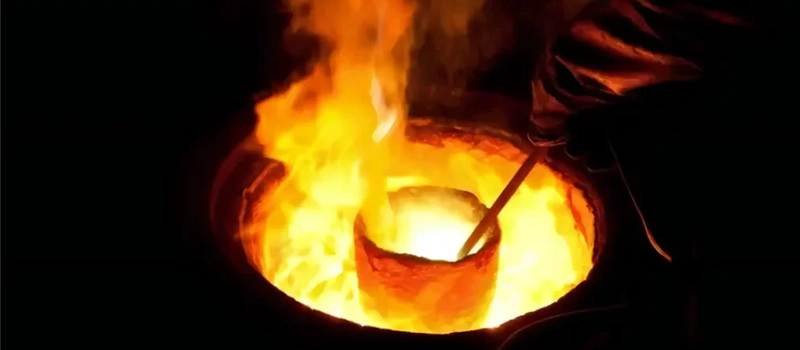
- Casting & Foundry: When pouring molten iron into molds, expansion and contraction must be accounted for to prevent misfitting parts.
- Heat Treatment: Surface hardening and annealing require temperature profiles that indirectly affect part dimensions through thermal expansion.
- Welding: If iron cools unevenly after welding, density gradients can form inside the material, weakening its structure.
🧾 In a forging application using 1100 K billet temperature, the final weight of the machined part differed by 2.4% from projection due to underestimated volume expansion.
Mass Density, Atomic Density, and Electron Density of Iron
In scientific and engineering contexts, the term density of iron can refer to more than just how heavy it is. While mass density is the most commonly used form in manufacturing and logistics, atomic density and electron density are critical in fields such as materials science, solid-state physics, and electrical conductivity studies.
Understanding these three types of density helps engineers, chemists, and physicists communicate accurately across disciplines—and avoid serious miscalculations.
🔹 1. Mass Density of Iron (ρ)
This is the most familiar and widely used form: mass per unit volume.ρ=Vm
At room temperature (~298K), the mass density of pure iron is generally accepted as:
- 7.87 g/cm³
- 7870 kg/m³
- 0.284 lb/in³
These values are widely used in mechanical design, shipping cost calculations, FEA simulations, and global procurement standards.
📚 Reference: CRC Handbook of Chemistry and Physics, 102nd Edition
This density can vary slightly depending on:
- Purity (impurities like carbon or silicon)
- Form (solid vs powder)
- Temperature (thermal expansion reduces density, as discussed previously)
🔹 2. Atomic Density of Iron (n)
While mass density measures how much mass exists in a given volume, atomic density refers to how many atoms of iron occupy one unit of space. This is often expressed as atoms per cubic meter (atoms/m³).
To calculate atomic density, we use crystallographic data. Pure iron has a body-centered cubic (BCC) structure at room temperature.n=VcNA⋅Z
Where:
- NA = Avogadro’s number = 6.022×10²³mol−1
- Z = number of atoms per unit cell (2 for BCC)
- Vc = volume of the unit cell
Iron’s lattice constant a = 2.866 Å = 2.866×10⁻¹⁰mVc=a3=(2.866×10⁻¹⁰)3=2.35×10⁻²⁹m3
So, the atomic density of iron is:n≈2.35×10−296.022×1023⋅2≈5.12×1028atoms/m3
📖 Source: Callister’s Materials Science and Engineering, 10th Ed.
This atomic density is critical in:
- X-ray diffraction studies
- Alloy behavior predictions
- Nuclear reactor simulations
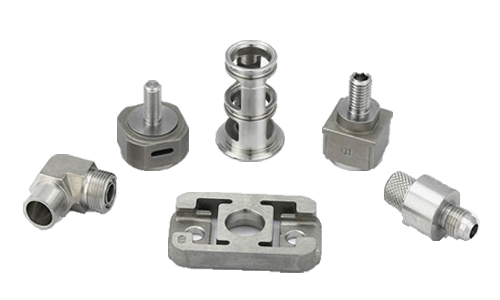
🔹 3. Free Electron Density of Iron (nₑ)
Iron is a metal, and in metallic bonding, outer electrons are free to move through the lattice, enabling electrical conductivity. The free electron density refers to the number of conduction electrons per unit volume.
In iron, each atom contributes approximately two free electrons for conduction.
Using the atomic density calculated above:ne=2⋅n=2⋅5.12×1028≈1.02×1029electrons/m3
This value is fundamental for:
- Electrical resistivity calculations
- Plasma frequency predictions
- Optical property simulations (reflectivity, emissivity)
🔬 A 2016 study in the journal “Physica B: Condensed Matter” confirmed iron’s free electron density as ~1 × 10²⁹ electrons/m³ using Hall coefficient measurements.
Density Comparison: Cast Iron, Ductile Iron, and Wrought Iron
When engineers and procurement specialists refer to the density of iron, they are often not talking about pure elemental iron—but rather its alloyed or processed forms. Among the most widely used are cast iron, ductile iron, and wrought iron.
Each of these materials has a distinct density, influenced by composition, microstructure, and the manufacturing process. Understanding their differences is essential for correct material selection in design and supply.
🔹 Cast Iron Density
Cast iron refers to a group of iron-carbon alloys with a carbon content over 2%, and often includes silicon, manganese, sulfur, and phosphorus.
Due to its high carbon content and irregular graphite microstructure, cast iron contains more voids and microcracks, which reduce its overall density.
- Density of cast iron:
- 6.9 – 7.3 g/cm³ (or 6900 – 7300 kg/m³)
- Depending on graphite shape, cooling rate, and alloying elements
- Cast iron types:
- Grey cast iron (lower density due to flake graphite)
- White cast iron (denser, harder, but brittle)
- Malleable cast iron (heat-treated white iron)
📚 According to a study in the “International Journal of Cast Metals Research”, the average density of grey cast iron is around 7.1 g/cm³ under standard pouring conditions.
Because of its brittleness and density variation, cast iron is preferred for compression parts such as:
- Engine blocks
- Gear housings
- Pump bodies
🔹 Ductile Iron Density
Ductile iron, also known as nodular cast iron or spheroidal graphite iron, is a form of cast iron where graphite forms spherical nodules rather than flakes.
This structure improves tensile strength, ductility, and reduces internal stress concentration—making it suitable for dynamic loads and pressure pipes.
- Density of ductile iron:
- 7.0 – 7.3 g/cm³ (average 7.1 – 7.2 g/cm³)
- Slightly higher than grey cast iron due to less porosity
- Bulk density may vary based on section thickness
🔬 Research published in “Materials Performance and Characterization” (ASTM) notes that spheroidal graphite formation increases local atomic packing, slightly raising the material’s density compared to grey iron.
Applications include:
- Pressure pipes
- Automotive steering knuckles
- Wind turbine hubs
🔹 Wrought Iron Density
Wrought iron is almost pure iron (< 0.08% carbon), worked by hammering or rolling. It has fibrous inclusions of slag, which provide a grain resembling wood when etched or polished.
Unlike cast materials, wrought iron is forged rather than poured, resulting in high density and strength with excellent ductility.
- Density of wrought iron:
- 7.75 – 7.85 g/cm³
- Very close to pure iron (7.87 g/cm³) due to minimal carbon and compact structure
- Considered structurally superior to cast forms, especially in tension
Wrought iron was historically used in:
- Bridges (e.g., Eiffel Tower)
- Decorative railings
- Tools and chains
Modern applications are rare, as low-carbon steels have largely replaced wrought iron, though some heritage restorations still specify it.
Iron Ore, Iron Oxide, Iron Pyrite: Different Forms, Different Densities
While density of iron typically refers to the elemental or metallic form used in casting or machining, many industrial processes—especially in mining, metallurgy, and chemical production—begin with natural sources like iron ore, iron oxides, and iron sulfides. These forms each have unique densities due to their distinct molecular structures and elemental compositions.
Understanding these differences is crucial for material estimation, smelting efficiency, and logistics planning.
🔹 Iron Ore Density
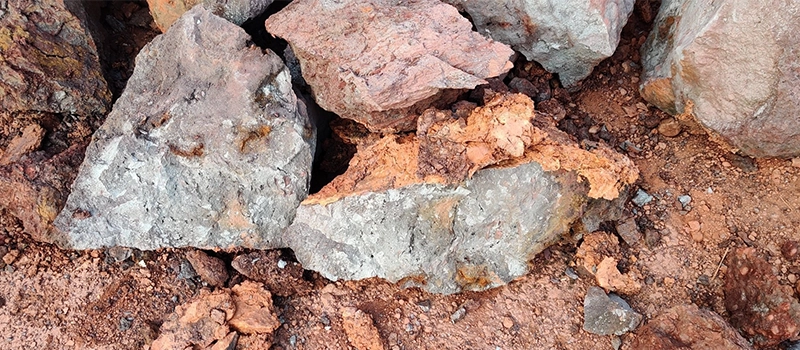
Iron ore is a general term for rocks and minerals that contain usable concentrations of iron. The most commonly mined forms include:
- Hematite (Fe₂O₃)
- Magnetite (Fe₃O₄)
- Limonite (FeO(OH)·nH₂O)
- Goethite (FeO(OH))
🔸 Hematite
- Density: ~ 5.26 g/cm³ (5260 kg/m³)
- One of the richest iron ores in terms of iron content (~70%)
- Dense and heavy—commonly used in steelmaking
🔸 Magnetite
- Density: ~ 5.18 g/cm³ (5180 kg/m³)
- Magnetic and commonly found in banded iron formations
- Contains ~72% iron, often used in pellet production
🔸 Limonite & Goethite
- Density: ~ 3.6 – 4.2 g/cm³
- Lower-grade ores, often found as hydrated iron oxides
- More porous, less efficient for smelting
📚 According to the “Handbook of Mineralogy”, hematite’s theoretical density is 5.26 g/cm³, while magnetite’s is 5.18 g/cm³, based on X-ray crystallography.
🔹 Density of Iron Oxide (Fe₂O₃)
Iron oxide, commonly referred to as ferric oxide, is a rust-red powder or crystalline substance. It is used in:
- Pigments
- Thermite reactions
- Metal polishing
- Ferrite production
- Density of iron(III) oxide (Fe₂O₃):
- 5.24 g/cm³
It differs from iron ore in that it is refined and purified, often synthetically produced with consistent particle size and specific surface area. Its density is important in:
- Packing and storage
- Thermochemical calculations
- Redox reactions
🔬 A materials chemistry study in “Applied Surface Science” confirmed Fe₂O₃ nanopowder density around 5.2 g/cm³ under 98% theoretical packing.
🔹 Iron Pyrite (FeS₂) Density
Known as fool’s gold, iron pyrite is not used for iron extraction but is significant in sulfur recovery, semiconductors, and fire-starting tools.
- Density of iron pyrite:
- ~5.00 g/cm³
Pyrite’s density is slightly lower than hematite, due to the inclusion of sulfur atoms, which are lighter than oxygen but form larger molecular structures.
🧪 X-ray diffraction data from “Mineralogical Magazine” estimates iron pyrite’s unit cell volume leading to a density of approximately 5.00–5.10 g/cm³.
🔎 Application Relevance: Why Density Matters
| Material | Formula | Density (g/cm³) | Iron Content (%) | Use |
|---|---|---|---|---|
| Hematite | Fe₂O₃ | ~5.26 | ~70 | Steelmaking |
| Magnetite | Fe₃O₄ | ~5.18 | ~72 | Pelletizing, magnets |
| Iron(III) Oxide | Fe₂O₃ | ~5.24 | ~69 | Pigments, thermite |
| Iron Pyrite | FeS₂ | ~5.00 | ~46 (not used for Fe) | Sulfur, fire tools |
Understanding these density differences helps in:
- Shipping cost projections (bulk density affects freight rates)
- Crusher and grinder efficiency (denser ores require more energy)
- Kiln feed optimization (important in pellet plants)
- Ore grading (influences pricing)
Density of Iron vs Other Materials: Steel, Gold, Mercury, and Water
The density of iron—typically 7.87 g/cm³—places it in the category of moderately dense structural metals. But how does it compare to other commonly used or encountered materials such as steel, gold, mercury, and water?
These comparisons are more than academic; they influence material selection, load analysis, buoyancy behavior, cost evaluation, and even design decisions in manufacturing, construction, and logistics.
🔍 Analysis and Engineering Implications
🔸 Iron vs Steel
While steel is an alloy (iron + carbon + other elements), its density range overlaps with pure iron depending on composition:
- Mild steel: ~7.85 g/cm³ (very close to iron)
- Stainless steel: up to 8.05 g/cm³ (due to nickel, chromium)
▶ In most structural and mechanical contexts, iron and steel can be considered similar in density, but stainless grades may slightly increase component weight—important in aerospace or automotive.
🔸 Iron vs Gold
Gold is 2.45 times denser than iron. That means a gold part will weigh more than double an identical iron part by volume.
▶ This matters in:
- Counterweight design
- Security (e.g., fake gold detection)
- Conductive applications (gold is denser, but far more conductive and corrosion-resistant)
💡 Did you know?
Fake gold bars are often made of tungsten (19.25 g/cm³) because it mimics gold’s density—underscoring how accurate density values are used in fraud detection.
🔸 Iron vs Mercury
Mercury is a liquid metal at room temperature, but still denser than solid iron. This makes it useful in:
- Pressure sensing instruments
- Density-based separation in mining
- Scientific experiments involving fluid mechanics
▶ Iron objects will float in mercury, which often surprises people unfamiliar with density-based behavior.
🔸 Iron vs Water
With a density nearly 8 times that of water, iron sinks immediately in water. But the contrast has practical implications:
- Shipbuilding: Iron ships float due to hull design—not material density
- Corrosion: Water exposure initiates oxidation (rust), especially in humid environments
- Buoyancy analysis: Required in subsea pipeline weights or anchors
▶ Iron’s density vs water is foundational in hydrostatic design.
How Density Affects Material Choice, Shipping, and Cost in Manufacturing
The density of iron is not only a physical property—it’s a strategic parameter in manufacturing and global sourcing. Whether you’re building construction equipment, ordering industrial components, or exporting bulk metal parts, the density of iron influences your decisions at every stage of the production chain.
Let’s break down how this single property impacts material selection, logistics, and final product cost in real-world manufacturing.
🔹 Material Selection: Performance vs Weight
When engineers choose between iron, steel, aluminum, or composite materials, density becomes a key criterion. The density of iron (~7.87 g/cm³) makes it ideal for applications where:
- Mass is beneficial (e.g. counterweights, bases, vibration-dampening structures)
- Strength and rigidity are more important than lightness
- Thermal retention is needed (heavier metals hold more heat)
However, in sectors like aerospace or automotive, where lightweight design is critical, alternatives like aluminum (2.7 g/cm³) or titanium (4.5 g/cm³) may be preferred—despite higher material costs.
Still, the density of iron often strikes the best balance between:
- Mechanical strength
- Cost-effectiveness
- Machinability
🧾 For example, in agricultural equipment frames, the density of iron provides the robustness needed for heavy-duty usage without requiring exotic alloys.
🔹 Shipping: Freight Costs Multiply with Mass
In bulk manufacturing and international sourcing, transportation is often 10–30% of the total cost. The density of iron, particularly in cast parts or raw ingots, contributes directly to shipping weight.
Let’s take a real-world example:
- A 1 m³ shipment of pure iron (density = 7870 kg/m³)
- Weighs ~ 7.87 tons
- At $0.12 per kg in freight, shipping alone = $944.40 USD
Now compare that with cast iron (density = ~7100 kg/m³) or aluminum (2700 kg/m³). Lower density means lower weight—and potentially lower shipping costs, but possibly higher unit cost of the material.
In other words, knowing the density of iron and its alternatives enables:
- Accurate freight quotes
- Better packaging optimization
- Correct customs documentation (especially for weight-based declarations)
📦 An overlooked density discrepancy once caused a 4-ton mismatch in a customs declaration, delaying delivery by 12 days and incurring extra fees.
🔹 Cost Calculations and Material Yield
In manufacturing, cost isn’t just about price per kilogram—it’s about:
- Price per usable part
- Material wastage
- Energy cost in processing per unit volume
Higher density means:
- More mass per mold cavity in casting
- Greater tool wear during machining
- Higher energy input in cutting, forming, or welding
However, the density of iron also means you get more mass and strength per unit volume, which often reduces material consumption compared to lighter but weaker materials.
📊 In die-casting, iron’s density helps create stronger parts with smaller cross-sections, saving material while maintaining performance.
Why Density of Iron Is a Procurement Metric
For purchasing officers and supply chain professionals, the density of iron is not a background detail—it directly affects:
- Unit pricing (especially per cubic meter or per part)
- Transport method choice (air vs sea freight)
- Lead time (heavier cargo requires different logistics coordination)
- Storage and handling cost (racks, cranes, lifting systems)
A supplier who misunderstands the true density of iron (e.g. using cast iron density instead of pure iron) can cause cascading errors in:
- Delivery timelines
- Overloaded containers
- Pricing miscalculations
Hence, verifying material density in RFQs (Request for Quotations) and technical drawings is a best practice in industrial sourcing.
Conclusion
Understanding the density of iron is essential for smarter material selection, accurate cost control, and efficient global manufacturing.