Continuous casting is widely recognized as the most efficient method for producing semi-finished metal products in modern industry. It is often stated that “over 90% of global steel production is achieved through continuous casting,” reflecting its dominant position in metallurgical manufacturing. Unlike traditional casting methods, continuous casting allows molten metal to solidify continuously under controlled conditions, ensuring higher productivity and consistent internal structure.
Metallurgical research also emphasizes that “continuous casting significantly reduces material waste while improving product uniformity,” making it a preferred solution for high-demand industries. As a result, continuous casting process technology is now extensively applied in the production of steel, copper, and aluminum components.
Despite its widespread adoption, many professionals still seek a clearer understanding of what is continuous casting, how the continuous casting process works, and which metals are most suitable. This guide provides a structured and practical overview of continuous casting, helping readers better evaluate its applications, advantages, and role in modern manufacturing.
What is Continuous Casting
Continuous casting refers to a modern metal forming method in which molten material is solidified into a continuous shape, typically in the form of billets, blooms, or slabs for subsequent processing. Unlike traditional batch casting techniques, this method operates in a steady and uninterrupted manner, allowing molten metal to be directly converted into semi-finished products with minimal handling.
In practice, the process begins when molten metal is poured into a water-cooled mold. Solidification starts at the mold surface, forming a solid shell while the inner core remains liquid. The partially solidified strand is then continuously withdrawn, further cooled, and cut into specified lengths. This uninterrupted production flow defines the process and distinguishes it from conventional casting systems.
From a metallurgical perspective, this method provides a controlled solidification environment. Stable thermal conditions during solidification help improve internal structure consistency and reduce segregation. As a result, products manufactured through this process typically exhibit more uniform properties compared to those produced by intermittent casting methods.
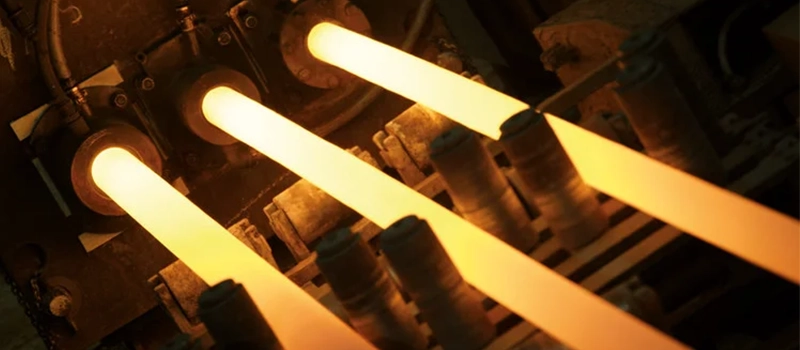
Another key characteristic is its ability to produce large volumes efficiently. Large metal sections can be formed without repeated mold preparation, which reduces downtime and simplifies operations. This makes the process suitable for applications requiring continuous output and stable quality.
The term “continuous cast” is commonly used to describe materials produced using this method, including cast iron bars, copper rods, and bronze components. These products are known for their structural uniformity and dimensional consistency, making them suitable for subsequent machining and fabrication.
Overall, this process represents a fundamental approach in modern metal production, providing a stable and continuous route from molten metal to semi-finished products.
Continuous Casting Process Explained
The continuous casting process consists of a series of coordinated steps in which molten metal is continuously transformed into solid semi-finished products such as billets, blooms, or slabs. The entire process follows a fixed sequence from liquid metal handling to final cutting.
Molten Metal Transfer
The process begins with molten metal contained in a ladle. The metal is poured from the ladle into a tundish. The tundish serves as a buffer vessel, stabilizing the flow of molten metal and ensuring a constant and controlled supply into the mold. At this stage, flow rate and temperature must remain stable to avoid fluctuations during casting.
Mold Filling and Initial Solidification
From the tundish, molten metal enters a water-cooled copper mold. As the liquid metal contacts the inner surface of the mold, rapid heat extraction occurs, forming a solid shell along the mold wall while the الداخل部分 remains liquid.
The thickness of this shell increases as heat continues to be removed. The mold oscillates slightly during operation to prevent sticking between the solidified shell and the mold surface.
Strand Withdrawal
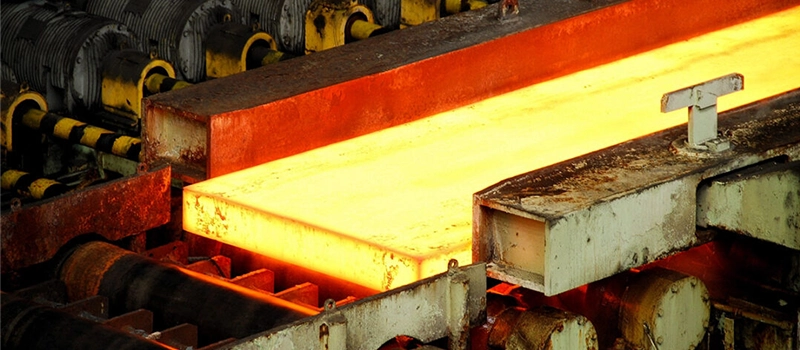
Once a sufficient shell thickness is formed, the partially solidified strand is continuously withdrawn from the mold by a series of driven rollers. The interior of the strand remains in a semi-liquid or mushy state during this stage.
The withdrawal speed must be synchronized with the solidification rate. If the speed is too high, the shell may rupture; if too low, productivity decreases.
Secondary Cooling
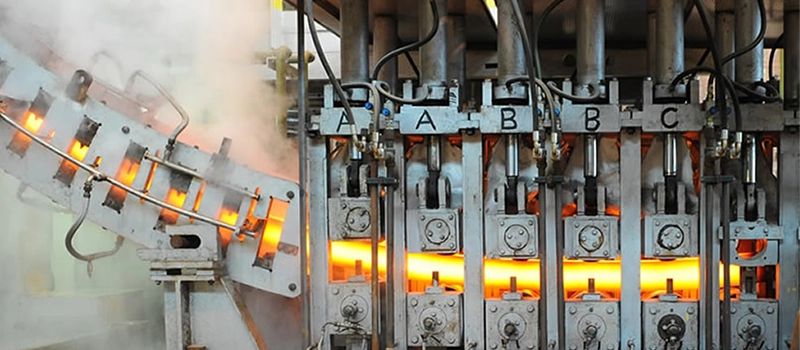
After exiting the mold, the strand enters the secondary cooling zone. In this stage, water sprays or air-mist systems are applied to extract heat from the strand and promote further solidification of the internal core.
Cooling intensity is carefully controlled to ensure uniform solidification and to avoid excessive thermal gradients within the material.
Straightening and Guidance
In curved or vertical casting systems, the strand is guided and gradually straightened through a series of rollers. This step ensures that the final product maintains the required geometric shape.
Mechanical alignment during this stage is controlled to prevent deformation while the material is still at elevated temperatures.
Final Solidification and Cutting
By the end of the cooling zone, the strand becomes fully solidified. The continuous strand is then cut into required lengths using mechanical shears or thermal cutting methods.
The resulting products include billets, blooms, or slabs, depending on the mold size and casting configuration.
Types of Continuous Casting Process
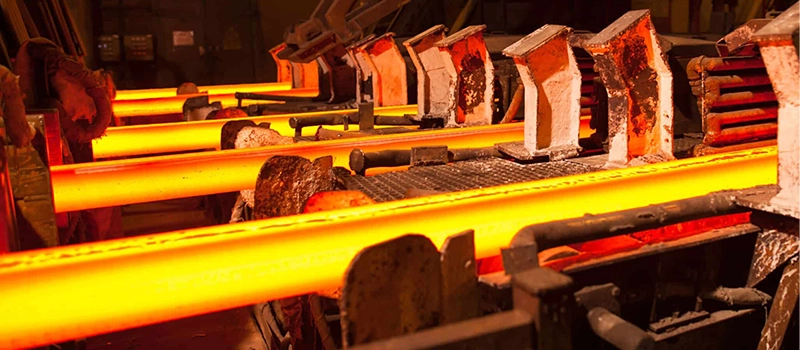
The continuous casting process can be classified into several types based on machine design, strand movement, and application requirements. Each type follows the same basic principle but differs in equipment layout and operational characteristics.
Vertical Continuous Casting
In vertical continuous casting, molten metal flows downward from the mold in a straight vertical line. The strand solidifies as it moves downward through the cooling zones.
This configuration has a simple structure and allows uniform solidification because the metal is not subjected to bending during the early stages. It is commonly used for smaller cross-section products or specialty alloys where process stability is critical.
However, the height of the equipment is significant, which limits its use in facilities with space constraints.
Curved Continuous Casting
Curved continuous casting introduces a bending section below the mold. After initial solidification in the vertical mold, the strand follows a curved path and is gradually straightened during withdrawal.
This design reduces the overall height of the equipment while maintaining continuous operation. It is widely used in steel production, especially for slabs and blooms.
The bending and straightening process must be carefully controlled to avoid internal stress while the material is still partially solidified.
Horizontal Continuous Casting
In horizontal continuous casting, molten metal flows horizontally into the mold. The strand is withdrawn in a straight horizontal direction.
This type eliminates the need for strand bending and straightening. It is often used for non-ferrous metals such as copper alloys and aluminum, as well as for producing bars and rods.
The equipment layout is compact, and operation is relatively simple. However, controlling the initial solidification and maintaining surface quality can be more challenging compared to vertical systems.
Near-Net Shape Continuous Casting
Near-net shape casting produces sections that are close to the final product dimensions, reducing the need for further processing.
Examples include thin slab casting and strip casting. In these systems, the solidified product requires minimal rolling or machining after casting.
This type is used in applications where material efficiency and reduced processing steps are required.
Selection of Casting Type
The choice of casting type depends on several factors, including material type, product geometry, and production volume.
Vertical systems are suitable for high-quality requirements. Curved systems are commonly used for large-scale steel production. Horizontal systems are preferred for non-ferrous metals and smaller cross-sections.
Each configuration is designed to balance process stability, equipment size, and production efficiency.
What Metals Are Suitable for Continuous Casting
The continuous casting process is applicable to a wide range of ferrous and non-ferrous metals. The suitability of a metal depends on its melting behavior, solidification characteristics, and thermal conductivity. Materials that can maintain stable solidification under controlled cooling conditions are generally suitable for this process.
Steel
Steel is the most widely processed material in continuous casting. Carbon steel, alloy steel, and stainless steel can all be produced using this method.
In steel production, the process is commonly used to manufacture billets, blooms, and slabs. These semi-finished products are later used for rolling into structural components, plates, and bars.
Due to its high melting temperature and sensitivity to internal defects, steel requires strict control of temperature, cooling rate, and flow stability during casting.
Copper and Copper Alloys
Copper and its alloys are also suitable for continuous casting, particularly for producing rods, tubes, and profiles.
Copper has high thermal conductivity, which allows rapid heat extraction during solidification. This makes it suitable for stable casting conditions when cooling is properly controlled.
Common materials include pure copper, brass, and bronze. Continuous cast copper rods are widely used in electrical and mechanical applications.
Aluminum and Aluminum Alloys
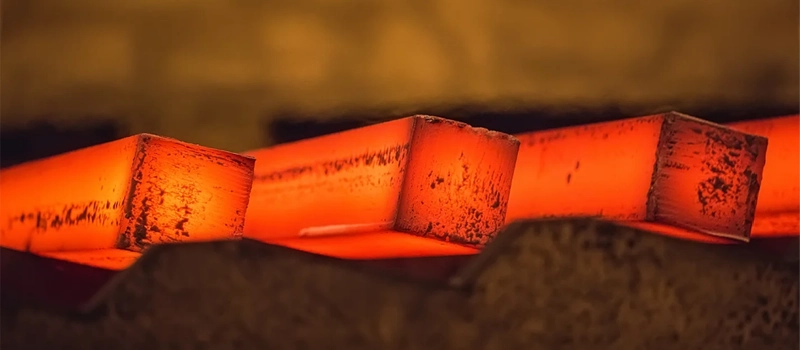
Aluminum is frequently processed using continuous casting due to its relatively low melting temperature and good fluidity.
The process is used to produce aluminum billets and slabs for extrusion and rolling. Aluminum alloys can also be cast in this way, provided that oxidation and temperature control are properly managed.
Compared to steel, aluminum requires different cooling strategies due to its thermal properties.
Cast Iron
Cast iron can be produced using continuous casting, especially in the form of bars and tubes.
Continuous cast iron bars are commonly used in machining applications because of their uniform structure and good machinability. The process allows consistent graphite distribution and stable mechanical properties.
Bronze and Special Alloys
Bronze and other copper-based alloys are suitable for this process, particularly for producing bearing materials and wear-resistant components.
Aluminum bronze and other alloy systems can also be cast continuously when process parameters are properly controlled. These materials are often used in applications requiring strength, corrosion resistance, and durability.
Alloy Materials
Various alloy systems, including specialty and engineered alloys, can be processed using continuous casting.
The key requirement is that the alloy must have predictable solidification behavior and compatibility with controlled cooling conditions. This ensures that the final product maintains uniform composition and structure.
Continuous Casting vs Other Casting Methods
Different casting methods are used depending on production requirements, material type, and product geometry. The continuous casting process differs significantly from other methods in terms of operation, efficiency, and product characteristics.
Comparison of Continuous Casting and Other Methods
| Aspect | Continuous Casting | Sand Casting | Die Casting | Investment Casting |
|---|---|---|---|---|
| Production Mode | Continuous and uninterrupted | Batch-based | Cyclic high-pressure | Batch-based |
| Process Flow | Molten metal solidifies while being withdrawn | Molten metal poured into sand mold and cooled | Molten metal injected into metal mold under pressure | Molten metal poured into ceramic mold |
| Product Form | Billets, blooms, slabs, rods | Complex shapes, large parts | Thin-walled, precise components | High-precision complex parts |
| Dimensional Consistency | High | Moderate | High | Very high |
| Surface Quality | Good | Rough | Excellent | Excellent |
| Production Efficiency | Very high | Low | High | Low |
| Material Utilization | High | Lower (due to gating and risers) | Moderate | Moderate |
| Cooling Control | Controlled and continuous | Natural cooling | Rapid cooling in mold | Controlled but slower |
| Equipment Complexity | High | Low | High | High |
| Typical Materials | Steel, copper, aluminum, alloys | Almost all metals | Non-ferrous metals | Steel and alloys |
Key Differences in Process Characteristics
Continuous production allows stable operation and uniform output. In contrast, sand casting and investment casting rely on repeated mold preparation, which increases production time.
Die casting operates in cycles but requires high-pressure systems and is mainly used for non-ferrous metals. Continuous methods are more suitable for producing long, uniform sections rather than complex individual shapes.
Advantages and Disadvantages of Continuous Casting
The continuous casting process provides a balance between production efficiency and operational complexity. Its performance can be evaluated from both advantages and limitations.
Advantages of Continuous Casting
High Production Efficiency
Continuous operation eliminates repeated mold preparation and reduces downtime. This enables stable, large-scale output.
Consistent Product Quality
Controlled solidification conditions help maintain uniform internal structure, resulting in consistent mechanical properties along the entire length.
High Material Utilization
The process minimizes metal loss by reducing the need for gating and risers, improving overall yield.
Suitability for Automation
The process can be integrated with automated control systems. Parameters such as temperature, flow rate, and withdrawal speed can be continuously monitored and adjusted.
Disadvantages of Continuous Casting
High Initial Investment
The equipment, cooling systems, and control units require significant capital investment compared to conventional casting methods.
Sensitivity to Process Stability
Continuous operation requires stable parameters. Any fluctuation in temperature, flow, or speed can affect the entire production line.
Limited Product Geometry
The process is mainly used for simple cross-sectional shapes such as billets, slabs, and rods, rather than complex components.
Strict Process Control Requirements
Precise control of cooling rate, casting speed, and molten metal flow is necessary to maintain stable operation.
Continuous Casting Cooling and Technology
Cooling and process control are essential parts of the continuous casting process. The solidification behavior of molten metal is directly determined by how heat is extracted during different stages of casting.
Primary Cooling in the Mold
Primary cooling takes place inside the mold. The mold is typically made of copper and is intensively water-cooled.
When molten metal enters the mold, heat is rapidly extracted through the mold walls. This leads to the formation of a solid shell along the surface of the strand. The stability and thickness of this shell are critical for maintaining the integrity of the strand during withdrawal.
Mold cooling conditions must remain uniform to avoid uneven solidification. Parameters such as water flow rate and mold temperature are carefully controlled.
Secondary Cooling Zone
After leaving the mold, the strand enters the secondary cooling zone. In this stage, cooling is achieved through water sprays or air-mist systems.
The purpose of secondary cooling is to remove heat from the internal core and complete the solidification process. Cooling intensity is adjusted based on casting speed, material type, and section size.
Uniform cooling is required to prevent thermal gradients that may cause internal stress or deformation.
Cooling Control Parameters
Several parameters must be controlled to ensure stable cooling:
Cooling Rate
The rate of heat extraction must match the solidification requirements of the material. Excessive cooling can lead to internal stress, while insufficient cooling may result in incomplete solidification.
Casting Speed
The withdrawal speed must be synchronized with cooling capacity. Higher speeds require more intensive cooling to maintain shell stability.
Temperature Distribution
Uniform temperature distribution across the strand is necessary to ensure consistent solidification. Localized temperature variations can affect internal structure.
Continuous Casting Technology
Modern systems incorporate advanced control technologies to maintain process stability.
Mold Level Control
Sensors are used to monitor the level of molten metal in the mold. Stable mold level helps maintain consistent flow and solidification conditions.
Automated Monitoring Systems
Temperature, cooling intensity, and strand position are continuously monitored. Automated adjustments are made to maintain stable operation.
Refractory Materials
Refractory components such as tundish linings and nozzles are used to control metal flow and protect equipment from high temperatures. These materials must withstand thermal stress and chemical interaction with molten metal.
Process Stability and Integration
Cooling and control systems are integrated with mechanical components such as rollers and withdrawal units. Coordination between thermal and mechanical systems ensures that the strand solidifies uniformly while maintaining dimensional accuracy.
Stable operation depends on maintaining balance between heat extraction, casting speed, and material flow throughout the process.
Continuous Casting Applications and Products
The continuous casting process is widely used in industrial production to manufacture semi-finished metal products. These products serve as the starting materials for further processes such as rolling, forging, and machining.
Applications in Steel Production
Structural and Construction Materials
In steelmaking, the process is used to produce billets, blooms, and slabs. These are further processed into beams, rebar, plates, and other structural components used in construction and infrastructure.
Automotive and Machinery Components
Steel products derived from this method are commonly used in automotive frames, mechanical parts, and heavy equipment. The uniform structure of the material supports consistent performance during downstream processing.
Applications in Non-Ferrous Metals
Copper and Electrical Applications
Copper rods produced through this process are widely used in electrical systems. They serve as raw material for wire drawing and cable manufacturing due to their conductivity and uniform structure.
Aluminum Processing
Aluminum billets and slabs are used in extrusion and rolling operations. These materials are applied in transportation, packaging, and industrial components.
Industrial Product Forms
Billets, Blooms, and Slabs
These are the primary outputs of the process. Their dimensions depend on mold design and application requirements. They are used as feedstock for rolling mills.
Bars and Rods
Continuous cast bars and rods are commonly used in machining and manufacturing. Examples include iron bars, copper rods, and alloy bars.
Tubes and Profiles
Certain configurations allow the production of hollow sections and specialized profiles, depending on equipment design.
Applications in Specialized Alloys
Bronze and Bearing Materials
Bronze alloys produced through this method are used in bearing applications. Their uniform structure supports wear resistance and dimensional stability.
Engineering Alloys
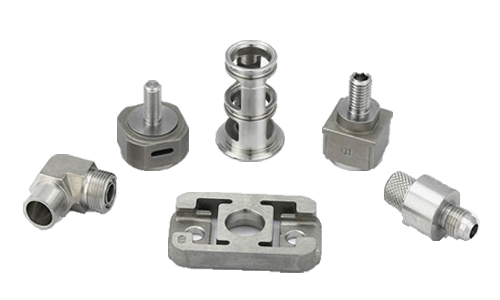
Various alloy systems are processed into semi-finished forms for use in mechanical and industrial applications. These materials are selected based on performance requirements such as strength and corrosion resistance.
Role in Industrial Manufacturing
Products generated from this process are not final components but intermediate materials. They are designed to ensure consistency and efficiency in subsequent manufacturing stages.
By providing stable and uniform input materials, this method supports large-scale industrial production across multiple sectors.
Conclusion
Continuous casting is a stable and efficient method for producing semi-finished metal products. By controlling solidification, cooling, and process parameters, it enables consistent quality and high productivity. It remains a fundamental technology for processing steel, copper, aluminum, and various alloys in modern manufacturing.