Are you struggling to understand technical terms in CNC machining drawings? Do unclear machining terminology cause miscommunication between engineers and suppliers? Inconsistent CNC terminology can lead to production delays, dimensional errors, and costly rework.
A well-structured CNC Machining Glossary eliminates confusion and creates a shared technical language for engineers, machinists, procurement teams, and quality inspectors. By clearly defining CNC machining terms related to tooling, tolerances, surface finish, programming, and inspection, this glossary ensures precision, efficiency, and professional communication throughout the entire manufacturing process.
In this comprehensive CNC Machining Glossary, I systematically organize and explain essential machining terminology used in modern industrial manufacturing.
Fundamental CNC Machining Glossary Terms
Fundamental CNC Machining Glossary Terms define the essential language used in modern CNC manufacturing. These CNC Machining Glossary terms establish the technical foundation for machining operations, programming logic, machine setup, and process control. Mastering these CNC Machining Glossary terms ensures accurate communication between engineers, machinists, and production teams.
CNC (Computer Numerical Control): CNC refers to Computer Numerical Control technology that automates machine tool movement through programmed instructions. In any CNC Machining Glossary, CNC defines the integration of software, controllers, and mechanical systems used to manufacture precision components.
Numerical Control (NC): Numerical Control is the precursor to CNC systems, where machine movements are directed by coded numerical data. In the CNC Machining Glossary, NC represents the foundational concept behind modern programmable machining.
Machine Tool: A machine tool is a power-driven mechanical device used to cut, shape, or finish materials. In a CNC Machining Glossary, machine tools include mills, lathes, grinders, and machining centers controlled by CNC systems.
Machining Center: A machining center is a CNC machine equipped with automatic tool changing capability. Within the CNC Machining Glossary, machining centers typically refer to vertical or horizontal mills used for multi-operation production.
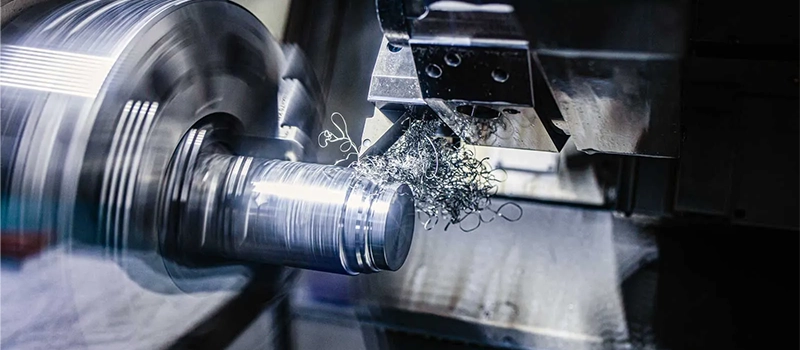
Lathe: A lathe is a machine tool that rotates the workpiece while a cutting tool removes material. In the CNC Machining Glossary, CNC lathes are essential for turning cylindrical components.
Axis (X, Y, Z): Axis refers to the linear directions in which a CNC machine moves. In CNC Machining Glossary terminology, X, Y, and Z represent the primary three-dimensional coordinate directions.
Rotary Axis (A, B, C): Rotary axes allow rotational movement around linear axes. In advanced CNC Machining Glossary terms, A, B, and C axes enable 4-axis and 5-axis machining operations.
Workpiece: Workpiece is the raw material or semi-finished part being machined. In the CNC Machining Glossary, the workpiece is the component subjected to cutting operations.
Fixture: A fixture is a device used to securely hold and position a workpiece during machining. Proper fixturing in CNC Machining Glossary practice ensures stability and dimensional accuracy.
Jig: A jig is a work-holding device that also guides the cutting tool. In CNC Machining Glossary terminology, jigs are more common in manual operations but still referenced in tooling systems.
Coordinate System: Coordinate system defines reference points used to control tool movement. In CNC Machining Glossary language, Cartesian coordinates are standard for programming toolpaths.
Cartesian Coordinate: Cartesian coordinate system uses perpendicular X, Y, and Z axes to define position. This is a core CNC Machining Glossary concept for positioning accuracy.
Machine Zero: Machine zero is the fixed reference point set by the manufacturer. In CNC Machining Glossary terminology, it represents the origin of machine coordinates.
Work Zero (Program Zero): Work zero is the reference point defined by the programmer for a specific job. CNC Machining Glossary usage emphasizes correct work zero setting to prevent dimensional errors.
Toolpath: Toolpath is the programmed route followed by the cutting tool. In the CNC Machining Glossary, toolpath directly influences surface finish and machining efficiency.
Interpolation: Interpolation is the controlled movement between programmed points. In CNC Machining Glossary definitions, linear and circular interpolation are fundamental motion commands.
Linear Interpolation: Linear interpolation allows straight-line movement between two coordinates. It is one of the most frequently used CNC Machining Glossary commands.
Circular Interpolation: Circular interpolation generates arc or circular movements in machining operations, widely referenced in CNC Machining Glossary programming.
G-Code: G-Code is the primary programming language controlling CNC machine movements. Every CNC Machining Glossary includes G-Code as the core operational instruction set.
M-Code: M-Code controls auxiliary machine functions such as coolant activation and spindle start or stop. In CNC Machining Glossary systems, M-Code manages machine behavior beyond motion.
Block: A block is a single line of CNC program instruction. In CNC Machining Glossary terminology, each block contains motion or function commands.
Feed Rate: Feed rate defines the speed at which the cutting tool advances relative to the workpiece. Proper feed rate selection in CNC Machining Glossary practice affects tool life and finish quality.
Spindle Speed: Spindle speed refers to rotational speed of the spindle measured in RPM. In CNC Machining Glossary usage, spindle speed must match material and tool requirements.
RPM (Revolutions Per Minute): RPM quantifies rotational speed. Within CNC Machining Glossary standards, RPM directly influences cutting speed and thermal generation.
Cutting Speed: Cutting speed is the surface speed between tool and workpiece, typically measured in meters per minute or feet per minute in CNC Machining Glossary calculations.
Surface Speed: Surface speed represents the linear velocity at the tool-workpiece interface. In CNC Machining Glossary references, it is critical for optimal machining parameters.
Chip Load: Chip load defines the thickness of material removed per tooth per revolution. Accurate chip load control is central in CNC Machining Glossary efficiency calculations.
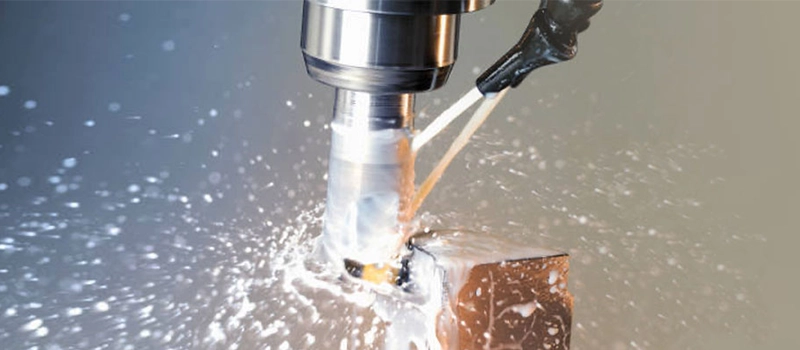
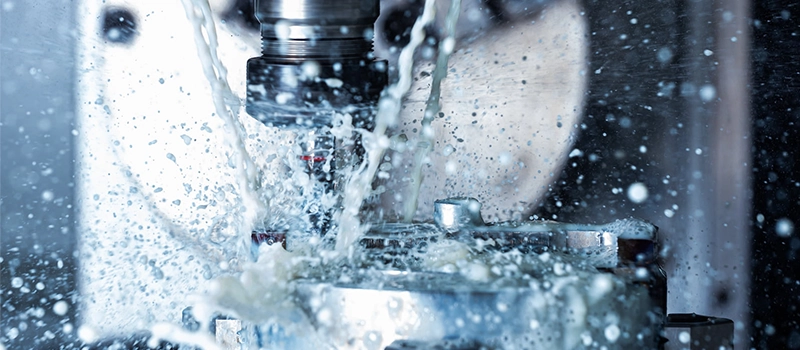
Coolant: Coolant is a fluid used to reduce heat and flush chips during machining. CNC Machining Glossary definitions emphasize coolant for thermal control and tool longevity.
Dry Machining: Dry machining eliminates coolant usage, relying on optimized tool coatings and cutting parameters in CNC Machining Glossary applications.
Flood Coolant: Flood coolant delivers high-volume fluid to the cutting zone for maximum cooling and lubrication efficiency.
Mist Coolant: Mist coolant uses atomized spray to provide lubrication while reducing fluid consumption.
Tool Offset: Tool offset compensates for tool length and diameter differences. In CNC Machining Glossary programming, offsets ensure dimensional precision.
Work Offset: Work offset defines the coordinate shift from machine zero to work zero. Proper work offset setup is critical in CNC Machining Glossary practice.
Setup: Setup refers to preparation of machine, tools, and workpiece before production. In CNC Machining Glossary terminology, setup time directly affects productivity.
Cycle Time: Cycle time is the total time required to complete one machining operation or part according to CNC Machining Glossary production metrics.
Setup Time: Setup time measures the duration required to prepare a machine for a job change in CNC Machining Glossary production planning.
Takt Time: Takt time defines the production rhythm required to meet customer demand within CNC Machining Glossary manufacturing systems.
Rapid Traverse: Rapid traverse is high-speed non-cutting movement of the tool between machining operations.
Feed Override: Feed override allows manual adjustment of programmed feed rate during operation in CNC Machining Glossary control systems.
Emergency Stop (E-Stop): Emergency stop is a safety function that immediately halts machine operation to prevent damage or injury.
CNC Machine Structure Glossary
CNC Machine Structure Glossary terms describe the mechanical, electrical, and control components that form the physical foundation of CNC equipment. Understanding these CNC Machining Glossary terms helps engineers evaluate machine rigidity, accuracy, stability, and long-term production reliability.
Machine Bed: Machine bed is the base structure that supports all major machine components. In CNC Machining Glossary terminology, the bed provides rigidity and vibration absorption during machining operations.
Column: Column is the vertical structural element supporting the spindle head in a machining center. CNC Machining Glossary definitions emphasize column stiffness for maintaining geometric accuracy.
Saddle: Saddle is the moving component mounted on guideways that supports the table or carriage, allowing precise axis movement in CNC Machining Glossary systems.
Table: Table is the platform where the workpiece or fixture is mounted. In CNC Machining Glossary usage, table flatness directly affects machining precision.
Spindle: Spindle is the rotating unit that holds and drives the cutting tool. In CNC Machining Glossary standards, spindle accuracy and balance determine surface finish quality.
Spindle Taper: Spindle taper is the standardized internal cone that secures tool holders. CNC Machining Glossary commonly references BT, CAT, and HSK taper systems.
Ball Screw: Ball screw converts rotary motion into precise linear movement using recirculating ball bearings. In CNC Machining Glossary applications, ball screws minimize backlash.
Linear Guideway: Linear guideway provides smooth and accurate axis movement with reduced friction. CNC Machining Glossary systems rely on guideways for positioning stability.
Servo Motor: Servo motor drives axis movement using closed-loop feedback control. In CNC Machining Glossary terminology, servo motors ensure high positioning accuracy.
Encoder: Encoder is a feedback device that measures rotational or linear position. CNC Machining Glossary control systems use encoders for precision motion control.
Controller: Controller is the central computing unit that interprets CNC programs. In CNC Machining Glossary practice, the controller manages motion, speed, and auxiliary functions.
PLC (Programmable Logic Controller): PLC controls machine auxiliary systems such as coolant, tool changer, and safety interlocks within CNC Machining Glossary automation.
Automatic Tool Changer (ATC): ATC automatically swaps tools during machining cycles. CNC Machining Glossary systems use ATC to reduce downtime and increase productivity.
Tool Magazine: Tool magazine stores multiple cutting tools for automatic selection during machining operations.
Hydraulic System: Hydraulic system provides power for clamping, tool changing, and auxiliary movements in CNC Machining Glossary equipment.
Pneumatic System: Pneumatic system uses compressed air to actuate certain machine functions, often supporting automation features.
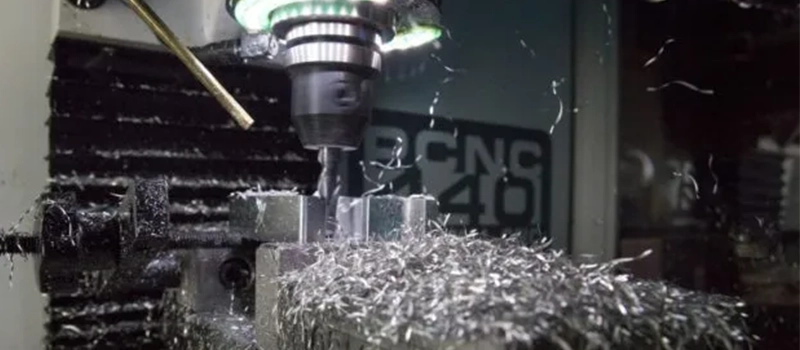
Chip Conveyor: Chip conveyor removes metal chips from the machining area to maintain operational cleanliness and safety.
Coolant Tank: Coolant tank stores and circulates coolant used during machining operations.
Enclosure: Enclosure surrounds the machining area to contain chips, coolant, and noise, enhancing operator safety.
Safety Interlock: Safety interlock prevents machine operation when protective doors are open or unsafe conditions exist.
Control Panel: Control panel is the operator interface used to input commands, adjust parameters, and monitor CNC Machining Glossary operations.
Touch Probe: Touch probe is a precision measurement device used for automatic workpiece setup and in-process inspection.
Rotary Table: Rotary table enables indexed or continuous rotational movement of the workpiece, expanding machining capability.
Trunnion: Trunnion is a dual-axis rotary system that supports 5-axis machining within CNC Machining Glossary advanced setups.
Way Cover: Way cover protects guideways and moving parts from chip contamination and coolant intrusion.
Counterbalance System: Counterbalance system offsets the weight of vertical axis components to reduce servo load.
Cooling System: Cooling system regulates spindle and motor temperature to maintain dimensional stability.
Power Supply Unit: Power supply unit distributes electrical energy to machine components and control systems.
Lubrication System: Lubrication system delivers oil or grease to moving components to reduce wear and extend service life.
Foundation Bolts: Foundation bolts anchor the CNC machine to the shop floor, ensuring vibration control and structural stability.
Vibration Damping Structure: Vibration damping structure minimizes resonance and chatter during high-speed machining.
Thermal Compensation System: Thermal compensation system adjusts positioning parameters to offset temperature-induced dimensional drift.
Spindle Bearings: Spindle bearings support high-speed rotation while maintaining radial and axial precision.
Tool Clamping Mechanism: Tool clamping mechanism secures cutting tools inside the spindle taper during machining operations.
Axis Drive System: Axis drive system integrates servo motor, ball screw, and feedback components to produce controlled linear motion.
Electrical Cabinet: Electrical cabinet houses control electronics and protects them from dust, moisture, and electromagnetic interference.
Cooling Fan System: Cooling fan system maintains stable temperature inside the electrical cabinet.
Emergency Power Cutoff: Emergency power cutoff immediately disconnects electrical supply during critical malfunction conditions.
CNC Cutting Tool Glossary
CNC Cutting Tool Glossary terms describe the tools, tool materials, coatings, geometries, and wear mechanisms used in modern machining operations. These CNC Machining Glossary terms are essential for optimizing tool life, cutting performance, surface finish, and production efficiency.
Cutting Tool: Cutting tool is the device that removes material from a workpiece through shear deformation. In CNC Machining Glossary terminology, tool selection directly affects machining stability and productivity.
End Mill: End mill is a rotary cutting tool used primarily in milling operations. CNC Machining Glossary definitions classify end mills by flute count, geometry, and coating type.
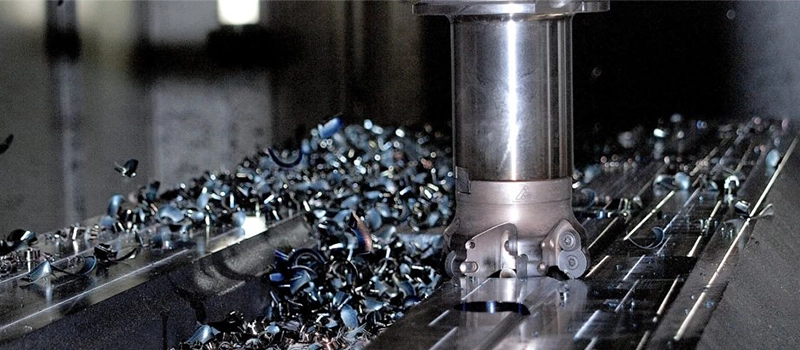
Face Mill: Face mill is designed for surfacing large flat areas. In CNC Machining Glossary applications, face mills often use indexable inserts.
Ball Nose End Mill: Ball nose end mill features a hemispherical tip used for contouring and 3D surface machining.
Corner Radius End Mill: Corner radius end mill combines flat bottom geometry with a rounded edge to improve strength and reduce chipping.
Chamfer Mill: Chamfer mill is used to create beveled edges and break sharp corners in CNC Machining Glossary finishing operations.
Drill Bit: Drill bit creates cylindrical holes in materials. CNC Machining Glossary drilling tools vary by point angle and coating.
Center Drill: Center drill is used to create an initial guide hole for accurate drilling alignment.
Spot Drill: Spot drill ensures precise hole positioning before deep drilling operations.
Reamer: Reamer enlarges and finishes pre-drilled holes to precise diameter tolerances.
Tap: Tap is a cutting tool used to create internal threads inside drilled holes.
Thread Mill: Thread mill produces internal or external threads using circular interpolation in CNC Machining Glossary programming.
Boring Bar: Boring bar enlarges or finishes internal diameters with high precision.
Turning Insert: Turning insert is a replaceable cutting edge mounted on a tool holder for lathe operations.
Grooving Tool: Grooving tool creates narrow slots or grooves in turned components.
Parting Tool: Parting tool separates finished parts from bar stock during turning operations.
Shell Mill: Shell mill is a large-diameter face milling tool mounted on an arbor.
Slitting Saw: Slitting saw is a thin circular cutter used for narrow slot cutting.
Form Tool: Form tool produces specific profiles or contours in a single pass.
Indexable Insert: Indexable insert is a replaceable cutting edge designed for multiple cutting faces.
Solid Carbide Tool: Solid carbide tool is made entirely from carbide material for high rigidity and wear resistance.
High-Speed Steel (HSS) Tool: HSS tool is made from alloy steel suitable for moderate cutting speeds.
Carbide Tool: Carbide tool offers higher hardness and temperature resistance compared to HSS tools.
Ceramic Tool: Ceramic tool withstands very high cutting temperatures and is used for hard machining.
CBN Tool (Cubic Boron Nitride): CBN tool is designed for machining hardened steels with excellent wear resistance.
PCD Tool (Polycrystalline Diamond): PCD tool is used for machining non-ferrous metals and composite materials.
Coated Tool: Coated tool features a thin protective layer to improve wear resistance and heat resistance.
PVD Coating: PVD coating is applied using physical vapor deposition to enhance tool hardness.
CVD Coating: CVD coating uses chemical vapor deposition to create thicker, wear-resistant coatings.
Tool Holder: Tool holder secures the cutting tool inside the spindle taper.
Collet: Collet is a clamping device that grips cylindrical tools securely.
ER Collet: ER collet is a standardized clamping system widely used in CNC Machining Glossary setups.
BT Tool Holder: BT tool holder is a symmetric taper system commonly used in machining centers.
HSK Tool Holder: HSK tool holder provides dual-contact taper design for high-speed machining.
Tool Length Offset: Tool length offset compensates for differences in tool projection length.
Tool Diameter Offset: Tool diameter offset adjusts programmed toolpath to match actual cutter size.
Flute: Flute is the helical groove on a cutting tool that evacuates chips.
Helix Angle: Helix angle influences chip evacuation and cutting smoothness.
Rake Angle: Rake angle determines cutting efficiency and chip formation characteristics.
Clearance Angle: Clearance angle prevents tool rubbing against the workpiece surface.
Chip Breaker: Chip breaker geometry controls chip size and prevents chip entanglement.
Tool Wear: Tool wear describes gradual loss of cutting edge material during machining.
Flank Wear: Flank wear occurs on the clearance face due to friction with the workpiece.
Crater Wear: Crater wear forms on the rake face caused by high-temperature chip flow.
Built-Up Edge (BUE): Built-up edge is material adhesion on the cutting edge during machining.
Tool Life: Tool life refers to the usable cutting duration before replacement is required.
Tool Failure: Tool failure occurs when the cutting edge fractures or loses effectiveness.
Micro Tool: Micro tool is used for precision machining of very small features.
Roughing Tool: Roughing tool removes large volumes of material quickly.
Finishing Tool: Finishing tool produces final dimensions and improved surface finish.
Step Drill: Step drill produces multiple hole diameters in a single operation.
Counterbore: Counterbore enlarges the top portion of a hole to create a flat-bottom recess.
Countersink: Countersink creates a conical recess for flat-head fasteners.
Tool Balance: Tool balance ensures minimal vibration during high-speed rotation.
Tool Runout: Tool runout measures deviation of tool rotation from true axis alignment.
Tool Deflection: Tool deflection occurs when cutting forces cause tool bending.
Tool Engagement: Tool engagement defines the portion of tool in contact with material during cutting.
Tool Path Strategy: Tool path strategy determines how the cutter moves to remove material efficiently.
CNC Machining Process Glossary
CNC Machining Process Glossary terms describe the actual cutting operations and manufacturing strategies used to shape materials. These CNC Machining Glossary terms define how material is removed, how accuracy is achieved, and how efficiency is optimized across different machining applications.
Milling: Milling is a machining process in which a rotating cutting tool removes material from a stationary workpiece. In CNC Machining Glossary terminology, milling supports contouring, slotting, and surface finishing.
Turning: Turning is a process where the workpiece rotates while a stationary cutting tool removes material. CNC Machining Glossary systems commonly use turning for cylindrical parts.
Drilling: Drilling creates round holes using a rotating drill bit. In CNC Machining Glossary applications, drilling accuracy depends on feed rate and spindle speed.
Boring: Boring enlarges or refines existing holes to improve diameter accuracy and surface finish.
Reaming: Reaming is a finishing process that brings drilled holes to precise tolerance.
Tapping: Tapping produces internal threads inside pre-drilled holes.
Threading: Threading creates helical ridges on internal or external surfaces.
Grooving: Grooving forms narrow recesses or channels in a component.
Facing: Facing produces a flat surface perpendicular to the rotational axis in turning operations.
Slotting: Slotting creates straight or curved channels in a workpiece.
Pocketing: Pocketing removes material inside a defined boundary to create cavities.
Profiling: Profiling follows a defined contour to shape complex geometries.
Contouring: Contouring creates smooth 3D surfaces using multi-axis movement.
Helical Milling: Helical milling produces threads or deep holes using spiral tool motion.
Climb Milling: Climb milling involves cutter rotation matching feed direction, improving surface finish.
Conventional Milling: Conventional milling rotates cutter opposite to feed direction.
Roughing: Roughing removes large amounts of material quickly with high feed rates.
Semi-Finishing: Semi-finishing prepares the surface before final finishing pass.
Finishing: Finishing achieves final dimensions and surface quality.
High-Speed Machining: High-speed machining uses elevated spindle speeds and optimized toolpaths to improve productivity.
Adaptive Machining: Adaptive machining adjusts toolpath based on real-time cutting conditions.
Trochoidal Milling: Trochoidal milling uses circular tool motions to reduce tool load and heat.
Peck Drilling: Peck drilling periodically retracts the drill to remove chips and reduce heat.
Rigid Tapping: Rigid tapping synchronizes spindle rotation with feed rate to produce accurate threads.
Deep Hole Drilling: Deep hole drilling creates holes with high depth-to-diameter ratios.
Swiss Turning: Swiss turning supports precision machining of small-diameter parts with sliding headstock design.
Live Tooling: Live tooling enables milling operations on a CNC lathe.
Multi-Tasking Machining: Multi-tasking machining combines turning and milling in one setup.
Hard Turning: Hard turning machines hardened materials as an alternative to grinding.
Surface Grinding: Surface grinding uses abrasive wheels to achieve fine finishes.
Cylindrical Grinding: Cylindrical grinding improves roundness and diameter accuracy.
Centerless Grinding: Centerless grinding removes material without traditional centers.
Wire EDM: Wire EDM cuts conductive materials using electrically charged wire.
Sinker EDM: Sinker EDM forms cavities using shaped electrodes.
Electrical Discharge Machining (EDM): EDM removes material through spark erosion.
Broaching: Broaching uses a toothed tool to remove material in a single pass.
Honing: Honing improves internal surface finish and geometry.
Lapping: Lapping achieves extremely fine surface finishes and tight tolerances.
Burnishing: Burnishing improves surface finish through plastic deformation rather than material removal.
Chamfering: Chamfering creates angled edges to remove sharp corners.
Deburring: Deburring removes sharp edges or burrs after machining.
Engraving: Engraving creates fine surface markings or text.
Knurling: Knurling produces patterned textures on cylindrical surfaces.
Interpolation Machining: Interpolation machining combines axis movements to create arcs or complex curves.
Step Milling: Step milling machines surfaces in incremental depth passes.
Ramp Milling: Ramp milling gradually lowers the tool into material during cutting.
Plunge Milling: Plunge milling removes material vertically with controlled depth.
Back Boring: Back boring enlarges hole diameters from the backside of a component.
Thread Rolling: Thread rolling forms threads through plastic deformation rather than cutting.
Micro Machining: Micro machining produces extremely small precision features.
Batch Machining: Batch machining produces parts in controlled production quantities.
Prototype Machining: Prototype machining focuses on single or small-batch production for design validation.
Production Machining: Production machining emphasizes efficiency and repeatability for high-volume output.
CNC Precision and Tolerance Glossary
CNC Precision and Tolerance Glossary terms define dimensional control, geometric accuracy, measurement standards, and inspection methods used in modern manufacturing. These CNC Machining Glossary terms are critical for ensuring part interchangeability, assembly reliability, and consistent production quality.
Tolerance: Tolerance defines the permissible variation in a specified dimension. In CNC Machining Glossary terminology, tolerance directly determines machining accuracy and cost.
Dimensional Accuracy: Dimensional accuracy describes how closely a machined part matches its specified dimensions.
Repeatability: Repeatability measures a CNC machine’s ability to produce identical results over multiple cycles.
Positional Accuracy: Positional accuracy indicates how precisely a machine can move to a programmed coordinate.
Resolution: Resolution refers to the smallest movement increment a CNC system can detect or command.
Backlash: Backlash is unwanted movement caused by mechanical play in drive systems, affecting CNC Machining Glossary positioning precision.
Bilateral Tolerance: Bilateral tolerance allows dimensional variation in both positive and negative directions.
Unilateral Tolerance: Unilateral tolerance permits variation in only one direction from nominal size.
Limit Dimension: Limit dimension defines the maximum and minimum allowable size for a feature.
Allowance: Allowance is intentional difference between mating parts to achieve desired fit.
Clearance Fit: Clearance fit ensures space between mating components for easy assembly.
Interference Fit: Interference fit creates tight assembly requiring force or thermal methods.
Transition Fit: Transition fit may result in either slight clearance or interference.
Press Fit: Press fit requires controlled force to assemble mating components.
Slip Fit: Slip fit allows easy sliding assembly without excessive looseness.
Surface Finish: Surface finish describes the texture quality of a machined surface.
Surface Roughness (Ra): Ra represents the arithmetic average of surface deviations and is a core CNC Machining Glossary parameter.
Surface Roughness (Rz): Rz measures the average peak-to-valley height across sampling lengths.
Waviness: Waviness refers to larger-scale surface irregularities beyond roughness.
Flatness: Flatness defines how closely a surface conforms to a perfect plane.
Parallelism: Parallelism controls the distance between two parallel surfaces.
Perpendicularity: Perpendicularity ensures two surfaces meet at 90 degrees.
Concentricity: Concentricity describes how closely two circular features share the same center.
Circularity (Roundness): Circularity measures deviation from a perfect circle.
Cylindricity: Cylindricity controls the uniformity of a cylindrical feature.
Runout: Runout measures variation of a rotating surface relative to its axis.
Total Runout: Total runout evaluates cumulative variation across an entire rotating surface.
True Position: True position defines allowable deviation of a feature from its theoretically exact location.
Profile Tolerance: Profile tolerance controls the shape of complex surfaces.
Datum: Datum is a reference point, line, or plane used for measurement.
Datum Reference Frame: Datum reference frame establishes a coordinate system for geometric control.
Feature Control Frame: Feature control frame is the symbolic box defining GD&T requirements.
Geometric Dimensioning and Tolerancing (GD&T): GD&T is a symbolic language that defines part geometry and tolerance requirements in CNC Machining Glossary standards.
Tolerance Stack-Up: Tolerance stack-up analyzes cumulative dimensional variation in assemblies.
Gauge: Gauge is a device used to check dimensional conformity.
Plug Gauge: Plug gauge verifies internal hole diameters.
Ring Gauge: Ring gauge checks external diameters.
Vernier Caliper: Vernier caliper measures external, internal, and depth dimensions.
Micrometer: Micrometer provides high-precision measurement of small dimensions.
Height Gauge: Height gauge measures vertical dimensions on a surface plate.
Dial Indicator: Dial indicator detects small dimensional deviations.
Surface Plate: Surface plate provides a flat reference plane for inspection.
CMM (Coordinate Measuring Machine): CMM uses probing systems to measure complex geometries accurately.
Laser Measurement System: Laser measurement system performs non-contact dimensional inspection.
Optical Comparator: Optical comparator magnifies part profiles for visual inspection.
First Article Inspection (FAI): First Article Inspection verifies initial production parts meet specification.
Statistical Process Control (SPC): SPC monitors manufacturing variation using statistical methods.
Process Capability (Cp, Cpk): Process capability evaluates how well a process meets tolerance requirements.
Control Chart: Control chart tracks process stability over time.
Inspection Report: Inspection report documents measurement results and compliance status.
Non-Conformance: Non-conformance identifies parts that fail to meet specification.
Rework: Rework refers to corrective machining to bring a part within tolerance.
Scrap: Scrap describes parts that cannot be repaired economically.
Calibration: Calibration ensures measurement tools maintain accuracy standards.
Measurement Uncertainty: Measurement uncertainty quantifies possible deviation in inspection results.
Conclusion
A comprehensive CNC Machining Glossary establishes a clear and standardized technical language for modern manufacturing. By defining core machining concepts, tooling systems, processes, and precision requirements, this CNC Machining Glossary supports accurate communication, improved production efficiency, and consistent quality control. Mastering these CNC Machining Glossary terms enables engineers and manufacturers to optimize machining performance and ensure reliable industrial results.