CNC machining bronze presents unique challenges that set it apart from working with aluminum, steel, or even brass. In this article, I’ll walk you through everything you need to know — from understanding bronze as a material, its various grades and machinability, to mastering the techniques that ensure flawless results. Whether you’re sourcing machined bronze parts or running the operations yourself, this is your complete expert guide.
With over 30 years of experience in the metal manufacturing industry, I’ve worked with nearly every bronze alloy — including difficult ones like C95400 aluminum bronze, oil-impregnated bronze, and phosphor bronze. I’ve seen how poor tooling choices, misunderstood material properties, and design oversights can ruin CNC projects. But I’ve also seen how the right approach transforms these challenges into a competitive advantage.
By the end of this guide, you’ll understand how to select the right bronze grade, optimize CNC machining parameters, improve part quality, and reduce production costs. If you’re serious about achieving high precision in cnc machining bronze, this article will give you the technical clarity and practical tools you need.
Understanding Bronze and Its CNC Machining Characteristics
When we talk about cnc machining bronze, we’re not just talking about another metal. We’re talking about a material that behaves very differently compared to aluminum, brass, or steel — and those differences matter at every stage of the machining process.
Let’s start with aluminum. Aluminum is soft, lightweight, and highly machinable. It cuts easily, allows high-speed machining, and rarely causes tool wear. But bronze? Bronze is tougher. It’s denser. And its abrasiveness can wear out tools far more quickly if the wrong setup is used.
What about brass? Brass is often mistaken as “similar to bronze” — but from a machining perspective, they are miles apart. Brass is smoother to cut, forms cleaner chips, and behaves predictably under high speeds. Bronze, on the other hand, has a sticky or gummy cutting behavior, especially in high-copper-content alloys. This makes cnc machining bronze more prone to built-up edges and rough surface finishes.
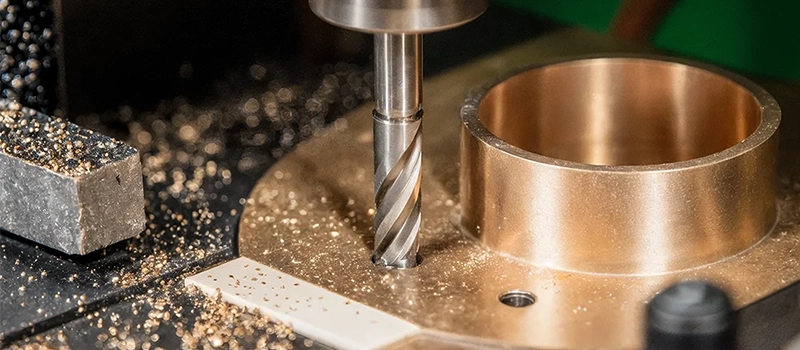
Now let’s look at steel. Steel is hard, yes, but machinists are used to its behavior. Bronze, especially aluminum bronze or silicon bronze, offers hardness plus a high tendency to work-harden — a combination that can quickly ruin a cutter or compromise surface quality if not handled properly.
Here’s the key: bronze isn’t better or worse — it’s just different. And if you’re expecting it to behave like other metals, you’re setting yourself up for costly surprises.
In cnc machining bronze, you need to think differently. Bronze doesn’t give you second chances. It punishes poor cooling, wrong tool geometry, and aggressive speeds. But if you treat it right, bronze rewards you with superior wear resistance, corrosion protection, and long-term part durability — qualities you won’t easily get from other common metals.
Understanding Bronze Grades and Their Machinability
Not all bronze is created equal. When it comes to cnc machining bronze, the specific grade of the alloy can drastically affect how the material behaves under cutting forces, how quickly tools wear, and the quality of the finished part.
Some bronze grades offer moderate machinability and are suitable for tight tolerances and fine finishes. Others — like aluminum bronze — are known for their strength and corrosion resistance but are notorious for their poor machinability and rapid tool wear.
To choose the right approach, you need to understand the characteristics of each type of bronze alloy. The table below summarizes the most commonly used bronze grades in CNC machining, comparing their key machining characteristics:
📊 Common Bronze Grades and Their Machinability
| Bronze Grade | Alternate Name / UNS | Key Alloying Element | Machinability Rating* | Typical CNC Challenges | Common Applications |
|---|---|---|---|---|---|
| C95400 | Aluminum Bronze | Aluminum (10-11%) | Low to Medium | Work hardens quickly, high tool wear | Bushings, valves, marine parts |
| C63000 | Nickel Aluminum Bronze | Ni + Al | Low | Very tough to machine, needs rigid setup | Aerospace, oil & gas, heavy-duty bearings |
| C93200 | Bearing Bronze | Leaded Tin | High | Easy to machine, good chip control | Bearings, low-load components |
| C54400 | Phosphor Bronze | Tin + Phosphorus | Medium | Tough but manageable, good surface finish | Springs, connectors, medical parts |
| C93700 | SAE 64 | Lead + Tin | Medium to High | Excellent machinability, may smear under poor cooling | Bearings, gears |
| Oil-Impregnated Bronze | Sintered Bronze | Porous Bronze | Low | Needs sharp tools, clogs easily | Self-lubricating bushings |
| Silicon Bronze | C65500 | Silicon | Medium | Moderate tool wear, decent finish | Fasteners, marine fittings |
| Manganese Bronze | C86300 | Mn + Zn + Al | Low | Requires slow speeds, strong cutting tools | Load-bearing components |
*Machinability rating is relative: “High” means easier to machine; “Low” means requires special techniques/tools.
When selecting a bronze grade for cnc machining bronze, keep in mind that ease of cutting often trades off with strength and wear resistance. For example, aluminum bronze grades like C95400 and C63000 offer exceptional durability but are harsh on tools. In contrast, leaded bronze grades such as C93200 or C93700 are much easier to cut, but may not be suitable for high-load or corrosive environments.
Advantages of Using Bronze in CNC Machining
CNC machining bronze is not just about dealing with a difficult material — it’s about unlocking unique engineering value. Below are the core advantages of using bronze in CNC machined components.
▶ Superior Wear Resistance
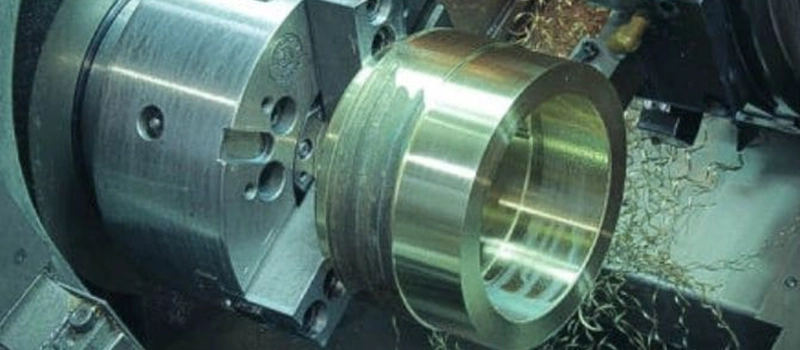
One major reason for choosing bronze machining is wear resistance. Machined bronze parts are often used in dynamic, high-friction environments where aluminum or steel would wear out quickly. Bronze excels in bushings, gears, and bearing systems thanks to its long-lasting performance.
▶ Excellent Corrosion Resistance
Corrosion resistance is a hallmark of many bronze alloys. In bronze parts cnc machining, aluminum bronze and phosphor bronze are frequently chosen for marine or chemical exposure environments. This makes cnc machining bronze ideal for pumps, valves, and industrial equipment exposed to saltwater or acids.
▶ Dimensional Stability
Precision is everything in modern manufacturing. Bronze cnc machining delivers reliable dimensional stability, especially in components exposed to thermal stress or vibration. This quality is vital for applications in aerospace and automotive industries where tolerance consistency is mission-critical.
▶ Low Friction Properties
Many machined bronze components operate in sliding or rotating conditions. Bronze’s naturally low coefficient of friction — especially in oil-impregnated or self-lubricating grades — makes it perfect for bearings, bushings, and wear plates. That’s why machining bronze is a preferred option in moving assemblies.
▶ Balanced Electrical Conductivity
Some bronze grades used in cnc machining provide moderate electrical conductivity along with mechanical strength. This balance makes cnc machining bronze useful in applications such as grounding terminals, EMI shielding parts, or electronic connectors.
▶ Achievable High-Quality Surface Finish
With proper tooling and settings, machining bronze can result in a clean, even surface finish. Although bronze may be harder to machine than brass, the final appearance and mechanical polish are often far superior — critical in cnc machining bronze for medical, decorative, or sealing applications.
Design Considerations for CNC Machined Bronze Components
Designing for cnc machining bronze is not just about geometry — it’s about understanding how bronze behaves under cutting forces, tool pressure, and heat. Many engineers underestimate how important design decisions are when it comes to bronze parts cnc machining. A well-designed component can drastically reduce machining time, improve surface quality, and extend tool life.
▶ Wall Thickness and Structural Integrity
When designing machined bronze parts, avoid overly thin walls. Bronze alloys can be dense and heavy, and while they are strong, too-thin sections can lead to chatter or deflection during cutting. In cnc machining bronze, especially with tougher alloys like aluminum bronze or silicon bronze, a recommended wall thickness of at least 1.5–2.0 mm ensures structural stability and better machinability.
▶ Sharp Corners and Radius Considerations
Machining bronze with sharp internal corners is a bad idea. Bronze is less forgiving than aluminum or brass, and right-angle transitions can cause tool wear or breakage. Always design generous internal radii in bronze parts cnc machining to allow smooth tool entry and minimize stress concentrations.
▶ Undercuts, Threads, and Internal Features
In cnc machining bronze, complex internal features — like undercuts, deep threads, or blind pockets — increase machining difficulty and cost. Bronze doesn’t chip as cleanly as brass, and internal cavities can trap heat. Avoid overly intricate designs unless functionally necessary, and always plan for proper chip evacuation paths in machined bronze parts.
▶ Tolerances and Fits
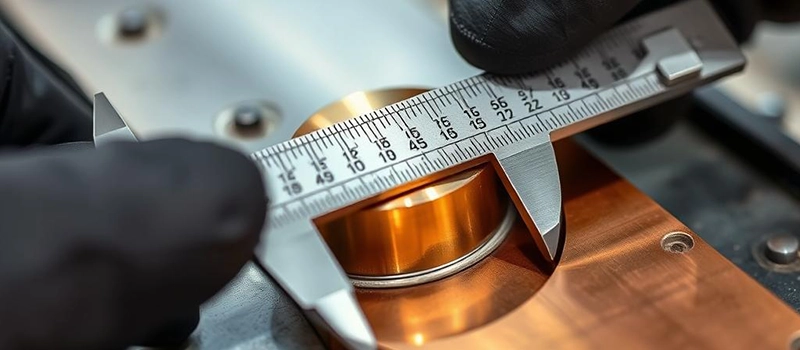
Tolerances in cnc machining bronze should reflect the alloy’s stability. Leaded bronzes like C93200 allow tighter tolerances, while aluminum bronze grades like C95400 may expand under heat. Specify tolerances based on the grade’s thermal and mechanical behavior. This is critical for bronze cnc machining where parts are used in dynamic or high-temperature assemblies.
▶ Machining Allowances and Stock Removal
Always include sufficient machining allowance when casting or forging bronze parts. Depending on the grade, bronze machining may require more than one finishing pass due to spring-back or work-hardening. For precise machined bronze components, a 1.5–3.0 mm allowance ensures clean final surfaces without overloading the tool.
▶ Design for Coolant and Chip Flow
Effective chip evacuation is vital during cnc machining bronze. Bronze tends to produce long, stringy chips, especially in tougher grades. Poor coolant access or closed pockets can overheat the tool and ruin surface finishes. Always include access holes, drainage paths, or open geometries to help coolant reach the tool and chips exit the cavity.
Well-designed parts are easier to manufacture and less prone to defects. In cnc machining bronze, good design isn’t optional — it’s what separates high-yield, profitable production from wasted time and tool wear. If your bronze component is difficult to machine, the problem often starts with the drawing, not the machine.
Key CNC Machining Techniques for Bronze Parts
CNC machining bronze isn’t just about using the right machine — it’s about applying the right techniques. Bronze has a reputation for being tricky to work with, especially when compared to aluminum or even stainless steel. But with proper methods, machining bronze can become highly efficient, repeatable, and profitable.
Below are the most essential techniques to improve outcomes in cnc machining bronze.
▶ Choosing the Right Cutting Tools
Tool selection is crucial for effective machining bronze. High-speed steel (HSS) may work for softer bronze grades, but for tougher alloys like aluminum bronze, carbide tools with a TiAlN or TiCN coating are far more durable. These coatings reduce friction and help manage the high heat generated in bronze parts cnc machining.
Avoid tools with overly sharp cutting edges — bronze tends to grab and chip at sharp geometries. A slightly honed edge improves stability during bronze cnc machining.
▶ Optimal Feeds and Speeds for Bronze Machining
Each bronze alloy behaves differently under cutting forces. For example, 954 aluminum bronze machinability is rated lower than leaded bronze grades. This means you’ll need slower surface speeds (SFM) and moderate feed rates to prevent work hardening or tool wear.
As a general rule for machining bronze:
- Softer bronzes: 120–200 SFM
- Harder bronzes (e.g., C95400, C63000): 60–100 SFM
- Keep chip load moderate to avoid smearing
Fine-tuning these numbers is essential in bronze cnc machining to ensure repeatable part quality.
▶ Coolant and Lubrication Best Practices
Effective cooling is non-negotiable in cnc machining bronze. Bronze alloys generate heat rapidly due to their density and cutting resistance. Use a flood coolant or high-pressure nozzle system to remove heat and chips from the cutting zone.
For machined bronze components with tight tolerances or long bores, mist or oil-based lubricants help minimize thermal expansion and surface drag, especially in bronze machining of small parts or internal cavities.
▶ Toolpath Strategies for Bronze Parts
Adaptive toolpaths work well in bronze parts cnc machining, especially when using modern CAM software. Radial engagement should be limited, especially on hard bronzes. For slotting operations, climb milling provides a better finish and reduces chatter in machined bronze surfaces.
Avoid full-width cuts unless absolutely necessary. Multiple shallow passes are safer, cooler, and more consistent in bronze cnc machining workflows.
▶ Managing Tool Wear and Built-Up Edge
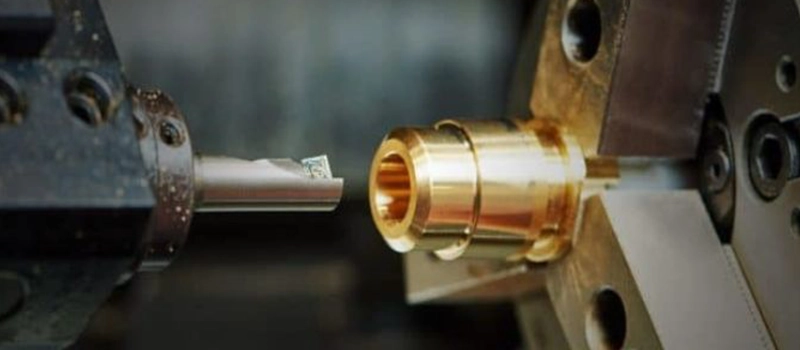
One common issue in machining bronze is built-up edge (BUE) — when bronze sticks to the cutting tool and distorts surface quality. This is particularly true for aluminum bronze machinability, which suffers from high friction during cutting.
Combat this with:
- Coated carbide tools
- Proper chip breakers
- Coolant aimed at the cutting zone
- Shorter tool engagement time
By addressing these factors, you reduce BUE and extend tool life in bronze cnc machining.
▶ Workholding for Bronze CNC Machining
Due to bronze’s density and vibration sensitivity, rigid workholding is essential. Use high-clamp pressure with minimal vibration transfer. Vise pads or soft jaws customized for bronze machining can prevent part marring while improving accuracy in repeated cycles.
Also, ensure that bronze parts cnc machining setups are thermally stable, especially for precision bores and sealing faces.
By applying these techniques, cnc machining bronze becomes less of a challenge and more of an opportunity. With proper cutting speeds, toolpath strategies, and coolant systems, even alloys with poor bronze machinability — like C95400 aluminum bronze — can yield smooth, accurate, and durable parts.
Mastering these techniques is the bridge between poor finishes and flawless machined bronze components.
Quality Control in CNC Machining of Bronze Parts
In high-precision manufacturing, quality control is not a step — it’s a system. When it comes to cnc machining bronze, quality issues can be costly, especially when parts are destined for aerospace, marine, or medical use. Whether you’re producing one prototype or 10,000 units, quality consistency in machining bronze must be built into every stage of the process.
▶ Dimensional Accuracy and Tolerances
One of the most challenging aspects of machining bronze is maintaining consistent dimensions, especially on long shafts or tight bores. Bronze has moderate thermal expansion and can deform under high cutting loads. This is especially true for aluminum bronze, where lower bronze machinability makes multi-pass finishing essential.
In bronze parts cnc machining, it is recommended to:
- Use calibrated probes for in-process measurement
- Apply thermal compensation for long-cycle parts
- Use coordinate measuring machines (CMMs) for final inspection
For mission-critical machined bronze parts, tolerances are often in the ±0.01 mm range — achievable only with stable processes and constant monitoring.
▶ Surface Finish Requirements
Surface finish is both a performance factor and a visual indicator of machining quality. Many machined bronze parts are used in sealing assemblies, sliding interfaces, or decorative components. Poor surface finish can lead to leaks, increased friction, or customer rejection.
To ensure quality in bronze cnc machining:
- Use sharp tools and proper rake angles
- Control feed rates during finishing passes
- Avoid built-up edge that ruins finish (especially with aluminum bronze)
- Target Ra values between 0.4–1.6 µm depending on application
Certain bronze machining processes may also require polishing, grinding, or coating after CNC to meet final specs.
▶ Tool Wear and Edge Integrity Monitoring
Tool wear directly affects accuracy, burr formation, and surface finish. In cnc machining bronze, tool degradation happens faster than in aluminum or plastics due to bronze’s density and abrasiveness.
Implement:
- Tool life tracking for each bronze grade
- Scheduled inspection intervals
- Automatic wear detection via spindle load or acoustic monitoring
This is especially critical when bronze machinability is poor — as in C63000 nickel-aluminum bronze — where even a slightly worn tool can shift tolerances significantly.
▶ Material Certification and Traceability
For industries like defense, aerospace, or medical, material traceability is non-negotiable. Every batch of machined bronze parts should be documented from raw material certification to final delivery.
In quality-controlled bronze cnc machining operations:
- Record heat number, supplier info, and mechanical properties
- Link inspection data to each part’s serial number
- Use digital inspection reports with time stamps for traceability
▶ Defect Prevention Through Process Control
Don’t wait for a part to fail inspection — design your machining bronze process to prevent failure in the first place. Key practices include:
- Stable fixturing to avoid chatter
- Consistent coolant flow
- Process FMEA (Failure Mode and Effects Analysis) to assess risk
- SPC (Statistical Process Control) charts to monitor process drift
These controls make bronze parts cnc machining more reliable, especially in long-run production.
Common Applications of Precision Bronze Parts
The real value of cnc machining bronze comes to life when we look at its industrial applications. Across critical sectors, machined bronze components play an essential role in systems that demand durability, corrosion resistance, and precision. These are not decorative parts — they are performance-critical, high-tolerance components made possible through expert-level bronze cnc machining.
▶ Medical Devices and Equipment
In the medical field, machining bronze is ideal for non-magnetic, corrosion-resistant components that come into contact with bodily fluids or sterilization environments. Bronze parts cnc machining is often used to produce:
- Surgical instrument bushings
- Sterilizer fittings
- Connectors in diagnostic equipment
The anti-microbial properties of bronze, combined with its compatibility with precision machining, make cnc machining bronze highly valued in medical device production.
▶ Aerospace and Defense
In aerospace, weight, wear resistance, and precision are everything. Machined bronze parts such as landing gear bushings, actuation system bearings, and structural connectors are commonly produced via bronze cnc machining. Bronze is favored for its dimensional stability and ability to operate under extreme temperatures and loads.
For defense applications, cnc machining bronze is often used for non-sparking parts in explosive or flammable environments — such as munitions handling systems.
▶ Automotive Components
Bronze has long been a trusted material in the automotive world. With the rise of electric vehicles, the demand for machined bronze contacts, connectors, and bushings is increasing. Common bronze cnc machining applications include:
- Gearbox bushings
- Electric motor spacers
- High-wear mechanical joints
Because cnc machining bronze offers low-friction performance, it improves efficiency and durability in moving parts.
▶ Oil, Gas, and Petrochemical Industries
Few environments are as aggressive as offshore drilling or chemical processing plants. That’s where bronze cnc machining becomes indispensable. Bronze parts like valve seats, pump impellers, and pressure-sealing components must withstand corrosive fluids and abrasive particles.
Cnc machining bronze ensures these parts meet critical sealing and tolerance specifications — preventing leaks, contamination, or failure.
▶ Marine and Shipbuilding
In shipbuilding and offshore engineering, machining bronze is the go-to solution for corrosion-prone environments. Bronze resists saltwater better than many stainless steels, and bronze parts cnc machining is used for:
- Propeller hubs
- Shaft sleeves
- Thrust bearings
- Deck equipment hardware
These machined bronze parts must be extremely precise to ensure safety and reliability in marine systems. The durability of bronze cnc machining is what keeps these vessels operational in the harshest waters.
▶ Heavy Industrial Equipment
From mining to paper mills, cnc machining bronze is applied where parts must endure high loads and cyclical stress. Typical machined bronze components include:
- Press bearings
- Guide bushings
- Hydraulic pump sleeves
Here, the focus of bronze cnc machining is on strength, vibration resistance, and long wear life. Even with continuous 24/7 operation, machining bronze helps ensure machines don’t fail prematurely.
Conclusion: How to Make CNC Machining Bronze Efficient and Profitable
CNC machining bronze is not easy — but that’s exactly what makes it valuable. With the right understanding of bronze grades, smart design practices, optimized machining techniques, and strong quality control, the challenges of machining bronze become opportunities for competitive advantage.
Industries that demand strength, precision, and longevity trust bronze cnc machining to deliver results where other materials fail. And when you master this process, you unlock the potential for long-term performance, customer satisfaction, and lower total cost.
In the world of metal manufacturing, few materials match the versatility and endurance of machined bronze. Treat it with the expertise it deserves — and it will reward you with precision parts that outperform the rest.