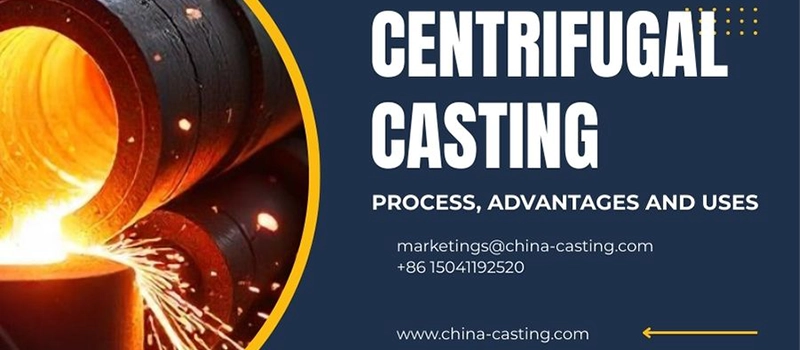
Centrifugal casting is one of the most efficient metal casting technologies used in modern manufacturing. Many industrial components such as pipes, bearings, and cylindrical sleeves require high density, excellent mechanical strength, and minimal internal defects. Traditional casting methods often struggle to meet these strict requirements.
To solve this problem, engineers developed centrifugal casting, a process that uses high-speed rotation to distribute molten metal evenly along the mold wall. The centrifugal force pushes impurities toward the inner surface while forming a dense and uniform outer structure.
Today, centrifugal casting is widely used to manufacture components made from iron, steel, stainless steel, bronze, and aluminum alloys. Industries such as petrochemical, mining, automotive, and construction rely heavily on this technology.
This article explains the centrifugal casting process, its advantages and disadvantages, commonly used materials, major industrial applications, and how it compares with other casting methods.
How Centrifugal Casting Works
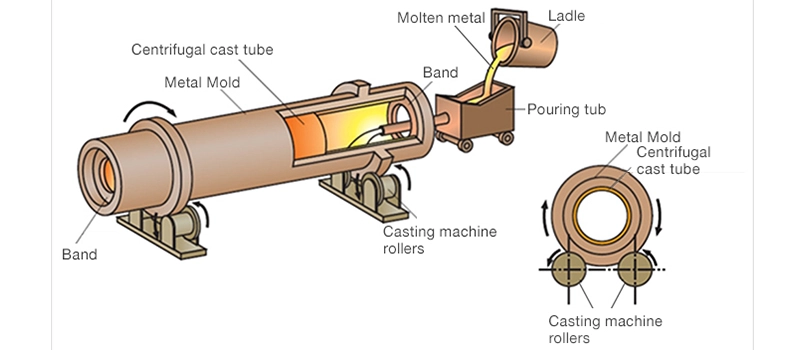
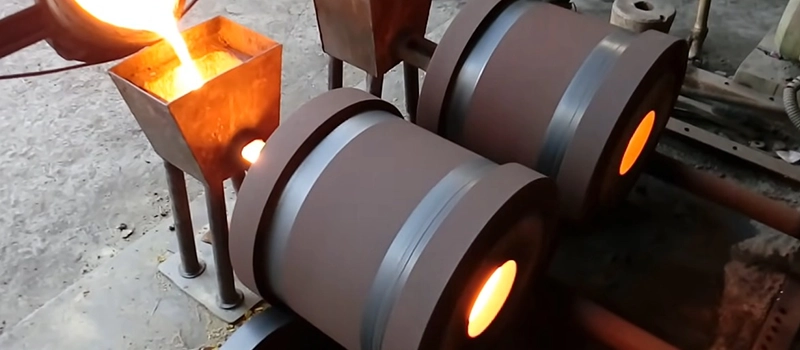
The centrifugal casting process is a specialized metal casting technique that uses rotational force to distribute molten metal inside a mold. Unlike traditional gravity casting methods, where molten metal simply flows into a stationary mold, this process relies on centrifugal force generated by high-speed rotation. This force pushes the liquid metal outward against the mold wall, forming a dense and uniform structure as the metal solidifies.
This manufacturing method is particularly suitable for producing cylindrical or hollow components such as pipes, tubes, bushings, and bearing sleeves. Because the molten metal is continuously forced toward the outer mold surface during rotation, impurities and lighter inclusions naturally move toward the inner surface of the casting. These impurities can later be removed through machining or finishing operations, resulting in components with improved internal integrity and mechanical strength.
Basic Principle of the Process
At its core, the process relies on the physical principle of centrifugal force. When a mold rotates at high speed, molten metal poured into the mold experiences a strong outward force. This force presses the liquid metal firmly against the mold wall, allowing it to solidify in a controlled and uniform manner.
The magnitude of centrifugal force depends on several factors:
- Rotational speed of the mold
- Diameter of the mold
- Density of the molten metal
- Temperature and fluidity of the metal
Because the metal is forced outward during solidification, the outer region of the casting becomes extremely dense. This leads to improved mechanical properties compared with many conventional casting methods.
Step-by-Step Centrifugal Casting Process
Although equipment designs may vary among foundries, the general production steps follow a similar sequence.
1. Mold Preparation
Before casting begins, the mold must be carefully prepared. Molds are typically made from steel or cast iron and are designed to withstand high temperatures and rotational forces. The mold interior is coated with a refractory material or protective coating to prevent molten metal from sticking to the surface and to control the cooling rate.
The coating also helps improve the surface finish of the final casting.
2. Mold Rotation
Once prepared, the mold is mounted on a centrifugal casting machine. The machine rotates the mold around its axis at a predetermined speed. Rotational speeds vary depending on the size of the casting and the material being used. Larger castings may require slower speeds, while smaller components often require higher rotational speeds.
Typical rotational speeds range from 300 to 3000 revolutions per minute, depending on the casting diameter and alloy characteristics.
3. Pouring the Molten Metal
After the mold reaches the required speed, molten metal is poured into the rotating mold. Because the mold is already spinning, the metal spreads rapidly along the inner surface of the mold wall.
This distribution happens almost instantly. The centrifugal force ensures that the metal forms a uniform layer along the mold interior. In many cases, no cores are required to create hollow sections, which simplifies the mold design compared with other casting techniques.
4. Solidification Under Centrifugal Force
As the molten metal cools, solidification begins from the outer surface of the mold toward the inner surface. This directional solidification pattern helps reduce internal shrinkage and porosity.
During this stage, several beneficial effects occur:
- Gas bubbles are pushed inward
- Non-metallic inclusions migrate toward the inner diameter
- The outer region becomes extremely dense
Because impurities move toward the inner surface, the final machining process can remove this layer and expose the high-quality metal beneath.
5. Cooling and Extraction
Once the metal has fully solidified, the rotational speed is gradually reduced and the casting is removed from the mold. At this stage, the product may still require additional operations such as:
- Heat treatment
- Machining
- Surface finishing
- Quality inspection
Machining is particularly important for cylindrical components, as it ensures the correct internal diameter and dimensional tolerances.
Types of Centrifugal Casting Systems
The process can be performed using different machine configurations depending on the product design.
Horizontal Centrifugal Casting
Horizontal machines rotate molds along a horizontal axis. This configuration is commonly used to produce pipes, tubes, and cylindrical liners. It is widely used in industries that require long hollow components.
Vertical Centrifugal Casting
Vertical machines rotate molds along a vertical axis. This configuration is often used to manufacture ring-shaped components, wheel hubs, and short cylindrical parts.
Benefits of Centrifugal Casting
The widespread adoption of centrifugal casting in modern manufacturing is largely due to the many performance and production advantages it offers compared with traditional casting methods. By using rotational force to distribute molten metal, this process can produce components with superior density, structural integrity, and mechanical properties. These characteristics make it especially suitable for producing critical cylindrical parts used in demanding industrial environments.
From heavy machinery and petrochemical equipment to mining and transportation systems, manufacturers rely on this method because it can produce reliable components while also improving production efficiency. The advantages are not limited to product quality alone; they also extend to material utilization, process stability, and design flexibility.
Higher Metal Density and Strength
One of the most significant advantages of centrifugal casting is the high density of the resulting metal structure. During the casting process, molten metal is forced outward against the mold wall by centrifugal force. This pressure helps compress the metal as it solidifies, reducing the formation of voids and improving the overall compactness of the casting.
As a result, the outer layer of the casting often exhibits superior mechanical properties compared with castings produced using gravity-based processes. The dense microstructure enhances properties such as:
- Tensile strength
- Wear resistance
- Fatigue resistance
- Pressure resistance
These characteristics are particularly important for components that operate under heavy loads or high-pressure conditions. Pipes used in fluid transportation systems, for example, must withstand internal pressure and long-term mechanical stress. The dense structure produced by centrifugal casting improves their durability and operational lifespan.
Reduced Porosity and Fewer Internal Defects
Another important benefit of centrifugal casting is the reduction of internal defects, especially gas porosity and shrinkage cavities. In many conventional casting methods, gases trapped in molten metal may remain inside the casting during solidification. These defects can weaken the structure and lead to premature failure during operation.
In centrifugal casting, however, the continuous rotational force helps push gases and non-metallic inclusions toward the inner surface of the casting. Because the inner surface is often machined after casting, many of these impurities are removed during finishing operations.
This natural separation effect improves the internal quality of the metal and reduces the likelihood of structural defects. As a result, the final components typically demonstrate greater reliability and consistency.
Improved Grain Structure
The solidification pattern in centrifugal casting also contributes to a refined and directional grain structure. Because the metal solidifies from the outer mold wall toward the center, heat is extracted in a controlled direction. This directional cooling promotes the formation of more uniform grains and minimizes the occurrence of irregular crystal structures.
A refined grain structure can enhance several material properties, including:
- Mechanical strength
- Impact resistance
- Wear resistance
- Structural stability under thermal stress
This improvement is particularly valuable for industrial components exposed to repeated mechanical loads or fluctuating temperatures.
Efficient Material Utilization
Compared with some other casting techniques, centrifugal casting often achieves higher material efficiency. The process generally requires fewer gating systems and feeders because the molten metal is distributed evenly by rotation. In many cases, the casting is formed directly into a near-net cylindrical shape.
This reduces excess material that would otherwise need to be removed during machining. As a result, manufacturers can reduce raw material waste while maintaining precise dimensions.
Efficient material usage is especially beneficial when working with high-value alloys such as stainless steel, bronze, or nickel-based materials. By minimizing waste, manufacturers can control production costs while maintaining high product quality.
Ability to Produce Hollow Components Without Cores
Another advantage of centrifugal casting is that it can produce hollow cylindrical components without the need for complex cores. In traditional casting processes, internal cavities often require sand cores or other removable structures. These cores must be carefully positioned and later removed, which increases mold complexity and production time.
In centrifugal casting, however, the hollow structure forms naturally because the molten metal is forced outward against the mold wall. The center region remains empty, creating a natural cylindrical cavity.
This simplifies mold design and reduces the potential for core-related defects. It also improves dimensional accuracy for components such as tubes, bushings, and cylindrical liners.
Excellent Surface Quality
The centrifugal force applied during casting also helps produce a smooth and uniform outer surface. Because the molten metal is pressed firmly against the mold wall, it can replicate the mold surface with high accuracy. This often results in improved surface finish compared with other casting processes.
A better surface finish can reduce the amount of post-processing required, including grinding or polishing operations. For certain industrial components, this can significantly reduce manufacturing time and overall production cost.
Consistent Quality in Repetitive Production
Centrifugal casting is well suited for stable and repeatable manufacturing. Once the correct process parameters are established—such as rotational speed, pouring temperature, and cooling conditions—the process can consistently produce components with similar properties and dimensions.
This repeatability is particularly important for industries that require large quantities of identical components. Consistent product quality helps manufacturers maintain strict performance standards and reduces the risk of defects during mass production.
Strong Suitability for Industrial Components
Due to its structural advantages, centrifugal casting is widely used to manufacture components that must withstand harsh operating conditions. These components often operate under high temperatures, heavy loads, or corrosive environments.
Examples include:
- Industrial pipes and tubes
- Bearing sleeves and bushings
- Pump components
- Cylinder liners
- Heavy equipment parts
These applications require high structural reliability, and centrifugal casting provides the mechanical strength and internal integrity needed for long-term performance.
Disadvantages of Centrifugal Casting
Although centrifugal casting provides many advantages in terms of density, strength, and product reliability, it also has several limitations that manufacturers must consider. Like any manufacturing method, it is not suitable for every type of component or production environment. Understanding these disadvantages helps engineers determine whether the process is the most appropriate solution for a particular project.
Limited to Certain Shapes
One of the most notable limitations of centrifugal casting is that it is primarily suitable for axisymmetric or cylindrical components. The process relies on rotational force to distribute molten metal along the inner wall of a spinning mold. Because of this principle, it works best for products that are naturally round or tubular in shape.
Typical parts produced using this method include pipes, tubes, bushings, bearing sleeves, and cylindrical liners. However, complex shapes with irregular geometries are difficult or impossible to manufacture using centrifugal casting alone. Components that require intricate internal structures, thin ribs, or complicated external profiles usually require other casting processes such as sand casting or investment casting.
As a result, centrifugal casting cannot completely replace other casting technologies in industrial manufacturing.
Equipment and Setup Cost
Centrifugal casting machines are specialized pieces of equipment designed to rotate molds at high speeds while maintaining stable pouring conditions. These machines require strong mechanical structures, precise speed control systems, and reliable balancing mechanisms to ensure safe operation.
Because of these technical requirements, the initial investment for centrifugal casting equipment can be relatively high compared with simpler casting methods. Foundries must also invest in durable molds capable of withstanding repeated thermal cycles and rotational forces.
In addition, the setup process may involve careful adjustment of several parameters, including rotational speed, pouring temperature, mold coating thickness, and cooling conditions. Improper setup can lead to casting defects or inconsistent product quality.
For small production runs or highly customized parts, the cost of preparing equipment and molds may reduce the economic advantage of this process.
Thickness Control Challenges
Although centrifugal casting is excellent for producing hollow cylindrical parts, controlling the exact wall thickness of the casting can sometimes be challenging. The distribution of molten metal inside the rotating mold depends on several variables such as pouring volume, rotational speed, and solidification rate.
If the pouring volume is not precisely controlled, the final wall thickness may deviate from the desired specification. Excess metal may accumulate in the mold, while insufficient metal may result in thinner sections.
To achieve consistent thickness, manufacturers often rely on precise process control and subsequent machining operations. Machining helps ensure the final component meets dimensional tolerance requirements, but it also adds additional manufacturing steps.
Segregation of Impurities Toward the Inner Surface
While centrifugal casting helps concentrate impurities away from the outer wall, these inclusions are typically pushed toward the inner diameter of the casting. This phenomenon can be beneficial because the outer surface—where the highest mechanical stress usually occurs—remains dense and relatively free of defects.
However, the presence of impurities on the inner surface means that additional machining is often required to remove this material layer. If the inner layer is not properly removed, the casting may contain inclusions that affect performance or reliability.
For this reason, manufacturers typically plan for a machining allowance during the casting design stage.
Not Ideal for Very Small or Thin Components
Centrifugal casting generally performs best when producing medium to large cylindrical components. Very small or extremely thin-walled parts can be more difficult to manufacture using this method.
Thin sections may cool and solidify too quickly before the molten metal is evenly distributed along the mold wall. In some cases, this can lead to incomplete filling or inconsistent wall thickness.
For precision micro-components or thin decorative parts, alternative processes such as investment casting or die casting may provide better results.
Process Control Requirements
Successful centrifugal casting depends heavily on accurate control of several key process variables. These include mold rotation speed, metal pouring temperature, cooling rate, and mold surface preparation. Small variations in any of these factors can influence the quality of the final casting.
For example, if the rotational speed is too low, the centrifugal force may not be sufficient to distribute the molten metal evenly along the mold wall. If the speed is too high, excessive turbulence may occur during pouring, potentially introducing defects.
Maintaining stable operating conditions requires experienced technicians and carefully calibrated equipment. Without proper control, product quality may vary between production batches.
Limited Suitability for Highly Complex Designs
Because centrifugal casting primarily forms simple cylindrical geometries, it is less suitable for components requiring multiple internal cavities or complex external contours. While secondary machining operations can add features such as grooves or threads, very complicated shapes may still be impractical to produce through this process.
In many manufacturing environments, centrifugal casting is therefore used in combination with other manufacturing methods. A component might first be produced as a cylindrical casting and then undergo extensive machining to achieve its final shape.
Despite these limitations, centrifugal casting remains a highly effective manufacturing method for components that match its strengths. When applied to suitable product designs—particularly cylindrical parts that require high density and structural reliability—it continues to provide excellent performance and long-term durability in demanding industrial applications.
Materials Used in Centrifugal Casting
One of the reasons centrifugal casting is widely adopted across heavy industry is its compatibility with a broad range of engineering alloys. The process can handle metals that require high structural integrity, wear resistance, and pressure resistance. Because centrifugal force helps produce dense and uniform metal structures, many high-performance alloys benefit significantly from being manufactured using this method.
Different materials are selected based on the mechanical requirements, operating environment, corrosion resistance, and wear conditions of the final component. In industrial practice, centrifugal casting is commonly used for ferrous alloys, copper-based alloys, and certain aluminum alloys.
Cast Iron
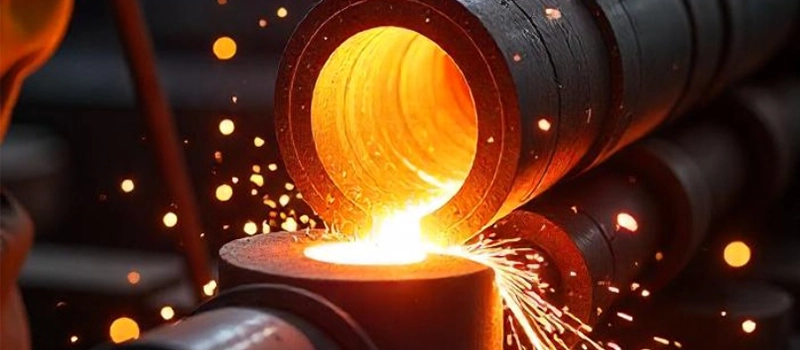
Cast iron is one of the most frequently used materials in centrifugal casting. It offers excellent wear resistance, good vibration damping, and relatively low material cost. These characteristics make it suitable for manufacturing components that must endure long service cycles and mechanical stress.
Centrifugally cast iron is commonly used in products such as:
- Industrial pipes and pipelines
- Pump housings and sleeves
- Cylinder liners
- Machine bushings
- Hydraulic system components
Because cast iron flows well in molten form, it adapts efficiently to the centrifugal casting process. The resulting castings typically exhibit a dense outer layer with improved mechanical performance compared with conventional cast iron products.
Ductile Iron
Ductile iron, also known as nodular iron, is another important material used in centrifugal casting. Compared with traditional gray iron, ductile iron contains graphite in spherical form, which significantly improves strength and toughness.
Centrifugally cast ductile iron components are widely used in infrastructure and heavy industry, particularly for pressure pipelines and structural mechanical parts. The improved mechanical properties of ductile iron allow components to withstand higher loads and impact stresses while maintaining good corrosion resistance.
Typical applications include water supply pipes, sewage systems, and industrial transport pipelines.
Stainless Steel
Stainless steel is frequently used in centrifugal casting when corrosion resistance and high temperature performance are critical requirements. Stainless steel alloys contain chromium and other alloying elements that create a protective oxide layer on the metal surface, preventing corrosion in aggressive environments.
Centrifugally cast stainless steel components are often used in:
- Petrochemical processing equipment
- Chemical transport pipelines
- Heat-resistant furnace components
- High-temperature industrial machinery
Because stainless steel is more challenging to cast than iron alloys, the controlled distribution of molten metal during centrifugal casting can help improve structural integrity and reduce internal defects.
Carbon Steel and Alloy Steel
Carbon steel and alloy steel are also widely used in centrifugal casting for components that require high strength and excellent load-bearing capability. These materials are commonly selected for heavy machinery, mining equipment, and industrial mechanical systems.
Alloy steels may contain additional elements such as chromium, molybdenum, or nickel to enhance specific properties including hardness, corrosion resistance, or heat resistance. When processed using centrifugal casting, these alloys can develop strong and reliable structures suitable for demanding mechanical environments.
Components produced from steel alloys often include industrial rollers, pressure pipes, and structural sleeves.
Bronze Alloys
Copper-based alloys such as bronze are particularly well suited for centrifugal casting. Bronze exhibits excellent wear resistance, good machinability, and strong anti-friction characteristics. These properties make it ideal for producing components that experience sliding contact or rotational movement.
Common bronze alloys used in centrifugal casting include aluminum bronze, tin bronze, and manganese bronze. These materials are widely used for manufacturing:
- Bearing sleeves
- Bushings
- Gear blanks
- Marine components
- Heavy machinery wear parts
The dense structure created by centrifugal casting helps improve the durability and load capacity of bronze bearings, making them reliable in long-term industrial operation.
Copper Alloys
Copper alloys are another important category of materials used in centrifugal casting. In addition to bronze, other copper-based materials such as brass and specialized engineering copper alloys may also be used.
Copper alloys typically offer high thermal conductivity, good corrosion resistance, and favorable mechanical strength. These properties make them suitable for applications where efficient heat transfer or electrical conductivity is required.
Examples of copper alloy components include industrial sleeves, mechanical bushings, and specialized equipment parts used in power systems and manufacturing machinery.
Aluminum Alloys
Although aluminum alloys are more commonly associated with die casting, they can also be produced through centrifugal casting when cylindrical or rotationally symmetric components are required. Aluminum alloys offer advantages such as low density, corrosion resistance, and good machinability.
These materials are often selected when weight reduction is important while still maintaining adequate structural strength. Aluminum centrifugal castings may be used in transportation equipment, mechanical systems, and certain industrial machinery components.
Nickel-Based Alloys
For extremely demanding environments, nickel-based alloys may also be produced using centrifugal casting. These materials are known for their excellent resistance to heat, corrosion, and oxidation. They are commonly used in high-temperature industrial environments such as chemical processing systems and energy equipment.
Nickel alloys maintain mechanical strength even at elevated temperatures, making them suitable for components exposed to intense thermal stress. Although these materials are more expensive than common alloys, their durability often justifies their use in specialized applications.
Material Selection Considerations
Selecting the appropriate material for centrifugal casting requires careful evaluation of the working conditions of the final component. Engineers typically consider several factors during material selection, including:
- Mechanical strength requirements
- Operating temperature range
- Corrosion resistance needs
- Wear resistance requirements
- Pressure and load conditions
- Machining and finishing requirements
By choosing the right alloy and optimizing the casting process parameters, manufacturers can produce components that meet both performance and durability requirements.
Because centrifugal casting produces dense and uniform structures, many engineering alloys perform exceptionally well when manufactured using this method. This flexibility in material selection is one of the reasons the process remains widely used across multiple industries and engineering sectors.
Applications of Centrifugal Casting in Various Industries
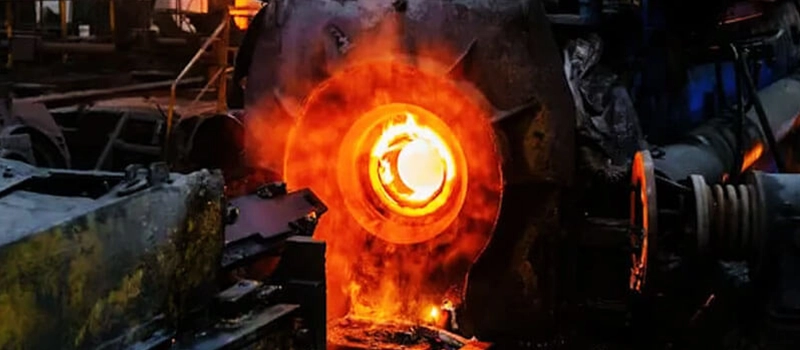
Because centrifugal casting can produce dense, durable, and high-strength cylindrical components, it has become an essential manufacturing method in many industrial sectors. The process is particularly valued in applications where parts must withstand high pressure, friction, corrosion, or extreme temperatures. Industries that require reliable metal components with consistent internal quality often rely on centrifugal casting to meet these demanding conditions.
The ability to manufacture hollow components without complex cores also makes the process highly efficient for producing pipes, sleeves, and bushings that are commonly used in heavy equipment and infrastructure systems.
Petrochemical and Energy Industry
One of the most important application areas for centrifugal casting is the petrochemical and energy sector. Equipment used in these industries often operates in environments involving high pressure, elevated temperatures, and corrosive chemicals. Components must therefore demonstrate excellent structural integrity and corrosion resistance.
Centrifugally cast pipes and tubes are frequently used for transporting oil, natural gas, and chemical fluids. Stainless steel and alloy steel are commonly selected materials because they provide strong resistance to corrosion and high-temperature degradation.
In refineries and chemical plants, centrifugal cast components may include:
- Process pipes and tubes
- Furnace rollers and heat-resistant tubes
- Chemical transport pipelines
- High-temperature pressure vessels
Because the casting process produces dense metal structures with minimal internal defects, these components can maintain long service lives even under continuous exposure to aggressive operating conditions.
Mining and Heavy Machinery
Mining operations require equipment that can endure extremely harsh environments. Machinery used in mining must handle abrasive materials, heavy loads, and constant mechanical stress. Components manufactured using centrifugal casting are well suited for these conditions because of their high wear resistance and mechanical strength.
Common mining equipment components produced through centrifugal casting include:
- Bearing sleeves and bushings
- Wear-resistant liners
- Crusher sleeves
- Heavy-duty mechanical rollers
Bronze alloys and high-strength steel alloys are frequently used in these applications because they provide excellent durability and resistance to wear caused by continuous friction.
Water Supply and Infrastructure
Centrifugally cast iron pipes play a major role in water supply systems and municipal infrastructure. Ductile iron pipes manufactured using centrifugal casting are widely used in urban water distribution networks due to their strength, reliability, and resistance to external pressure.
These pipes must withstand soil pressure, water pressure, and long-term environmental exposure. The dense metal structure created during centrifugal casting helps ensure that pipelines remain reliable for decades.
In addition to water supply systems, centrifugally cast pipes are also used in:
- Sewage systems
- Drainage infrastructure
- Irrigation networks
- Industrial fluid transport systems
The process allows manufacturers to produce long, uniform pipe sections that maintain consistent wall thickness and structural stability.
Marine and Shipbuilding Industry
Marine environments present significant challenges for metal components due to continuous exposure to saltwater and corrosion. Copper-based alloys such as bronze and aluminum bronze are often used in centrifugal casting for marine applications because of their excellent corrosion resistance.
Components produced for marine systems may include:
- Propeller shaft sleeves
- Marine bushings
- Pump housings
- Valve components
These parts must operate reliably under heavy loads while resisting corrosion caused by seawater. The dense structure of centrifugal cast bronze components helps improve their durability and performance in marine equipment.
Automotive and Transportation Equipment
The automotive and transportation industries also benefit from centrifugal casting, particularly for components that experience rotational movement or high friction. Cylindrical parts such as bushings, sleeves, and liners must maintain precise dimensions and strong wear resistance.
Centrifugal casting is commonly used to manufacture:
- Cylinder liners for engines
- Bearing bushings
- Transmission sleeves
- Structural rotating components
The improved mechanical strength and uniform material structure produced by centrifugal casting help extend the lifespan of these critical components.
Industrial Machinery and Manufacturing Equipment
Many types of industrial machinery require components that can withstand continuous operation and heavy mechanical stress. Bushings, sleeves, rollers, and bearing components are often produced using centrifugal casting because of the method’s ability to create dense, wear-resistant metal structures.
Manufacturing systems that rely on rotating shafts and sliding contact surfaces particularly benefit from centrifugally cast bronze and steel components. These materials provide strong load-bearing capacity while maintaining smooth operation and reduced friction.
Examples of such equipment include:
- Rolling mills
- Industrial presses
- Heavy machine tools
- Mechanical power transmission systems
The reliability of centrifugally cast parts helps ensure stable equipment performance and reduces the frequency of maintenance or replacement.
Chemical Processing Equipment
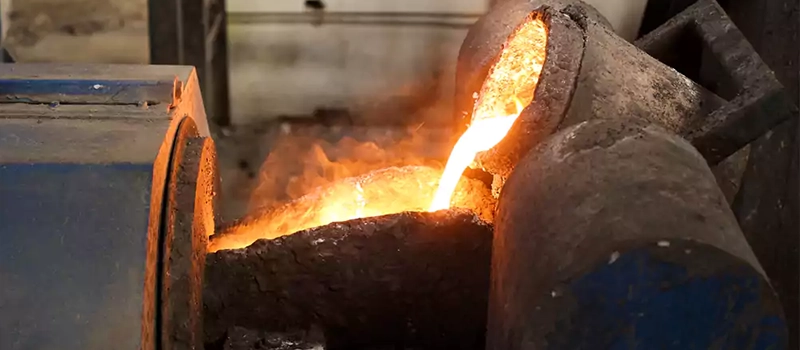
Chemical processing plants require specialized materials capable of resisting aggressive chemical environments. Stainless steel, nickel alloys, and other corrosion-resistant metals are often used in centrifugal casting to produce components used in chemical reactors and processing pipelines.
These components must maintain structural integrity even when exposed to corrosive liquids, gases, or high-temperature reactions. The dense metal structure achieved through centrifugal casting helps reduce the risk of leaks, structural failure, or chemical damage.
Examples of components used in chemical processing include:
- Reactor sleeves
- Chemical transport pipes
- High-temperature processing tubes
- Corrosion-resistant bushings
Role in Modern Industrial Manufacturing
Across all these industries, centrifugal casting provides a reliable method for producing cylindrical components that require high strength, durability, and consistent material quality. The process allows manufacturers to meet strict engineering requirements while maintaining efficient production.
As industrial equipment continues to evolve and operate under increasingly demanding conditions, the importance of centrifugal casting in modern manufacturing remains significant. Its ability to produce high-quality metal components ensures that it will continue to play a key role in many engineering and industrial applications.
Comparison with Other Casting Methods
Different casting technologies are used in metal manufacturing depending on the required component shape, production volume, material type, and mechanical performance requirements. While centrifugal casting offers clear advantages for cylindrical parts, other casting processes are often used for components with complex geometries or high production volumes.
The following table compares centrifugal casting with several commonly used casting methods in industrial manufacturing.
| Casting Method | Basic Principle | Typical Product Shapes | Main Advantages | Main Limitations | Common Industrial Uses |
|---|---|---|---|---|---|
| Centrifugal Casting | Molten metal is poured into a rotating mold and distributed along the mold wall by centrifugal force | Cylindrical and hollow components such as pipes, tubes, bushings, and sleeves | High metal density, low porosity, excellent mechanical strength, no cores required for hollow shapes | Limited mainly to axisymmetric parts | Pipes, cylinder liners, bearing sleeves, industrial rollers |
| Sand Casting | Molten metal is poured into a sand mold formed around a pattern | Very complex shapes and large components | Flexible design capability, low tooling cost, suitable for large castings | Rough surface finish, higher porosity, lower dimensional accuracy | Machinery parts, engine blocks, pump housings |
| Investment Casting | Wax patterns are coated with ceramic to create precision molds for casting | Small to medium complex components | High dimensional accuracy, excellent surface finish, minimal machining required | Higher production cost and longer manufacturing cycle | Aerospace components, turbine parts, precision machinery |
| Die Casting | Molten metal is injected into a steel mold under high pressure | Thin-walled parts with complex geometry | Very high production efficiency, smooth surface finish, excellent dimensional consistency | Limited mainly to low-melting-point alloys such as aluminum or zinc | Automotive parts, electronics housings, consumer products |
| Continuous Casting | Molten metal solidifies continuously as it moves through a cooled mold | Long metal bars, slabs, and billets | High production efficiency, consistent material structure | Limited to simple cross-section shapes | Steel production, metal stock manufacturing |
Key Differences in Manufacturing Performance
Compared with these casting methods, centrifugal casting stands out for its ability to produce dense cylindrical components with minimal internal defects. The centrifugal force applied during solidification compresses the molten metal against the mold wall, improving internal structure and mechanical strength.
In contrast, sand casting provides greater flexibility in producing complex shapes but may result in higher porosity and lower dimensional precision. Investment casting offers exceptional accuracy but is often more expensive and better suited for smaller components.
Die casting is extremely efficient for large-scale production of thin-walled parts, particularly aluminum components, but it is limited by alloy type and tooling costs.
Continuous casting is primarily used in large-scale metal production rather than manufacturing finished components.
Selecting the Appropriate Casting Process
Engineers and manufacturers select the appropriate casting process by evaluating several factors:
- Component geometry
- Mechanical performance requirements
- Production volume
- Material type
- Cost considerations
For cylindrical components that require high density, excellent mechanical strength, and consistent internal quality, centrifugal casting often provides the most effective manufacturing solution.
Conclusion: The Future of Centrifugal Casting
Centrifugal casting remains an important manufacturing method for producing high-quality cylindrical metal components. Its ability to create dense structures, reduce internal defects, and improve mechanical performance makes it especially valuable for pipes, bushings, liners, and other rotational parts used in demanding industrial environments.
As industries continue to require stronger, more durable materials, centrifugal casting is expected to evolve alongside advancements in alloy development, process control, and manufacturing automation. These improvements will further enhance product quality, production efficiency, and consistency.
With its proven reliability and wide material compatibility, centrifugal casting will continue to play a vital role in modern metal manufacturing and industrial engineering.