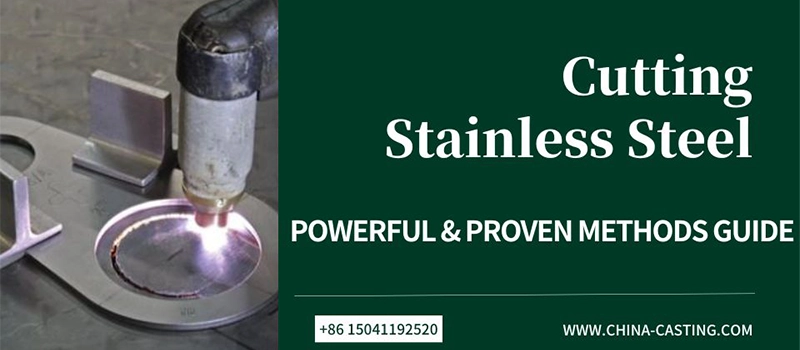
Why do so many manufacturers and designers choose brushed metal? Is it just for the distinctive appearance—or is there more behind the surface texture? From architecture to automotive, brushed finishes are found everywhere, yet the real reason lies in performance, durability, and controlled surface treatment.
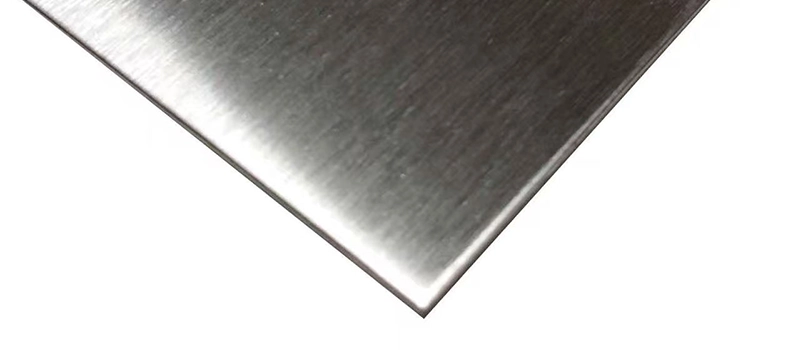
Brushed metal is a surface finish created by abrasive polishing that leaves a uniform, directional texture. It reduces reflectivity, hides minor flaws, and enhances corrosion resistance. This finish is not just cosmetic—it plays a critical role in both product quality and user experience.
According to the European Committee for Surface Treatment (CETS), “Mechanical surface finishes like brushing improve not only the appearance of metals but also their functional behavior in industrial settings.” With this in mind, understanding how brushed metal is made—and why it’s preferred—is essential across industries.
What Is Brushed Metal and How Is It Made?
Understanding the Brushed Metal Surface
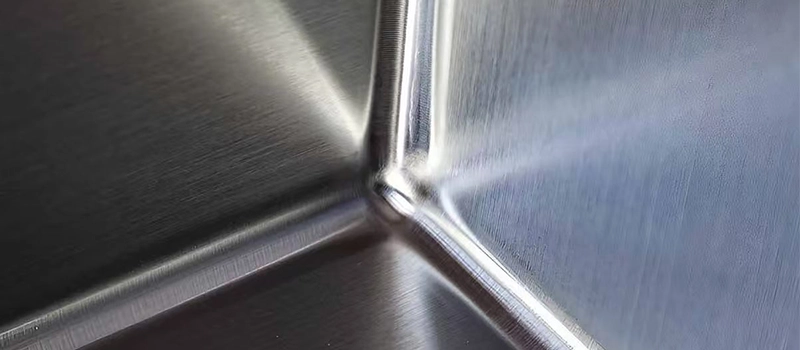
Brushed metal refers to a surface finish created through a mechanical abrasion process that leaves fine, parallel lines across the metal’s surface. These lines are typically uniform and directional, giving the metal a matte, textured appearance. Brushed metal is not a different type of metal but a surface treatment applied to common base metals such as stainless steel, aluminum, and sometimes copper or brass.
This texture reduces reflectivity and helps hide small surface imperfections, making it ideal for visible applications where both appearance and durability are critical. The finish gives the metal a clean, industrial look that is highly popular in architectural panels, household appliances, and consumer electronics.
Brushed metal is valued for its ability to combine aesthetics with function. It enhances grip on components, minimizes the visibility of wear over time, and gives a consistent tone to the surface, even under different lighting conditions.
The Brushing Process in Manufacturing
The process of producing brushed metal involves moving the metal surface across an abrasive belt or brush with consistent pressure and speed. This abrasion removes a thin surface layer and leaves behind a series of fine grooves aligned in one direction.
The machinery used may vary depending on the base metal and required grain finish. Common equipment includes belt sanders, rotary brushing heads, or wide-belt polishing systems. The brushing is typically done as a final surface treatment, after the sheet metal has been rolled, cut, or formed.
Depending on the application, manufacturers may apply different grain sizes, from coarse lines for industrial machinery to fine, almost satin-like finishes for consumer goods. Controlling this grain direction and consistency is key to achieving a professional, repeatable brushed metal result.
Pre- and Post-Treatment Considerations
Before brushing, the metal surface must be clean and free from scale, oxides, or oils. After brushing, further treatments may be applied to improve corrosion resistance or color tone. For example:
- Stainless steel may be passivated after brushing to restore its corrosion layer
- Aluminum may be anodized to increase surface hardness and color uniformity
- Transparent protective coatings may be added to resist fingerprints and wear
These steps ensure the brushed metal surface remains consistent and functional during transport, fabrication, or installation.
Brushed metal surfaces offer not just visual appeal but also engineered control over reflectivity and wear resistance. By combining mechanical abrasion with precise surface preparation, manufacturers create finishes that serve both aesthetic and functional goals across industries.
Brushed Metal vs Other Surface Finishes
Comparing Surface Texture and Reflectivity
Brushed metal is often selected for its subtle, textured finish and low reflectivity. Unlike polished or mirror finishes that create a highly reflective surface, brushed metal has a soft, matte appearance due to its linear grain. This directional texture diffuses light instead of reflecting it sharply, giving it a more subdued, industrial character.
In contrast, polished metal is smooth and bright, often used where visual sharpness or a clean mirror effect is desired. Matte finishes, which can be created through chemical etching or sandblasting, have no visible grain but offer a completely flat look. Satin finishes lie somewhere in between, combining mild reflectivity with a smoother feel than brushed metal.
The primary difference lies in how these finishes are perceived under light and touch. Brushed metal’s visible grain adds both visual interest and tactile grip, making it ideal for touch surfaces and visible components.
Durability and Maintenance Comparison
In industrial or high-contact environments, the choice of surface finish can impact maintenance needs and long-term performance. Brushed metal, while resistant to minor scratches due to its grain, can accumulate fingerprints and smudges more easily than matte surfaces. However, its linear texture tends to mask light abrasions better than polished finishes, which show wear more clearly.
Polished surfaces, though initially striking, require frequent cleaning to retain their shine. They are more susceptible to swirl marks and scratches. Matte finishes resist glare and fingerprints but may trap dirt in micro-textures, making cleaning slightly more difficult in certain environments.
Brushed metal offers a practical balance. It combines durability with visual tolerance, often requiring less upkeep than high-gloss or untreated surfaces, particularly in public-facing or high-use applications.
Cost and Process Efficiency
The production method also influences cost and efficiency. Brushed metal is generally less expensive to produce than highly polished finishes, which require additional buffing and surface refinement. It is more process-intensive than raw or mill finishes but can be automated easily in industrial settings.
In volume manufacturing, brushing can be integrated into continuous sheet lines or post-processing stages with minimal interruption. This makes brushed metal a cost-effective upgrade over unfinished surfaces, especially for consumer-facing products where both appearance and functionality are important.
For manufacturers balancing budget, appearance, and durability, brushed metal provides a versatile solution with consistent performance. It offers a high-value finish that enhances the product’s appeal without compromising function or increasing maintenance demands.
Industrial Applications of Brushed Metal
Consumer Electronics and Appliances
Brushed metal is a widely preferred surface treatment in consumer electronics due to its clean look, fingerprint-masking texture, and tactile appeal. Laptops, mobile phones, smart home devices, and speakers frequently feature brushed aluminum housings. The finish adds a premium feel and distinguishes these products from plastic or glossy alternatives.
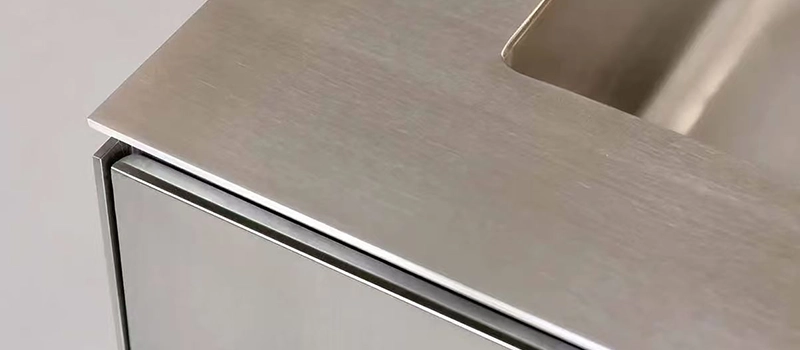
In home appliances, brushed stainless steel has become a standard. Refrigerators, ovens, dishwashers, and microwaves use brushed metal panels to provide both a professional appearance and scratch resistance in daily use. The brushed surface maintains a clean look longer, making it suitable for kitchens, showrooms, and high-touch environments.
Architectural and Interior Design Elements
Brushed metal also plays a major role in modern architecture and interior construction. Elevator panels, wall cladding, door hardware, and lighting fixtures often use brushed stainless steel or aluminum for their refined, industrial aesthetic.
The surface finish helps resist visible wear in public or commercial spaces such as airports, hotels, and shopping centers. Handrails, signage, and door trims use brushed metal for both functional durability and visual harmony with surrounding materials like glass, stone, or wood.
Brushed finishes also allow for controlled light reflection, preventing glare in bright environments while preserving a modern, minimalistic appearance.
Automotive and Aerospace Components
In automotive design, brushed metal is used in dashboard trims, door panels, gear shifters, and decorative inlays. Brushed aluminum provides contrast with leather, plastic, or carbon fiber, and its low-gloss surface prevents distraction from sunlight reflection.
In aerospace, brushed metal components are found in cockpit panels, cabin fittings, and support structures where cosmetic durability is required. Brushed finishes can also help reduce glare in control surfaces and improve readability of instrument housings.
The controlled grain on brushed metal reduces directional glare, which is important in both automotive and aircraft interiors for safety and comfort.
Medical and Food-Grade Equipment
Brushed stainless steel is a top choice in environments where hygiene and durability are critical. In hospitals, surgical tools, bed frames, and lab equipment use brushed finishes to ensure easy cleaning while minimizing surface imperfections that could harbor contaminants.
In food production and restaurant equipment, brushed metal provides a corrosion-resistant, non-reactive surface. It also hides usage marks, making it suitable for long-term, intensive use in commercial kitchens and food-grade machinery.
Brushed metal balances performance, cleanability, and aesthetics across many industries, making it a reliable and repeatable surface solution.
Brushed Metal in Sheet Fabrication
How Brushing Integrates Into Sheet Metal Processing
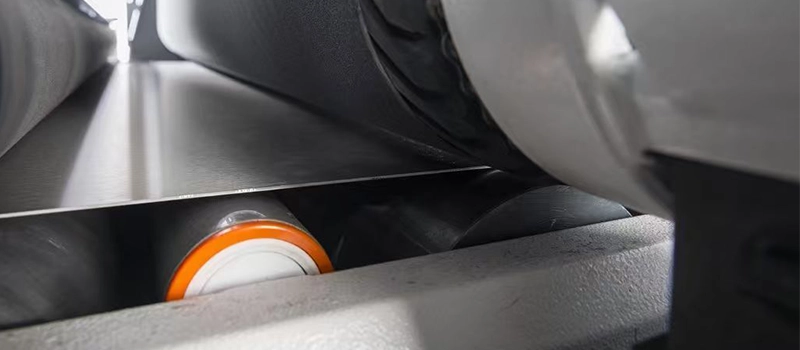
In industrial manufacturing, brushed metal is most often applied to flat sheets before or after forming. The brushing process can be part of a continuous line, or it may be conducted as a separate finishing stage. The goal is to achieve uniform grain direction and a consistent surface finish across the entire sheet.
The base material—usually stainless steel or aluminum—is first cut or rolled to the desired thickness. It then passes through abrasive belts or rotary brushing machines that remove a fine surface layer while imparting the linear texture associated with brushed metal. In high-volume production, this process is automated to ensure repeatability and efficiency.
This makes brushed metal especially suitable for architectural panels, elevator doors, control enclosures, and equipment housings where both form and appearance are critical.
Controlling Grain Direction and Texture
One of the defining traits of brushed metal is the orientation of its grain. In sheet fabrication, controlling grain direction matters for both aesthetics and performance. For example, vertical grain patterns are typically used in wall panels and elevator interiors, while horizontal grain is common in kitchen appliances and countertops.
Uniform grain alignment across multiple panels ensures visual consistency when pieces are installed side by side. Manufacturers must align brushing direction during cutting and assembly stages to prevent mismatched finishes or visible seam lines.
Grain depth is also customizable. Coarse brushing produces a more rugged industrial look, while fine brushing gives a smoother, satin-like texture. The grain size affects not only the visual impression but also how the surface responds to handling and cleaning.
Secondary Treatments After Brushing
After a brushed finish is applied, additional surface treatments may be added depending on end-use requirements. These include:
- Anodizing for aluminum to increase corrosion resistance and color control
- Passivation for stainless steel to restore its protective oxide layer
- Application of clear coatings to resist fingerprints or UV damage
- Powder coating or painting for color customization while retaining surface texture
Importantly, these treatments are designed to preserve the brushed metal grain and texture while enhancing durability or aesthetics.
Challenges in Large-Scale Fabrication
Maintaining consistency in brushed metal across large sheets or high-volume production runs requires careful control of machinery, abrasives, and material flow. Uneven pressure, worn abrasive belts, or inconsistent feed speeds can result in streaks, color variation, or incomplete brushing.
In addition, brushed surfaces are more prone to visible cross-contamination during fabrication—such as oil smudges or tool marks—so clean handling practices are essential during transport and assembly.
Despite these challenges, brushed metal remains a popular choice for sheet fabrication due to its versatility, scalability, and distinctive visual appeal. It offers manufacturers a controllable, attractive finish that adds both functional and aesthetic value to their products.
Advantages and Limitations of Brushed Metal
Advantages of Brushed Metal Surfaces
Brushed metal offers a strong balance between performance, aesthetics, and durability. One of its biggest advantages is its ability to mask minor surface imperfections. The directional grain diffuses reflections and conceals small scratches or blemishes that would be more noticeable on polished or glossy surfaces.
Another benefit is its tactile surface. The grain texture provides a subtle grip, making brushed metal ideal for touch surfaces such as elevator buttons, appliance handles, and control panels. It is also less reflective than mirror-polished finishes, which reduces glare and improves readability in high-light environments.
In addition, brushed finishes can enhance the perceived value of a product. Many designers associate brushed metal with a professional, modern, or high-end look. Whether in electronics, kitchen appliances, or architectural elements, this finish signals quality without being flashy.
Brushed metal is also compatible with various base materials. Stainless steel, aluminum, brass, and even titanium can all be brushed using industry-standard equipment, making the finish accessible across sectors.
Durability and Wear Resistance
From a functional standpoint, brushed metal maintains its surface appearance longer in day-to-day use. The directional grain helps blend in minor abrasions, meaning that frequent contact does not rapidly degrade the visual quality.
This is especially true for brushed stainless steel, which combines corrosion resistance with a finish that tolerates regular cleaning. In commercial kitchens, for example, brushed surfaces are chosen not just for appearance but because they hold up under heavy cleaning cycles.
Brushed aluminum, while softer than steel, still benefits from a protective oxide layer and can be anodized to further improve surface hardness. This is particularly helpful in electronics, where brushed metal casings resist wear from regular handling.
Maintenance and Cleaning Considerations
Although brushed metal hides scratches well, it is not maintenance-free. The grain texture can hold dirt or oils, especially in horizontal applications or high-touch environments. Fingerprints are more visible on brushed finishes than on matte or textured coatings.
To clean brushed metal properly, non-abrasive cloths and grain-aligned wiping are recommended. Harsh chemicals or cross-grain scrubbing can disrupt the surface pattern and create visible inconsistencies. Some products receive a thin clear coat to resist smudging or oxidation, depending on their application environment.
Periodic maintenance ensures the brushed appearance remains consistent and attractive, particularly in architectural or display settings.
Limitations and Trade-Offs
While brushed metal offers many advantages, it does come with limitations. One of the most notable is that the brushing process slightly reduces corrosion resistance in stainless steel by removing part of the protective oxide layer. Post-brushing passivation or coatings are often necessary to restore full protection.
Another drawback is the potential for surface fatigue. Over time, brushed finishes may become dull or uneven, especially if subjected to improper cleaning or mechanical wear. Unlike polished surfaces, brushed metal cannot be easily buffed to restore its original texture—it often requires rebrushing.
For products that must withstand harsh chemicals or outdoor exposure, brushed metal may not be the ideal choice unless it is treated with secondary coatings or fabricated from corrosion-resistant alloys.
Despite these trade-offs, brushed metal remains a preferred finish in applications where appearance, controlled reflectivity, and tactile quality are important.
Trends and Innovations in Brushed Metal Design
Evolving Aesthetics in Modern Design
In recent years, brushed metal has evolved beyond its traditional roles. While it remains a staple in industrial and commercial settings, designers are increasingly using it in creative applications. From home interiors to wearable electronics, brushed finishes offer a refined texture that blends seamlessly with both minimal and bold design languages.
Color treatments are also becoming more common. Dark-brushed stainless steel, rose gold brushed aluminum, and champagne-toned finishes are now widely used in premium product lines. These variants maintain the familiar grain structure of brushed metal while adding uniqueness through controlled anodizing or tinting processes.
Architects, interior designers, and industrial product teams are integrating these finishes into their material libraries, using brushed metal to convey a sense of balance between utility and elegance.
Customization Through Digital Finishing
Advancements in finishing technology now allow for digital control of the brushing process. CNC brushing systems can apply custom grain patterns, varying depths, or even multi-directional textures to brushed metal surfaces. This opens the door to unique textures and surface branding that go beyond the traditional linear grain.
Laser-etched overlays on brushed metal, for example, allow logos or functional markings to be embedded directly into the surface without disrupting the overall texture. These innovations are particularly popular in high-end electronics and packaging applications where identity and precision must coexist.
Controlled brushing depth and patterning also enable the combination of function and design. For example, certain patterns can reduce glare in specific lighting conditions or improve the grip on control panels and handles.
Integration With Smart Materials and Components
Brushed metal is also being integrated into smart technologies. In devices with embedded sensors or touch interfaces, brushed metal provides a sleek surface that doesn’t interfere with signal transmission. It is commonly used in touch panels, haptic feedback systems, and user-interface hardware in industrial equipment.
In addition, its compatibility with temperature-resistant coatings makes it suitable for integration with heating or cooling elements in both consumer and industrial products.
Future applications of brushed metal may involve nanocoating layers that provide self-cleaning or anti-fingerprint capabilities, making the finish even more practical in demanding environments.
Role in Branding and Product Differentiation
For many companies, brushed metal has become part of their product identity. In electronics, automotive interiors, and even luxury packaging, the texture and appearance of brushed surfaces contribute directly to brand perception.
Brushed metal gives a premium impression without excessive gloss or ornamentation. This restrained elegance is often favored in brands that value functionality, quality, and modern minimalism.
As surface customization becomes more accessible, expect brushed metal to continue serving not just as a finish—but as a storytelling medium for products and brands alike.
Conclusion
Brushed metal remains a versatile and dependable surface finish across industries. It delivers the balance of aesthetic appeal, durability, and practicality that manufacturers and designers continue to rely on. Whether used in sheet fabrication, product design, or architectural elements, brushed metal offers controlled performance with a finish that stands the test of time.