Brass vs bronze vs copper—at first glance, these three metals often look alike. Yet in manufacturing and metal fabrication, confusing brass vs bronze vs copper can result in poor performance, premature corrosion, higher maintenance costs, or even complete product failure. When material selection directly impacts durability and cost, understanding brass vs bronze vs copper is not optional—it is essential.
As a manufacturer with years of hands-on experience in metal fabrication, I have worked extensively with brass vs bronze vs copper across multiple industries, including construction, automotive, agriculture, and heavy equipment. In this article, I provide a clear, experience-based comparison of brass vs bronze vs copper, examining their chemical composition, appearance, corrosion behavior, cost structure, and long-term maintenance requirements—factors that truly matter in real-world applications.
By the end of this guide, brass vs bronze vs copper will no longer be a confusing choice. You will understand exactly how brass vs bronze vs copper differ, why those differences matter, and how to select the right metal with confidence, precision, and cost-efficiency for your specific project.
Copper, Brass, and Bronze: Basic Definitions and Chemical Composition
In the world of metals, brass vs bronze vs copper is a topic that often causes confusion—even among professionals. All three share similar warm tones, and all are essential to various industries. But beneath the surface, their differences in composition and performance make each metal distinct and specialized.
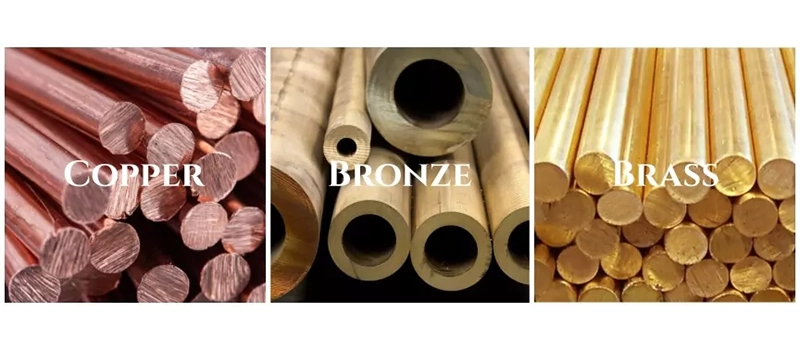
Let’s start with the base element: copper. Copper is a naturally occurring metal, symbolized as Cu on the periodic table. It has been in human use for over 10,000 years. In its pure form, copper is known for its reddish-orange color and high purity—usually 99.9%—before being used in manufacturing. As a base metal, it is soft, ductile, and visually striking. Historically, it laid the foundation for both brass and bronze through alloying.
Brass is an alloy created by combining copper and zinc. The percentage of zinc can vary depending on the application, typically ranging from 5% to 45%. More zinc generally means a lighter color and improved strength. Because of this flexibility, brass is popular in fittings, decorative components, musical instruments, and low-friction applications. It has a distinct yellowish hue, often resembling gold, making it highly attractive for both functional and ornamental uses.
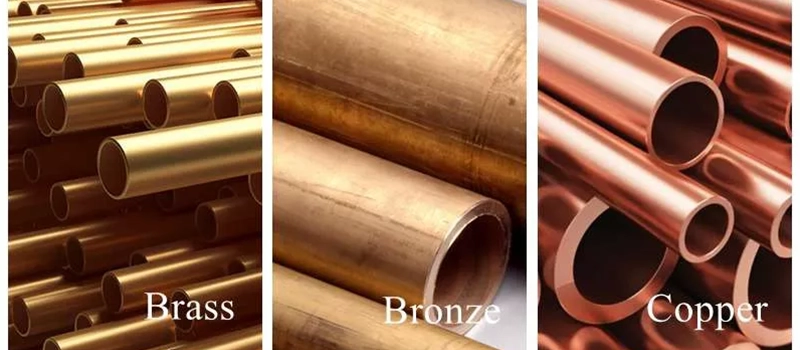
Bronze, on the other hand, is formed by alloying copper with tin. The proportion of tin usually ranges from 5% to 20%, and sometimes additional elements like aluminum, phosphorus, or silicon are added to further refine its properties. Compared to brass, bronze is generally harder, more brittle, and exhibits superior resistance to wear and corrosion in demanding environments. It is commonly used in sculptures, tools, coins, and marine equipment due to its toughness and heritage of durability.
Understanding the base formula of each metal is crucial when evaluating bronze vs brass vs copper. The chemical composition directly affects how the metal performs in strength, machinability, and resistance to corrosion.
Comparison Table: Chemical Composition of Copper, Brass, and Bronze
| Metal | Main Elements | Typical Copper Content | Secondary Elements |
|---|---|---|---|
| Copper | Pure Copper (Cu) | 99.9% | None |
| Brass | Copper + Zinc | 60–85% | Zinc (5–40%) |
| Bronze | Copper + Tin (plus others) | 70–90% | Tin, Aluminum, Silicon, etc. |
Although copper vs brass vs bronze comparisons often focus on external features like color, it is their internal composition that ultimately defines their function. For instance, while copper remains unalloyed, both brass and bronze are designed alloys, each with customizable properties suited to specific industrial or decorative needs.
This foundational knowledge sets the stage for understanding why brass vs bronze vs copper is more than just a surface-level debate—it’s about choosing the right material from the inside out.
Appearance Comparison: Color Differences Between Copper, Brass, and Bronze
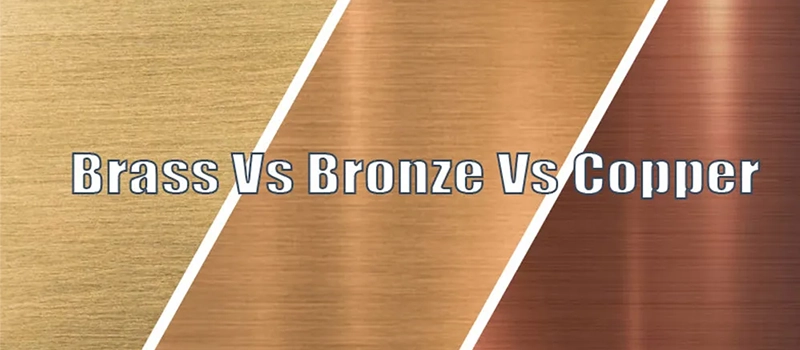
When comparing brass vs bronze vs copper, visual appearance is often the first—and sometimes the only—thing buyers and engineers notice. While these metals may seem similar from a distance, their surface colors, tones, and the way they age are significantly different. A trained eye can distinguish them instantly.
Copper: From Warm Orange to Iconic Green
Copper is unmistakable in its natural state. Freshly polished, it appears reddish-orange, glowing with a rich, warm tone that has made it a favorite in architecture, design, and hardware. Over time, however, copper reacts with oxygen, moisture, and air pollutants, forming a green or bluish-green patina—famously seen on monuments like the Statue of Liberty.
This patina is more than just a visual effect. It acts as a protective layer, preventing deeper corrosion and increasing longevity. Many architects and artists embrace this transformation, seeing it as part of copper’s character and natural life cycle. In copper vs brass vs bronze aesthetics, copper is the most dynamic and reactive of the three.
Brass: The Bright, Golden Finish
Brass offers a yellow to golden appearance, often mistaken for gold itself. This bright, reflective finish is why it’s commonly used in musical instruments, antique handles, and plumbing components. The specific tone of brass varies depending on its zinc content—more zinc leads to a paler yellow, while less zinc creates a deeper, warmer gold.
Unlike copper, brass does not develop a green patina. Instead, if left unprotected, it will tarnish to a dull brown or darker yellow. Some applications embrace this aging effect, while others require regular polishing or lacquer coating to maintain the original brilliance. When discussing brass vs bronze vs copper color, brass stands out as the most vibrant and high-luster option—especially when freshly finished.
Bronze: Earthy Tones with Timeless Depth
Among the three metals, bronze has the most understated elegance. It typically appears reddish-brown or deep brown and quickly darkens with age. Over time, bronze develops a rich, dark patina that may include shades of chocolate, charcoal, or even black. Unlike copper, it rarely turns green unless exposed to harsh conditions for extended periods.
This subtle aging process is highly valued, particularly in sculptures, marine components, and historic hardware. In the bronze vs brass vs copper conversation, bronze is often chosen for projects where durability and dignified aging are desired, rather than brightness or shine.

Industrial Applications: How Copper, Brass, and Bronze Are Used Differently
In the metal fabrication world, the decision between brass vs bronze vs copper isn’t only about appearance or cost—it’s about function. Each metal has its own strengths and limitations, which determine where and how it’s used in industrial applications. From heavy machinery to precision components, knowing when to use copper, brass, or bronze can make or break product performance.
Copper: The Backbone of Electrical and Thermal Systems
Copper is widely regarded as the gold standard for conductivity. Its ability to efficiently carry both electricity and heat makes it the top choice for electrical wiring, power transmission lines, and heating components. In industrial settings, you’ll find copper used in:
- Electrical motors and transformers
- Busbars and switchgear
- Heat exchangers and HVAC tubing
- Plumbing systems (due to corrosion resistance and hygiene)
Another key advantage of copper is its anti-microbial property, which makes it valuable in medical and food-processing environments. However, copper is relatively soft, meaning it’s not suitable for high-friction mechanical applications unless it’s alloyed or reinforced.
Brass: A Perfect Balance of Strength and Workability
Brass offers a unique blend of formability, corrosion resistance, and visual appeal. Because of its zinc content, it’s harder than pure copper but still easy to machine and fabricate. In the context of brass vs bronze vs copper, brass is often selected when both appearance and precision machining are critical.
Typical industrial applications include:
- Plumbing fittings and valves
- Gears, bushings, and lock mechanisms
- Low-friction bearings
- Decorative hardware and architectural elements
- Marine parts (with special corrosion-resistant brass types)
Brass is especially valuable when tight tolerances are required in machining, and it holds up well in moderately corrosive environments. It is also non-sparking, which makes it a safer option for fittings and tools in explosive atmospheres such as oil refineries or chemical plants.
Bronze: Built for Friction, Fatigue, and Harsh Environments
When it comes to rugged mechanical use, bronze is the industry’s go-to metal. It handles high-load and high-friction environments better than brass or copper, thanks to its tin content and superior wear resistance. It is also highly resistant to corrosion—especially in seawater—making it indispensable in marine and heavy industrial applications.
You’ll find bronze in:
- Bearings and bushings (especially in engines and gear systems)
- Pump and valve components
- Propellers and underwater fasteners
- Industrial tools and die-making
- Structural components in construction and mining
Bronze alloys are often formulated with small additions of phosphorus, aluminum, or silicon to increase hardness or corrosion resistance even further. In copper vs bronze vs brass performance comparisons, bronze consistently leads in durability, making it ideal for repetitive motion parts or long-term structural roles.
Copper, Brass, and Bronze in Cookware and Utensils: Which Is Safer?
In today’s global market, the debate around brass vs bronze vs copper extends far beyond industrial applications. These metals are increasingly used in cookware, serving utensils, and kitchen decor. But are they all equally safe for food contact? Can you confidently use a copper bowl or a brass ladle in daily cooking? The answer depends on more than appearance—it’s about chemistry, coating, and context.
Copper Utensils: Beautiful, but Handle with Care
Copper is widely used in high-end cookware, particularly for pots, pans, and mixing bowls. Its excellent thermal conductivity allows food to heat quickly and evenly, making it a favorite among professional chefs. However, copper presents a significant food safety issue when used in its bare, uncoated form.
When acidic foods (like tomatoes, vinegar, or citrus) come into direct contact with uncoated copper, they can cause the metal to leach into the food. Excessive copper ingestion may lead to nausea or gastrointestinal discomfort. That’s why most modern copper cookware comes with a protective inner lining, usually stainless steel or tin, to prevent direct food contact.
When comparing copper vs brass vs bronze in kitchen use, copper wins for performance but requires proper coating and careful cleaning.
Brass Utensils: Traditional Appeal with a Safety Caveat
Brass is commonly found in decorative utensils, serving trays, spoons, and drinking vessels in traditional markets. Its golden appearance gives it a regal and antique charm. However, not all brass is food-safe. Depending on its zinc content and manufacturing quality, brass may contain traces of lead, which poses serious health risks if ingested regularly.
To make brass safe for food use, manufacturers often coat it with lacquer or food-grade resin, or produce lead-free brass alloys. In the context of brass vs bronze vs copper utensils, brass sits in the middle ground—it offers better strength and tarnish resistance than copper but must be produced carefully to ensure food safety.
Consumers and restaurant buyers should always check whether brass utensils are lead-free and clearly labeled food-grade before use.
Bronze Utensils: Rare but Rugged
Bronze is less common in everyday cookware but may appear in serving ware, decorative bowls, and antique-style kitchen tools. Its dark, earthy tone gives it a distinctive appearance, but it’s generally heavier and harder than brass or copper—qualities that make it more suitable for durable or ceremonial pieces rather than daily use.
While bronze itself doesn’t usually pose a toxicity risk, the alloy’s exact composition can vary greatly. Some bronze blends may include elements like aluminum or phosphorus, which aren’t intended for culinary environments. When evaluating bronze vs brass vs copper safety for food contact, bronze is often considered the least practical choice unless specifically certified for culinary use.
Corrosion Resistance and Patina Development: Long-Term Behavior of Brass, Bronze, and Copper
When it comes to durability, understanding brass vs bronze vs copper means looking beyond their composition and color. What truly sets these metals apart is how they react over time—especially when exposed to air, moisture, or chemicals. Whether you’re sourcing metals for outdoor structures, marine components, or high-touch industrial parts, corrosion resistance and patina development are essential performance factors.
Copper: Naturally Reactive but Self-Protective
Among the three, copper is the most reactive. It quickly oxidizes when exposed to air and moisture, forming a surface layer of copper oxide. Over time, this layer transforms into a greenish patina, known as verdigris, which can be seen on rooftops, domes, and iconic monuments around the world.
Although it appears aged, this patina actually plays a protective role. It seals the surface and prevents deeper corrosion, which is why uncoated copper is often used in architectural and artistic settings where controlled aging is desired. In the copper vs brass vs bronze comparison, copper clearly undergoes the most visible transformation—but in a way that can actually enhance its lifespan in stable environments.
However, copper is still less corrosion-resistant than bronze in aggressive industrial or marine conditions. That’s an important consideration when evaluating brass vs bronze vs copper for long-term structural use.
Brass: Tarnish-Prone, Not Patina-Proof
Brass resists corrosion better than pure copper due to its zinc content, but it’s not entirely immune. In dry indoor settings, brass maintains its golden appearance for years. But in humid or polluted environments, brass tends to tarnish, turning brown or dull gray.
Unlike copper, brass does not develop a patina layer that strengthens its corrosion resistance. Instead, the surface dulls and may accumulate stains unless it’s regularly polished or lacquer-coated. This makes brass more suitable for interior applications or environments where visual shine is important and corrosive agents are minimal.
In the broader brass vs bronze vs copper analysis, brass offers moderate corrosion resistance—better than copper, but not as durable as bronze.
Bronze: The King of Corrosion Resistance
Bronze outperforms both copper and brass in terms of corrosion resistance—especially in marine, coastal, and industrial environments. Thanks to its tin content, bronze forms a tight, stable oxide layer that prevents further corrosion, even in saltwater or acidic atmospheres.
In fact, certain bronze alloys, like aluminum bronze or phosphor bronze, are specifically engineered for extreme resistance to chemical exposure, wear, and corrosion. These properties make bronze a top choice for bearings, underwater fasteners, ship propellers, and valves.
While bronze can darken over time, the patina it develops is typically dark brown or black, not green like copper. This aging process is slow and uniform, maintaining the metal’s integrity and performance. That’s why in bronze vs brass vs copper corrosion resistance, bronze wins every time.
Choosing Based on Environment and Application
Here’s how brass vs bronze vs copper rank for corrosion resistance in practical terms:
- Copper: Visibly reactive; forms green patina; suited for architecture and controlled environments
- Brass: Moderate resistance; tarnishes without protection; best for indoor or decorative use
- Bronze: Superior corrosion resistance; ideal for marine, industrial, and load-bearing components
Understanding how each metal ages allows you to plan for maintenance, design around aging, and choose materials that match your environment—whether it’s humid, salty, acidic, or variable.
Price Comparison: Cost Differences Between Brass, Bronze, and Copper
In global sourcing and industrial procurement, the cost of raw materials is a critical factor. Choosing between brass vs bronze vs copper often comes down to more than just performance—it comes down to price and return on investment.
Because these three metals share a copper base, their pricing is interrelated, yet varies significantly depending on alloy content, manufacturing process, and market demand. A clear comparison is essential for project managers, engineers, and buyers aiming to stay within budget while meeting functional requirements.
How Pricing Works in Copper Alloys
The price of copper sets the baseline. As a globally traded commodity, copper’s price fluctuates daily based on international markets. Since both brass and bronze are copper-based alloys, their prices track copper, but the addition of zinc in brass and tin or aluminum in bronze drives variation.
Generally speaking:
- Copper is the most expensive per kg, due to its high purity and demand in electronics
- Bronze is often more expensive than brass due to the high cost of tin
- Brass tends to be the most economical, especially when high zinc content is used
Brass vs Bronze vs Copper Price Comparison Table
| Metal | Approx. Material Cost (per kg) | Raw Material Drivers | Market Notes |
|---|---|---|---|
| Copper | High | Pure copper | Prices fluctuate with global demand; costly but essential |
| Brass | Low to Medium | Copper + Zinc | Economical; zinc lowers cost; ideal for mass production |
| Bronze | Medium to High | Copper + Tin (or others) | Tin cost raises price; used for performance, not savings |
Note: Pricing is dynamic and influenced by purity, alloy formulation, and global metal markets. Always request updated quotes for accuracy.
Other Cost Factors to Consider
Beyond raw material cost, choosing between brass vs bronze vs copper also involves secondary cost considerations:
- Machining Cost: Brass is easy to machine, reducing labor and tooling time
- Scrap Recovery: Copper and brass have high recycling value, offsetting cost
- Durability: Bronze’s longevity in harsh environments may justify higher initial cost
- Finishing: Brass often requires polishing or lacquering for aesthetics, adding minor cost
When sourcing internationally—especially from China or Vietnam—freight costs, minimum order quantities, and surface treatment needs should also be factored into the total landed cost.
Maintenance and Care for Brass, Bronze, and Copper
When it comes to long-term durability, selecting between brass vs bronze vs copper is only the beginning. Even the best metal can underperform—or lose its visual appeal—without proper maintenance. Whether you’re dealing with industrial parts, household utensils, or architectural elements, each of these metals requires specific cleaning and preservation techniques to maintain their value and function over time.
Copper Maintenance: Managing Patina or Preventing It
Copper is well known for its visual transformation. In fact, one of the most distinctive features in the copper vs brass vs bronze discussion is copper’s tendency to oxidize into a greenish-blue patina. Some users love this antique look. Others want to avoid it altogether.
If your goal is to preserve copper’s original reddish-orange shine, regular maintenance is key:
- Clean gently with a mixture of lemon juice and baking soda or a commercial copper polish.
- Avoid abrasive pads that can scratch the surface.
- For long-term protection, apply a clear lacquer or beeswax coating to prevent oxidation.
In outdoor or high-humidity environments, uncoated copper will develop patina naturally. If you prefer that aged look, let it evolve—but still inspect it periodically to avoid hidden corrosion underneath.
In short, whether you’re preserving shine or embracing patina, copper maintenance needs to be intentional.
Brass Maintenance: Brightness Requires Effort
In the brass vs bronze vs copper maintenance conversation, brass is perhaps the most demanding—at least visually. Brass is prized for its bright, golden appearance, but that brightness can fade quickly without proper care.
To keep brass looking its best:
- Clean regularly with a non-abrasive brass cleaner or a paste of vinegar, salt, and flour.
- Dry thoroughly after cleaning to prevent water spots and surface oxidation.
- Apply a protective clear coat or lacquer for polished finishes in decorative applications.
If left untreated, brass can tarnish to a dull brown tone. For industrial brass components like fittings or valves, this may not matter. But for decorative or consumer-facing items, regular polishing will be required to maintain appeal.
Brass is often chosen in the brass vs copper vs bronze equation for its affordability and beauty—but buyers must account for the time and cost of upkeep.
Bronze Maintenance: Less Shine, More Stability
Bronze stands out in the bronze vs brass vs copper debate for its low-maintenance durability. Unlike brass or copper, bronze does not tarnish in the same way. Instead, it darkens slowly over time into a rich, dark brown or black patina—a finish many users find attractive and even desirable.
Basic care includes:
- Wiping surfaces with a soft cloth to remove dust and dirt.
- Avoiding acidic cleaners, which can disrupt the natural aging process.
- Applying wax coatings for decorative bronze to maintain a subtle sheen and protect the surface.
In industrial environments, bronze is often left uncoated because its natural oxide layer protects it from corrosion. That’s why bronze is common in outdoor, marine, and high-wear applications where low maintenance is essential.
In terms of effort, bronze wins for low-maintenance performance—a key reason many engineers and designers select it over brass or copper.
Conclusion
Choosing between brass vs bronze vs copper is never just about looks—it’s about selecting the right material for the right job. Each metal offers unique advantages: copper for conductivity and elegance, brass for workability and cost-effectiveness, and bronze for strength and resistance.
Understanding the differences in composition, appearance, corrosion behavior, cost, and maintenance allows you to make informed, confident decisions. Whether you’re designing industrial components, sourcing cookware, or specifying architectural details, a deep knowledge of brass vs bronze vs copper ensures your material choice aligns with performance, aesthetics, and budget.
With the right insights, you’re not just choosing a metal—you’re engineering success.