Are your metal parts suffering from rust, dull appearance, or wear over time?
If so, you’re not alone. Many manufacturers and engineers struggle with metal components that corrode too fast, look unprofessional, or underperform in harsh environments. Conventional coatings either don’t last or cost too much.
Black oxide coating is a time-tested solution that offers durable, dimensionally stable, and visually appealing protection—at a very low cost. In this article, I’ll break down how it works, where it shines, and why it’s the preferred choice for steel and stainless steel components.
Understanding Black Oxide Coating
Black oxide coating is a chemical surface treatment applied to ferrous metals to create a thin, black-colored conversion layer on the metal surface. Unlike paint or plating, which adds material to a part, this process chemically reacts with the metal to transform its surface into a compound known as magnetite (Fe₃O₄), a form of black iron oxide.
This process is classified as a conversion coating, meaning the coating is not applied on top of the metal, but rather formed from the metal itself. That’s a crucial distinction. The base metal surface is converted into a layer of black oxide, which becomes an integral part of the component. The result is a very thin layer—typically only about 0.5 to 2.5 microns thick—that does not alter the part’s dimensions, making it ideal for precision components.
Black oxide coating is commonly used on carbon steel, alloy steel, and some types of stainless steel. It is not suitable for non-ferrous metals like aluminum or copper, as the underlying chemical reaction requires iron in the base material. Depending on the application and performance requirements, the process can be performed using hot, mid-temperature, or cold black oxide methods, each resulting in different coating characteristics and performance profiles.
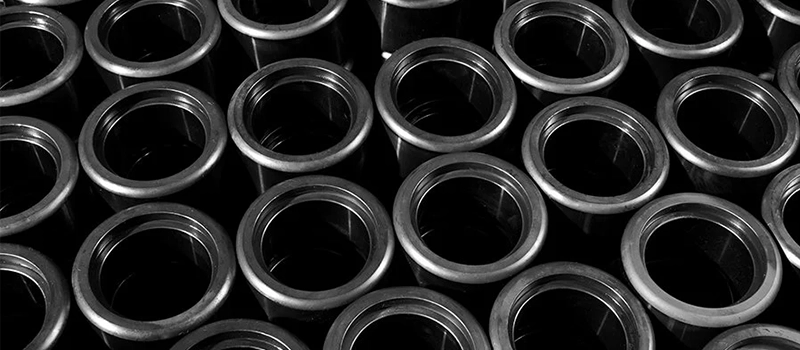
At its core, the black oxide process involves immersing metal parts in a carefully controlled alkaline salt solution, typically at elevated temperatures. The solution triggers a chemical reaction on the surface of the metal, which transforms the outermost layer into a stable black oxide compound. The resulting layer is microscopically thin, adheres tightly to the base material, and produces a deep matte black finish.
In manufacturing, black oxide coating is often regarded as a foundational surface treatment. It’s not applied for decorative purposes alone, nor does it serve as a heavy-duty protective barrier like some other coatings. Instead, its value lies in its chemical stability, low cost, compatibility with post-treatment (such as oiling or waxing), and its ability to enhance surface properties without affecting tolerances.
With over a century of proven use in industrial manufacturing, black oxide remains a go-to process for engineers and production teams seeking reliable, consistent, and cost-effective surface treatment—especially when working with ferrous materials.
How Black Oxide Coating Works
The process behind black oxide coating is a well-controlled chemical transformation. It’s not a mechanical or additive process—there’s no physical layer being sprayed, plated, or deposited. Instead, it is a chemical conversion that modifies the outer layer of a metal surface to form a compound known as magnetite (Fe₃O₄), which gives the surface its signature black appearance.
At a technical level, black oxide coating is performed by immersing ferrous metal parts into a series of chemical baths. These steps may vary depending on whether the method used is hot, mid-temperature, or cold black oxide, but the underlying chemical principle is consistent: the outermost layer of iron on the part’s surface is transformed into black iron oxide through controlled oxidation.
Here’s a breakdown of the typical hot black oxide process, which is the most commonly used and industrially preferred method:
- Cleaning and Degreasing:
Parts are first cleaned thoroughly to remove oil, dirt, and other contaminants. This ensures that the surface is chemically active and ready for uniform conversion. A clean surface is crucial for a consistent black oxide layer. - Pickling (Acid Rinse):
After cleaning, the parts are often dipped into an acid solution to remove any scale, rust, or oxides that may interfere with the process. This step exposes fresh metal for better chemical reaction. - Black Oxide Reaction (Oxidation Bath):
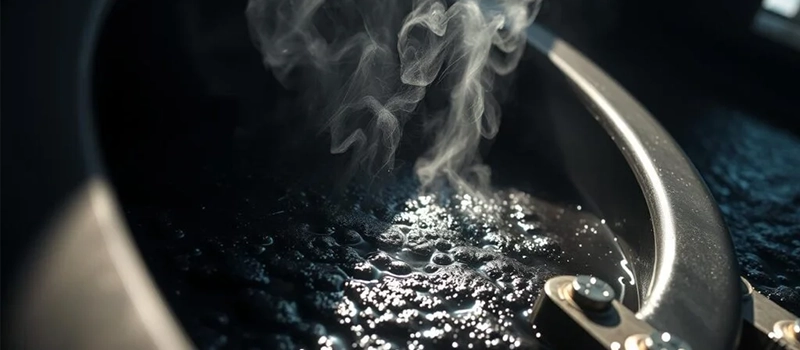
Cleaned parts are immersed in a heated alkaline salt solution—usually at temperatures between 135°C and 145°C (275–293°F). This solution contains strong oxidizing agents that react with the iron in the metal surface, forming a thin layer of magnetite. This is the actual black oxide coating. - Rinsing and Neutralization:
Once the reaction is complete, parts are rinsed to remove any residual salts or chemicals. Sometimes an alkaline neutralizing rinse is applied to prevent corrosion from leftover acidity. - Post-Treatment (Sealing or Oiling):
To improve corrosion resistance and extend the life of the black oxide coating, the parts are often dipped in oil, wax, or another sealing agent. This step fills the microscopic pores in the oxide layer and enhances the surface’s lubricity and protection.
The result is a uniform, adherent, black-colored surface layer that doesn’t chip, flake, or alter the component’s dimensions. Because it is so thin—typically in the range of 0.5 to 2.5 microns—it does not interfere with tight tolerances, which is essential in applications like gears, fasteners, and mechanical assemblies.
There are also cold and mid-temperature variations of the black oxide coating process. These alternatives are often used in smaller operations or where safety regulations limit the use of high-temperature systems. However, they generally do not produce the same durability or appearance quality as the hot process. Cold black oxide treatments typically involve room-temperature chemicals and rely more heavily on post-coating oils or waxes to provide corrosion protection.
It’s also important to understand that not all ferrous materials react the same way. For instance, some grades of stainless steel require specialized formulations or activation steps before applying a black oxide finish. Without proper activation, stainless surfaces may resist the chemical conversion, resulting in poor or inconsistent coverage.
In our production experience, successful black oxide coating relies on three key elements:
surface preparation, bath chemistry, and process control.
When all three are precisely managed, the result is a consistent, high-quality black surface that forms a stable foundation for further finishing or functional use.
In short, the effectiveness of a black oxide coating is not just about the chemical itself—it’s about understanding the metal, the chemistry, and the timing. That’s where skilled execution makes all the difference.
Applications of Black Oxide Coating
The use of black oxide coating spans a wide range of industries and product types, especially where dimensional stability, consistent appearance, and surface-level protection are essential. Although it is a relatively thin and low-cost coating, it plays a critical role in preparing metal components for real-world industrial environments.
Black Oxide Coating on Steel
Steel is the most common base material for black oxide coating, and with good reason. The high iron content in steel reacts effectively with the black oxide bath, producing a uniform and deeply colored surface.
In manufacturing environments, we frequently apply black oxide treatment to:
- Precision machined components
- Tooling and dies
- Machine shafts and gears
- Steel brackets and enclosures
Because the black oxide coating does not build thickness, it is especially well-suited for components that require exact tolerances. Additionally, the dark matte finish of black oxide is often desirable in mechanical assemblies where reflection and glare are concerns.
Black Oxide Coating for Stainless Steel
Although stainless steel contains chromium and is more chemically resistant, it can still be treated with black oxide, using a specially formulated process.
This process involves a pre-treatment step to activate the stainless surface before applying the black oxide bath. The result is a smooth, dark finish that doesn’t compromise the corrosion resistance of the stainless base metal.
Stainless steel components that often receive black oxide coating include:
- Surgical instruments
- Optical components
- Food processing equipment parts
- Decorative architectural hardware
The dark finish not only enhances the visual appearance but also reduces light reflection and provides a non-oily, professional surface—especially useful in applications like optical or medical devices.
Fasteners, Bolts, and Threaded Components
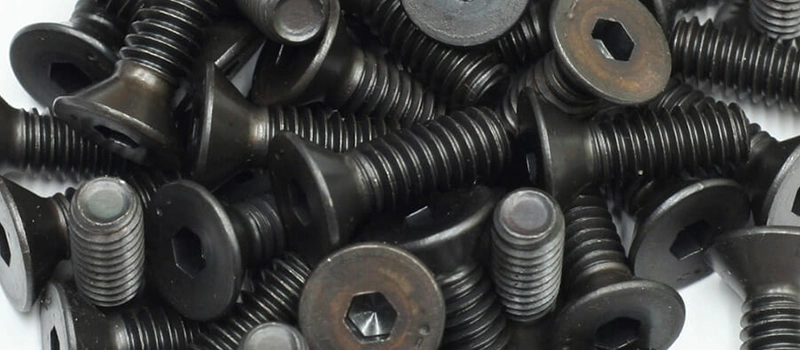
One of the most widely recognized uses of black oxide coating is on threaded fasteners such as bolts, nuts, washers, and screws. These components benefit from the coating’s ability to:
- Prevent galling
- Reduce friction during tightening
- Maintain consistent thread dimensions
- Offer basic corrosion protection when paired with oil
In environments where threaded parts must be both functional and visually consistent—such as automotive assembly or industrial machinery—black oxide coated fasteners are the standard choice.
Tools and Cutting Instruments
Hand tools, cutting blades, drill bits, and precision measuring equipment frequently undergo black oxide treatment to reduce glare, improve handling, and create a durable surface. Unlike chrome or nickel plating, black oxide coating does not create a slippery surface, which is why it’s often preferred for handheld instruments.
Industrial Equipment and Assemblies
In heavy industries like agriculture, mining, construction, and petrochemical, many structural and functional components are black oxide coated to ensure durability in demanding environments. This includes parts like:
- Mounting brackets
- Machine housings
- Flanges and couplings
- Low-speed rotating components
These industries value black oxide because it provides basic protection without dimensional impact, making it ideal for parts that require post-coating assembly or tight fits.
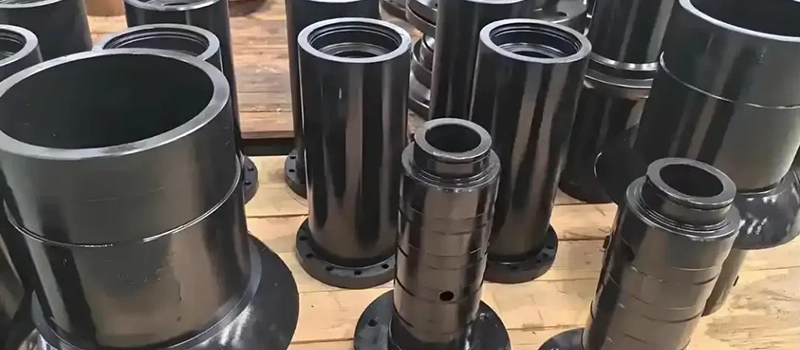
Aesthetic and Tactical Applications
Beyond function, black oxide coating is also valued for its appearance. The deep matte black finish creates a uniform, non-reflective surface that’s often used for tactical equipment, automotive parts, and even specialty consumer products like knives or watches.
The finish provides a sleek, professional look without the gloss or color inconsistencies of paints or powder coating. And because it forms from the metal itself, it doesn’t chip off or peel under mechanical stress.
Advantages and Benefits of Black Oxide Coating
When deciding on a surface finish for metal components, manufacturers often weigh cost, durability, corrosion resistance, and dimensional accuracy. Black oxide coating stands out as a unique balance of these factors, offering a combination of properties that few other coatings can match—especially at its price point.
1. Dimensional Stability
One of the most important benefits of black oxide coating is that it doesn’t add measurable thickness to the component. The oxide layer typically ranges from 0.5 to 2.5 microns, which is significantly thinner than most plating or painting processes.
For high-precision parts—like gears, shafts, fasteners, and threaded inserts—this characteristic is essential. Engineers can apply the coating without compensating for dimensional changes in the design. That means faster post-processing, fewer adjustments, and more predictable assembly results.
2. Enhanced Wear Resistance
Although black oxide coating is thin, it provides a noticeable improvement in surface hardness and wear resistance. By transforming the metal surface into a magnetite layer, the coating increases the ability of the part to resist abrasion during sliding or repeated contact.
This is why tools, hand-operated equipment, and machine parts often undergo black oxide treatment. The process minimizes surface galling and extends the working life of components that are frequently handled or subject to light mechanical stress.
3. Improved Corrosion Resistance
On its own, the black oxide layer offers limited corrosion resistance. However, when sealed with oil or wax, its performance improves significantly. The porous structure of the oxide layer retains these sealants well, creating a hydrophobic barrier that helps repel moisture and slow down oxidation.
This two-part system—conversion coating plus sealant—allows black oxide to be used in indoor industrial environments or mild outdoor conditions where occasional humidity or contact with moisture is expected.
4. Aesthetic Uniformity
The deep matte black finish produced by black oxide coating is one of its most desirable visual features. It creates a non-reflective, uniform appearance that looks clean and professional. This makes it particularly useful in industries where appearance matters, such as consumer tools, optics, or tactical gear.
Unlike paint or powder coat, the black oxide layer won’t peel, flake, or crack. It retains a consistent look even when subjected to mechanical stress or contact during handling and assembly.
5. Better Lubricity and Reduced Friction
Black oxide surfaces, especially when oiled, offer lower surface friction compared to untreated metal. This makes the coating ideal for parts that experience sliding contact, like pins, washers, spacers, and fasteners.
Reduced friction helps minimize wear between moving parts, lowers assembly torque, and decreases the chance of galling or seizing—particularly useful in threaded applications.
6. Cost-Effective Processing
Compared to other surface treatments like zinc plating, powder coating, or anodizing, black oxide coating is significantly more affordable—both in terms of materials and labor.
The equipment used for black oxide processing is simpler, and the chemicals are relatively low cost. Moreover, the processing time is short, often taking only a few minutes per batch, which increases overall throughput and reduces lead times.
For large-volume production, this means major savings over time, especially when treating high quantities of small to mid-sized metal components.
7. Environmentally Stable and Chemically Passive
The black oxide layer is chemically inert under most ambient conditions. It does not outgas, react with lubricants, or degrade when exposed to light or indoor atmospheres. It is also non-conductive and non-magnetic, which is an advantage in certain sensitive applications, such as electronics enclosures or optical assemblies.
This makes black oxide a low-maintenance coating—one that performs reliably without requiring frequent touch-up or inspection.
Limitations and Disadvantages of Black Oxide Coating
While black oxide coating is valued for its simplicity, low cost, and dimensional stability, it is not without limitations. Understanding these drawbacks is essential before deciding whether this surface treatment is the right choice for your application.
1. Limited Corrosion Resistance Without Sealants
The base black oxide coating itself provides very minimal corrosion protection. Unlike thicker coatings like zinc plating or powder coating, the oxide layer is only mildly protective on its own.
It relies heavily on post-treatment oiling or waxing to deliver effective corrosion resistance. Without proper sealing, the surface is vulnerable to rust, especially in humid or outdoor environments.
For components used in marine, chemical processing, or high-moisture applications, black oxide may not be sufficient unless used in combination with other protection strategies.
2. Unsuitable for Non-Ferrous Metals
The black oxide process is designed specifically for ferrous metals like carbon steel, alloy steel, and some grades of stainless steel. It does not work on materials like:
- Aluminum
- Brass
- Copper
- Titanium
Attempts to apply black oxide coating to these materials without appropriate surface engineering will result in incomplete reactions, poor adhesion, or outright process failure. In such cases, alternative blackening or anodizing processes must be used.
3. Sensitivity to Surface Condition
For black oxide coating to work effectively, the surface of the metal must be perfectly clean, free of rust, scale, or oil. Any contamination can lead to uneven finish, discoloration, or coating failure.
In high-volume production, this means investing in robust surface preparation steps (cleaning, pickling, degreasing) to maintain consistent results. If upstream process control is weak, coating defects become common.
4. Limited Mechanical Durability
Although black oxide coating does enhance surface hardness slightly, it is not a hard coating. It does not offer the same mechanical durability or impact resistance as thicker finishes like:
- Manganese phosphate
- Hard chrome
- Thermal spray coatings
In high-friction or abrasive environments, black oxide may wear off faster than alternative coatings. It is best suited for low-stress components, indoor applications, or parts that are not subject to repetitive impact.
5. Not Suitable for Extreme Environments
In very harsh operating conditions—such as offshore installations, high-acidity zones, or applications with salt spray exposure—black oxide coating is simply not enough. Its resistance thresholds are limited, and degradation can happen quickly without secondary protection.
In these cases, coatings like zinc-nickel plating, ceramic coating, or anodizing are more appropriate, even though they cost more and may add more thickness.
6. Aesthetic Inconsistency Across Batches
In some cases, especially with stainless steel black oxide, slight differences in alloy composition or surface texture can lead to inconsistent color depth. Without strict process control, black oxide finishes can appear patchy or uneven across production runs.
This is less of a problem for functional components, but in cosmetic or consumer-facing parts, such inconsistency may be unacceptable.
Black Oxide Coating vs Other Finishes
When selecting a surface treatment for metal parts, engineers and procurement specialists often face a wide range of options. Each finish comes with its own advantages, limitations, cost structure, and technical requirements.
Comparison Table: Black Oxide vs Other Coating Methods
| Feature / Coating Type | Black Oxide | Phosphate (Zinc/Manganese) | Zinc Plating | Powder Coating | Titanium Coating |
|---|---|---|---|---|---|
| Base Metal Compatibility | Ferrous metals only | Ferrous metals | Ferrous + non-ferrous | Most metals | Steel, titanium, alloys |
| Coating Thickness | 0.5–2.5 microns | 5–15 microns | 5–25 microns | 50–150 microns | ~2–5 microns |
| Dimensional Impact | Very low | Low to moderate | Moderate | High | Very low |
| Corrosion Resistance | Low (requires oil) | Moderate (better with oil) | Good (sacrificial layer) | Excellent | Excellent |
| Wear Resistance | Moderate | Good | Fair | Very good | Excellent |
| Surface Hardness | Slight increase | Moderate | No significant change | High (but brittle) | Extremely high |
| Visual Appearance | Matte black | Dull gray to black | Bright silver or yellow | Wide range of colors | Gold, rainbow, etc. |
| Conductivity | Low | Low | Good | Insulating | Low |
| Friction Reduction | Good (with oil) | Good (with oil) | Poor | Poor | Moderate |
| Post-Treatment Required | Yes (oil or wax) | Often (oil) | Optional passivation | No | No |
| Application Temperature | Cold or hot (up to 145°C) | Room to moderate heat | Electrochemical at low temps | Cured at high temps | Applied via PVD at high temps |
| Typical Use Cases | Tools, fasteners, shafts | Gears, automotive parts | Screws, brackets, panels | Enclosures, appliances | Cutting tools, drills |
| Cost per Unit | Very low | Low to moderate | Moderate | High | Very high |
| Environmental Resistance | Indoor, dry environments | Moderate outdoor | Outdoor (short term) | Outdoor, chemical resistant | Harsh, abrasive environments |
As the table shows, black oxide coating is not the most corrosion-resistant or the hardest surface finish available. However, its dimensional stability, low cost, and ease of application make it an ideal choice for many internal parts, mechanical components, and tools that don’t face extreme conditions.
It also occupies a unique position between raw metal and heavier coatings—providing just enough surface enhancement without over-engineering the part. This is especially valuable in high-volume production where turnaround time and cost-efficiency are critical.
Choosing the right coating always depends on the performance demands of your application. But when speed, budget, and precision matter most, black oxide coating remains a strong, reliable contender.
Conclusion
Black oxide coating is a cost-effective, dimensionally stable surface treatment that enhances the performance and appearance of metal components. While it’s not suited for every environment, it remains a reliable choice for precision parts, fasteners, tools, and general-purpose applications—especially when speed, budget, and consistency are key.