Aluminum bronze is widely recognized as one of the most reliable high-performance copper alloys in modern industry. According to industry material data sources, it delivers exceptional corrosion resistance, high strength, and superior wear performance. In this guide, I will explain why aluminum bronze remains a powerful industrial material choice.
Composition and Properties of Aluminum Bronze
What Is Aluminum Bronze
Aluminum bronze is a high-performance copper-based alloy in which aluminum serves as the primary alloying element. Unlike traditional bronze alloys that rely mainly on tin, aluminum bronze derives its enhanced mechanical properties and corrosion resistance from aluminum additions typically ranging between 5% and 12%.
From a metallurgical standpoint, aluminum bronze belongs to the family of copper-aluminum alloys. Its performance characteristics depend heavily on its chemical composition, phase structure, and heat treatment conditions. In industrial standards such as ASTM B148 and EN 1982, aluminum bronze is categorized into multiple grades based on alloying content and intended application.
Aluminum bronze is widely recognized in engineering material databases for its unique combination of high strength, superior wear resistance, and outstanding corrosion performance in aggressive environments.
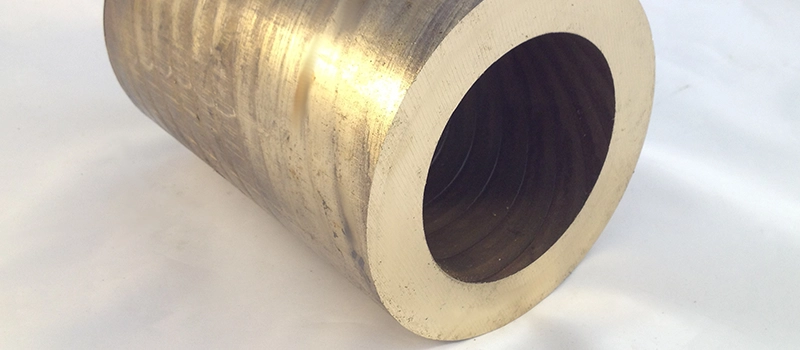
Aluminum Bronze Alloy Composition
The composition of aluminum bronze typically consists of:
- Copper (Cu): Balance element
- Aluminum (Al): 5%–12%
- Iron (Fe): 2%–5% (in high-strength grades)
- Nickel (Ni): 3%–6% (in nickel aluminum bronze)
- Manganese (Mn): Minor additions for strength
The aluminum bronze alloy composition significantly influences mechanical performance. Lower aluminum content (5–8%) generally improves ductility and corrosion resistance. Higher aluminum content (9–12%) increases strength and hardness but may reduce machinability.
Nickel aluminum bronze, a widely used variant, contains nickel to enhance corrosion resistance in marine environments. This grade demonstrates improved resistance to stress corrosion cracking and cavitation erosion.
Iron additions refine grain structure and improve tensile strength. The microstructural refinement caused by iron increases the stability of kappa phases, which contribute directly to aluminum bronze mechanical properties.
Aluminum Bronze Chemical Composition
The aluminum bronze chemical composition determines phase formation during solidification. The alloy system is governed by the copper-aluminum phase diagram.
At aluminum levels below approximately 9.4%, aluminum bronze forms a single-phase alpha structure. This phase provides excellent ductility and corrosion resistance.
When aluminum content exceeds this threshold, beta phase formation begins. Controlled heat treatment can transform beta phase into martensitic structures, significantly increasing hardness and yield strength.
In high-performance grades such as nickel aluminum bronze, additional intermetallic compounds such as kappa phases form. These microstructural features improve:
- Aluminum bronze strength
- Aluminum bronze hardness
- Aluminum bronze wear resistance
Understanding aluminum bronze chemical composition is critical for predicting mechanical behavior and service life in demanding industrial environments.
Aluminum Bronze Mechanical Properties
Aluminum bronze mechanical properties are among the most impressive within copper-based alloys.
Typical values include:
- Tensile strength: 500–800 MPa
- Yield strength: 250–500 MPa
- Hardness: 120–250 HB
- Elongation: 10–25%
These values vary depending on alloy grade, heat treatment, and manufacturing method.
Compared to traditional tin bronze, aluminum bronze tensile strength is significantly higher. In many cases, aluminum bronze yield strength approaches that of low-alloy steels while maintaining superior corrosion resistance.
The aluminum bronze hardness vs steel comparison shows that although steel may exhibit higher absolute hardness in some grades, aluminum bronze provides better galling resistance and anti-seizure behavior in sliding applications.
Aluminum bronze density typically ranges from 7.5 to 7.9 g/cm³. This density is lower than many steel grades, contributing to weight reduction in mechanical components.
The melting point of aluminum bronze varies between 1025°C and 1080°C depending on aluminum content.
Aluminum Bronze Corrosion Resistance
One of the defining aluminum bronze properties is its exceptional corrosion resistance.
When exposed to oxygen, aluminum bronze forms a thin, adherent aluminum oxide film on the surface. This passive layer protects the underlying metal from further oxidation and chemical attack.
Aluminum bronze corrosion resistance is particularly strong in:
- Seawater
- Brackish water
- Industrial wastewater
- Petrochemical atmospheres
Studies show that aluminum bronze exhibits superior resistance to biofouling and microbial-induced corrosion compared to standard bronze alloys.
Unlike many ferrous alloys, aluminum bronze does not suffer from rust formation. It also demonstrates high resistance to stress corrosion cracking and erosion-corrosion in high-flow environments.
Aluminum bronze corrosion performance is one of the primary reasons it is selected for critical industrial components operating under aggressive environmental conditions.
Aluminum Bronze Microstructure
The aluminum bronze microstructure plays a fundamental role in determining overall performance.
In alpha-phase aluminum bronze, the microstructure consists of a solid solution of aluminum in copper. This structure provides excellent ductility and uniform corrosion resistance.
In beta or dual-phase alloys, the presence of transformed beta and kappa intermetallic phases increases strength and hardness. Controlled cooling and heat treatment allow engineers to tailor aluminum bronze mechanical properties for specific requirements.
The distribution and morphology of kappa phases significantly influence:
- Aluminum bronze wear resistance
- Aluminum bronze strength
- Aluminum bronze machinability
Microstructural control is essential in ensuring consistent quality, especially in aluminum bronze casting and aluminum bronze forgings where cooling rates can vary.
Advanced metallographic analysis methods confirm that properly controlled aluminum bronze alloys maintain structural stability even under cyclic loading conditions.
Key Uses of Aluminum Bronze in Various Industries
Marine and Offshore Industry
Aluminum bronze is widely used in marine and offshore environments due to its excellent resistance to seawater corrosion and cavitation erosion. In shipbuilding and offshore engineering, it is commonly applied in:
- Propellers
- Propeller shafts
- Seawater pump components
- Valve bodies and valve trim
- Fasteners exposed to saltwater
- Marine bearings and bushings
Nickel-containing grades are especially common in seawater systems because they maintain mechanical strength while resisting biofouling and pitting. These properties make the alloy suitable for continuous exposure to saltwater under dynamic flow conditions.
Mining and Heavy Equipment Industry
In mining and mineral processing operations, equipment is exposed to abrasion, vibration, and impact. Aluminum bronze components are frequently used in:
- Wear plates
- Bushings
- Sleeve bearings
- Pump impellers for slurry transport
- Crusher and mill components
Its combination of toughness and wear resistance makes it suitable for heavy-duty equipment that operates under abrasive conditions. In slurry pumps and mineral transport systems, it performs reliably under continuous mechanical stress.
Petrochemical and Oil & Gas Industry
In petrochemical plants and oil refineries, aluminum bronze is used in components that must withstand corrosive chemicals and elevated temperatures. Typical applications include:
- Gate valves and butterfly valves
- Pump housings
- Flanges and fittings
- Non-sparking tools
- Fasteners for corrosive atmospheres
Its resistance to chemical corrosion and erosion makes it suitable for handling brine, hydrocarbons, and industrial fluids. The material is commonly specified in safety-critical flow control systems.
Power Generation Industry
In thermal and hydropower plants, aluminum bronze is used in systems involving water flow and mechanical rotation. Common components include:
- Turbine parts
- Pump components
- Condenser tube plates
- Bearings for rotating assemblies
Its resistance to water corrosion and mechanical fatigue supports long-term performance in high-load operating environments.
Construction and Heavy Machinery
Construction machinery operates under dust, shock, and repetitive load conditions. Aluminum bronze is commonly used in:
- Pivot bushings
- Thrust washers
- Gear components
- Heavy-duty fasteners
- Structural wear elements
In excavators, loaders, and lifting equipment, the material supports load-bearing and sliding applications where durability is critical.
Automotive and Transportation
In automotive and rail applications, aluminum bronze is selected for components that require both strength and corrosion resistance. Typical uses include:
- Worm gears
- Valve guides
- Bearing cages
- Fasteners exposed to harsh weather
Its mechanical strength and resistance to surface wear contribute to reliable performance in moving assemblies.
General Industrial Manufacturing
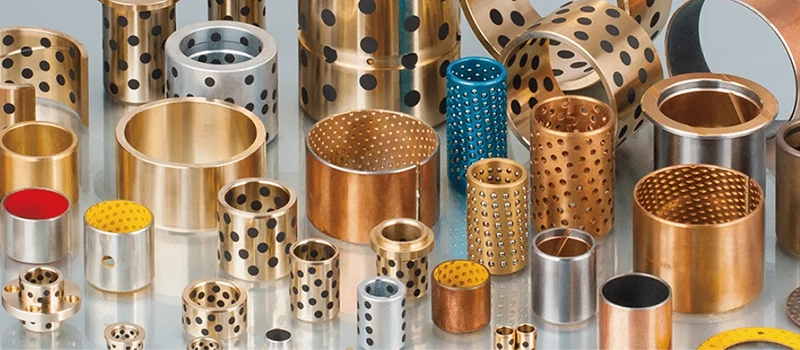
In broader industrial manufacturing, aluminum bronze is supplied in multiple forms including castings, forgings, plates, bars, and tubes. These forms are used to produce:
- Industrial bearings
- Sliding plates
- Wear rings
- Bushings
- Specialty fasteners
Across industries, its primary role is in components exposed to friction, corrosion, and mechanical load.
Advantages of Aluminum Bronze Over Other Alloys
Higher Strength Compared to Traditional Bronze Alloys
One of the most recognized advantages of aluminum bronze is its superior mechanical strength when compared with traditional tin bronze. The addition of aluminum significantly increases tensile and yield strength, allowing the alloy to handle higher mechanical loads.
In structural and rotating components, this strength advantage translates into improved resistance to deformation under stress. While conventional bronze alloys perform well in moderate-duty applications, aluminum-containing copper alloys are better suited for demanding load-bearing environments.
This higher strength level also enables thinner cross-sections in certain designs, supporting weight reduction without compromising performance.
Superior Corrosion Resistance Compared to Brass
When compared with brass, aluminum bronze demonstrates significantly stronger resistance to corrosion, particularly in marine and chloride-rich environments. Brass alloys are more susceptible to dezincification, a form of corrosion that weakens the material over time.
Aluminum bronze forms a stable protective oxide film on its surface. This passive layer enhances durability in seawater, industrial water systems, and many chemical processing environments.
Because of this, aluminum bronze is often specified in applications where brass would experience premature degradation.
Better Wear and Galling Resistance Than Steel in Sliding Contact
In sliding and bearing applications, aluminum bronze offers distinct advantages over many steel grades. While steel may provide higher hardness in certain heat-treated conditions, it is more prone to galling and adhesive wear during metal-to-metal contact.
Aluminum bronze exhibits natural anti-seizure characteristics. This makes it particularly effective in bushings, thrust washers, and worm gear systems where surface friction is unavoidable.
Its combination of moderate hardness and toughness helps reduce scoring and surface damage under repeated movement.
Improved Cavitation and Erosion Resistance
Compared with many copper alloys and some stainless steels, nickel-containing aluminum bronze grades offer enhanced resistance to cavitation erosion.
Cavitation occurs when vapor bubbles form and collapse in high-velocity fluids, generating localized shock forces. Over time, this can severely damage metallic surfaces.
Aluminum bronze withstands this phenomenon more effectively, which explains its widespread use in marine propellers, pump impellers, and turbine components.
Higher Reliability Than Silicon Bronze in Heavy-Duty Applications
Silicon bronze is widely used for corrosion resistance and architectural hardware. However, in heavy-duty mechanical environments, aluminum bronze provides higher strength and improved load-bearing capability.
In structural and industrial equipment components, this difference becomes significant when parts are exposed to impact, vibration, or continuous mechanical stress.
As a result, aluminum bronze is often selected when performance requirements exceed the limits of silicon bronze.
Non-Sparking Characteristics Compared to Ferrous Alloys
In hazardous environments where explosive gases or dust may be present, material selection must consider ignition risk. Aluminum bronze, being copper-based, produces a lower risk of sparking compared to carbon steel under impact conditions.
For this reason, it is commonly used in safety tools, fasteners, and equipment components within petrochemical and gas-handling facilities.
This characteristic adds an additional layer of operational safety in sensitive environments.
Better Balance of Strength and Corrosion Resistance Than Many Alloys
Few engineering alloys combine high mechanical strength with strong corrosion resistance in the same way aluminum bronze does. Stainless steels may provide corrosion resistance but can suffer from galling in sliding applications. Carbon steels may offer strength but require protective coatings in aggressive environments.
Aluminum bronze provides a balanced performance profile that reduces the need for additional surface treatments in many applications.
This balance is one of the primary reasons it continues to be specified across marine, mining, petrochemical, and heavy machinery industries.
Fabrication and Machining of Aluminum Bronze
Casting of Aluminum Bronze
Aluminum bronze is widely produced through casting processes, particularly for complex industrial components such as pump bodies, valve housings, impellers, and heavy-duty structural parts.
Because of its relatively high melting temperature compared to many copper alloys, precise temperature control is essential during melting and pouring. Typical pouring temperatures range above 1100°C, depending on composition. Controlled melting reduces oxidation losses and prevents excessive aluminum burn-off.
Sand casting is commonly used for large components due to its flexibility and cost efficiency. Investment casting may be selected when tighter dimensional tolerances and finer surface finishes are required.
Solidification control is critical. Improper cooling rates can lead to shrinkage porosity or microstructural inconsistencies. For this reason, gating design, riser placement, and mold temperature must be engineered carefully.
Forging of Aluminum Bronze
Forging is applied when higher mechanical integrity is required. Compared with cast structures, forged components generally exhibit improved grain flow and enhanced fatigue resistance.
During hot forging, temperature control is critical to prevent cracking or undesirable phase formation. Forging temperatures are typically maintained within a controlled range to preserve workability while preventing overheating.
After forging, components often undergo heat treatment to optimize strength and hardness. Controlled cooling allows refinement of microstructure, improving mechanical reliability.
Forged forms are commonly used for:
- High-load bushings
- Structural fasteners
- Heavy-duty mechanical components
- Rotating machinery parts
Machining Considerations
Machining aluminum bronze requires specific tooling strategies. Compared with free-cutting brass, it has lower machinability due to its strength and toughness.
Carbide tooling is typically recommended. High-speed steel tools may experience rapid wear, particularly when machining high-strength grades. Proper tool geometry and rigid setups are essential to avoid chatter.
Cutting speeds are generally lower than those used for brass but comparable to certain medium-carbon steels. Adequate lubrication improves surface finish and reduces tool wear.
Drilling, milling, and turning operations require stable feeds to prevent work hardening. Interrupted cuts should be minimized when possible.
Heat Treatment
Heat treatment can significantly influence mechanical performance. Solution treatment and quenching may be used to modify phase distribution and improve strength.
Controlled aging can enhance hardness in certain grades. However, excessive heat exposure must be avoided, as it can negatively affect dimensional stability.
Proper heat treatment ensures consistent properties across sections of varying thickness, especially in heavy castings and forgings.
Welding of Aluminum Bronze
Welding is feasible but requires careful preparation. Preheating is often recommended for thicker sections to reduce thermal stress and minimize cracking.
Matching filler materials are typically selected to maintain corrosion resistance and mechanical properties. Gas metal arc welding (GMAW) and gas tungsten arc welding (GTAW) are commonly used processes.
Surface cleanliness is critical prior to welding, as oxide layers can interfere with weld quality. Post-weld inspection ensures structural integrity, particularly in pressure-containing components.
Brazing and Joining
Brazing is sometimes applied for joining thinner sections or for repair applications. Aluminum bronze brazing rods are selected based on compatibility and service environment.
Controlled heating is required to avoid altering the base metal microstructure. Proper joint design improves capillary flow and bonding strength.
In industrial manufacturing, joining methods are chosen based on component geometry, required mechanical strength, and service conditions.
Quality Control in Fabrication
Strict quality control measures are essential throughout fabrication and machining. Common inspection methods include:
- Chemical composition analysis
- Mechanical property testing
- Non-destructive testing (NDT)
- Dimensional verification
- Metallographic examination
These controls ensure that fabricated components meet industrial performance standards and maintain reliability in demanding service environments.
Conclusion: The Future of Aluminum Bronze in Modern Applications
Aluminum bronze continues to hold a strong position in modern engineering because it delivers a rare combination of strength, corrosion resistance, wear durability, and long-term reliability. As industries demand materials that can operate in harsher environments with longer service intervals, this copper-based alloy family remains highly relevant.
In marine systems, heavy machinery, petrochemical facilities, and power infrastructure, material failure is not simply a technical issue—it is a cost, safety, and operational risk issue. Aluminum bronze addresses these concerns by providing stable performance under mechanical stress, chemical exposure, and continuous load.
Advancements in casting control, forging techniques, and precision machining are further improving consistency and structural integrity. With increasing global emphasis on durability, lifecycle cost reduction, and reduced maintenance downtime, aluminum bronze is positioned to remain a preferred solution in critical industrial components.
Its role in modern applications is not based on tradition alone, but on measurable performance and proven service history.