Why does aluminum crack when bent? Why do some parts return to their original shape after forming? And how do manufacturers choose the right technique for different grades of aluminum? These are common challenges in aluminum bending, especially when the wrong method leads to scrap, delays, or costly redesigns.
Aluminum bending, when done correctly, allows manufacturers to form lightweight yet strong components used in aerospace, automotive, and construction. According to The Aluminum Association, “aluminum’s formability and strength-to-weight ratio make it ideal for complex shaping in sheet and extrusion applications.” But with improper technique, the same material can fracture, wrinkle, or lose dimensional accuracy.
Understanding the bending characteristics of aluminum—its elasticity, grain direction, and minimum bend radius—is key to controlling deformation. From press brake operations to rotary draw bending, the right method depends on the alloy, thickness, and application. With proper planning, aluminum can be bent cleanly and reliably across a wide range of industrial needs.
Understanding the Properties of Aluminum in Bending
Mechanical Behavior of Aluminum During Forming
Aluminum bending is a precise process influenced heavily by the material’s mechanical properties. Unlike steel, aluminum is less forgiving during deformation. It lacks the same level of elasticity and can fracture if overstressed or bent at too tight a radius. Its relatively low yield strength and modulus of elasticity allow it to bend easily, but also make it more sensitive to springback and cracking.
Aluminum’s natural oxide layer can also impact surface finish during bending. This outer layer is hard and brittle, which may flake or crack if the bending process isn’t controlled properly. That’s why even the initial setup—such as lubrication, die condition, and material handling—directly affects the quality of aluminum bends.
Grain Direction and Bendability
One often overlooked factor in aluminum bending is grain direction. Aluminum, like many rolled metals, has a distinct grain structure formed during the rolling process. When bending perpendicular to the grain, the material can better distribute stress, reducing the risk of cracking. Bending along the grain, however, increases the chance of fracture, particularly with harder tempers.
Engineers should always analyze the sheet’s orientation before choosing a bend line. For tight-radius bending or complex angles, aligning the bend direction perpendicular to the grain is recommended. This helps maintain ductility and prevents edge tearing or break lines.
Minimum Bend Radius by Alloy and Temper
Each aluminum alloy has a minimum recommended bend radius, typically expressed as a factor of the material’s thickness. Softer alloys like 3003 or 5052 can be bent at tighter radii than harder ones like 6061-T6. For example, while 5052-H32 may allow a 1x thickness inside radius, 6061-T6 often requires 3x or more to avoid cracking.
Understanding this ratio is critical during tooling and die selection. If the bend radius is too tight for the alloy and temper, the result will likely be surface cracking or internal stress failures. Datasheets from aluminum suppliers often provide guidelines, but in practice, test bending is still widely used for validation.
Common Aluminum Alloys Used in Bending
Not all aluminum grades behave the same under bending conditions. The most commonly used alloys in bending operations include:
- 3003: Excellent formability, low strength, very bend-friendly
- 5052: Good balance of strength and ductility, ideal for forming
- 6061: High strength but poor bendability in T6 temper, better in T4
- 1100: Soft and ductile, but limited structural use
The choice of alloy depends on end-use requirements such as strength, corrosion resistance, and appearance. The density of aluminum, while relatively low at 2.7 g/cm³, does not significantly affect bending itself, but it contributes to its popularity in weight-sensitive applications.
Common Aluminum Bending Techniques
Overview of Bending Methods
Aluminum bending is widely used across manufacturing industries due to the metal’s lightweight and corrosion-resistant properties. However, choosing the right method for aluminum bending is crucial to achieving accuracy and avoiding material damage. Several standard techniques are available, each suited to different thicknesses, bend angles, and production volumes.
The most common aluminum bending methods include air bending, bottom bending, coining, rotary draw bending, and roll bending. Each process interacts with the material differently, depending on how force is applied and how the aluminum responds to compression and tension.
Air Bending, Bottom Bending, and Coining
Air bending is the most flexible and widely used method in aluminum bending. In this process, the punch presses the sheet into a die without bottoming out. This allows for varied angles using the same die set, which is particularly useful for projects requiring multiple bend angles.
Bottom bending involves pressing the aluminum sheet all the way to the bottom of the die. It offers higher precision than air bending but requires more force and dedicated tooling for each angle. Aluminum bending via bottom bending is typically reserved for repeatable jobs where exact angle control is necessary.
Coining is a more aggressive method where the punch fully compresses the aluminum into the die, plastically deforming the material. While this produces very accurate bends and reduces springback, it requires significantly higher tonnage. Coining is less common in aluminum bending due to the material’s sensitivity to cracking under high force.
Rotary Draw Bending and Roll Bending
Rotary draw bending is ideal for aluminum tubing and extrusions. In this process, a rotating die pulls the aluminum around a fixed radius. This method is highly accurate and is frequently used in aerospace and automotive aluminum bending where curved profiles are required.
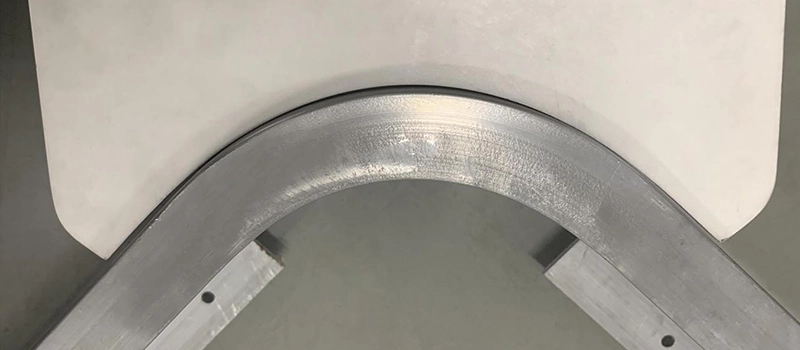
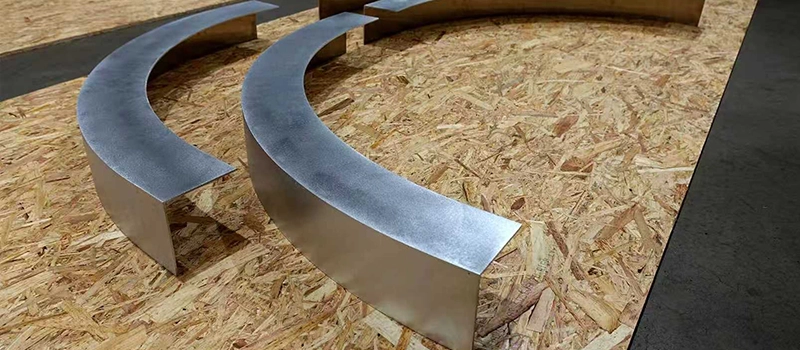
Roll bending is best for creating large-radius curves. The aluminum sheet passes through three rollers that apply gradual pressure. Roll bending is slower and not suited for tight-radius applications, but it’s highly effective for structural components or decorative aluminum panels.
Choosing the Right Technique for Your Application
The best aluminum bending method depends on several factors, including:
- Material thickness and alloy
- Required bend angle and radius
- Quantity of parts and tooling availability
- Tolerance and surface finish expectations
In industrial sheet metal work, air bending is often the first choice due to its adaptability. However, if the project demands repeatable, high-accuracy bends, bottom bending or coining may be required. Rotary draw bending is reserved for tubular or profile work, while roll bending handles broader curves.
Machine Compatibility and Setup
Each aluminum bending method requires compatible machinery and proper setup. Press brakes are standard for air and bottom bending. Rotary draw machines are necessary for precision curves, while roll benders are used for structural parts.
Tooling selection, tonnage calculation, and bend sequence programming all affect the success of aluminum bending. Improper setup can lead to springback, cracking, or misalignment—issues that can often be avoided through pre-bending simulations and alloy-specific adjustments.
Preventing Cracks and Material Failure in Aluminum Bending
Why Cracks Occur During Aluminum Bending
Cracking is one of the most common issues in aluminum bending, especially with harder tempers or tight-radius designs. Aluminum lacks the ductility of some other metals, and if overstressed during forming, it may fracture along the bend line. The root cause often lies in exceeding the alloy’s minimum bend radius or bending along the grain direction.
High-strength alloys such as 6061-T6 are especially prone to cracking during aluminum bending. While they offer excellent strength in service, their lower elongation makes them less tolerant to deformation. Choosing the right combination of alloy, temper, and radius is essential to avoid failure.
Alloy Selection and Temper Considerations
Not all aluminum alloys behave the same during bending. Softer alloys like 3003-H14 or 5052-H32 handle tight bends well, while harder grades like 2024-T3 or 7075-T6 are more rigid and require large bend radii. The temper—representing the hardness of the alloy—also plays a major role.
For successful aluminum bending, engineers should refer to industry guidelines that list minimum inside bend radii by alloy and temper. As a general rule, the harder the temper, the larger the bend radius required. For example, 5052-H32 can typically be bent to 1x thickness, while 6061-T6 may need 3x or more.
Use of Annealing to Improve Bendability
When aluminum bending involves difficult shapes or minimal bend radii, annealing can improve formability. The process softens the material by heating it below its recrystallization point and then allowing it to cool slowly. This makes the metal more ductile and less prone to cracking during the bending process.
However, annealing may slightly reduce the final mechanical strength. It is most effective in prototyping, custom bending jobs, or low-volume production runs where failure prevention is more critical than maximum strength retention.
Edge Cracking and Surface Deformation
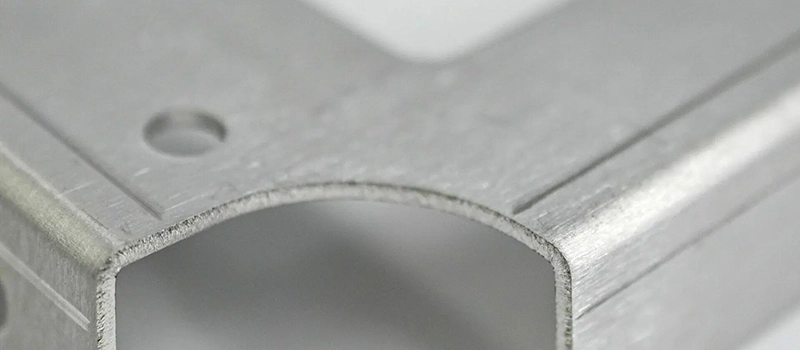
Edge cracking is a specific problem in aluminum bending that occurs when the tension side of the material fractures during the bend. This typically results from improper die width, over-bending, or using the wrong tooling angle. When the bend is too sharp for the material’s ductility, microscopic fractures begin at the surface and propagate inward.
Surface deformation, like wrinkling or stretching, is another concern. These defects often arise from poor alignment, incorrect clamping, or lack of lubrication. Since aluminum is sensitive to surface imperfections, cosmetic quality must be considered in addition to structural soundness.
Tips for Avoiding Material Failure
To reduce the risk of cracking during aluminum bending:
- Choose alloys with good formability for tight-radius bends
- Use the recommended bend radius based on alloy and temper
- Avoid bending parallel to the grain direction
- Use polished tooling to minimize surface stress
- Consider heat treatment for challenging bends
- Use consistent, controlled pressure across the bend
Crack prevention is not about overbuilding the part—it’s about designing intelligently within aluminum’s known forming limits. With proper process control, aluminum bending can deliver reliable, high-quality results across a range of industries.
Managing Springback in Aluminum Bending
What Is Springback in Bending?
Springback is the tendency of metal to partially return to its original shape after being bent. It occurs in nearly all forming operations, but in aluminum bending, it presents unique challenges due to aluminum’s relatively low modulus of elasticity and high elasticity-to-strength ratio. This rebound effect can lead to inaccurate bend angles if not accounted for during tool setup and design.
During aluminum bending, the inside of the material undergoes compression while the outside is stretched. Once pressure is released, the stored elastic energy causes the material to spring back slightly, reducing the intended bend angle. Failure to compensate for this rebound can compromise dimensional tolerances and fit in assembly.
How Aluminum Alloys Respond to Springback
Different aluminum alloys react to springback in different ways. Alloys like 3003 or 5052 typically exhibit less springback due to their higher ductility. In contrast, 6061-T6 or 2024-T3, being harder and more brittle, will show more pronounced springback during aluminum bending.
The temper of the alloy also affects rebound. Softer tempers allow more plastic deformation, meaning less elastic recovery and lower springback. Harder tempers resist deformation and tend to snap back more forcefully once released from tooling. This makes precise aluminum bending more complex when working with high-strength grades.
Sheet Thickness and Radius Impact
The ratio of bend radius to material thickness also influences springback. A tighter radius relative to the material thickness typically leads to more springback. Thicker sheets store more elastic energy, especially in aluminum bending, where the material tends to return to its original shape when under low constraint.
Controlling this behavior requires close attention to bend angle compensation. Using a larger punch radius or increasing the initial bend angle can offset the expected rebound.
Techniques to Control Springback
Effective springback management in aluminum bending involves a combination of material selection, die geometry, and process control. The most common approach is overbending, where the angle is intentionally increased during forming to account for the rebound. Overbending requires experience or simulation data to dial in accurate compensation.
In precision operations, bottom bending or coining can reduce springback by plastically deforming the aluminum beyond its yield point. These methods use greater force and tighter die contact to lock the metal into its final position, minimizing elastic recovery.
Simulation and Software in Modern Bending
Modern aluminum bending operations often use simulation software to predict springback. These programs analyze material behavior under stress and calculate the correct overbend angle or tool adjustments required to meet design specs. When working with critical tolerances or complex shapes, simulation ensures repeatability and reduces trial-and-error.
Additionally, adaptive press brake systems can measure rebound in real time and auto-correct for the next bend. This closed-loop control ensures consistency and is particularly useful in aluminum bending applications for aerospace and electronics.
Springback is not a defect—it’s a predictable response. With proper control, the final part can match the intended shape precisely, even in demanding industrial environments.
Tooling, Tolerances, and Bending Equipment
Tooling Matters in Aluminum Bending
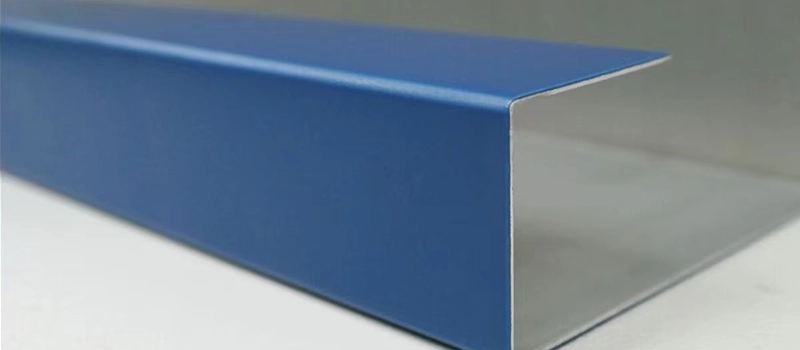
Tooling is a critical factor in successful aluminum bending. Because aluminum is softer than steel, it’s more prone to surface marking, warping, and cracking if the tooling is not properly designed or maintained. Selecting the correct punch and die geometry ensures that the bending process remains consistent, precise, and free from cosmetic or structural defects.
The condition of the die surface is especially important in aluminum bending. Dull, worn, or dirty tooling can leave visible lines or indentations on the finished part. For applications requiring high surface quality—such as visible architectural panels or enclosures—polished tooling or protective films are often used.
Die Width, Radius, and Punch Selection
The relationship between die opening width (V-width), material thickness, and bend radius is fundamental to accurate aluminum bending. A general rule is that the die width should be 8 to 12 times the thickness of the aluminum. Too narrow a die can cause cracking or material thinning; too wide a die leads to inconsistent angles.
The punch radius also affects the bend. A sharper punch radius creates a tighter bend but increases the risk of cracking, especially with harder aluminum alloys. A larger punch radius produces smoother, more gradual bends and reduces stress at the bend line.
Press Brake Tooling Options
Press brakes are the most common machines used for aluminum bending, and they require precision tooling. Standard tooling includes:
- Air bending punches and dies for flexible angles
- Bottoming tools for accuracy and low springback
- Coining tools for tight control in hard alloys
- Radius tooling for consistent curves and edge control
For aluminum parts with sensitive surfaces, urethane dies or overlays may be used to prevent scratches. Magnetic dies can also be used in thin-gauge applications where clamping force is a concern.
Tolerances in Industrial Bending
Maintaining tolerances during aluminum bending is challenging due to springback and aluminum’s lower rigidity. Acceptable bend tolerances vary by industry, but in general, tighter bends require stricter control over angle deviation and dimensional variation.
Factors that affect tolerance include material consistency, temperature, press brake calibration, and operator technique. In high-volume production, the tooling must be tested and verified repeatedly to ensure minimal deviation.
CNC-Controlled Equipment for Accuracy
Modern aluminum bending operations increasingly rely on CNC-controlled press brakes. These systems offer programmable back gauges, automatic angle correction, and real-time pressure adjustment. CNC controls enhance repeatability, especially when switching between different aluminum thicknesses or alloys.
In some cases, laser angle measurement systems are integrated into the press brake, providing feedback during each bend. This is especially useful in aluminum bending where even slight springback or slip can affect the part’s final dimensions.
Aluminum bending at industrial scale depends on more than just material knowledge—it requires precision tooling and tight process control. Matching the right tools with the correct parameters is essential to meet quality and cost targets.
Best Practices for Industrial-Scale Aluminum Bending
Preparing Aluminum for Bending
Before aluminum bending begins, proper preparation is essential for consistent results. Material cleanliness, flatness, and temperature all influence how aluminum will behave under pressure. Dirt, oil, or oxidation can cause slippage or surface defects. In precision environments, aluminum sheets are often cleaned and deburred to ensure accurate contact with tooling.
Preheating may be used in specific aluminum bending operations to reduce brittleness, particularly with thicker materials or harder tempers. While not always necessary, slight warmth can improve ductility and reduce the risk of cracking during sharp or multi-stage bends.
Surface Protection and Handling
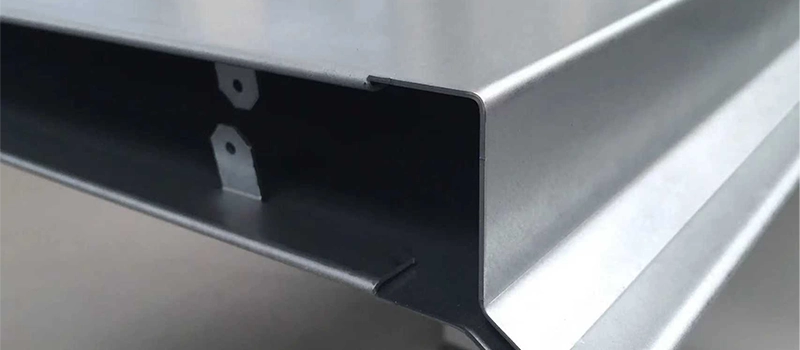
Aluminum’s surface is relatively soft compared to steel and can be scratched easily during handling or forming. In high-finish applications, applying a protective film or using felt-lined tooling is standard practice. This prevents cosmetic defects that can be expensive to correct after forming.
During aluminum bending, care must also be taken to prevent galling—the transfer of metal from the aluminum part to the die surface. Lubricants or coatings can help reduce this issue in high-friction environments.
Stacking and Alignment in Batch Processing
When aluminum bending is performed at scale, maintaining part alignment across hundreds or thousands of cycles is vital. Material batches should be uniform in temper and thickness. Even slight variations can result in inconsistent bend angles or dimensions.
Operators should use calibrated gauges and alignment systems to ensure repeatability. In automated systems, robotic part handling and back gauge positioning can maintain production efficiency while reducing human error.
In-Process Quality Control
Industrial aluminum bending benefits from in-line quality control checkpoints. Measuring tools such as angle gauges, calipers, and coordinate measuring machines (CMMs) are used to confirm that each part stays within tolerance.
For high-precision bending jobs, especially in aerospace or electronics, 100% inspection or statistical process control (SPC) methods are used. By monitoring trends, manufacturers can detect tool wear or setup drift before it results in scrap.
Documentation and Standardization
Standard operating procedures (SOPs) for aluminum bending should include setup sheets, tool lists, and inspection checkpoints. This ensures consistency across shifts, operators, and batches. Documenting successful bend parameters for each aluminum alloy and thickness allows for quick repeat jobs and fewer errors.
Investing in process documentation pays off especially when scaling production, onboarding new team members, or expanding into new part geometries.
Designing for Manufacturability
Design engineers play a key role in successful aluminum bending. Parts should be designed with adequate bend radii, proper material orientation, and clear tolerances. Avoiding overly complex bends or abrupt transitions helps reduce forming stress and tooling issues.
Collaborating early between design and production teams ensures that aluminum bending is both efficient and reliable. Changes in part geometry, radius adjustments, or relief features can make bending faster and reduce downstream correction or rework.
Aluminum bending at an industrial scale combines precision, repeatability, and consistency. With the right practices in place, manufacturers can produce high-quality parts with minimal waste and maximum throughput.
Conclusion
Aluminum bending combines material science, precision tooling, and process control. By understanding the metal’s behavior and applying proven techniques, manufacturers can achieve consistent, high-quality results across small and large-scale production.