Why are aluminum 3xxx alloys widely used in roofing, cookware, and automotive heat exchangers? What makes them so reliable for forming and corrosion resistance?
Aluminum 3xxx series alloys, primarily alloyed with manganese, are known for their formability, corrosion resistance, and performance in everyday industrial use. As noted in material specifications, these alloys are “commonly selected for applications requiring moderate strength and excellent workability, particularly where corrosion resistance is critical”
This balance of properties makes aluminum 3xxx a dependable solution in industries where material consistency and cost efficiency are essential.
What Defines the Aluminum 3xxx Series?
Manganese as the Primary Alloying Element
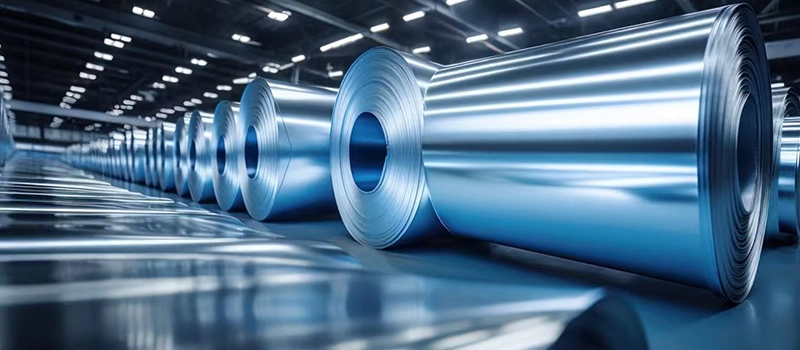
Aluminum 3xxx series alloys are defined by the addition of manganese, typically in amounts up to 1.5%. This small but significant addition improves strength while maintaining excellent workability and corrosion resistance. Unlike heat-treatable aluminum alloys, the 3xxx series achieves its mechanical properties through cold working methods such as rolling or drawing, not thermal treatment.
Non-Heat-Treatable with Balanced Strength
The aluminum 3xxx series is classified as non-heat-treatable. This means its strength cannot be enhanced through thermal aging or solution treatment. Instead, mechanical properties are developed by strain hardening. As a result, the 3xxx series offers moderate strength levels, higher than the 1xxx series, but lower than those of heat-treatable alloys like 6xxx or 7xxx.
These properties make the aluminum 3xxx series suitable for applications where formability, surface finish, and corrosion resistance are more important than maximum strength.
Common Grades in the Series
Several commercial grades fall under the 3xxx series umbrella. The most widely used include:
3003
An all-purpose alloy with excellent formability and good corrosion resistance. Commonly used in roofing, siding, cooking utensils, and storage tanks.
3004
A slightly stronger version of 3003, with additional manganese and small amounts of magnesium. Often used in aluminum beverage cans and thin-gauge applications requiring more strength.
3105
Contains a small percentage of other elements to improve strength. Frequently used in building materials such as rain-carrying goods, siding, and mobile homes.
Each of these grades offers a slightly different balance of strength and formability, allowing selection based on the performance needs of the application.
Why Choose Aluminum 3xxx for Corrosion Resistance?
Stable Performance in Moist and Polluted Environments
Aluminum 3xxx series alloys are widely selected for their reliable corrosion resistance, especially in non-aggressive environments such as rural, urban, and light marine conditions. These alloys naturally form a thin oxide layer on the surface when exposed to air. This passive layer protects the underlying metal from further oxidation and slows the reaction with environmental moisture or airborne pollutants.
This corrosion resistance is particularly useful in roofing sheets, exterior siding, rainwater systems, and storage tanks—applications that require long-term exposure to moisture without rapid degradation.
Resistance in Food and Chemical Applications
Grades like 3003 and 3105 are also used in the food industry for containers, kitchenware, and food packaging. Their resistance to mild acids and alkalis makes them suitable for contact with food products and light industrial chemicals. Aluminum 3xxx maintains structural integrity and hygiene without the need for special coatings or frequent replacements.
For this reason, the 3xxx series is often used in environments where hygiene and corrosion control are important but the use of more expensive alloys is unnecessary.
Corrosion Behavior Compared to Other Series
While not designed for harsh marine or chemical conditions like the 5xxx series, aluminum 3xxx still performs well in environments exposed to moisture, condensation, or cleaning agents. Compared to the 1xxx series, it offers better corrosion protection due to its refined composition. However, in applications involving saltwater or strong chemicals, alternative materials with enhanced resistance may be more appropriate.
Long-Term Surface Appearance
In addition to resisting corrosion, aluminum 3xxx alloys retain a stable appearance over time. They do not easily discolor, flake, or pit under normal conditions, even when exposed to outdoor weather. This makes them a suitable choice for visible architectural applications such as fascia panels, trim, and enclosures.
Manufacturing Efficiency with Aluminum 3xxx
Excellent Cold Forming Capabilities
Aluminum 3xxx series alloys are known for their superior formability in cold working processes. These alloys respond well to operations such as bending, rolling, stamping, and deep drawing without cracking or losing structural integrity. This makes them highly efficient for manufacturing parts that require extensive shaping or forming, especially in thin or medium gauge sheets.
The ability to undergo significant deformation without annealing is a major benefit in continuous production environments. Common examples include cookware, HVAC fins, roofing panels, and lighting enclosures.
Compatibility with Deep Drawing and Stamping
Due to their ductility and moderate strength, 3xxx alloys are often selected for deep drawn components. Grades such as 3003 can be formed into pots, pans, and storage vessels with consistent wall thickness and minimal springback. In stamped parts like architectural trims or appliance panels, these alloys maintain precise edges and corners even after multiple forming steps.
This forming behavior also reduces the need for intermediate heat treatments or post-processing, contributing to shorter production cycles and lower energy consumption.
Welding and Joining Performance
Aluminum 3xxx alloys are weldable using conventional techniques, including gas metal arc welding (GMAW) and gas tungsten arc welding (GTAW). They exhibit good weld quality with minimal porosity and reduced risk of cracking. The mechanical strength in the weld zone remains acceptable for general-purpose applications.
These alloys can be joined to other 3xxx series materials, and in some cases, to dissimilar aluminum alloys, although filler selection must be considered to ensure compatibility. Filler alloys such as 4045 or 4047 may be used depending on the joint design and post-weld performance requirements.
Surface Treatment and Coating Compatibility
The 3xxx series also provides good adhesion for surface treatments, including anodizing, painting, and powder coating. While anodized finishes on 3xxx alloys are not as bright as those on purer aluminum, they offer a consistent matte appearance that is suitable for many architectural and industrial applications.
Painted 3xxx sheets are commonly used in pre-coated roofing, siding, and signage. The stable surface properties help coatings adhere uniformly, improving product life and visual consistency.
Comparing 3xxx Series to Other Common Alloys
Differences Between 3xxx and 1xxx Series
Aluminum 1xxx series alloys are composed of 99% or more pure aluminum. They offer excellent corrosion resistance and electrical conductivity but have very low strength. In contrast, the 3xxx series incorporates manganese to improve mechanical strength while still preserving good corrosion resistance and workability.
While 1xxx is preferred for applications like electrical conductors and chemical storage where purity is essential, 3xxx is the better choice for structural or formed parts where additional strength and shape retention are required. This makes 3xxx more suitable for roofing, cookware, and architectural elements.
Comparison with 5xxx Series Alloys
Aluminum 5xxx series alloys are alloyed primarily with magnesium and offer higher strength and better resistance to marine corrosion than 3xxx. They are often used in transportation, shipbuilding, and heavy-duty structural applications. However, 5xxx alloys are generally less formable than 3xxx, especially in thin-gauge or deep-drawn parts.
In applications where ease of forming, moderate strength, and resistance to atmospheric corrosion are priorities, aluminum 3xxx provides a more economical and efficient solution. It also offers simpler fabrication routes, especially in mass production of light-duty components.
3xxx vs. 6xxx Series in Fabrication
Aluminum 6xxx series alloys, which contain magnesium and silicon, are heat-treatable and provide higher mechanical strength and better machinability. They are common in structural framing, extrusions, and precision-machined parts. However, the heat treatment process adds complexity and cost.
The 3xxx series is often chosen when thermal strengthening is unnecessary and where cold working provides sufficient strength for the application. It also excels in processes requiring rapid forming and joining, without the added steps of heat treatment or temper control.
Selecting the Right Alloy for the Application
- Choose 3xxx for high-volume, formed products that need moderate strength and corrosion resistance, such as roofing, cookware, and packaging.
- Choose 1xxx when chemical purity or electrical conductivity is the main concern.
- Choose 5xxx when higher strength and corrosion resistance in marine or transport settings is required.
- Choose 6xxx for structural applications needing heat-treated strength and machinability.
Understanding these differences allows for more efficient material selection based on technical needs and cost considerations.
Industry Applications That Rely on Aluminum 3xxx
Building and Construction Products
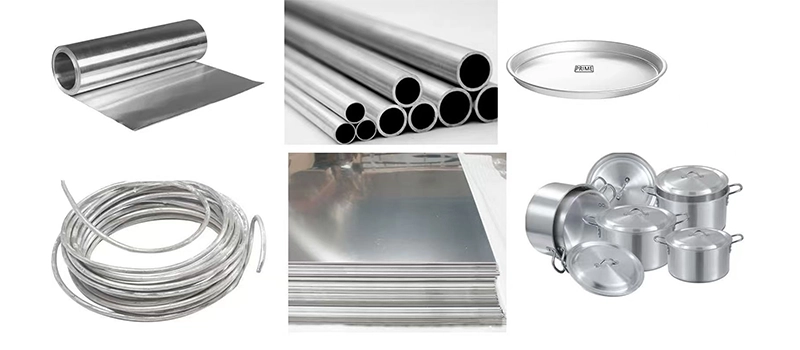
Aluminum 3xxx is widely used in the construction industry due to its excellent formability and corrosion resistance. Products such as roofing sheets, wall cladding, siding panels, and rain gutters are often made from aluminum 3xxx because it performs well in outdoor environments exposed to humidity, rain, and temperature variation. Its ability to retain shape during bending and forming makes it a cost-effective choice for custom profiles and large surface installations.
The alloy’s resistance to discoloration and corrosion also ensures that building exteriors maintain a consistent appearance over time, which is especially important in architectural designs requiring low maintenance.
Consumer Goods and Cookware
In consumer applications, aluminum 3xxx is a preferred material for cookware, kitchen utensils, and food packaging. Its combination of moderate strength, high thermal conductivity, and corrosion resistance in contact with water and mild food acids makes it ideal for pots, pans, trays, and lids. Cookware formed from aluminum 3xxx maintains its shape during daily use and offers efficient heat distribution without hot spots.
Additionally, aluminum 3xxx is used in rolled or coated sheets for food and beverage containers. It meets hygiene standards and provides reliable performance throughout the product lifecycle.
Automotive and Transport Applications
Aluminum 3xxx series alloys are increasingly found in automotive systems where moderate strength and corrosion resistance are required at a competitive cost. Applications include heat exchangers such as evaporators and radiators, interior panels, and fuel system components. In HVAC modules, aluminum 3xxx provides the thermal performance and durability needed for long-term operation under fluctuating conditions.
Its cold workability allows manufacturers to produce complex fin shapes and tube geometries with precision, supporting the lightweight and efficiency goals of modern automotive design.
Packaging and Storage Solutions
Aluminum 3xxx is also used in various forms of packaging, particularly where chemical resistance and forming capability are needed. Aluminum containers, storage tanks, and can bodies benefit from the alloy’s ability to be drawn into precise shapes without cracking. This is important for packaging liquids, semi-liquids, or powdered goods that must remain sealed in corrosion-resistant containers.
The ability to roll aluminum 3xxx into thin foils or laminates further expands its use in food preservation and pharmaceutical packaging.
HVAC and Appliance Components
In heating and cooling systems, aluminum 3xxx offers a practical balance between weight, corrosion resistance, and thermal transfer. It is used in fins, coils, and sheet housings for air conditioners, refrigerators, and ventilation systems. These components often require fast stamping, joining, and assembly, which aluminum 3xxx supports effectively.
Its predictable mechanical behavior and resistance to corrosion from condensation make it a long-term solution for indoor and light outdoor environments.
Conclusion
Aluminum 3xxx series alloys provide a reliable combination of moderate strength, excellent formability, and corrosion resistance, making them well-suited for a wide range of applications in construction, cookware, automotive systems, and packaging. As non-heat-treatable materials, aluminum 3xxx alloys are easy to process through cold working methods, allowing efficient fabrication without compromising performance. Their widespread use in both industrial and consumer products reflects their versatility and cost-effectiveness, especially in high-volume manufacturing where durability, consistency, and material availability are essential.