Non-destructive testing is the foundation of modern manufacturing quality control. Among all surface inspection methods, penetrant inspection remains one of the most reliable and widely adopted techniques for detecting critical surface defects in metal components.
This guide explains the science, methods, and industrial applications of penetrant inspection in a clear and authoritative way.
The Science Behind Penetrant Inspection
Penetrant inspection is fundamentally based on capillary action and surface chemistry. The method works because liquids naturally flow into narrow openings when specific physical conditions are met. This behavior is governed by intermolecular forces rather than mechanical pressure.
Capillary Action
Capillary action is the primary scientific principle behind penetrant inspection. It describes the ability of a liquid to enter narrow cavities without external force. When a liquid penetrant is applied to a solid surface, it is drawn into surface-breaking discontinuities due to the interaction between adhesive and cohesive forces.
Adhesion occurs between the liquid and the solid surface.
Cohesion occurs between the liquid molecules themselves.
When adhesion exceeds cohesion, the liquid spreads and flows into microscopic cracks. The narrower the defect opening, the stronger the capillary attraction. This is why penetrant inspection is highly sensitive to fine surface cracks.
Mathematically, capillary penetration is influenced by:
- Surface tension
- Contact angle
- Viscosity
- Defect geometry
A lower contact angle improves wetting ability, allowing deeper penetration.
Surface Tension and Wetting Behavior
Surface tension controls how easily the penetrant spreads across a material. Effective penetrant liquids are formulated to have low surface tension and strong wetting characteristics. Wetting determines whether the liquid can form continuous contact with the surface.
If the contact angle between the liquid and the surface is small, the penetrant spreads uniformly. If the angle is large, penetration becomes limited. Therefore, surface cleanliness directly affects the physics of wetting.
Contaminants such as oil or oxide layers increase the contact angle and prevent proper penetration.
Reverse Capillary Action
Once penetrant enters a discontinuity, it remains trapped until a developer is applied. The developer creates a reverse capillary effect. Its absorbent structure draws the penetrant back out of the defect, forming a visible indication on the surface.
This mechanism is driven by differential absorption and capillary pressure gradients. The developer provides contrast while amplifying the trapped liquid.
Fluorescence Physics
In fluorescent systems, detection relies on photoluminescence. Fluorescent molecules absorb ultraviolet radiation and re-emit energy as visible light. This optical transformation increases contrast dramatically, making fine cracks detectable under controlled lighting.
The science here is molecular excitation and emission. When UV light excites fluorescent dye molecules, electrons move to a higher energy state. As they return to their original state, they release visible light.
This is not mechanical detection. It is optical amplification.
Scientific Limitation
Penetrant inspection can only detect defects that are open to the surface. If a flaw is fully enclosed within the material, capillary action cannot access it. The physics simply does not allow penetration into sealed subsurface discontinuities.
Surface porosity also disrupts capillary predictability because the liquid spreads irregularly instead of concentrating in true defects.
Types of Penetrant Inspection Techniques
Penetrant inspection techniques are classified based on three primary technical variables:
- Type of penetrant indication (visible or fluorescent)
- Removal method
- Sensitivity level
These classifications are defined in international standards such as ASTM and ISO specifications.
Visible Dye Penetrant Inspection
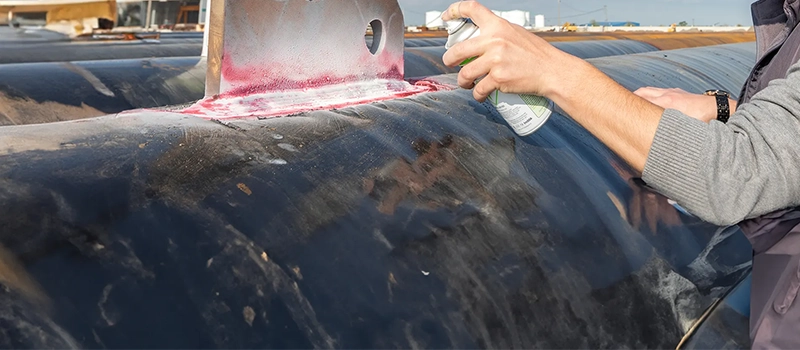
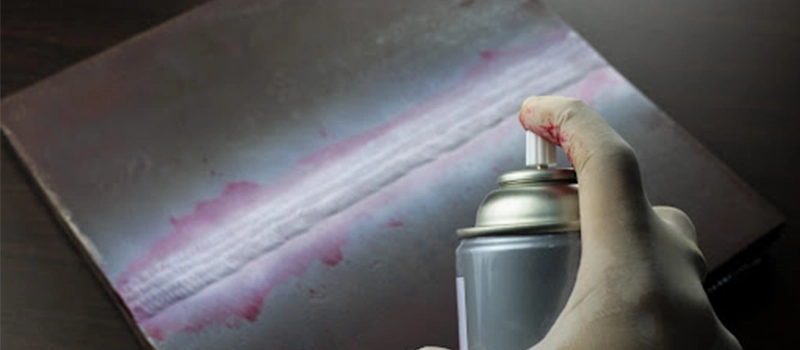
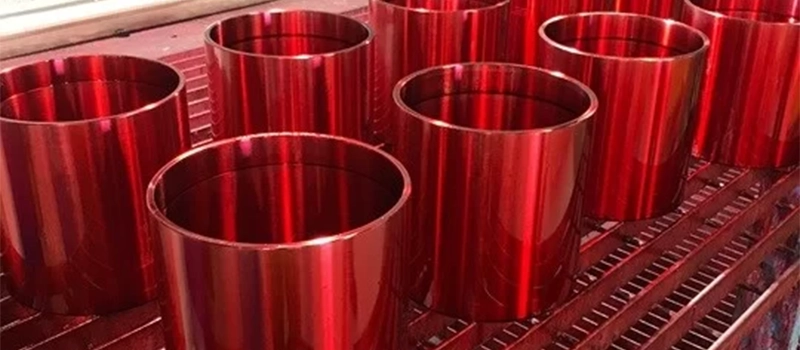
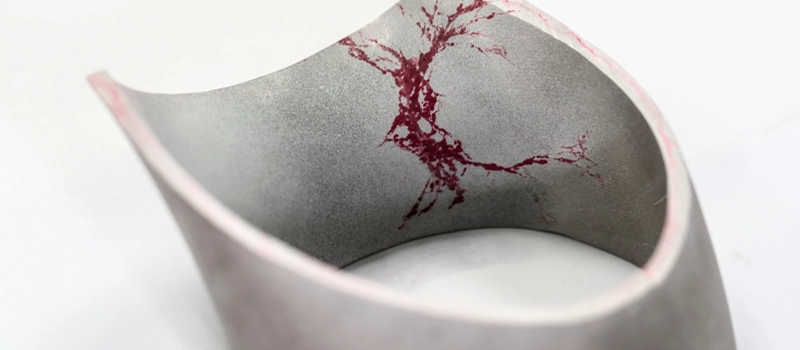
Visible dye penetrant inspection uses a red-colored dye that produces indications under white light. The contrast between the red indication and the white developer background allows discontinuities to be observed without specialized lighting equipment.
This technique relies purely on color contrast. The physics of penetration remains identical to other penetrant methods. The difference lies in the visualization mechanism.
Visible systems are generally used in:
- Field inspections
- Large structural components
- Environments where UV control is impractical
They are typically lower in sensitivity compared to fluorescent systems but are operationally simple.
Fluorescent Penetrant Inspection
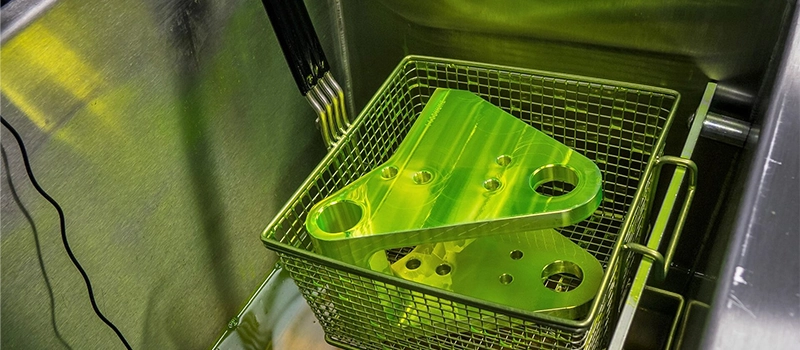
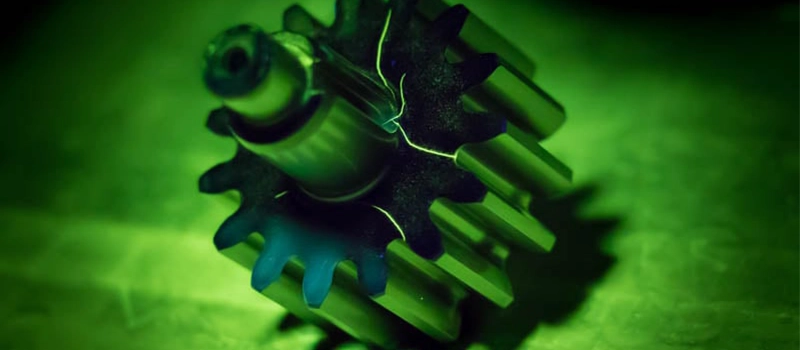
Fluorescent penetrant inspection uses dyes that emit visible light when exposed to ultraviolet radiation. Under UV-A illumination, discontinuities appear as bright yellow-green indications against a dark background.
This method increases detection sensitivity because the human eye can detect light contrast more effectively than color contrast. Fluorescent systems are therefore preferred in industries requiring high reliability.
The fundamental penetration mechanism does not change. Only the detection method differs.
Fluorescent penetrant inspection is commonly selected for:
- Aerospace components
- Precision-machined parts
- Critical welds
Water-Washable Penetrant Systems
In water-washable systems, excess penetrant is removed directly using controlled water spray. The penetrant contains emulsifying agents that allow it to be washed from the surface while remaining trapped inside discontinuities.
The key control factor is wash pressure and duration. Excessive washing can remove penetrant from defects. Insufficient washing can leave background staining.
This method is efficient but requires process control discipline.
Post-Emulsifiable Penetrant Systems
Post-emulsifiable systems separate the penetrant from the emulsifier. After dwell time, a separate emulsifier is applied to render excess penetrant removable with water.
This method provides greater control over penetrant removal. Because the emulsification step is timed, technicians can manage sensitivity more precisely.
There are two subtypes:
- Lipophilic emulsifier (oil-based interaction)
- Hydrophilic emulsifier (water-based interaction)
Post-emulsifiable systems are often used in high-sensitivity applications.
Solvent-Removable Penetrant Systems
Solvent-removable systems use a cleaning solvent to wipe away excess penetrant. This method does not involve water rinsing.
It is typically applied in:
- Maintenance environments
- Field repairs
- Localized inspections
Control is manual. Over-wiping can reduce sensitivity. Under-wiping can produce background interference.
Oil-Based vs. Water-Based Penetrants
Penetrants can also be classified by carrier medium.
Oil-based penetrants generally provide strong wetting characteristics and stable capillary performance. They are less sensitive to minor surface contamination.
Water-based penetrants are easier to clean and more environmentally manageable. However, they may require stricter surface preparation to maintain consistent performance.
The selection depends on inspection environment, regulatory considerations, and required sensitivity.
Sensitivity Levels
Penetrant systems are graded by sensitivity, commonly classified into multiple levels defined by standards. Higher sensitivity penetrants reveal finer discontinuities but require tighter environmental and procedural control.
Sensitivity selection is not arbitrary. It is determined by:
- Component criticality
- Material type
- Expected defect size
- Industry compliance requirements
Advantages of Using Penetrant Inspection
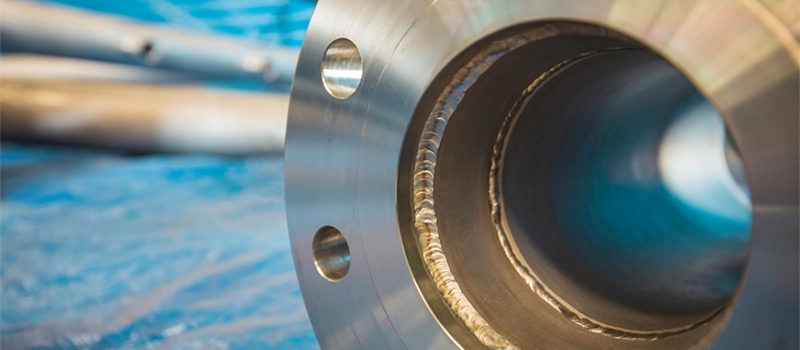
Penetrant inspection offers distinct technical advantages because it relies on simple physical principles rather than complex instrumentation. Its effectiveness comes from controlled liquid behavior, not mechanical signal interpretation. This makes the method inherently stable and predictable when properly executed.
High Surface Sensitivity
One of the primary advantages is its ability to detect extremely fine surface-breaking discontinuities. Because capillary action draws penetrant into narrow openings, even micro-cracks can produce visible indications. In many cases, the method reveals discontinuities that are not detectable by visual inspection alone.
Detection capability is limited only by defect openness and penetrant sensitivity level. There is no dependency on material magnetism, acoustic reflection, or electrical conductivity.
Material Versatility
Penetrant inspection can be applied to a wide range of non-porous materials. These include:
- Carbon steels
- Stainless steels
- Aluminum alloys
- Copper alloys
- Certain ceramics
- Some engineered plastics
The method does not require the material to be ferromagnetic. This gives it a broader application range compared to magnetic particle inspection.
Simplicity of Equipment
The required equipment is minimal. A typical inspection setup includes:
- Cleaner
- Penetrant
- Removal system
- Developer
- Lighting source
No complex electronic instruments are required. This reduces calibration dependency and lowers technical barriers for implementation. Process reliability depends more on procedural control than on equipment precision.
Cost Efficiency
Because the method does not require advanced instrumentation, capital investment is relatively low. Consumable materials represent the primary operational cost. For many manufacturing environments, this makes penetrant inspection economically practical for routine quality control.
The balance between detection capability and operational cost is one of the method’s strongest advantages.
Portability and Field Adaptability
Penetrant inspection can be performed in both controlled laboratory environments and field conditions. Solvent-removable systems in particular are highly portable. This makes the method suitable for maintenance inspections and localized weld evaluations.
The physics of capillary action does not change with location. Only environmental controls such as temperature and lighting require management.
Immediate Visual Results
Indications are directly visible to the human eye. There is no need for signal interpretation software or waveform analysis. The inspector evaluates shape, size, and distribution of indications visually.
This immediacy simplifies decision-making. However, it also requires trained personnel to distinguish relevant indications from non-relevant ones.
Surface Integrity Preservation
As a non-destructive method, penetrant inspection does not alter mechanical properties, introduce stress, or damage the component. The process involves surface application of liquids only. After cleaning, the part remains suitable for service or further processing.
This characteristic makes it compatible with in-process inspection and final inspection stages.
Process Control Stability
When conducted under standardized procedures, penetrant inspection produces repeatable results. Variables such as dwell time, temperature, and removal technique can be controlled precisely. Once parameters are defined, inspection consistency becomes predictable.
The absence of complex signal variables reduces interpretation variability compared to some other non-destructive methods.
Applications of Penetrant Inspection in Various Industries
Penetrant inspection is applied wherever surface integrity directly influences structural performance, safety, or reliability. Because the method detects surface-breaking discontinuities, it is primarily used on components subjected to stress concentration, cyclic loading, or thermal variation.
Its industrial value lies in preventing failure initiation at the surface level.
Casting Industry
In cast components, surface discontinuities such as shrinkage cracks, cold shuts, porosity, and hot tears are common manufacturing risks. These defects often originate during solidification.
Penetrant inspection is particularly effective for castings because:
- Many casting defects break the surface
- Complex geometries can be inspected visually
- Non-ferromagnetic alloys such as aluminum can be evaluated
Aluminum castings, in particular, benefit from penetrant inspection because magnetic methods are not applicable. Surface-breaking cracks in aluminum housings, pump bodies, and structural components can be identified with high reliability.
Welding Fabrication
Welded joints frequently require surface crack detection after fabrication. Surface-breaking defects may include:
- Weld toe cracks
- Crater cracks
- Lack of fusion opening to the surface
- Surface porosity
Penetrant inspection is used after welding, grinding, or repair operations to confirm weld surface integrity. It is especially useful for stainless steel and non-magnetic alloys where magnetic particle testing is not feasible.
Because weld geometry can create stress concentration zones, surface crack detection is critical for structural safety.
Aerospace Manufacturing
In aerospace components, surface cracks can propagate rapidly under cyclic stress conditions. Penetrant inspection is widely used for turbine components, structural fittings, landing gear parts, and precision-machined components.
Fluorescent systems are typically preferred due to their higher sensitivity. Fine fatigue cracks, often microscopic in width, can be revealed under controlled ultraviolet inspection environments.
The method is integrated into routine inspection cycles to maintain airworthiness standards.
Automotive and Heavy Equipment
Automotive and heavy equipment components such as crankshafts, suspension parts, hydraulic fittings, and steering components are subject to dynamic loading.
Surface cracks that initiate in these components can lead to mechanical failure. Penetrant inspection is commonly used during:
- Prototype validation
- Production sampling
- Failure analysis
Because the method is cost-effective and adaptable, it fits both mass production environments and repair workshops.
Petrochemical and Pressure Systems
In pressure vessels, pipelines, and valve bodies, surface cracks can compromise containment integrity. Penetrant inspection is used to examine weld surfaces and machined sealing areas.
The method is especially useful for stainless steel and alloy materials used in corrosive environments. Surface crack detection supports preventive maintenance strategies and regulatory compliance.
Maintenance and Repair Operations
Beyond manufacturing, penetrant inspection is frequently applied during maintenance cycles. When components are refurbished or repaired, surface integrity must be verified before returning them to service.
The portability of certain penetrant systems allows inspection to be performed on-site without large equipment. This flexibility supports industrial uptime and operational continuity.
Step-by-Step Process of Penetrant Inspection
The penetrant inspection process follows a controlled sequence of surface preparation, liquid application, excess removal, development, and evaluation. Each stage is governed by defined technical parameters. Deviation from these parameters directly affects detection reliability.
Surface Preparation
Surface preparation is the most critical prerequisite. The objective is to ensure that discontinuities are open and free from contaminants.
Contaminants such as:
- Oil
- Grease
- Oxide scale
- Paint
- Machining coolant residue
can block penetrant entry. Cleaning methods may include solvent cleaning, alkaline cleaning, vapor degreasing, or mechanical cleaning, depending on material and contamination type.
The surface must be dry before penetrant application. Moisture can dilute penetrant and reduce capillary effectiveness.
Penetrant Application
The penetrant is applied uniformly across the inspection surface. Application methods include:
- Spraying
- Brushing
- Immersion
Uniform coverage ensures consistent wetting behavior. The penetrant must remain on the surface for a defined dwell time. During this dwell period, capillary action draws the liquid into surface-breaking defects.
Dwell time depends on:
- Material type
- Surface condition
- Penetrant sensitivity level
- Temperature
Insufficient dwell time reduces penetration depth. Excessive dwell time does not necessarily improve detection and may complicate removal.
Excess Penetrant Removal
After dwell time, excess penetrant must be removed from the surface without extracting penetrant from defects.
Removal method depends on system type:
- Water-washable systems use controlled water spray
- Post-emulsifiable systems require emulsifier application before rinsing
- Solvent-removable systems rely on controlled wiping
The objective is surface cleanliness while preserving penetrant trapped in discontinuities. Over-removal reduces sensitivity. Under-removal increases background noise.
Control at this stage determines indication clarity.
Developer Application
The developer is applied after the surface is dry. Developer forms include:
- Dry powder
- Water-soluble
- Water-suspendable
- Non-aqueous wet developer
The developer acts as an absorbent medium. Through reverse capillary action, it draws penetrant from defects back to the surface. This produces visible indications.
Application must be uniform and thin. Excess developer can mask fine indications. Insufficient coverage may reduce contrast.
Development Time
After developer application, a development period is required. During this time, penetrant diffuses outward and forms indications.
Development time depends on penetrant type and inspection standard requirements. Premature evaluation may miss fine defects. Excessive waiting may cause indication diffusion and reduced sharpness.
Inspection and Evaluation
Evaluation is conducted under appropriate lighting conditions:
- Visible dye systems require adequate white light intensity
- Fluorescent systems require controlled ultraviolet illumination
Inspectors examine:
- Indication shape
- Size
- Orientation
- Distribution
Linear indications often suggest cracks. Rounded indications may indicate porosity. Interpretation requires training and reference standards.
Post-Inspection Cleaning
After evaluation, the component must be cleaned to remove residual chemicals. This ensures compatibility with subsequent processing or service conditions.
Choosing the Right Penetrant Inspection Method
Selecting an appropriate penetrant inspection method requires evaluation of material type, defect criticality, production environment, regulatory requirements, and sensitivity expectations. The selection is not arbitrary. It must align with technical objectives and inspection standards.
Material Consideration
The first selection factor is material type. Penetrant inspection is suitable for non-porous materials. However, surface finish and alloy characteristics influence performance.
For example:
- Smooth machined aluminum surfaces allow high-sensitivity detection.
- Rough cast surfaces may require lower sensitivity grades to avoid excessive background.
- Stainless steels often benefit from fluorescent systems when fine crack detection is required.
Material porosity must be assessed before method selection. Highly porous materials may produce non-relevant indications.
Defect Criticality
If the inspected component is classified as safety-critical, higher sensitivity penetrant systems are typically required. Fine fatigue cracks demand fluorescent penetrant inspection under controlled UV lighting.
For general manufacturing components where larger discontinuities are the primary concern, visible dye systems may provide sufficient detection capability.
The required detection threshold determines penetrant sensitivity level.
Production Environment
Inspection environment directly influences method selection.
In controlled laboratory settings, fluorescent penetrant inspection provides superior sensitivity and repeatability. However, it requires:
- UV-A lighting
- Controlled ambient light
- Darkened inspection area
In field or maintenance conditions, solvent-removable visible dye systems may be more practical. They require minimal infrastructure and allow localized inspection.
Operational practicality must match inspection objectives.
Removal Method Selection
Water-washable systems are efficient in high-volume production environments. They reduce processing time but require careful wash control.
Post-emulsifiable systems offer greater sensitivity control. They are often chosen when fine crack detection is essential.
Solvent-removable systems provide portability and simplicity but depend heavily on technician discipline.
The removal process influences overall inspection consistency.
Regulatory and Standard Requirements
Industry standards frequently dictate penetrant classification, sensitivity level, and process control parameters.
Sectors such as aerospace, nuclear, and pressure vessel manufacturing often require compliance with defined penetrant inspection procedures. These standards may specify:
- Minimum light intensity
- Maximum wash pressure
- Dwell time ranges
- Sensitivity classification
Method selection must align with applicable compliance requirements.
Cost and Throughput Considerations
High-sensitivity fluorescent systems require greater infrastructure and process control. This increases operational cost.
Visible dye systems are generally more economical and faster to implement. In high-throughput production lines, efficiency may be prioritized while maintaining acceptable detection reliability.
Balancing detection sensitivity with economic efficiency is a key decision factor.
Operator Skill Level
Although penetrant inspection does not require complex instruments, interpretation accuracy depends on trained personnel.
High-sensitivity systems generate more indications, including non-relevant ones. Experienced inspectors are required to differentiate between true defects and surface artifacts.
Method selection must consider available inspection expertise.
Conclusion and Key Takeaways
Penetrant inspection is a surface defect detection method grounded in capillary action and surface chemistry. Its effectiveness depends on controlled liquid behavior, disciplined process execution, and appropriate method selection.
Key technical points include:
- It detects only surface-breaking discontinuities.
- Sensitivity depends on penetrant type and process control.
- Method selection must align with material, environment, and compliance requirements.
- Proper cleaning and removal stages are critical to reliability.
When applied under controlled conditions, penetrant inspection remains a stable, economical, and highly effective solution for detecting surface discontinuities across industrial applications.