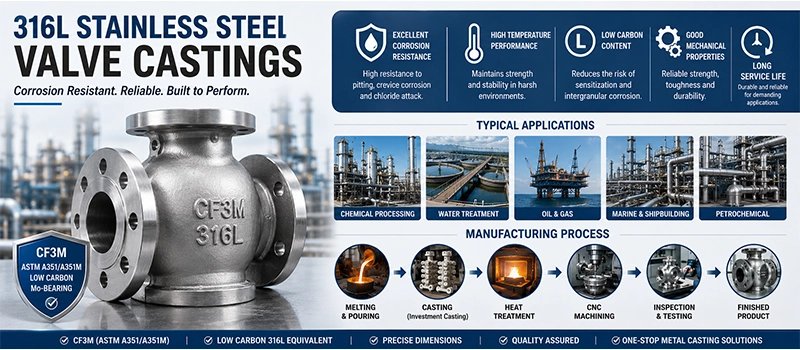
Mechanical properties are the foundation of material performance in engineering and manufacturing.
They determine how metals behave under load, stress, impact, and long-term service conditions.
In material science, mechanical properties explain why a component bends, fractures, wears out, or performs reliably for years. Without a clear understanding of mechanical properties, material selection becomes guesswork rather than engineering.
This article focuses on what mechanical properties are, why they are important, how they influence material selection, and where they are applied in real engineering scenarios. It is written for engineers, manufacturers, and technical decision-makers who need reliable, practical understanding rather than fragmented definitions.
Importance of Mechanical Properties in Material Science
Mechanical Properties Define Material Performance Under Load
Mechanical properties are fundamental in material science because they describe how materials respond when subjected to external forces. These forces may include tension, compression, bending, shear, or impact, all of which occur frequently in real service conditions.
From a scientific perspective, mechanical properties quantify a material’s resistance to deformation and failure. They determine whether a material behaves elastically, undergoes permanent deformation, or fractures when stressed. Without mechanical property data, material behavior under load cannot be evaluated in a reliable or repeatable manner.

Mechanical Properties as Measurable Outcomes of Material Structure
In material science, materials are often studied at the atomic and microstructural levels. However, mechanical properties represent the measurable, macroscopic outcomes of those internal structures. Atomic bonding, crystal arrangement, and defect distribution all manifest as observable mechanical behavior.
Mechanical properties translate complex internal characteristics into standardized values such as strength, stiffness, hardness, and ductility. These values allow material behavior to be described objectively, making mechanical properties a core component of scientific material characterization.
Mechanical Properties and Material Reliability
Reliability in material science is closely linked to mechanical performance. A material must maintain its mechanical integrity when exposed to forces over time, whether those forces are constant or variable.
Mechanical properties provide insight into how materials respond not only to immediate loading but also to sustained or repeated stress. This makes them essential for understanding deformation behavior, resistance to fracture, and long-term structural stability from a scientific standpoint.
The Central Role of Mechanical Properties in Material Evaluation
Material science relies on mechanical properties as primary evaluation criteria because they reflect functional behavior rather than theoretical composition alone. Two materials with similar chemical makeup can exhibit very different mechanical behavior due to differences in structure or internal defects.
By focusing on mechanical properties, material science establishes a practical framework for comparing materials based on performance-related characteristics. This approach ensures that material evaluation is grounded in observable behavior rather than assumptions.
Mechanical Properties as a Core Component of Material Science Knowledge
Mechanical properties are not a secondary or optional aspect of material science; they are one of its core pillars. Alongside physical and chemical properties, mechanical properties complete the scientific understanding of how materials exist and behave in real conditions.
They provide a common language through which material behavior can be measured, analyzed, and discussed across research, education, and industry. For this reason, mechanical properties remain central to material science as a discipline.
Types of Mechanical Properties

Mechanical properties encompass a broad range of characteristics that describe how a material responds to applied forces. In material science, these properties are classified based on the nature of loading, deformation behavior, and failure mechanisms. Together, they form a complete framework for understanding mechanical behavior under different conditions.
Strength Properties
Strength refers to a material’s ability to resist applied stress without failure. It is one of the most fundamental mechanical properties and is typically quantified through standardized testing methods.
Strength-related properties describe the stress limits at which materials begin to deform permanently or fracture. These properties establish the boundaries of load-bearing capability and are essential for defining mechanical resistance under static loading conditions.
Common strength-related parameters include yield strength, tensile strength, compressive strength, and shear strength. Each represents resistance to a specific type of applied force.
Elastic Properties
Elastic properties describe a material’s ability to deform under load and return to its original shape once the load is removed. These properties govern reversible deformation behavior and are critical for understanding stiffness and dimensional stability.
Elastic behavior is characterized by a proportional relationship between stress and strain within the elastic region. Key elastic properties include elastic modulus, shear modulus, and bulk modulus, which quantify resistance to different modes of elastic deformation.
Plasticity and Ductility Properties
Plasticity refers to a material’s ability to undergo permanent deformation without fracture. Once the elastic limit is exceeded, plastic deformation occurs, and the material does not return to its original dimensions.
Ductility is a related mechanical property that describes the extent of plastic deformation a material can sustain before fracture. It is commonly evaluated through elongation or reduction of area measurements. These properties are essential for understanding deformation capacity and failure behavior under excessive loading.
Hardness Properties
Hardness describes a material’s resistance to localized surface deformation, such as indentation, scratching, or abrasion. It is a mechanical property that reflects resistance to penetration rather than bulk deformation.
Hardness is typically measured using standardized indentation tests, and while it does not directly represent strength, it often correlates with resistance to wear and surface damage. In material science, hardness provides insight into surface-level mechanical behavior.
Toughness Properties
Toughness represents a material’s ability to absorb energy and deform plastically before fracturing. It reflects the combined effects of strength and ductility rather than either property alone.
A tough material resists crack initiation and propagation under applied stress. Toughness is particularly important for understanding mechanical behavior under sudden or severe loading, where energy absorption capability is critical.
Brittleness
Brittleness is the tendency of a material to fracture with little or no plastic deformation. Brittle materials fail suddenly once their strength limit is exceeded, exhibiting minimal warning before fracture.
In material science, brittleness is considered a mechanical characteristic rather than a single measured value. It is typically assessed by observing fracture behavior and deformation patterns during mechanical testing.

Fatigue Properties
Fatigue properties describe a material’s response to repeated or cyclic loading. Even when stresses are below static strength limits, cyclic loading can lead to progressive damage and eventual failure.
Fatigue behavior is characterized by the relationship between stress amplitude and the number of cycles to failure. Mechanical properties related to fatigue are essential for understanding time-dependent mechanical degradation under fluctuating loads.
Creep Properties
Creep refers to time-dependent deformation that occurs when a material is subjected to a constant load over an extended period, particularly at elevated temperatures.
Creep properties describe the rate and extent of deformation as a function of stress, temperature, and time. These properties are crucial for understanding long-term mechanical stability under sustained loading conditions.
Impact Properties
Impact properties describe a material’s ability to withstand sudden or rapidly applied loads. Unlike static loading, impact loading involves high strain rates and limited time for stress redistribution.
Impact resistance is evaluated through standardized tests that measure energy absorption during fracture. These properties provide insight into dynamic mechanical behavior.
Wear and Tribological Properties
Wear-related mechanical properties describe a material’s resistance to material loss due to friction, abrasion, or contact with other surfaces.
Although wear involves surface interactions, it is considered a mechanical property because it is driven by mechanical contact forces and deformation at the surface level. These properties are essential for characterizing durability under contact conditions.
Fracture Properties
Fracture properties describe a material’s resistance to crack initiation and crack propagation. They are particularly important for understanding failure in the presence of defects, flaws, or stress concentrations.
Fracture behavior integrates multiple mechanical characteristics and provides insight into how materials behave under critical stress conditions.
How Mechanical Properties Affect Material Selection
Material selection in material science is fundamentally governed by mechanical properties. While chemical composition and physical characteristics provide important background information, it is mechanical performance that determines whether a material can meet functional requirements under load. Mechanical properties act as objective criteria that allow materials to be evaluated, compared, and selected in a rational and systematic manner.
Mechanical Properties as Selection Criteria
Mechanical properties influence material selection because they define the limits of allowable stress, deformation, and failure. When a material is subjected to service loads, its response is determined by properties such as strength, stiffness, ductility, toughness, and fatigue resistance.
From a scientific standpoint, material selection is not based on isolated properties but on mechanical property profiles. A material with high strength but low ductility behaves very differently from one with moderate strength and high toughness. Mechanical properties therefore provide a multidimensional framework for evaluating suitability rather than a single-pass or fail criterion.
Balancing Mechanical Performance Requirements
In material science, mechanical property requirements are often competing rather than independent. Increasing hardness may reduce ductility, while increasing strength may reduce toughness. As a result, material selection involves balancing mechanical properties rather than maximizing one value.
Mechanical properties help define acceptable performance ranges instead of absolute targets. This balance-oriented approach prevents unrealistic material choices and supports consistency in scientific evaluation.
Comparative Role of Mechanical Properties Across Materials
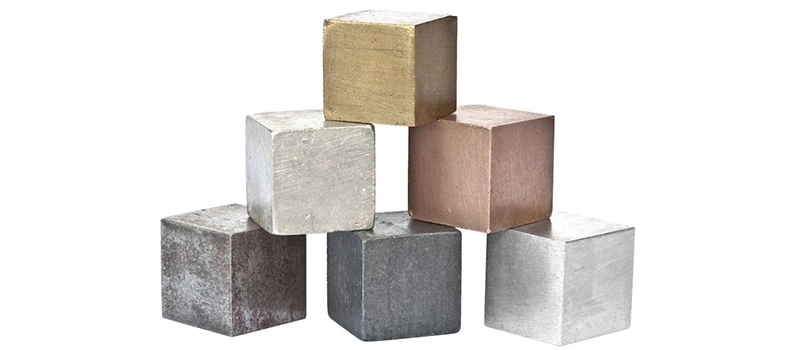
To illustrate how mechanical properties guide material selection, commonly used engineering metals can be compared using standardized mechanical parameters. The purpose of such comparison is not to rank materials as “better” or “worse,” but to demonstrate how different materials exhibit distinct mechanical behavior profiles.
Below is a concise comparison table showing typical mechanical property ranges for representative metals. Values are indicative and may vary with condition, standard, and testing method.
Typical Mechanical Properties of Common Engineering Metals (Overview)
| Material Type | Yield Strength (MPa) | Tensile Strength (MPa) | Elongation (%) | Hardness (HB) | Notable Mechanical Characteristics |
|---|---|---|---|---|---|
| Carbon Steel (A36) | ~250 | ~400–550 | ~20 | ~120–170 | Balanced strength and ductility |
| Alloy Steel (4140) | ~415–655 | ~655–850 | ~12–18 | ~200–300 | High strength and fatigue resistance |
| Aluminum Alloy (6061-T6) | ~275 | ~310 | ~10–17 | ~95 | Moderate strength, good ductility |
| Stainless Steel (304) | ~215 | ~505–735 | ~40 | ~150–200 | High ductility and toughness |
| Stainless Steel (316) | ~205 | ~515–690 | ~40 | ~150–200 | Similar to 304 with enhanced toughness |
| Pure Aluminum | ~35–50 | ~90 | ~35–45 | ~15–30 | High ductility, low strength |
Note: Values shown are typical reference ranges for comparison purposes only. Actual mechanical properties depend on material condition, processing history, and applicable standards.
Interpretation of Mechanical Property Differences
The table demonstrates how materials with different compositions exhibit distinct mechanical behavior even when used for similar structural purposes. Carbon and alloy steels generally provide higher strength, while aluminum alloys emphasize lower density with moderate mechanical performance. Stainless steels combine ductility and toughness with stable mechanical behavior.
From a material science perspective, these differences highlight the importance of understanding mechanical properties as behavioral descriptors, not merely numerical values. Selection decisions rely on how combinations of properties interact under expected loading conditions.

Mechanical Properties as Objective Selection Tools
Mechanical properties enable objective material comparison because they are standardized, measurable, and reproducible. Unlike qualitative descriptors, mechanical property data allows materials to be evaluated within defined performance boundaries.
In material science, this objectivity ensures that material selection is based on evidence rather than assumption. Mechanical properties thus serve as the scientific basis for rational decision-making when comparing different material classes.
Factors Affecting Mechanical Properties
Mechanical properties are not fixed values inherent to a material in isolation. In material science, they are understood as variable outcomes influenced by internal structure, external conditions, and material history. Identifying the factors that affect mechanical properties is essential for accurately characterizing material behavior and explaining variations observed during testing.
Chemical Composition and Alloying Elements
Chemical composition is one of the primary factors influencing mechanical properties. The type and proportion of elements present in a material determine atomic bonding strength, lattice structure, and phase stability.
Alloying elements can increase strength, modify ductility, improve toughness, or alter hardness by changing how atoms interact and how dislocations move within the crystal structure. Even small compositional changes can lead to measurable differences in mechanical behavior, making composition control a fundamental aspect of material science.
Crystal Structure and Atomic Bonding
The crystal structure of a material strongly affects its mechanical properties. Materials with different lattice arrangements exhibit different resistance to deformation due to variations in atomic packing density and slip system availability.
Atomic bonding type—metallic, ionic, or covalent—also plays a significant role. Strong directional bonds typically increase stiffness and hardness but may reduce ductility, while non-directional metallic bonds generally allow greater plastic deformation. Mechanical properties emerge directly from these atomic-scale interactions.
Microstructure and Grain Characteristics
Microstructure is a critical factor that governs mechanical properties at the macroscopic level. Features such as grain size, grain shape, phase distribution, and defect density directly influence strength, ductility, and toughness.
Fine-grained structures often exhibit higher strength due to increased grain boundary resistance to dislocation motion, while coarse-grained structures may allow greater ductility. In material science, microstructural control is central to explaining mechanical property variation within the same material system.
Defects and Imperfections
All real materials contain defects, including vacancies, dislocations, inclusions, and microcracks. These imperfections have a direct impact on mechanical properties by influencing stress distribution and deformation mechanisms.
Some defects enhance mechanical performance by impeding dislocation motion, while others act as stress concentrators that promote fracture. Understanding the role of defects allows material scientists to interpret mechanical test results with greater accuracy.
Temperature Effects
Temperature significantly affects mechanical properties by altering atomic mobility and deformation behavior. As temperature increases, materials generally become more ductile and less strong due to increased atomic movement.
At lower temperatures, reduced atomic mobility can lead to higher strength but lower toughness, increasing the risk of brittle behavior. Mechanical properties must therefore always be considered within the temperature range relevant to testing and service conditions.
Strain Rate and Loading Speed
Mechanical properties are influenced by the rate at which load is applied. Under rapid loading conditions, materials may exhibit higher apparent strength but reduced ductility due to limited time for dislocation movement.
Slow loading allows greater plastic deformation, while high strain rates can promote brittle responses. In material science, strain rate sensitivity is an important factor for interpreting mechanical test data.
Environmental Conditions
The surrounding environment can affect mechanical properties through interactions such as corrosion, oxidation, or hydrogen absorption. These interactions may alter surface integrity or internal structure, leading to changes in strength, ductility, or fracture behavior.
Environmental factors do not change the material itself instantly but influence how mechanical properties evolve over time under exposure conditions.
Time-Dependent Effects
Mechanical properties can change with time under sustained loading. Long-term exposure to stress may result in gradual deformation or mechanical degradation even when applied stress remains constant.
Time-dependent behavior reflects the interaction between stress, temperature, and material structure. In material science, this factor is essential for understanding how mechanical properties evolve rather than assuming they remain static.
Conclusion
Mechanical properties are fundamental to material science because they define how materials respond to force, deformation, and time-dependent stress. By providing measurable and comparable descriptions of material behavior, mechanical properties form the scientific basis for understanding performance, reliability, and structural integrity. A clear and systematic understanding of mechanical properties allows material behavior to be evaluated objectively, ensuring that materials are studied, characterized, and applied with consistency and precision.