MIG vs TIG welding is one of the most common comparisons made in the metal fabrication world — and for good reason.
“TIG welding is often considered the gold standard for precision, while MIG is praised for its speed and efficiency,” notes the American Welding Society (AWS).
As a metal fabrication expert working across industries, I’m frequently asked: Which method should I choose — MIG or TIG welding?
In this article, I’ll break down the critical differences, core advantages, and practical applications of MIG vs TIG welding, helping you decide which process best suits your materials, project goals, and performance expectations.
What is MIG Welding?
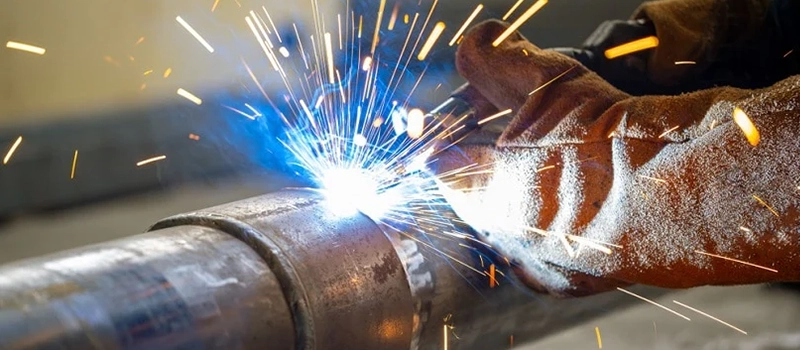
MIG vs TIG welding often begins with understanding what MIG welding actually is. MIG welding stands for Metal Inert Gas welding, and it’s a subtype of Gas Metal Arc Welding (GMAW). This process uses a consumable wire electrode that is continuously fed through a welding gun, while a shielding gas (usually argon or a mix of argon and carbon dioxide) protects the weld area from atmospheric gases like oxygen, nitrogen, and water vapor.
At its core, MIG welding works by creating an electric arc between the wire electrode and the base material. The heat from this arc melts both the wire and the base metal, forming a molten weld pool that solidifies into a strong joint. The wire serves a dual purpose — it conducts electricity to generate the arc and simultaneously melts to become filler metal.
MIG welding is classified as a semi-automatic or automatic process, depending on the setup. It’s controlled by a machine that feeds the wire at a steady rate, while the welder manually guides the torch along the joint. Because of this mechanization, the process is relatively easy to learn and enables consistent weld quality over repetitive tasks.
Another important component in MIG welding is the shielding gas. This inert gas prevents oxidation and contamination of the weld pool, ensuring clean, sound welds. However, this also means MIG welding is generally used indoors or in controlled environments, as the shielding gas can be disrupted by wind or drafts.
The technique is especially suitable for low to medium thickness metals, particularly carbon steel. While it can be adapted to weld aluminum and stainless steel, this often requires specialized equipment and careful parameter adjustments.
To clarify, MIG welding involves:
- A continuous solid wire acting as both electrode and filler
- Use of an inert or semi-inert shielding gas
- Generation of an electric arc between the wire and the workpiece
- Formation of a molten weld pool that fuses the metals
- A semi-automated process controlled by wire feed speed, voltage, and travel speed
What is TIG Welding?
To fully grasp the differences in MIG vs TIG welding, it’s essential to understand what TIG welding is. TIG stands for Tungsten Inert Gas welding, and it’s technically known as Gas Tungsten Arc Welding (GTAW). Unlike MIG welding, which uses a consumable wire electrode, TIG welding uses a non-consumable tungsten electrode to create the arc. This arc generates the heat needed to melt the base metal and, when needed, a separate filler rod is manually added to complete the weld.
The hallmark of TIG welding is its precision and control. The welder has full command over the arc, the heat, and the filler material. This makes it particularly well-suited for thin materials and delicate, high-quality welds where appearance and structural integrity are critical. The process also requires the use of an inert shielding gas — usually pure argon — to protect the weld area from atmospheric contamination.
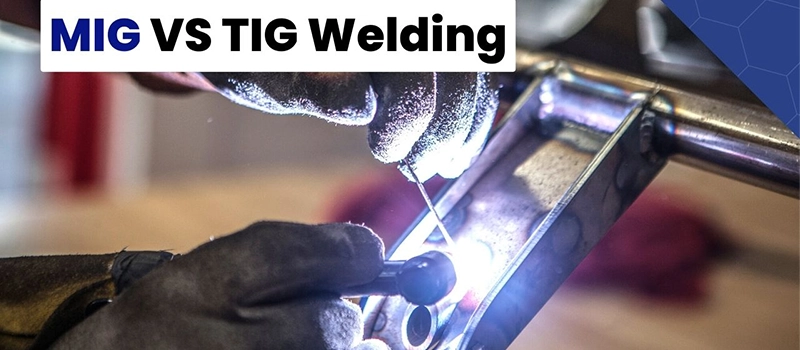
Unlike MIG welding, TIG is a manual process. The welder typically uses a foot pedal to control the current and holds the torch in one hand while feeding the filler rod with the other. This dual-hand operation allows for highly accurate welds, but it also requires more skill and practice to master.
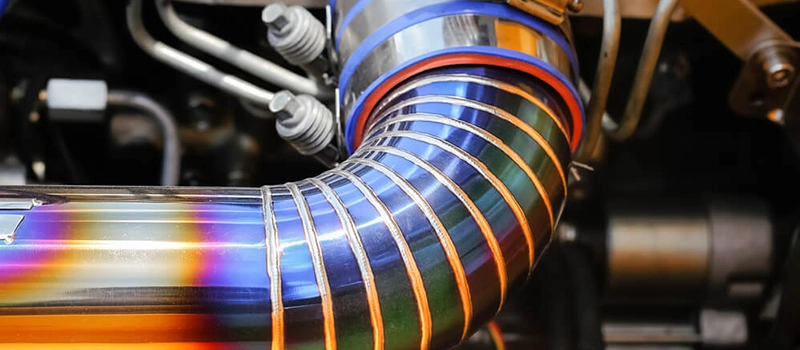
TIG welding is commonly used with materials such as aluminum, stainless steel, magnesium, and titanium — especially in industries where weld quality is non-negotiable, such as aerospace, automotive motorsports, food-grade equipment, and piping systems.
Here’s a breakdown of how TIG welding works:
- An electric arc forms between the tungsten electrode and the workpiece
- Heat melts the metal, forming a weld pool
- A filler rod is manually added if needed
- Argon shielding gas protects the weld from atmospheric gases
- The tungsten electrode does not melt or become filler
Key Differences Between MIG and TIG Welding
To truly understand the mig vs tig welding debate, it’s critical to look at how the two processes differ across several dimensions — from equipment and technique to material compatibility and overall performance. Below is a detailed comparison table that highlights the key differences between mig vs tig welding, making it easier to determine which method suits your project.
🔍 MIG vs TIG Welding: Side-by-Side Comparison
| Feature / Factor | MIG Welding | TIG Welding |
|---|---|---|
| Full Name | Metal Inert Gas Welding | Tungsten Inert Gas Welding |
| Electrode Type | Consumable wire electrode | Non-consumable tungsten electrode |
| Filler Material | Built-in (wire) | Added manually (filler rod) |
| Shielding Gas | Argon / CO₂ mix | Pure Argon (mostly) |
| Welding Speed | Faster – high deposition rate | Slower – more manual control |
| Skill Level Required | Easier to learn – suitable for beginners | Requires advanced skill – suitable for experienced welders |
| Precision | Moderate – great for general fabrication | High – ideal for delicate or clean welds |
| Spatter & Cleanliness | More spatter – needs post-weld cleaning | Minimal spatter – cleaner finish |
| Best For | Thick metals, long welds, volume production | Thin metals, intricate parts, aesthetic welds |
| Material Compatibility | Mild steel, carbon steel, some aluminum & stainless | Aluminum, stainless steel, magnesium, titanium |
| Cost (equipment + operation) | Lower initial setup cost, cheaper wire | Higher equipment cost, more time-consuming |
| Typical Use Cases | Automotive frames, construction, machinery repair | Aerospace parts, food-grade equipment, artistic metalwork |
| Process Type | Semi-automatic or fully automatic | Manual process |
The mig vs tig welding comparison clearly shows that each method serves a unique role in metal fabrication. MIG welding dominates when speed, ease of use, and cost-efficiency are priorities. In contrast, TIG welding is the preferred choice where precision, aesthetics, and clean welds are essential — even though it comes at a higher cost and requires more skill.
Advantages of MIG Welding
Faster Welding Speed
MIG welding delivers significantly higher welding speeds compared to TIG. This is due to its continuous wire feed, which maintains a steady arc and allows for uninterrupted welds over long sections. In high-volume environments like automotive assembly lines or steel structure fabrication, speed is critical, and MIG welding easily outpaces TIG in this regard. This is one of the most decisive factors in the mig vs tig welding performance comparison.
Easier to Learn and Operate
One of the standout advantages in the mig vs tig welding discussion is usability. MIG welding is considered more beginner-friendly because it involves simplified hand control — the welder guides the torch while the machine automatically feeds the wire. There’s no need to coordinate between a foot pedal and filler rod, which is essential in TIG. This reduced complexity makes MIG ideal for training environments and for projects where skilled labor might be limited.
Lower Equipment and Operational Costs
When comparing mig vs tig welding, cost plays a big role. MIG welding machines generally cost less than TIG setups, and consumables like wire electrodes are more affordable than TIG rods. Additionally, because MIG welding is faster, it reduces labor time and overhead costs. For businesses focused on profitability, this economic efficiency makes MIG a smarter long-term investment.
High Deposition Rate
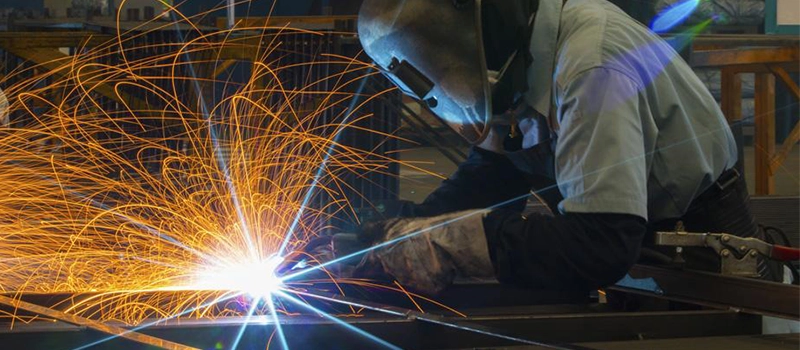
MIG welding offers a higher metal deposition rate, meaning it lays down more weld material in less time. This translates into greater productivity and stronger weld joints for thicker metals. Especially in structural or heavy fabrication work, this advantage puts MIG ahead in the mig vs tig welding productivity debate.
Versatility Across Metal Types
While TIG is often favored for specialty metals, MIG is highly versatile. With the right shielding gas and machine settings, MIG welding can be used for carbon steel, stainless steel, and even aluminum. This flexibility allows manufacturers to standardize on MIG equipment across multiple metal types, streamlining operations and reducing the need for specialized TIG setups.
Ideal for Thicker Materials
MIG welding excels at penetrating thicker metals with ease. Because of its strong arc and higher heat input, it’s more suitable for heavier workpieces, making it common in industries like construction, shipbuilding, and mining equipment fabrication. When evaluating mig vs tig welding for heavy-duty applications, MIG wins on penetration power and efficiency.
Each of these advantages supports MIG welding’s reputation as the go-to process for projects that demand speed, cost-efficiency, and reliability. While TIG welding holds its place in high-precision tasks, MIG continues to lead in terms of scalability and industrial practicality.
Advantages of TIG Welding
Superior Weld Quality and Appearance
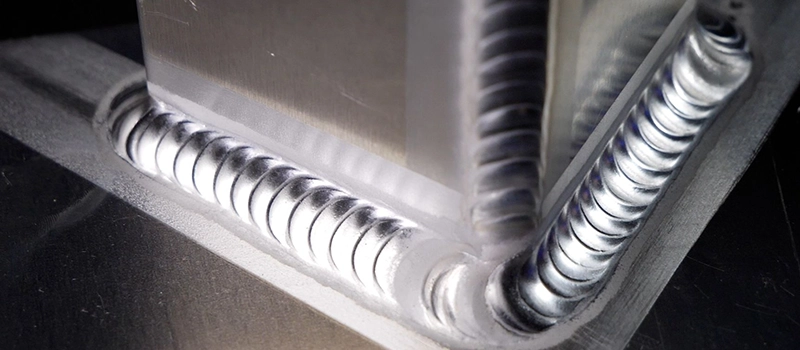
TIG welding is known for producing clean, smooth, and highly aesthetic welds. The process results in minimal spatter, no slag, and tight heat control, which allows for welds that often require no post-cleaning. This makes TIG welding ideal for visible or decorative welds, where appearance is just as important as strength. In terms of finish quality, tig vs mig welding clearly favors TIG.
Exceptional Precision and Control
Unlike MIG, TIG welding allows the welder to manually control both heat input and filler material. This level of precision is especially valuable when working on thin metals, tight joints, or delicate structures. The ability to control the arc using a foot pedal and feed the filler rod by hand gives TIG unmatched finesse — a major win in the mig vs tig welding discussion when accuracy is the priority.
No Spatter and Minimal Cleanup
TIG welding produces virtually no spatter, since it operates without using flux and has better shielding gas protection. This leads to a cleaner workspace, reduces the need for post-weld grinding or brushing, and ultimately saves finishing time. For industries where cleanliness is crucial — like food-grade equipment or medical devices — TIG clearly outperforms MIG.
Ideal for Non-Ferrous and Exotic Metals
In the battle of mig vs tig welding, TIG dominates when working with materials like aluminum, stainless steel, magnesium, titanium, and even thin sheet metals. These materials are often sensitive to contamination or heat distortion, and TIG welding’s precise control makes it perfect for these applications. MIG can handle some of these metals too, but not with the same level of finesse.
Stronger, Higher-Integrity Welds (When Done Properly)
Although MIG welds are strong and efficient, TIG welding — when performed by a skilled welder — can produce stronger, more structurally sound welds, especially in critical applications. The lack of spatter and deeper fusion creates welds that are less prone to cracking or porosity. This makes TIG the preferred choice in aerospace, nuclear, medical, and pressure vessel industries where weld integrity is non-negotiable.
No Need for Filler Material (Optional)
One unique feature of TIG welding is that it can be done with or without filler. For certain joints and material types, autogenous welding (fusing metals without additional material) is possible, offering cleaner and more efficient results. This is not possible in MIG welding, giving TIG an added layer of versatility in specialized tasks.
In conclusion, while MIG may dominate in speed and volume, TIG welding leads in precision, appearance, and material flexibility. When comparing mig vs tig welding, TIG is clearly the superior option in any setting where quality cannot be compromised.
Common Applications for MIG vs TIG Welding
Understanding how mig vs tig welding applies to real-world projects helps clarify which process to choose. While both methods are essential in modern fabrication, they serve very different needs depending on the material type, project complexity, and industry standards.
MIG Welding Applications
✅ Automotive and Transportation
In the mig vs tig welding comparison, MIG is the clear winner in automotive production. Its fast welding speed and ability to handle thicker materials make it ideal for building car frames, chassis parts, trailers, and truck beds. MIG is also widely used for automotive repairs, especially where speed and strength are critical.
✅ Construction and Structural Fabrication
MIG welding is preferred in structural steel fabrication, heavy machinery, and building frameworks. The process is suitable for large-scale, repetitive welding tasks, including I-beams, support brackets, agricultural machinery, and mining equipment.
✅ Manufacturing and Mass Production
MIG’s compatibility with automated welding systems makes it the go-to method in industrial production lines. When comparing mig vs tig welding, manufacturers favor MIG for its efficiency in producing repeatable, consistent welds on mild steel and carbon steel parts.
✅ Home Projects and Light Repairs
Because of its ease of use, MIG is popular for DIY tasks, maintenance work, and small-scale fabrication. It’s great for fences, gates, garden tools, and metal art when a strong weld is more important than aesthetics.
TIG Welding Applications
✅ Aerospace and Aviation
When it comes to precision-critical applications in mig vs tig welding, TIG is the only choice. It delivers flawless, high-integrity welds required in aircraft frames, engine components, and aerospace tubing — often using exotic metals like titanium or magnesium.
✅ Food and Medical Equipment
TIG welding is widely used for stainless steel tanks, sanitary piping, surgical tools, and cleanroom equipment. Its clean, contamination-free welds are mandatory in industries where hygiene is non-negotiable — a domain where MIG welding simply can’t compete.
✅ Automotive Customization and Body Panels
Although MIG is used in general automotive work, TIG welding is preferred for restoration jobs, exhaust systems, and thin body panels. TIG offers better control and cleaner results, which are essential for non-ferrous metals and detailed welds.
✅ Artistic and Decorative Metalwork
In the mig vs tig welding comparison, TIG is favored for projects that require aesthetic perfection. Metal artists and designers use TIG to join metals like copper, bronze, and stainless steel in sculptures, furniture, and luxury architectural elements.
Choosing the Right Welding Method for Your Project
When it comes to selecting the best welding method, the mig vs tig welding debate ultimately depends on your specific project requirements, material type, time constraints, and quality expectations. There is no single method that fits all — both MIG and TIG have distinct strengths, and making the right choice starts with understanding your priorities.
🔍 Consider the Material Type
The type of metal you’re working with should heavily influence your decision in mig vs tig welding. If you’re welding mild steel or carbon steel, MIG is often the better option due to its fast arc penetration and compatibility with thicker materials. On the other hand, if you’re working with aluminum, stainless steel, titanium, or thin sheet metal, TIG welding is the superior choice thanks to its precise heat control and cleaner weld finish.
🔧 Evaluate Required Weld Strength and Appearance
In terms of mig vs tig welding strength, both methods can produce strong welds — but only if executed properly. MIG welding is strong, but it can generate spatter and may require more cleanup. TIG welding offers greater control over the weld puddle, allowing for deeper fusion and stronger, cleaner welds, especially on thinner materials. If visual quality and structural integrity are essential, TIG welding is usually preferred.
🕒 Assess Time and Efficiency Requirements
If speed is critical — for example, in manufacturing, construction, or automotive repair — MIG welding is the obvious winner. It’s faster, more automated, and ideal for long continuous welds. However, in settings where time is less important than aesthetics, control, or specialty metal handling, TIG is worth the investment. When comparing welding MIG vs TIG, always align your method with the timeline.
💸 Factor in Skill Level and Labor Resources
For beginners or projects where skilled welders are not available, MIG welding is easier to learn and operate. It’s more forgiving, making it ideal for repair work, maintenance, and light fabrication. TIG welding, on the other hand, requires a higher level of skill and training, which can raise labor costs. In the mig vs tig welding context, consider who will be doing the work and their comfort with each process.
📈 Weigh the Budget
Cost is another critical factor in deciding between mig vs tig welding. MIG welding equipment is generally less expensive and more widely available. The consumables — wire and shielding gas — are also cheaper. TIG welding setups tend to cost more, and the process is slower, which increases labor hours. If your budget is limited, MIG welding often delivers the best return on investment for general applications.
Conclusion
In the end, the choice between mig vs tig welding depends entirely on your project’s goals. If you need fast, cost-effective welds on thicker metals, MIG welding is the smart solution. If your priority is precision, aesthetics, or working with thinner or specialty materials, TIG welding delivers unmatched control and quality. By understanding the strengths and limitations of both processes, you can confidently choose the welding method that meets your technical, financial, and structural needs.