Why do certain stainless steels crack during fabrication? Why do surface finishes degrade quickly in food or architectural use? Why does corrosion resistance vary across similar grades?
J4 stainless steel is a low-cost austenitic-manganese grade developed as an alternative to 304 in mild environments. While it offers economic advantages, its forming, welding, and corrosion behavior differ significantly and require precise control during manufacturing. Standard references such as ASTM A240 do not cover J4, making grade-specific insight essential.
Misapplying J4 stainless steel can lead to service failure, costly redesigns, and performance issues. Understanding its limits avoids these outcomes.
What Is J4 Stainless Steel?
Composition and Grade Origin
J4 stainless steel is a low-nickel, austenitic chromium-manganese alloy designed as a cost-effective alternative to 300-series stainless steels. It replaces nickel with manganese and copper to reduce cost while maintaining an austenitic structure. This design choice affects corrosion resistance, forming characteristics, and weld behavior.
Typical composition includes 16–18% chromium, 8–10% manganese, 0.8–1.0% copper, and <1% nickel. Carbon is controlled below 0.1%. Nitrogen may be added in small amounts to improve strength. The alloy’s passive layer is less stable than that of 304, limiting its performance in aggressive environments.
J4 is not standardized in ASTM A240 or EN 10088. It is produced according to mill-specific specifications, often for cookware, tubing, and light structural products. It should not be assumed to meet standardized grades without chemical verification.
Differences from 304 and 201
J4 is visually similar to 304 but performs differently. Compared to 304, J4 has:
- Lower corrosion resistance
- Higher yield strength
- Lower elongation
- Reduced weld toughness
J4 can outperform 201 in corrosion resistance, but it work-hardens more slowly and has slightly lower formability. It is not suitable for cryogenic service.
Tool life during machining is moderate. J4 chips are short and manageable. Coated tools and proper cooling extend tool life.
Visual similarity often leads to substitution risk. Positive Material Identification (PMI) is essential for differentiation in production and quality control.
Material Standards and Documentation Limits
J4 stainless steel is not listed in global standards. This creates risks in traceability, certification, and dimensional tolerance assurance.
- No ASTM, EN, or JIS designation
- Quality depends on supplier control
- Limited forms: primarily cold-rolled sheets, strips, and tubes
Mill Test Reports (MTRs) must be reviewed for every lot. Without formal grade recognition, documentation consistency varies. It should not be used in CE-marked or ASME-certified systems without additional qualification.
Procurement should involve:
- Lot-specific chemical verification
- Clear internal specifications
- Segregation in storage and labeling
Use of J4 must be restricted to non-critical applications unless validated through internal testing or external qualification.
How J4 Stainless Steel Behaves in Service
Corrosion Resistance in Real Environments
J4 stainless steel offers limited corrosion resistance, appropriate only for mildly corrosive environments. Its performance depends on the application setting, alloying elements, and surface condition. The absence of sufficient nickel reduces the alloy’s ability to form a stable, self-healing passive film—especially under mechanical or chemical stress.
In dry indoor environments, such as kitchen equipment or furniture, J4 performs acceptably. However, in outdoor or humid conditions, pitting and surface staining can occur rapidly. Exposure to chloride ions, particularly in coastal areas or from deicing salts, accelerates localized attack. J4 fails to maintain resistance under cyclic wetting or in environments with acidic or alkaline cleaning agents.
Copper additions offer limited benefit. They enhance resistance to some organic acids but do not prevent pitting or crevice corrosion in marine atmospheres. Surface finish has a significant impact: smoother finishes (e.g., BA or mirror polish) delay corrosion initiation, but do not eliminate it.
Corrosion performance is variable across batches and suppliers due to lack of standardization. In field use, components fabricated from J4 should be monitored for rust staining and spot failures, particularly around welds and formed edges where passive film integrity is reduced.
J4 is unsuitable for:
- Food processing areas with salt, vinegar, or citric acid
- Chemical storage containers
- Coastal architecture or marine installations
Service performance relies heavily on detailed environmental control, which is not always feasible. In most outdoor or industrial applications, 304 or 316 remains the preferred choice.
Mechanical Properties and Fatigue Limits
J4 exhibits mechanical properties typical of work-hardened austenitic stainless steels. It delivers higher yield strength than 304, mainly due to its higher manganese content. However, its lower ductility affects its fatigue life and formability.
Typical mechanical properties:
- Yield strength: ~370–420 MPa (higher than 304)
- Tensile strength: ~700–800 MPa (depending on thickness and cold work)
- Elongation: ~30–35% (lower than 304 and 201)
The alloy work-hardens during forming, but not as aggressively as 201 or 304. This behavior influences bend radius and forming force requirements. In cyclic loading conditions, J4 performs worse than nickel-rich grades due to increased susceptibility to surface cracking and work-embrittlement.
In fatigue-prone applications—such as vibration mounts, spring components, or dynamic load supports—J4 should not be used without full stress-life testing. It is not recommended for structures under mechanical shock or repeated flexing.
For static components with minimal load variation, J4’s mechanical properties are generally acceptable. Welded structures must account for reduced impact resistance in the heat-affected zone due to its chemical profile.
Behavior Under Chemical and Food Exposure
J4 is not chemically inert and reacts poorly with many cleaning agents and food acids. While marketed for kitchenware, its safe use is restricted to dry environments with gentle cleaning procedures. In environments involving salt, acids, or prolonged moisture, the alloy fails quickly.
In food contact scenarios:
- Citric acid and vinegar cause surface etching
- Salt residues initiate pitting corrosion
- Repeated wash cycles with alkaline or acidic detergents degrade surfaces
Unlike 304, J4 does not meet NSF or other hygienic surface criteria for food processing zones. The absence of robust passivation makes it unsuitable for long-term sanitary use, particularly in industrial or commercial kitchens where exposure to acidic foods and aggressive cleaners is routine.
Additionally, in industrial environments:
- Acids like HCl and H2SO4 attack J4 readily
- Alkaline solutions promote stress corrosion
- High humidity accelerates intergranular corrosion in poorly annealed sections
Surface corrosion often appears as rust-colored spots or edge failures after only months of exposure. Welds, bends, and areas with residual stress are more prone to failure.
For food-grade or chemically exposed components, J4 should only be selected after detailed compatibility analysis. In most cases, it is best used in dry, decorative, or furniture-grade applications with no chemical exposure.
How Manufacturing Processes Respond to J4 Stainless Steel
Forming and Cold Work Hardening
J4 stainless steel responds moderately well to forming operations, but its work-hardening rate and ductility are both lower than those of 304 stainless steel. This limits the alloy’s performance in deep drawing, stretch forming, or complex bending tasks where high plasticity is required.
The manganese-based austenitic structure of J4 stainless steel provides sufficient initial ductility for light to moderate bending, roll forming, and press braking. However, springback is more pronounced than in ferritic steels and must be compensated through die design. For roll-forming applications, consistent surface finish and strip thickness are required to avoid wrinkling or uneven deformation.
Work hardening occurs during cold deformation, but the rate is relatively low compared to nickel-rich austenitic grades. As a result, forming J4 stainless steel to high strains can result in cracking, particularly at corners or along tight bends. Minimum bend radii must be respected, and forming should be performed in the annealed condition.
Surface quality is affected during aggressive forming. Scratching, galling, and surface drag are more common unless proper lubrication is applied. In automated lines, tooling must be adjusted to accommodate the lower elongation of J4 stainless steel to avoid tearing or non-uniform strain distribution.
When edge quality is critical—for example, in decorative tubes or exposed sheet metal—trimming after forming may be required. Formed parts made from J4 stainless steel may also need to be repassivated, especially if pickling was skipped or oxide layers were removed mechanically.
Formability is serviceable, but less forgiving. For high-volume production, dies must be tuned to J4 stainless steel’s forming limits, and breakage during batch runs should be anticipated if tolerances are tight or material properties vary across lots.
Machining Performance and Tool Life
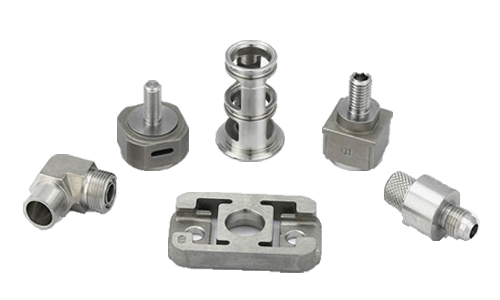
Machining J4 stainless steel presents challenges typical of austenitic grades with added complexity from its manganese and copper content. These elements increase hardness and reduce chip ductility, leading to moderate to high tool wear—especially during dry machining.
The machinability rating of J4 stainless steel is approximately 50–55% that of free-machining carbon steel. High-speed steel tools experience accelerated wear unless proper feeds, speeds, and coolants are maintained. For longer production runs, carbide inserts with TiAlN or similar coatings are recommended. Sharp cutting edges and consistent chip removal are necessary to avoid built-up edge and reduce tool chatter.
J4 stainless steel generates short, discontinuous chips, which can clog tools and lead to inconsistent surface finish. For drilling, peck cycles and through-coolant tools are preferred to evacuate chips efficiently. Tapping and threading require rigid setups to prevent tool breakage due to the alloy’s work-hardening behavior.
Surface finish on J4 stainless steel can be acceptable when cutting parameters are optimized. However, roughness increases rapidly with worn tooling, especially on copper-rich inclusions or manganese-segregated zones. Final machining passes should be light, and finishing with grinding or polishing may be required to meet tight surface requirements.
Machining residuals such as manganese sulfides may smear across the surface, increasing the risk of localized corrosion if not properly removed. Final components should be degreased and passivated to restore corrosion resistance post-machining.
For small-scale machining tasks or one-off parts, J4 stainless steel is manageable. For high-volume or precision manufacturing, it demands careful setup, tool selection, and post-process cleaning.
Welding Considerations and Post-Weld Risk
J4 stainless steel is weldable using standard techniques such as TIG, MIG, and resistance welding, but its performance depends heavily on joint preparation, filler selection, and thermal management. The low nickel content increases susceptibility to hot cracking and reduces toughness in the heat-affected zone.
Autogenous welding is not recommended for structural joints. Filler metals must be selected to match not just the composition but also the corrosion behavior of J4 stainless steel. Most common 308L or 309L fillers are not well-matched in terms of corrosion resistance or thermal expansion, which can result in galvanic imbalance or visible weld discoloration.
Cracking can occur during cooling, particularly in thick sections or restrained joints. Preheat is typically not required, but interpass temperature must be controlled below 150°C to avoid grain growth. Shielding gas purity must be high to prevent nitrogen loss or chromium carbide precipitation at the fusion line.
Post-weld cleaning is essential. The heat tint from welding J4 stainless steel contains oxidized manganese and chromium, which disrupts passivation. Pickling and passivation with nitric-fluoride or citric acid-based treatments are recommended immediately after welding to restore the passive layer.
Weld appearance is often dull or mottled due to the alloy content. For visible parts, additional mechanical polishing may be needed to match the parent metal finish. In tube welding, orbital welders can maintain better consistency in J4 stainless steel joints.
Welded components should be inspected for pitting, edge cracking, and discoloration. Inconsistent cooling or contamination leads to reduced corrosion resistance in the weld zone, making post-weld inspection and surface restoration mandatory in most cases.
Surface Finishing and Pickling Issues
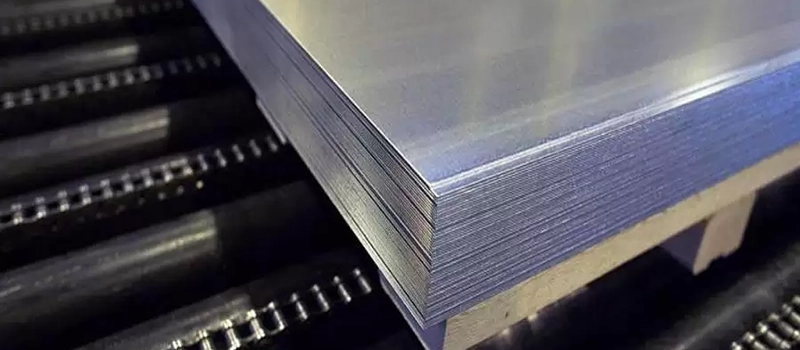
Surface finishing of J4 stainless steel is one of the most critical steps in controlling both appearance and corrosion resistance. As-supplied finishes include 2B (cold-rolled, annealed, pickled), BA (bright annealed), and various polished grades (e.g., satin or mirror).
The passive film on J4 stainless steel is less robust than that of 304 due to its alloy balance. As a result, surface defects, tool marks, and residual oxides have a more pronounced effect on corrosion initiation. Pickling is required after welding, forming, or heat treatment, especially where manganese-rich oxide scales form.
Pickling solutions must be adjusted for J4 stainless steel’s chemical behavior. Standard nitric-hydrofluoric acid mixtures work but can over-etch the surface if not tightly controlled. Citric acid-based alternatives are less aggressive and offer more uniform surface passivation.
Mechanical finishing, such as grinding or brushing, must use clean abrasives and dedicated equipment to avoid cross-contamination from carbon steel. Surface roughness Ra should remain below 0.8 µm for applications requiring corrosion resistance or hygiene.
For decorative applications, mirror or satin polish is achievable, but requires more steps compared to 304. Copper and manganese in the alloy tend to create minor surface streaks unless fully removed during polishing.
Electropolishing is less effective than with high-nickel grades, but can improve corrosion resistance marginally. Clear labeling and process control are essential when polishing J4 stainless steel alongside other alloys in shared production lines.
Surface treatment is not optional. Without controlled finishing and proper passivation, J4 stainless steel will corrode prematurely—especially around welds, edges, and formed zones.
Where J4 Stainless Steel Performs Well
Kitchenware and Light Appliances
J4 stainless steel is widely used in the manufacture of kitchen utensils, appliance housings, and cookware components where cosmetic finish, moderate corrosion resistance, and cost control are key considerations. It provides an acceptable balance between formability and durability in dry, indoor food-prep environments.
In kitchen applications, J4 stainless steel is used for:
- Dish drainers and racks
- Sink accessories (trays, strainers)
- Handles and knobs
- Water dispensers and appliance panels
- Rice cookers, induction cooktop surfaces, and housing shells
The alloy’s relatively high chromium content maintains a visually clean surface under dry conditions. Its ability to take on bright annealed (BA) and satin finishes makes it suitable for appliance manufacturers aiming for a stainless aesthetic at a lower cost.
However, J4 stainless steel in these applications must be used with understanding of its limits. Contact with vinegar, brine, lemon juice, or acidic residues can initiate staining or pitting, especially around welds and sharp corners. Manufacturers often use J4 in non-contact or indirect-contact zones while retaining 304 or 430 for critical food contact surfaces.
From a forming perspective, J4 stainless steel performs well for stamped and shallow drawn components. Its lower work-hardening rate supports rapid forming without excessive tool wear, although deep drawing may lead to cracking unless carefully controlled.
For appliances subjected to thermal cycling or washdown, additional passivation or coating is sometimes applied to maintain visual quality. Routine use in enclosed, low-humidity environments aligns with J4 stainless steel’s corrosion threshold.
Indoor Architectural Trim
J4 stainless steel is often used in architectural interiors where moisture exposure is minimal and appearance is prioritized over long-term corrosion resistance. In these settings, the alloy provides good machinability and an attractive finish at lower cost compared to 304.
Common uses include:
- Elevator panels
- Decorative wall trims and skirtings
- Door hardware and frames
- Partition channels and covers
- Furniture brackets and support legs
Its ability to accept mirror polishing and brushed finishes allows J4 stainless steel to visually match higher grades in controlled conditions. Components remain dimensionally stable, and the alloy’s higher manganese content supports moderate strength in light structural details.
Installations inside office buildings, malls, residential interiors, and dry transport terminals are well-suited for J4 stainless steel. In these environments, the passive layer remains intact, and corrosion initiators such as chlorides, acidic condensation, or industrial dust are minimal.
However, care must be taken during installation and maintenance. Abrasive cleaners or moisture entrapment from construction adhesives can damage the oxide layer. For this reason, many users specify clear lacquer coatings or request factory passivation to maintain finish uniformity post-installation.
Edge protection, drainage design, and insulation from dissimilar metals (especially carbon steel fixings) further improve performance. While not recommended for structural supports or load-bearing frames, J4 stainless steel performs adequately in visual and secondary architectural roles when correctly detailed.
Decorative Structural Tubes
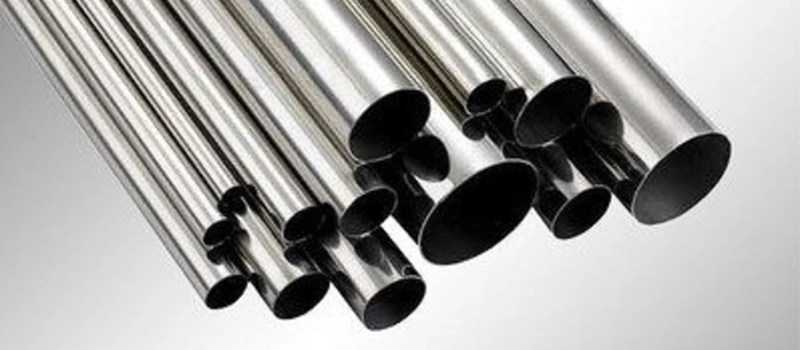
J4 stainless steel tubing is a common material for decorative frames, furniture supports, railings, and structural tubes in indoor or covered outdoor environments. It is readily available in square, round, and rectangular profiles with consistent surface quality.
Tubing applications include:
- Display racks and retail shelving
- Indoor railings and barriers
- Hospital bed frames and supports
- Table legs, chair arms, and kiosks
The alloy’s strength-to-weight ratio supports use in static structures where load demand is low to moderate. Welding behavior is consistent for thin-walled tube welding, especially with orbital and TIG processes, provided that filler selection and post-weld passivation are correctly managed.
In tube fabrication, J4 stainless steel offers dimensional stability and ease of bending in diameters up to 50mm. Wall thicknesses typically range from 0.5 mm to 2.0 mm. Tight bending radii should be avoided without internal support, as the alloy’s reduced elongation increases cracking risk at tight corners.
Tube finishes typically include:
- 2B (mill finish for structural use)
- Satin/brushed (for visible frames)
- BA or mirror polish (for decorative fixtures)
The appearance of J4 stainless steel tubing can be maintained over long periods indoors, provided it is cleaned using non-acidic solutions and protected from humidity accumulation. Applications in public-facing structures like retail furniture, educational institutions, and office spaces make use of its aesthetic versatility.
That said, caution is needed if these installations are near entrances or cleaning areas where saltwater, detergents, or moisture can reach exposed sections. For railing and furniture near entrances, anodized aluminum or coated mild steel may offer better lifecycle durability.
When used indoors and installed with proper spacing, drainage, and surface protection, J4 stainless steel tubing is a cost-effective solution for non-load-bearing structural components with decorative intent.
Where J4 Stainless Steel Fails or Should Be Avoided
Marine and Chloride-Exposed Environments
J4 stainless steel fails rapidly in marine or chloride-rich environments due to its insufficient nickel content and unstable passive film. In coastal regions, salt-laden air deposits chloride ions on exposed surfaces. These chlorides penetrate the oxide layer and initiate pitting corrosion, especially at welds, edges, or surface defects.
This risk is heightened by the presence of manganese and copper, which do not provide equivalent protection against halide attack. Unlike 316 stainless steel, which contains molybdenum to resist pitting, J4 stainless steel corrodes visibly within weeks under constant salt exposure. Rust staining and structural weakening progress quickly, even in splash or mist zones several kilometers inland.
Common marine failures include:
- Railing systems near coastlines
- Signage mounts and outdoor trim in harbor areas
- Boat fixtures, dock hardware, and anchor brackets
Attempts to coat or passivate J4 stainless steel for marine use generally fail over time, as the underlying alloy cannot maintain passive stability once the coating is breached. For any marine application, especially structural or safety-critical components, J4 stainless steel is fundamentally unsuitable.
Outdoor Installations With Acidic Rain or Humidity
Outdoor environments with high humidity, air pollutants, or acidic rainfall accelerate the breakdown of the passive layer on J4 stainless steel. The alloy is especially vulnerable in industrialized urban regions where sulfur dioxide and nitrogen oxides from combustion sources lead to low-pH precipitation.
When water remains on the surface of J4 stainless steel for extended periods—due to poor drainage, horizontal orientation, or dew cycles—the chromium oxide layer dissolves and allows underlying iron to oxidize. Corrosion initiates as spot rusting, then progresses through surface blistering or flaking.
Failures are common in:
- Exterior cladding
- Balcony rails
- Decorative covers exposed to rain or fog
- Garden fixtures and furniture left in open areas
Staining often occurs within months of installation. Once pitting begins, the process is self-propagating. Even mild urban rainfall with low pH is enough to degrade the surface if drying cycles are slow or trapped moisture accumulates.
For outdoor installations without full sheltering or temperature-controlled environments, J4 stainless steel should be avoided. Painted carbon steel, anodized aluminum, or 304 stainless steel with sufficient finish protection are better-suited.
Structural Applications With High Dynamic Loads
J4 stainless steel lacks the mechanical toughness and fatigue endurance necessary for structural or dynamically loaded applications. Its elongation at break and impact resistance are lower than standard 304, while its weld zones are more susceptible to cracking under cyclic loading or vibration.
In structural contexts, the risks include:
- Brittle fracture at stress concentrators
- Fatigue cracking at weld toes
- Deformation under shock or accidental impact
- Weld failure due to hot cracking or lack of ductility
Typical failure examples:
- Frame components in vibrating machinery
- Stair supports under pedestrian loading
- Load-bearing brackets in transportation systems
- Equipment structures subject to shock loading
J4 stainless steel’s higher yield strength may initially appear favorable in specification tables, but its reduced elongation and inconsistent toughness, especially in thicker sections or low-temperature environments, make it unsuitable where design requires energy absorption or movement resistance.
Welded assemblies made from J4 stainless steel tend to fail at or near the heat-affected zone due to residual stress and microstructural sensitivity. In areas exposed to vibration or load cycling, small surface cracks can propagate quickly, leading to functional failure.
In summary, J4 stainless steel is not recommended for:
- Load-bearing infrastructure
- Mechanically stressed joints
- Mobile or transport-based equipment frames
- Safety-critical applications without extensive testing
Correct grade selection must match not just static load capacity but also fatigue performance, weld reliability, and corrosion compatibility. In these conditions, J4 stainless steel represents a high-risk material choice.
Conclusion
J4 stainless steel offers cost advantages but comes with strict application boundaries. It performs well in dry, indoor, and decorative environments but fails under chloride exposure, humidity, or mechanical stress. Proper grade selection, surface finishing, and procurement control are essential to avoid misuse and service failure.