Why do structural metals fail in just a few years outdoors? Why do some steels resist corrosion while others degrade rapidly? Why are coating costs still rising in long-term infrastructure?
Weathering steel is engineered to create a protective patina that resists further corrosion, eliminating the need for paint in many applications. Standards such as ASTM A588 and EN 10025-5 define its chemical and performance criteria, making it a proven solution for atmospheric exposure.
Properly selected and processed, weathering steel reduces lifecycle costs—but misuse can lead to catastrophic degradation.
What Is Weathering Steel?
Alloy Composition and Key Elements
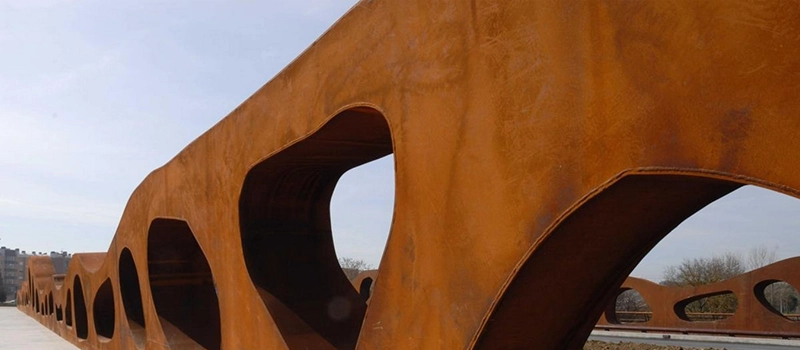
Weathering steel is a high-strength, low-alloy structural steel designed to resist atmospheric corrosion through controlled patina formation. Unlike conventional carbon steel, which rusts continuously in open-air environments, weathering steel forms a tightly adhering oxide layer that slows further degradation. This behavior results from a carefully engineered chemical composition.
The principal alloying elements are copper (Cu), chromium (Cr), nickel (Ni), and phosphorus (P). Copper initiates the development of the protective oxide layer. Chromium and nickel stabilize it, preventing it from becoming porous or flaking. Phosphorus, when used, increases resistance to atmospheric corrosion but must be tightly controlled to avoid adverse effects on impact toughness and weldability.
Carbon content is typically limited to 0.12% or less to preserve weldability and minimize brittleness. Manganese is added to support strength without compromising ductility. Silicon, sulfur, and other residuals are tightly managed through ladle metallurgy and precise process control to maintain cleanliness and mechanical integrity.
Weathering steel is produced using fully killed, fine-grain practices. These methods ensure uniform mechanical performance, improved surface finish, and better control of microstructure. The outcome is a material that resists moisture and oxygen ingress without the need for paint or coatings in suitable environments.
Relevant Grades and Standards
Weathering steel is standardized globally, but the most widely used specifications are ASTM A588 and ASTM A242 in North America, and EN 10025-5 in Europe. These standards define required mechanical properties, chemical compositions, and test conditions.
ASTM A588 specifies minimum yield strengths of 50 ksi for plates and 46 ksi for structural shapes. It requires impact testing when the material is used in bridge applications or other fatigue-critical structures. ASTM A242, used more frequently for thinner sections and hot-rolled profiles, provides similar corrosion resistance but with slightly different strength requirements.
EN 10025-5 covers European structural weathering steels, including grades such as S355J2W and S355K2W. These grades incorporate weathering behavior with varying notch toughness levels depending on service temperature. The ‘W’ suffix denotes weathering resistance, while ‘J2’ and ‘K2’ define minimum absorbed energy at specific temperatures during Charpy V-notch testing.
Compliance with these standards is critical for sourcing, especially in regulated industries or public infrastructure projects. Buyers must verify that mill test reports (MTRs) match the specified grade, chemistry, and mechanical values. Substituting lower-grade materials may result in early-stage corrosion, structural loss, or failure to meet inspection criteria.
For CE-marked applications in the European Union, materials must also comply with the Construction Products Regulation (CPR). This involves conformance to EN 1090 standards and verified traceability documentation. The manufacturer’s declaration must align with the appointed European Authorized Representative’s documentation to meet CE marking and market access rules.
Patina Formation Mechanism
The self-protecting nature of weathering steel results from its ability to develop a patina—a dense oxide film that resists further corrosion. This patina forms under cyclic wet and dry conditions where the alloying elements alter the electrochemical behavior of the steel’s surface.
Initial exposure to moisture causes the outer layer of the steel to oxidize. In carbon steel, this rust remains porous, allowing corrosion to penetrate deeper. In weathering steel, the specific alloying elements cause the oxide to transform into a compact, adherent layer that effectively limits oxygen and moisture diffusion. This oxide layer slows the rate of future corrosion and becomes increasingly stable over time.
The patina typically forms within 18 to 36 months, depending on environmental exposure. Key conditions for successful development include clean air, regular drying cycles, and unrestricted water runoff. The presence of chlorides, acids, or continuous dampness can disrupt patina formation, leading to active corrosion or pitting.
Structural design plays a critical role in whether the patina forms properly. Avoiding flat surfaces where water pools, eliminating tight crevices, and ensuring adequate ventilation are all necessary. In sealed environments without airflow, the patina cannot stabilize, and corrosion progresses unchecked.
When the environmental and design conditions are suitable, weathering steel becomes a long-term, low-maintenance solution. It eliminates the need for periodic recoating and reduces inspection intervals in applications such as structural frames, transmission towers, and outdoor equipment supports.
How Weathering Steel Behaves in Service
Atmospheric Corrosion Resistance
Weathering steel is designed to resist atmospheric corrosion in environments where wet-dry cycles promote oxide layer stabilization. Its corrosion rate under these conditions is significantly lower than that of standard carbon steel, especially after the initial formation period of the patina. Once the stable oxide forms, the corrosion rate often drops below 0.01 mm/year in suitable climates.
The corrosion resistance of weathering steel is highly dependent on the specific atmospheric exposure. In rural environments with low pollution and low humidity, patina formation is predictable and effective. Urban environments, particularly those with moderate sulfur dioxide levels, can still support patina development, although it may be slower or non-uniform.
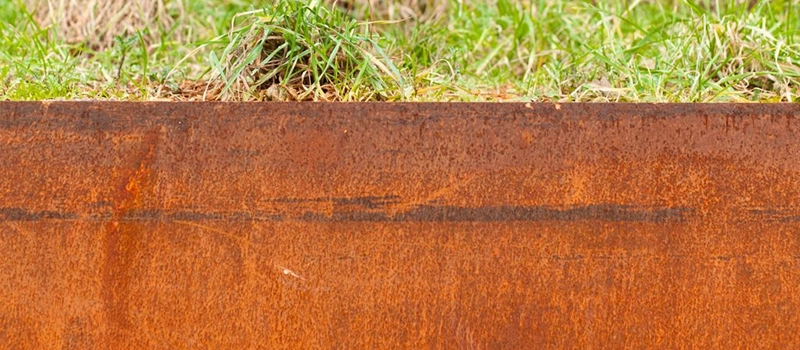
Industrial atmospheres pose greater variability. Exposure to acidic vapors, high particulate load, or wet deposition of chemical contaminants can disrupt oxide stabilization. Sulfate-rich rain, for instance, may lead to uneven or loosely bonded oxide layers that offer little protection. In such cases, the steel may corrode at rates closer to unalloyed carbon steels unless preventive design measures or coatings are applied.
Relative humidity also influences performance. Optimal conditions involve daily drying and moderate wetting cycles. In climates with continuous high humidity, such as tropical forests or sealed building interiors, the patina does not fully develop. Instead, corrosion may progress underneath a misleading surface layer that appears stable but remains porous.
Understanding the site environment is essential. Weathering steel performs well when oxygen exchange and surface drying are reliable. It performs poorly in environments with standing water, condensation traps, or persistent pollution. Evaluating the microclimate—not just the geographic region—is required for accurate material selection.
Structural Strength and Fatigue Properties
In terms of mechanical behavior, weathering steel is comparable to conventional structural steels of similar grades. Yield strength ranges from 345 MPa to 460 MPa depending on the standard and thickness. Ultimate tensile strength and elongation are similarly consistent with carbon-manganese steels used in construction and transportation.
Fatigue performance of weathering steel does not differ significantly from equivalent non-weathering grades under clean, dry conditions. However, in the presence of active corrosion, crack initiation accelerates at surface defects. Corrosion pits can serve as stress risers, reducing fatigue life in cyclically loaded components.
In welded structures, stress concentrations near weld toes or attachment points are particularly vulnerable. If protective patina fails to form uniformly, fatigue cracking may initiate in regions exposed to fluctuating stress and moisture. This effect can be mitigated through post-weld treatments such as grinding, peening, or the use of over-welding at transition zones.
Impact resistance and low-temperature ductility vary by grade. For example, EN 10025-5 offers versions tested at -20°C or -40°C, identified by suffixes like J2 or K2. These impact performance requirements must be considered in infrastructure exposed to cold climates or where brittle fracture risk must be minimized.
From a load-bearing standpoint, weathering steel functions reliably in bridge girders, columns, and frames. However, its strength must be supported by proper design detailing to ensure the corrosion protection system remains active throughout the service life.
Degradation in Non-Ideal Conditions
Weathering steel is not universally corrosion-resistant. It fails when exposed to conditions that prevent patina formation or promote localized corrosion mechanisms. Understanding these limits is critical to preventing material misapplication.
In marine or coastal environments, airborne chlorides attack the oxide layer, causing it to remain porous and non-adherent. Salt-laden moisture prevents passivation and leads to under-rust corrosion. Even at distances over one kilometer from the coastline, chloride deposition can be significant enough to compromise performance.
In enclosed or poorly ventilated structures, water may accumulate without sufficient drying cycles. Humidity levels remain high, reducing oxygen diffusion and inhibiting oxide crystallization. Corrosion continues beneath a layer that looks stable but lacks cohesion and density. These environments include HVAC shafts, sealed utility vaults, or below-grade structures.
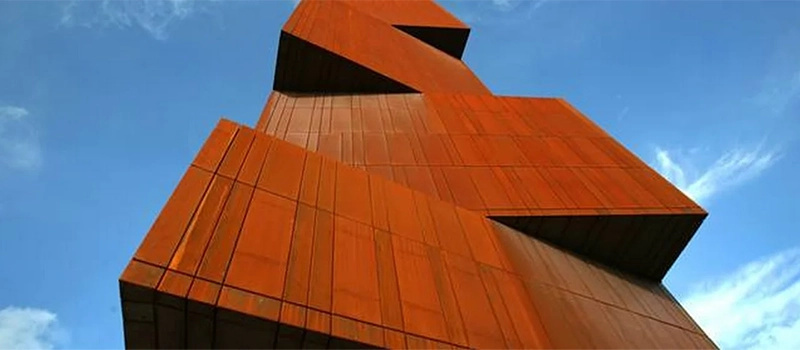
Chemical exposure also presents risk. In areas where acidic runoff, high sulfate levels, or industrial aerosols are common, the steel may corrode actively. Even in environments with cyclic wetting, the presence of acidic condensates or industrial pollutants can prevent the oxide from forming a continuous barrier.
Runoff staining is another service-related behavior. Rust leaching from unpainted surfaces may stain nearby materials—such as concrete, stone, or lighter-colored metals. While this does not necessarily indicate material failure, it may be undesirable in architectural contexts.
To maintain corrosion resistance, structural and site design must facilitate drainage, exposure to airflow, and avoid stagnant water. When weathering steel is applied outside of its environmental limits, supplemental coatings, barriers, or alternative materials must be considered.
How Manufacturing Responds to Weathering Steel
Forming and Cold Working Behavior
Weathering steel behaves similarly to conventional structural carbon steels during forming, but its slightly higher yield strength and work-hardening response require adjustments in bending and forming operations. Typical grades like ASTM A588 and EN S355J2W have minimum yield strengths between 345 MPa and 460 MPa depending on thickness, which can influence springback, bend radius, and tooling loads.
Cold bending operations must take into account minimum inside bend radii to avoid cracking. For thicker sections or tighter bends, preheating may be necessary to reduce forming stress. Tooling must be rigid and wear-resistant, particularly when forming rolled shapes or structural members over repeated cycles.
When forming is performed after partial patina development, the oxide layer may flake or crack, exposing fresh steel and restarting the corrosion cycle at the bend area. In such cases, surface cleaning and accelerated weathering are sometimes applied post-fabrication to reestablish uniform corrosion protection.
Weathering steels are generally not used for deep drawing or high-deformation stamping due to their relatively low ductility compared to low-carbon steels. Applications typically involve moderate forming operations such as press-braking, rolling, and profiling, all of which are well-suited when process parameters are correctly selected.
Residual stress induced during cold forming should be monitored. In large structures subject to thermal cycles or dynamic loading, these stresses can lead to deformation or microcracking over time. Controlled forming processes, and when necessary, stress-relieving heat treatments, help maintain geometric and mechanical integrity.
Machinability and Tool Wear Considerations
Weathering steel can be machined using standard practices, but its alloying additions, particularly copper and chromium, make it more abrasive than plain carbon steel. Tool wear increases, especially at high cutting speeds or when inadequate coolant flow is used. Machinability is roughly 60–70% that of mild steel depending on the grade.
High-speed steel tools may suffice for light operations, but carbide tooling is strongly recommended for volume production or precision machining. Edge wear, chipping, and notch formation are common tool failure modes unless proper geometry, feeds, and cooling rates are applied.
Chip formation tends to be short and irregular due to the work-hardening effect of the surface oxide and the steel’s increased hardness. Positive rake angles and high lubricity cutting fluids help reduce tool load and improve chip evacuation.
Hole-making, threading, and surface finishing operations should be planned with reduced tool dwell time to minimize workpiece heating and surface glazing. Built-up edge formation on tools is less prevalent than in low-carbon steels, but continuous monitoring of surface finish is necessary to prevent localized corrosion initiation points from rough tool paths.
In many applications, machining is limited to attachment points, flange surfaces, or bolted connections. Full part machining is rare due to cost and wear implications. When precision cuts are necessary, high-definition plasma or waterjet cutting may be preferred over mechanical machining to reduce tool degradation.
Welding Practices and Post-Weld Risks
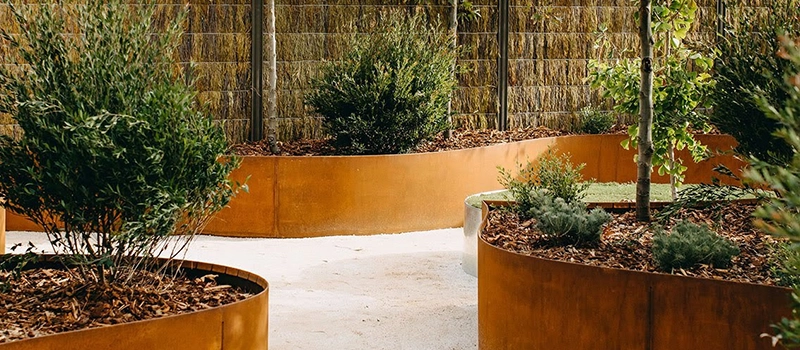
Welding weathering steel requires attention to both filler metal selection and process control. The most common processes used are Shielded Metal Arc Welding (SMAW), Gas Metal Arc Welding (GMAW), and Flux-Cored Arc Welding (FCAW). Not all filler metals provide matching weathering properties, so only those with equivalent atmospheric corrosion resistance should be used when exposed welds are required.
Welding consumables must meet specifications such as AWS A5.5 (low-alloy steel electrodes) or AWS A5.29 for flux-cored wires with weathering characteristics. Failure to match the alloy composition can result in weld zones that corrode at a faster rate than the base metal, defeating the purpose of using weathering steel.
Preheat and interpass temperature control are critical, particularly in thicker sections or in cold climates. Excessive heat input may cause grain growth and reduce toughness. Insufficient preheating can promote hydrogen cracking or weld defects. Best practices include maintaining interpass temperatures between 100°C and 200°C for most sections.
Weld geometry should promote runoff and avoid moisture traps. Fillet welds in horizontal joints are particularly vulnerable if undercut or misaligned. Post-weld cleaning—mechanical or chemical—is essential to remove slag, oxide, and contamination, allowing the patina to reform properly over time.
In multi-pass welds or heavy-gauge applications, heat-affected zones may exhibit different corrosion behavior compared to the parent metal. These zones may require additional inspection or surface treatment to maintain long-term uniformity in appearance and performance.
For critical applications, bend tests, macroetching, and non-destructive evaluation (NDE) such as ultrasonic or magnetic particle inspection are applied to verify weld integrity.
Surface Preparation and Coating Compatibility
Although one of the benefits of weathering steel is the elimination of protective paint in suitable environments, coatings are still required in regions where patina formation is impaired. This includes marine environments, buried or immersed components, or areas where appearance control or runoff staining must be prevented.
Surface preparation before coating is more demanding than with carbon steel. The presence of weathering steel’s tightly bonded oxide layers can interfere with coating adhesion if not fully removed or treated. Grit blasting to Sa 2.5 (near-white metal finish) is typically required, followed by immediate priming to prevent flash rusting.
Compatible coating systems must accommodate the steel’s alloy chemistry and patina reactivity. Inorganic zinc primers and polyurethane topcoats are commonly specified for aggressive exposure. Alkyd-based paints and systems designed for mild steel may fail prematurely on weathering steel.
When hybrid applications combine coated and uncoated areas, masking and joint detailing must be carefully executed to prevent galvanic reactions or capillary water retention. Bolted joints and overlapping surfaces should be sealed or protected with joint compound to reduce crevice corrosion.
Inspection criteria for surface prep, film thickness, and adhesion are typically specified in ISO 12944 or SSPC guidelines, and must be verified with appropriate documentation during production.
Where Weathering Steel Performs Best
Bridges, Walkways, and Infrastructure
Weathering steel is widely used in bridge construction and civil infrastructure due to its ability to provide long-term corrosion resistance without paint. Many transportation authorities prefer it for its lifecycle cost advantages, particularly in locations where routine maintenance is difficult or cost-prohibitive.
In highway overpasses and pedestrian bridges, uncoated weathering steel reduces inspection frequency and eliminates the need for periodic recoating. Once the patina has fully developed, the corrosion rate stabilizes, often allowing for service lives exceeding 75 years under controlled conditions. Structural elements such as girders, crossbeams, and trusses are fabricated from ASTM A588 or EN 10025-5 grade steel, depending on region.
Open-air locations with adequate airflow, rainfall exposure, and drainage allow weathering steel to perform predictably. The oxide layer is self-renewing and typically reaches equilibrium within two to five years. Design detailing is critical—sloped surfaces, no ponding water, and clear runoff paths are essential to maintain the patina.
Case studies from North America and Europe confirm performance under these conditions. For example, weathering steel has been used successfully in railway overpasses, vehicular flyovers, and long-span pedestrian walkways where repainting access is limited. These structures often require only visual inspection unless unusual wear or mechanical damage is detected.
However, in mixed-material structures—such as bridges with concrete decks and weathering steel beams—staining and runoff can discolor the concrete. To address this, designers often specify drip edges, sealants, or runoff diverters. Despite the aesthetic concerns, structural performance is unaffected.
Overall, weathering steel is well-suited for infrastructure where exposure to atmospheric conditions is consistent, where drying cycles occur regularly, and where maintenance access is limited or costly.

Transport and Logistics Equipment
Weathering steel’s durability under open-air exposure has also made it a suitable candidate for transport equipment subject to environmental wear. This includes railcar bodies, container frames, and certain heavy-vehicle substructures that operate in non-marine conditions.
In railway applications, weathering steel is often selected for hopper cars, flatbeds, and support frames exposed to sun, rain, and snow. The reduced need for external coatings lowers manufacturing costs, while the oxide layer resists abrasion and corrosion from road spray and environmental exposure.
Steel used in these applications must maintain both structural integrity and appearance. Welded joints, bolt-on components, and surface finishes must be executed to ensure that the corrosion protection is consistent across the entire assembly. Failures typically occur when components are mismatched—such as standard carbon steel bolts used on weathering steel structures—leading to differential corrosion and weakening of connections.
In truck frames and trailer components, weathering steel can be used for structural rails and chassis members. However, these are typically coated or enclosed to reduce water ingress and abrasion from road debris. When exposed, the patina provides resistance against surface pitting and reduces maintenance in high-use logistics operations.
The key to success in transportation applications lies in design and environmental exposure. These vehicles must operate in conditions that allow for regular drying. In climates with high salinity or constant moisture—such as winter road salting or coastal operations—alternative materials or coatings may be required.
Proper drainage, clear separation from sacrificial coatings, and compatibility with fasteners and attachments must be validated during design. When applied with these precautions, weathering steel performs reliably in mobile platforms and industrial transport infrastructure.
Industrial Equipment with Open-Air Use
For static industrial equipment exposed to outdoor environments, weathering steel offers a practical solution to corrosion control without relying on surface treatments. In sectors like mining, aggregate processing, and agriculture, where equipment is placed in the open and subjected to rain, dust, and UV exposure, the material offers long-term stability with minimal intervention.
Applications include conveyor frames, support trusses, field hoppers, and structural platforms where paint would degrade under abrasion or exposure. These installations benefit from weathering steel’s ability to self-seal against corrosion, especially in regions where equipment is left unused for extended periods or only seasonally operated.
Equipment design must consider flow paths, moisture traps, and crevice avoidance. Dust accumulation, organic matter, and animal waste can alter pH levels on surfaces and disrupt patina formation. In agricultural machinery, surface runoff from fertilizers or manure may also affect corrosion resistance, so material selection must match the exact conditions.
Maintenance strategies for these installations often include periodic rinsing and removal of contaminants but do not require coating reapplication. Welding and on-site repairs must use consumables that maintain the corrosion resistance of the parent metal to avoid weld discoloration or failure.
When weathering steel is used in field structures—such as irrigation towers, windbreak frames, or open storage racking—the long-term visual changes are often acceptable, and the mechanical performance remains consistent across multiple seasons of service.
In industrial environments where coating breakdown would require frequent reapplication or shutdowns, weathering steel provides both economic and operational advantages when correctly implemented.
Conclusion
Weathering steel performs reliably when used in dry, well-ventilated environments with appropriate detailing. Its corrosion resistance depends on patina formation, which fails in marine, chemical, or enclosed exposures. Proper application ensures long-term structural performance without coatings. Misapplication results in premature corrosion and maintenance risk.