Why is tungsten so heavy compared to other metals? What makes it ideal for aerospace parts, molds, or kinetic applications where strength and compactness matter? Engineers often choose it when weight and performance are non-negotiable—but how much of that decision comes down to understanding the true density of tungsten?
The density of tungsten is approximately 19.25 g/cm³, making it nearly as dense as gold and almost twice as dense as lead. According to the Royal Society of Chemistry, this exceptional density results from its tightly packed atomic structure and high atomic mass. These properties allow tungsten to withstand extreme heat, stress, and mechanical loads in compact forms.
Many industrial designers assume density only affects weight, but in tungsten’s case, it directly influences heat resistance, vibration dampening, and impact tolerance. Understanding the density of tungsten is essential for selecting the right materials in high-performance manufacturing, particularly where space and durability are tightly constrained.
What Is the Density of Tungsten?
Measured Density and Units
The density of tungsten is 19.25 grams per cubic centimeter (g/cm³) at room temperature. This value makes tungsten one of the densest naturally occurring elements in the periodic table. To put this in context, tungsten is nearly 1.7 times denser than lead (11.34 g/cm³) and just slightly less dense than gold (19.32 g/cm³).
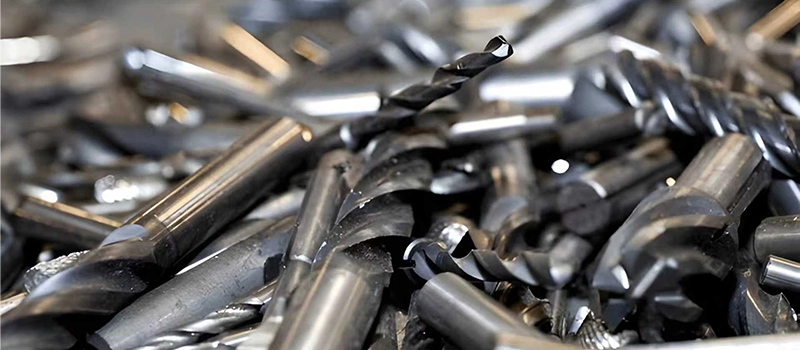
In industrial applications, density is often converted to kilograms per cubic meter (kg/m³) for large-scale measurements, where tungsten comes in at approximately 19,250 kg/m³. Its high atomic number (74) and compact body-centered cubic (BCC) crystal structure give tungsten its extreme mass per unit volume.
How It Compares to Other Common Metals
Compared to more common industrial metals like steel (7.85 g/cm³), aluminum (2.7 g/cm³), or titanium (4.5 g/cm³), the density of tungsten is significantly higher. This unique property is what gives it an advantage in many weight-sensitive and energy-transfer applications.
While steel is often used for its structural strength, tungsten is used when high mass is required in a small space. Its compactness allows for the manufacture of counterweights, ballistic components, and vibration-dampening tools where space constraints are strict.
Atomic-Level Explanation for High Density
The high density of tungsten stems from two main factors: its atomic mass and atomic packing. Tungsten atoms are large and heavy, with 74 protons and a high number of neutrons, giving it an atomic mass of 183.84 u (unified atomic mass units). At the same time, its atoms are tightly arranged in a stable crystalline structure that allows very little empty space between them.
This close atomic packing, along with the element’s inherent weight, means more mass fits into a given volume. As a result, even small tungsten parts are significantly heavier than similarly sized parts made from other metals.
How Density Affects Tungsten’s Mechanical Properties
Influence on Strength and Structural Behavior
The density of tungsten directly influences its performance in structural applications. With such a high mass-to-volume ratio, tungsten provides superior rigidity and compressive strength, especially in components subjected to extreme force or weight-bearing conditions. This makes it ideal for supporting systems in aerospace, mining, and heavy-duty industrial tooling.
Tungsten’s dense atomic structure contributes to its remarkable stiffness. It is less prone to deformation under load compared to lighter metals, which helps maintain dimensional accuracy in high-pressure environments. In applications like injection molds or press dies, this mechanical stability reduces wear and extends service life.
High-Temperature Resistance and Heat Conductivity
Tungsten is well-known for its high melting point, which exceeds 3,400°C—the highest of all metals. While this is not directly caused by density alone, the closely packed atomic structure responsible for the density of tungsten also contributes to its high thermal stability.
Dense atomic bonding improves the metal’s ability to handle sustained heat without warping or failure. As a result, tungsten is used in applications like arc welding electrodes, furnace components, and aerospace heat shields, where heat resistance and structural integrity are essential.
Thermal Conductivity Performance
In addition to heat tolerance, tungsten’s density correlates with moderate thermal conductivity. Although it is not as conductive as copper, tungsten can efficiently transfer heat in systems where both thermal management and structural mass are required. This balance makes it effective in thermal barrier assemblies and high-performance tooling.
Impact Absorption and Vibration Dampening
The density of tungsten enhances its performance in absorbing impact and dampening vibration. High-density materials naturally resist rapid movement or sudden force, making tungsten a preferred choice for kinetic energy penetrators, flywheels, and stabilizers in mechanical systems.
Because of this property, tungsten components are commonly used in automotive balancing weights, aerospace gyroscopes, and precision military systems. The material’s ability to remain steady under dynamic conditions ensures consistent operation, especially in high-speed or rotating equipment.
Application in Kinetic Systems
When used in dynamic mechanical assemblies, the density of tungsten offers better momentum control and energy absorption. This is critical for systems involving rotation, recoil, or oscillation. The material helps manage force without expanding component volume, which is often a critical design constraint.
Industrial Applications That Rely on Tungsten’s Density
Aerospace and Aviation Components
In aerospace manufacturing, compact mass and high durability are essential. The density of tungsten makes it an ideal material for counterweights, ballast systems, and vibration dampening components used in aircraft and spacecraft. Due to strict weight distribution requirements, even small tungsten inserts can balance large structural elements without increasing size or volume.
Tungsten is often used in control surfaces, helicopter rotors, and instrumentation that must maintain stability at high altitudes and during rapid movement. The metal’s ability to maintain shape and position under dynamic loads is critical for maintaining precise navigation and structural balance.
Tooling and Metalworking Dies
In metal forming and high-pressure tooling environments, the density of tungsten allows for the creation of durable dies and molds capable of withstanding repeated mechanical impact. Tungsten’s mass reduces recoil, improves stamping accuracy, and helps maintain tool alignment in automated production systems.
The high density of tungsten also improves heat management during operations like hot forging and die casting. Tungsten dies resist thermal deformation and reduce cycle time by absorbing and dissipating heat efficiently. As a result, tungsten is frequently used in industries that demand long tool life and minimal wear.
High-Precision Mold Inserts
For injection molding of plastics and composites, tungsten inserts are used where enhanced thermal control and weight are required. These inserts maintain dimensional stability over long runs and allow for quicker cooling cycles due to consistent thermal distribution—an advantage driven directly by the density of tungsten.
Medical and Radiation Shielding
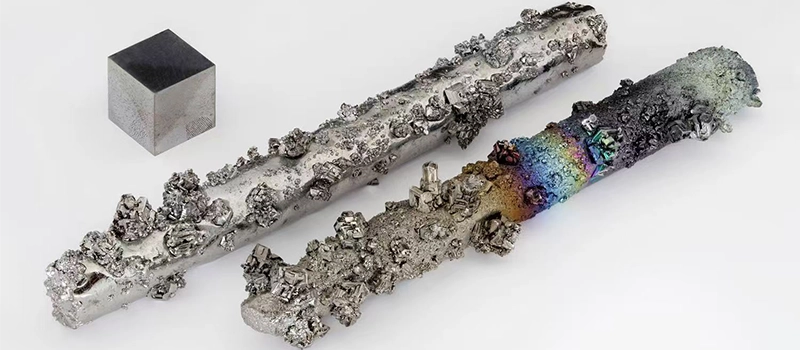
Tungsten’s density makes it highly effective at blocking radiation, both gamma and X-ray. In medical imaging equipment, cancer treatment systems, and nuclear shielding, tungsten is used to protect sensitive components and human operators from radiation exposure.
Compared to lead, tungsten offers similar shielding performance at a smaller thickness and with better mechanical strength. Its non-toxic nature also makes it preferable in healthcare and laboratory environments where material safety is critical.
Portable Shielding Components
Mobile shielding panels, vial shields, and syringe protection often rely on compact tungsten blocks or composite materials infused with tungsten powder. These applications highlight how the density of tungsten allows high protection in small, portable formats.
Defense and Ammunition Systems
In defense sectors, tungsten is valued for kinetic energy weapons, armor-piercing rounds, and fragmentation systems. The extreme density of tungsten provides the necessary mass and energy retention in small-diameter projectiles. Its ability to concentrate force on impact increases penetration capability without increasing size.
Military-grade systems use tungsten not only for its mass but also for its heat resistance and stability under extreme acceleration and impact. This combination of properties makes it a critical material in next-generation ordnance and armor technologies.
Tungsten vs. Other High-Density Materials
Comparing Material Densities
When evaluating materials for applications requiring compact mass, the density of tungsten stands out—but it’s not alone. Other high-density materials like depleted uranium, tantalum, molybdenum, and lead are also used in specialized industries. Selecting the right one depends on performance, cost, toxicity, and machining characteristics.
Depleted uranium, for example, is denser than tungsten at approximately 19.3 g/cm³ and has excellent self-sharpening properties when used in armor-piercing rounds. However, its radioactivity and environmental concerns make it unsuitable for most civilian or commercial uses.
Tantalum, with a density of 16.7 g/cm³, offers excellent corrosion resistance and biocompatibility, making it ideal for surgical implants and electronics. Molybdenum, at 10.3 g/cm³, shares similar thermal properties with tungsten but is lighter and generally easier to machine.
Lead remains widely used for radiation shielding due to its density (11.34 g/cm³) and low cost. However, its softness, toxicity, and poor mechanical properties limit its use in structural or dynamic environments where the density of tungsten offers more durable performance.
Why Choose Tungsten?
The density of tungsten provides a rare combination of benefits: high strength, high melting point, and excellent resistance to mechanical and thermal fatigue. Unlike lead, tungsten is non-toxic. Compared to uranium, it is safe and non-radioactive. When compared to tantalum, tungsten is often more readily available and cost-efficient for applications requiring sheer mass and thermal resilience.
Tungsten is preferred in applications where mechanical durability and thermal integrity matter just as much as mass. Its use in high-performance aerospace, defense, and industrial tooling reflects how its density is matched with real-world reliability.
Volume Efficiency in Part Design
One of the key advantages of the density of tungsten is the ability to pack significant weight into a compact volume. This allows for smaller components with the same or greater mass than alternative materials. In constrained design environments—such as satellites, avionics, or medical devices—this makes tungsten the most volume-efficient option.
Designers also benefit from tungsten’s ability to maintain shape and alignment under force. In moving systems, this improves balance, control, and long-term performance—all outcomes tied directly to the density of tungsten.
Challenges of Working with Dense Metals Like Tungsten
Machining and Processing Difficulties
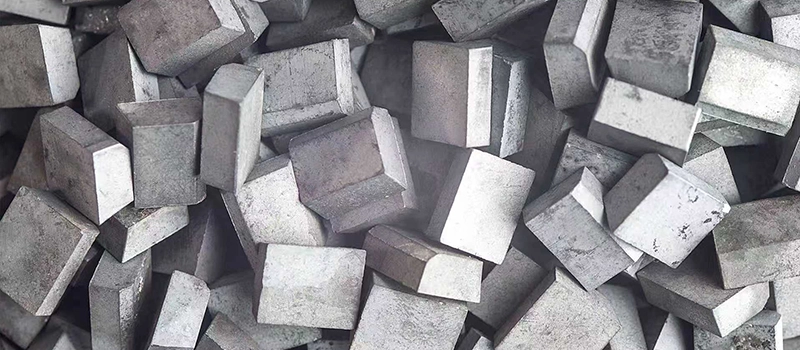
The high density of tungsten contributes directly to its mechanical strength—but that same property also introduces significant challenges in machining and processing. Tungsten is extremely hard and brittle, which makes conventional milling, drilling, or cutting operations slower and more tool-intensive.
Unlike ductile metals like aluminum or even steel, tungsten does not deform easily. Instead, it can chip or crack under improper stress. Specialized tooling with carbide or polycrystalline diamond (PCD) inserts is often required, and feed rates must be carefully controlled. The density of tungsten means more mass per unit volume, increasing tool wear and heat generation during machining.
To manage these issues, some manufacturers use sintered tungsten or tungsten alloys that balance machinability with desired density. Even then, tolerances are harder to achieve compared to lighter or softer metals.
Casting and Forming Constraints
Because of its high melting point—well above 3,400°C—tungsten cannot be processed with conventional casting techniques. Most components are produced using powder metallurgy or sintering. The density of tungsten makes molten handling impractical, and its limited ductility restricts its use in complex drawn or formed shapes.
This means manufacturers must plan for simplified geometries and post-processing treatments to achieve final dimensions. The inability to form tungsten easily into thin or intricate structures is a trade-off for its exceptional weight and strength.
Fabrication Complexity
Even joining tungsten to other materials poses unique challenges. Traditional welding methods are generally unsuitable. In many cases, brazing or mechanical fastening is required. If the density of tungsten is not correctly accounted for during joint design, stress concentration and failure can occur at the interface with lighter metals.
This is particularly important in hybrid components, where tungsten must be integrated with aluminum, steel, or titanium. Differences in thermal expansion and structural mass make compatibility a key engineering concern.
Transportation and Handling
The density of tungsten makes it deceptively heavy for its size. A small tungsten component can weigh as much as several larger aluminum or plastic parts combined. This creates logistics challenges in both manual handling and automated systems.
Shipping costs may increase if bulk tungsten components are involved. In factory settings, heavy parts require stronger fixtures, robotic arms, or manual hoists. If the design team underestimates the impact of the density of tungsten during planning, unexpected constraints may appear in installation or assembly.
Inventory and Material Management
Inventory systems must also adapt. For example, parts stored by volume rather than weight may exceed shelf load limits. For this reason, companies working with tungsten often need customized storage and labeling systems to manage small yet heavy components safely.
Key Considerations When Selecting Tungsten for Fabrication
Choosing Between Pure Tungsten and Alloys
Not all applications require pure tungsten. While the density of tungsten is consistent across grades, alloying it with other metals such as nickel, iron, or copper can improve machinability, reduce brittleness, and lower production costs—especially in complex part geometries or high-volume manufacturing.
For example, tungsten heavy alloys (WHAs) retain high density but are easier to machine and form, making them suitable for precision counterweights, aerospace balance systems, and medical components. On the other hand, applications like x-ray collimators or kinetic penetrators may still favor pure tungsten for maximum density and material integrity.
Choosing the correct grade depends not only on dimensional and mechanical needs but also on secondary factors like surface finish, joining method, and thermal requirements.
Understanding Application-Specific Density Needs
While the density of tungsten is always high, it’s essential to understand how much of that density is actually required for a given function. Over-specifying can lead to unnecessary material costs and fabrication complexity. Under-specifying can compromise performance or safety.
Applications like aerospace counterweights, for instance, benefit from the smallest possible volume with the highest possible weight. Here, tungsten’s density allows tight spatial packaging. However, in structural components or systems involving large surface areas, other heavy-duty metals may be more practical and cost-effective.
Balancing Weight and Design Constraints
Designers must factor in the overall weight distribution and dynamic load interactions. While the density of tungsten offers benefits in stabilizing systems or dampening vibrations, it can also affect system inertia, rotational balance, and structural anchoring.
Therefore, material selection should be closely tied to the role of the component within the assembly. Design teams should use digital simulations to evaluate whether the added mass from tungsten enhances or hinders the system’s function.
Procurement, Cost, and Supply Chain Considerations
The density of tungsten can also influence the total cost of ownership. Tungsten is more expensive than many other metals on a per-kilogram basis, and because of its high density, even small parts can be costly to ship and store.
Additionally, global supply of tungsten is regionally concentrated, and long lead times may impact procurement planning. Engineers and buyers should account for supplier reliability, fabrication capabilities, and the potential need for custom tooling during production.
Long-Term Performance Value
Despite the upfront costs and manufacturing complexity, the density of tungsten often results in superior long-term value. Its high wear resistance, thermal durability, and structural mass reduce the need for replacement, maintenance, and system recalibration.
This reliability, especially in mission-critical systems, justifies the selection of tungsten when precision and performance are non-negotiable.
Conclusion
The density of tungsten defines its value in advanced engineering. When weight, strength, and dimensional efficiency are critical, tungsten delivers unmatched performance. With proper selection and planning, it supports high-load, high-precision, and high-temperature applications where no compromise can be made.