“Powder coating provides a high-quality, durable finish, allowing for maximized production, improved efficiencies, and simplified environmental compliance,” says the Powder Coating Institute. This statement reflects why powder coating has become a standard in metal manufacturing—where both performance and environmental responsibility are critical.
Many industrial manufacturers face problems with coatings that crack, fade, or corrode under stress. In applications exposed to weather, abrasion, or chemicals, traditional liquid paints often fail to deliver the protection required. This leads to product failures, premature maintenance, and increased production costs—issues no operation can afford to ignore.
Powder coating solves these challenges by offering a hard, even, and long-lasting finish without using harmful solvents. It resists chipping, corrosion, and UV damage while delivering consistent results in large-scale production. In this article, we’ll examine how powder coating works, its specific advantages, and why it’s become the go-to solution for many industrial metal products.
What Is Powder Coating and How It Works
Overview of Powder Coating Technology
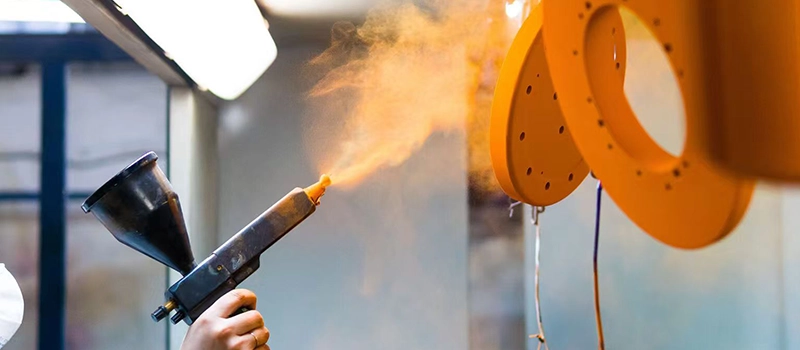
Powder coating is a dry surface finishing method widely used in industrial metal production. Instead of using a solvent to suspend pigments and binders, this process relies on electrostatically charged powder that is sprayed onto a grounded metal surface. After application, the coated part is moved into a curing oven, where heat causes the powder to melt, flow, and chemically bond into a solid, protective layer.
This method provides a high-quality finish that is both durable and environmentally friendly. It offers superior resistance to corrosion, chipping, UV rays, and impact. Powder coating is especially effective for large-volume production due to its efficiency, consistency, and reduced waste.
Core Materials Used in Powder Coating
Resins
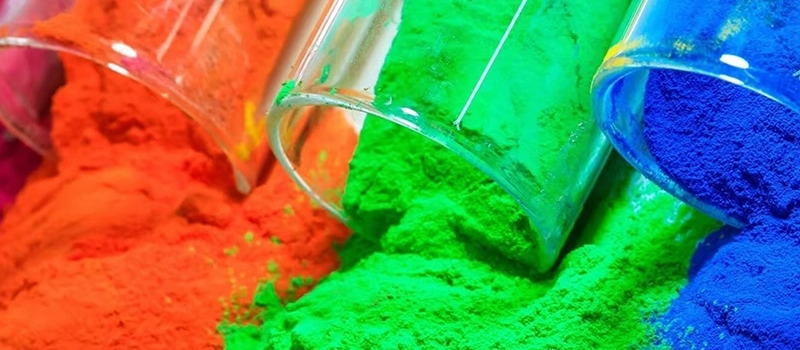
Resins form the backbone of powder coatings. Common resin types include epoxy, polyester, polyurethane, and acrylic. Each has unique properties suited to different end-use environments. For instance, epoxy resins offer chemical resistance, while polyester is better for UV stability in outdoor applications.
Pigments
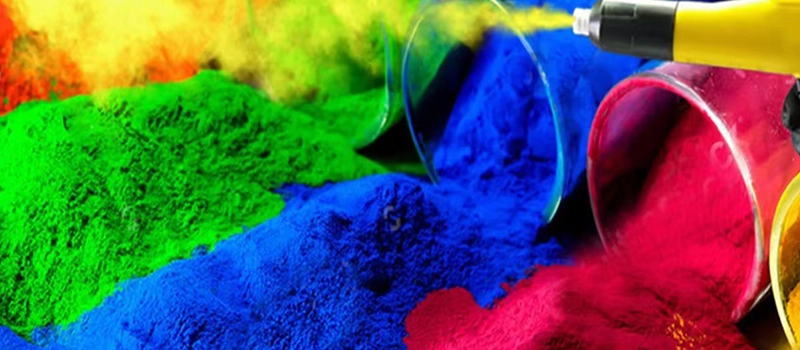
Pigments provide color, opacity, and, in some cases, added durability. They can also be selected for special requirements such as heat reflection or gloss control.
Curing Agents
Curing agents are added to trigger the cross-linking process during the heating stage. This chemical reaction solidifies the coating and enhances its strength and resistance.
Additives
Functional additives are included to improve application and performance characteristics. These may affect flow, texture, anti-static behavior, or surface hardness, depending on the desired finish.
How the Electrostatic Application and Curing Process Works
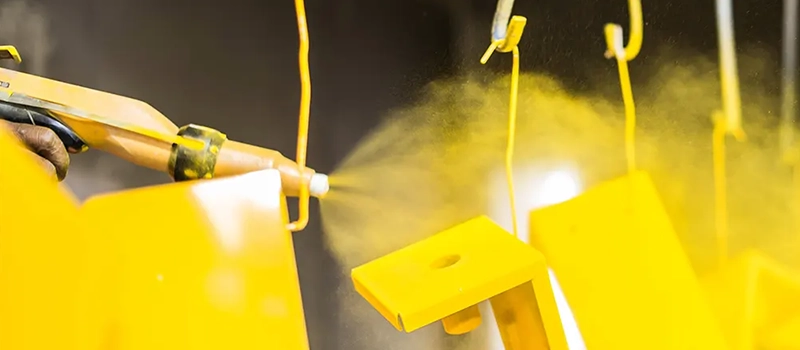
The powder is applied using a spray gun that imparts a negative electrical charge to the powder particles. These charged particles are attracted to the grounded metal part, allowing the powder to cling evenly across the entire surface.
Once applied, the coated part enters a curing oven where temperatures typically range from 160°C to 210°C. Inside the oven, the powder melts and flows, then undergoes cross-linking to form a tough, uniform film. This film bonds tightly to the substrate, creating a finish that can withstand abrasion, weather, and industrial use without peeling or cracking.
Key Differences Between Powder Coating and Liquid Painting
Powder coating differs from liquid painting in several important ways. Powder coatings are free of solvents, resulting in zero VOC emissions and a safer working environment. The application process also generates minimal waste, as overspray can often be collected and reused.
In contrast, liquid painting uses solvents and requires more careful handling of fumes and waste. It is more adaptable to complex geometries and is easier to use for touch-ups or thin-film applications. However, for high-volume production and parts that require strong, durable finishes, powder coating generally offers better coverage, longer service life, and lower long-term costs.
Best Applications for Powder Coating in Metal Production
Ideal Part Types and Surface Geometries
Powder coating performs best on metal parts that have flat, even surfaces or simple three-dimensional shapes. Frames, enclosures, brackets, rails, and panels are ideal candidates due to their predictable contours and open access for spray application. Since the powder is applied electrostatically, it tends to wrap uniformly around parts with few recesses or obstructions.
Smooth Application and Consistent Coverage
Uniform surfaces allow for even powder distribution and prevent areas of low or excess film thickness. This contributes to a smooth, professional finish with excellent adhesion and long-term durability.
Edge and Corner Protection
Powder coating forms an even layer over sharp edges and corners, which are often weak points in other coating methods. This helps reduce rust development and paint failure in critical areas.
High-Volume and Batch-Consistent Production Environments
One of powder coating’s biggest advantages is its efficiency in high-volume manufacturing settings. Automated powder coating lines are capable of processing thousands of parts per day with minimal downtime, making the process ideal for consistent, repeatable production.
Cost-Efficiency in Scale
For large production runs, powder coating significantly reduces the cost per part by minimizing waste, reducing manual labor, and enabling faster curing cycles. Powder that misses the part can often be reclaimed and reused.
Minimal Variation Between Batches
With controlled application and standardized curing parameters, powder coating ensures consistent color, gloss, and thickness across all units in a batch—critical for product lines requiring strict quality control.
Exposure-Heavy Environments Needing Strong Finishes
Powder-coated parts are well-suited for environments where surfaces must resist weathering, abrasion, and chemical exposure. The cured film provides excellent protection against moisture, UV rays, temperature fluctuations, and mechanical impact.
Outdoor Equipment and Fixtures
Applications like fences, toolboxes, public benches, and street lighting benefit from powder coating’s long-term color retention and resistance to flaking or corrosion in outdoor conditions.
Industrial Machinery and Structural Components
Heavy equipment used in mining, construction, and agriculture often undergoes powder coating to protect structural parts that operate in high-wear or corrosive settings.
Limitations in Precision Touch-Up or Complex Internal Parts
Despite its advantages, powder coating is less effective for certain part types. Internal cavities, tight recesses, or overlapping surfaces may not receive full powder coverage due to limited line-of-sight and inconsistent electrostatic attraction.
Difficulty Reaching Hidden Surfaces
Unlike liquid painting, powder cannot easily flow into narrow or obstructed areas, which may result in thin spots or uncoated sections on complex components.
Challenges with Field Repairs
Powder coating is not well-suited for touch-ups or post-installation repairs. If the surface is damaged after curing, re-coating requires stripping and full reapplication, usually in a professional coating facility.
Benefits of Powder Coating for Industrial Metal Parts
Corrosion, Chemical, and UV Resistance
One of the primary reasons powder coating is preferred in industrial environments is its ability to resist corrosion, chemical exposure, and UV degradation. Once cured, the coating forms a dense, non-porous film that shields the metal from oxygen, moisture, and harmful substances.
Long-Term Corrosion Protection
Powder-coated surfaces perform exceptionally well in environments where metal is exposed to water, humidity, or salt. The cured coating prevents rust from forming, extending the lifespan of parts in construction, automotive, and outdoor equipment applications.
Chemical Resistance in Industrial Settings
Depending on the resin system used, powder coatings can be formulated to resist oils, solvents, cleaning agents, and corrosive chemicals. This makes them ideal for use in facilities like food processing plants, petrochemical sites, and manufacturing environments.
Resistance to UV Exposure and Fading
For parts that will be used outdoors, polyester-based powder coatings offer excellent resistance to sunlight. The finish remains stable and vibrant over time, avoiding the chalking, peeling, or fading common in some liquid paint systems.
Superior Mechanical Strength and Chip Resistance
Powder coating produces a thicker and more durable film compared to most liquid coatings. This added film strength translates into better mechanical performance under abrasion, impact, or daily wear.
Tough Coating for High-Contact Surfaces
Parts that are handled frequently—like machinery guards, panels, handrails, or handles—benefit from the impact resistance of powder coating. The cured finish resists dents, chips, and surface wear better than many alternatives.
Extended Durability in Demanding Applications
In sectors like transportation, mining, and construction, powder-coated parts can maintain structural and visual integrity longer under mechanical stress, reducing the need for refinishing or replacements.
Environmental Compliance and Zero VOC Emissions
Powder coating is a clean process that produces little to no harmful emissions. Since it contains no solvents, it does not release volatile organic compounds (VOCs) during application or curing.
Safe for Workers and Facilities
Unlike solvent-based systems, powder coating minimizes airborne toxins, flammability, and hazardous waste handling. This improves safety on the factory floor and reduces the cost of emissions control systems.
Efficient Use of Material and Minimal Waste
Overspray from powder application can often be collected, filtered, and reused, increasing material efficiency. The unused powder does not require special disposal, which lowers both environmental impact and waste management costs.
Uniform, Attractive Appearance
Powder coating produces a smooth, consistent finish with no brush marks, drips, or runs. It delivers high-quality aesthetics that meet both functional and branding requirements.
Consistent Color and Gloss Levels
From matte black to glossy white, powder coatings provide uniform appearance across batches, even on large surface areas. This is especially important for enclosures, visible panels, or branded equipment.
Wide Range of Finishes and Textures
Manufacturers can select from a variety of gloss levels, colors, metallic effects, and textured finishes. This allows for more control over the final product’s appearance, whether for visibility, safety, or design appeal.
Powder Coating vs. Liquid Painting: A Practical Comparison
Application Methods and Equipment
Powder coating and liquid painting differ significantly in how they are applied to metal surfaces. Each process requires different tools, environmental controls, and operational workflows.
Powder Coating Application
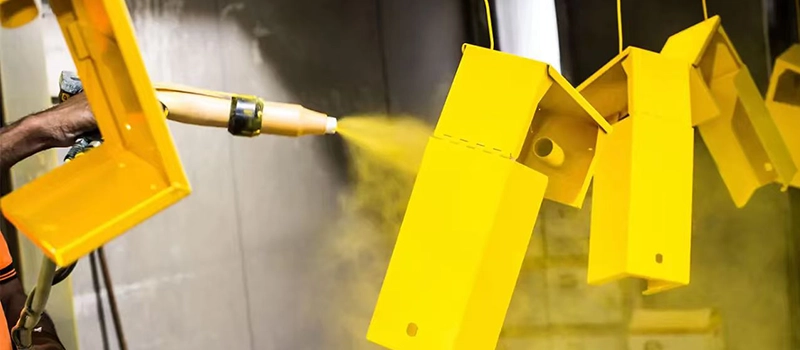
Powder coating uses electrostatic spray guns to charge fine powder particles. These particles are attracted to a grounded metal surface, forming a uniform coating. The coated part is then cured in an oven at high temperatures, typically between 160°C and 210°C. This process is fast, efficient, and highly repeatable—ideal for automated production lines.
Liquid Painting Application
Liquid painting uses spray guns or brushes to apply a solvent-based coating. The solvent allows the paint to flow and level on the surface, and then it evaporates during the drying or curing process. Liquid paint does not require curing ovens, making it more suitable for large or assembled parts that can’t tolerate high heat.
Performance and Durability Comparison
While both coatings serve to protect metal parts, powder coating generally offers better mechanical and chemical resistance.
Powder Coating Durability
Powder coating provides a thicker, more durable finish that is highly resistant to chipping, scratching, corrosion, and UV exposure. It forms a strong bond to the substrate and performs well under heavy wear and outdoor conditions.
Liquid Painting Durability
Liquid painting can provide excellent surface protection, but it is more vulnerable to damage from abrasion and environmental stress. It may require multiple coats and more frequent maintenance to match the performance of powder coating in harsh environments.
Cost Considerations Per Unit
The cost-effectiveness of each method depends on batch size, equipment availability, and production goals.
Powder Coating Costs
While powder coating has higher upfront costs due to equipment and oven requirements, it becomes more economical for medium to high-volume production. Material waste is low, and coating efficiency is high, resulting in reduced cost per part over time.
Liquid Painting Costs
Liquid painting is generally less expensive to set up, making it suitable for smaller runs or low-budget operations. However, higher material waste, longer drying times, and more labor can increase the total cost per unit for large-scale production.
Heat Requirements and Material Limitations
Heat tolerance plays a critical role in choosing between powder coating and liquid painting.
Powder Coating Limitations
Powder coating requires high-temperature curing, which limits its use on heat-sensitive substrates such as plastics, rubber-sealed parts, or pre-assembled products.
Liquid Painting Flexibility
Liquid painting can be air-dried or cured at low temperatures, making it suitable for materials and assemblies that cannot withstand intense heat. It also allows for greater flexibility in coating large, fixed-position items.
Touch-Up Flexibility and Custom Color Variation
Maintenance and visual customization are areas where liquid painting may offer advantages.
Powder Coating Limitations
Touch-ups with powder coating are difficult once the part has been cured. Re-coating typically requires stripping and starting over. Color changes also require thorough cleaning of powder systems, which can be time-consuming in mixed production lines.
Liquid Painting Advantages
Liquid paint is easier to match and reapply in the field. It’s the preferred option when parts are expected to be repaired, repainted, or customized regularly. This makes it more suitable for low-volume or specialty work.
Conclusion
Powder coating has become one of the most trusted finishing solutions in industrial metal production, offering a powerful combination of durability, efficiency, and environmental safety. Its ability to resist corrosion, impact, and UV exposure makes it ideal for large-scale manufacturing across demanding sectors such as automotive, construction, and heavy equipment. While it does have limitations—particularly with heat-sensitive parts and complex geometries—its advantages in high-volume, high-performance applications are undeniable. By understanding where powder coating excels and where alternatives may be needed, manufacturers can make better-informed decisions that improve product quality, reduce costs, and meet evolving industry standards.