Why do certain technical drawings restrict dimensional variation in only one direction? Why are manufacturers often asked to hold tighter limits only above or below a nominal size? And how does this design choice influence cost, fit, and functionality?
Unilateral tolerances provide a focused form of dimensional control, where deviation is allowed on only one side—either positive or negative—of the specified size. This simplifies inspection, protects critical fits, and ensures that functional requirements are met. As noted in ISO 286, such tolerances are “intended to ensure clearance or interference in one direction while limiting variation in the other.”
Used widely in aerospace, automotive, and precision tooling, unilateral tolerances help reduce production variation, prevent oversizing or undersizing, and support consistent assembly performance.
What Are Unilateral Tolerances?
Definition and Basic Concept
Unilateral tolerances are a type of dimensional control used in technical drawings and part manufacturing. In this system, the tolerance zone allows variation only in one direction from the nominal dimension—either positive or negative, but not both. For example, a dimension of 50.00 mm with a tolerance of +0.00/-0.10 mm means the actual size can be slightly smaller, but never larger than the nominal.
Unilateral tolerances are applied when functional or assembly conditions demand strict control in one direction while permitting flexibility in the other. This method reduces uncertainty in manufacturing and ensures that deviations do not interfere with part performance.
By contrast, bilateral tolerances allow variation in both directions, while limit tolerances define only the upper and lower limits directly. Among these, unilateral tolerances provide focused control, which is especially important in mating parts, interference fits, and tight assemblies.
Purpose and Application in Manufacturing
The primary purpose of using unilateral tolerances is to protect a critical functional requirement—such as clearance, interference, or minimum material conditions—by restricting dimensional drift in the undesirable direction. This ensures that the produced part will always remain within the acceptable performance range, even if there is variation during machining or inspection.
Unilateral tolerances are often used in parts that must insert into or align with another component, where being oversized could prevent assembly, or being undersized could result in looseness. By directing variation away from the critical side, the designer guarantees fit and function.
For manufacturers, using unilateral tolerances allows for more predictable process control. Tooling, fixtures, and gauges can be designed specifically to inspect only one side of deviation, simplifying quality assurance and reducing measurement ambiguity.
Typical Format and Notation
Unilateral tolerances are presented on engineering drawings in one of two standard formats:
- Positive-only: 50.00 mm +0.10 / -0.00
- Negative-only: 50.00 mm +0.00 / -0.05
This notation clearly communicates the allowed direction of deviation and is especially common in CNC machining, die casting, and insert molding processes.
When applied consistently, unilateral tolerances improve machining outcomes, reduce part rejection rates, and support precision control over fit-critical features.
How Unilateral Tolerances Work in Practice
Applications in Fit and Function
Unilateral tolerances are widely applied in assemblies where precise fit is required between two mating components—typically a shaft and a hole. By allowing variation in only one direction, designers can prevent interference or excessive looseness while ensuring that the part remains functional.
For example, when designing a shaft to fit inside a bore, a unilateral tolerance on the shaft might only allow it to be smaller than the nominal diameter. This guarantees clearance during assembly without the risk of binding. Conversely, for press-fit parts, the bore may have a unilateral tolerance that only allows it to be smaller than the nominal, ensuring a secure fit.
Such intentional direction of dimensional control makes unilateral tolerances a preferred method in mechanical systems where one side of the tolerance zone is critical to assembly performance.
Simplified Inspection and Quality Control
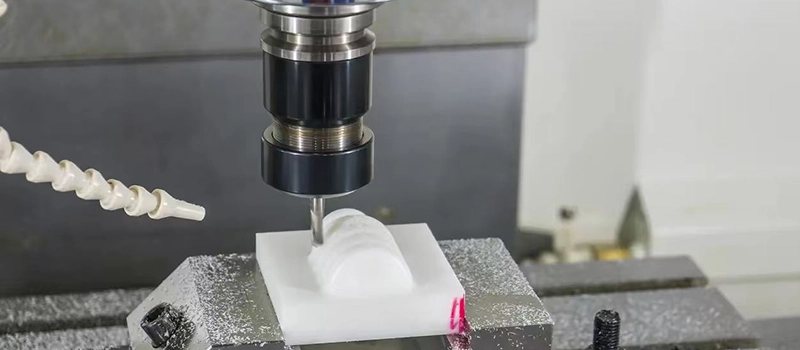
One of the operational benefits of unilateral tolerances is the simplification of inspection processes. Since deviation is allowed in only one direction, quality inspectors can focus their gauging tools or digital measuring systems on detecting violations in that single direction.
This reduces the risk of measurement error and speeds up production line inspections. In high-volume environments, having a fixed tolerance boundary on one side of the nominal dimension eliminates ambiguity, especially in parts where precision must be confirmed within seconds.
Benefits for Manufacturing Teams
- Reduced inspection setup time
- Easier training for quality personnel
- More predictable part rejection criteria
- Lower calibration complexity for gauges
These efficiencies contribute to cost savings, especially when repeated across thousands of parts in automotive or aerospace production.
Tooling and Machining Implications
When machining parts to a unilateral tolerance, the cutting tools and fixtures can be set up to maintain size control from one side only. This allows the process to drift slightly in the non-critical direction without impacting part acceptability.
In turning or milling, tool wear often causes dimensional shift. If the tolerance zone is one-sided in the direction opposite to tool wear, manufacturers can maintain quality longer between tool changes. This kind of strategic tolerance planning is part of modern lean manufacturing techniques.
Furthermore, because unilateral tolerances create clear boundaries on dimensional variation, automated machines with real-time feedback can adjust tool offsets more reliably, improving process control.
Benefits and Limitations
Advantages of Using Unilateral Tolerances
Unilateral tolerances offer several practical advantages in manufacturing and design, especially when precision and assembly control are priorities. By limiting dimensional variation to a single direction, they allow engineers to protect critical boundaries without tightening the entire tolerance band.
This approach simplifies decisions about clearance and interference in assemblies. It gives manufacturers a predictable and controlled process window, making it easier to maintain conformance over large production volumes.
Key Benefits of Unilateral Tolerances
- Focused dimensional control: Only the critical direction is restricted, reducing tolerance stack-up issues.
- Simplified gauging: Inspectors need only verify deviation on one side of the nominal, speeding up quality checks.
- Reduced machining risk: Tolerance is allowed in the non-critical direction, accommodating minor process drift.
- Optimized tool life: Machining can be adjusted to favor wear in the acceptable direction, minimizing downtime.
- Improved consistency: Parts produced under unilateral tolerance systems tend to show less dimensional variation where it matters most.
These characteristics are particularly useful in automated production, where uniformity and speed are essential.
Limitations and Considerations
While unilateral tolerances are helpful in many scenarios, they are not universally suitable. Their one-sided control assumes that deviation in the opposite direction has little or no impact on the part’s function. This assumption may not hold true in assemblies where symmetrical variation is acceptable—or required.
In such cases, bilateral tolerances may provide more flexibility for both design and production. Additionally, unilateral tolerances may demand closer monitoring during setup and require precise machine calibration to ensure consistent control.
Common Drawbacks
- Reduced design flexibility: Limited room for variation may increase part rejection rates in borderline conditions.
- Potential over-specification: Some applications may not require such tight directional control, leading to unnecessary cost.
- Supplier alignment required: Tighter inspection protocols must be clearly communicated to all vendors to avoid misunderstanding.
- Not ideal for all materials: In castings or materials with high shrinkage, one-directional tolerances may complicate process planning.
As with any tolerance scheme, the choice to use unilateral tolerances must be justified by functional needs, production capability, and economic impact.
Where Unilateral Tolerances Are Commonly Used
Precision Mechanical Assemblies
Unilateral tolerances are widely used in industries where mechanical components must assemble with consistent clearance or interference. In such systems, maintaining dimensional control in one direction ensures reliable fitment without compromising structural integrity or function. This is particularly important in designs where one surface must never exceed a given limit, such as a shaft fitting into a bearing or a pin into a hole.
In mechanical assemblies involving motion—like linear actuators, rotating joints, or guided rails—dimensional precision is critical. Unilateral tolerances help define boundaries that ensure movement without jamming or excessive looseness.
Example Use Cases
- Shafts that must always fit into housings without binding
- Pins or dowels that require press-fit in one component and clearance in another
- Guide rails where travel smoothness depends on controlled spacing
Aerospace and Automotive Manufacturing
Both the aerospace and automotive industries demand high levels of dimensional consistency across millions of components. In these sectors, unilateral tolerances are used to control parts that are functionally sensitive to oversize or undersize conditions, such as control linkages, engine assemblies, brake systems, and structural joints.
In aerospace, for instance, tight weight margins and extreme service conditions require that parts fit precisely and behave predictably under load and vibration. Allowing tolerance variation in only one direction ensures that even slight deviations won’t interfere with safety or mechanical performance.
Common Aerospace and Automotive Applications
- Fastener holes in aircraft fuselage panels (no oversizing allowed)
- Valve stem clearances in combustion engines
- Brake piston fit in caliper bores
- Transmission and differential gear seating
These applications highlight the critical role of unilateral tolerances in preventing failures and ensuring long-term performance.
Casting, Molding, and CNC Machining
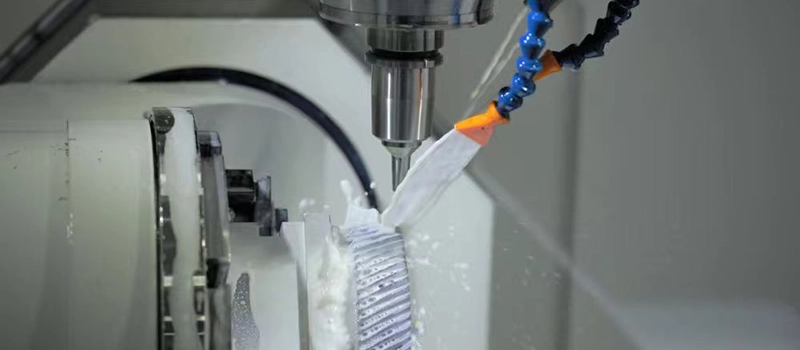
In metal casting, plastic molding, and CNC machining, unilateral tolerances are often applied where dimensional shrinkage or tool wear is known to occur in a specific direction. Designers leverage this knowledge to permit variation where it naturally occurs, without affecting final part function.
In die casting, for example, shrinkage may lead to slightly smaller features. A unilateral negative tolerance accommodates this expected variation while ensuring the feature never becomes too large to fit. In CNC machining, tool deflection and wear may gradually enlarge a dimension; by specifying a positive-only tolerance, the designer accounts for this while keeping critical dimensions within acceptable limits.
Production Environments Benefiting from Unilateral Tolerances
- High-volume CNC operations with known tool wear patterns
- Injection molded parts with precise fit requirements
- Die-cast housings and enclosures for electronics or mechanical systems
In each of these processes, unilateral tolerances are part of a broader strategy to balance dimensional accuracy with efficient production control.
Unilateral vs. Bilateral vs. Limit Dimensions
Understanding the Differences
Tolerancing systems define how much dimensional variation is allowed during manufacturing. Among these, unilateral tolerances, bilateral tolerances, and limit dimensions represent the most common approaches used in engineering design. Understanding their differences is essential for selecting the most appropriate method for function, manufacturability, and inspection.
Unilateral tolerances restrict variation to one side of the nominal dimension. Bilateral tolerances allow deviation on both sides. Limit dimensions define the maximum and minimum allowable sizes directly, without referencing a midpoint.
Each approach provides a different level of control and flexibility depending on the application’s needs.
Unilateral Tolerances
In unilateral tolerances, deviation is permitted only in one direction. For example, a dimension listed as 25.00 mm +0.00 / -0.10 mm means the part can be no larger than 25.00 mm but may be up to 0.10 mm smaller. This system is commonly used in fits where an oversize condition would cause interference or assembly failure.
Applications using unilateral tolerances often require predictable performance, controlled assembly fit, and simplified quality inspection. It is favored in cases where exceeding a certain size limit is unacceptable, such as mating surfaces or bearing fits.
Bilateral Tolerances
Bilateral tolerances allow variation on both sides of the nominal value. A typical example is 25.00 mm ±0.05 mm, which permits the actual size to range from 24.95 mm to 25.05 mm. This approach provides more flexibility for the manufacturer, as variation is balanced in both directions.
Bilateral tolerances are suitable when a symmetric deviation does not affect the part’s function. They are often used in structural parts, non-critical features, and general machined components where exact fit is less essential.
Limit Dimensions
Limit dimensions show only the upper and lower size boundaries without indicating a nominal or mean value. For example, a hole dimension might be specified as 24.95 – 25.05 mm. This format is direct and leaves no ambiguity about acceptable limits.
Although clear, limit dimensions may require more careful interpretation by operators and inspectors. They are commonly used in industries where standard tolerancing is less practical or when manufacturing uses manual methods.
Choosing the Right System
Selecting between unilateral, bilateral, and limit dimensioning depends on functional requirements, inspection methods, and production process capability.
- Use unilateral tolerances when critical dimensions must never exceed a limit.
- Use bilateral tolerances for symmetric tolerancing where some deviation is acceptable in both directions.
- Use limit dimensions when clarity and simplicity are preferred, especially in inspection.
Understanding how each system impacts design intent and production performance helps engineers make better tolerance decisions across various industries.
Conclusion
Unilateral tolerances offer targeted dimensional control, allowing deviation in only one direction to protect functional limits during manufacturing. Their use improves assembly reliability, simplifies inspection, and supports consistent part performance in precision applications. While not suitable for every situation, unilateral tolerances are an effective solution when one-sided dimensional accuracy is essential. Selecting and applying them correctly ensures better fit, reduced risk of interference, and greater confidence in production outcomes.